Mision of the
Marine Logistics Group
Marine Logistics Group (MLG)
Provides general and direct support and sustained combat logistics above the organic capabilities of supported elements.
Sustains the MAGTF in all levels of conflict or mission training
(formerly known as FSSG-Force Service Support Group)
Explain how an MLG is employed
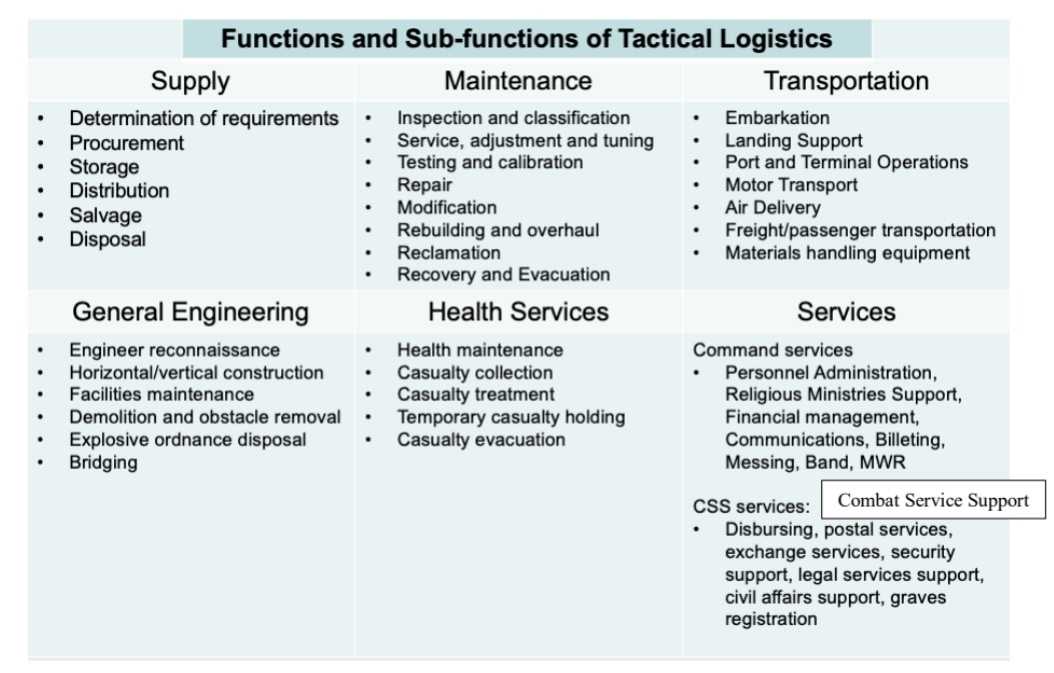
Six functions of Logistics:
- Supply
- Transportation
- Maintenance
- General Engineering
- Health Services
- (Other) Services
Name The Battalions And Major Sub Units Of Each In
3d MLG
- Headquarters and Service Battalion (H&S)
- Materiel Readiness Battalion (Maintenance and Supply Battalions)
- 3d Transportation Support Battalion (Landing Support and Motor Transportation Battalions)
- 9th Engineering Support Battalion (9th ESB)
- 3d Medical Battalion
- Dental Battalion
Maintenance Battalion
MLG
Maintenance Battalion
-Provides general support and intermediate field maintenance support (3rd & 4th echelon) for ordnance, engineering, motor transport, communications electrics, and general support equipment of the MEF.
Levels and echelons of Maintenance
Organizational level (unit-level) - Responsibility of and performed by a using organization; inspecting, lubricating, & minor repair
- 1st echelon: limited action performed by crew or operator as prescribed by applicable manuals
- 2nd echelon: limited action above the operator level performed by specialist personnel in the using unit
Intermediate level - Responsibility of and perfoemed by designated mainenance activities; repair of subassemblies and assemblies
- 3d echelon: component replacement usually perfomed by specially trained personnel in owning or LCE units
- 4th echelon: component and end item overhaul and rebuilding performed by LCE units at semi-permanent or fixed sites
Depot level - Major overhaul and complete rebuilding of parts, subassemblies, and end items
- 5th echelon: end item overhaul and rebuilding performed by industrial-type activities using production line techniques, programs, and schedules. Located in the US
Supply Battalion
MLG
Supply Battalion
- Provides general support and ground supply support for the sustainment of MAGTF operations.
- But does not supply bulk fuel or navy-funded stock/programs…Engineers do that.
Engineer Support Battalion
MLG
Engineer Support Battalion
- Provides general engineering support of an expeditionary nature to the MEF, including survivability, mobility, and counter mobility enhancements; EOD; and bulk water and fuel storage.
- Conducts engineering reconnaissance.
- Takes care of airfields and encampments
Medical Battalion
MLG
Medical Battalion
-Provides direct and general Health Service Support (HSS) in order to sustain the combat effort across the full spectrum of MAGTF operations
Direct Support: Organic/attached
General Support: Casualty decontamination & treatment stations, combat stress casualties, resuscitative care/surgery
Dental Battalion
MLG
Dental Battalion
Basic = Provides dental health support care to the MEF
Detailed = Ensures dental readiness and optimizes dental health for all beneficiaries while supporting operational and humanitarian missions
LCE for:
MEF
MEB
MEU
LCE for….
MEF = Marine Logistics Group (MLG)
MEB = Combat Logistics Regiment (CLR)
-Provides logistics support and capabilities “beyond the organic capabilities” of the MARDIV
MEU = Combat Logistics Battalion (CLB)
-Provides logistics support and capabilities “beyond the organic capabilities” of the GCE & ACE
^All LCEs provide their respective groups with the 6 functions of logistics
Define War Reserve Materiel
War Reserve Materiel (WRM)
- Mission-essential principal end items, secondary items, and munitions required to sustain the MEF so that it can attain operational objectives.
- WRM inventories are acquired during peacetime
- Allows the MEF to deploy with sufficient equipment and supplies for 60 days
Peacetime Force Material Stocks: On-hand inventories that support day-to-day operational and training requirements of the operating forces and the Marine Corps Reserve.
War Materiel Procurement Capability: The quantity of an item that can be ordered on D-day (day of invasion/operation) or after the day an operation commences.
War Reserve Materiel Stocks: Consist of two portions: field, and inventory control
Field - portion of the war reserve material stocks held by the operational forces
Inventory control - Portion held at the wholesale level at marine logistics bases
support vehicles
LCE
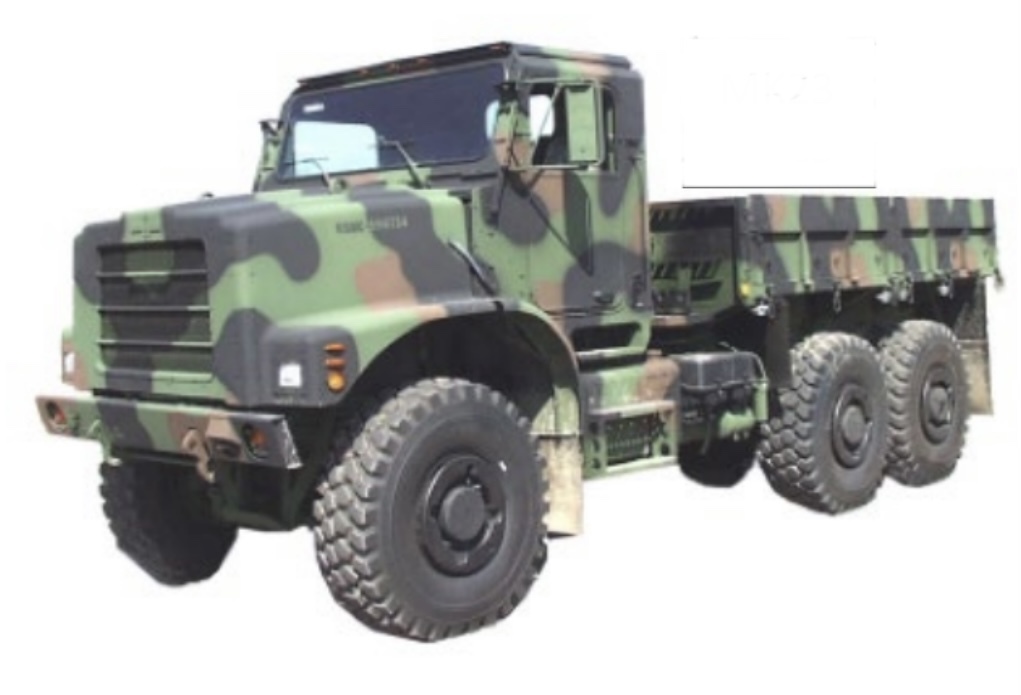
7-ton / Medium Tactical Vehicle Replacement (MTVR)
MK23 / MK25
- Independent suspension system
- Electronically controlled engine and transmission
- Central tire inflation system - increases off-road maneuverability
- 7 ton, 6x6 designed for use on all roads / highways / terrains
- 27,000 lbs
- Can ford… 60 inches of water
- On-road cruising range of 300 miles
support vehicles
LCE
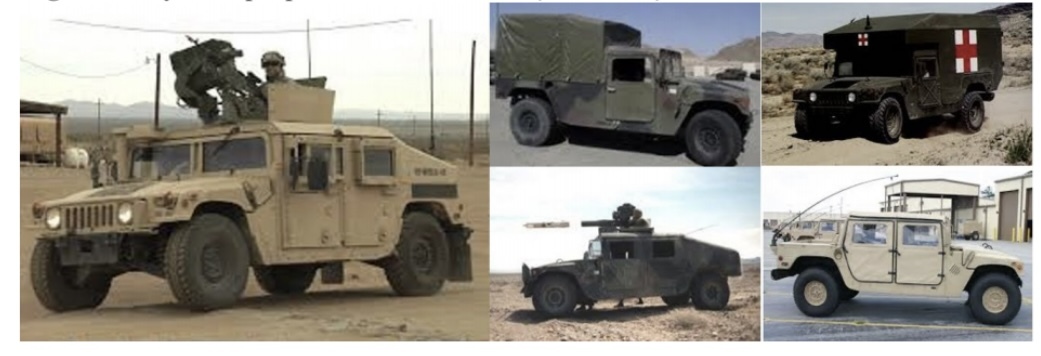
High Mobility Multipurpose Wheeled Vehicle (HMMWV)
-Can carry troops (2-man crew, 8 passengers) and cargo (2,500 - 4,575 lbs depending on configuration), be an ambulance (8 patients), and various other purposes. (Multipurpose!)
support vehicles
LCE
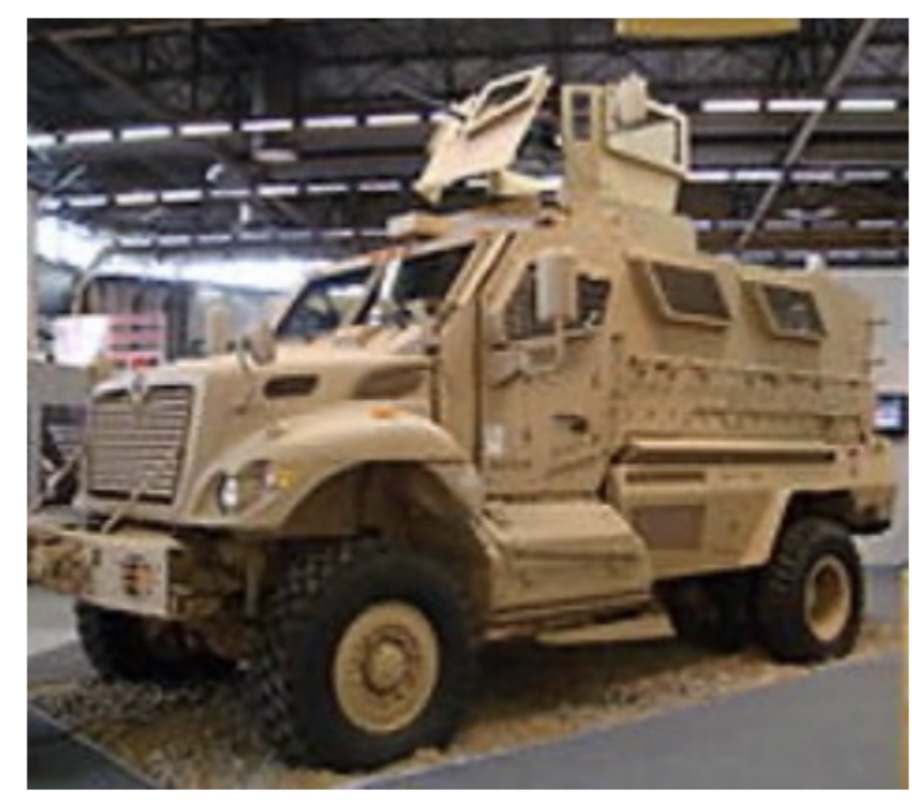
Mine Resistant Ambush Protected (MRAP)
- Has a V-shaped hull design, designed for crew protection.
- Intended to withstand ballistic arms fire, mine blasts, IEDs, and Nuclear, Biological, and Chemical environments.
- There are a variety of armoring levels and sizes to fit various mission requirements.
Different classes of supplies
Class I – Subsistence, including gratuitous health and welfare items
Class II – Clothing, individual equipment, tentage, tool sets and tool kits
Class III – Petroleum, oils, and lubricants
Class IV – Construction supplies
Class V – Ammunition
Class VI – Personal demand items (non-military sales items, aka hygiene products like soap, toothpaste, writing materials, cigarettes, alcohol, etc.)
Class VII – Major end items: products ready for their intended use (launchers, tanks, vehicles)
Class VIII – Medical material, including medical-unique repair parts
Class IX – Repair parts and components
Class X – Material to support non-military programs (Such as agriculture and economic development)
Responsibility of LCE components as they relate to MPF operations
Overall Summary
Note: Maritime Prepositioning Forces (MPF) provide follow-on logistics items that will be coming to sustain the MAGTF.
- The support will always come in by sea and/or air
- The different LCE components below explain the mechanics of how MPF support gets to our Marines that are forward-deployed.
Departure Airfield Control Group (DACG)
- The primary interface with the AMC (Air Mobility Command) and TALCE (Tactical Airlift Control Element) at APOEs (Aerial Port of Embarkation)
- -Responsible for receiving equipment and personnel at the APOE, coordinating with the TALCE to ensure that personnel and materiel are prepared for air shipment and delivery.*
Arrival and Assembly Area (AAA)
- Area of sufficient size and facilities to perform the complex tasks of arrival, offload, Maritime Prepositioning Equipment and Supplies (MPE/S) distribution, assembly, and preparing the MAGTF for employment
- Arrival and assembly may well be the most crucial phase of an MPF operation
Arrival and Assembly Operations Group (AAOG)
- Function is to coordinate and control arrival and assembly operations
- Monitors the airflow of the Fly-in-echelon (FIE) in to the AAA
- Basically makes sure everything is going smoothly in the AAA and AAOE
Arrival and Assembly Operations Element (AAOE)
- Each MAGTF element (CE, ACE, GCE, LCE) has their own AAOE
- Provides Command & Control (C2) within assembly area of element…
- Gets receipts for MPE/S, and distributes MPE/S to unit equipment reception points (ERPs)
Survey Liaison and Reconnaissance Party (SLRP)
-Conducts initial reconnaissance, establishes liaison with in-theater authorities and initiates preparations for arrival of the main body of the Fly-In-Echelon and the maritime prepositioning ships squadron.
Aerial Port of Embarkation (APOE)
-An airfield for sustained air movement where personnel and material are loaded to initiate aerial movement. APOEs may serve as ports of debarkation for return passengers and retrograde cargo shipments.
Aerial Port of Debarkation (APOD)
-An airfield for sustained air movement at which personnel and material are discharged from aircraft. APODs can serve as ports of embarkation for return passengers and retrograde cargo shipments.
APOD/APOE – K5R Kadena AB, MCAS Futenma
Sea Port of Embarkation (SPOE)
- The geographic point in a routing scheme from which cargo or personnel depart.
- This may be a seaport or aerial port from which personnel and equipment flow to a part of debarkation; it may or may not coincide with the origin.
Sea Port of Debarkation (SPOD)
- The geographic point at which cargo or personnel are discharged.
- This may be a seaport or aerial port of debarkation; it may or may not coincide with the destination.
SPOD/SPOE – Naha Military Port, Naval Base White Beach, Kin Red/Blue (Camp Hansen)
Port Operations Group (POG)
- Task-organized for the offload of follow-up or sustainment shipping and for retrograde of damaged equipment.
- It prepares the port before Maritime Prepositioning Ship (MPS) arrival and throughout offloading**. SLRP relationship?
Beach Operations Group (BOG)
- Task-organized and operates under the overall direction of the Landing Force Support Party (LFSP).
- It may be retained after the arrival and assembly for the offload of follow-up or sustainment shipping.
Off-Load Preparation Party (OPP)
- Temporary task organization under the OPCON of the MAGTF Commander
- Task is to prepare MPE/S for offload at the AAA.
Responsibility of LCE components as they relate to MPF operations:
Departure Airfield Control Group (DACG)
Departure Airfield Control Group (DACG)
- The primary interface with the AMC (Air Mobility Command) and TALCE (Tactical Airlift Control Element) at APOEs (Aerial Port of Embarkation)
- -Responsible for receiving equipment and personnel at the APOE, coordinating with the TALCE to ensure that personnel and materiel are prepared for air shipment and delivery.*
Responsibility of LCE components as they relate to MPF operations:
Arrival and Assembly Area (AAA)
Arrival and Assembly Area (AAA)
- Area of sufficient size and facilities to perform the complex tasks of arrival, offload, Maritime Prepositioning Equipment and Supplies (MPE/S) distribution, assembly, and preparing the MAGTF for employment
- Arrival and assembly may well be the most crucial phase of an MPF operation
Responsibility of LCE components as they relate to MPF operations:
Arrival and Assembly Operations Group (AAOG)
Arrival and Assembly Operations Group (AAOG)
- Function is to coordinate and control arrival and assembly operations
- Monitors the airflow of the Fly-in-echelon (FIE) in to the AAA
- Basically makes sure everything is going smoothly in the AAA and AAOE
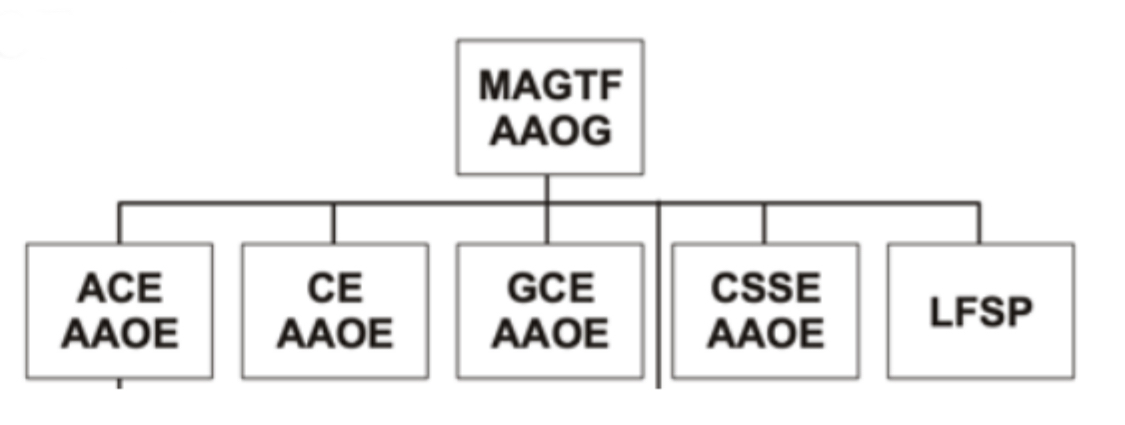
Responsibility of LCE components as they relate to MPF operations:
Arrival and Assembly Operations Element (AAOE)
Arrival and Assembly Operations Element (AAOE)
- Each MAGTF element (CE, ACE, GCE, LCE) has their own AAOE
- Provides Command & Control (C2) within assembly area of element…
- Gets receipts for MPE/S, and distributes MPE/S to unit equipment reception points (ERPs)
Responsibility of LCE components as they relate to MPF operations:
Survey Liaison and Reconnaissance Party (SLRP)
Survey Liaison and Reconnaissance Party (SLRP)
-Conducts initial reconnaissance, establishes liaison with in-theater authorities and initiates preparations for arrival of the main body of the Fly-In-Echelon and the maritime prepositioning ships squadron.
Responsibility of LCE components as they relate to MPF operations:
Aerial Port of Embarkation (APOE)
Aerial Port of Embarkation (APOE)
-An airfield for sustained air movement where personnel and material are loaded to initiate aerial movement. APOEs may serve as ports of debarkation for return passengers and retrograde cargo shipments.
Responsibility of LCE components as they relate to MPF operations:
Aerial Port of Debarkation (APOD)
Aerial Port of Debarkation (APOD)
-An airfield for sustained air movement at which personnel and material are discharged from aircraft. APODs can serve as ports of embarkation for return passengers and retrograde cargo shipments.
APOD/APOE – K5R Kadena AB, MCAS Futenma
Responsibility of LCE components as they relate to MPF operations:
Sea Port of Embarkation (SPOE)
Sea Port of Embarkation (SPOE)
- The geographic point in a routing scheme from which cargo or personnel depart.
- This may be a seaport or aerial port from which personnel and equipment flow to a part of debarkation; it may or may not coincide with the origin.


-
101 Traditions, History95
-
102 USMC Mission and Organization16
-
103 Safety10
-
104 Administrative Fundamentals21
-
105 Air Combat Element (ACE)36
-
106 Ground Combat Element16
-
107 Logistics Command Element33
-
108 Command Element38
-
109 Amphibious Operations20
-
110 Force Protection6
-
111 General Combat Leadership13
-
112 USMC Operations14
-
113 Environmental Awareness Fundamentals6
-
114 Communications9
-
115 Weapons18
-
116 Tactical Measures8
-
117 Land Navigation7
-
118 Marine Corps Planning Process9
-
119 First Aid and Field Sanitation13
-
Pictures35
-
Lists25
-
Need To Know Facts28



