Explain what we mean with ‘Brand Imagery’ in the CBBE model
descripe its 4 types of properties:
Deals with the extrinsic properties of the product or service, incl. the ways in which brand (eventually) attempts to meet customers’ psychological or social needs
- User profiles >> gaat over de persoon of organisatie die het merk gebruikt >> baseren op factoren als geslacht, leeftijd, ras, inkomen, etc.
- Purchase and usage situations >> vertelt consumenten onder welke omstandigheden ze het product moeten kopen of gebruiken >> kan relateren aan het soort channel (bijv. Internet), bepaalde winkels (bijv. Macy’s) of het gemak van aankooptijd, locatie, waar te gebruiken en wanneer te gebruiken
- Personality and values >> merken kunnen persoonlijkheidstrekjes aannemen sincerity, excitement, competence, sophistication, ruggedness
- History, heritage, and experiences >> bijv. associaties die zijn gerelateerd aan de persoon die het product maakt, land van herkomst, sponsorevenementen, etc. >> POD
Explain what we mean with ‘Brand Saliance’ in the CBBE model
- Aspects of brand awarness : how easy the brand is available in memory in relevant situations
- Saliance is necessary but not sufficient
- Brand associations are directly and indirectly formed
including:
- Breadth and depth of awarness: (breadth: Purchase consideration / depth: how easy is the brand available in memory (recognition and recall)) ex. Toen Tropicana haar verpakking veranderde, was het merk niet goed herkenbaar >> consumenten dachten dat het uitverkocht was >> omzet daalde
- Product Category structure: How product categories are organized in memory. Producten worden geordend naar hiërarchie
- Strategic implications: where, when, how easyily and often consumers think of the brand (4 o’clock Cup-a-soup)
How does customers determine if they are satisfied?
Equity Theory
(fairness)
The consumer compares his input with the output as well as with the input and output of the supplier and assesses what is reasonable or “equitable”.
What is brand dispersion and why is it important?
THE IMPACT OF BRAND RATING DISPERSION ON FIRM VALUE (LUO ET AL,, 2013)
The heterogeneity (variance) in evaluations across customers
Is important because variance can inform on short term brand performance:
- If the variance is brand discordance (unstable) >>
- dispersion might be a bad signal.
- If the source is stable heterogeneity in evaluations >>
- dispersion can be a good thing (sign of popular or niche brand lovers)
- a bad thing (there is a core of dissatisfied users and brand haters)
- or a neutral sign..
Sales response model (Giep Franzen)
Sales response model: genereren van direct gedrag (nu kopen)
- Brand response: geen (merk is onbelangrijk, brand awareness en acceptance zijn reeds aanwezig of de attitude verandert na het gedrag)
- Advertising response: aandacht, overtuigingik moet het nu hebben, morgen is het er niet meer, bijv. bij een uitverkoop, promoties, retail
- Advertising characteristics: feiten, vergelijkingen, peripheral cues
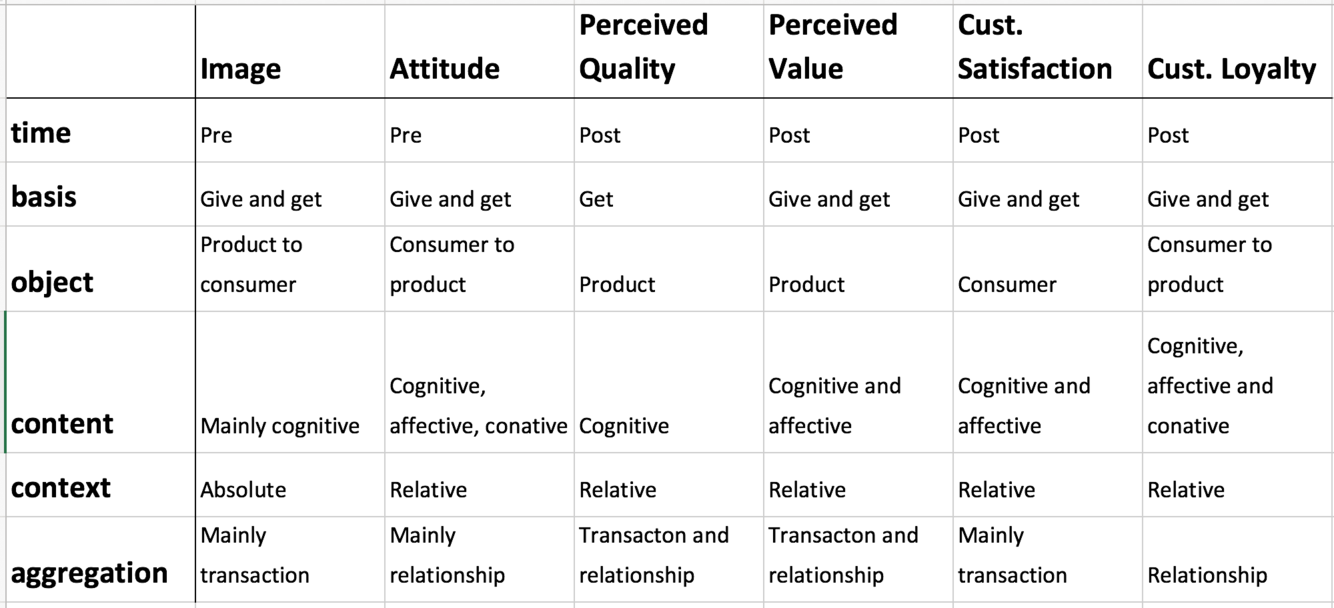
Differences in meaning
- Perceived quality
- Perceived value
- Customer Satisfaction
- Brand image
- Product attitude
- Customer loyalty
Time:: pre or post purchase
Basis:: give or get
Object:: product or customer
Content:: cognitive,, affective or conative
Context:: absolute or relative
Aggregation:: transaction or relationship
Explain what we mean with ‘Brand performance’ in the CBBE model
Judged on 5 concepts:
Relates to ways in which product or service attempts to (eventually) meet customers’ more functional needs (refers to intrinsic properties of the brand or attributes)
Including:
- Primary ingredients and supplementary features >> sommige attributen zijn essentiële ingrediënten die zorgen dat een product werkt; andere attributen zijn supplementaire features die zorgen voor customization en een meer gepersonaliseerd gebruik
- Product reliability, durability, and serviceability >> percepties van productperformance worden beïnvloed door factors als snelheid, nauwkeurigheid, behulpzaamheid, etc.
- Service effectiveness, efficiency, and empathy >> voldoen aan de service vereisten, de snelheid en responsiviteit van de service, en het gedrag van service providers
- Style and design >> functionele aspecten en aesthetische aspecten (bijv. vorm)
- Price >>creëert associaties over hoe relatief duur het merk is, kortingen, etc.
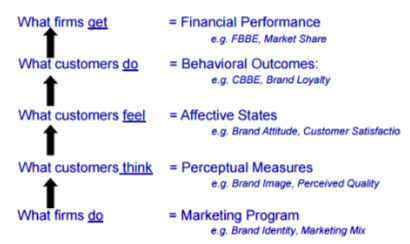
explain the 5 steps of Brand Management
from what firms do to what firms get
Likeability Model (Giep Franzen)
Likeability model: heeft als doel: merkwaardering en opname in de evoked set
- Brand response: merksympathie
- Advertising response: likeability
- Advertising characteristics: vorm van entertainment, humor, bijv. AH >> het verveelt snel, mensen weten niet meer dat het om jouw merk gaat
- Examples of circumstances: producten zonder belangrijk doel >> commodity
Explain:
The reactions of the investors to upside versus downside dispersion can be asymmetrical.
Increases in downside brand dispersion are more likely to be related to (a) abnormal returns and (b) idiosyncratic risks than those in upside dispersion.
- Downside dispersion:‘The observed variability in cross-consumer brand ratings when the brand ratings are lower than the neutral point.’
- Upside dispersion:‘The observed variability in cross-consumer brand ratings when the brand ratings are higher than the neutral point.’
- Increase in upside dispersion shows a shift to more brand lovers
- Investors especially pay attention to downside dispersion
More recent includings in the customer journey theory
- Value of non-purchase interactions
- Positive and negative attitudes, emotions and behaviors
- Conceptual platform to incorporate social media
- More clearly recognized the customer’s role in the experience
Explain what we mean with ‘Brand Resonance’ in the CBBE model
descripe its 4 types of properties:
Most valuable brand building block
Reflects a completely harmonious relationship between customers and the brand; brand relationships can be characterized in terms of intensity and activity
mate waarin de klant ‘in sync’ is met het merk
Behavioral loyalty: wordt gemeten in termen van de frequentie en hoeveelheid van herhaalaankopen en het aandeel van categorievolume dat aan het merk wordt besteed
Attitudinal loyalty: behavorial loyalty is nodig maar niet voldoende voor resonance. Sommige klanten kopen uit noodzaak, bijv. omdat het merk het enige is wat ze kunnen betalen. Een grotere loyaliteit (resonance) vereist echter een sterke persoonlijke hechting en volledig tevreden consumenten
Sense of community: klanten voelen een aansluiting met andere mensen die zijn geassocieerd met het werk, bijv. werknemers of medeklanten
Active engagement: sterkste bevestiging van merkloyaliteit ontstaat wanneer klanten betrokken zijn, of tijd, energie en geld willen investeren in het merk, naast de uitgaven voor de aankoop en consumptie van het merk
Involvement (relationship) model (Giep Franzen)
Involvement (relationship) model: persoonlijke betrokkenheid bij het merk
- Brand response: brand status, emotional proximity, brand personality
- Advertising response: gevoel van wederzijds begrip/respect, interactie
- Advertising characteristics: toonhoogte, ruimte voor interpretatie, uitvoering
- Examples of circumstances: gevestigde merken, services, B2B producten
Explain how brand equity works as a ‘bridge’
Consumer knowledge drives the differences and manifest themselves in terms of brand equity
• Brand as a reflection of the past >> most critical is the quality of the investment in brand building
• Brand as a direction for the future >> true value and future prospects of a brand rests with consumers and their knowledge about the brand
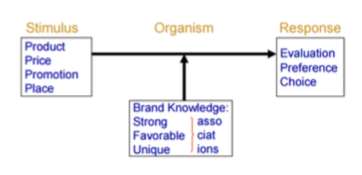
CBBE = Bridge (moderator) tussen stimulus (bv prijs) en response (evaluatie)
Het kennen van een merk leidt tot andere reacties (CBBE) >> Y = response (bijv. evaluatie of keuze), X = stimulus (activiteit die door de organisatie is ontworpen, bijv. prijs). Brand knowledge is een moderator in deze relatie >> verandert de slope.
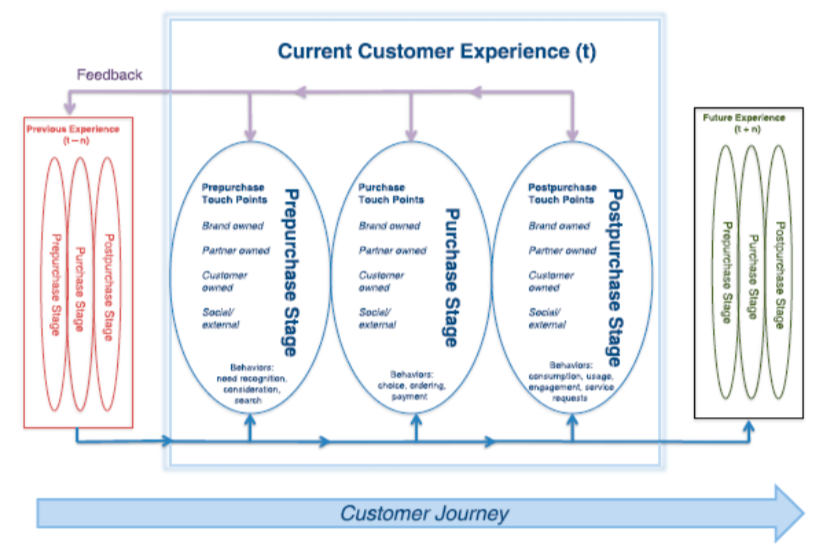
UNDERSTANDING CUSTOM ER EXPERIENCE THROUG HOUT THE CUSTOMER JOURNEY ( LEMON & VERHOEF , 2016)
what are the 3 stages of customer experience?
(+ relevant factors for each stage)
- Pre-purchase stage
- Need cognition, consideration, search
- Purchase stage
- Choice, ordering, payment
- Post-purchase stage
- consumption, usage, engagement, service requests
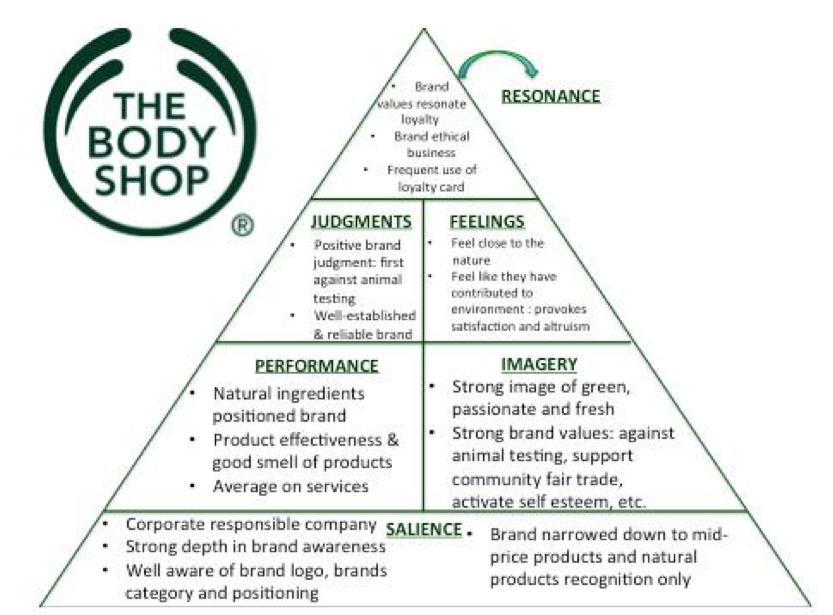
Give example of ‘The Body Shop’ process to CBBE
All the six building blocks of the pyramid
what is the right order from prior to pruchase until post purchase?
6 concepts of how consumers think about a brand
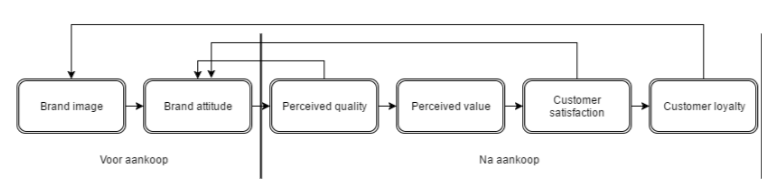
UNDERSTANDING CUSTOM ER EXPERIENCE THROUG HOUT THE CUSTOMER JOURNEY ( LEMON & VERHOEF , 2016)
Definition of customer experience:
A multidimensional construct focusing on a customer’s cognitive, emotional, behavioural, sensorial and social responses to a firm’s offerings during the customer’s entire purchasing journey.
7 branding models by Giep Franzen
verbindingen tussen advertising en gedrag:
- . Sales response model >> direct behavior
- . Persuasion model >> Short-term behavior
- . Emotions model >> Brand feelings
- . Likeability model >> Brand appreciation
- . Awareness model >> Brand awareness
- . Involvement model >> Brand involvement
- . Symbolism model >> brand representation
What is the definition of Customer Based Brand Equity (CBBE)?
CBBE = (1) Differential effect that (2) brand knowledge has on (3) consumer response to the marketing of that brand
A brand has positive customer based brand equity when customers react more favorably to a product and the way it is marketed when the brand is identified than when it is not (e.g., when it is attributed to a fictitiously named or unnamed version of the product))
Customer experience measurements (3):
- Customer Satisfaction
- Net Promoter Score (NPS)
- Customer Effort Score (CES)
Researchers believe that there is an urgent need for the development of new scales for measuring customer experience across entire customer journey due to the fact that current scales are not well developed.
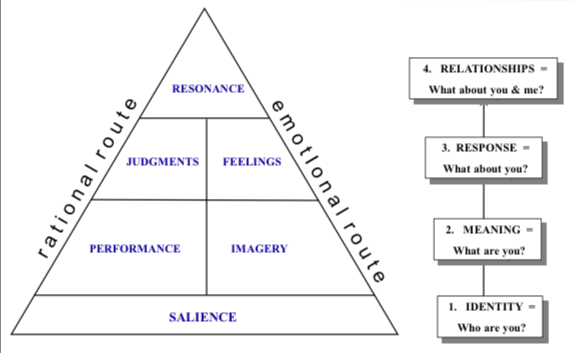
Explain the conceptual CBBE model (pyramid)
Constructs:
- Loyalty
- Satisfaction
- Perceived Quality
- Brand Image
- Presence
Describe the difference between behavioural loyalty and attitudinal loyalty
Behavioral loyalty: wordt gemeten in termen van de frequentie en hoeveelheid van herhaalaankopen en het aandeel van categorievolume dat aan het merk wordt besteed
Attitudinal loyalty: behavorial loyalty is nodig maar niet voldoende voor resonance. Sommige klanten kopen uit noodzaak, bijv. omdat het merk het enige is wat ze kunnen betalen. Een grotere loyaliteit (resonance) vereist echter een sterke persoonlijke hechting en volledig tevreden consumenten
Explain what we mean with ‘Brand Judgements’ in the CBBE model
descripe its 4 types of properties:
personal opinions and evaluations with regard to the brand
- Brand quality perceptions : overall evaluation of brand
- Brand credibility : brand as a whole >> perceived expertise and trustworthiness
- Brand consideration : when brand is appropriate and meaningful to consumers (depends on cons. personal relevance)
- Brand superiority : consumers view brand as unique and better than other brands (essential for building intense and active relationships)






