What are some mechanisms of viral transmission?
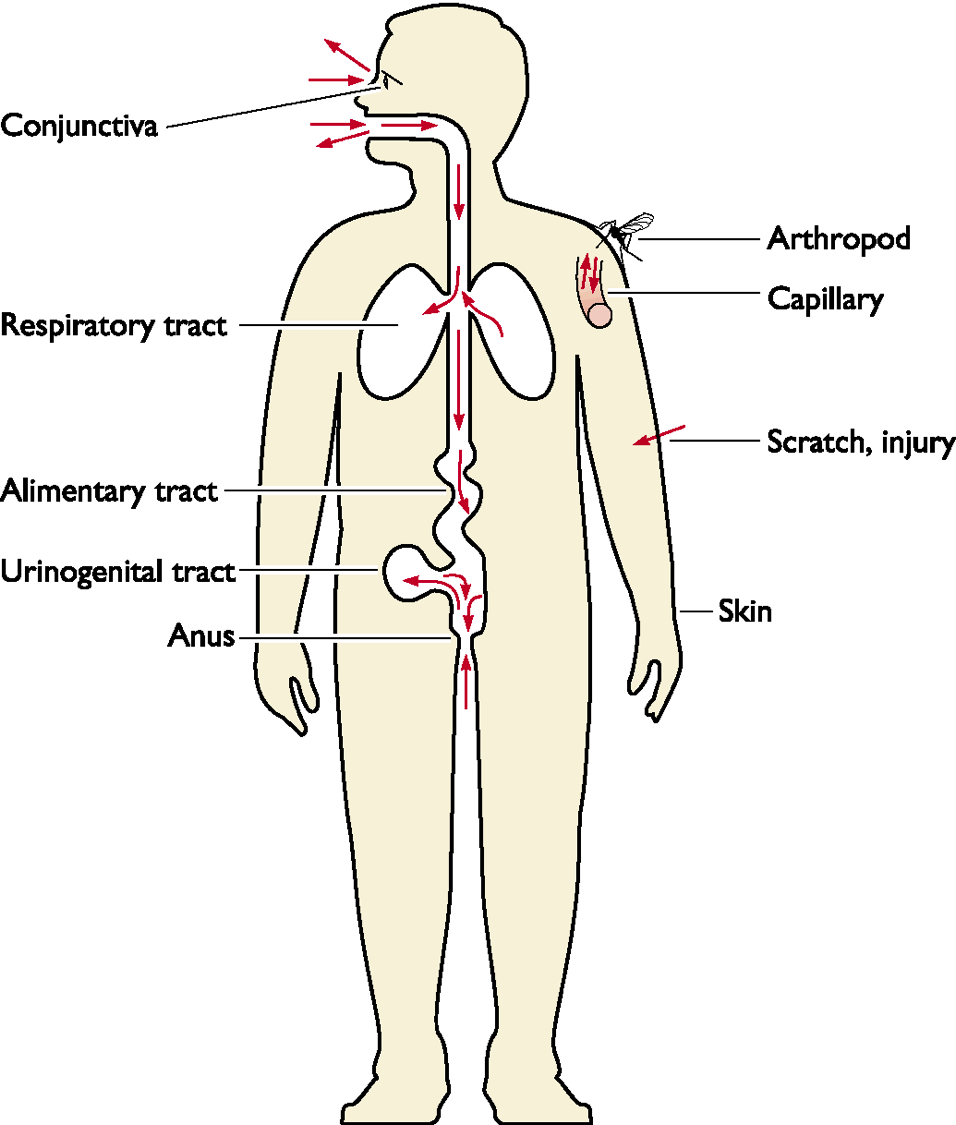
- Respiratory: aerosols
- Fecal-oral: food, water, dirty hands
- Contact: lesions, saliva, fomites
- Zoonoses: animals, insects
- Blood: direct contact, blood products, organ transplants
- Sexual: mucous membranes, blood
- Maternal-neonatal: birth, breastmilk
- Genetic: prions, retroviruses
What factors affect the susceptibility and severity of a viral disease?
- Nature of exposure: route; i.e., aerosol vs. scratch, etc.
- Viral dose: more virus increases risk of disease
- Status of the person: age, general health, immune status
- Virus-host interactions: unique genetic features of each
What are some general sites of entry for virus?
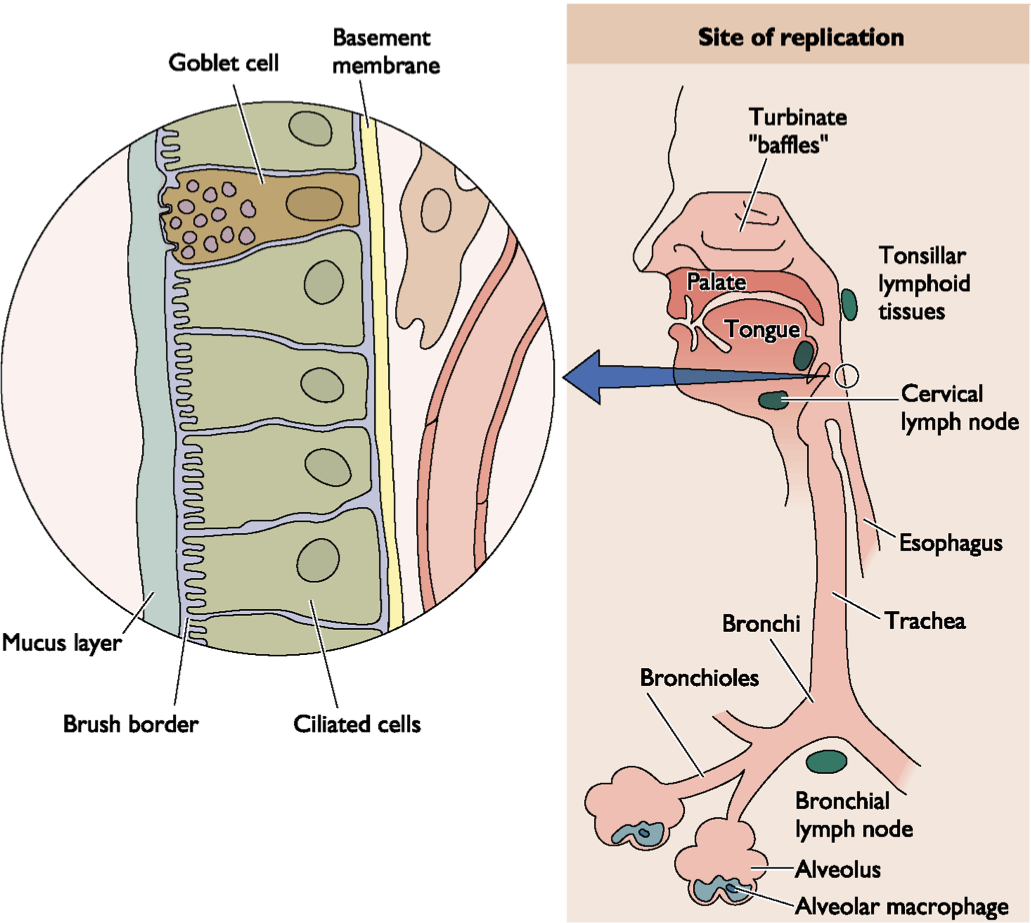
How do viruses use the respiratory tract as a site of entry?
- Interact with cilia, OR
- Cross basement membrane → lymph and blood system
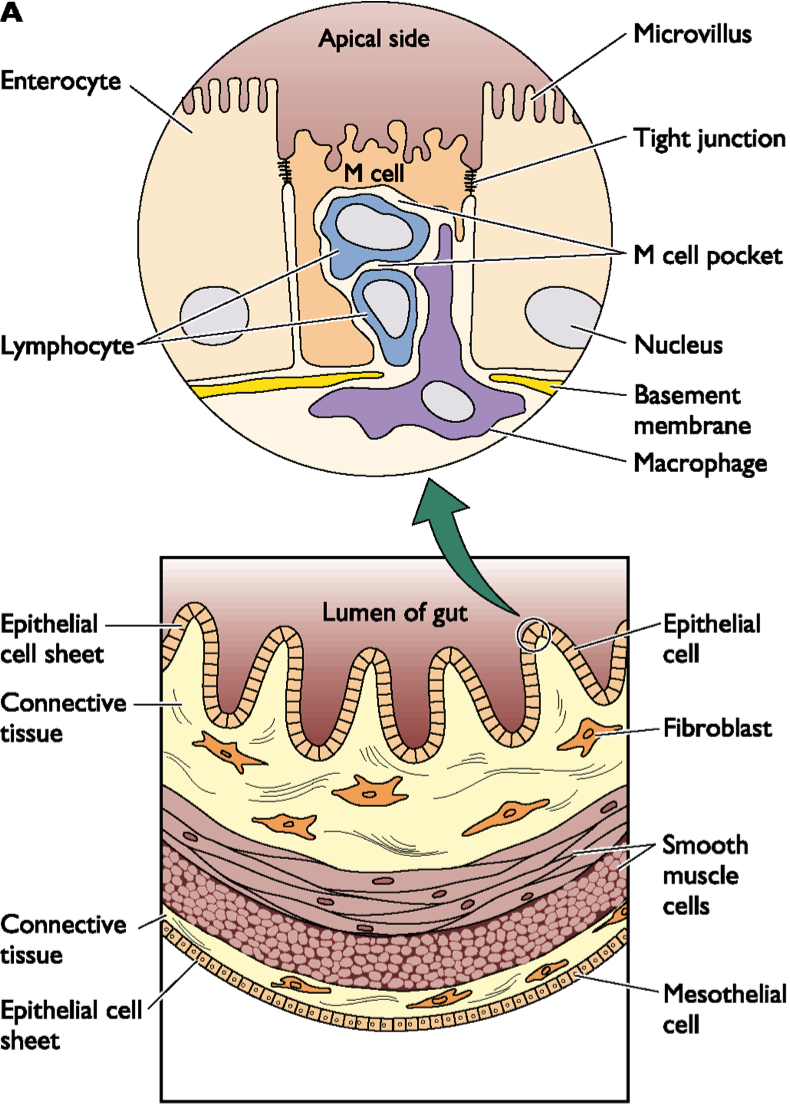
How do viruses use the GI tract as a site of entry?
M cells sample the gut contents and present it to underlying immune cells. Viruses can infect M cells and easily reach the blood stream.
ex) Reovirus attaches to M cells and intracellular vesicles after fecal-oral transmission
What are the stages of virus dissemination throughout the body?
- 1° viremia = low levels of virus in the blood → replication in internal organs; often asymptomatic (incubation stage) →
- 2° viremia: high levels of virus in blood → dissemination of virus to organs, where it is shed
ex) Chicken pox and shingles (VZV): mucosal surfaces → lymph nodes → liver, spleen, respiratory system → skin → latency in neuron
What are some patterns of viral infection?
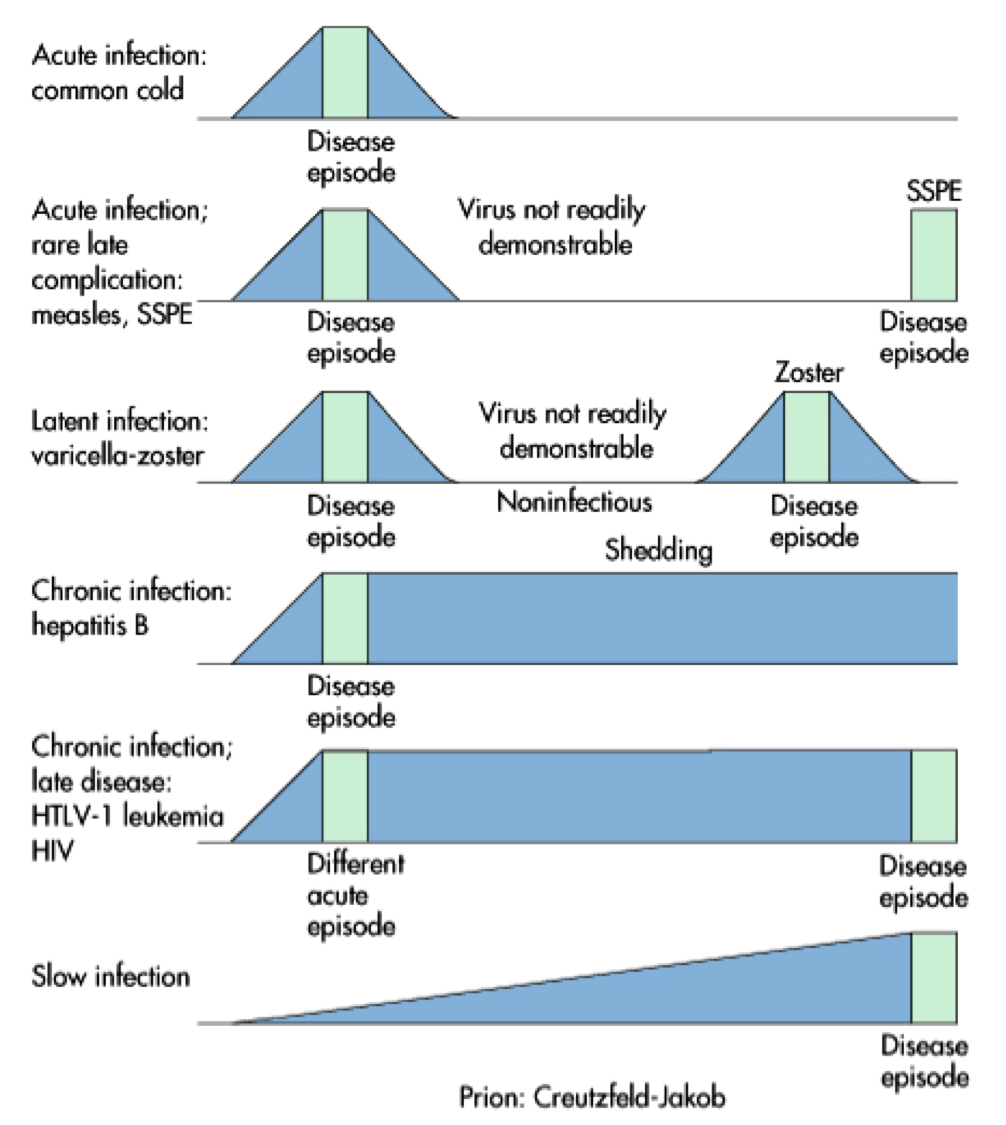
Viral infection may be unnoticed, cause illness, induce autoimmunity, be persistent, or be lethal. A successful virus, however, will avoid destruction by the immune system AND avoid destroying the host before replication is finished. Patterns include:
- Acute
- Chronic: persistent, latent (VZV), and/or slow
- Transforming
(Blue = virus shedding, green = disease symptoms)
What is injury induced by viruses?
Symptoms of viral disease (e.g., fever, tissue damage, rash, aches, pains, nausea, etc.) are MAINLY caused by the host response to infection.
Cell injury, on the other hand, is caused DIRECTLY by viruses (e.g., cell lysis, Norwalk virus, cell inactivation) and INDIRECTLY by the host (e.g., immunopathology).
What is cell inactivation?
A virus-induced cell injury, directly caused by the virus (as opposed to the host).
Essential cell functions halted by virus → infected cells susceptible to apoptosis → loss of cell functions → organ damage/failure
What is immunopathology?
A virus-induced cell injury, indirectly caused by host immune responses.
Immune pathology is usually caused by T cells and antibody complexes. Vaccination can make some viral infections worse.
ex) dengue fever, RSV

-
2-1 Virus Structure and Classification7
-
2-2 Virus Life Cycle14
-
2-3 Signaling I11
-
2-4 Development of B Cells and Generation of Diversity8
-
2-5 T Cell Development9
-
2-6 Signaling II15
-
2-7 Enzymes as Biological Catalysts12
-
2-8 Enzyme Mechanism and Therapeutic Inhibition of Enzymes8
-
2-9 Cell Division Cycle18
-
2-10 RNA Viruses I5
-
2-11 RNA Viruses II10
-
Geriatrics II and Falls Assessment14
-
Research Ethics3
-
2-12 Enzyme Regulation and Clinical Applications12
-
Clinical Quality and Safety8
-
2-19 Viral Genetics10
-
2-20 Viral Oncogenesis15
-
2-21 and 2-22 Cancer Genetics26
-
2-23 Embryogenesis24
-
2-24 Introduction to the Hepatitis Viruses18
-
2-25 Antiviral Drugs19
-
2-26 Mechanisms of Development11
-
2-27 B-Cell Immunity10
-
2-28 Viral Pathogenesis10
-
Abdominal History and Exam2
-
2-17 T-Cell Receptor and MHC11
-
2-18 T Cell-Mediated Immunity0
-
2-29 Immune Regulation17
-
Clinical Prevention II: Vaccines, Chemoprophylaxis, and Behavioral Counseling6
-
2-30 Gut Immunity10
-
2-31 Fungi I13
-
2-32 Fungi II20
-
2-33 Prenatal Genetics16
-
2-34 Introduction to Parasitic Diseases12
-
2-35 Prions19
-
2-36 Speciality Genetics and Personalized Medicine15



