Fall from ladder - suspected injury patterns?
Head injury
Axial spine
Abdomial visceral injuries
Fractures pelvs/acetabulum
Bilateral lower limb expremity fractures - incl calcaneal fractures
GCS
4 Eyes: spontaneous, voice, pain, nil
5 Verbal: orientated, confused, inapropriate (words), incomprehensible (sounds), nil
6 Motor: obeys commands, localises to pain, withdraws from pain, flexion to pain, extension to pain, nil
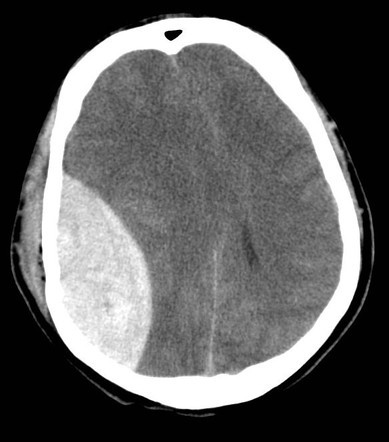
- High pressure arterial origin (middle meningeal artery most commonl)
- >85% assoc with skull #
- Decreased GCS & contralateral side hemiparesis is common
- <30%: ‘Talk and die’
- LOC -> Lucid interval -> Rapid deterioration
- Variable underlying brain injury
- High density biconvex lesion on non-contrast CT scan aka lentiform (+scalp heamatoma
- ATLS resuscitation and head injury principles +
- Conservative - if small
- Endovascular embolisation - if small
- Craniotomy & evacuation:
- if increasing size/>0.5cm thick with >5mm midline shift / deteriorating GCS
Management of raised ICP
The management of Traumatic Brain Injury (TBI) is focused on the prevention of secondary injury
PREHOSPITAL CARE
prevention of secondary injury is the goal
secure airway by rapid sequence intubation (early intubation of probable benefit but not proven)
establish normal breathing (normocapnia unless neurological deterioration documented)
circulation (aggressively avoid hypotension; use crystalloid fluids – avoid albumin solutions)
protect c-spine
timely transport to a neurosurgical unit
EMERGENCY DEPARTMENT CARE
manage with an ATLS protocol
focussed neurological assessment: GCS, pupils, extent of extremity movements, examine head (e.g. haemotympanum, periorbital or mastoid ecchymosis, CSF rhinorrhoea, otorrhoea)
haemodynamically stable -> CT
haemodynamically unstable -> laparotomy, thoracotomy, diagnostic burrholes if there is lateralising neurology (e.g. fixed dilated pupil)
DEFINITIVE TREATMENT
determined by lesions
small haematomas usually observed (<10mm)
haematomas/contusions involving the middle cranial fossa are higher risk (can cause herniation without a rise in ICP)
penetrating injuries: bullets -> massive destruction, knives -> minimal mass effect but high risk of infection and CSF leak
PHYSIOLOGICAL MONITORING
standard monitoring required plus invasive pressure monitoring
ICP monitoring mandatory for severe TBI + abnormal CT as intracranial hypertension develops in 60% (see ICP monitor document)
EVDs vs Codmans (both have advantages and disadvantages)
SURGICAL INTERVENTIONS
evacuation of mass lesions
decompressive craniectomy (controversial, the DECRA study showed harm with early, aggressive decompression)
MEDICAL MANAGEMENT
Resuscitation
avoid hypoxaemia
— titrated FiO2
— PEEP up to 15cmH2O doesn’t increase ICP significantly
avoid hypotension and hypvolaemia
— use saline and avoid albumin
— use vasopressors
— treat anaemia
Specific therapy
TARGETS
avoid intracranial hypertension
— sustained ICP > 20mmHg causes ischaemia
maintain CPP of 60mmHg
— higher produces more ARDS
— lower produces a fall in brain tissue PO2
FIRST TIER
head up 30 degrees position
sedation and analgesia
neuromuscular blockade
— helps control ICP
— increases risk of pneumonia and critical illness polyneuropathy
vent CSF via EVD if raised ICP
mild hyperventilation to maintain normocarbia
— aim for PaCO2 35mmHg
SECOND TIER
osmotherapies
— mannitol 0.25-1g/kg Q3hrly
— hypertonic saline (3%) 3 mL/kg over 10 min or 10-20 mL 20% saline
FINAL TIER
barbiturate coma
— decreases cerebral metabolic rate, but can cause hypotension and has long half life
therapeutic hypothermia
— lowers ICP but not shown to change outcome (POLAR study is currently in progress)
aggressive hyperventilation
— causes cerebral vasoconstriction
— not used except in rescue situation (e.g. patient coning)
decompressive craniectomy
lumbar CSF drainage
OTHER
avoidance of hyperthermia
— increase in neuronal death when > 39 C during first 24 hours
— aggressively cool if T >39 C
seizure prophylaxis
— phenytoin or levitiracetam during first 7 days, but generally on midazolam and propofol
— no evidence of benefit
Supportive care and Monitoring
DVT prophylaxis
— TEDS + IPC
— can usually use LMWH and UFH within 2-3 days of injury (discuss with neurosurgeon)
nutrition
— early feeding important because of high metabolic requirement
sedation
— permits manipulation of ventilation, optimisation of cerebral metabolic rate (CMRO2), cerebral blood flow (CBF), and intracranial pressure (ICP)
— also provides anxiolysis, treatment of withdrawal syndromes and seizure control
SUSPECT diagnosis - Hx, deep coma, deteriorating GCS, pupillary dilatation.
INVESTIGATE - CT
MAINTAIN PHYSIOLOGY -
1) ensuring normoxia and normocapnia (Pao2 >11 kPa, Paco2 4.5–5 kPa), with tracheal intubation and ventilatory support where required;
2) Fluid loading and vasoactive agents to maintain CPP>70 or MAP 90-100 (if CIP not monitored)
TREAT ICP:
3) MANITOL - treating raised intracranial pressure with mannitol effective in emergencies and can be used repeatedly if effective and plasma osmolality ≤325 mOsm/litre. Hypertonic NaCl (3–30%) may reduce ICP either as first line agent or when mannitol is ineffective and tends to cause less problems with major fluid shifts. Hyperosmotic agents may be less effective when there is widespread disruption of the blood–brain barrier
4) Hyperventilation - Reduction of cerebral blood volume - Sedation and treatment of seizures can produce reductions in CBF and CBV that are coupled to reduction of neuronal metabolism. Hyperventilation has been commonly used to reduce CBV by inducing cerebral vasoconstriction, but can produce critical reductions in CBF. Needs to be used with care and with monitoring of cerebral oxygenation (usually with brain tissue or jugular bulb oximetry).
CONSIDER
5) Hypothermia - Mild to moderate hypothermia (32–36oC) is neuroprotective in experimental models, but clinically unproven. The neuroprotective benefit of hypothermia following cardiac arrest has been challenged by more recent data that show no benefit when compared to avoidance of hyperthermia. Hypothermia is effective at controlling refractory intracranial hypertension by multiple mechanisms, including metabolic suppression and anti-inflammatory effects, but outcome benefits have not been demonstrated. Indeed, when used early as an ICP lowering intervention in TBI, it may result in worse outcomes.
6) surgical decompression/CSF drainage
(treating precipitating factors such as seizures, fever, and electrolyte abnormalities)
7) Monitoring intracranial pressure if appropriate (e.g. trauma)*
- Raised ICP symptoms: headache, nausea, vomiting, visual disturbances, focal neurological deficit
- Teir 1:
- Elevate head (30-45)
- Avoid hypoxia & hypercapnoea
- Sedate and paralyse: decrease O2 demand and cerebral blood flow -> decrease ICP
- Control PaCO2 (4-4.5kPa): Moderate hyderventilation ‘blows off’ CO2 to help prevent cerebral vasodilation
- Maintain MAP: maintain CPP
- Ensure Normothermia
- ?Surgical:
- External ventricular drainage: therapeutic CSF withdrawal to control ICP
- Teir 2 (Teir 1+…)
- Increase sedation: boluses if req
- Induce hypothermia (33-35): reduce metabolic demand
- Manitol (osmotic diuretic)/Hypertonic saline (target Na 145-155): reduce cerebral oedema. Risk of renal impairment when serum osmol >320mOsm/Kg water
- Surgical:
- External ventricular dainage: therapeutic CSF withdrawal to control ICP
- Teir 3 (Teir 1 + 2 + …)
- Barbiturate coma (e.g. thioentone) induced ‘total cerebral narcosis’ & reduces brain metabolic demand to minimum requirement. Risks incl myocardial depression, hepatic & renal impairment
- Surgical:
- External ventricular drainage
- decompressive craniotomy - alows cerebral herniation through the defect
PE
- Causes: Usually arise from DVTs in proximal leg or iliac veins
- Rarely: Right ventricle post MI/Septic emboli in right sided endocarditis
- Risk Factors: Sex: F, Pregnancy, Age: ↑, Surgery (classically 10d post-op straining at stool), Malignancy, Oestrogen: OCP/HRT, DVT/PE previous Hx, Immobility, Colossal size , Antiphospholipid Abs, Lupus Anti-coagulant
- Presentation: Dyspnoea + Pleuritic pain + Haemoptysis + Syncope
- Signs: Fever + Cyanosis + Tachycardia, tachypnoea +RHF: hypotension, ↑JVP, loud P2 & Evidence of cause: DVT
- Bloods:
- FBC, U+E, clotting, D-dimers
- ABG: normal or ↓PaO2 and ↓PaCO2, ↑pH
- CXR: normal or oligaemia, linear atelectasis
- ECG: sinus tachycardia, RBBB, right ventricular strain (inverted T in V1-V4) - S1, Q3, T3 is rare
- Doppler US: thigh and pelvis (+ve in 60%)
- CTPA + venous phase of legs and pelvis (85-95% sensitivity)
- Dx 1. Assess probability using Wells’ Score 2. Low-probability → perform D-dimers, Negative → excludes PE, Positive → CTPA 3. High probability → CTPA NB. –ve D-dimer has 95% NPV for PE Prevention
- Risk assessment for all pts TEDS / Prophylactic LMWH. Avoid OCP/HRT if @ risk
- Management: A-E (ALS) - sit up, O2, analgesia as required, LMWH Rx dose IF CRITICALLY ILL/MASSIVE thrombolysis (alteplase), conversion to oral anticoag when able
PE: anticoagulation, thrombolysis v embolectomy
- anticoagulation
- most common
- pt normotensive and normal RV function
- If secondary to reversible risk factor - 3 mo
- If unprevoked >3 mo, review in ac clinic
- If recurrent unprevoled - ondefinit AC
- Thrombolysis
- IF critically unwell with massive PE
- i.e. normotensive & RV dysfunction OR HD compromise
- Embolectomy - catheter:
- if CI to thrombolytic, failure of thrombolytic Rx
- Embolectomy - surgical:
- Failed catheter embolectomy, Failed/CI thrombolytic therapy, cardiogenic shock that may cause death pre thrombolytic therapy
Peri-operative - Pt with PE who cannot tolerate AC => IVF filter
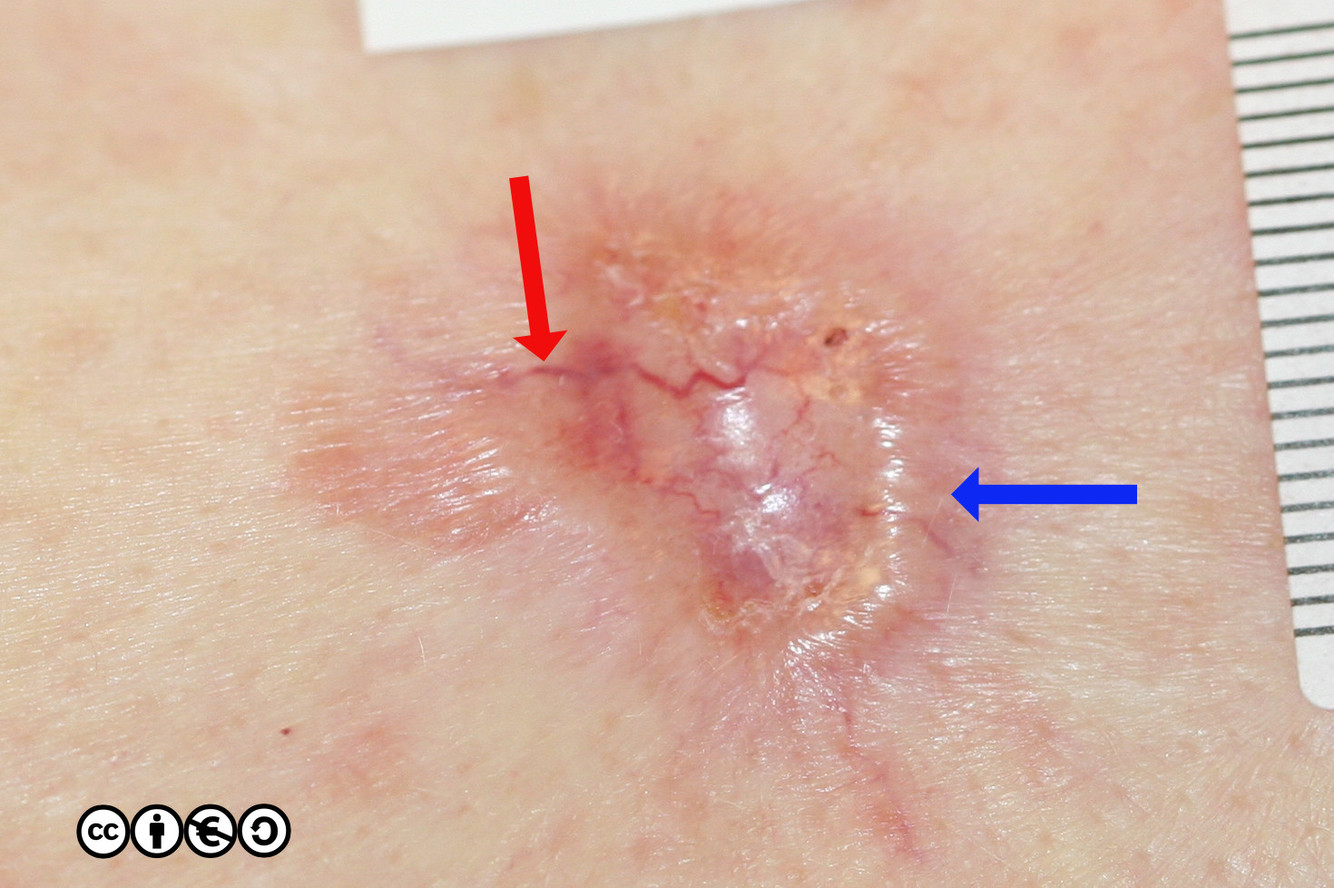
BCC
- Examination
- Location - On face in sun-exposed areas
- Pearly 1x1cm round asymetric smooth nodule with on the ‘right cheek’ with rolled a telangiectactic edge and central depression/ulceration
- smooth surface, soft consistency, - not erythematous/tender/tethered/pulsatile/expansilte
- Natural Hx
- Commonest skin cancer
- 2nd to sun exposure
- Slow growing locally destructive: “rodent ulcer”
- Metastasis is rare ++ -> Lymphatic spread
- Mx
- Superficial: curettage
- Deep: surgical excision ± radiotherapy
often in skin type 1-2
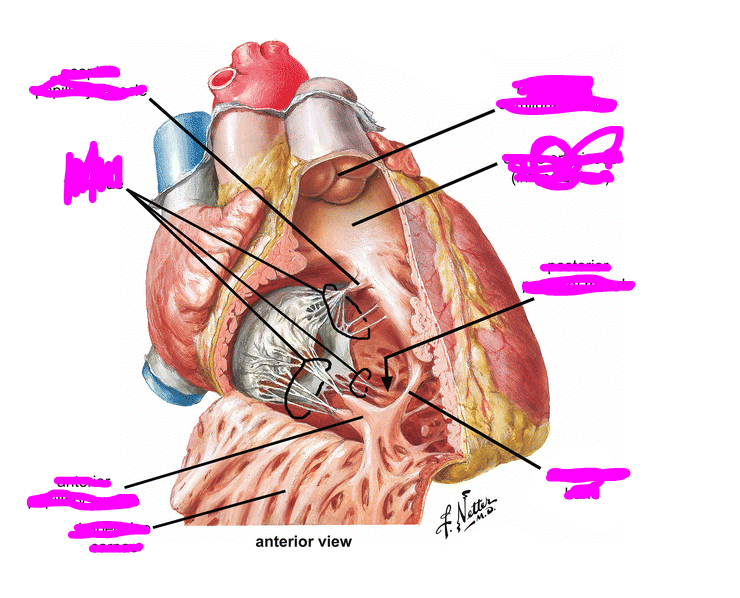
- SVC & IVC & Coronary sinus
- Right atrium - crista terminalis (ridge in lateral wall from SVC to IVC), with fossa ovalis (remnant of F.ovale), perctinate muscles (ant surface), Right aterial appendage.auricle
- Tricuspid valve
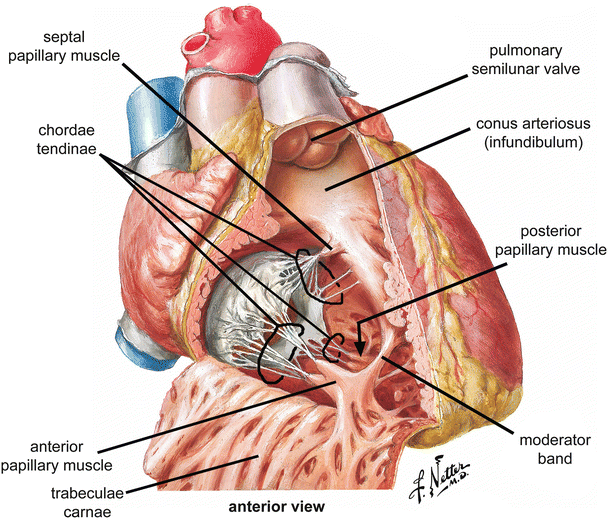
- Right ventricle - lined with trabeculae carne, moderator band
- Pulmonary semilunar valve
- Pulmonary artery
Azygous vein anatomy
SINGLE
Runs up the right side of the thoracic verterbral column
Union of ascending lumbar veins with the RIGHT subcostal veins at the level of the 12th thoracic veterbra
Pass through aortic opening of diaphragm (T12)
Ascends within posterior mediastinum - draining from the posterior intercostal V (5-10) & R.superior IC vein (2/3/4) (note right supreme IC drains into R BC Vein)
At level of T4 arches across the right pulmonary hilum
Drains into SVC just before it pierces the pericardium
Tributaries:
Hemi-azygous - asc lumbar V with left subcostal V, pierces left crus of diaphrage, asc on left side of thoracic verterbral colmn, draining IC T11/10/9 - DRAINS into azygous at T8.
Accesory hemi-azygous - Right IC T5-8 (LEFT superior IC V (T2/3/4) (LEFT supreme ICV -> LEFT brachiochephalic) - DRAINS into azygous at T8
What is the role of chordae tendinae
(Connect to 2 leaflets of LEFT MV AVV and 3 leaflets of RIGHTTV AVV)
Prevent AV prolapsing during ventricular contraction to prevent AVV regurgitation into atrium
Damage - MI, physical trauma, infective endocarditis, aortic stenosis
Branches of ascending aorta
Left ventricle aortic orifice c.2 inches
Left and right aortic sinuses -> left and right coronary arteries
Branches of aortic arch
- Brachiocephalic trunk: The first and largest branch that ascends laterally to split into the right common carotid and right subclavian arteries. These arteries supply the right side of the head and neck, and the right upper limb.
- Left common carotid artery: Supplies the left side of the head and neck.
- Left subclavian artery: Supplies the left upper limb.
Descending thoracic aorta
- Bronchial arteries: Paired visceral branches arising laterally to supply bronchial and peribronchial tissue and visceral pleura. However, most commonly, only the paired left bronchial artery arises directly from the aorta whilst the right branches off usually from the third posterior intercostal artery.
- Mediastinal arteries: Small arteries that supply the lymph glands and loose areolar tissue in the posterior mediastinum.
- Oesophageal arteries: Unpaired visceral branches arising anteriorly to supply the oesophagus.
- Pericardial arteries: Small unpaired arteries that arise anteriorly to supply the dorsal portion of the pericardium.
- Superior phrenic arteries: Paired parietal branches that supply the superior portion of the diaphragm.
- Intercostal and subcostal arteries: Small paired arteries that branch off throughout the length of the posterior thoracic aorta. The 9 pairs of intercostal arteries supply the intercostal spaces, with the exception of the first and second (they are supplied by a branch from the subclavian artery). The subcostal arteries supply the flat abdominal wall muscles.
Anatomy of the spleen
Lies in space of taube LUQ opposes the diaphragm
surface anatomy - Left 9-11th ribs
Hilum - splenic artery (coeliac access) and vein (merges in IMV and confluence with SMV -> portal V)
Red and white pulp - red = filtration of RBC / white = acitve immune
Function: filtration of encapsulated organisms, recycling of blood cells, storage of platelets. major lymphoid system - procude lymphocytes and key mediators incl opsonins
Splenic artery
Branches to the pancreas - multiple branches serving the pancreas including greater pancreatic artery and dorsal pancreatic artery.
short gastric - upper part of greater curvature of the stomach and fundus of the stomach
left gastroepiploic - middle of greater curvature of the stomach
posterior gastric - posterior of stomach, gastric region superior to the splenic artery
Branch of the coeliac trunk - posterior to stomach - linorenal ligamanet to the spleen
Pathology report - owl eye sign
Reed Sternberg cells
Hodgkins lymphoma
- M>F 2:1
- 20-29 and >60
- Assoc EBV
- Lymphadenopathy - painless, asymmetric, contiguous spread to adj LN, cervical nodes (90%), ETOH induced LN pain. Mediastinal LN-> SVC/bronchial obstruction (mass effect)
- B symptoms - feve, night sweats, Wt loss
- itch, pel epstein fever, hepato/spleno megaly
- Ix - FBC, film, ESR, LFT, LDH, Ca, LN excision/FNA (Reed sternberg), stage (CT chest abdo pelvis), BM Bx if B symptoms/stage 3/4
- Ann arbour staging:
- single LN region
- >2, same side of diaphragm
- 2 sides of diaphragm
- Beyong LN -> liver/BM
- +B if consitutional Sx
- Mx - chemo/radio, ABVD regimen, BMT
What structures to preserve during splenectomy?
Tail of pancreas
Left lobe of liver
Left hemi Diaphragm
Left kidney
Splenic hilum
Consequence: at risk of sepsis from encapsulated organisms - pneumococca/hib/meningococcus, blood changes -> howell jolly bodies
Surface marking of the gallbladder
9th rib
Referred shoulder tip pain
Pain @ site seperate to the location of the painful stimulus
Diaphrag = phrenic nerve (C3/4/5)
Supraclavicular nerve = C3/4 = superficial sensory to skin above/below the clavicle i.e. shoulder tip
- diaphragmatic or peridiaphragmatic lesions e.g. gallbladder, renal calculi, splenic injury or ruptured ectopic pregnancy.

-
Anatomy pearls43
-
DrE: Lumps and bumps29
-
DrE: Head and Neck37
-
DrE: Breast16
-
DrE: Abdomen50
-
DrE: Herniae & scrotum42
-
DrE: Stoma7
-
DrE: Ortho1
-
DrE: Vascular46
-
DrE: Ortho Hands7
-
DrE: Neuro98
-
DrE: Upper limb nerves29
-
Kanani: Surgical Critical Care84
-
Cracking: Applied surgical anatomy106
-
201927
-
Random2
-
Parker144
-
Parker Definitions50
-
CL Pathology50
-
CL Critical care26
-
CL Anatomy107
-
202020



