ASA Grades
1 - normal healthy individual
2- mild systemic disease that does not limit activity
3- severe systemic disease that limits activity but is not incapacitating
4- incapacitating systemic disease which is constantly life threatening
5- moribund, not expected to survive 24hrs with/without op
c.50% of elective patients = ASA 1
Op mortality = <1 in 10,000
POSSUM Scoring
Physiological and Operative Severity Score for the enUmeration of Mortality and Morbidity
developed in a general surgical pop and has been adapted for vascular, colorectal and oesophago-gastric patients
12 physiological and biochemical variables + 6 operative variables => estimated mortality risk
risk adjusted assessment of surgical quality and accurately predicts 30 day morbidity and mortality
Elective surgery grades
graded in accordance to the degree if stress it will cause
- Minor - e.g. excision of skin lesion
- Intermediate - e.g. inguinal hernia repair
- Major - e.g. hysterectomy
- Major plus - e.g. colonic resection
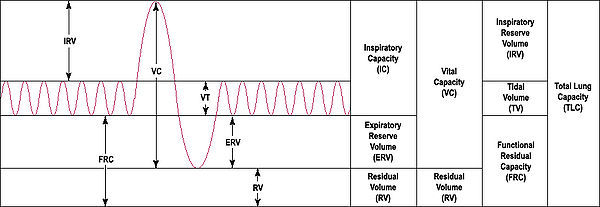
The FEV1/FVC ratio is the ratio of the forced expiratory volume in the first one second to the forced vital capacity of the lungs.
The normal value for this ratio is above 0.75-85, though this is age dependent.
<0.70 = airflow limitation = obstructive pattern
restrictive lung diseases often produce a FEV1/FVC ratio which is either normal or high with a reduced FVC
CV disease scoring e.g. Revised cardiac risk index
- High-risk surgery
- IHD
- Hx of CCF
- Hx of CVD
- Insulin therapy for GM
- Renal impairment
risk of major cardiac event 0.5% for zero points, 10% for more than 2 points
Risk factors for post op MreI
elective op should be deferred for 6mo post MI
Risk for post op re-infarction:
- Short time since previous infarct
- 0-3mo = 35%
- 3-6mo = 15%
- >6mo = 4%
- residual major coronary vessel disease
- prolonged/major surgery
- impaired myocardial function
c.60% post op MIs = silent
Mortality = c.40%
Complications associated with obesity:
- CV: HTN, IHD, CVD, DVT, difficult vascular access
- Respiratory: Difficult airway, difficult mechanical vent, chronic hypoxaemia, OSA, Pulmonary HTN, Post op Hypoxaemia
- Other: GORD, Abn liver runction, insulin resistance, T2DM, poor post op pain control, unpredictable pharmacological response
Complications associated with CKD:
- electrolyte disturbances
- impaired acid-base balance
- anaemia
- coagulopathy
- impaired autonomic regulation
- protection of veins, shunts, fistulas
When obstaining informed consent patients should be informed of:
- Detailed of diagnosis
- Uncertainties about the diagnosis
- Options available for treatment
- Proposed purpose of procedure
- Prognosis with and without procedure
- Likely benefits and probability of success
- possible side effects
- reminder that patient can change their mind at any stage
- reminder that patients have the right to a second opinion
All Qs should be answered honestly, info should not be witheld which might influence the decision, patient should not be coerced, person who obtains consent must be suitably trained and qualified, they must have sufficient knowledge of the proposed Rx and risks, good practice for this to be the physician provising the treatment
Consent forms 1-4
- Consent Form 1 - Patient agreement to investigation or treatment
- Consent Form 2 - Parental agreement to investigation or treatment
- Consent Form 3 - Patient/parental agreement to investigation or treatment (procedures where consciousness not impaired)
- Consent Form 4 - Form for adults who are unable to consent to investigation or treatment
Consent forms 5-9
- Consent Form 5 - Patient Agreement to Anti-cancer treatment
- Consent Form 6 - Supplementary Consent for Gifting of Tissue
- Consent form 7 - Consent to photography and conventional or digital video recordings form.
- Consent Form 8 - Consent for hospital post mortem examination on an adult
- Consent Form 9 - Consent for hospital post mortem examination on a baby or child
Consent in children
at 16yrs a child can be presumed to have capacity to decide on treatment
below the age of 16 a child may have the capacity to decide depending on their ability to undeerstand what the treatment involved (Gillick)
If a competent child refuses treatment a person which parental responsibility may authorise treatment which is in the child’s best interest
Mental capacity act
under the MCA a person is presumed to make their own decisions ‘unless all practical steps to help him/her have been taken without success.
Incapacity is not based on the ability to make a wise/sensible decision to determine
- is there an impairment or disturbance in the function of their mind/brain or an inability to make decision
A person is unable to make a decision is they:
- cannot understand the information relevant to the decision
- they are unable to retain that information
- they are unable to use/weigh that information as part of the decision making process
- they are unable to communicate the decision
If, having taken all practical steps to assist someone, it is concluded that a decision should be made for a person the decision must be made in that person’s best interest therefore…
- do not make assumptions on the basis of age, appearance, condition or behaviour
- consider all relevant circumstances
- consider whether/when the pt will have capacity
- support the pt’s participation in any acts/decisions made for them
- do not make a decision about life sustaining Rx motivated by a desire to bring about death
- consider the pts expressed wishes, feelings, beliefs, values
- take into account the views of others with an interest in the person’s welfare, their carers and those appt to act on their behalf
What risk assessment models fo you know?
- Goldman cardiac risk index
- parsonnet score
- POSSUM
- Injury severity score
- Revised trauma score
- APACHE I, II, III
WHO Safe surgery check list
- address preventable human error through a series of checks: sign in, time out, sign out, prior/during/after surgical procedure
- aims to strengthen the commitment of clinical staff to address safety issues within the surgical setting
- incl - improving anaesthetic safety practices, ensure correct site surgery, avoid surgical infections, improves communication within teams
- shown to reduce risk of complications and death
What is pharmacokinetics
study of the bodily absorption, distribution, metabolism and excretion of drugs
What is pharmacodynamics
study of the biochemical and physiological effects of drugs and their mechanisms of actions
General anaesthesia
drug induced state of unresponsiveness usually achieved by the use of a combination of agents
3 phases: induction, maintenance, reversal and recovery
GA: premedications
- Amxiolysis - benzodiazepines, phenothiazines
- analgesia - opiates, non-steroids anti-inflammatories
- Amnesia - benzodiazepines, anticholinergics
- Antiemetics - anticholinergics, antihistamines, 5HT antagnosits
- Antacids = alginates, PPIs
- Anti-autonomic - anticholinergics, B Blockers
- Adj - bronchodilators, steroids
Induction agents
IV, highly lipid soluble, rapidly cross BBB, distributed to organs with high bld flow e.g. brain, rapidly redistributed -> rapid onset/recovery
- thiopentone - short acting barbituate
- depresses myocardium and in hypovolaemic pt -> profound hypotension
- propofol - most commonly uses
- short 1/2 life, causes hypotension
- used as an infusion for maintenance
- no analgesic properties, used with opioids e.g. fentanyl
What is RSI
Rapid sequence induction = rapid induction of anaesthesia
Cricoid pressure -> reduces the risk of aspiration
pressure is released once definitive airway is achieved
e.g. thiopentone & suxamethonium
Pt who are not fastes/ Hx of GORD/Intestinal obstruction/pregnancy/intra-abdo pathology
Benefits/complications of ET airway
ET = placement of a tube into the trachea to maintain a patent airway
- Benefits:
- Protection against aspiration and gastric insufflation
- Effective ventilation and oxygenation
- Facilitation of suctioning
- Delivery of anaesthetic and other drugs
- Complications:
- Failed intubation -> hypoxaemia
- Right mainstem inbutation
- Oesophageal intubation
- trauma from laryngoscope to teeth/soft tissues
- Vocal cord damage
- Aspiration and post intubation pneumonia
- pneumothorax
- Hypotension and arrythmias
What are the 3 aspects of anaesthesia?
- Hypnosis - suppression of consciousness
- Analgesia - suppression of physiological responses to stimuli
- Relaxation - suppression of muscle tone and relaxation
Wha are the ideal features of an inhalational anaesthetic agent
inhaled volatile gases, lipid soluble hydrocarbons, high saturated vapour pressures
Potent, non-inflammable, non-explosive
- Easily administered
- boiling point above ambient temp
- low latent heat of vaporisation
- chemically stable with long shelf life
- compatible with soda-limb, metals, plastics
- non-flammable
- cheap
- Phamacokinetic
- low solubility
- rapid onset, offset, adj depth
- minimal metabolism
- predictable in all age groups
- Pharmacodynamic
- high potency- allows high FiO2
- High therapeutic index
- Analgesic
nb MAC - Minimal Alveolar Concentration = alveolar conc required to keep 50% of pop unresponsive

-
Anatomy pearls43
-
DrE: Lumps and bumps29
-
DrE: Head and Neck37
-
DrE: Breast16
-
DrE: Abdomen50
-
DrE: Herniae & scrotum42
-
DrE: Stoma7
-
DrE: Ortho1
-
DrE: Vascular46
-
DrE: Ortho Hands7
-
DrE: Neuro98
-
DrE: Upper limb nerves29
-
Kanani: Surgical Critical Care84
-
Cracking: Applied surgical anatomy106
-
201927
-
Random2
-
Parker144
-
Parker Definitions50
-
CL Pathology50
-
CL Critical care26
-
CL Anatomy107
-
202020



