The changing atom
What was the first step of understanding the atom?
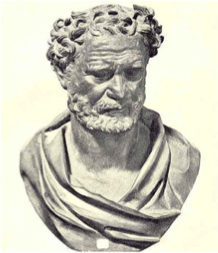
- The Greek philosoper Democritus developed the first idea of the atom.
- He suggested you could divide a sample of matter only a certain number of times.
- Eventually he believed you would end up with a particle that could not be split any further.
- He called this particle átomos
What was the second stage of understanding the atom?
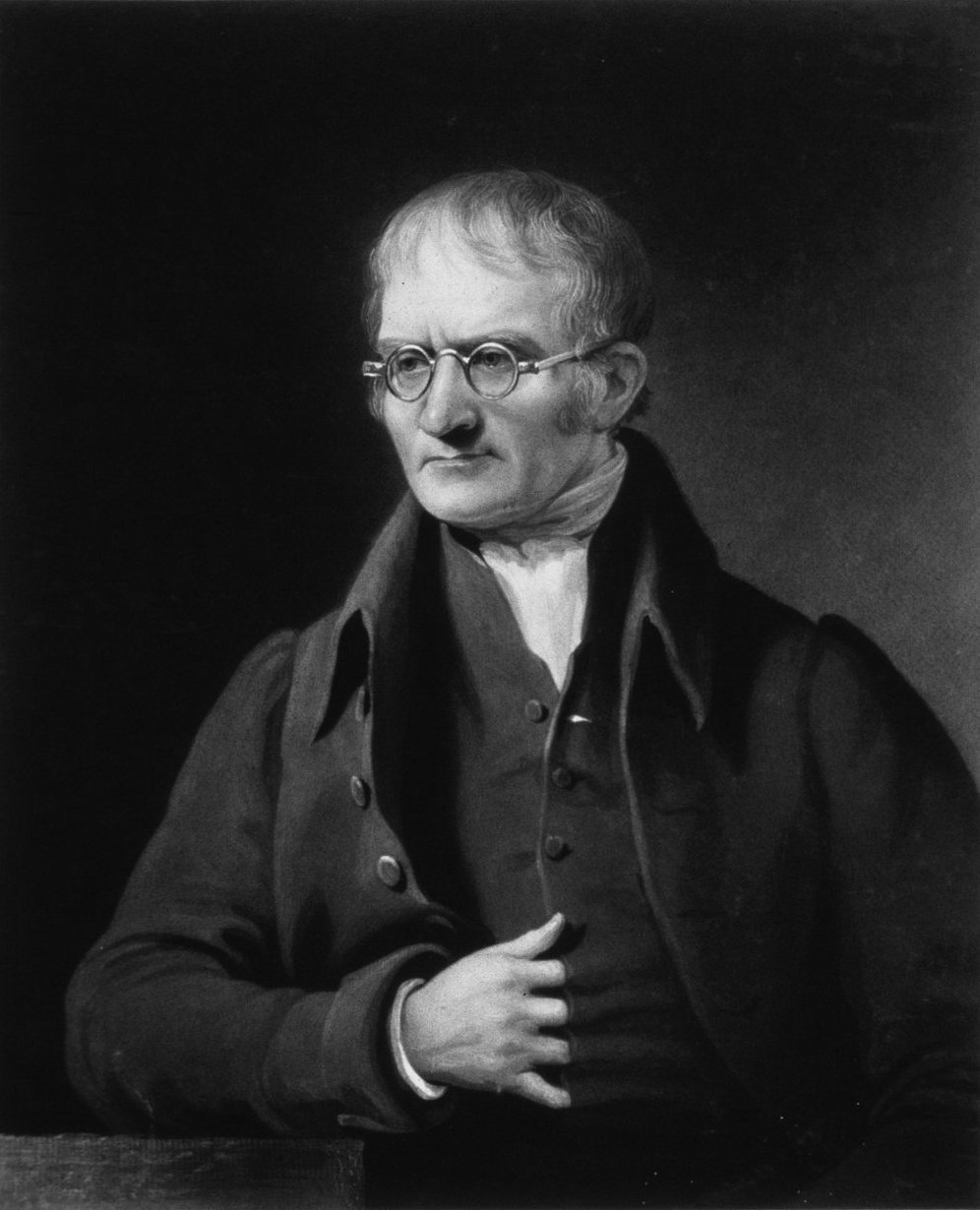
In the 1800s, John Dalton developed his atomic theory.
What was Daltons atomic theory?
- atoms are tiny particles that make up elements
- atoms cannot be divided
- all atoms of a given element are the same
- atoms of one element are different from those of every other element
What else did Dalton do apart from his atomic theory?
Dalton used his own symbols to represent atoms of different elements. He also developed the first table of atomic masses.
What discovery came after Dalton?
- 1897 - 1906 (you dont need to know exact dates for the changing atom)
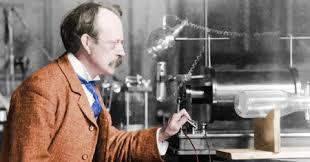
- Joseph John (J.J.) Thompson descovers electrons.
- Scientists had recently discovered cathode rays, which were emitted from cathode ray tubes.
- Thompson discovered that cathode rays were a stream of particles with the following properties.
- They had a negative charge
- They could be deflected by both a magnet and an electric field.
- They had a very, very small mass.
What did J.J Thompson conclude?
Cathode rays were, in fact, electrons. Thomson concluded that they must have come from within the atoms of the electrodes themselves. The idea that an atom could not be split any further, proposed by ancient Greeks and by dalton, had ben disproved.
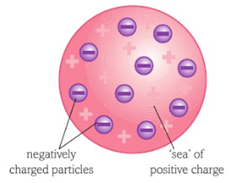
- Thomson prposed that atoms are made up of negative electrons moving in a sea of positive charge
- The overall negative charge is the same as the overall positive charge.
- It is often referred to as the plum pudding model.
When was an advancement made on the plum pudding model?
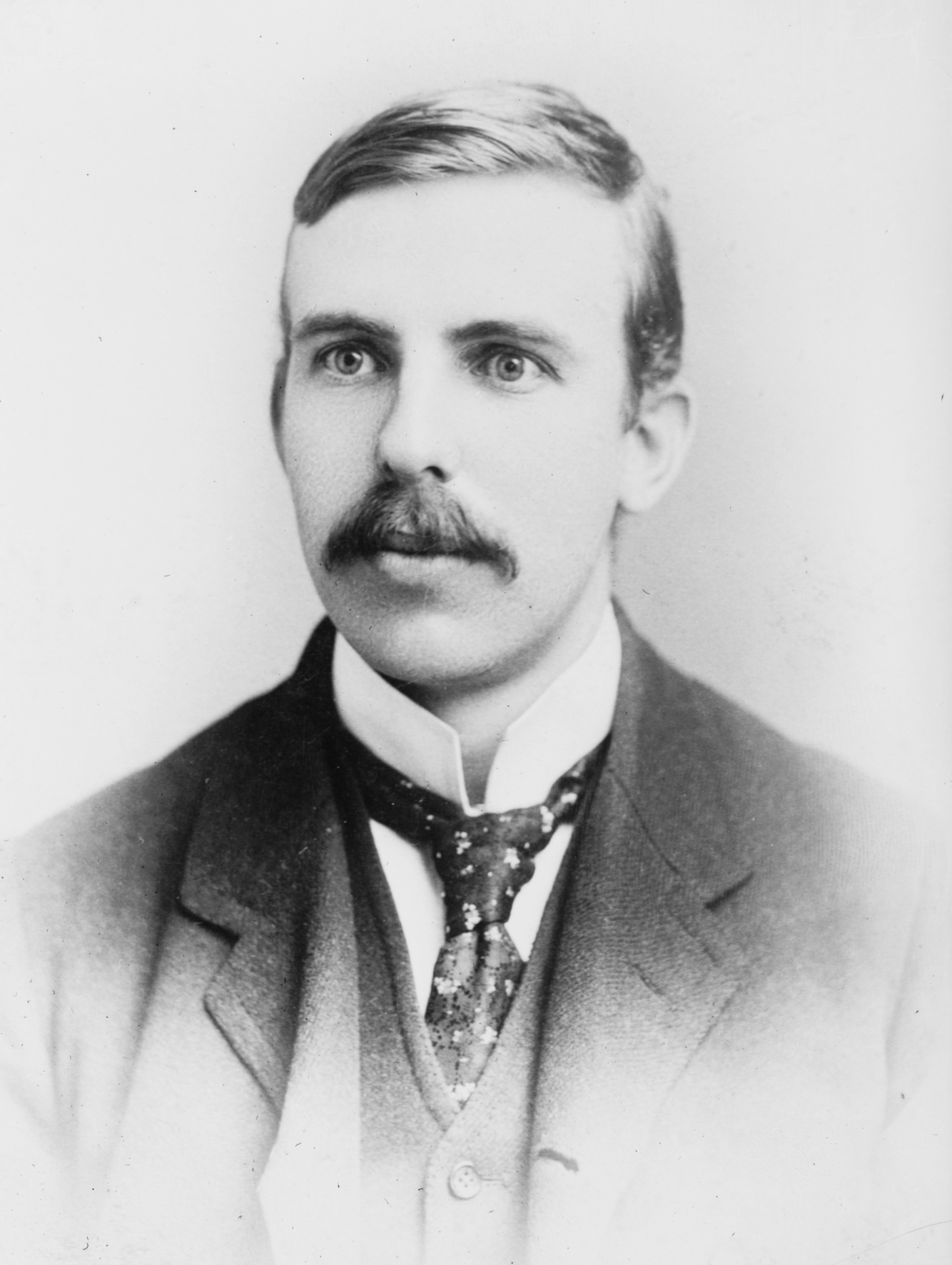
1909-11 - Ernest Rutherford’s gold leaf experiment
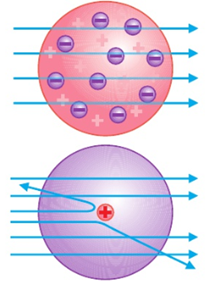
In 1909, Rutherford and to of his students, Hans geigner and Ernest Mardsten, carried out an experiment where they directed alpha-particles towrads a sheet of very thin gold foil. They measured any deflection (change in direction) of the particles. Rutherford calculated that a plum-pudding atom would hardly deflect alpha particles at all.
What were the results of Ernest Rutherfords’s gold-leaf experiment?
- Most of the particles, as expected, were not defelected at all.
- However, a small percentage of particles were deflected through large amgles.
- A very few particles were actually deflected back towards the scource.
What did Ernest Rutherford propose in 1911 based on their results?
- The positive charge of an atom and most of it’s mass are concentrated in a nucleus, at the centre.
- Negative electrons oribit this nucleus, just as planets orbit the sun,
- Most of an atom’s volume would be the space between the tiny nucleus and the orbiting electrons.
- The overall positive chrage and neagative charges must balance.
What discovery came after the gold-leaf experiment
1913 - Niels Bohr’s planetary model and Henry Moseley’s work on atomic numbers
Describe Niels Bohr’s planetary model.
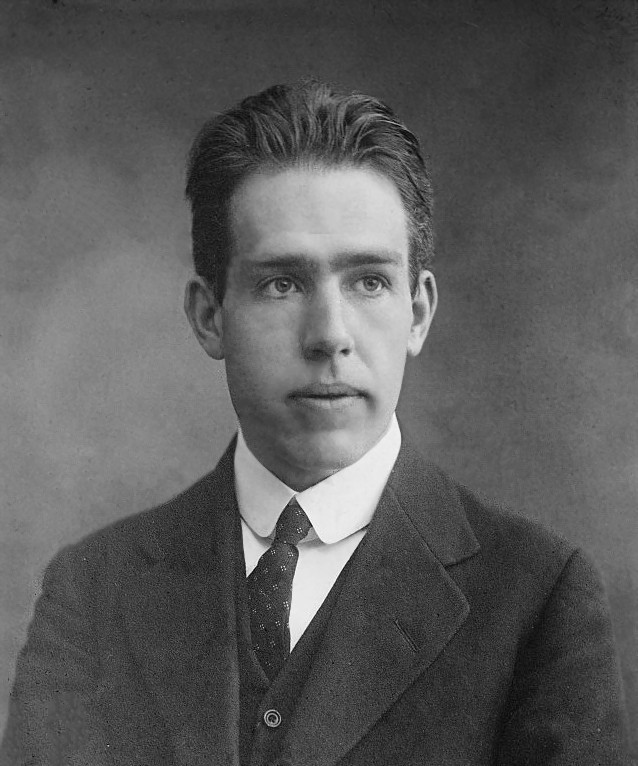
In 1913, the Danish physicist Niels Bohr altered Rutherford’s model to allow electrons to follow only certain paths. Otherwise electrons would spiral into the nucleus. This was the planetary atom, inwhich electrons orbited a central nuclear ‘sun’ in shells.
What did Bohr’s model help to explain?
Some periodic properties such as;
- spectral lines in the emission spectra
- the energy of electrons at different distances from the nucleus.
What did Henry Moseley discover to help our understanding of the atom?
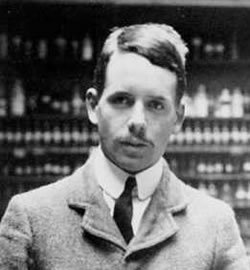
In the same year as Bohrs discovery, Henry Moseley discovered a link between X-ray frequencies and an elements atomic (i.e. its order in the periodic table). At the time, moseley couldn’t explian this.
What discovery towards understanding the atomic number happened after Henry Moseley and Niels Bohr’s discovery?
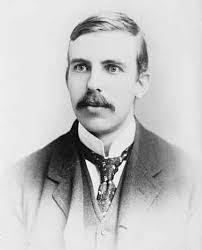
1918 - Rutherford discovers the proton
Rutherfords discovery of the proton was able to explain Moseley’s finding that an atom’s atomic number was lined to X-ray frequencies. We now know that the atomic number tells us the number of protons in an element’s atom.
What discovery towards understanding the atomic number happened after rutherford discovers the Proton?
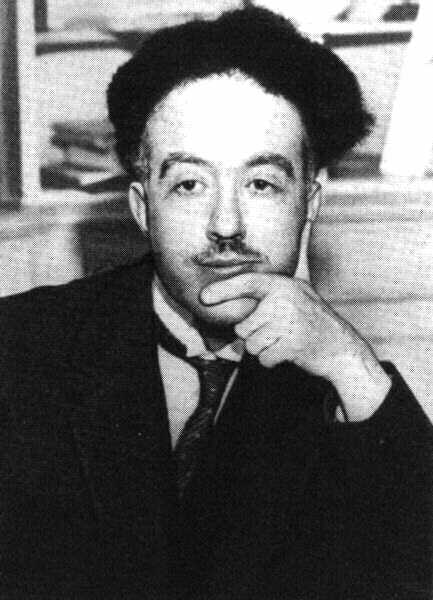
In 1923, the french physicist Louis de Brogile suggested that an electron had wave-like propertiesin an atom. He also introduced the idea of atomic orbitals.
What discovery towards understanding the atomic number happened after Louis de Brogile’s suggestion?
In 1926, the Austrian physicist called Erwin Schrödinger suggested that an electron had wave-like properties in an atom. He also introduced the idea of atomic orbitals.
What discovery towards understanding the atomic number happened after wave and particle behavior suggestions?
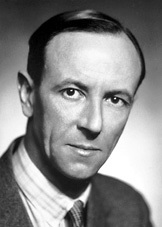
1932 - James Chadwick discovers the neutron.
James chadwick - and English physicist - observed a new type of radiation emmitted form some elements. He showed that this new type of radiation was made up of uncharged particles with approximately the same mass as a proton. These uncharged particles become known as neutrons, because they have no charge.
Describe the understanding of the atom in moden day.
It is now thought that protons and neutrons themselves are made up of even smaller particles called quarks. Our understanding of the atom is likely to progress with time as science advances futher and further.
What is the order of scientists in discovering the atom?
- fifth century - Democritus
- early 1800’s - Dalton
- 1897-1906 - J.J.Thomson
- 1909-11 - Ernest Rutherford
- 1913 - Niels Bohr
- 1913 - Henry Moseley
- 1918 - Rutherford
- 1923 - Louis de Brogile
- 1926 - Erwin Schrödinger
- 1932 - James Chadwick
What are ions?
Many atoms react by loosing or gaining electrons to form charged particles called ions. Ions are charged because they have unbalanced numbers of protons and electrons, and so the charges no longer cancel each other out.
Does the existence of isotopes effect reactions?
Chemical reactions involve electrons, neutrons make no diference to chemical reactivity.
What is relative isotopic mass?
is the mass of an atom of an isotope compared with one-twelfth of the mass of an atom of carbon-12. (for an isotope the relative isotopic mass is the same as the mass number. (for an isotope the relative isotopic mass is the same as the mass number)
What is the relative atomic mass?
is the weighted mean mass of an atom of an element compared with one-twelfth of the mass of an atom of carbon-12. (most elements contain a mixture of isotopes, chemists combine the contribution from each isotope to arrive at the relative atom mass. )
What is relative molecular mass?
The mass of a molecules is measured as the relatrive molecular mass by comparason with carbon-12. You can find the relative molecular mass by adding together the relative atomic masses of each atom making up a molecule.



