Marketing Planning
The process of identifying and creating marketing strategies in order to meet the business’ marketing objectives
What a Market Plan contains:
A marketing plan may contain:
- Details of the business’ marketing objectives
- Market Research - market share, main competitors etc.
- Sales forecasting
- Marketing budget
- Marketing strategies
Market Segmentation
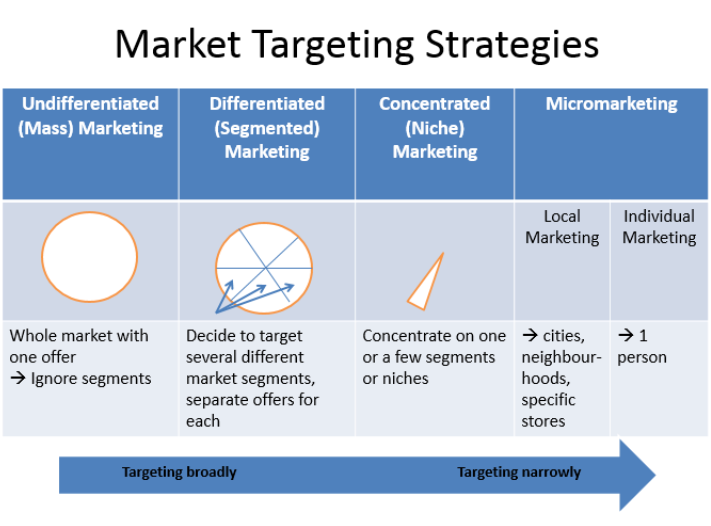
Breaking a market into different parts/ segments, where consumers in each segment have similar characteristics
Targeting different product to them
- E.g. Clothing market
- Male youth
- Sportswear
Target Market (Targeting)
Which market segments to aim for.
- One only or multiple?
Conduct market research to find the segment’s consumer needs
- Aim marketing at that segment
Mass Marketing
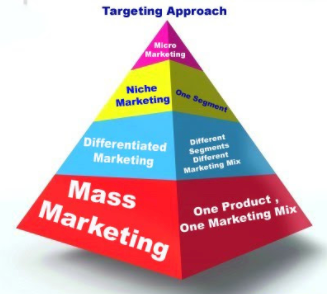
Selling a product to the whole market
No targeting of different segments and a standardized product
Not very common for a business to do this
Niche marketing
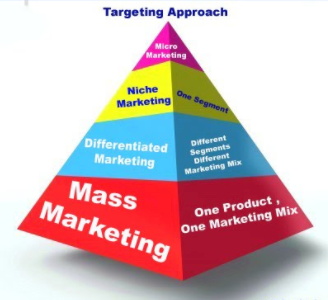
Targets a specific and well-defined segment of the market
Differentiated products
E.g. luxury, extreme sports, Euroshop
Differentiated Marketing
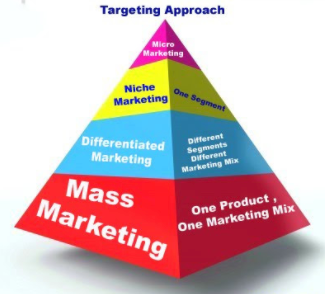
Target multiple segments, usually with different products for each segment
E.g. Colgate - Different types of toothpastes
Advantages of Niche Marketing
Better targeted marketing mix
Less competition and higher prices
Specialization and focus
Small firms can survive here
pros of Mass Marketing
More potential customers
Economies of scale
Higher brand recognition
Less risky (though this is questionable)
Demographic Segmentation
- Age
- Gender
- Race
- Ethnicity
- Religion
- Marital status
- Education
- Socio-economic class
Geographic Segmentation
Local tastes
Local culture
Climate
Urban/rural
Population density
Psychographic segmentation
Lifestyle
Hobbies and interests
Values
Status
Motivations
The importance of having a USP (Unique Selling Point)
Any aspect of the business that makes it STAND OUT or be differentiated from the competition.
E.g.
- The best
- Cheapest
- Slogan
- Only firm in the area
- Be first or last
- Ethical stance
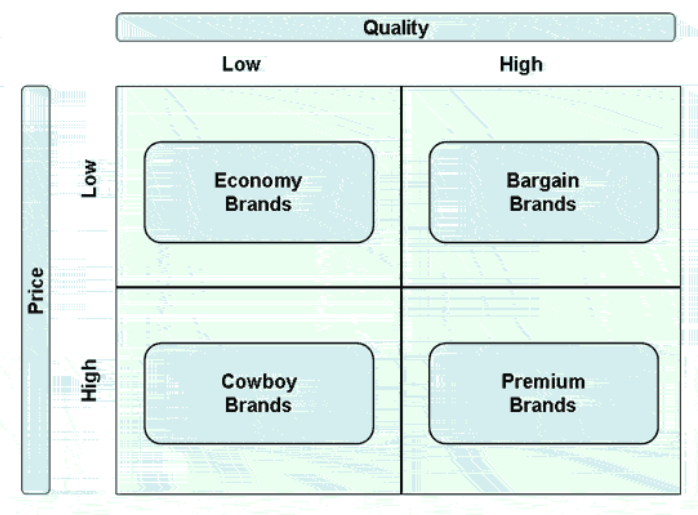
Product position matrix (PPM)
Identify 2 key characteristics important to consumers
Often price and quality
But could be anything that makes sense
The usefulness of PPMs
Gaining Information on the market
- To check what customer perceptions are of their brand
Finding gaps in the market
- Less competition when we enter the market segment
- Area on the PPM where no other businesses are
Repositioning
- Company moves on the PPM to an area where less competition is ot higher demand is.

-
2.18
-
3.1 Sources of Finance20
-
4.16
-
3.29
-
3.710
-
4.215
-
2.6 Industrial Employee Relations HL12
-
1.7 Organizational Planning Tools HL9
-
5.5 Production Planning HL8
-
5.1 The Role of Operations Management6
-
5.2 Production Methods4
-
2.4 Motivation22
-
4.4 Market research22
-
3.4 Final Accounts10
-
3.5 Profitability & Liquidity Ratio Analysis10
-
4.3 Sales Forecasting HL3
-
3.4 Final Accounts HL3
-
1.4 Stakeholders11
-
1.2 Types Of Organisations10
-
1.6 Growth and Evolution18
-
2.2 Organisational Structure17
-
5.4 Location8
-
2.3 Leadership and Management9
-
3.3 Break Even Analysis10
-
4.5 The 4P's20
-
4.8 E-Commerce4
-
2.5 Organisational Culture (HL)7
-
3.9 Budgets6
-
3.6 Ratio Efficiency Ratio Analysis7
-
1.1 Intro to BM9
-
AO3 Exam Skills0
-
1.3 Organisational Objectives14
-
1.5 External Environment2
-
3.8 Investment Appraisal5
-
4.6 Extended Marketing Mix of 7P's5
-
4.7 International Marketing7
-
5.3 Lean Production and Quality Management12
-
CUEGIS - Dominos16
-
5.66
-
5.7 Contigency planning and crisis management5



