What is the definition of an
- aneurysm
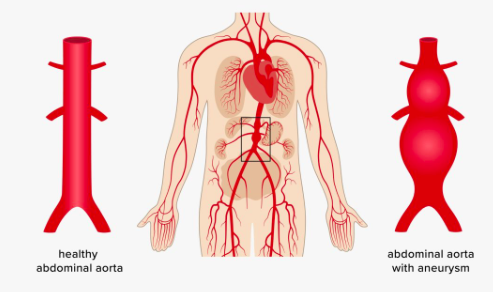
- abdominal aortic aneurrysm
- Aneurysm: abnormal dilatation of a blood vessel more than 50% its normal diameter
- AAA: dilatation of the AA greater than 3cm, every 8mm increase there is 34% more chance of death
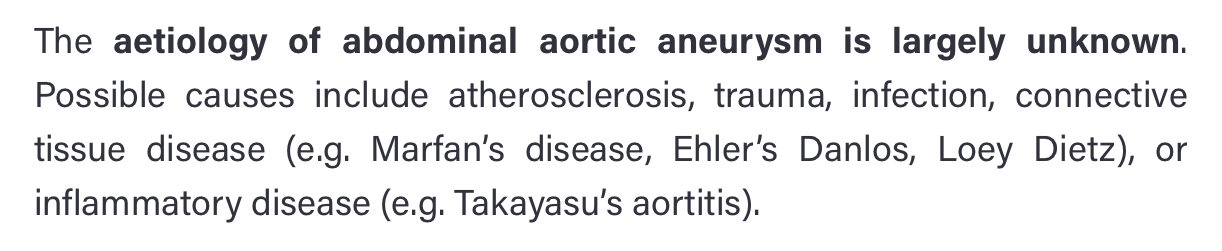
What are some risk factors for an AAA?
- Smoking
- HTN
- Hyperlipidaemia
- FHx
- Male
- Increasing age
- DM is negative risk factor
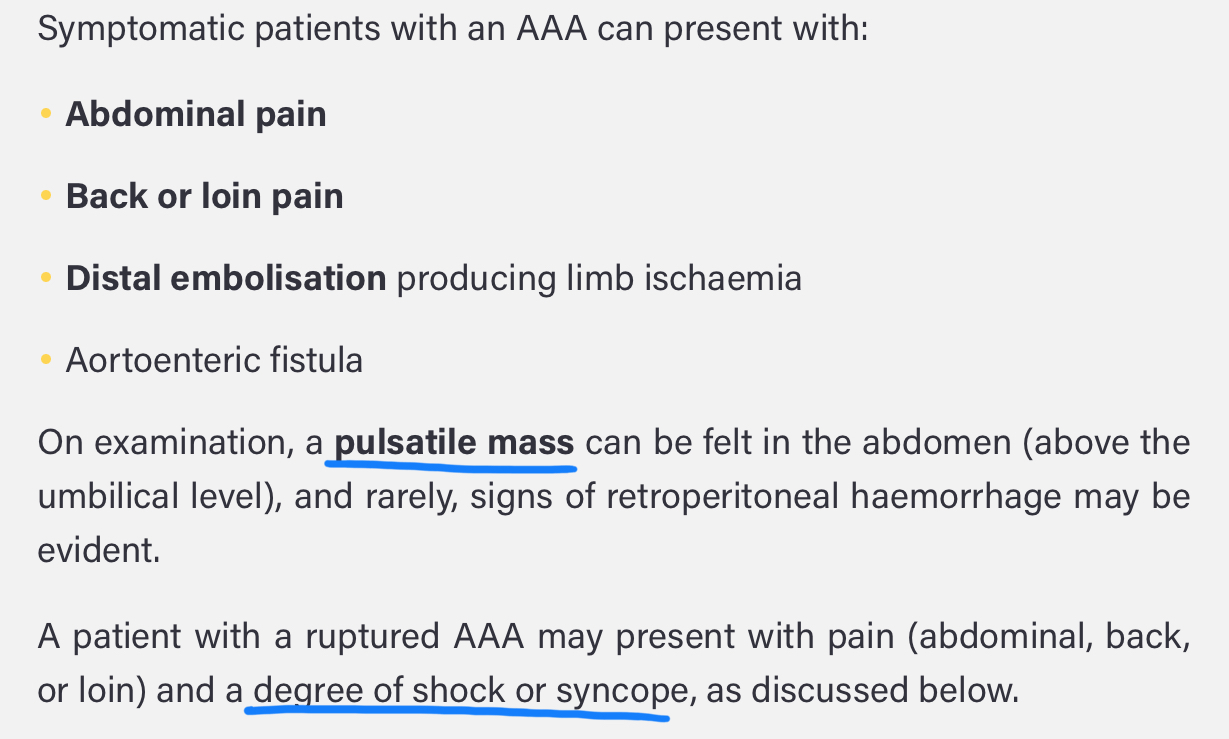
What are the clinical features of an AAA?
Asymptomatic: detected on screening or incidental finding
Symptomatic: see image
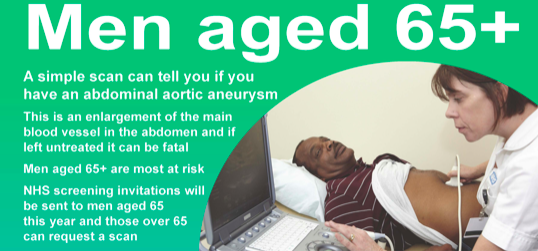
What is the AAA screening programme in the UK?
Abdominal US offered to men aged 65 once
If AAA detected either direct referral for surgery or 3-5 years surveillance before reaching threshold for elective repaire
What are the differentials with the pain produced in AAA?
- Renal colic (due to back pain and no other symptoms)
- IBD/IBS
- GI haemorraghe
- Appendicitis
- Ovarian rupture
- Splenic infarctions
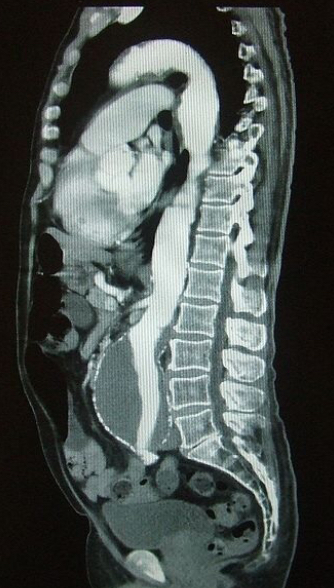
How do you investigate a suspected AAA (not ruptured)?
- US
- Once US has confirmed then CT scan with contrast with a threshold diameter of 5.5cm
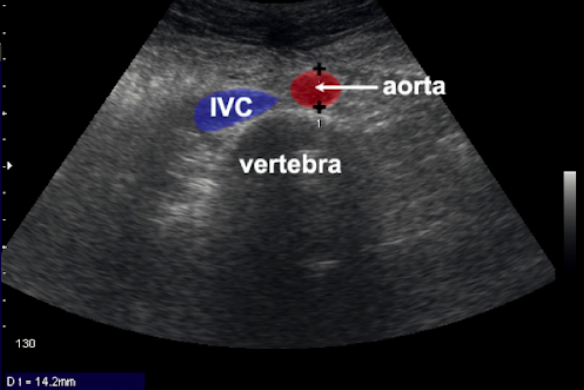
How are unruptured AAA’s managed?
Medical (<5.5cm asymptomatic)
- Monitor with Duplex USS (3-4.4cm yearly, 4.5-5.4 every 3 months)
- Smoking cessation to stop expansion and rupture
- Improve blood pressure control
- Aspirin and Statin therapy
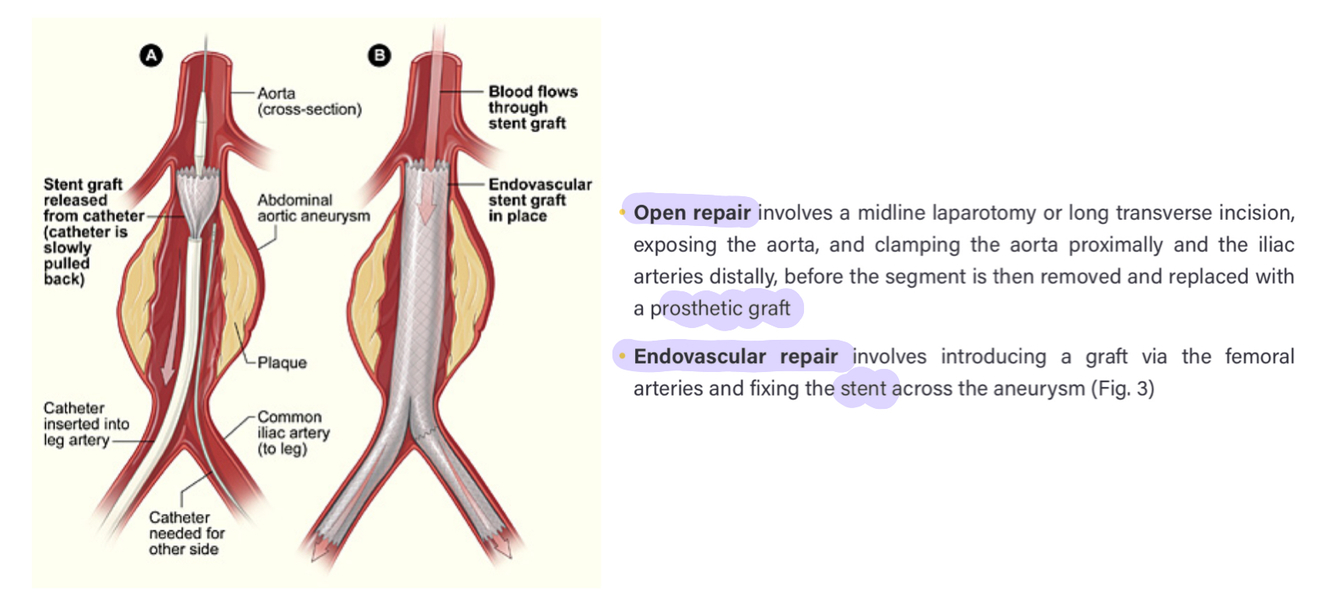
Surgical (>5.5cm, symptomatic or expanding >1cm a year)
- If >6.5cm tell DVLA
- If unfit patient can wait until 6cm
- See image for options
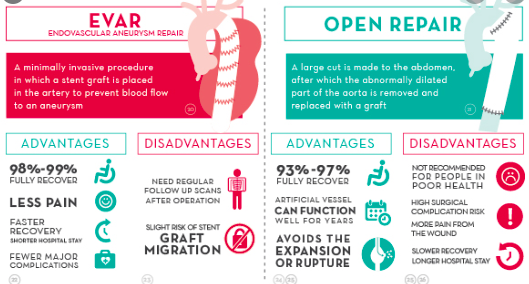
What would be preferred for an AAA repair, endovascular stenting or open repair?
- Both have similar outcomes
- Endovascular repair has better short term outcomes (30 day mortality and decreased hospital stay) but higher rate of reintervention and aneurysm leaking
- Young patient open repair preferred
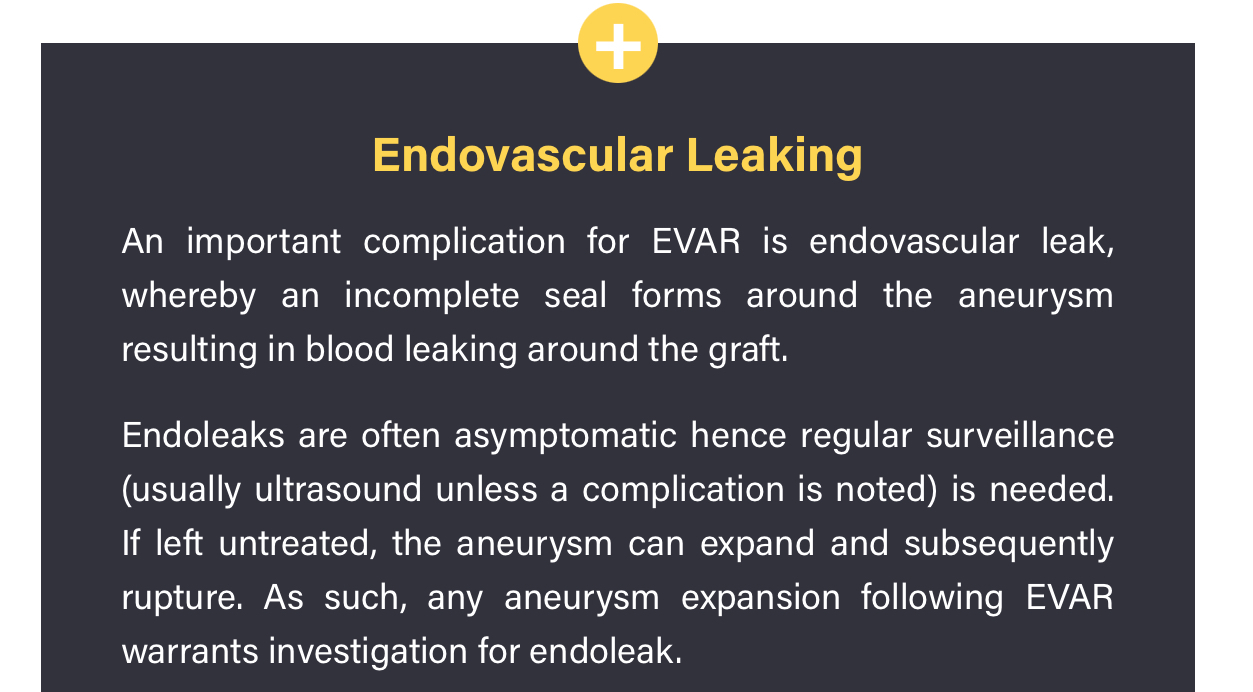
What are the complications of an AAA?
- Rupture
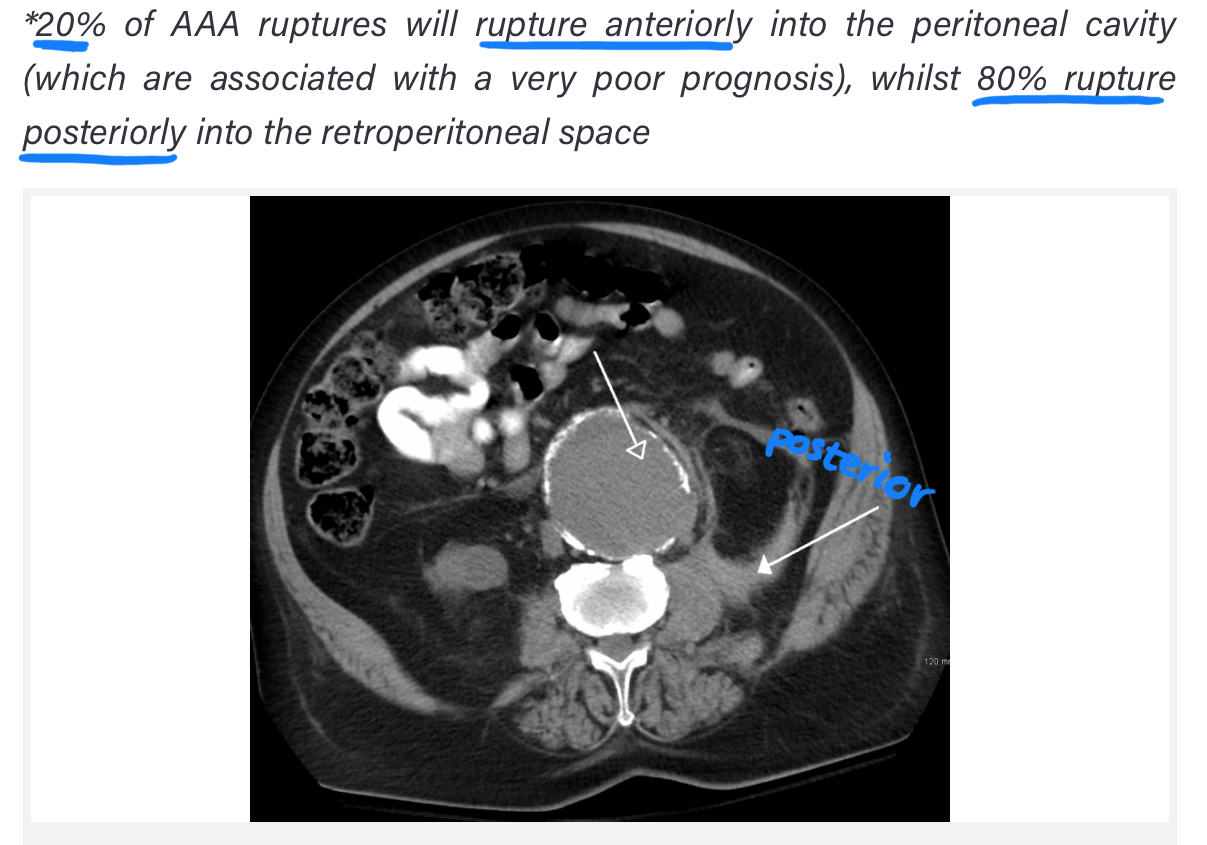
- Retroperitoneal leak
- Embolisation
- Aortoduodenal fistula
How do AAA ruptures present?
- Abdominal and back pain
- Syncope
- Vomiting
- Haemodynamicall compromised
- Pulsatile tender mass in abdomen
TRIAD OF RUPTURED AAA: flank or back pain, hypotension, pulsatile abdominal mass
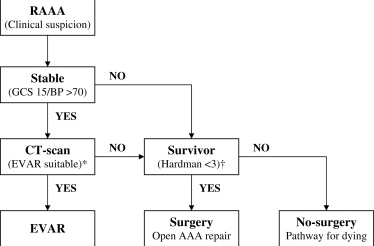
How is any suspected AAA rupture managed?
Immediate: high flow O2, IV access with 2 large bore cannulas, urgent boods (FBC, U+Es, Clotting), crossmatch for minimum 6 units
Shock treatment: try to keep BP<100 as raising BP could dislodge any clot and cause further bleeding
Transfer to local vascular unit: if unstable immediate theatre for open surgical repair, if stable CT angiogram to determine if suitable for endovascular repair
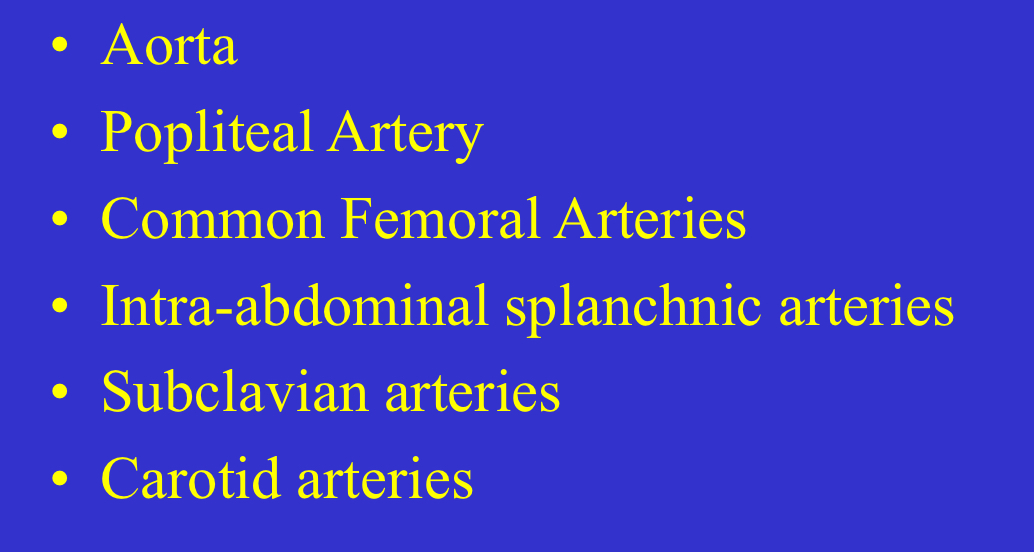
Where are the common locations for aneurysms in the body?
AAA most commonly infrarenal