What’s the other name for TYPE A adverse drug reactions?
Type A = augumented
What’s the other name for Type B ADR?
Type B = bizzaire/ idiosyncratic
What’s type A reactions?
Type A (augmented)
- reactions that are predictable from the known pharmacology
- often represent an exaggeration of pharmacological effect of the drug
What are Type B reactions?
Types B (idiosyncratic/ bizarre)
- unpredictable from the knowledge of the basic pharmacology of the drug
- show no dose-response relationship
May be : chemical, biochemical, immunological -> these complex processes influence the reaction
Phases in drug development
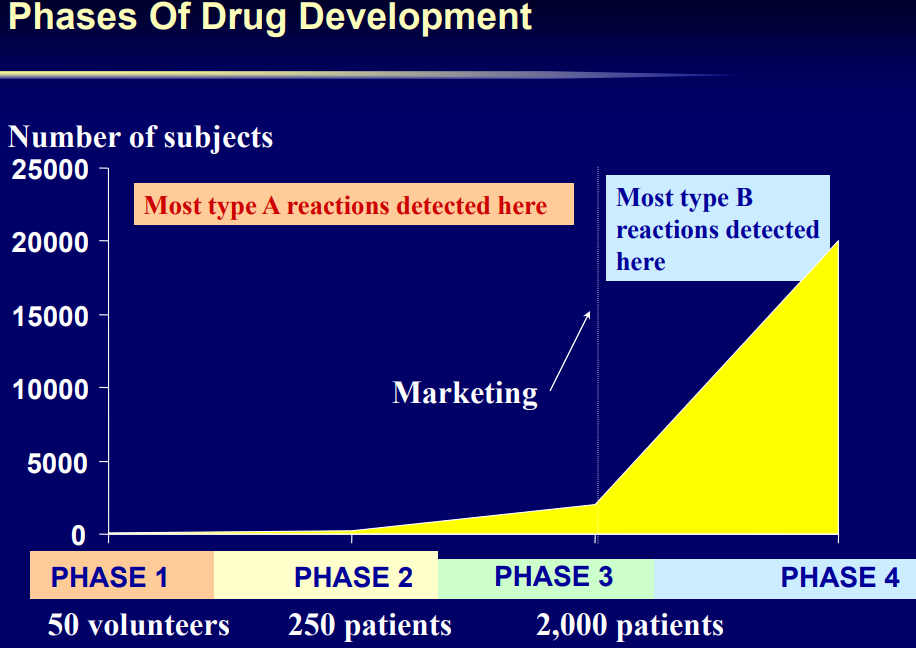
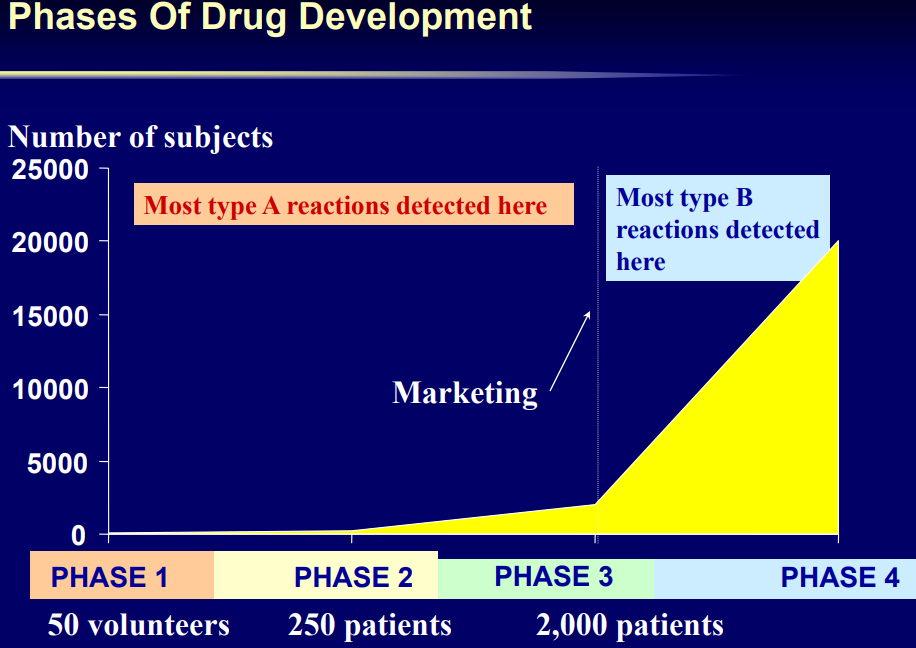
Phase I - healthy volunteers ->to understand bioavailability of the drug
Phase II - inpatient -> to identify dose, kinetics and dynamics of the drug
Phase III - patients -> 1st efficacy and safety studies (how effective under ideal condition) with exclusion and inclusion criteria (comparison to placebo)
When the drug company can apply for the license for the drug?
Once the drug got through phase 1, 2 and 3
Where can this be usually detected in drug development process:
Type A reactions
Type B reactions
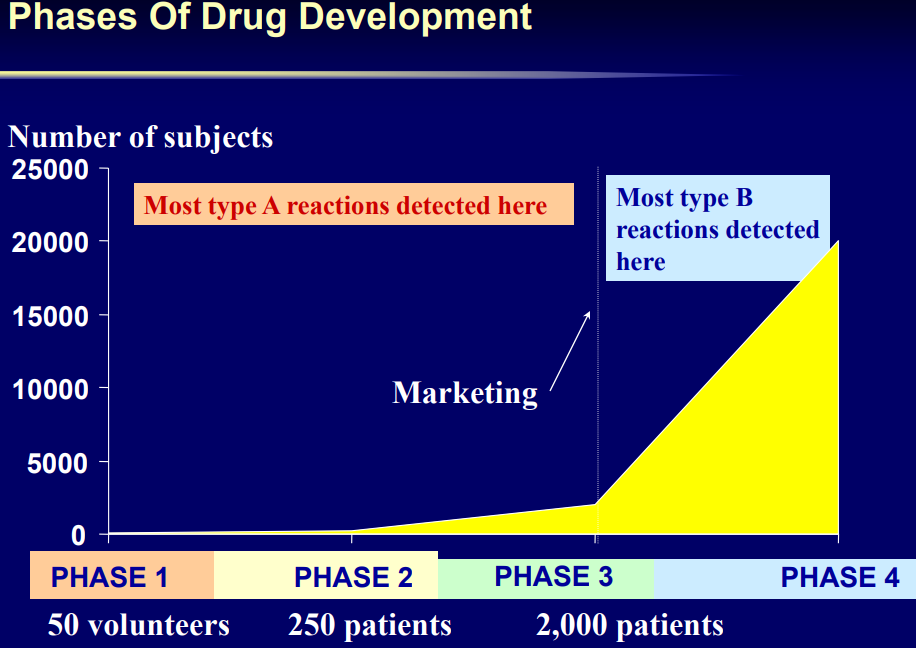
Types A -> usually during phases 1 - 3
Type B -> usually during phase 4 *
* only with large exposure, when drug is on the market
What’s ‘role of 3’ in pre-marketing detection of the ADR?
Role of 3 in ADR
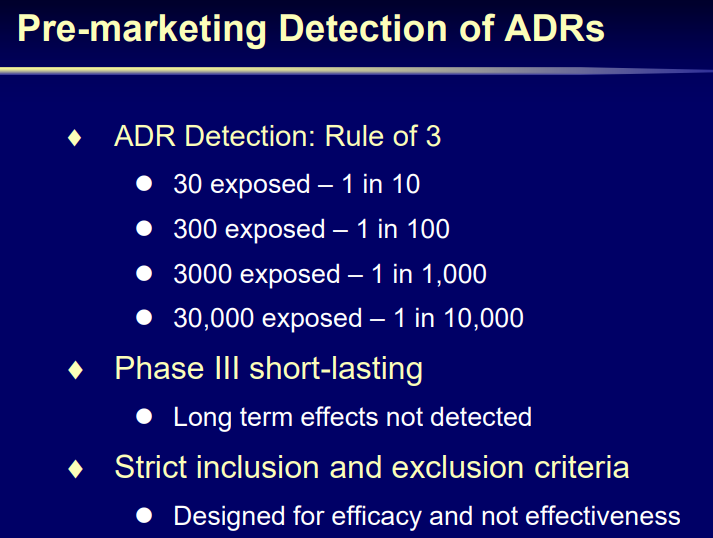
- if 30 exposed persons -> 1 in 10 show ADR
- if 300 exposed -> 1 in 100 will show ADR
- 3000 espossed -> 1 in 1000 show ADR
- 30 000 -> 1 in 10 000 show ADR
* Not all ADR will show up in the early phases of clinical trials (some rare reactions detected only with large exposure - when clinically available)
Are the long term effects detected in phase III pre-marketing testing?
Not, as it is short-lasting
What phase III for?
Phase III is for efficacy
How to recognise ADR?
When a patient develops new symptoms
T -> temporal relationship -> does the effect occur after the drug has started? (most ADR occur in first 3 months after the drug started)
R - re-challenge -> if you give same drug, same dose again -> pt will develop symptom again (done in mild ADR only)
E - exclusion of other causes -> to check if the symptom is not due to other cause
N - novelty -> check if someone else had same drug reaction; but maybe you will be first to identify the ADR
D - de-challenge -> dose reduction/ withdrawal (would reduction of drug improve the effect?)
What’s the yellow card?
To report suspected ADR -> MHRA* collects the data and assess the safety of the drug
MHRA = Medicine and Healthcare products Regulatory Agency
What is ADR with Warfarin?
- MoA
- antidote
Warfarin -> May cause hematoma
*higher the dose = higher risk of bleeding
- MoA: warfarin prevents vit K -> vitamin K- dependant clotting factors (2, 7, 9 and 10) are decreased
- antidote: vitamin K
What factors will determine the dosage of Warfarin )?
Warfarin doses
- elderly -> lower doses -> this is because the liver get smaller with age
- weight increase -> higher doses
- gender
- age
- other meds
- nutritional status
- genetics
*to determine the dose -> we check INR
Direct Oral Anticoagulant
- elimination depends on what organ?
DOAC
- excreted by the kidney
Therefore in kidney impairment -> need to reduce the dose due to risk of bleeding
What is MoA of DOCS?
- DOACs (Apibaxan and ‘…baxans’) -> Xa inhibitor
- Dabigatran IIa (antithrombin)
What type of ADR Toxic Epidermal Necrolysis is?
TEN is type B ADR reaction
Toxic Epidermal Necrolysis
- what happens?
Toxic epidermal necrolysis (TEN)
- potentially life-threatening skin disorder
- most commonly seen secondary to a drug reaction
- the skin develops a scalded appearance over an extensive area
- TEN is severe end of a spectrum of skin disorders which includes erythema multiform and Stevens-Johnson syndrome
Clinical features (+ sign) of TEN
Features
- systemically unwell e.g. pyrexia, tachycardic
- positive Nikolsky’s sign: the epidermis separates with mild lateral pressure
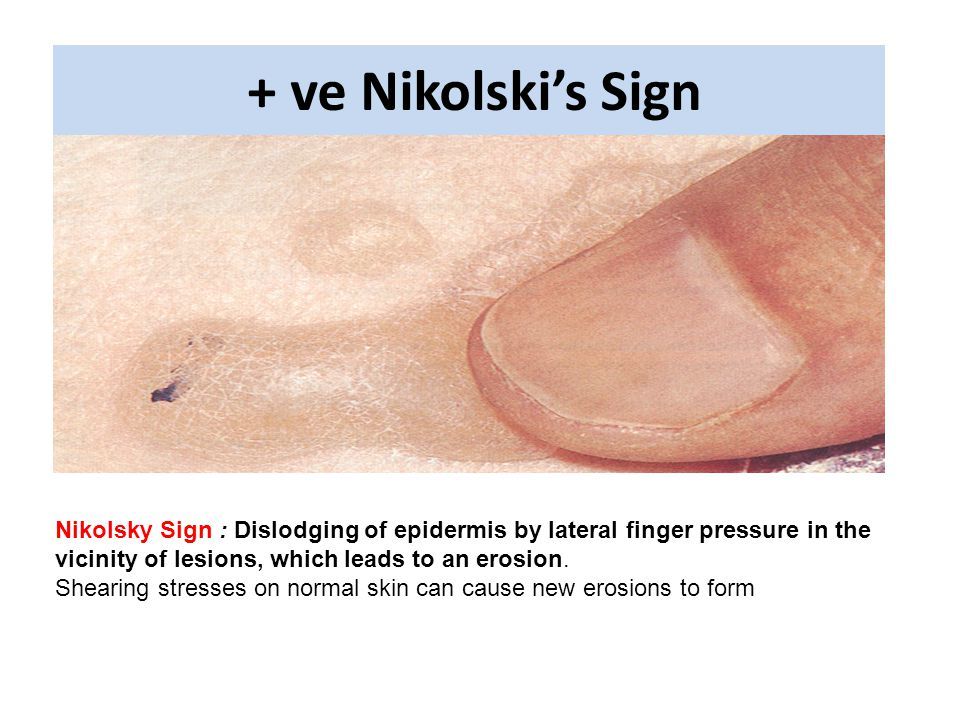
Examples of drugs that are known to cause Toxic Epidermal Necrolysis
Drugs known to induce TEN
- phenytoin
- sulphonamides
- allopurinol
- penicillins
- carbamazepine
- NSAIDs
Management of TEN
Management of *TEN*
- stop precipitating factor (drug)
- supportive care, often in intensive care unit
- intravenous immunoglobulin has been shown to be effective and is now commonly used first-line
- other treatment options include: immunosuppressive agents (ciclosporin and cyclophosphamide), plasmapheresis
The difference between SJS and TEN
SJS - 10% of the body is blistered
TEN - 30% or more blistered
What is pathophysiology of TEN/SJS
Drug is recognised by the body as a foreign -> immune system response against them -> cytokines produced and skin attacked by T cells -> blisters
What are Immune Check Inhibitors?
Immune Check Inhibitors
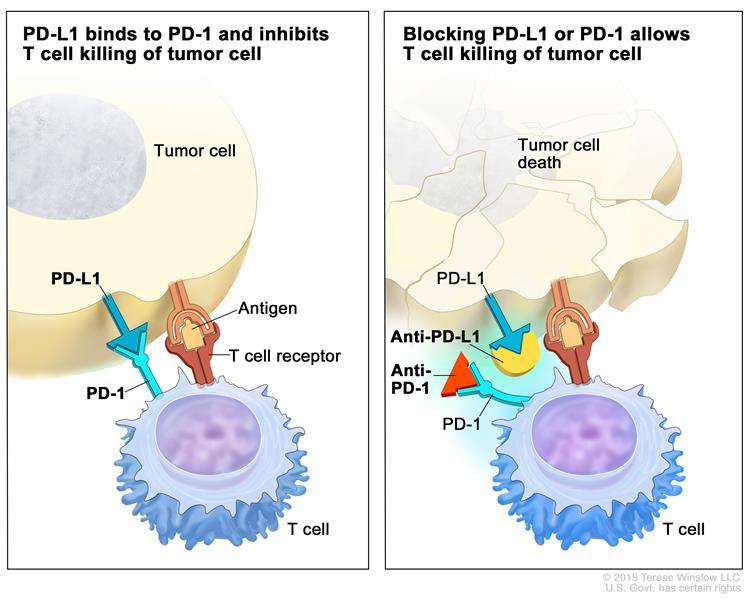
- Blocking the binding of PD-L1 to PD-1 with an immune checkpoint inhibitor (anti-PD-L1 or anti-PD-1) -> T cells to kill tumor cells (
- Immunotherapy uses the body’s immune system to fight cancer
Summary: these drugs allow the body’s immune system to attack the cancer



-
Acute sepsis31
-
Anaphylaxis28
-
Travel Hx10
-
Travel conditions61
-
HIV14
-
Antibiotics28
-
ABG38
-
Respiratory Emergencies17
-
Clinical Aspects of Respiratory Infection10
-
Asthma & COPD drugs25
-
Intestitial Lung Disease26
-
Interstitial Lung Disease 226
-
Lung Cancer25
-
Paediatric Respiratory conditions16
-
Viral respiratory infection22
-
Obstetric cardiology48
-
Acute coronary syndrome (includes biomarkers)26
-
Heart failure and BNP42
-
Acute Chest pain34
-
Cardiac arrhythmia management28
-
Anti-coagulants51
-
Congenital Heart Disease42
-
Cardiogenetics15
-
Pathology 38
-
Peripheral Vascular Disease33
-
Hemorrhagic disorders49
-
Infections in Pregnancy31
-
Vomiting and diarrhoea in children25
-
Gastro-duodenal disease29
-
Haematology in GI disorders (anaemia)29
-
Liver and pancreas pathophysiology39
-
Causes of Abdo pain31
-
Abdominal pain in pregnancy40
-
Antibiotics COPY48
-
Paediatric prescribing21
-
Pharmacological Mx of epilepsy42
-
Drug Overdose57
-
Alcohol and health25
-
Female pelvic pain33
-
SIM session_useful info11
-
Lower GI bleeding35
-
Upper GI bleed48
-
Drug dependency46
-
GI genetics56
-
ADR39
-
Glomerulonephritis (1)38
-
Glomerulonephritis (2)27
-
Imaging of renal tract45
-
Renal pathology30
-
Genetics: Renal Disease41
-
Assessment of patient with reduced consciousness55
-
High risk medications and never events14
-
Renal Disease and Pregnancy (1)40
-
Renal Disease and Pregnancy (2)22
-
SIM session 420
-
Lab 5: Biochemistry in renal disase (1)40
-
Lab5: Biochemistry in renal disase (2)37
-
IV fluids36
-
Microbiology Lab Investigations23
-
Yellow Card Scheme20
-
CAT (PP) lecture43
-
AKI lecture28
-
Paediatric renal problems55
-
Biologics48
-
Patient with renal tumors42



