Principles of Surgical antimicrobial prophylaxis
Surgical antimicrobial prophylaxis is the periprocedural systemic administration of an antimicrobial agent intended to reduce the risk of postprocedural local and systemic infections.
- The potential benefit of surgical antimicrobial prophylaxis is based on:
- patient-related factors (ability of the host to respond to bacterial invasion) (Table 1). These factors can be additive, compounding their impact.
- procedural factors (likelihood of bacterial invasion at the operative site) (Table 2). Urinary procedures are considered “clean-contaminated.”
- the potential morbidity of infection.
- Surgical antimicrobial prophylaxis when the potential personal and public health-related benefits exceed the risks and anticipated costs. •
The antimicrobial agent used for prophylaxis should be effective against the disease-relevant bacterial flora characteristic of the operative site. Cost, convenience, and safety of the agent also should be considered. • The duration of surgical antimicrobial prophylaxis should extend throughout the period in which bacterial invasion is facilitated and/or is likely to establish an infection.
- Begin infusion of the first dose within 60 minutes of the surgical incision (with the exception of 120 minutes for intravenous fluoroquinolones and vancomycin).
- Do not extend prophylaxis beyond 24 hours after a procedure except when a prosthetic material is being placed, an external urinary catheter is present prior tor is placed at the time of the procedure in patients with certain risk factors, or with documented bacteriuria.
- With an existing infection, a therapeutic course of antimicrobials should be administered in an attempt to sterilize the field or at least to suppress the bacterial count. If urine culture shows no growth, prophylaxis can be omitted.
Antimicrobial prophylaxis recommendations - patients undergoing urologic surgery
Patients Undergoing Urologic Surgery
- Antimicrobial prophylaxis for genitourinary procedures solely to prevent infectious endocarditis is no longer recommended by the American Heart Association; the risk of adverse events exceeds the benefit.
- The efficacy of oral fluoroquinolones for prophylaxis is unique to urologic surgical procedures.
- Choose an antimicrobial agent that is effective against the disease-relevant bacterial flora characteristic of the operative site. Consider cost, convenience and safety of the agent.
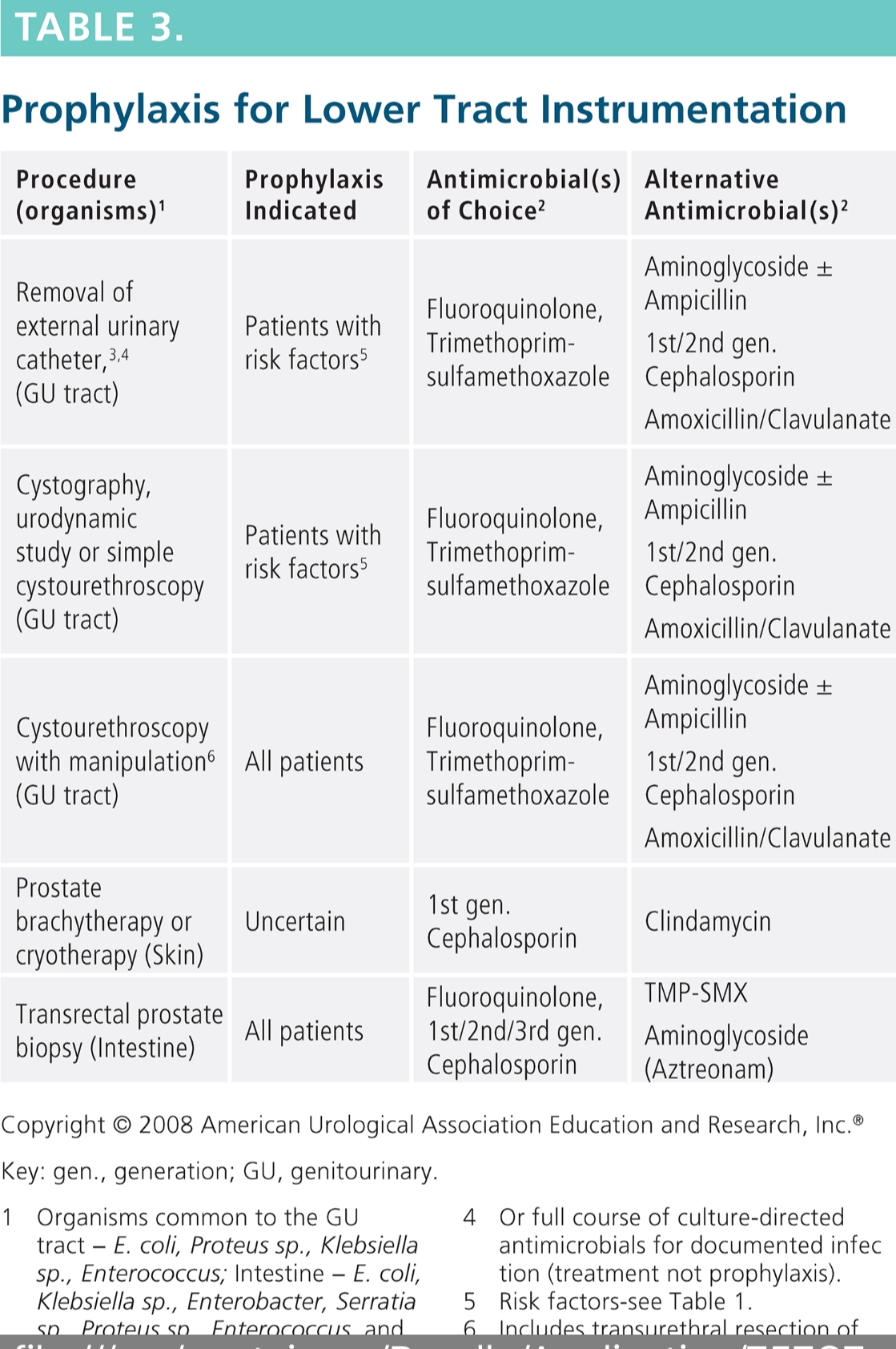
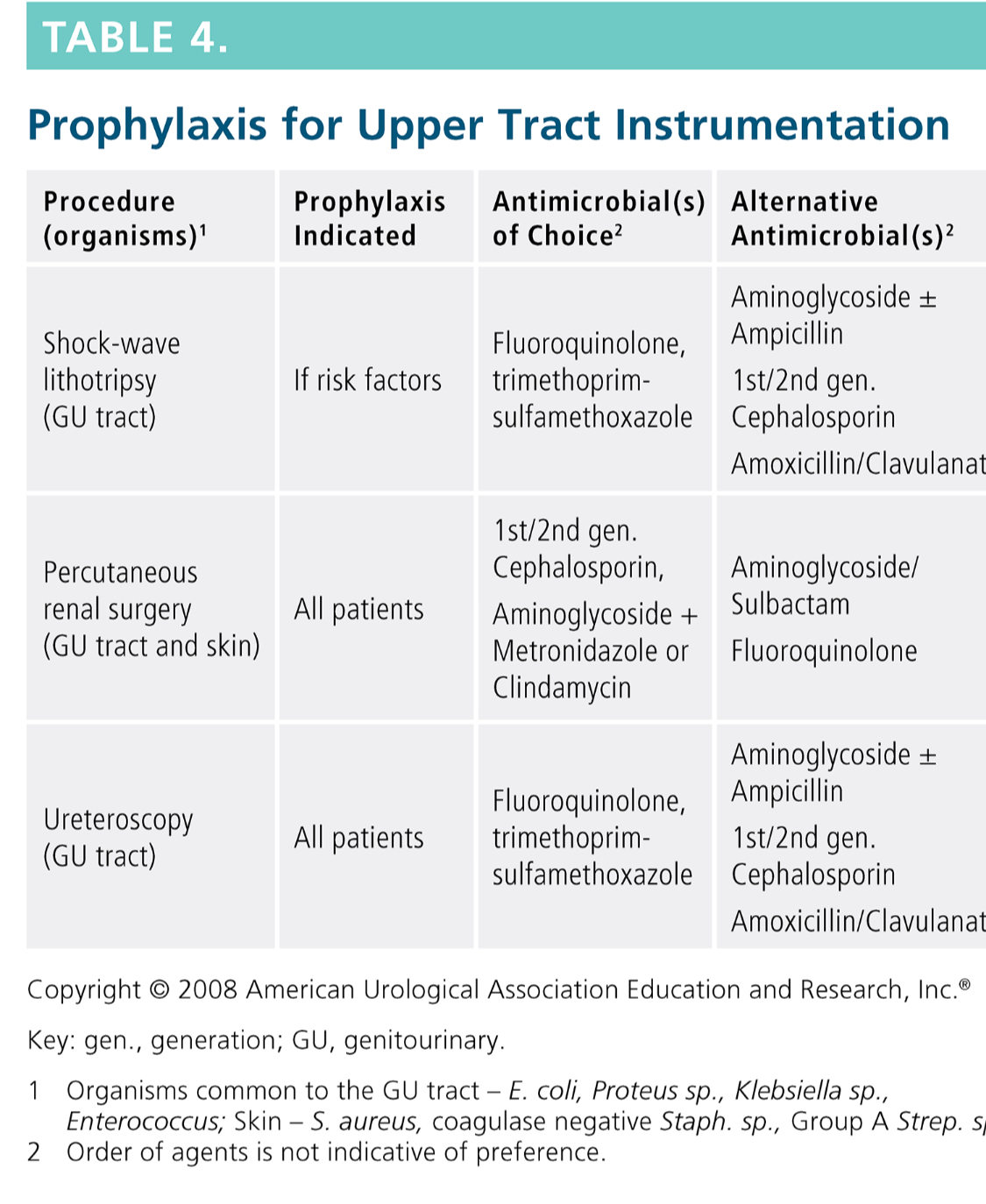
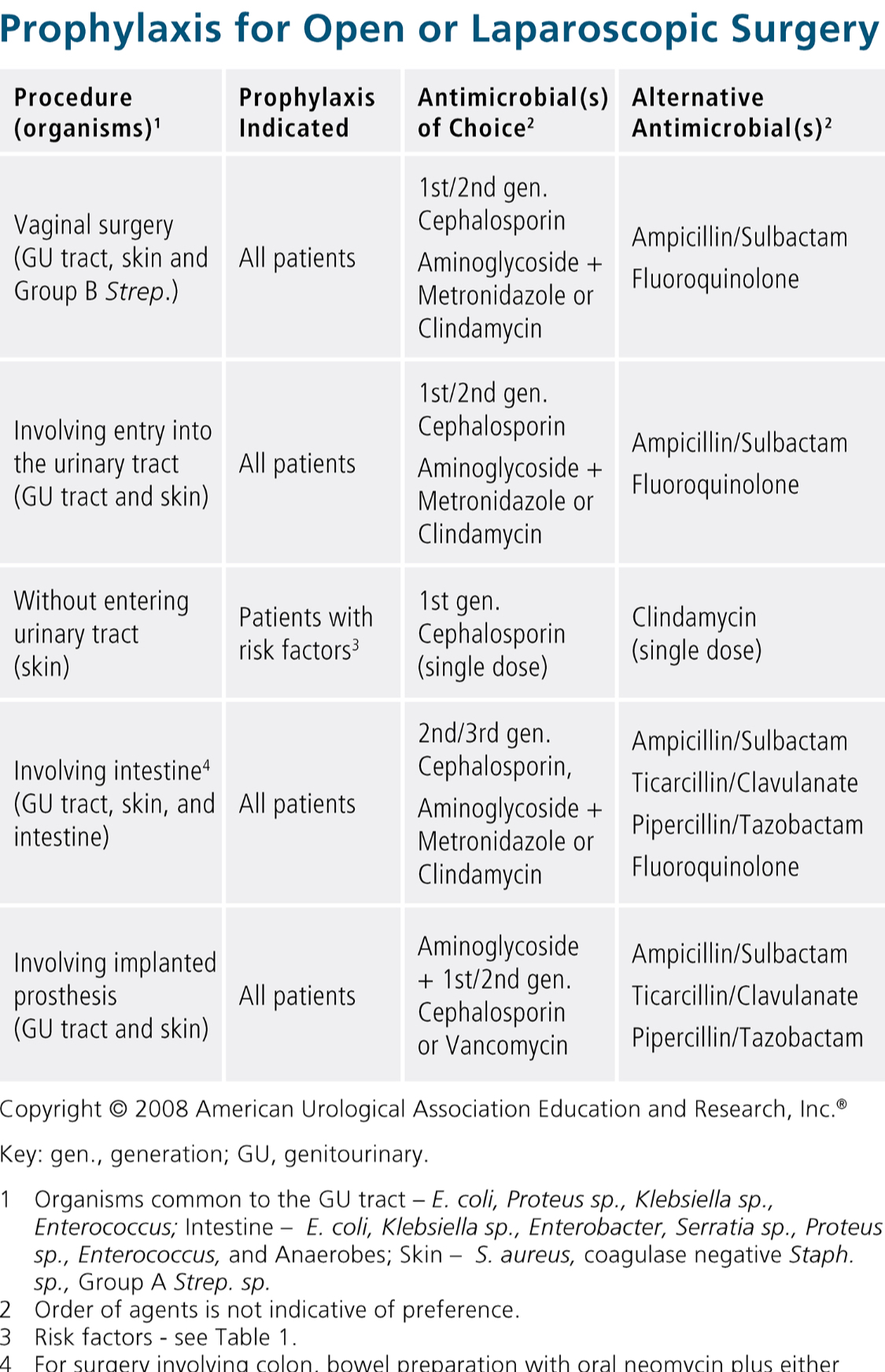
- Tables 3, 4 and 5 provide specific recommendations for the settings in which antimicrobial prophylaxis is indicated and the agent of choice. •
The agent should achieve serum and tissue levels which exceed the minimum inhibitory concentration of the organism characteristic of the operative site, have a long half-life, and be safe, inexpensive and not likely to promote bacterial resistance. For the urinary tract, the cephalosporins, oral flouroquinolones and aminoglycosides generally meet these criteria.
- Absence of an agent from the Tables should not preclude its appropriate use, depending on the situations such as: medication intolerance, agent compatibility, prior infection and community resistance patterns.
- In some cases, prophylaxis should be limited to patients with specific risk factors.
- For surgical prophylaxis, all antimicrobials should be administered IV except for the oral administration for fluoroquinolones, trimethoprim-sulfamethoxazole, bowel preparation agents, and some agents given at catheter removal; in addition, intramuscular administration for antimicrobials for transrectal prostate biopsy is acceptable.
- Table 6 presents standard dosing regimens; however, more frequent dosing may be needed. Adjust some drug doses to the patient’s body weight (or corrected dosing weight) or body mass index. Additional doses are required intraoperatively if the procedure extends beyond two half-lives of the initial dose.
Antimicrobial prophylaxis recommendations - patients with orthopedic considerations
Patients with Orthopaedic Considerations
- Use antimicrobial prophylaxis to reduce the risk of:
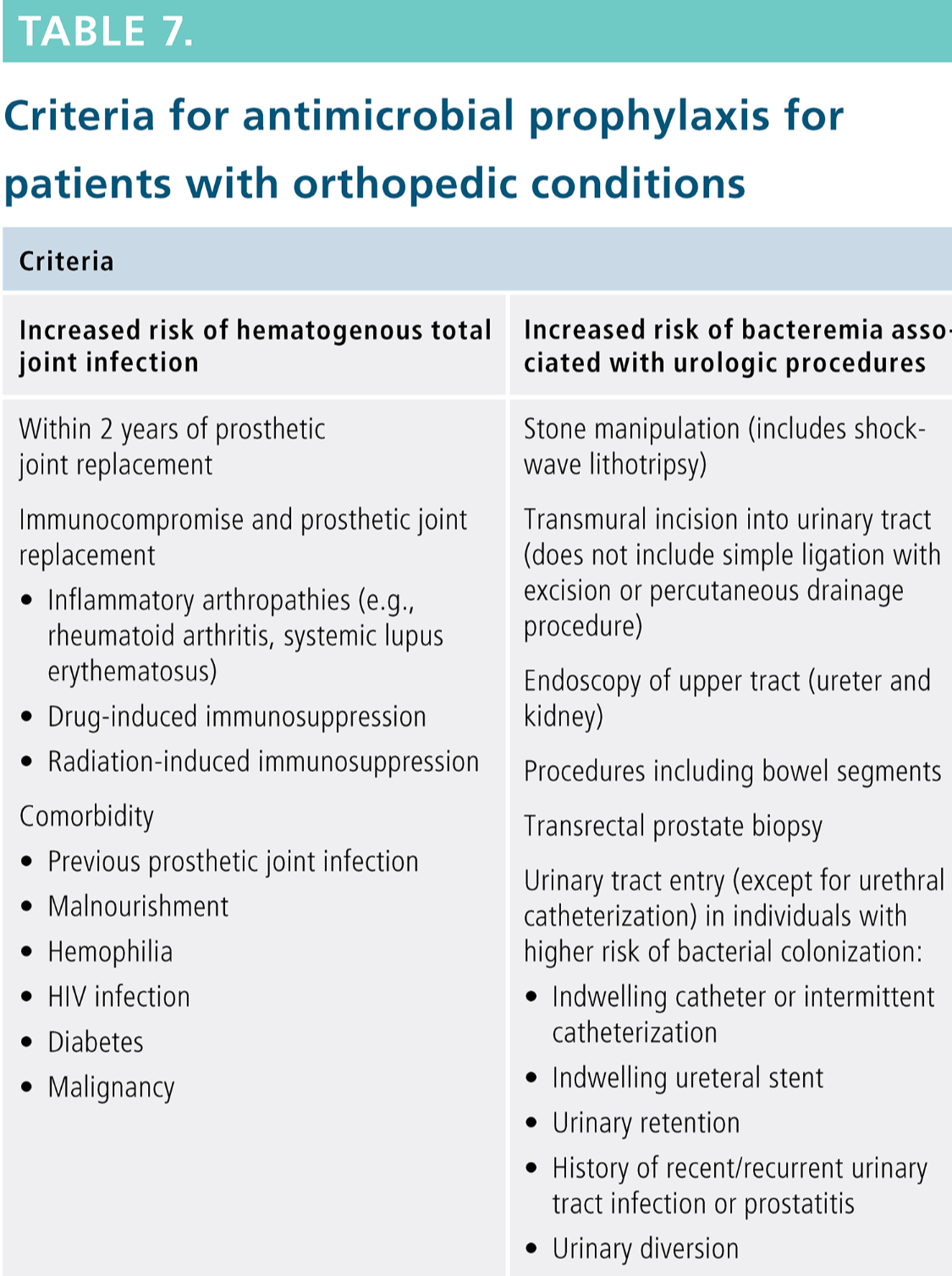
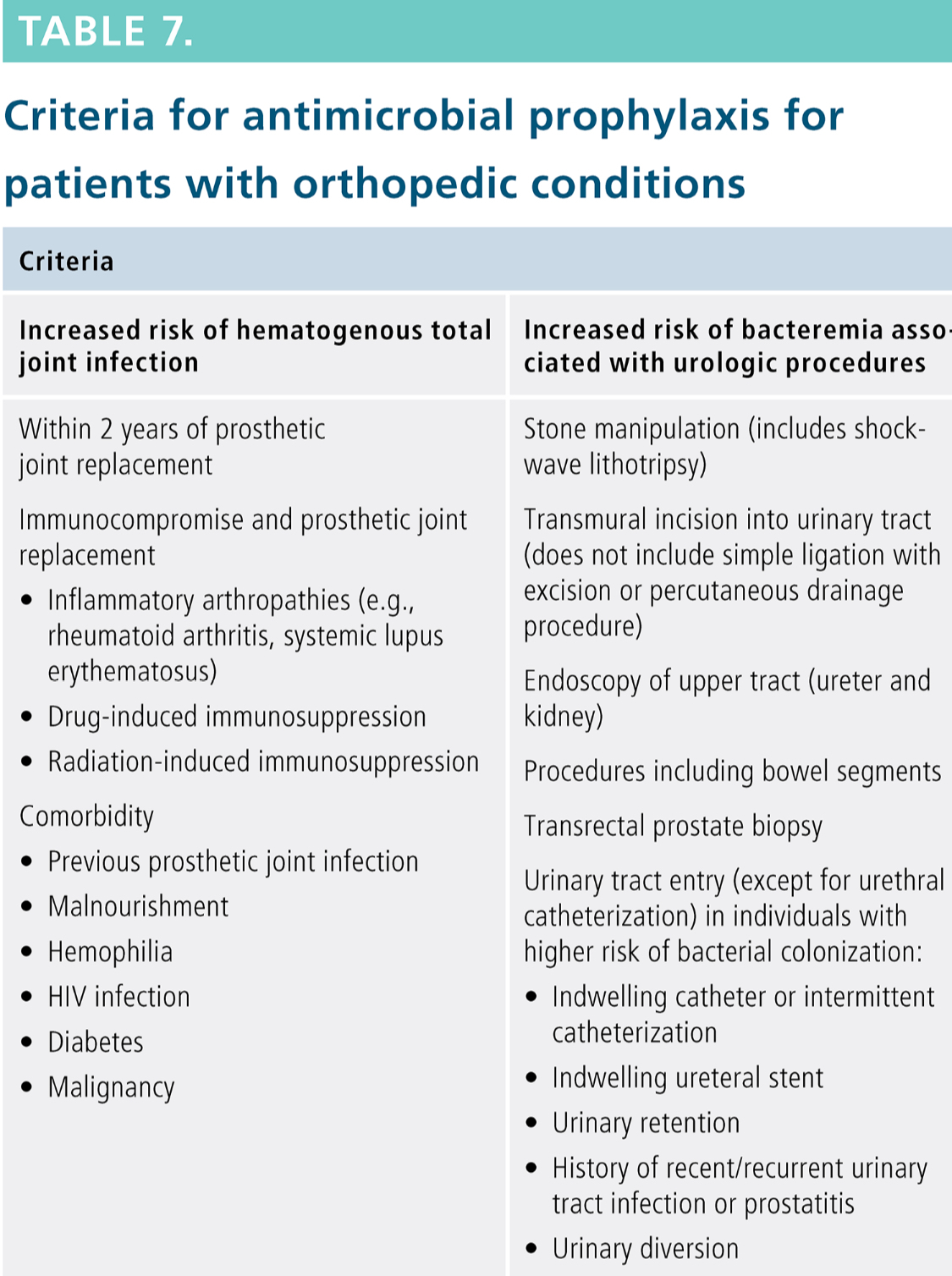
- hematogenous total joint infection in patients who meet both sets of criteria in Table 7.
- Other infections in some patients who do not meet both sets of criteria in Table 7.
- Do not use antimicrobial prophylaxis:
- On the basis of orthopaedic pins, plates and screws, or For total joint replacement on that basis alone.
The recommended antimicrobial regimen:
- A single systemic level dose of a fluoroquinolone orally one to two hours preoperatively.
- Ampicillin 2 g IV (or vancomycin 1 g IV in penicillin allergic patients, over one to two hours) plus gentamicin 1.5 mg/kg IV 30 t60 minutes preoperatively. • Consider additional or alternative agents against specific organisms and/or other infections.
Patient-related factors affecting host response to surgical infections
Advanced age
Anatomic anomalies of the urinary tract
Poor nutritional status
Smoking
Chronic corticosteroid use
Immunodeficiency
Externalized catheters
Colonized endogenous/exogenous material
Distant coexistent infection
Prolonged hospitalization
Surgical wound classification
–Clean Uninfected operative site, with primary skin closure. -
-Clean- contaminated Entry into respiratory, alimentary, genital, or urinary tracts.
–Contaminated Fresh accidental wounds, major break in sterile technique, gross spillage from gastrointestinal tract, or presence of acute but nonpurulent inflammation at the operative site.
–Dirty-infected Old accidental wound with devitalized tissue or presence of clinical infection or perforated viscera at the operative site. This definition implies that organisms that might cause postoperative infection were present at the operative site before surgery.
Prophylaxis for lower urinary tract instrumentation
Prophylaxis for upper tract instrumentation
Prophylaxis for open or lap surgery
Criteria for antimicrobial prophylaxis for patients with orthopedic conditions
Anitmicrobial prophylaxis for pts with history of orthopedic procedures

-
VUR8
-
Antimicrobial prophylaxis10
-
Asymptomatic microhematuria4
-
BPH17
-
Bladder Cancer - Muscle Invasive14
-
Bladder Cancer - non muscle invasive14
-
Cryptorchidism3
-
Erectile Dysfunction5
-
Interstitial cystitis/bladder pain9
-
Male Infertility13
-
OAB7
-
Peyrones disease3
-
premature ejaculation5
-
Priapism7
-
Prostate cancer - Clinically localized15
-
Prostate Cancer - Screening4
-
Prostate cancer - CRPC8
-
Renal mass and localized renal cancer10



