Antimicrobials Flashcards

(85 cards)

1
Q

Combination therapy

A
  • Sequential blockade (eg, trimethoprim + sulfamethoxazole)
  • Blockade of drug-inactivating enzymes (eg, clavulanic acid + amoxicillin)
  • Enhanced drug uptake (eg, increased permeability to aminoglycosides after
2
Q

Resistance

A
  • If maximal level of antibiotic tolerated by host does not halt growth
  • Primary resistance: Ex. Pseudomonas resistant to many antibiotics due to not having porins
  • Acquired drug resistance
    • Spontaneous mutations of DNA
    • DNA transfer of drug resistance
    • Altered expression of proteins in drug-resistant organisms
3
Q

Antimicrobial Chemoprophylaxis

A
  • Should always be directed toward a specific pathogen
  • No resistance should develop
  • Use should be of limited duration
  • Conventional therapeutic doses should be employed
  • Should only be used in situations of documented drug efficacy
4
Q

Cell wall synthesis inhibitors

A
  • Beta-lactam antibiotics
    • penicillins
    • cephalosporins
    • carbapenems
    • monobactams
  • Vancomycin
  • Daptomycin
  • Bacitracin
  • Fosfomycin
5
Q

Penicillins

A
  • Cell wall synthesis inhibitors
    • Widely effective: except Staph aureus which have beta-lactamase
    • Little toxicity
    • Increasing levels of resistance
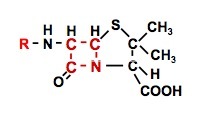
  • Structure: All include Beta-lactam ring

MOA:

  • Bactericidal
  • Inhibit last step in peptidogly can synthesis through binding to PBPs
  • Inactive against organisms without peptidoglycan cell wall eg, mycoplasma, protozoa, fungi, viruses
  • PBPs
    • Bacterial enzymes inactivated by penicillins
    • Include transpeptidases
    • Number varies with type of organism
    • Resistance can develop with PBP mutations
  • Autolysin production
    • Produced by bacteria and mediate cell lysis
    • Penicillins activate autolysins to initiate cell death
    • Bacteria eventually lyse due to activity of autolysins and inhibition of cell-wall assembly
  • Gram-positive bacteria have cell wall easily crossed by penicillin’s
  • Ability to reach PBPs determined by: size, charge, hydrophobicity
6
Q

Penicillin G - Clinical application (DOC for)

A
  • Syphilis (benzathine penicillin G)
  • Strep infections (especially in prevention of rheumatic fever)
  • Susceptible pneumococci
7
Q

Repository penicillins

A
  • Penicillin G Procaine, Penicillin G Benzathine
  • Developed to prolong duration of penicillin G
  • Penicillin G procaine
    • IM not IV (risk of procaine toxicity)
    • t1/2 = 12-24h
    • Seldom used (increased resistance)
  • Penicillin G **benazthine **
    • DOC for rheumatic fever prophylaxis & syph (but make sure no allergies)
    • IM
    • t1/2 = 3-4 weeks
8
Q

Penicillin V

A
  • Natural penicillins
  • Similar antibacterial spectrum to penicillin G (less active against Gram –ve bacteria)
  • More acid stable than G (can give orally)
  • DOC: strep throat
    *
9
Q

Methicillin, Nafcillin, Oxacillin, Dicloxacillin

A
  • Antistaphylococcal penicillins
  • Beta-lactamase resistant
  • Inactive against MRSA
  • Methicillin is never DOC (never used clinically)
  • Restricted to treatment of beta-lactamase-producing staphylococci
  • Recommended as first-line treatment for staphylococci endocarditis in patients without artificial heart valves
10
Q

Ampicillin, Amoxicillin

A
  • Extended-spectrum penicillins
  • Similar to penicillin G (plus Gram-negative activity)
  • Susceptible to beta-lactamases
  • Activity enhanced with beta-lactamase inhibitor
  • Amoxicillin has higher oral bioavailability than other penicillins (including ampicillin) ie do not require empty stomach
  • Amoxicillin is a common antibiotic prescribed for **children and in pregnancy **
  • Used for treatment of a number of infections: acute otitis media, streptococcal pharyngitis, pneumonia, skin infections, UTIs etc.
  • **Widely used to treat upper respiratory infections (H.influenzae & S.pneumoniae) **
  • **Amoxicillin = standard regimen for endocarditis prophylaxis during dental or respiratory tract procedures **
  • **Ampicillin is used in combination with aminoglycoside to treat enterococci and Listerial infections **
11
Q

Carbenicillin, Ticarcillin, Piperacillin

A
  • Antipseudomonal penicilins
  • Effective against many Gram-negative and Gram- positive bacilli
  • Often combined with beta-lactamase inhibitor
  • Piperacillin + Cipro Active against P.aeruginosa: Acute bronchitis in a Pt w acute bronchitis and COPD
  • Treatment of moderate-severe infections of susceptible organisms (eg, uncomplicated & complicated skin, gynecologic and intra-abdominal infections, febrile neutropenia)
12
Q

Effective empiric treatment for infective endocarditis

A
  • penicillin + aminoglycoside
  • synergistic
13
Q

Pencillins Resistance

A

One of 4 general mechanisms (primary or acquired):

  • Inactivation by beta-lactamase
  • Modification of target PBPs
  • Impaired penetration of drug to target PBPs
  • Increased efflux

MRSA (ORSA) = altered target PBPs (low affinity for

14
Q

Penicillins: PK

A

Half-life: ~30-60 min (except repository penicillins)

Oral absorption:

  • Absorption impaired by food (except amoxicillin -> high oral bioavailability)
  • Nafcillin = erratic (not suitable for oral admin.)

Distribution

  • All achieve therapeutic levels in pleural, pericardial, peritoneal, synovial fluids & urine
  • Nafcillin, ampicillin & piperacillin achieve high levels in bile,
  • Levels in prostate & eye = insufficient
  • CSF penetration = poor (except in meningitis)

Excretion

  • Most excreted primarily via kidney (beware in kidney failure)
  • Nafcillin = exception as primarily excreted in bile
  • Oxacillin & dicloxacillin = renal & biliary excretion
15
Q

Penicillins: Adverse

A
  • Hypersensitivity
    • Penicilloic acid = major antigenic determinant
    • ~ 5 % patients claim to have some reaction (maculopapular rash -> anaphylaxis)
    • Cross-allergic reactions between beta-lactam antibiotics can occur
  • GI disturbances (eg, diarrhea)
  • Pseudomembranous colitis (ampicillin)
  • Maculopapular rash (ampicillin, amoxicillin)
  • Interstitial nephritis (particularly methicillin)
  • Neurotoxicity (epileptic patients at risk)
  • Hematologic toxicities (ticarcillin)
  • Neutropenia (nafcillin)
  • Hepatitis (oxacillin)
  • Secondary infections (eg, vaginal candidiasis)
16
Q

Clavulanic acid, Sulbactam, Tazobactam

A
  • Beta-lactamase inhibitor
  • Contain beta-lactam ring but do not have sig. antibacterial activity
  • Bind to and inactivate most beta-lactamases
  • Available only in fixed combinations with specific penicillins
  • Indication: mild-mod diverticulitis (enteric Gram -ve bacteria + enterococci anearobes)
17
Q

Cephalosporins

A
  • Beta-lactam antibiotics
  • Bactericidal
  • Same MOA as penicillin’s
  • Affected by similar resistance mechanisms
  • Classified into generations
18
Q

Cephalosporins: antibacterial spectrum

A
  • In general, Gram positive activity diminishes while Gram- negative activity increases moving from the first-to third generations
  • 4th generation demonstrate similar activity to first- generation agents against Gram-positive cocci and are also active against most Gram-negative bacilli.
  • 5th generation have a similar spectrum to the 3rd generation. They are unique in that they have activity against MRSA.
  • All 1st-4th generation cephalosporins are considered inactive against MRSA,
  • All cephalosporins are considered inactive against enterococci, Listeria, Legionella, Chlamydia, mycoplasma, and acinetobacter species.
19
Q

Cefazolin, Cephalexin

A
  • 1st gen Cephalosporins
  • Penicillin G substitutes
  • Resistant to staphylococcal penicillinase
  • Activity against Gram-positive cocci & P.mirabilis, E.coli, & K.pneumoniae

Indications

  • Rarely DOC for any infections
  • Cefazolin = DOC for surgical prophylaxis
20
Q

Cefaclor, Cefoxitin, Cefotetan, Cefamandole

A
  • 2nd gen cephalosprins
  • Extended Gram-negative coverage
  • Greater activity against H.influenzae, Enterobacter aerogenes and some Neisseria species
  • Weaker activity against Gram-positive organisms

Indications

  • Primarily used to treat sinusitis, otitis & lower respiratory tract infections
  • Cefotetan & cefoxitin = prophylaxis & therapy of abdominal and pelvic cavity infections
21
Q

Ceftriaxone, Cefoperazone, Cefotaxime, Ceftazidime, Cefixime

A
  • 3rd gen cephalosporin; most common cephalosporin
  • Enhanced activity against Gram-negative cocci
  • Highly active against enterobacteriacae, Neisseria, & H.influenzae
  • Less active against most Gram-positive organisms
  • Cefotaxime & ceftriaxone = usually active against pneumococci

Indications

  • DOC for gonorrhea (parenteral)
  • DOC for meningitis due to ampicillin-resistant H.influenzae
  • Prophylaxis of meningitis in exposed individuals
  • Treatment of Lyme disease (CNS or joint infection)
  • Activity against P.aeruginosa
22
Q

Cefipime

A
  • 4th gen cephalosporins
  • Parenteral admin. Only
  • Wide antibacterial spectrum
  • Gram +ve activity of 1st generation + Gram -ve activity of 3rd generation
  • eg, enterobacter, Haemophilis, Neisseria, E.coli, pneumococci, P.mirabilis & P.aeruginosa

Indications

  • Treatment of infections with susceptible organisms
  • eg, UTI’s, complicated intra-abdominal infections, febrile neutropenia
23
Q

Ceftaroline

A
  • 5th gen
  • Parenteral admin. only
  • Activity against MRSA !
  • Similar spectrum of activity to 3rd generation

Indications

  • Skin and soft tissue infection due to MRSA, particularly if gram-negative pathogens are coinfecting
  • **Community-acquired pneumonia (when first-line agents are unsuccessful) **
24
Q

Cephalosporins - PK

A
  • Most administered parenterally (exceptions = cephalexin, cefaclor, cefixime)
  • Only 3rd generation reach adequate levels in CSF
  • Mainly eliminated via kidneys (exceptions = ceftriaxone & cefoperazone excreted in bile)
25
Cephalosporins - Adverse
* Allergic reactions (cross-sensitivity with penicillins can occur) * However, minor penicillin allergic patients often treated successfully with a cephalosporin * Pain at infection site (IM), thrombophlebitis (IV) * Superinfections (eg, C.difficile) * **Cefamandole, cefoperazone & cefotetan** contain methyl-thiotetrazole group, all can cause: * hypoprothrombinemia (Vit. K1 admin can prevent) & * disulfiram-like reactions (avoid alcohol)
26
Imipenem, Meropenem
* Carbapenem * Synthetic Beta-lactam antibiotics * Resist hydrolysis by most beta-lactamases * Very broad spectrum of activity * Active against penicillinase-producing Gram-positive & negative organisms; aerobes & anaerobes; P.aeruginosa * Not active against carbapenemase producing organisms eg, carbapenem-resistant enterobacteriaceae, carbapenem-resistant klebsiella * Not active against MRSA Indications: use typically restricted to avoid resistance * DOC for: * enterobacter infections * extended-spectrum beta-lactamase producing Gram -ve
27
Carbapenems - PK
* IV * Imipenem forms potentially nephrotoxic metabolite when activated by renal dehydropeptidase I. Combining with enzyme inhibitor Cilastatin prevents metabolism thus prevents toxicity & increases availability. * Meropenem is not metabolized by same enzyme (no need for Cilastatin)
28
Carbapenems - Adverse
* GI distress (but all antibiotics can cause diarrhea) * High levels of imipenem can provoke seizures * Allergic reactions (partial cross-reactivity with penicillin’s)
29
Aztreonam
* Monobactams * **Aerobic Gram-negative rods ONLY (including pseudomonas)** * No activity against Gram-positive bacteria or anaerobes * Resistant to action of beta-lactamases Indications UTI’s, lower respiratory tract infections, septicemia, skin/structure infections, intraabdominal infections, gynecological infections caused by susceptible Gram- negative bacteria
30
Monobactam - PK
* Mainly IV or IM * Can be given by inhalation in CF patients * Penetrates CSF when inflamed * Excreted primarily via urine
31
Monobactam - Adverse
* Relatively nontoxic * Little cross-hypersensitivity with other beta-lactam antibiotics * Occasional skin rashes / elevation of serum aminotransferases * GI upset, vertigo, headache * Phlebitis or thrombophlebitis reported with IV use
32
Vancomycin
* Bacterial glycoprotein * Bactericidal * Active against Gram-positive bacteria only * Virtually all Gram-negative organisms are intrinsically resistant * Effective against multi-drug resistant organisms (eg, MRSA, enterococci, PRSP) MOA * Binds to the D-Ala-D-Ala terminus of nascent peptidoglycan pentapeptide * Inhibits bacterial cell wall synthesis & peptidoglycan polymerization Resistance * Plasmid-mediated changes in drug permeability * Modification of the D-Ala-D-Ala binding site (D-Ala replaced by D-lactate) Indications: reserved for drug resistant bacteria * Treatment of serious infections caused by Beta-lactam resistant Gram +ve organisms eg, MRSA * Treatment of Gram +ve infections in patients severely **allergic to Beta-lactams** * In combination with an aminoglycoside for empirical treatment of **infective endocarditis; 1st line: vancomycin + gentamycin** * In combination with an aminoglycoside for treatment of enterococcal endocarditis or PRSP * Given orally for the treatment of staphylococcal enterocolitis or antibiotic-associated pseudomembranous colitis (C.difficile)
33
Vancomycin - PK
* Poor oral absorption * Requires slow IV infusion (60-90 min) * Penetrates CSF when inflamed * 90-100% excreted via kidneys
34
Vancomycin - Adverse
* Mostly minor eg, fever, chills, phlebitis at infusion site * ‘Red man’ or ‘red neck’ syndrome (infusion-related flushing over face and upper torso) * Ototoxicity (drug accumulation) * Nephrotoxicity (drug accumulation)
35
Daptomycin
* Bactericidal * Effective against multiple drugresistance organisms * Inactive against Gram-negative bacteria * Not effective in treatment of pneumonia MOA * Novel mechanism of action -\> useful against multi-drug resistant bacteria * Binds to cell membrane via calcium-dependent insertion of lipid tail * Results in depolarization of cell membrane with K+ efflux -\> cell death Indications * **Recommended for treatment of severe infections caused by MRSA or VRE** * Treatment of complicated skin/structure infections caused by susceptible S.aureus
36
Daptomycin - PK
* IV only * Can accumulate in renal insufficiency
37
Daptomycin - Adverse
* Constipation, nausea, headache, insomnia * Elevated creatine phosphokinases (recommended to discontinue coadmin. of statins)
38
Bacitracin
* Unique mechanisms -\> no cross resistance * Interferes in late stage cell wall synthesis * Effective against Gram-positive organisms * Marked nephrotoxicity -\> mainly topical use
39
Fosfomycin
* Inhibits cytoplasmic enzyme enolpyruvate transferase in early stage of cell wall synthesis * Active against Gram-positive and negative organisms * Oral * Used for treatment of uncomplicated lower UTI’s
40
Protein synthesis inhibitors
* Tetracyclines * Glycylcyclines * Aminoglycosides * Macrolides * Chloramphenicol * Clindamycin * Streptogramins * Linezolid * Mupirocin
41
Protein synthesis inhibitors
* Bind to and interfere with ribosomes * Bacterial ribosome (70S) differs from mammalian (80S) but closely resembles mammalian mitochondrial ribosome * Mostly bacteriostatic
42
Tetracyclines
* Doxycycline, Minocycline, Tetracycline * Broad-spectrum: aerobe, anaerobe, parasites, etc… * Bacteriostatic * Activity against many aerobic and anaerobic Gram- positive & Gram-negative organisms MOA * Entry via passive diffusion & energy-dependent transport unique to bacterial inner cytoplasmic membrane * Susceptible cells concentrate drug intracellularly * Bind reversibly to 30S subunit of ribosome, preventing binding of aminoacyl tRNA Resistance * Widespread resistance (usually plasmid mediated) * 3 main mechanisms: * Impaired influx or increased efflux by active protein pump * Production of proteins that interfere with binding to ribosome * Enzymatic inactivation Indications * Most common use = **severe acne & rosacea** * Used in empiric therapy of community-acquired pneumonia (outpatients) * Can be used for infections of respiratory tract, sinuses, middle ear, urinary tract, & intestines * Syphilis (patients allergic to penicillin) * DOC * Chlamydia * Mycoplasma pneumoniae * Lyme disease * Cholera * Anthrax prophylaxis * Rickettsia (Rocky Mountain Spotted Fever, typhus) * Used in combination for * H. pylori eradication * Malaria prophylaxis and treatment * Treatment of plague, tularemia, brucellosis
43
Tetracyclines - PK
* Variable oral absorption (decreased by divalent & trivalent cations) * Doxycycline (lipid soluble) = preferred for parenteral admin. and good choice for STD’s and prostatitis * Minocycline = reaches high concentrations in all secretions (useful for eradication of meningococcal carrier state) * Concentrate in liver, kidney, spleen & skin * Excreted primarily in urine except doxycycline (primarily via bile) * TERATOGENIC – all cross placenta & are excreted into breast milk (FDA category D)
44
Tetracylcine - Adverse
* Gastric effects / superinfections (nausea, vomiting, diarrhea) * Discoloration & hypoplasia of teeth, stunting of growth (generally avoided in pregnancy & not given in children under 8y) * Fatal hepatotoxicity (in pregnancy, with high doses, patients with hepatic insufficiency) * Exacerbation of existing renal dysfunction * Photosensitization * Dizziness, vertigo (esp. doxycycline & minocycline)
45
Tigecycline
* Glycycyclines * Structurally similar to tetracyclines * Antibacterial spectrum * Broad-spectrum against multidrug-resistant Gram- positive, some Gram-negative & anaerobic organisms Resistance * Little resistance * Not subject to same resistant mechanisms as tetracyclines (exceptions = efflux pumps of Proteus & Pseudomonas species) Indications * Treatment of complicated skin, soft tissue and intra- abdominal infections * Increased risk of mortality has been observed with tigecycline compared with other antibiotics when used to treat serious infections * FDA recommends considering the use of alternative antimicrobials when treating patients with serious infections
46
Glycylcyclines - PK/Adverse
* IV only * Excellent tissue & intracellular penetration * Primarily biliary/fecal elimination Adverse effects * Well tolerated * AE similar to tetracyclines Contraindications: Pregnancy & children \<8y
47
Amikacin, Gentamicin, Tobramycin, Streptomycin, Neomycin
* Aminoglycosides * Bactericidal * Associated with serious toxicities * Largely replaced by safer antibiotics; reserved for serious infections and only used for short period of time MOA * Passively diffuse across membranes of Gram-negative organisms * Actively transported (O2-dependent) across cytoplasmic membrane * Bind to 30S ribosomal subunit prior to ribosome formation leading to: 1. misreading of mRNA, & 2. inhibition of translocation Resistance: 3 mechanisms * Plasmid-associated synthesis of enzymes that modify and inactivate drug * Decreased accumulation of drug * Receptor protein on 30S ribosomal subunit may be deleted or altered due to mutation
48
Conc.- dependent vs. time-dependent killing
* Concentration-dependent (aminoglycosides) * Time-dependent (penicillins, cephalosporins)
49
Aminoglycosides - Antibacterial Spectrum
* Most active against aerobic Gram-negative bacteria * Anaerobes lack O2-dependent transport Indications * Used mostly in combination * Empiric therapy of serious infections eg, septicemia, nocosomial respiratory tract infections, complicated UTI’s, endocarditis etc * Once organism is identified aminoglycosides are normally discontinued in favor of less toxic drugs * DOC for * Empiric therapy of infective endocarditis in combination with either a penicillin or (more commonly) vancomycin * Streptomycin is the drug of choice for Plague (Y.Pestis)
50
Oral neomycin
* Used as adjunct in treatment for hepatic encephalopathy * Alternative treatment options for hepatic encephalopathy: * Lactulose * Oral vancomycin * Oral metronidazole * Rifaximin
51
Lactulose
Nonabsorbable disaccharide MOA * Degraded by intestinal bacteria
52
Aminoglycosides - PK
* Parenteral admin. only (except neomycin - topical) * Once-daily admin. * Well distributed (excluding CSF, bronchial secretions) * High levels in renal cortex & inner ear * 99% excreted in urine (reduce dose in renal insufficiency)
53
Aminoglycosides - Adverse
Both time- and concentration-dependent * Ototoxicity * Nephrotoxicity * Neuromuscular blockade (myasthenia gravis = contraindicated) * Pregnancy (contraindicated unless benefits outweigh risks – FDA Category D)
54
Erythromycin, Clarithromycin, Azithromycin, Telithromycin
* Macrolides * Mainly used to treat Gram-positive infections * Bacteriostatic (bactericidal at high conc.) MOA * Reversibly bind to 50S subunit inhibiting translocation; bacteriostatic * Binding site is identical or close to that for clindamycin & chloramphenicol Resistance: 3 mechanisms * Reduced membrane permeability or active efflux * Production of esterase that hydrolyze drugs (by enterobacteriaceae) * Modification of ribosomal binding site (by chromosomal mutation or by a methylase) * Complete cross-resistance between erythromycin, azithromycin, & clarithromycin * Partial cross-resistance with clindamycin & streptogramins Antibacterial spectrum * Most active against Gram-positive bacteria (some activity against Gram-negatives) * Spectrum is slightly wider than that of penicillins * Azithromycin, clarithromycin & telithromycin have broader spectrum than erythromycin Indications * Used in empiric therapy of community-acquired pneumonia (outpatient & in combination with beta-lactam for inpatients) * DOC for **Mycoplasma pneumoniae** * Treatment of **upper respiratory tract & soft-tissue infections** (eg, Staph, H.influenzae, S.pneumoniae, enterococci) * Erythromycin = DOC for whooping cough (**B.pertussis**) * **Common substitute for patients with penicillin allergy **
55
Macrolides - PK
* Clarithromycin, azithromycin, telithromycin = improved oral absorption, longer t1/2, increased bioavailability compared to erythromycin * Azithromycin & telithromycin = greater tissue penetration compared to other macrolides * Erythromycin, clarithromycin & telithromycin = CYP P450 inhibition (NOT azithromycin) * Ex. HIV Pt on multiple meds and fighting pneumonia -\> Azithromycin indicated
56
Macrolides - Adverse & contraindications
Adverse * GI irritation * Hepatic abnormalities (erythromycin & azithromycin) * QT prolongation * Severe reactions are rare (anaphylaxis, colitis) Contraindications * Statins (due to macrolides inhibiting CYP P450) * Telithromycin – fatal hepatotoxicity, exacerbations of myasthenia gravis, & visual disturbances
57
Chloramphenicol
* Potent inhibitor of protein synthesis * Broad-spectrum (aerobic & anaerobic Gram-positive & - negative organisms) * Bacteriostatic (usually) * Toxicity limits use to life-threatening infections with no alternatives **MOA** * Enters cells via active transport process * Binds reversibly to 50S ribosomal subunit (site adjacent to site of action of macrolides & clindamycin) * Can inhibit protein synthesis in mitochondrial ribosomes -\> bone marrow toxicity * Very broad spectrum * Activity against Gram-positive and negative bacteria, including Rickettisae & anaerobes * N.meningitidis, H.influenzae, Salmonella & bacteroides = highly susceptible * Never given systemically for minor infections (due to adverse effects) **Resistance** * Presence of factor that codes for chloramphenicol acetyltransferase (inactivates drug) * Changes in membrane permeability **Clinical applications** * Serious infections resistant to less toxic drugs * When chloramphenicols penetrability to site of infection is clinically superior to other drugs * Active against many VRE * Topical treatment of eye infections (mainly outside US) **PK** * Oral, IV or topical * Wide distribution (readily enters CSF) * Inhibits hepatic oxidases (3A4 & 2C9) **Adverse** * GI distress * Bone marrow depression * dose-related reversible depression * severe irreversible aplastic anemia * Gray baby syndrome (cyanosis), due to drug accumulation
58
Clindamycin
* MOA = same as macrolides (binds to 50S subunit) * Mainly bacteriostatic * Primarily used against Gram-positive anaerobic bacteria (including bacteroides) * not many drugs effective against anaerobes (only clindamycin and metronidzaole) **Resistance ** * mutation of ribosomal receptor site * modification of the receptor * enzymatic inactivation of drug * Most Gram-negative aerobes & enterococci are intrinsically resistant * Cross-resistant with macrolides **Clinical applications** * Anaerobic infections (eg, bacteroides infections, abscesses, abdominal infections) * Skin and soft tissue infections (streptococci and staphylococci, and some MRSA) * In combination with primaquine as an alternative in PCP * In combination with pyrimethamine as an alternative treatment for toxoplasmosis of brain * Prophylaxis of endocarditis in valvular patients allergic to penicillin **PK** * Oral or IV * Good penetration (including abscesses and bones)
59
Clindamycin - Adverse
* Potentially fatal pseudomembranous colitis (superinfection of C.difficile) * GI irritation (~ 20% people experience diarrhea) * Skin rashes (~10 %) * Neutropenia & impaired liver function
60
Quinupristin, Dalfopristin
* Streptogramins * Given as a combination (act synergistically to have bactericidal action) * Long postantibiotic effect MOA * Bind to separate sites on 50S bacterial ribosome * Resistance is uncommon * Gram-positive cocci * Multi-drug resistant bacteria (streptococci, PRSP, MRSA, E.faecium) Clinical applications: Restricted to treatment of infections caused by drug- resistant Staphylococci or VRE PK * IV only * Penetrates macrophages & polymorphonucleocytes * Inhibitors of CYP 3A4
61
Streptogramins - Adverse
* Infusion related (venous irritation, arthralgia & myalgia) * GI effects * CNS effects (headache, pain)
62
Linezolid
* Bacteriostatic (cidal against streptococci & Clostridium perfringens) * recommended in the treatment of vancomycin-resistant strains of MRSA **MOA** * Inhibits formation of 70S initiation complex * Binds to unique site on 23S ribosomal RNA of 50S subunit * Most Gram-positive organisms (staphylococci, streptococci, enterococci, Corynebacterium, Listeria monocytogenes) * Moderate activity against mycobacterium tuberculosis **Resistance** * Decreased binding to target site * No cross-resistance with other drug classes **Clinical applications: **Treatment of multi-drug resistant infections **PK** * Oral (100% bioavailable) & IV * Widely distributed (including CSF) * Weak reversible inhibitor of MAO
63
Linezolid - Adverse
Well tolerated for short admin. (GI, nausea, diarrhea, headaches, rash) Long-term admin. can cause: * Reversible myelosuppression * Optic & peripheral neuropathy, & lactic acidosis **Contraindications: **Reversible, nonselective inhibitor of MAO** -\> potential interaction w NE and 5HT drugs**
64
Fidaxomicin
* Narrow spectrum macrocyclic antibiotic * Activity against Gram-positive aerobes and anaerobes especially Clostridia (C. difficile) * No activity against Gram-negative bacteria **MOA: ** Inhibits bacterial protein synthesis by binding to RNA polymerase **Clinical applications** * Treatment of C.difficile colitis (in adults) * Metro, vanco, and Fida all equally effective * Fidaxomicin is DOC for C. difficile in UK **PK**: When administered orally, systemic absorption is negligible but fecal concentrations are high
65
Mupirocin
* Antibiotic belonging to monoxycarbolic acid class * Activity against most Gram-positive cocci, including MRSA and most streptococci (but not enterococci) * Only topical/intranasal agent with activity against MRSA **MOA: **Binds to bacterial isoleucyl transfer-RNA synthetase resulting in the inhibition of protein synthesis **Clinical applications** * Intranasal: Eradication of nasal colonization with MRSA in adult patients and healthcare workers * Topically: Treatment of impetigo or secondary infected traumatic skin lesions due to S.aureus or S.pyogenes
66
Mupirocin - Adverse
* Resistance develops if used for long periods of time * Mainly local and dermatologic effects (eg, burning, edema, tenderness, dry skin, pruritus)
67
Drugs that affect nuclei acid synthesis
* Fluoroquinolones * Sulfonamides * Trimethoprim
68
Flouroquinolones examples
* First generation: Nalidixic Acid (quinolone) * Second generation: Ciprofloxacin * Third generation: Levofloxacin * Fourth generation: Gemifloxacin, Moxifloxacin Lower generations have excellent Gram-negative activity Higher generations have improved activity against Gram- positives
69
Fluoroquinolones MOA, resistance, PK
**MOA** * Broad spectrum, bactericidal drugs * Enter bacterium via porins * Inhibit bacterial DNA replication via interference with topoisomerase II (DNA gyrase) & IV **Resistance** * Emerged rapidly in 2nd generation (esp. C.jejuni, gonococci, Gram-positive cocci, P.aeruginosa & serratia). * Due to chromosomal mutations that: * encode subunits of DNA gyrase (eg, gonococci resistance) and topo IV * regulate expression of efflux pumps (eg, S.aureus, S.pneumonia, M.tuberculosis) * Cross-resistance between drugs occurs **PK** * Good oral bioavailability * Well distributed into all tissues and fluids (including bones) * Iron, zinc, calcium (divalent cations) interfere with absorption * Dosage adjustments required in renal dysfunction (except moxifloxacin)
70
Nalidixic acid Clinical applications
Uncomplicated UTI’s
71
Ciprofloxacin clinical applications
* Travelers diarrhea (E.coli) * P.aeruginosa (CF patients) * Prophylaxis against meningitis (alternative to ceftriaxone & rifampin)
72
Levofloxacin
* Prostatitis (E.coli) * STD’s (not syphilis) * Skin infections * Acute sinusitis, bronchitis, TB Community acquired pneumonia
73
Moxifloxacin, Gemifloxacin
Community acquired pneumonia
74
Respiratory fluoroquinolones
Levofloxacin, moxifloxacin & gemifloxacin (excellent activity against S.pneumoniae, H.influenzae & M.catarrhalis) Used in treatment of pneumonia when: * First-line agents have failed * In the presence of comorbidities * Patient is an inpatient
75
Fluoroquinolones - Adverse
* GI distress * CNS, rash , photosensitivity * Connective tissue problems (avoid in pregnancy, nursing mother, under 18’s) – Black Box Warning! * **QT prolongation/Torsade** (moxifloxaci n, gemifloxacin, levofloxacin) -\> use Cotrimoxazole instead * High risk of causing superinfections (C.difficile, C albicans, streptococci Interactions * Theophylline, NSAIDs & corticosteroids = enhance toxicity of fluoroquinolones * 3rd & 4th generation = raise serum levels of warfarin, caffeine & cyclosporine Contraindications * Pregnancy & nursing mothers * Children \< 18y (unless benefits outweigh risks)
76
Sulfonamides
* Sulfamethoxazole, Sulfadiazine, Sulfasalazine * Structural analogs of p-aminobenzoic acid (PABA) * Bacteriostatic against Gram-positive & Gram-negative organisms **MOA** * Inhibit bacterial folic acid synthesis * Synthetic analogs of PABA (p-amino-benzoic acid) * Competitive inhibitors (& substrate) of dihydropteroate synthase **Resistance** * Altered dihydropteroate synthase * Decreased cellular permeability * Enhanced PABA production * Decreased intracellular drug accumulation **Clinical applications** * Topical agents (ocular, burn infections) * Oral agents (simple UTI’s) * Sulfasalazine (oral) = ulcerative colitis, enteritis, IBD **PK** * Oral or topical * Can accumulate in renal failure * Acetylated in liver. Can precipitate at neutral or acidic pH -\> kidney damage
77
Sulfonamides - Adverse
* GI distress, fever, rashes (Stevens-Johnson syndrome), photosensitivity are common * Crystalluria (nephrotoxicity) * Hypersensitivity reactions * Hematopoietic disturbances (esp. patients with G6PD deficiency) * Kernicterus (in newborns and infants \<2 months); sulfonamides displace bilirubin -\> kernicterus **Drug interactions: **Warfarin, phenytoin and methotrexate can lead to increased plasma levels **Contraindications: **Newborns & infants \< 2 months (kernicterus) – drugs compete with bilirubin for binding sites on albumin
78
Trimethoprim
* Structurally similar to folic acid * Bacteriostatic against Gram-positive & Gram-negative organisms **MOA** * Potent inhibitor of bacterial dihydrofolate reductase * Inhibits purine, pyrimidine & amino acid synthesis **Clinical applications** * UTI’s * Bacterial prostatitis * Bacterial vaginitis **PK** * Mostly (80-90%) excreted unchanged through kidney * Reaches high concentrations in prostatic & vaginal fluids
79
Trimethroprim - Adverse
* Antifolate effects (contraindicated in pregnancy) * Skin rash, pruritus
80
Cotrimoxazole
* Combination of trimethoprim & sulfamethoxazole * Bactericidal **MOA: ** * Synergistic: inhibition of sequential steps in tetrahydrofolic acid synthesis **Clinical applications** * **Uncomplicated UTI’s (drug of choice)** * PCP (drug of choice) * Nocardiosis (drug of choice) * Toxoplasmosis (alternative drug) * Respiratory, ear, sinus infections (H.influenzae, M.catarrhalis) **PK** * Oral admin. generally (can be given IV) * Well distributed (including CSF)
81
Cotrimoxazole - Adverse
* Dermatologic (common) * GI * Hematologic (hemolytic anemia) * AIDS patients = higher incidence * Contraindicated in pregnancy (esp. 1st trimester)
82
Metronidazole
* Antimicrobial, amebicide & antiprotozoal * Activity against anaerobic bacteria (including bacteroides & Clostridium) * Bactericidal **Clinical applications** * Typically indicated for diseases below diaphragm except brain abscess * C.difficile infections (drug of choice) * Anaerobic or mixed intra-abdominal infections * Vaginitis (trichomonas & bacterial vaginosis, G.vaginalis) * Brain abscesses * H.pylori eradication (in combination) **PK** * Oral, IV, rectal or topical * Wide distribution (including CSF) * Elimination = hepatic metabolism
83
Metronidazole - Adverse
* GI irritation, stomatitis, peripheral neuropathy (prolonged use) * Headache, dark coloration of urine * Leukopenia, dizziness, ataxia (rarer) * Opportunistic fungal infections * Disulfiram-like effect (avoid alcohol) * Use generally not advised in 1st trimester
84
Nitrofurantoin
* Bacteriostatic & bactericidal * Active against many Gram-positive and Gram-negative bacteria **MOA** * Reduction of nitrofurantoin by bacteria in the urine leads to formation of reactive intermediates that subsequently damage bacterial DNA * Slow emergence of resistance and no cross-resistance **PK: **Rapid elimination (only achieves adequate concentrations in urine)
85
Nitrofurantoin: Adverse & contraindications
**Adverse Effects** * Anorexia, nausea & vomiting. * Neuropathies, hemolytic anemia (G6PD deficient patients) **Contraindications** * Significant renal insufficiency * **Pregnancy at term (38-42 weeks) but safe prior to 38 w** * Infants \<1 month (risk of hemolytic anemia)


