the part of the nephron that accepts blood from the systemic system into the nephron unit
glomerulus
how does the afferent arteriole regular the RAS system?
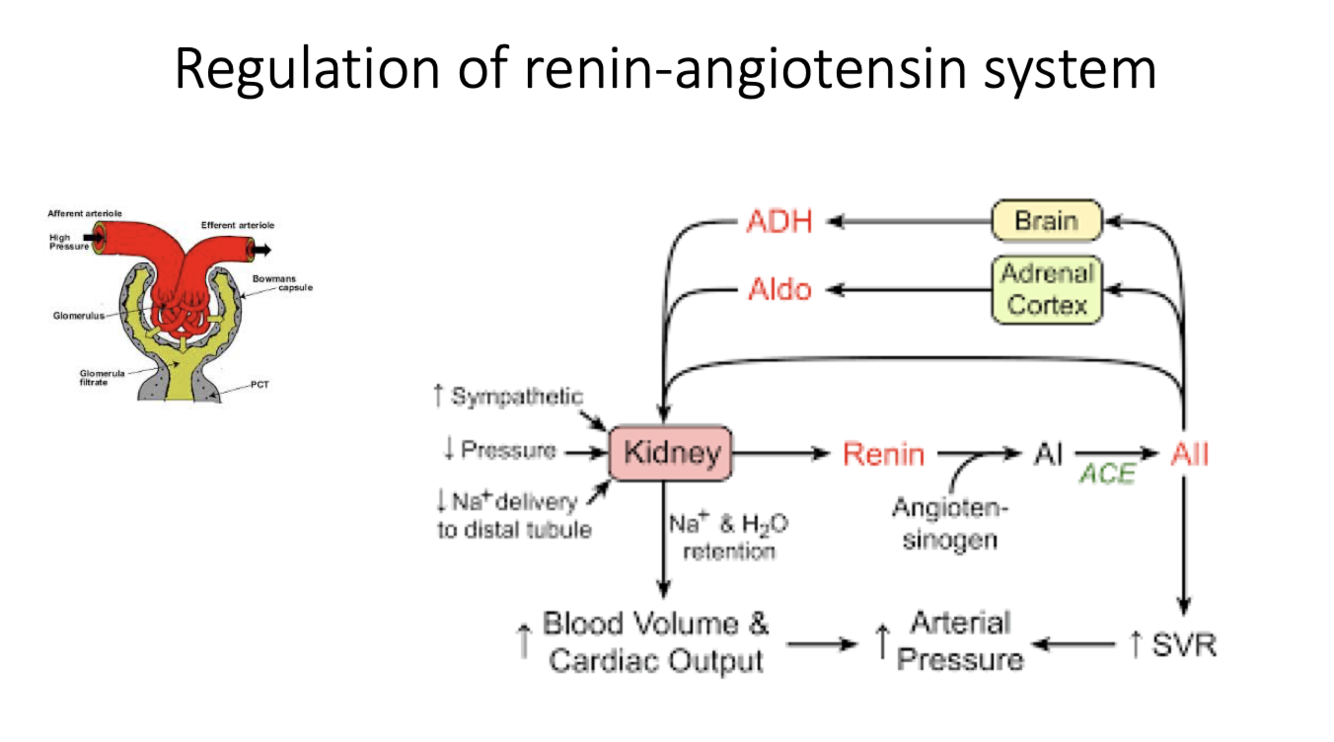
- the afferent arteriole is primed to produce renin until sufficient stretch (which indicates good cardiac output) and pressure occurs, in which point renin production decreases.
- renin release increases when there is increase in nervous system activity or when there’s reduced distal nephron sodium delivery. when we increase the release of renin a cascade results that increases proudction of angiotensin II which increases absorption of salt and fluid at the proximal tubule. It also facilitates the release of ADH hormone that results in water reabsorption. it increases CO and arterial pressur,e and when the artieral pressure is normal/sufficient, the RAS decreases in activity.
Primarily regulates serum osmolality; also responds to low blood volume states. Stimulates reabsorption of water in collecting ducts. Also stimulates reabsorption of urea in collecting ducts to maximizes corticopapillary osmotic gradient.
ADH
Primarily regulates ECF volume and Na+ content;
incresae release in decreasedblood volume states. Responds to hyperkalemia byK+ excretion.
aldosterone
Helps maintain blood volume and blood pressure. Affects baroreceptor function; limits reflex bradycardia, which would normally accompany its pressor effects.
angiotensin II
__ is secreted by JG cells in response to decreased renal perfusion pressue (detected by renal baroreceptors in the afferent artiole), increasing renal sympathetic discharge (beta 1 efect), and decreasing NaCL delivery to the macula densa cells
renin
Efferent arteriole allows for greater
hydrostatic pressure. this increases the glomerular filtration rate.
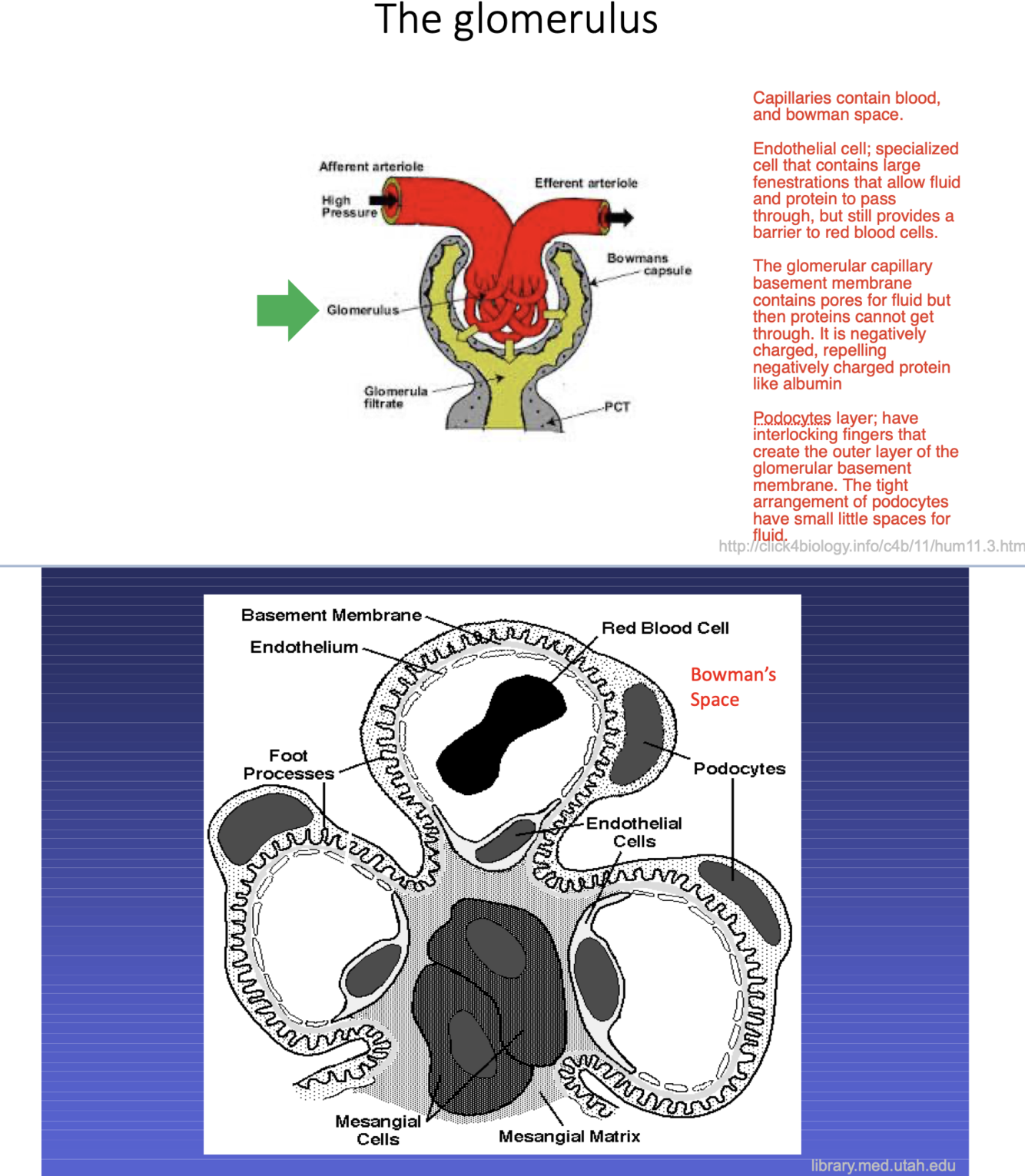
3 layers to the glomerular capillary barrier
- fenestrated capillary endothelium
- basement membrane with type 4 collagen chains and heparan sulfate
- visceral epithelial layer consisteing of PODOCYTE CELL. have interlocking fingers that create the outer layer of the glomerular basement membrane. The tight arrangement of podocytes have small little spaces for fluid.
Charge barrier—all 3 layers contain ⊝ charged glycoproteins that prevent entry of ⊝ charged molecules (eg, albumin).
Size barrier—fenestrated capillary endothelium (prevents entry of > 100 nm molecules/blood cells); podocyte foot processes interpose with glomerular basement membrane (GBM); slit diaphragm (prevents entry of molecules > 50–60 nm).
___ ___ __ is used to quantify solute clearance
glomerular filtration rate. • Typically based upon serine creatinine in blood. Endogenous waste product from muscle waste. Change in CK is caused by change in kidney clearance.
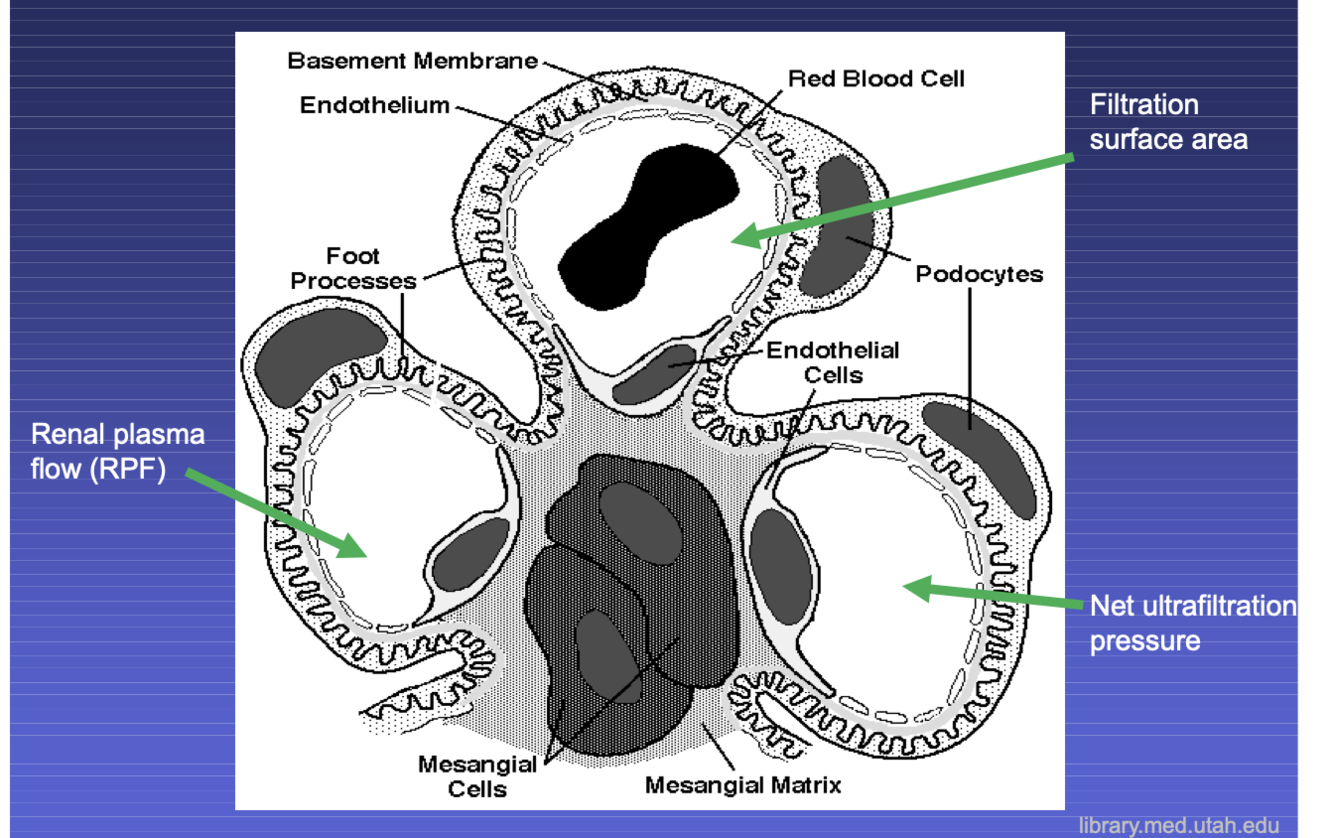
outline how starlings forces affect GFR
- *• Renal plasma flow;** the more blood flow, the more filtration rate.
- *• Filtration surface area**; the less surface area (due to disease), the reduced filtration
- *• Net ultrafiltration pressure;** hydrostatic and oncotic pressure and oncotic pressure of capillary and Bowmans space can affect movement of fluid that contains waste products of the blood.

-
Basic Nephrology: The Glomerulus11
-
Basic Nephrology: The Renal Tubules16
-
Approach to Abnormal Electrolyes10
-
Water Handling44
-
Intravenous Fluids33
-
Approach to Hyponatremia11
-
Fluid Compartment and Edema18
-
Treatment of Hyponatremia11
-
Endocrine 10132
-
Diabetes in Children21
-
Insulin Management29
-
Carbohydrate Metabolism and Regulation49
-
Peptide and Steroids17
-
Introduction to Diabetes21
-
Primary Hypertension I23
-
Primary Hypertension Part 221
-
Hypernatremia- Diabetes Insipidus, Polydipsia, Polyuria29
-
Diuretics25
-
Pathogenesis of Type I DM30
-
Pathogenesis of Type II DM22
-
Lipoprotein Physiology I19
-
Lipoprotein Physiology II: Genetic Lipid Disorders35
-
Management of Lipid Disorders26
-
Secondary Causes of Hyperlipidemia30
-
CV Risk Prediction18
-
Appropriate Use of DM Guidelines3
-
Hyperglycemic Diabetic Emergencies38
-
Hypoglycemia19
-
Non-Insulin Pharmacologic Agents for Diabetes18
-
Diabetes in Pregnancy38
-
Potassium Physiology13
-
Hypokalemia11
-
Hyperkalemia12
-
Putting it All Together: Diabetes2
-
In hospital Management of Diabetes14
-
Approach to Proteinuria35
-
Glomerular Hematuria: Nephritic Syndrome14
-
NSAIDs and Renal Toxicity15
-
Nephrolithiasis II30
-
Acute Kidney Injury I and II31
-
Acute Kidney Injury III13
-
Acute Interstitial Nephritis14
-
Acute Tubular Necrosis22
-
Thyroid Anatomy and Pathology I40
-
Thyroid Anatomy and Pathology II20
-
Low TSH Approach29
-
High TSH Approahc23
-
Thyroid Disorders in Pregnancy47
-
Abnormal TSH in Infancy38
-
Approach to Acid-Base Problems18
-
Proton Handling and Renal Tubular Acidosis15
-
Metabolic Alkalosis13
-
Metabolic Acidosis12
-
Incontinence: Voiding Function36
-
Approach to Chronic Kidney Disease31
-
Complications and Management of CKD29
-
Renal Replacement Therapy34
-
Palliative Care in CKD11
-
Drug Handling and the Kidney22
-
Approach to the Poisoned Patient23
-
Kidney Transplantation6
-
Calcium Metabolism35
-
Bone Metabolism Continued20
-
Approach to the Thyroid Nodule39
-
Thyroid Cancer26
-
Osteoporosis I33
-
Osteoporosis II: Treatment29
-
Hypocalcemia24
-
Hypercalcemia15
-
Growth Hormone Excess and Physiology19
-
Pituitary Physiology23
-
Approach to Prolactinemia15
-
Diabetic Nephropathy26
-
Hypertensive Nephrosclerosis13
-
Renal Artery Stenosis15
-
Erectile Dysfunction15
-
Adrenal Physiology27
-
Neoplasia of Testes and Scrotal Mass16
-
Urine Microscopy16
-
Newborn Disorders of Sexual Development16
-
Delayed Puberty17
-
Precocious Puberty28
-
Pediatric Panhypopituitarism22



