Diuretics all work by causing the kidneys to waste __, causing them to also waste water.
Diuretics all work by causing the kidneys to waste sodium, causing them to also waste water.
4 classes of diuretics
carbonic anhydrase inhibitors
loop diuretics
potassium sparing diuretics
thiazide diuretics
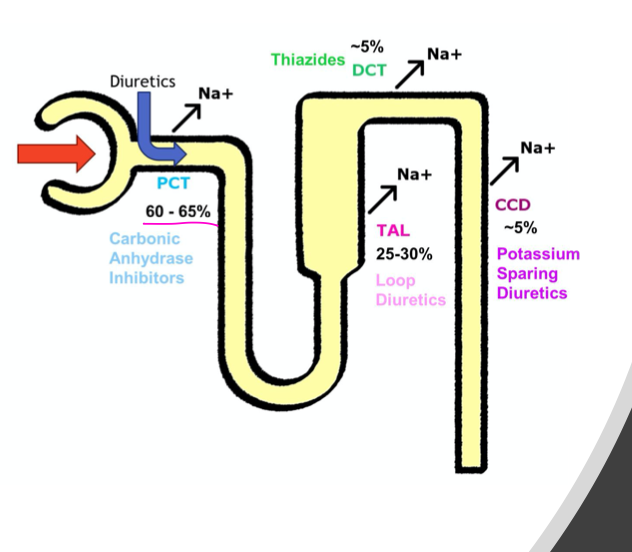
site of carbonic anhydrase inhibitor MOA
PCT;
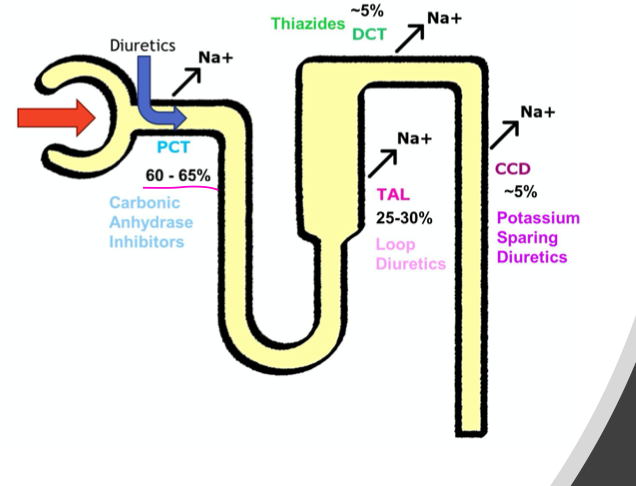
site of nephron where most re-absorption happens
PCT: 60-65%
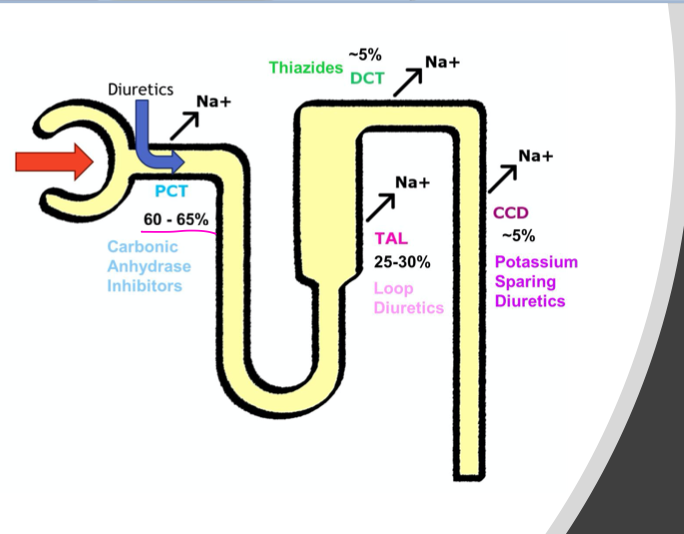
site where thiazides MOA
DCT
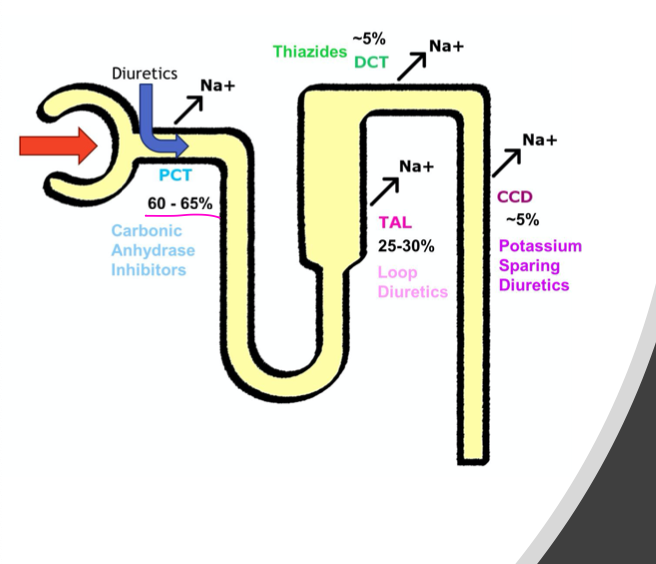
cite of loop diuretics MOA
loop diuretics
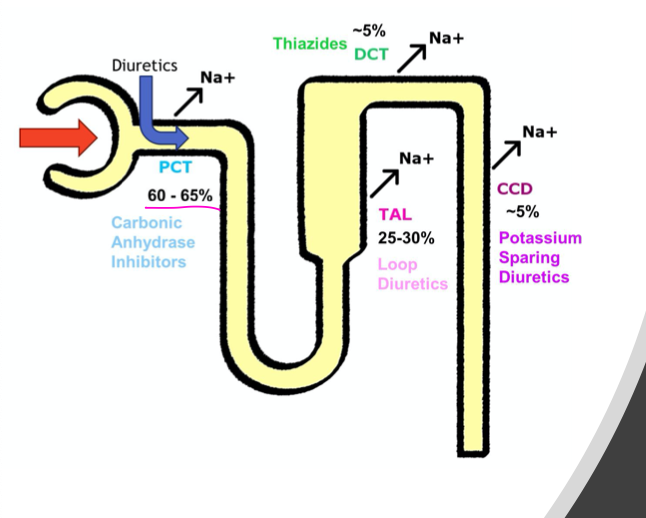
site of postassium sparing diuetics MOA
CCD/collecting duct
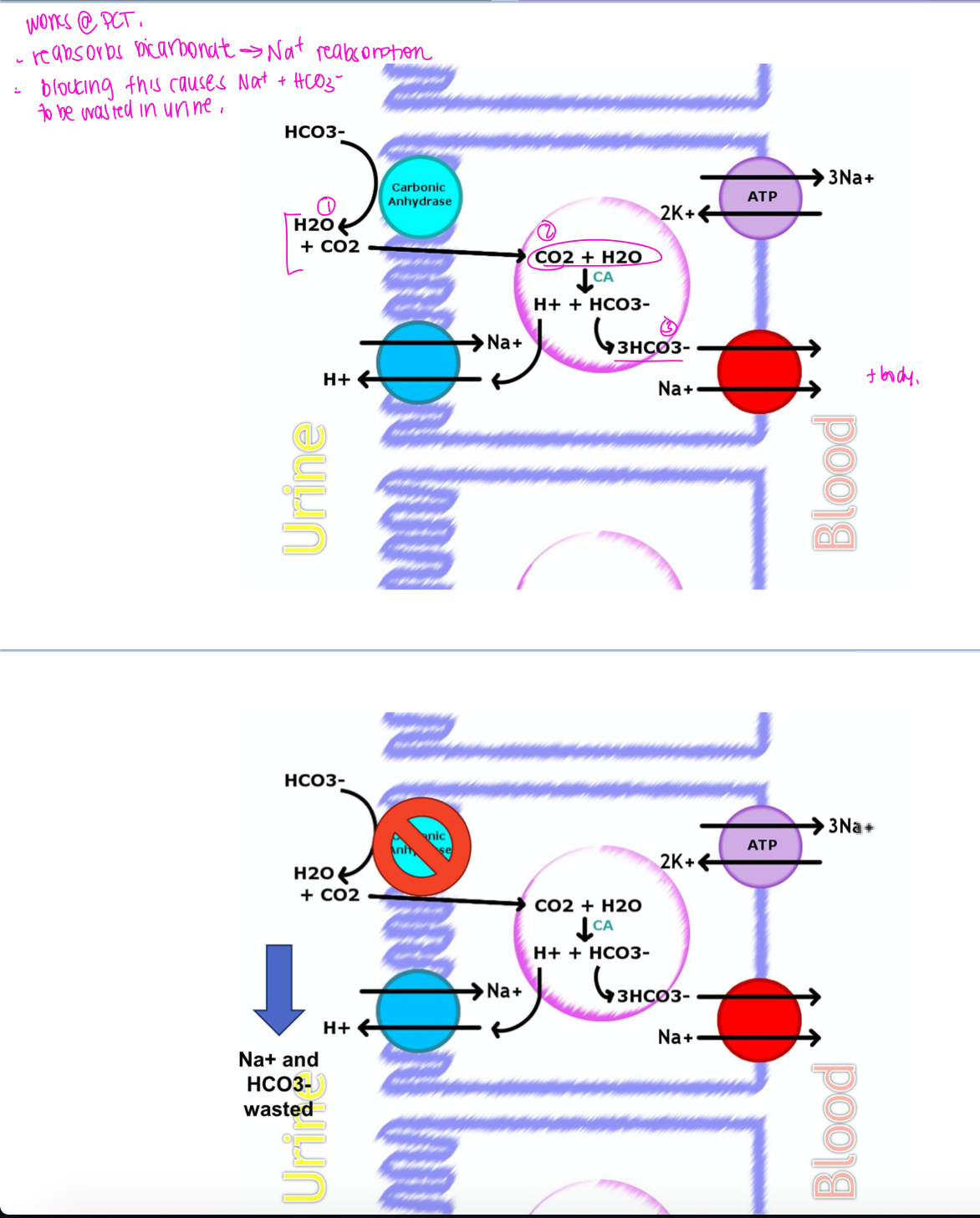
example of carbonic anhydrase inhibitor. outline the site and MAO
site; PCT– site of most sodium reabsorption
example: aetazolamide
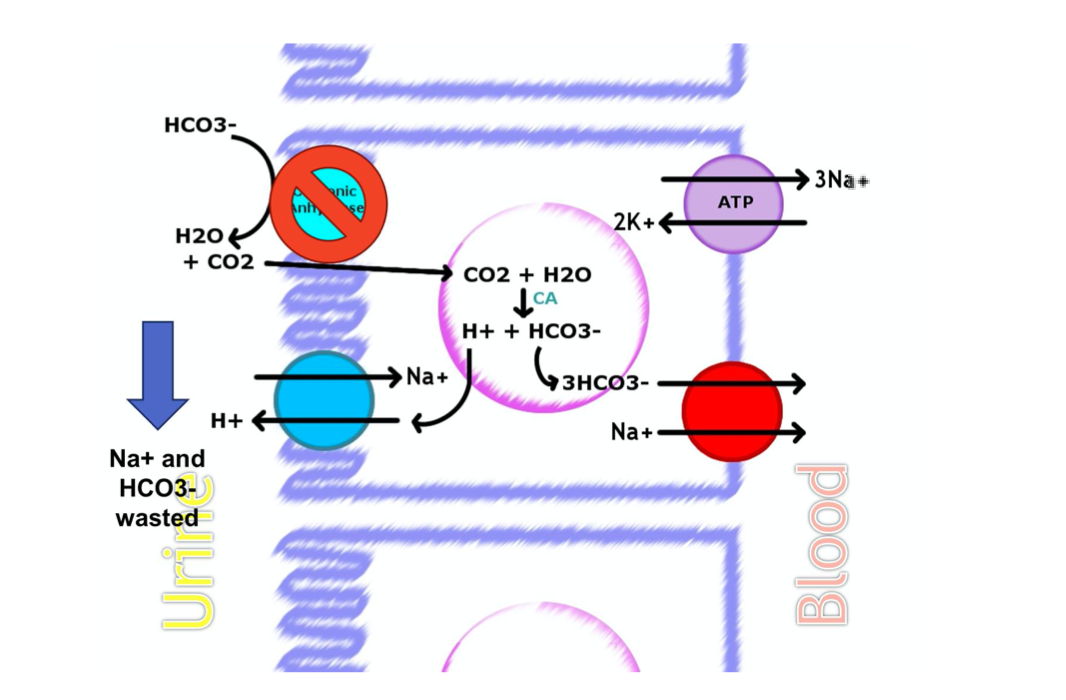
MOA; NORMALLY, carbonic anhydrase on the lumen of the PCT cell converts bicarbonate to H2O and water. this H2O and water enters the cell, where it is buffered to H+ and HCO3-. the H+ gets transported back OUT of the cell into the urine, with Na+ being pumped into the cell through the Na/H+ transporter. Bicarb from the carbonic anhydrase buffering and Na+ get co transported back into blood, causing Na+ reabsorption and water follows. However, when CA is BLOCKED by acetazolamide, there is no bicarb to cotransport with Na+, leaving Na+ in the diltrate. there is sodium wasting and thus promotes diuresis
3 indicatiosn for carbonic anhydrase inhibitors
- altitude sickness; bicarb wasting causes a state of metabolic acisosis– shifts Hb-O2 curve and increases the o2 delivery to tissues
- galucaoma
- seizures
side effects of CAHs and why
- metabolic acidosis; less bicarb is being transported back into the blood (because it goes through the HCo3-/Na+ transporter in the PCT)
- hyponatremia; sodium wasting– sodium also not transported because CA inhibited
- hypokalemia– due to sodium delivery to distal nephron, in combo with RAS activation.
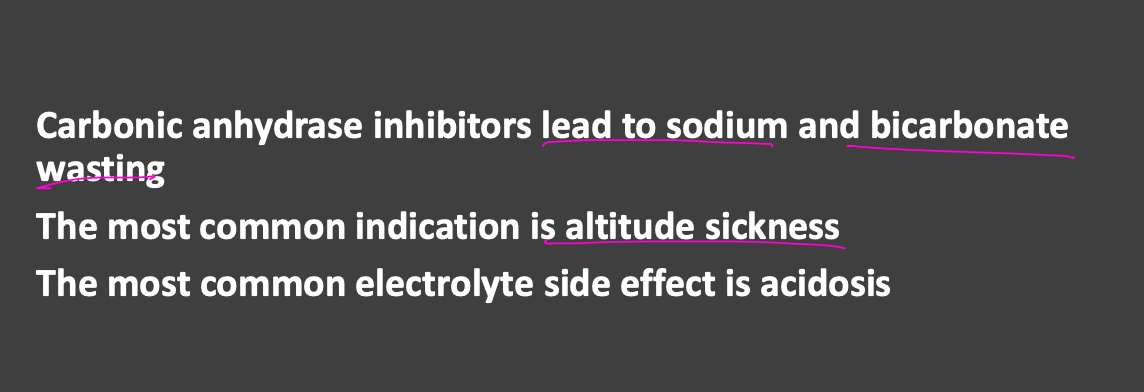
Carbonic anhydrase inhibitors lead to __ and ___ wasting
The most common indication is __ sickness
The most common electrolyte side effect is __
example of a loop diuretic, site, and MOA
ex/ lasix/furosemide.
site; THICK ascending loop of henle
MOA; normally in the ascending loop, Na+ is reabsorbed but it is impermeable to water. the 2NKCC transporter transports Cl, K, and Na from the filtrate back to the cell/. K+ is pumped back out, but Cl- is shuttled into the blood. the Na+ is reabsorbed through the 3Na+in/2K+out exchanger. FUROSEMIDE INHIBITS the 2NKCC channel, preventing any reabsorption of K+, Cl or Na+. Thus, Na+ accumulates in the ascending loop, causing interstitial washout.
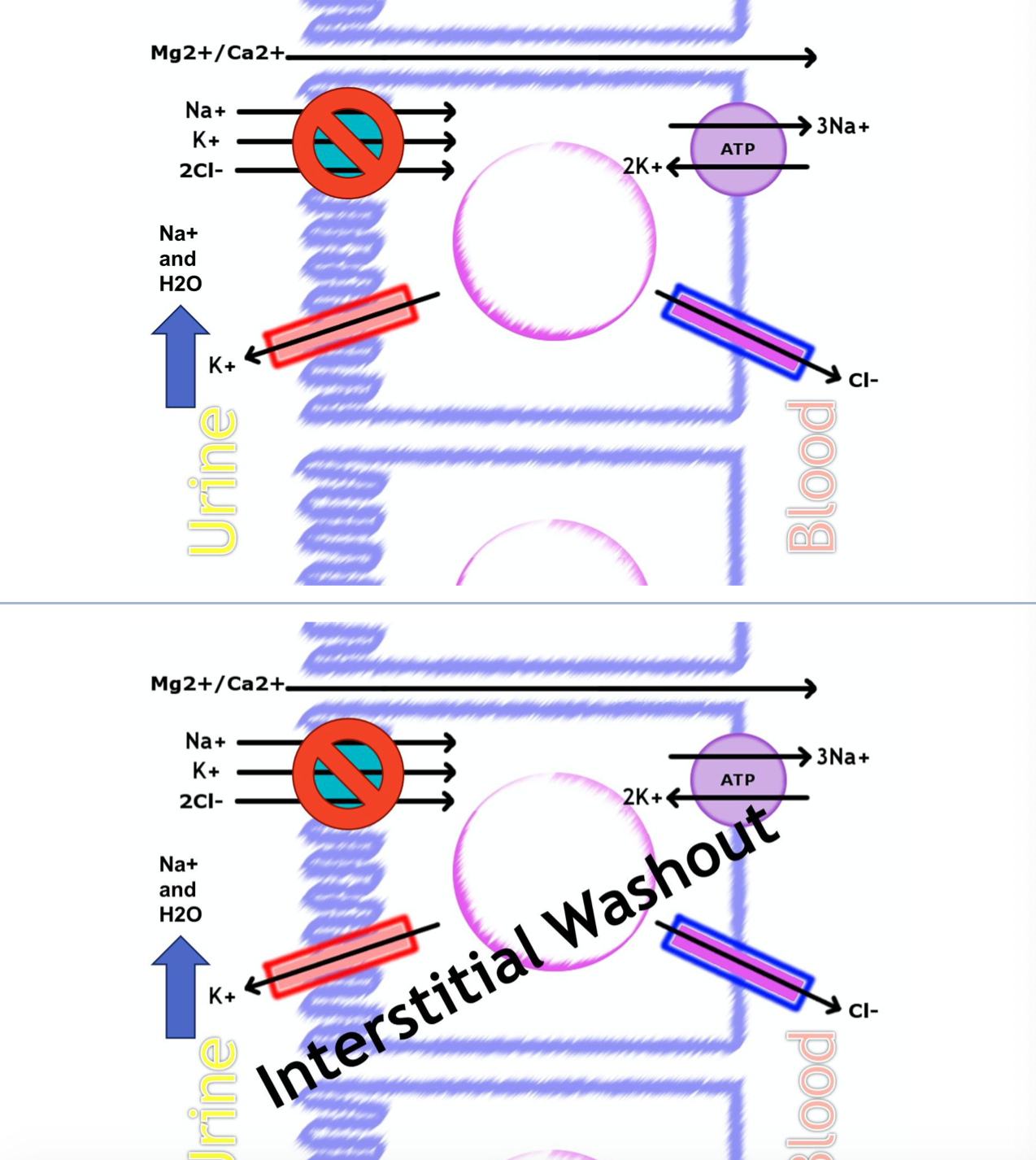
indications for furosemide
edema and pulmonary edema. it is a strong diuretic.
electrolyte side effects of loop diuretics/furosemide
hypokalameia; deactivation of NKCC prevents K+ reabsorption, causing distal wasting of K+
hypernatremia: due to interstitial wash out and large H2O diuresis
Hypomagnesemia
Metabolic ALKALOSIS; loops impair Mg2+ reabsorption.
Loop diuretics block the __
Potent salt and water diruresis Used for volume reduction
Most common electrolyte side effect it __ and __
__ is a common side effect
Loop diuretics block the NKCC
Potent salt and water diruresis Used for volume reduction
Most common electrolyte side effect it hypokalemia and hypernatremia Hypovolemia is a common side effect
thiazide diuretics act on the ___. Example, and MOA
act on the DCT. ex/ hydrochlorothiazise, indapamide, chlorthalidone.
MOA: Normally, DCT reabsorbs Na+ and Cl- through Na+/Cl co transporter, and also reabsorbs Mg2+ and Ca2+ through channels. thiazide blocks the Na+/Cl- channel at the DCT, preventing Na+ reabsorption.
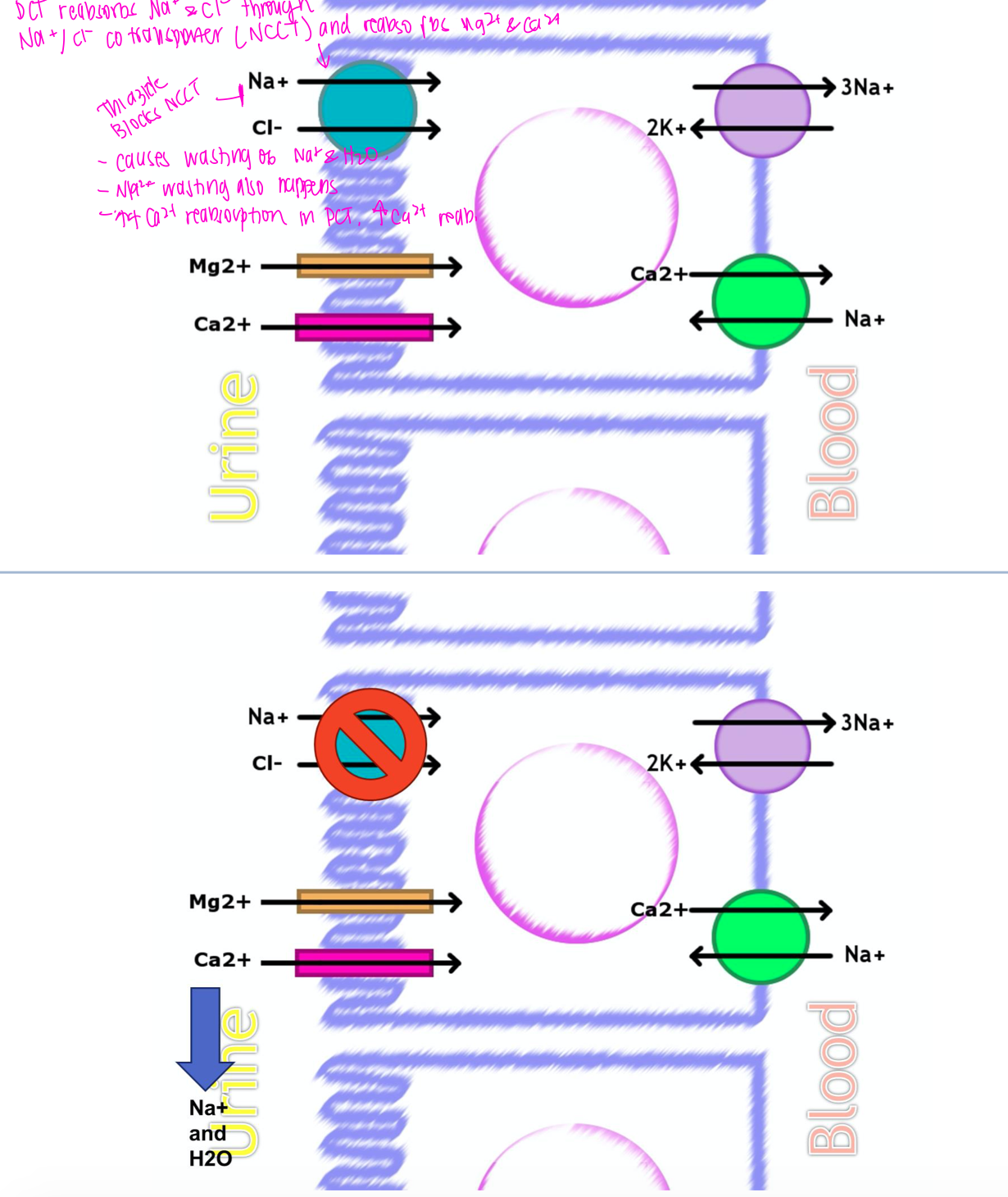
indications and electrolyte side effects of thiazide diuretics that work at the DCT
indications; hypertension
electrolyte side effects; hyponatremia, hypokalemmia, hypomagnesemia, hypercalcemia
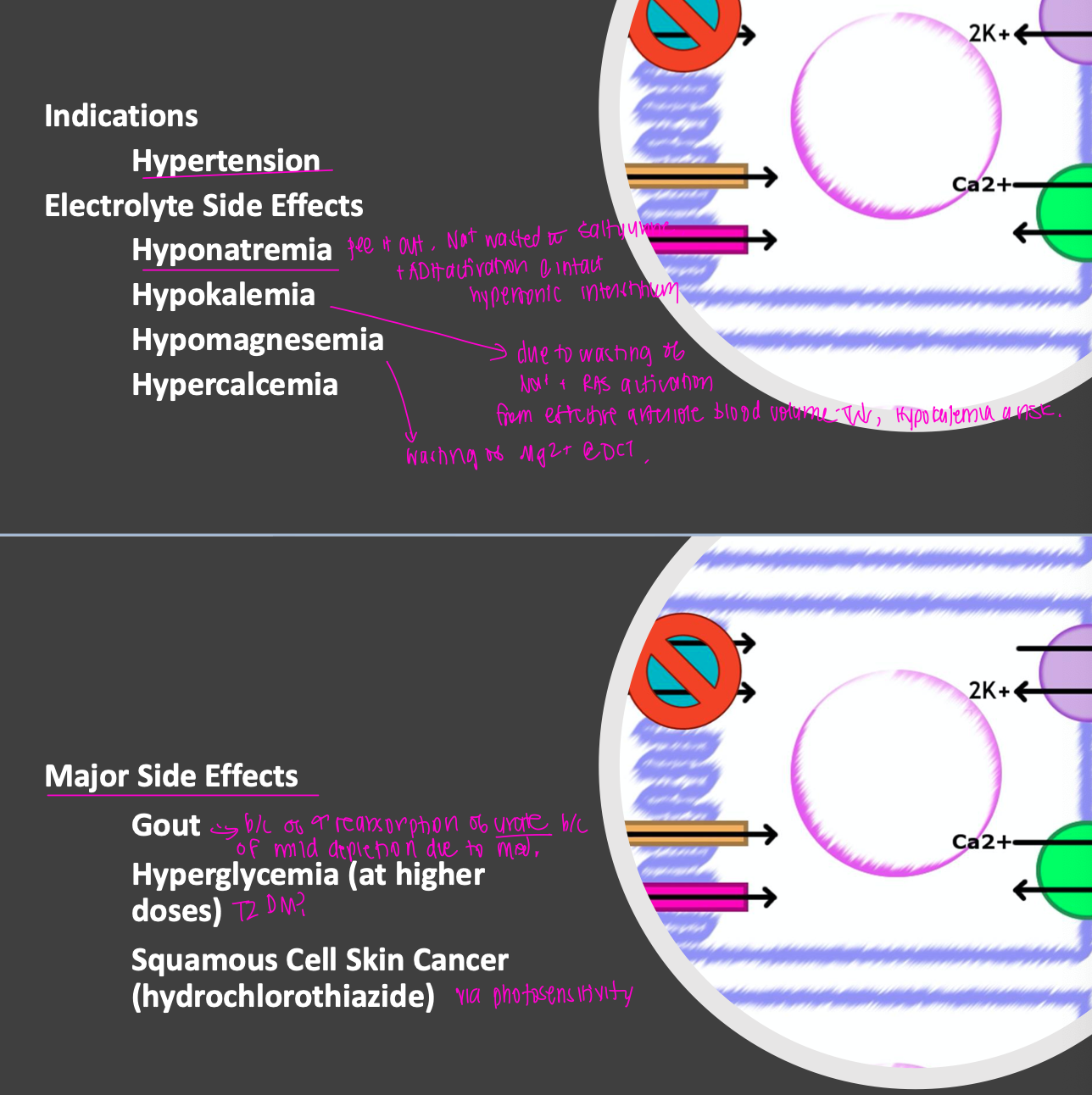
why is gout a major side effect of thiazide diuretics
Thiazide diuretics are associated with elevated serum uric acid (SUA) levels. They increase direct urate reabsorption in the proximal renal tubules [3]
type of cancer associated with hydrochlorothiazide
squamous cell skin cancer– causes photosensitivity.
Loop diuretics block the __ at the ___
Thiazide diuretics block the __ at the ___
Loop diuretics block the NKCC (Na+K+2Cl- channel)
thiazide diuretics Block the NCCT (Na/Cl- co transport channel)
two broad categories of potassium sparing diuretics and give an example
- mineralcorticoid antagonists– spironolactone and eplerenone
- ENaC blockers– amiloride, triamterine. (epithelial sodium chennal blockers)
Outline the MOA of Mineralcorticoid antagonists and ENACblockers (potassium sparing diuretics)
normally, the principle cell of the collecting tubule reabsorbs Na+ through ENAC, creating a negative luminal charge, which is neutralized by the secretion of K+ removed by the renal outer medullary K+ channel. Aldosterone turns on this function, resulting in increased Na+ absorption and K+ excretion
When MNAs inhibit aldosterone/block its binding, it shuts down the principle cell and prevents na+ reabsorption, causing salt wasting.
- ENACblockers directly inhibit ENaC, so Na+ can’t be reabsorbed even if aldosterone is there.
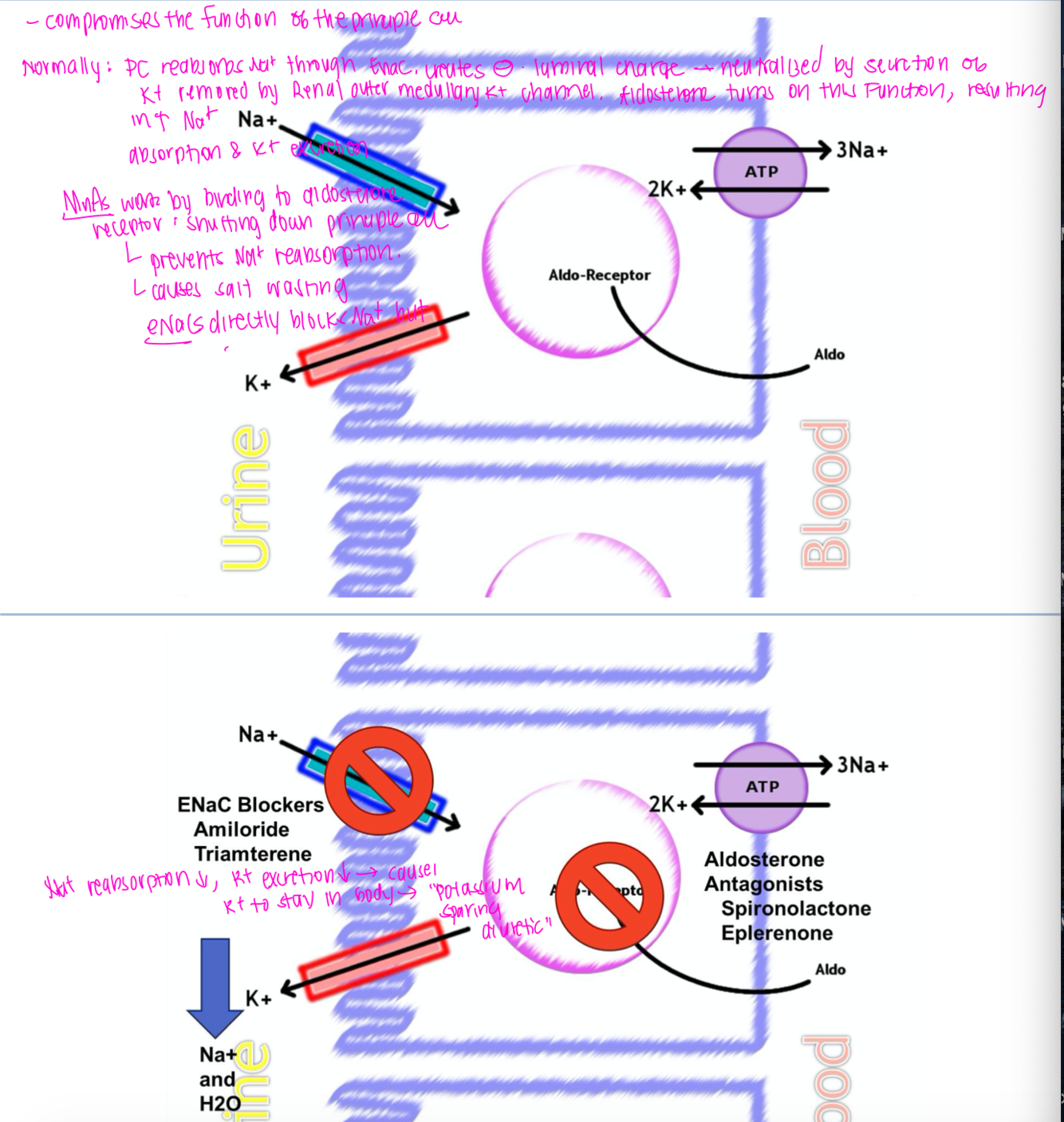
indications to use diuretics, and electrolyte and non electrolyte side effects
- hypertension
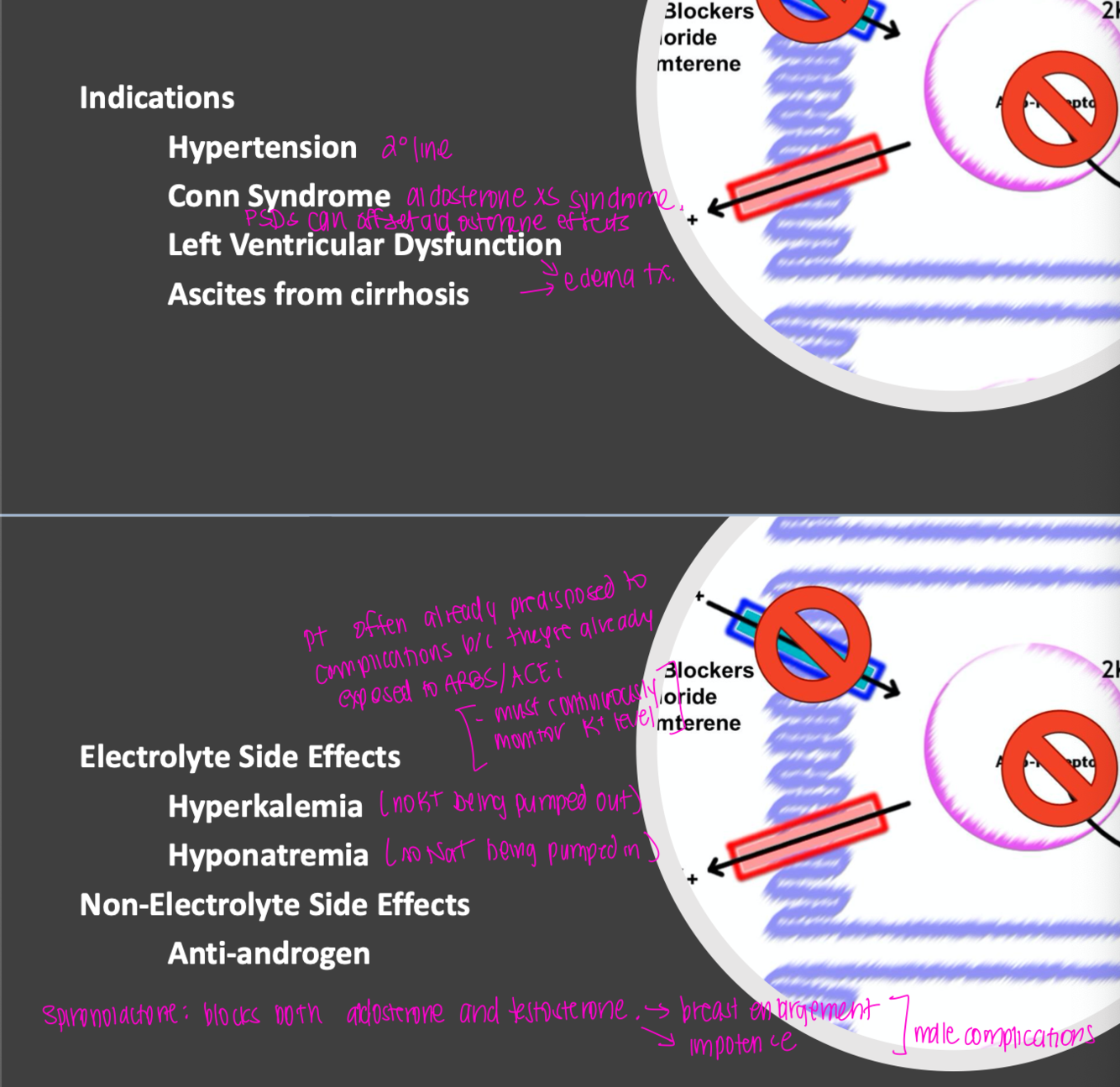
- Conn Syndrome: aldosterone excess syndrome: PSDs can offset aldosterone effects
- left ventricular dysfunction
- ascites from cirrhosis
**KEY NON-ELECTROLYTE side effect is that they are anti-androgens


-
Basic Nephrology: The Glomerulus11
-
Basic Nephrology: The Renal Tubules16
-
Approach to Abnormal Electrolyes10
-
Water Handling44
-
Intravenous Fluids33
-
Approach to Hyponatremia11
-
Fluid Compartment and Edema18
-
Treatment of Hyponatremia11
-
Endocrine 10132
-
Diabetes in Children21
-
Insulin Management29
-
Carbohydrate Metabolism and Regulation49
-
Peptide and Steroids17
-
Introduction to Diabetes21
-
Primary Hypertension I23
-
Primary Hypertension Part 221
-
Hypernatremia- Diabetes Insipidus, Polydipsia, Polyuria29
-
Diuretics25
-
Pathogenesis of Type I DM30
-
Pathogenesis of Type II DM22
-
Lipoprotein Physiology I19
-
Lipoprotein Physiology II: Genetic Lipid Disorders35
-
Management of Lipid Disorders26
-
Secondary Causes of Hyperlipidemia30
-
CV Risk Prediction18
-
Appropriate Use of DM Guidelines3
-
Hyperglycemic Diabetic Emergencies38
-
Hypoglycemia19
-
Non-Insulin Pharmacologic Agents for Diabetes18
-
Diabetes in Pregnancy38
-
Potassium Physiology13
-
Hypokalemia11
-
Hyperkalemia12
-
Putting it All Together: Diabetes2
-
In hospital Management of Diabetes14
-
Approach to Proteinuria35
-
Glomerular Hematuria: Nephritic Syndrome14
-
NSAIDs and Renal Toxicity15
-
Nephrolithiasis II30
-
Acute Kidney Injury I and II31
-
Acute Kidney Injury III13
-
Acute Interstitial Nephritis14
-
Acute Tubular Necrosis22
-
Thyroid Anatomy and Pathology I40
-
Thyroid Anatomy and Pathology II20
-
Low TSH Approach29
-
High TSH Approahc23
-
Thyroid Disorders in Pregnancy47
-
Abnormal TSH in Infancy38
-
Approach to Acid-Base Problems18
-
Proton Handling and Renal Tubular Acidosis15
-
Metabolic Alkalosis13
-
Metabolic Acidosis12
-
Incontinence: Voiding Function36
-
Approach to Chronic Kidney Disease31
-
Complications and Management of CKD29
-
Renal Replacement Therapy34
-
Palliative Care in CKD11
-
Drug Handling and the Kidney22
-
Approach to the Poisoned Patient23
-
Kidney Transplantation6
-
Calcium Metabolism35
-
Bone Metabolism Continued20
-
Approach to the Thyroid Nodule39
-
Thyroid Cancer26
-
Osteoporosis I33
-
Osteoporosis II: Treatment29
-
Hypocalcemia24
-
Hypercalcemia15
-
Growth Hormone Excess and Physiology19
-
Pituitary Physiology23
-
Approach to Prolactinemia15
-
Diabetic Nephropathy26
-
Hypertensive Nephrosclerosis13
-
Renal Artery Stenosis15
-
Erectile Dysfunction15
-
Adrenal Physiology27
-
Neoplasia of Testes and Scrotal Mass16
-
Urine Microscopy16
-
Newborn Disorders of Sexual Development16
-
Delayed Puberty17
-
Precocious Puberty28
-
Pediatric Panhypopituitarism22



