Disease of the bronchi can be created by:
- Alterations in wall thickness
- Lumen diameter
- Opacity of bronchi may result in inflammation of infiltrative dz
Normal bronchial wall are ____ and not well visualized in peripheral lung fields unless _______, ________, or surrounded by ______ _____ or contain _____.
obscured
thickened, mineralized , excessive fluid, secretions
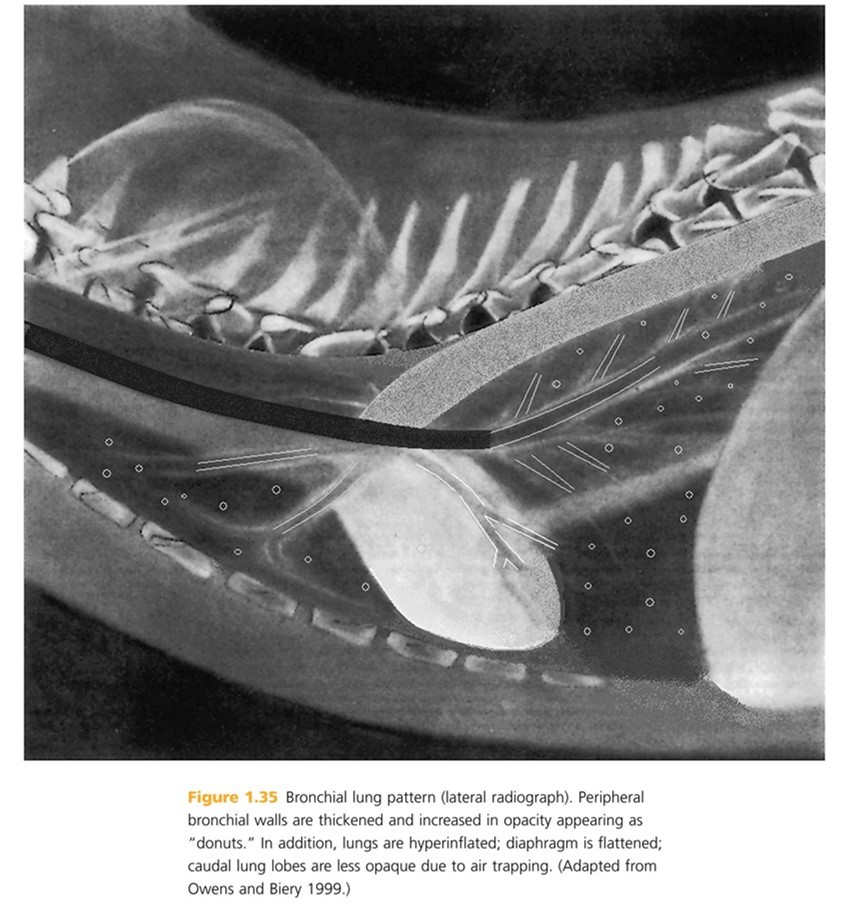
Thickened brochi viewed on-end appear as ____ ____.
Thick rings “donuts”
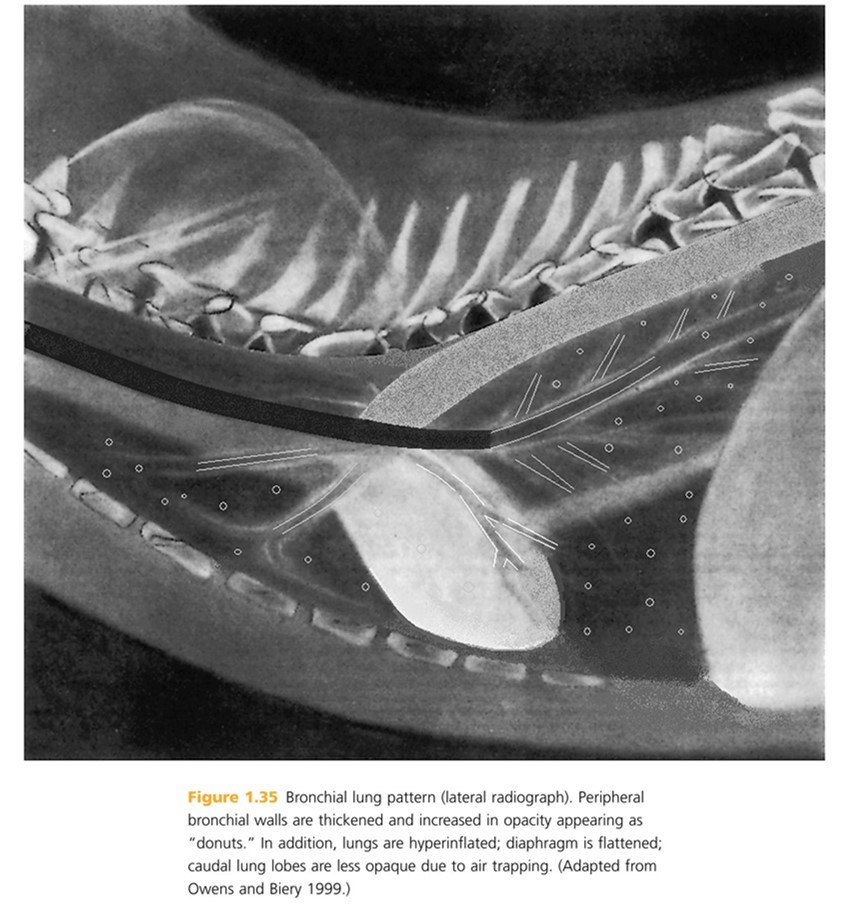
Thickened bronchi often do not ____ normally and appear as ____ ____ in profile. Paired blood vessels can be mistaken for thickened bronchial walls and therefore ______ are a more reliable finding with bronchial dz.
taper, parallel lines, “donuts”
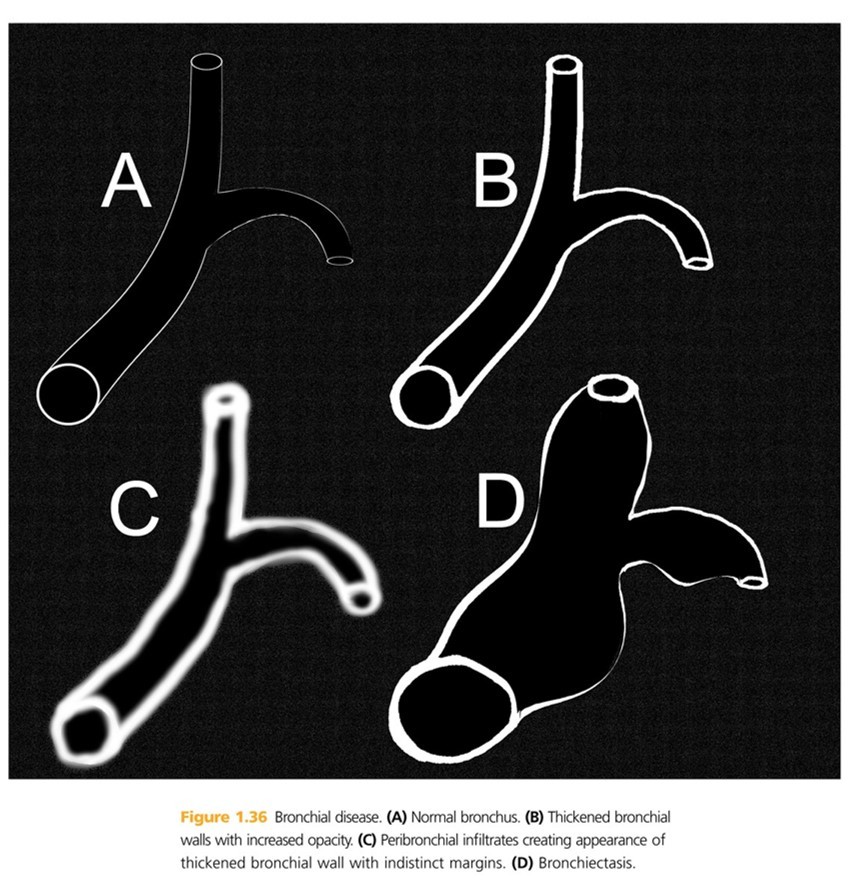
Outer bronchial margins may become indistinct due to disease in adjacent lung parenchyma or peribronchial infiltrates which is called ____ ____. Vascular margins usually remain sharp and well defined if lung dz is confined to ____. Bronchi with enlarged diameters and irregular shapes (bronchiectasis) typically result from ____ _____.
Peribronchial cuffing, bronchi, chronic inflammation
Definition of Bronchiectasis is:
Abnormal, irreversible, dialation of bronchi. It is uncommon in dogs and rare in cats (American Cocker Spaniel and Siamese cat may have higher incidence). Most often reported in middle-aged and older animals, but can happen at any age.
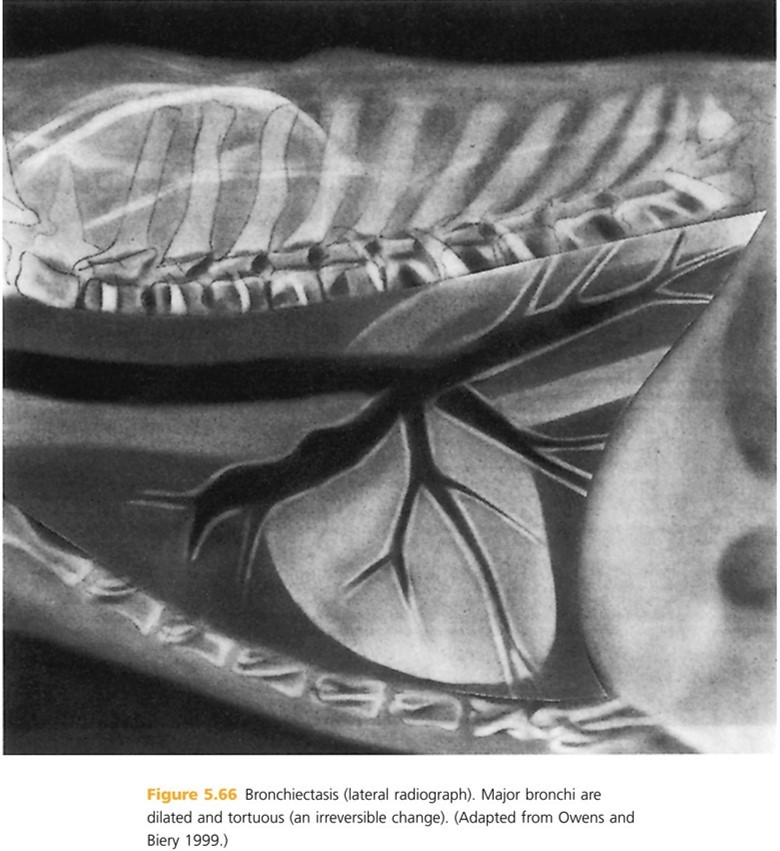
Acquired bronchiectasis results from _____ _____.
chronic inflammation
Congenital bronchiectasis may occur with?
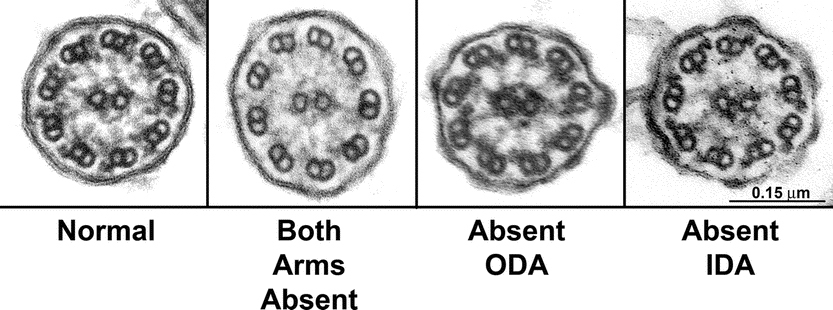
- Primary ciliary dyskinesia (reported in Rottweilers and Nwfoundlands) a.k.a. immotile ciliary syndrome or Kartagener syndrome, is a rare, ciliopathic, autosomalrecessive genetic disorder that causes defects in the action of cilia lining the respiratory tract (lower and upper, sinuses, Eustachian tube, middle ear) and fallopian tube, as well as in the flagella of sperm cells.
- Kartagener’s syndrome
- Bronchial hypoplasia or dysplasia
Affected animals often have recurrent respiratory infectiojns, which only termporarily respond to treatment
Clinical signs for Bronchiectasis include:
productive cough (sometimes paroxsmal- Pathology. a severe attack or a sudden increase in intensity of a disease, usually recurring periodically. ), retching, and labored breathing. Over time, secretions accumulate and block air flow, resulting in local or lobar pulomnary consolidation (aveolar pattern)
DDF for Bronchiectasis include:
Aspiration pneumonia, chronic bronchitis, Bronchial neoplasia
Causes of Bronchial lung patterns:
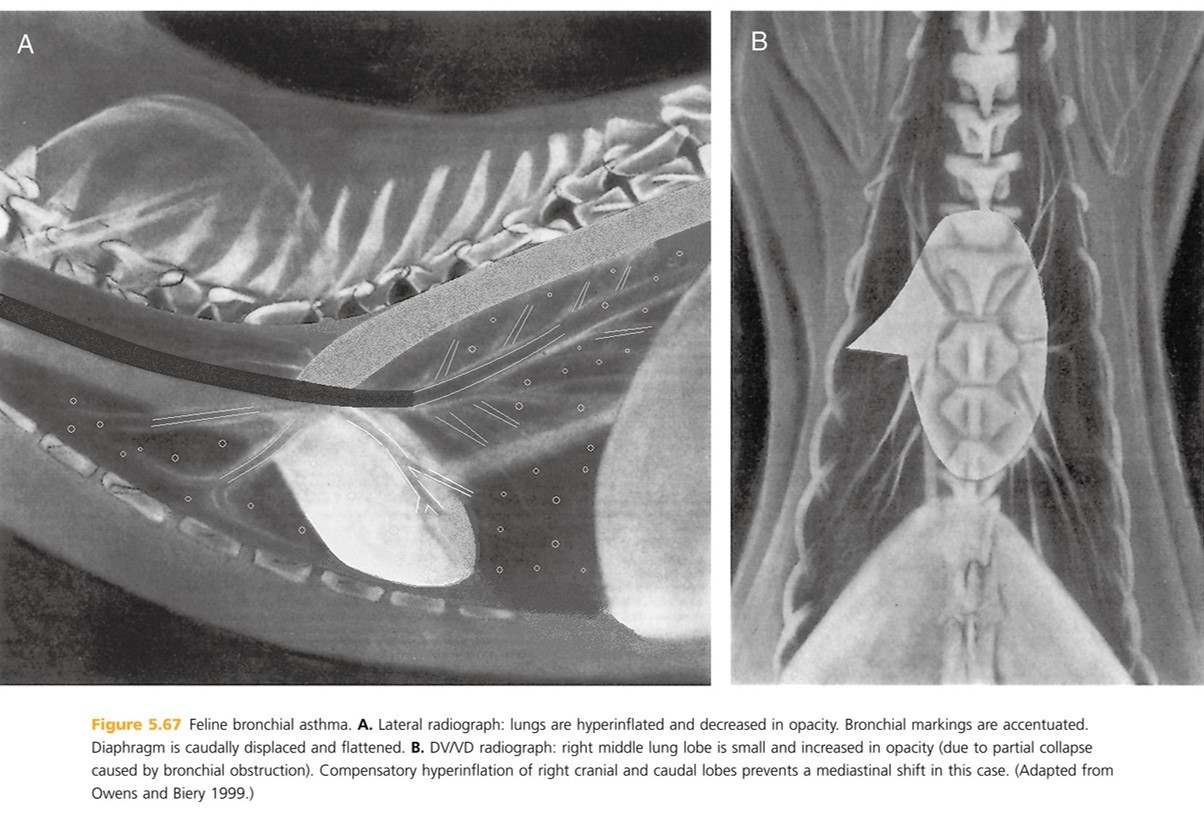
Allergy/asthma, chronic inflammation-(** tracheal collapse syndrome, tracheobronchitis), **Inhaled irritants** (second hand smoke), **infection** (bacterial, viral, parasitic), **Chronic Obstructive Pulmonary Disease (COPD)- (chronic bronchitis, emphysema, bronchiectasis, tracheal and bronchial collapse syndromes, chronic exposure to allergens and pollutants, tracheal hypoplasia, Tracheal stenosis, commpression of airways by a mass or enlarged heart, upper airway obstruction), Aspiration of material, FO

-
Images31
-
GK Questions15
-
Body Positions12
-
Diaphram9
-
Pleura and pleural space28
-
Mediastinum25
-
Trachea15
-
Lung27
-
Pulmonary vasculature pattern22
-
Bronchial lung pattern11
-
Esophagus37
-
Tracheobronchitis6
-
Treacheobronchial parasites12
-
Alveolar lung pattern20
-
Heart33
-
Nodular lung patterns (structured)9
-
Unstructured interstitial patterns6
-
Pneumonias16
-
Lung bacterial/viral/mycotic infections15
-
Abnormal cardiac size and shape11
-
Heart Problems6
-
Major vessels6
-
Heart worms13
-
Thymus1
-
Valve insufficiencies9
-
Tumors of the Heart6



