Flow of Blood
- Deoxygenated blood enters ____ side of heart through systemic ____
- Enters pulmonary circulation through pulmonary ____/_____ and becomes ______
- Blood leaves through pulmonary ____ to the ____ side of the heart
- Pumped into ______ circulation through systemic arteris that brings _____ blood to our organs at our systemic _____
Systemic Capillaries =
- right, veins
- arteries/capillaries, oxygenated
- veins, left
- systemic, oxygenated, capillaries
only sites of exchange between blood and tissue
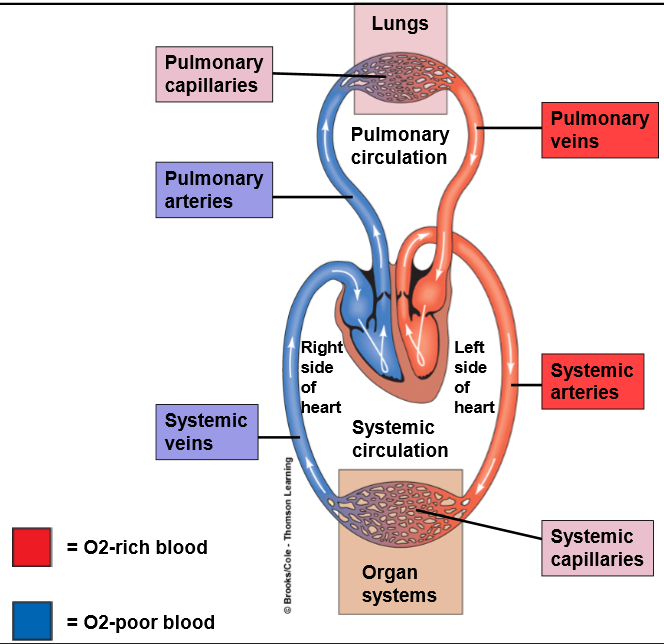
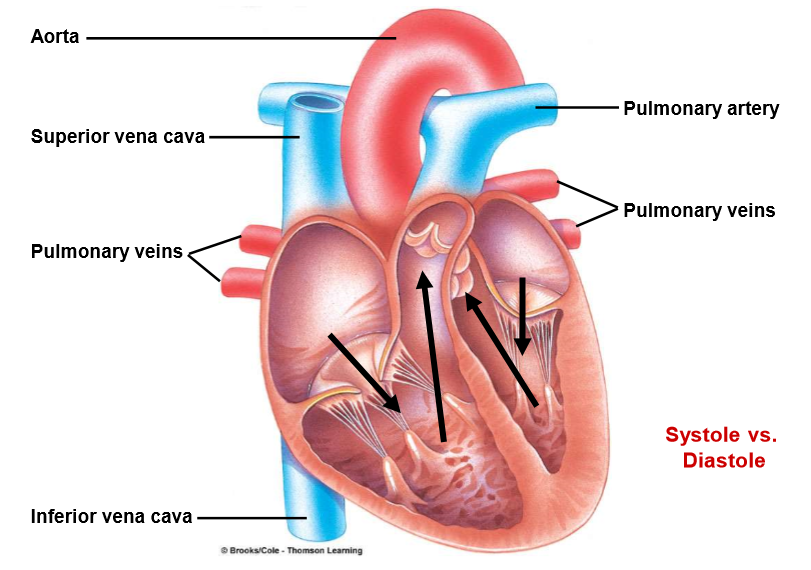
Flow of Blood through the Heart
=
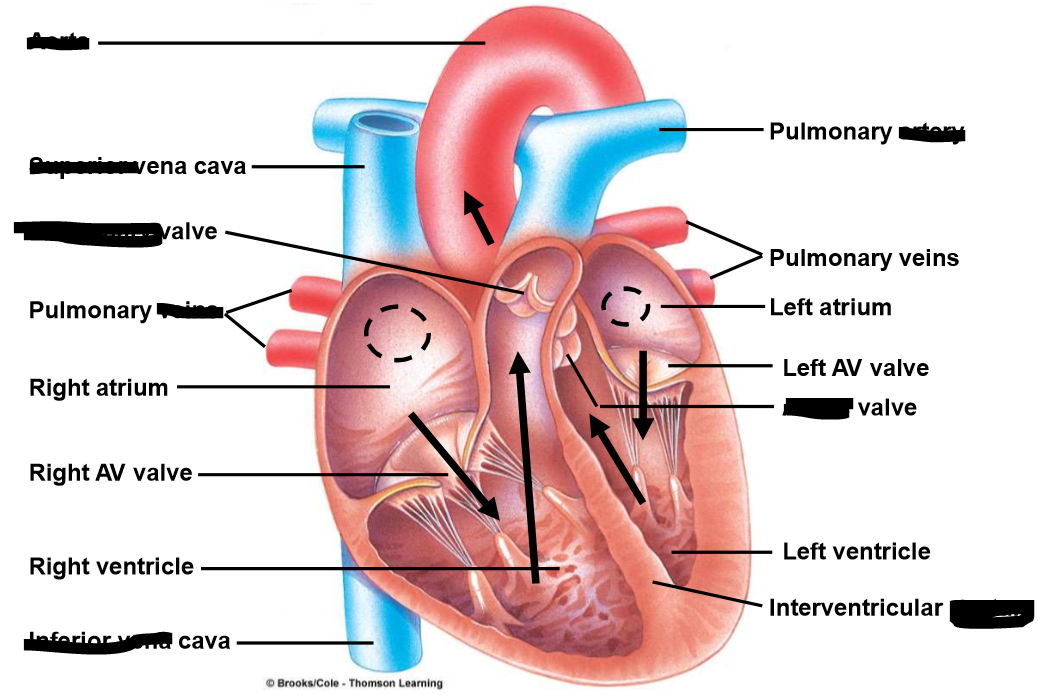
Inferior and Superior Vena Cava -> RA -> Right AV valve (tricuspid) -> RV ->
Pulmonary artery -> Pulmonary capillaries to become oxygenated -> Pulmonary vein ->
LA -> Left AV valve (mitral) -> LV -> Aortic valve -> Aorta/Aortic Arch
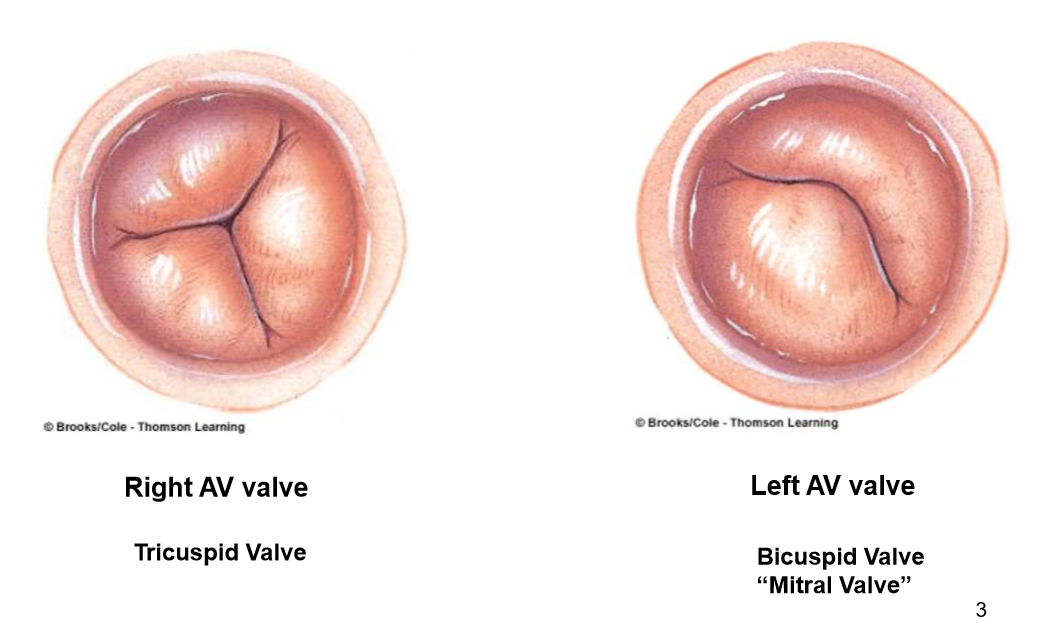
The Atrioventricular Valves
Right AV Valve =
Left AV Valve =
- Valves exist between atrium and ventricles, ventricles and arteries but NOT between ____ and ____
- Prevention of collapse (2)
Tricuspid Valve (3 leaflets)
Bicuspid “Mitral” Valve (2 leaflets)
- Veins and atria
- Strong rings of cartilage, Leaflets that fold inwards towards ventricles
Ventricle Anatomy
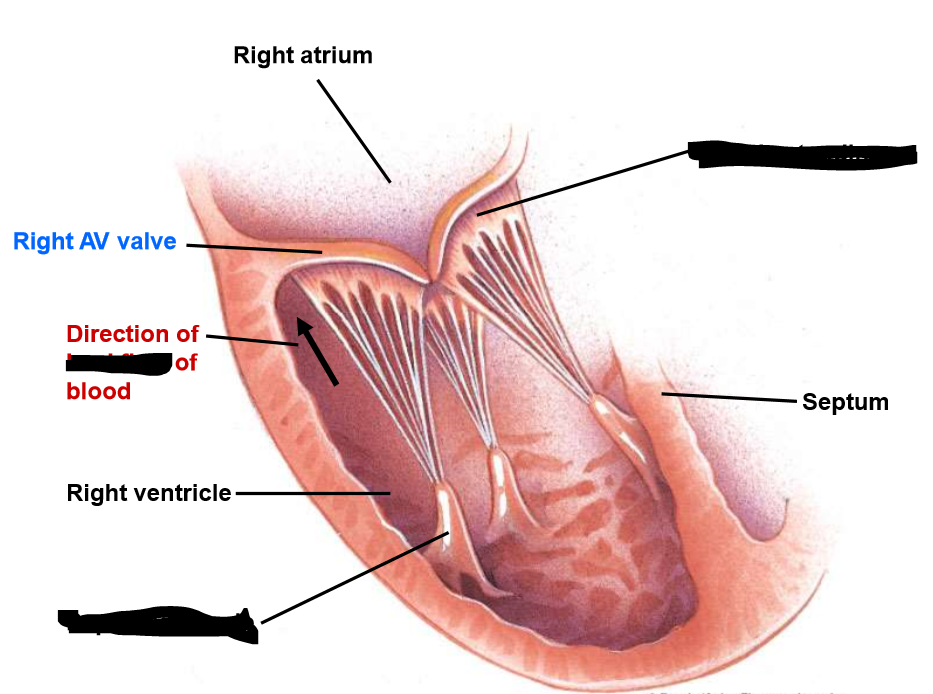
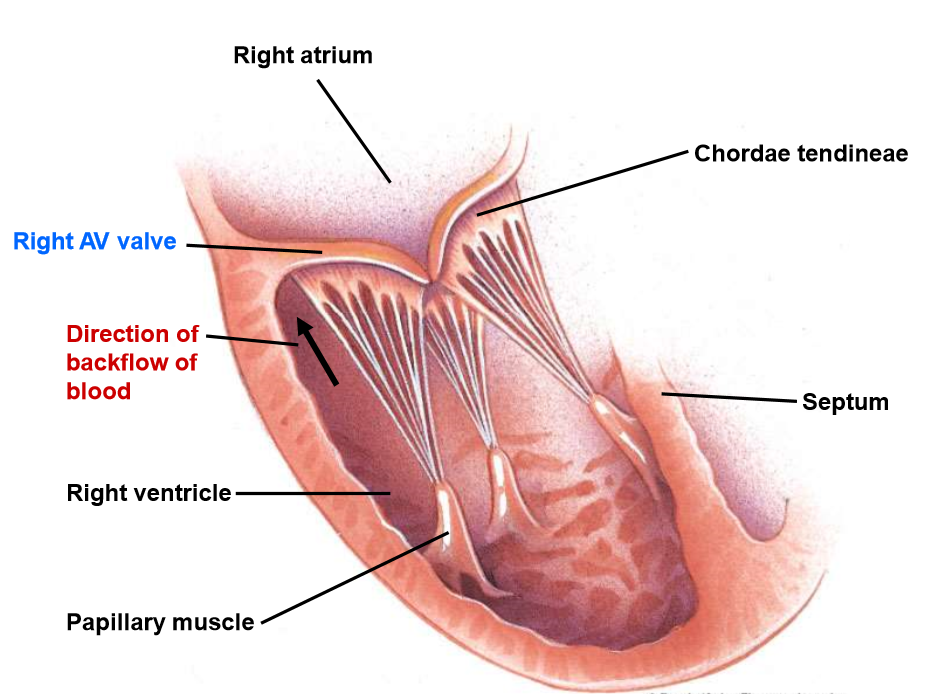
- Tendon cords that atach leaflets to the ventricle papillary muscle =
- Valves are critical in order to maximize ____- to use in contraction of muscle to push blood into artery
- Backflow represents =
- Chordae tendinae
- energy
- wasted energy
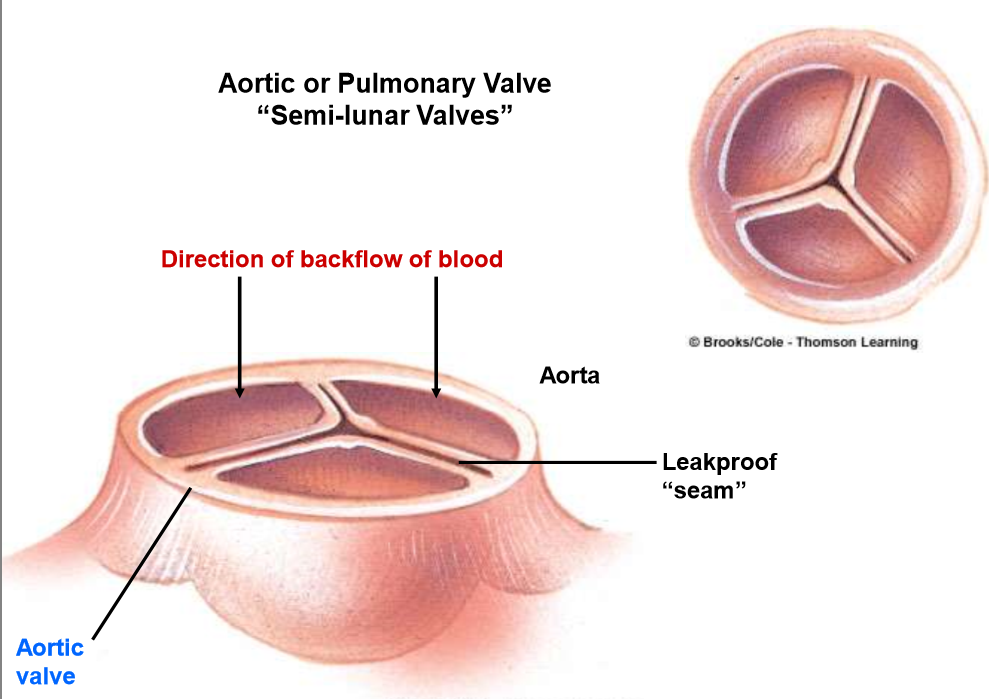
Aortic or Pulmonary valve “Semilunar Valves”
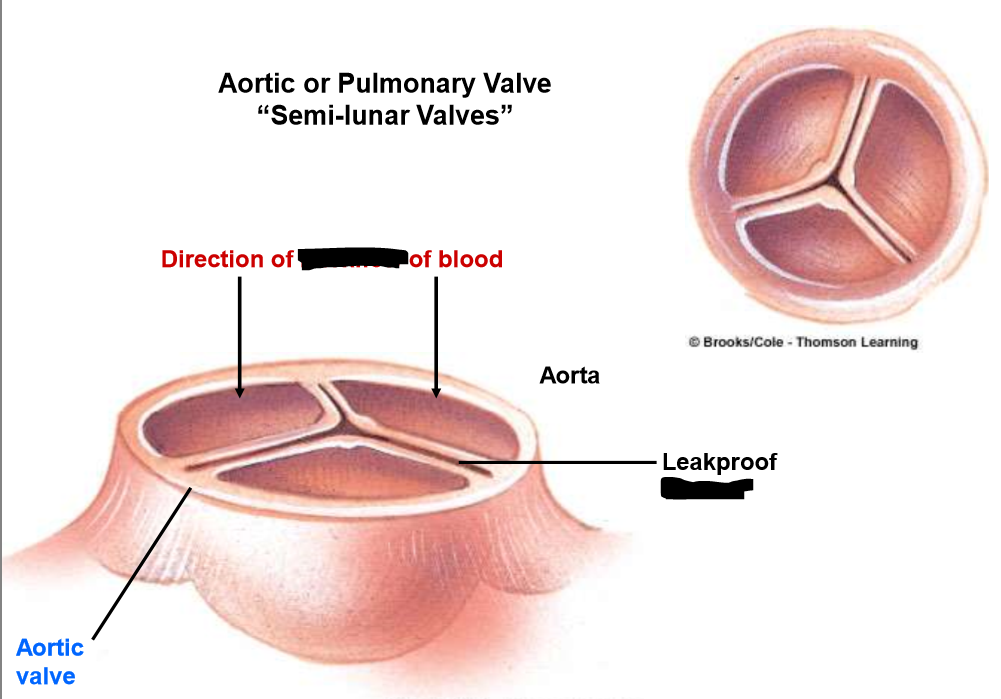
Difference from AV valves = these leaflets are true ____, forms little ____ -> so when valve is shut, blood fills these cups and participates in _____ off this valve
cusps, cups, sealing
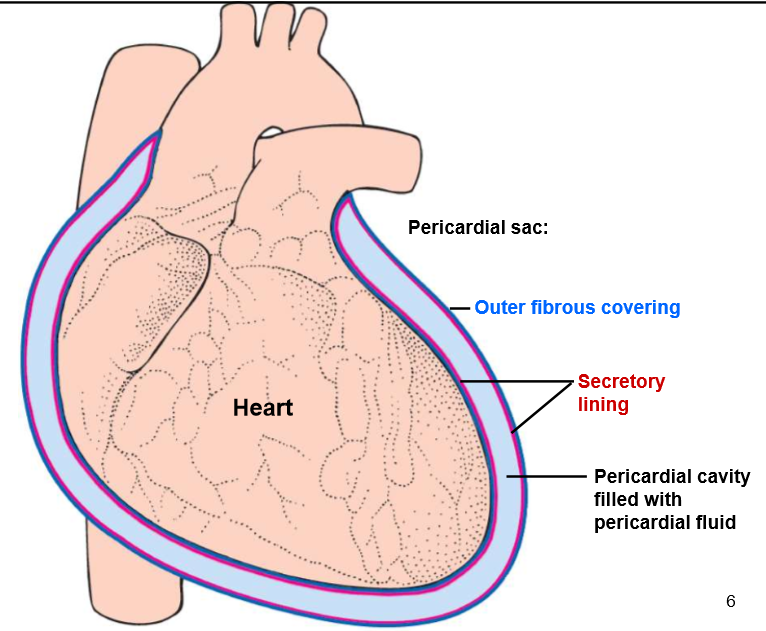
Pericardial Sac
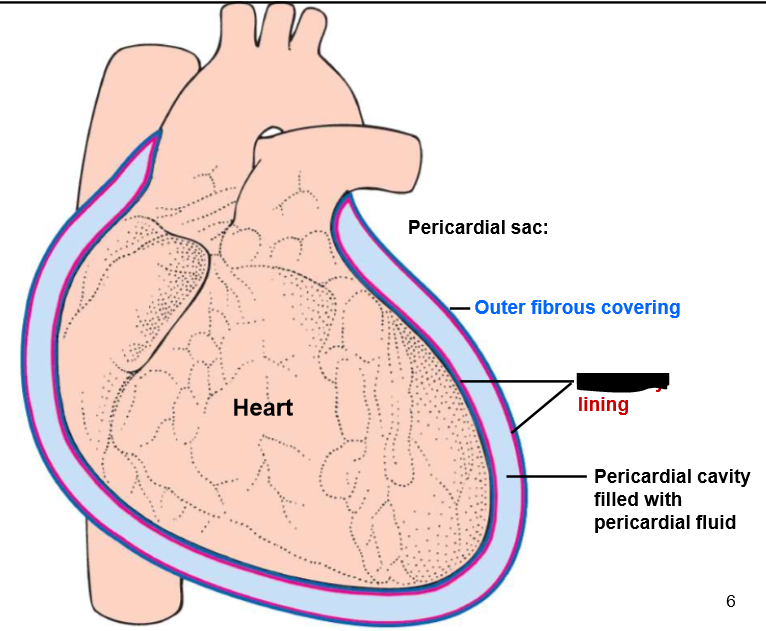
2 sets of serous _____ that act as ______ sheets of _______ tissue that surround the heart
- Epicardium =
- Pericardium =
- Pericardial Cavity =
- Pericardial Fluid =
Function of the pericardial sac =
membranes, protective, connective
- membrane that touches the heart
- outside membrane that touches the tissue
- space between the membranes
- fluid inside the cavity
reduces frictional forces the heart has against other structures in the thoracic cavity
Cardiac Muscle
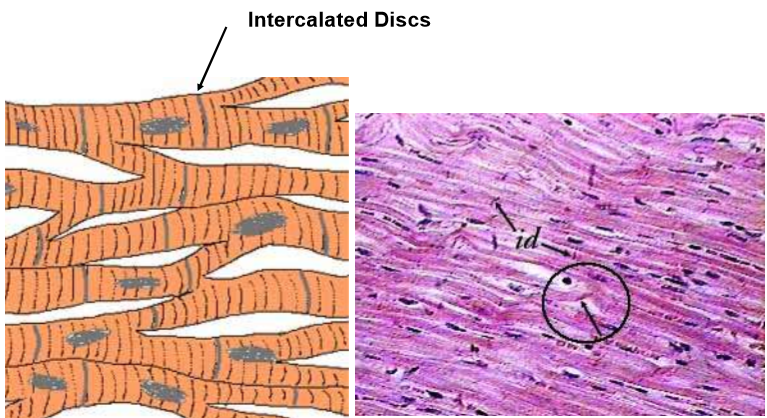
Defining Features
(3)
Striated - linear lines made up of intracellular patterns that organize into striated lines (skeletal and muscle cells)
Branch Pattern of Cells - intercalated discs separate the diff cells creates branch pattern (only in cardiac muscle)
Intercalated Discs - gray lines that attach one cardiac muscle to the next - critically imp in function of the heart
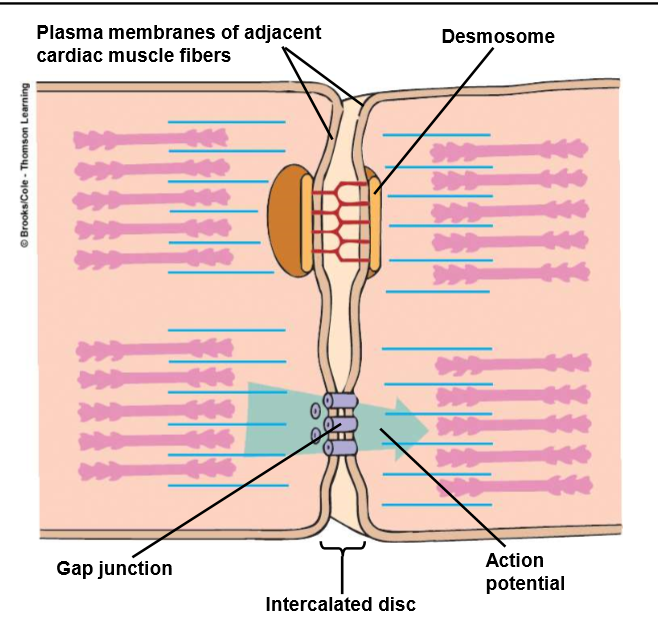
2 Key Structures of Intercalated Discs
Protein anchors that physically attach one cardiac muscle to the next Physically coupled
Electrical synapses between cardiac muscle cells where action potentials diffuse into the next Electrically coupled
- Purpose of intercalated discs = _____ + _______ -> allows neighboring muscle cells to contract how?
Desmosomes
Gap Junctions
- Physical Anchors + Electrically Coupled -> rapidly and all at once to act as a single unit
Electrical Activity of the Heart
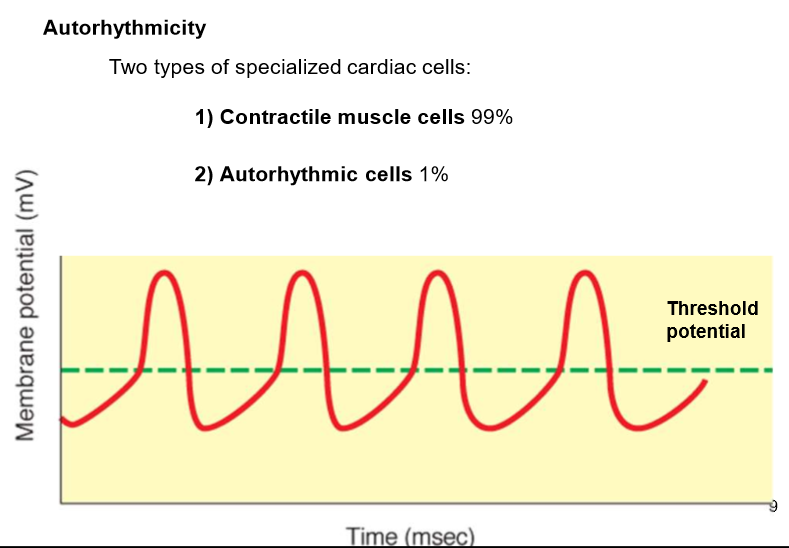
Two types of Specialized Cardiac Cells
- __________ 99%
- __________ 1%
Difference between the two?
- Contractile Muscle Cells
- Authorhythmic Cells
Pacemaker cells that are able to SPONTANEOUSLY generate action potentials at a particular frequency without external stimulation
Cardiac Action Potential
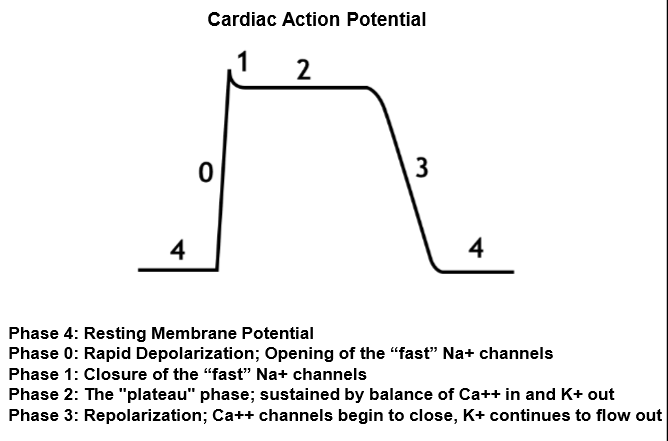
Which Phase does this describe?
- Rapid Depolarization: Opening of “fast” Na+ chanels
- The “Plateau” phase; sustained by balance of Ca++ in and K out
- Resting Membrane Potential
- Closure of “fast” Na+ channels
- Repolarization: Ca++ channels begin to close, K+ continues to flow out
- Phase 0
- Phase 2
- Phase 4
- Phase 1
- Phase 3
Cardiac Action Potential Notes
Does it spontaneously fire?
What is a defining feature?
Requires stimulation (does not spontaneously fire)
has a WIDER action potential (plateau phase) which allows neighboring cells enough time for action potential to spread so all can contract at the same time
Autorhythmic Cells and the Pacemaker Potential
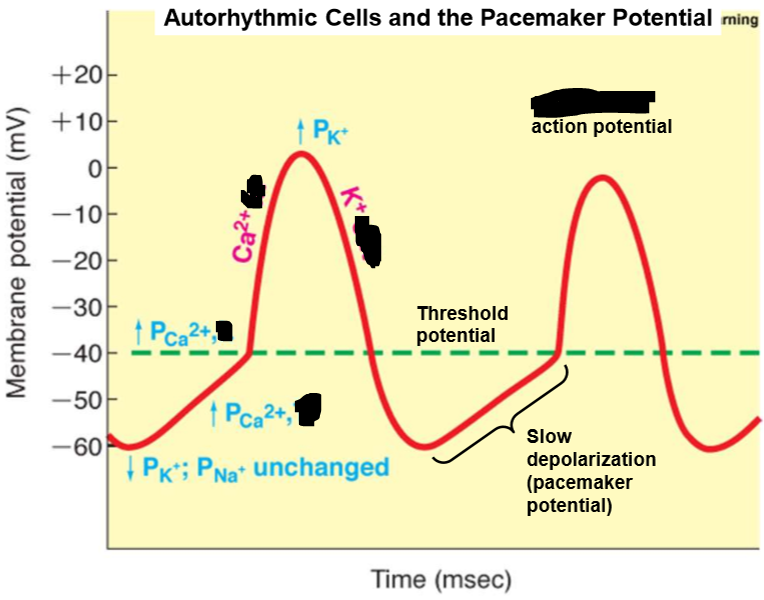
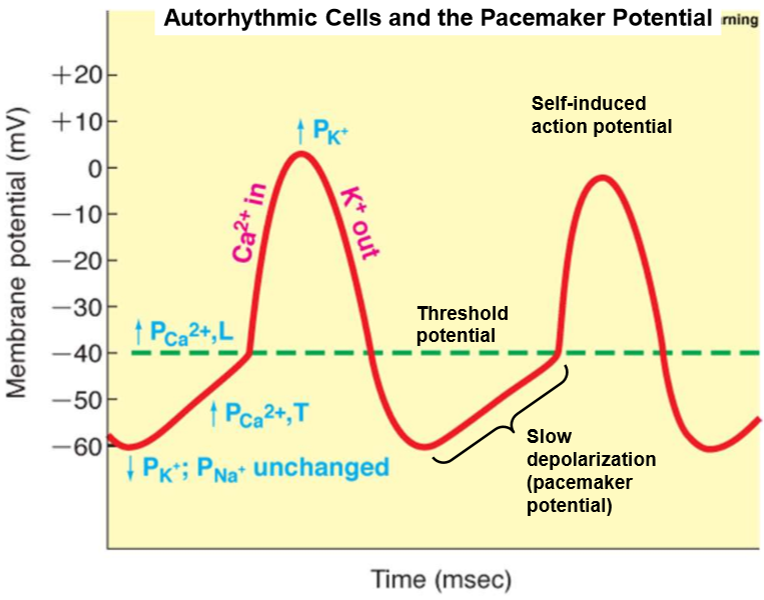
- Membrane potential is never?
- Lowest value is ___ for a brief time
- Slow depolarization before threshold - caused by?
- Within a few millivolts to threshold potential, what happens?
- Once threshold hits, what causes the rising phase?
- Rapid depolarization from?
- No consistent (stable) membrane potential (is ever changing)
- -60
- greater amount of Leaking Sodium Channels
- T-Type Ca Channel opens (transient that flickers open and close) trickles just enough Ca to get cell to threshold -40
- L-Type Ca Channel (long type) stays open for longer
- K out
3 Locations of Autorhythmic Cells
=
Each has a different ____* of autorhythmic activity
SA node
AV node
R and L Bundle of His (Purkinje Fibers) located in the Intraventricular Septum
Rate*
SA node also has fibers that extend into LA
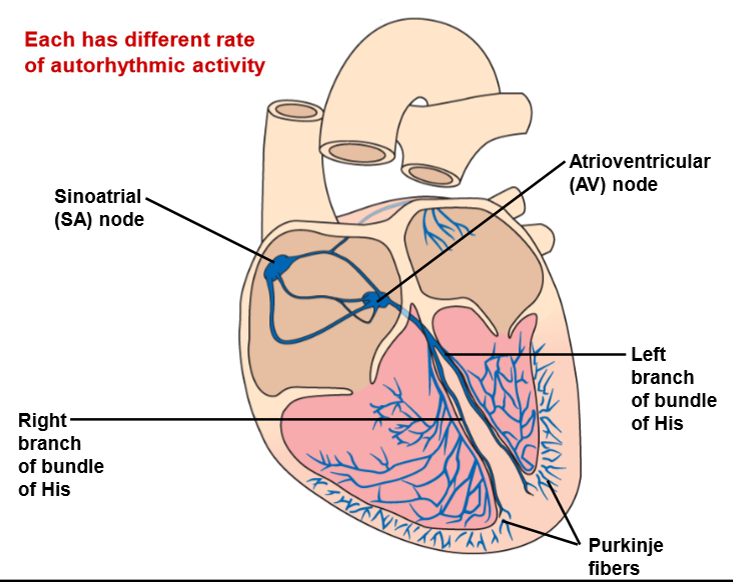
Autorhythmic Cells
SA Node = __-__ action potentials/min
AV node = __-__ action potentials/min
Bundle of His and Purkinje Fibers = __-__ action potentials/min
70-80
40-60
20-40
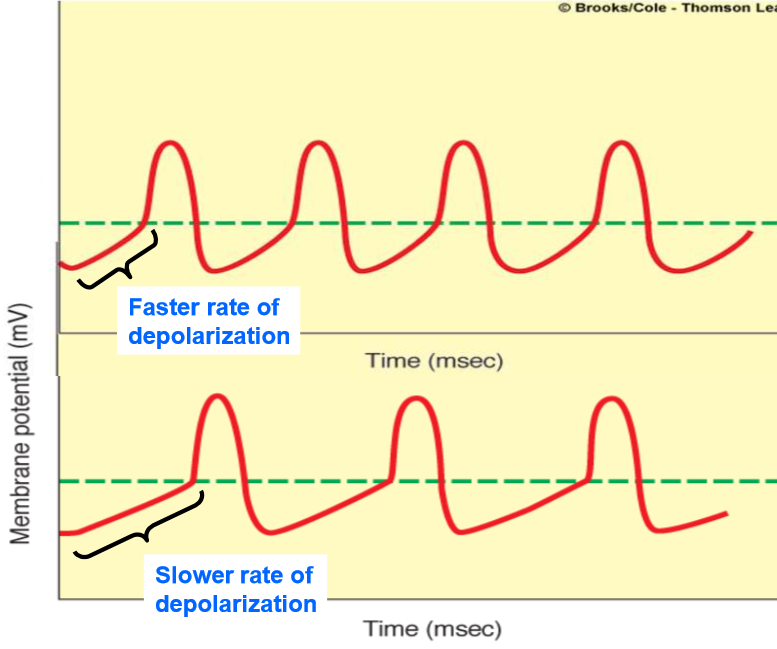
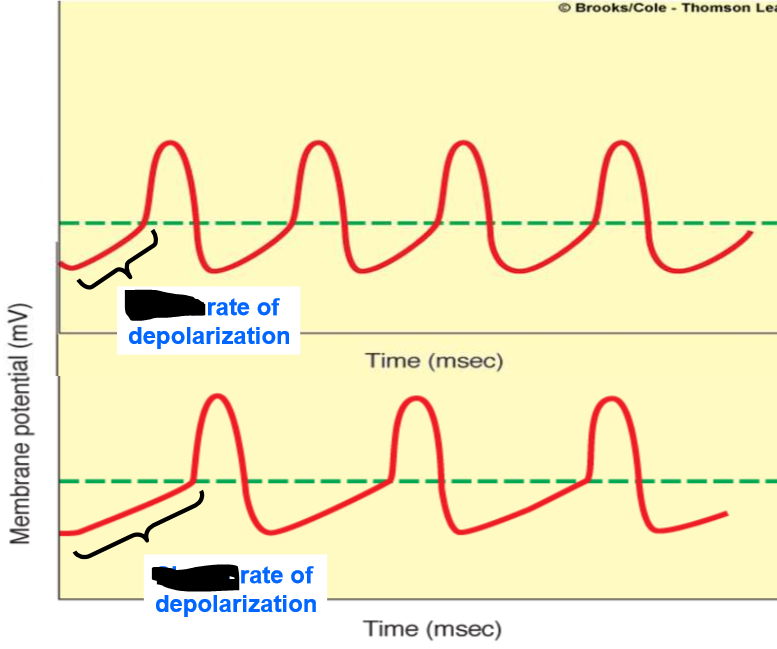
Autorhythmic Cells Notes
Different Natural firing rates are due to differing what?
- __: node tends to depolarize from -60 up to threshold more quickly -> more action potentials per minute vs. bundles of His take longer to go up from -60 to threshold
Pacemaker of the heart? Why?
Duration of slow depolarization phase
SA node
SA node bc it sets the HR of the entire heart bc fastest firing frequency (fires before other group of cells gets a chance to , and when it does it quickly spread to rest of system)
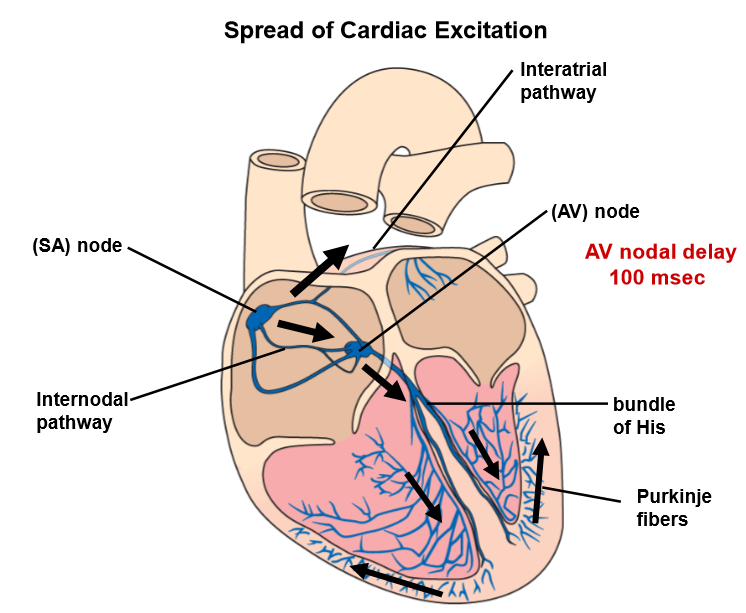
Spread of Cardiac Excitation
SA node -> (2) via (2) pathways simultaneously
AV nodal delay:
Purpose of the AV nodal delay?
SA node -> LA node via intra-atrial pathway and AV node via intranodal pathway
AV node fires action potential about 100msec
Allows for contraction of both atria at the same time to allow for Maximal ventricular filling
Systole vs. Diastole
Systole =
Diastole =
Active contraction of the heart (both atria at once then both ventricles at once)
Period of rest between heartbeats
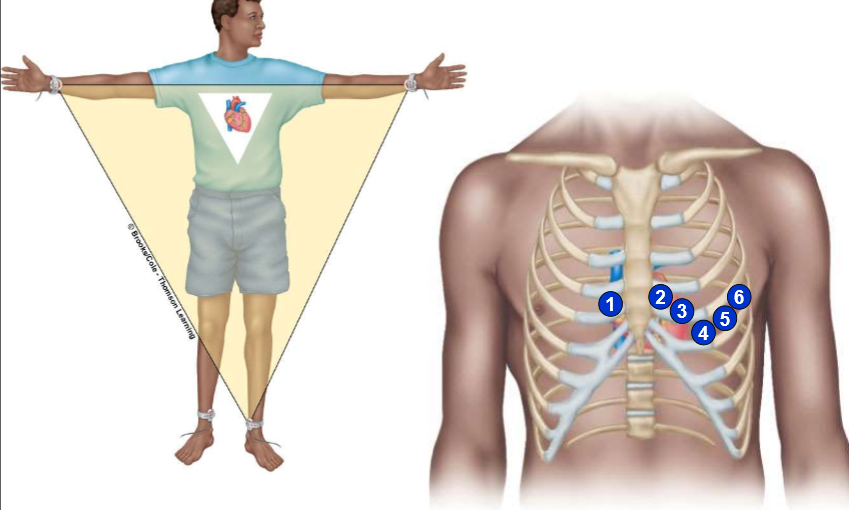
Electrocardiogram (ECG or EKG)
- How many leads? Placed where?
- Looks at the _______ electrical activity of the ____ heart
- 12 leads placed on surface of skin on chest and extremities
- Composite, whole heart
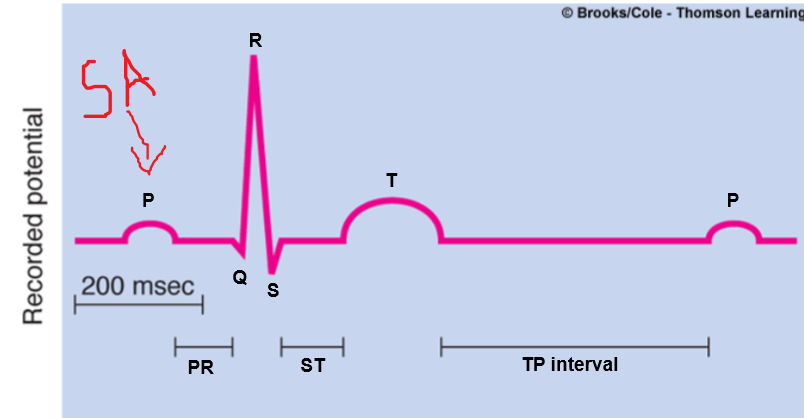
PQRST Wave
- P wave:
- PR interval:
- QRS complex:
- ST interval:
- T wave:
- TP interval:
- Depolarization of both Atria, generated by firing of the SA node
- AV nodal delay
- Depolarization of both Ventricles
- Ejection of blood from ventricles/brief period of no activity
- Repolarization of both Ventricles
- Diastolic time between each heartbeat
Heart Changes associated with EKG
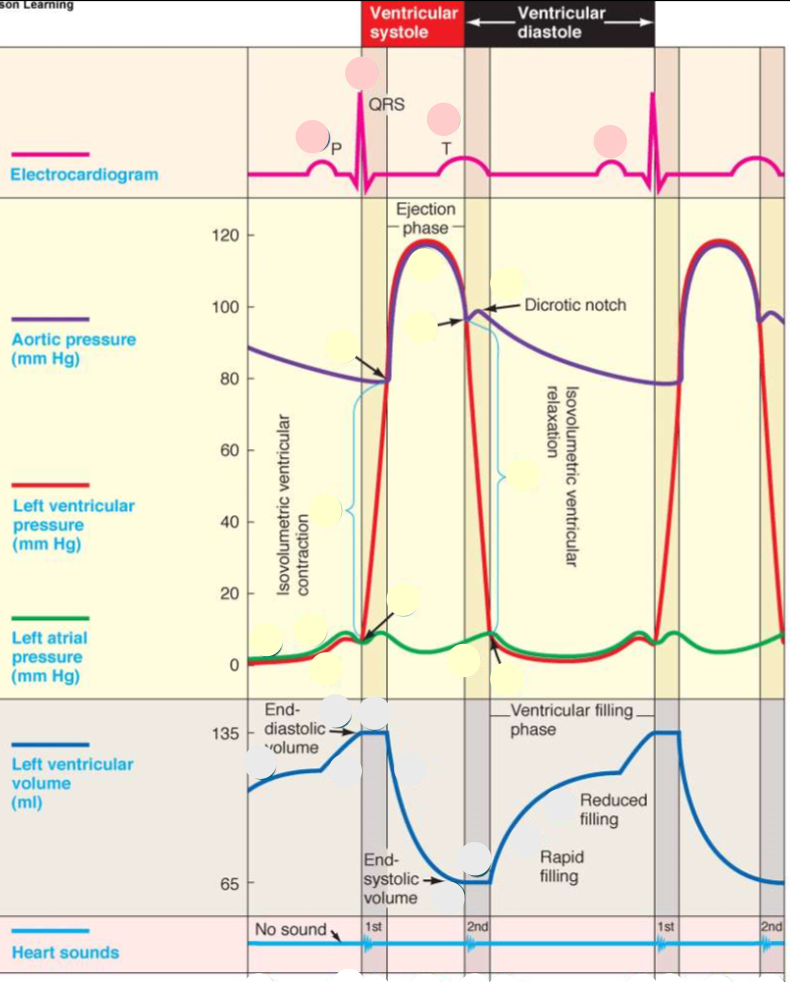
This pic of the cardiac cycle is showing the left side of the heart, everything thats happening here is also happening on the right side but what’s the difference?
Pressures are just smaller (0-20 instead of 0-120mmHg)
Steps of Heart Activity
(4)
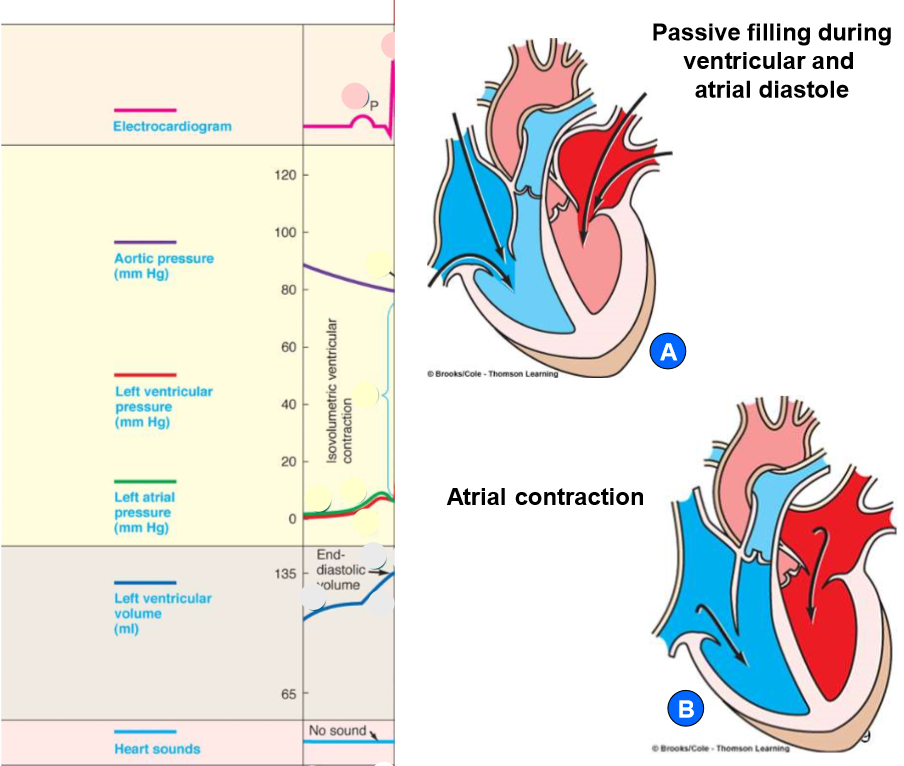
Passive filling during ventricular and atrial diastole then Atrial Contraction
Isovolumetric Ventricular Contraction
Ventricular Ejection
Isovolumetric Ventricular Relaxation
Step 1
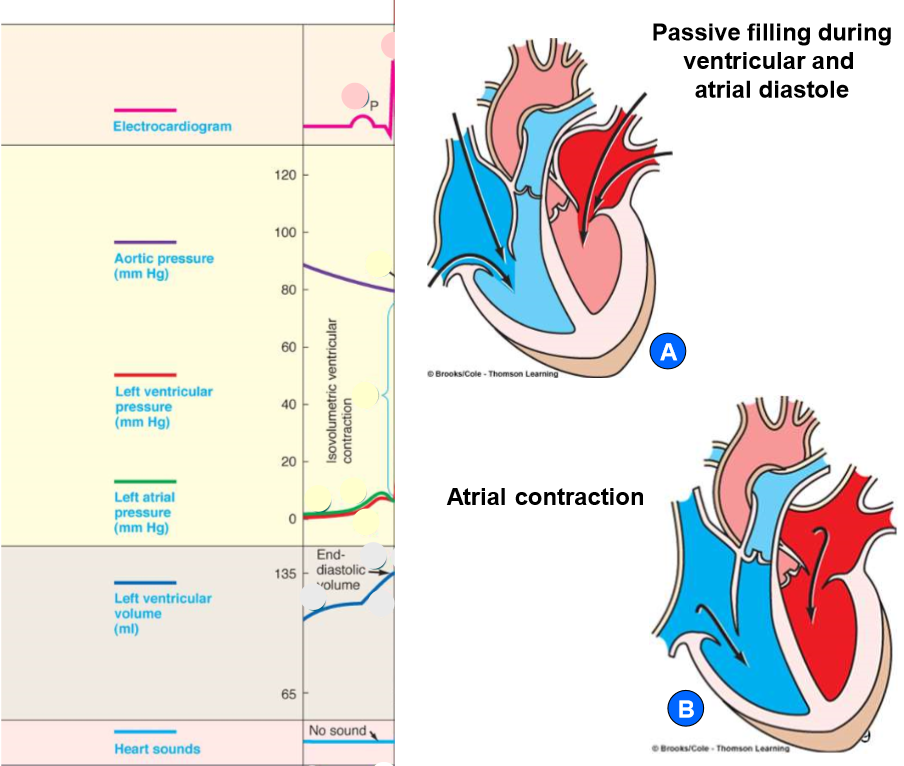
Firing of SA node -> depolarization of ______
Before the P wave in the EKG, what is happening?
- Aortic Pressure =
- LAP =
- LVP =
- LVV =
P wave: atrial contracts and pushes more blood into ventricles -> LAP, LVP, LVV all _____
PR interval =
Atria
Passive filling
- 80mmHG
- Sits higher than LVP (green line)
- Sits lower than LAP (red line)
- Increasing as the ventricles are filling (valves are open) during asystole
Rise
AV nodal delay
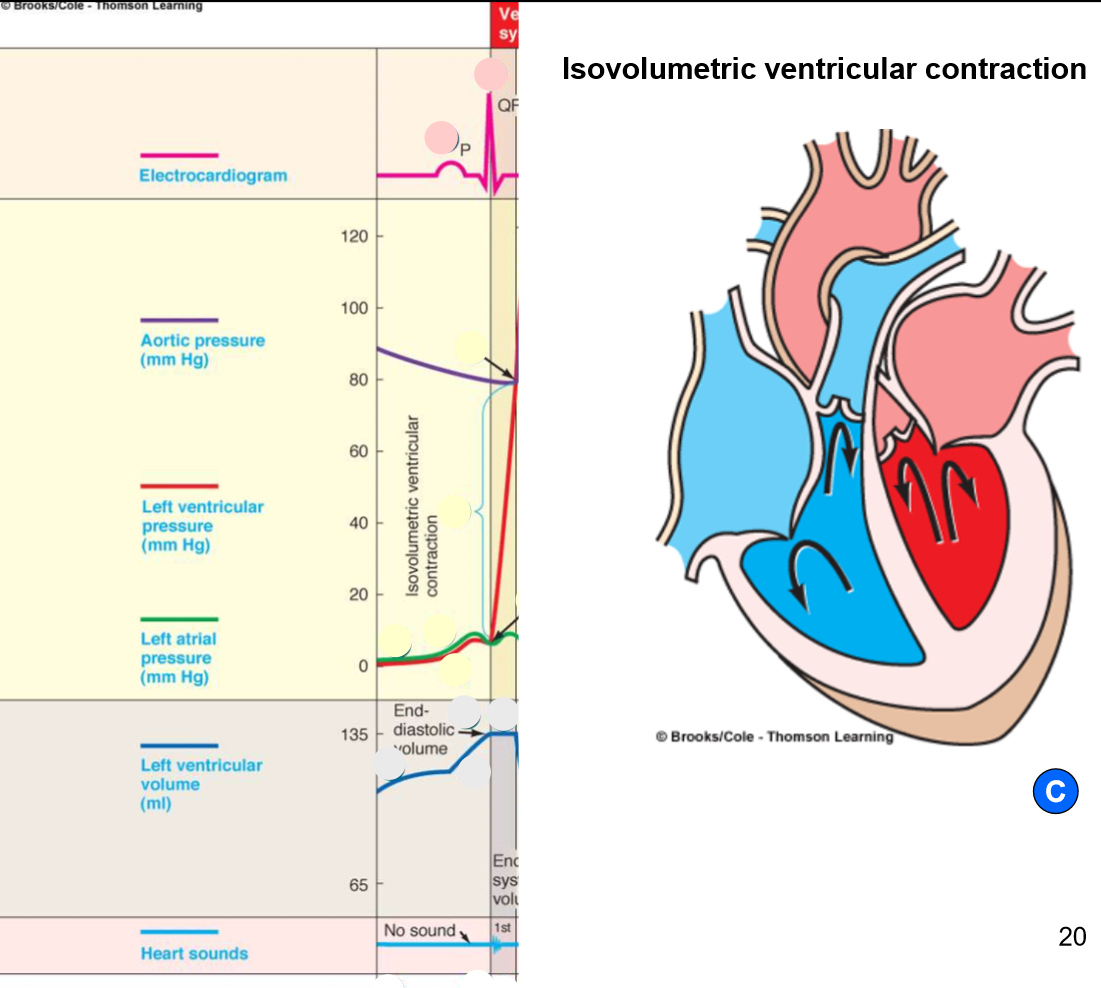
Step 2
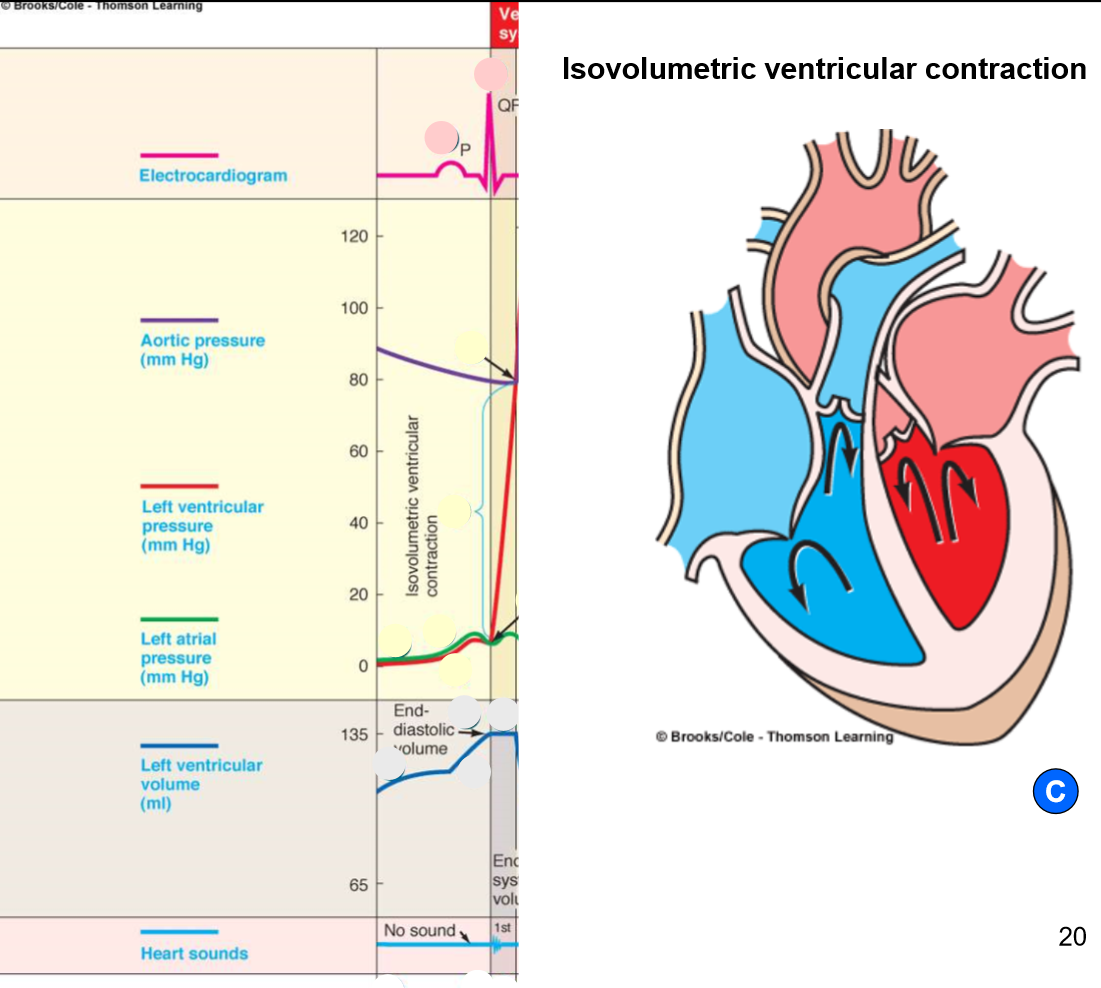
QRS complex =
- LVP =
- Heart Sounds =
- LVV =
Depolarization of ventricles -> Contraction of Ventricles
- increases drastically and is greater than LAP and eventually exceeds resting Aortic pressure so it can open valve and push blood into systemic circulation (has to get to above at least 80)
- Closure of AV valves creates 1st heart sound when ventricles contract
- Suddenly flatlines bc no more movement of blood into ventricles
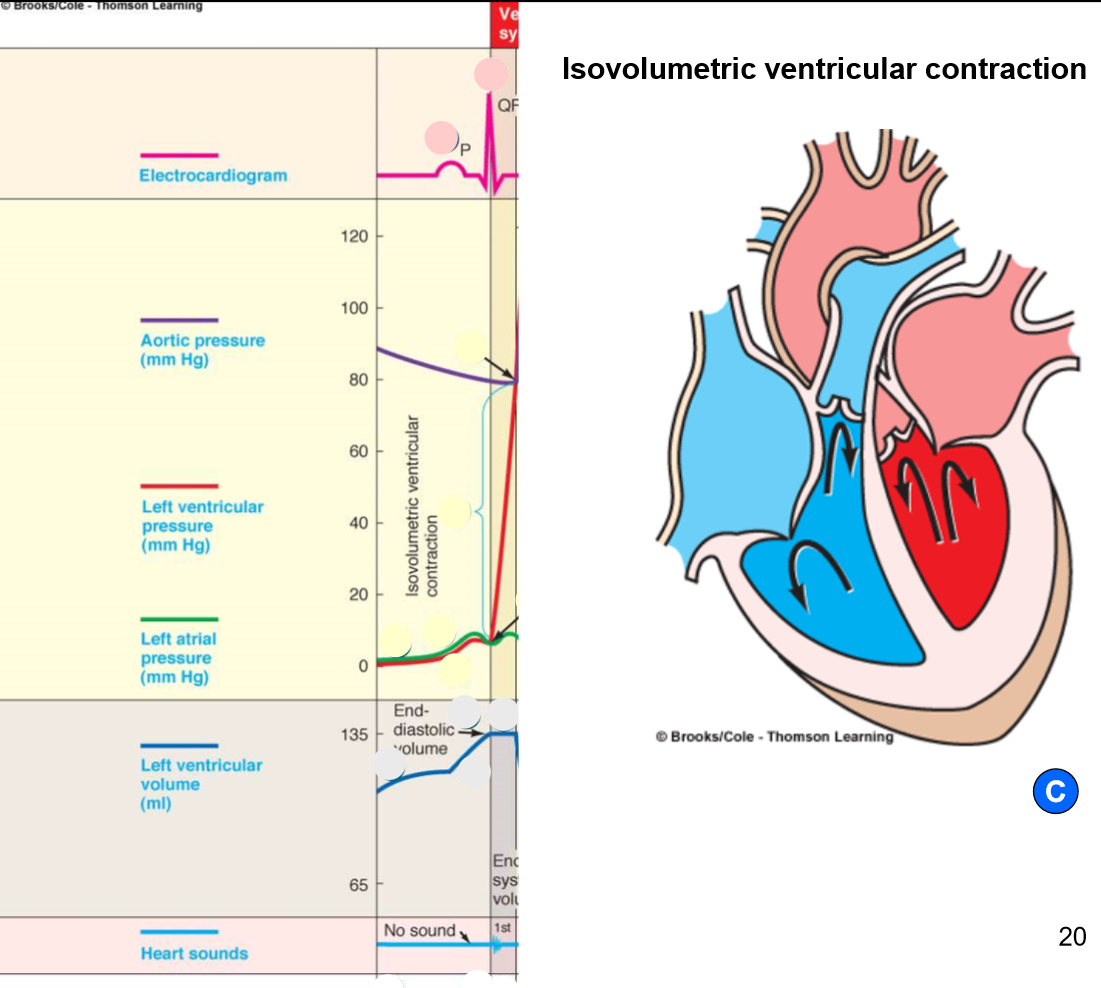
Step 2 Notes
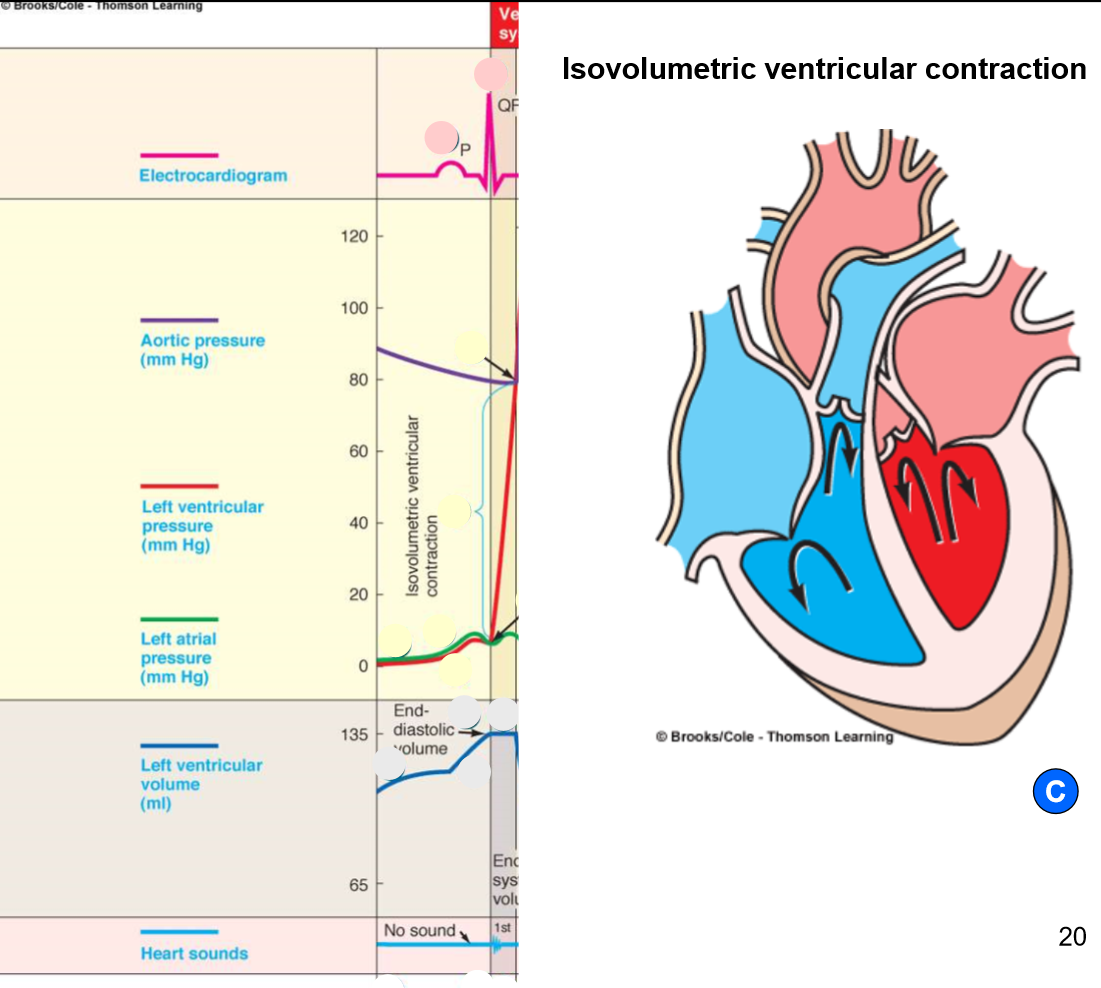
- End Diastolic Volume
- ”___ phase of ventricles” Volume that is in the _____ at the end of _____, beginning of ventricular _____ -> represents extent of ventricular _____
- Isovolumetric Ventricular Contraction
- ”contraction against a _____- volume” brief period of time it takes the ventricles to build up that ____ that exceeds ____ pressure to opent up aortic valve and all the valves are ____ at this time (steep red line)
- T wave
- Apex of the heart is starting to ______,
- What happens to the valves when LVP goes back down below 80?
- End Diastolic Volume
- Full phase, ventricles, diastole, contraction -> filling
- Isovolumetric Ventricular Contraction
- Constant, pressure, aortic, OPEN
- T wave
- relax
- CLOSURE of aortic and pulmonic when LVP gets below 80



-
Cellular Basis Of Disease49
-
Cellular Basis of Disease Part 241
-
Normal Function of the Nervous System43
-
Normal Function of the Nervous System Part 257
-
Endocrine System51
-
Human Stress Response, Immune System Part 143
-
Immune System Part 263
-
Cardiovascular Normal Function Part 141
-
Cardiovascular Normal Function Part 249
-
Cardiovascular Patho Part 138
-
HTN/Cardiovascular Patho Pt 280
-
Respiratory System Normal Function60
-
Respiratory Pathophysiology37
-
Renal System Normal Function87
-
Renal Pathophysiology51



