How are kids weights classified?
Classified as normal weight, overweight or obese
Use gender specific growth charts from the CDC
Children ≥ 85th but ≤ 95% are overweight
Children ≥ 95% are obese
Lab abnormalities, when found, are generally due to what?
malnutrition, weight control behaviors or medical complications
How would a pts acid-base status present with persistent vomiting?
Hypokalemic hypochloremic metabolic alkalosis
Describe anorexa nervosa
–Body size and shape OVERestimated
–Relentless pursuit of thinness
What are the two subtypes of anorexia?
–Restrictive subtype: severely limit caloric intake
–Binge-purge subtype: intermittent overeating followed by vomiting or laxative use to lose calories
How might bulemia nervosa present?
Hx of Food restriction during day; binge at night
- Diet soda common; may use excess alcohol
- Secretive eating, then shame and guilt
- Exercise unpredictable
- Vomiting most common means of eliminating extra food
- Laxatives and diet pills less common, but more common than AN
What groups are at risk of eating disorders?
- 90% of those affected are female
- MSM at increased risk
- Groups at risk include athletes, models and dancers, regardless of gender
Is there a hereditary component to BN? AN?
•Heritability
–AN: 48-76%
–BN: 54-85% (more)
–Female genetic vulnerability may be activated in early/mid-puberty due to neuroendocrine change
What is the predominant risk factor for cholelithiasis?
age (–Prevalence is 8% in patients >40 years and 20% in individuals >60 years)
What are the other risk factors for cholelithiasis?
- Obesity
- Female gender (increased risk with pregnancy)
- GB stasis (rapid weight loss; post-surgical; TPN)
- Family history
- Crohn’s disease
- Hemolytic anemias (bilirubin stones) in thalassemia, sickle cell
How does biliary colic usually present?
•Pain is usually associated with nausea and vomiting
–Pain improves fairly rapidly (only lasts a couple hrs usually); mild discomfort may persist for 1- 2 days
How common is recurrence of biliary colic?
•Biliary colic recurs in 50% of symptomatic patients
What are the complications of biliary colic?
pancreatitis, acute cholecystitis, or ascending cholangitis
in 1–2% of patients with biliary colic annually
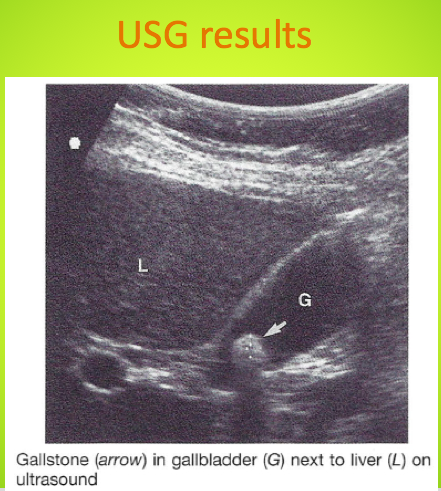
What is the test of choice for biliary colic?
Ultrasonography (–Sn 89%, Sp 97%, LR+ 30, LR– 0.11)
- CT scan is only 79% sensitive
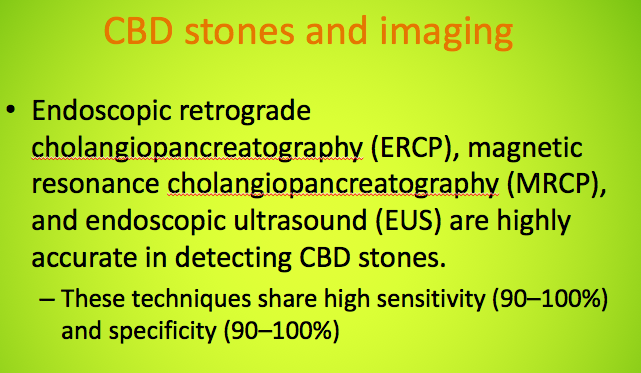
- Endoscopic ultrasound
– 100% sensitive
–Useful in patients with a negative transabdominal ultrasound in whom biliary colic is strongly suspected
How would acute cholangitis present?
long lasting RUQ with fever
What signs indicate the presence of ascending cholangitis?
RUQ pain and fever with **onset of dark urine and rigors**
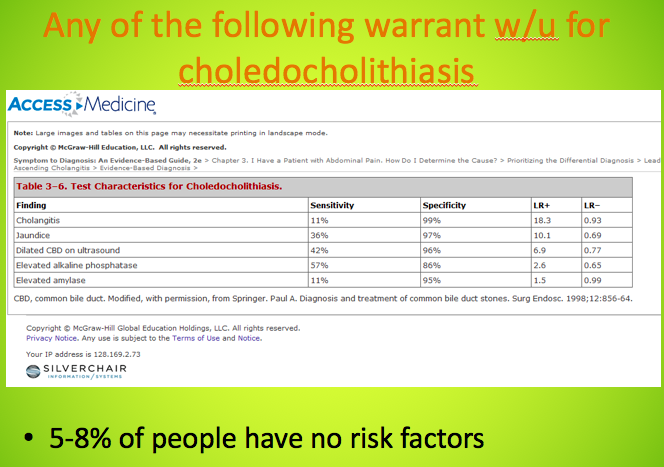
charcot triad: jaundice (most common) + temp + RUQ pain
What is ascending cholangitis?
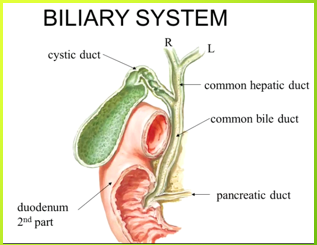
Ascending cholangitis, also known as acute cholangitis or simply cholangitis, is an infection of the bile duct (cholangitis), usually caused by bacteria ascending from its junction with the duodenum (first part of the small intestine). It tends to occur if the bile duct is already partially obstructed by gallstones
What labs suggest ascending cholangitis?
Elevated ALP and bilirubin in 91% and 87%, respectively
Bacteremia 74%
Leukocytosis 73% of patients
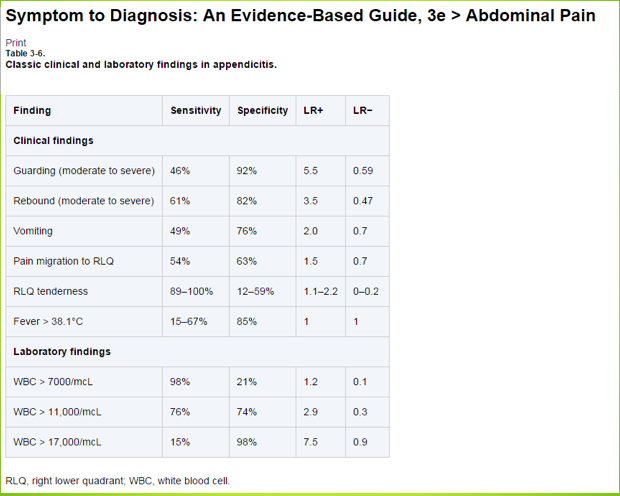
What symptoms are most specfiic to appendicitis?
top to bottom
- guarding
- rebound
- vomiting
- RLQ tenderness
- fever



-
Case Studies I26
-
Portal HTN/Ascites23
-
Alcoholic Liver Disease54
-
Non-Alcoholic Liver Disease38
-
Inherited Liver Diseases71
-
Liver Nodules and Tumors55
-
Liver Disease and Pregnancy22
-
The Liver31
-
Cholestatic Disease74
-
Chronic Liver Failure II35
-
Drug Induced Liver Disease24
-
Pathophysiology Acute Liver Failure46
-
Case Studies II22
-
GI Malignancies26
-
Tumor Drugs13



