____ involves gene activation, protein synthesis and production of organelles
hypertrophy involves gene activation, protein synthesis and production of organelles
permanent tissues (e.g. ____) cannot make new cells and undergo ___ only
permanent tissues (e.g. cardiac muscle, neurons, skeletal muscle) cannot make new cells and undergo hypertrophy only
describe the process of atrophy
- decrease in cell size occurs via ubiquitin-proteosome degradation of the cytoskeleton and autophagy of cellular components
- in ubiquitin-proteosome degradation, intermediate filaments of the cytoskeleton are tagged with ubiquitin and destroyed by proteosomes
- autophagy of cellular components involve generation of autophagic vacuoles
- these vacuoles fuse with lysosomes whose hydrolytic enzymes breakdown cellular components
describe 3 possible causes of atrophy
- decrease in size and function of cell due to:
- decreased workload and/or blood supply
- loss of innervation or aging
- loss of trophic signals (loss of endocrine stimulation)
name 3 potential causes of hyperplasia
- increase in the number of cells due to:
- increased functional demand
- hormonal stimulation
- persistent injury
describe metaplasia
- a change in stress of an organ leads to a change in cell type (by genetic reprogramming of stem cells)
- most commonly involves change of one type of surface epithelium (squamous, columnar or urothelial) to another
- metaplastic cells are better able to handle the new stress
describe Barrett esophagus
- esophagus is normally lined by nonkeratinizing squamous epithelium (suited to handle friction of food bolus)
- acid reflux from the stomach causes metaplasia to nonciliated, mucin-producing columnar cells (better able to handle stress of acid)
describe what is seen in the image
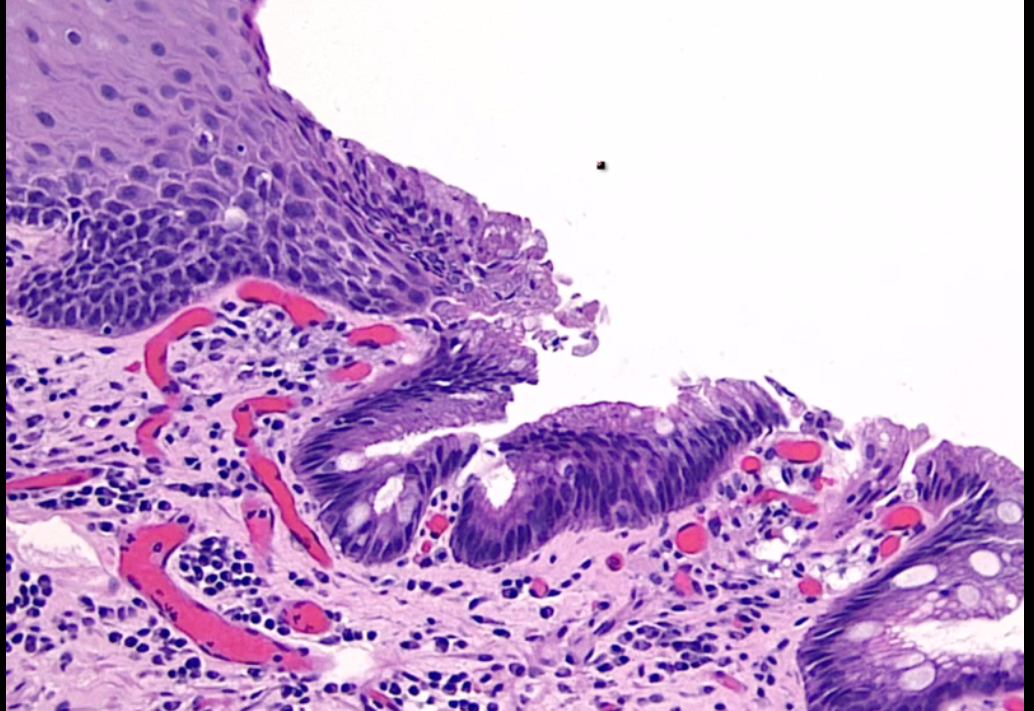
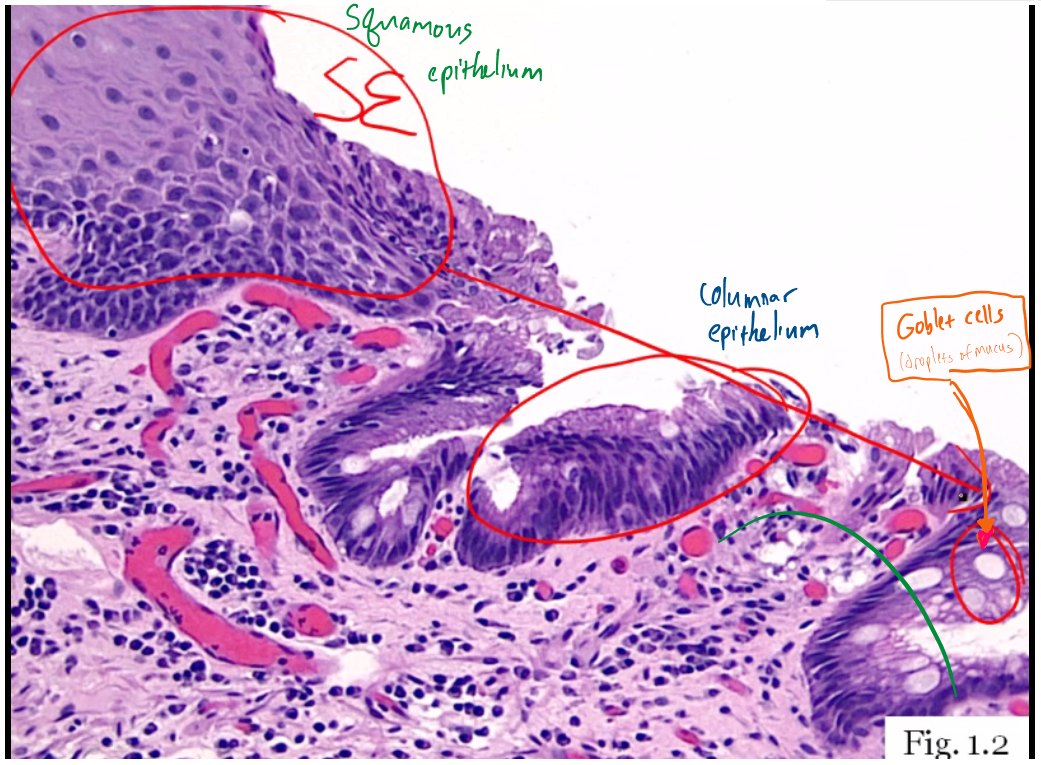
metaplasia occurs via reprogramming of _____
metaplasia occurs via reprogramming of stem cells, which then produce the new cell type
under persistent stress, metaplasia can progress to ____ and eventually result in ____
name an example and an exception
under persistent stress, metaplasia can progress to dysplasia and eventually result in cancer
- Barrett esophagus may progress to adenocarcinoma of the esophagus
- a notable exception is apocrine metaplasia of breast, which carries no increased risk for cancer
____ deficiency can result in metaplasia
explain why
vit. A/retinoic acid deficiency can result in metaplasia
- vit. A is necessary for differentiation of specialized epithelial surfaces such as the conjunctiva covering the eye
- in vit. A deficiency, the thin squamous lining of the conjunctiva undergoes metaplasia into stratified keratinizing squamous epithelium
- this change is called keratomalacia
describe what is seen in the image
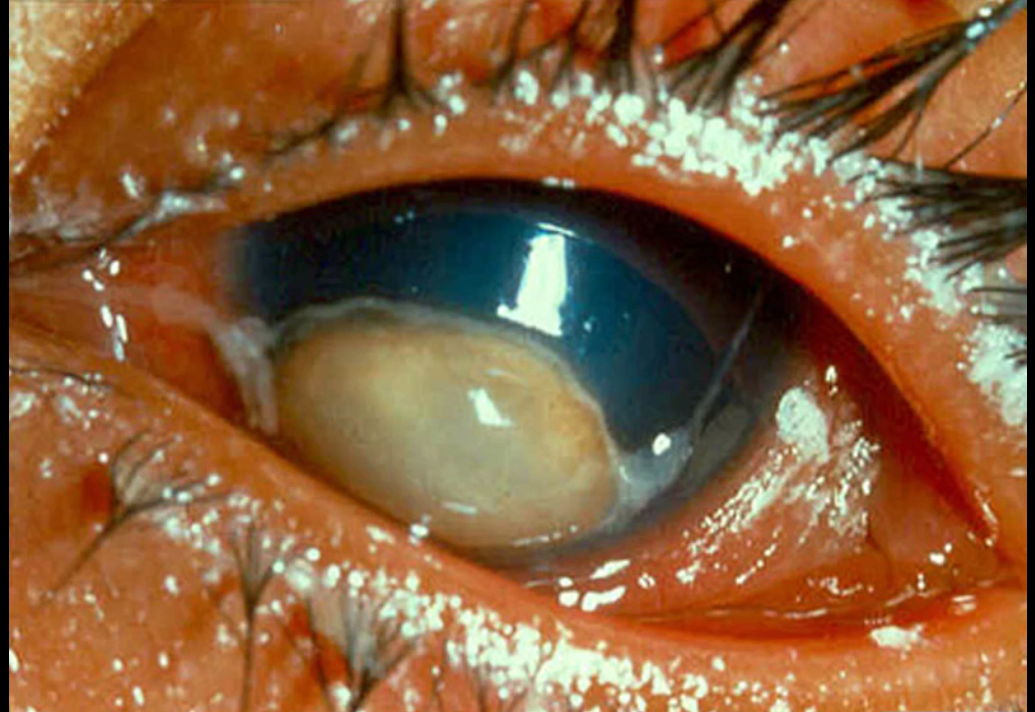
keratomalacia ; caused by vit. A deficiency, which results in an inability to maintain the highly specialized surface that covers the eye
describe dysplasia
disordered cellular growth
- refers to the proliferation of precancerous cells
- enlarged, irregular, dark nuclei
- often arises from longstanding pathologic hyperplasia (endometrial hyperplasia) or metaplasia (Barrett esophagus)
- dysplasia is reversible with alleviation of inciting stress
if stress persists, dysplasia progresses to ____ which is _____
if stress persists, dysplasia progresses to carcinoma which is irreversible
describe aplasia and name an example
- aplasia is failure of cell production during embryogenesis (e.g. unilateral renal agenesis)
describe hypoplasia
- hypoplasia is a decrease in cell production during embryogenesis, resulting in relatively small organs (e.g. streak ovary in Turner syndrome)

-
Growth Adaptations, Cell Injury and Cell Death28
-
Cellular Adaptations16
-
Inflammation20
-
Wednesday Lecture 10
-
Wound Healing17
-
Amyloidosis22
-
Pigmentations, Calcifications and Gout24
-
Pathology of Neoplasia12
-
Biology of Tumor Growth22
-
Tumor Features24
-
Carcinogenesis31
-
Cancer and Genetics I23
-
Fluid and Hemodynamic Disorders25
-
Hyperemia and Hemorrhage33
-
Thrombosis, Embolism and Infarction32



