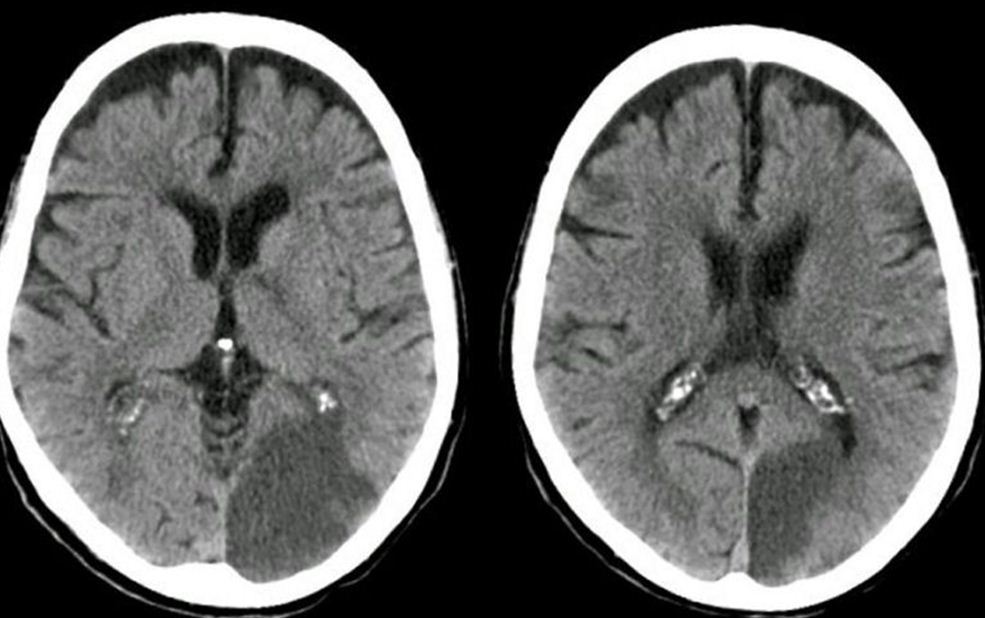
Stroke syndrome:
- Quadrantanopsia or hemianopsia
- Transcortical aphasia, or hemi-inattention
MCA/PCA borderzone infarct. Affects temporo-occipital portion of distal MCA territory
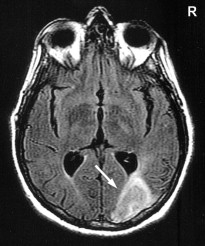
Stroke syndrome:
- producing proximal >> distal sensory & motor deficit in upper extremity, variable lower extremity involvement. Hand and face spared.
MCA/ACA borderzone infarct: affects superficial frontal and parietal parasagittal cortical areas
“Man in a barrel”
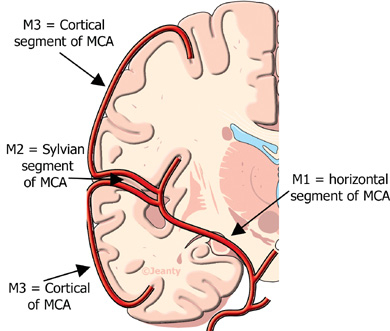
List the divisions of the MCA
M1: Main trunk with deep penetrators and lenticulostriate arteries.
M2: In sylvian fissure where two divisions arise
M3: All cortical branches
M4: Over the cortical Surface
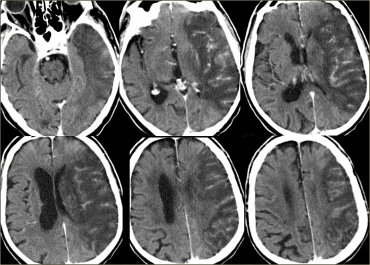
Stroke syndrome:
A right handed patient with…
- Hemiplegia of right face, arm, and leg
- Hemianesthesia of right side
- Right homonymous hemianopsia
- Deviation of head and eyes to Left
- Global aphasia
Left MCA stem occlusion.
Stroke Syndrome:
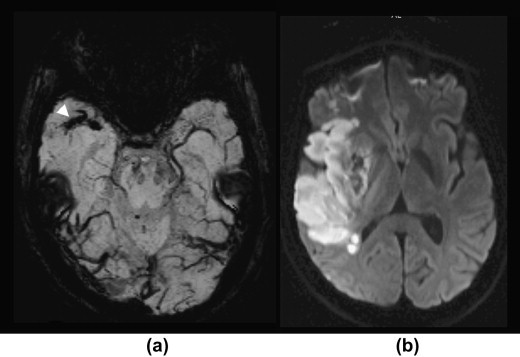
In a right handed patient…
- Left face, arm, leg hemiplegia
- Left sided hemianesthesia
- Left homonymous hemianopsia
- Deviation of head and eyes to right
- Anosognosia and amorphosynthesis
Right MCA Stem occlusion
Image on left is SWI
Image on right is DWI
Stroke Syndrome:
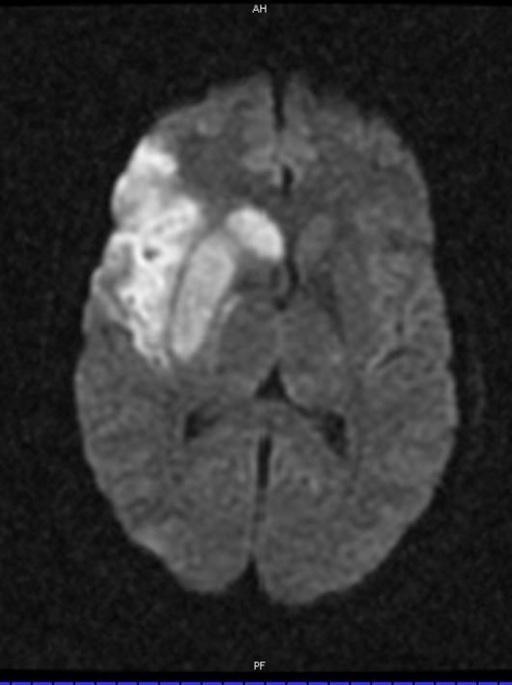
In a right-handed patient:
- Numbness and weakness of left arm >> leg
- Dysarthria but no aphasia
- Left facial droop
- Right deviation of head and eyes
- Consciousness preserved
Right superior division MCA
- The rolandic branches cause the sensorimotor deficits of the contralateral face and arm >> leg
- Cortical-subcortial branch causes brachial monoplegia
Stroke Syndrome:
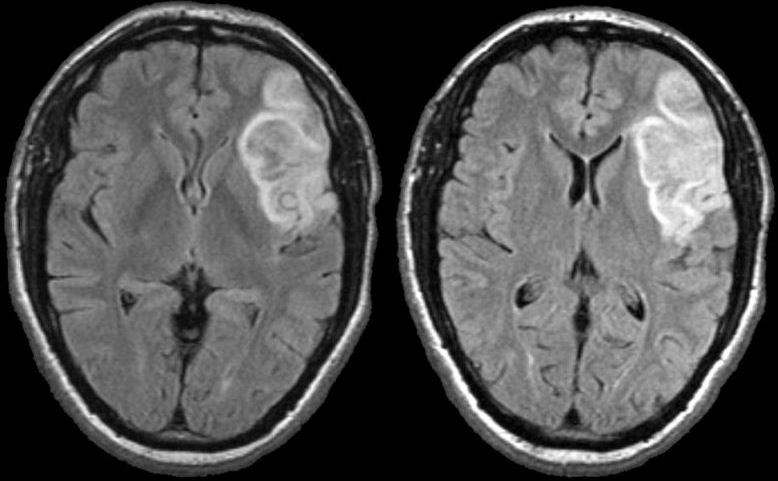
In a right-handed patient:
Numbness and weakness of right arm >> leg
Initial global aphasia, then dysarthria
Right facial droop
Left deviation of head and eyes
Consciousness preserved
Left MCA superior division
- Ascending frontal branch: initial mutism and mild comprehension defect, then dysfluent, agrammatic speech with normal comprehension
- Rolandic branches: sensorimotor paresis with severe dysarthria but little aphasia
- Cortical-subcortical branch: brachial monoplegia
- Ascending parietal: No sensorimotor, just a conduction aphasia
Stroke Syndrome:
In a right handed patient
- Wernicke’s aphasia
- Superior right quadrantanopsia or hemianopsia
- agitated confusional state
- No weakness or sensory loss
Left MCA Inferior division
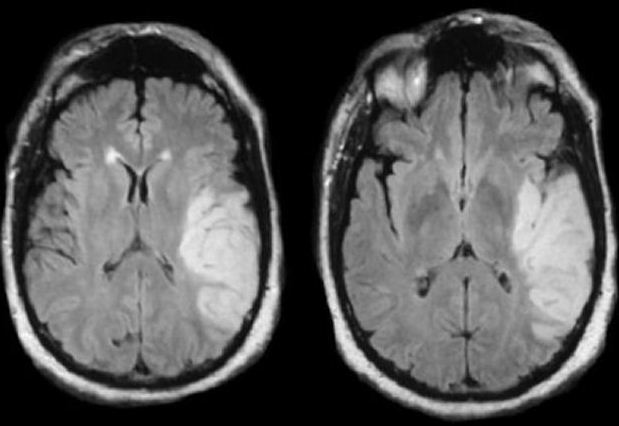
This is nearly always from a cardiogenic embolus
Stroke Syndrome:
In a right handed patient
- Left hemi-neglect
- Superior left quadrantanopsia or hemianopsia
- Agitated confusional state
- No weakness or numbness
Right sided inferior division MCA
Nearly always from a cardiogenic embolus
Stroke Syndrome
- Finger agnosia
- Acalcula
- Right-left confusion
- Alexia +/- agraphia
- Ideational apraxia
Gerstmann’s syndrome
Dominant parietal lobe
Stroke Syndrome:
- Anosognosia
- Autoprosopagnosia
- Hemi-neglect
- Constructional apraxia
- Dressing apraxia
What is the anatomic location (not the cerebrovascular territory)
Non-dominant parietal lobe lesion
Cortical Syndrome:
- docile
- hyperoral
- hypersexual
- hypomobile
- hypermetamorphosis
- visual agnosia
What is the eponym and anatomic location, not the cerebrovascular territory
Kluver-Bucy Syndrome: Bilateral anterior poles of temporal lobes
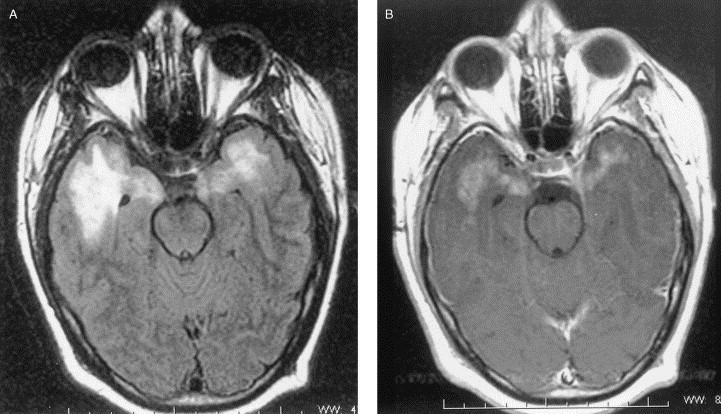
Stroke Syndrome:
- Paraplegia (both legs weak)
- Abulia
- Motor aphasia
- Frontal lobe personality changes
ACA stem occlusion proximal to the ACOM (the A1 segment), but only if both arteries arise from one ACA.
Otherwise, the ACOM will allow perfusion of both sides from one ACA and the stroke will be well tolerated.
Stroke Syndrome:
- Sensorimotor defect of left foot >> shoulder and arm
- Motor defect of foot and leg >> thigh
- Head and eyes deviated to the right
- Urinary incontinence
- Left grasp reflex
- Paratonia (gegenhalten)
ACA stem occlusion in the A2 segment (distal to the ACOM). In this case, the right A2 is involved.
If the left A2 segment is involved, you might see an alien hand too
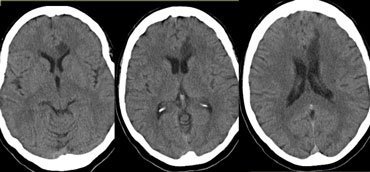
Stroke Syndrome:
Transcorticomotor aphasia (halting, one or two word speech, repetition is preserved, writing is impaired)
Heubner’s artery occlusion, a branch of the ACA. This serves the anterior frontal lobe.
Heubner’s artery comes off of the A2 segment just distal to the ACOM
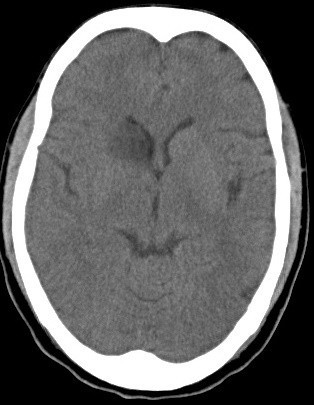
Stroke Syndrome:
In a right handed individual…
- Transient hemiparesis
- Dysarthria
- Abulia or agitation
- Stuttering and language difficulty
Left ACA penetrating branches infarct.
The right causes visuospatial neglect instead of language difficulty
Stroke Syndrome:
In a right handed individual…
Transient hemiparesis
 Dysarthria
 Abulia or agitation
 Visuospatial neglect
Right ACA penetrating branches infarct
Stroke Syndrome:
In a right handed individual…
Transient hemiparesis
 Dysarthria
 Abulia or agitation
 inattentive, abulia, forgetful, agitation, psychosis
Bilateral caudate infarcts - from ACA distribution
Stroke Syndrome:
In a right handed individual…
- Left hemiplegia
- Left hypesthesia
- Left homonymous hemianopsia
- Cognitive function completely spared
This syndrome is not uniform. Name the structures involved
Right anterior choroidal artery occlusion; this is a long narrow artery from the ICA just above the PCOM. Supplies the internal globus pallidus, the PLIC, the optic tract, choroid plexus
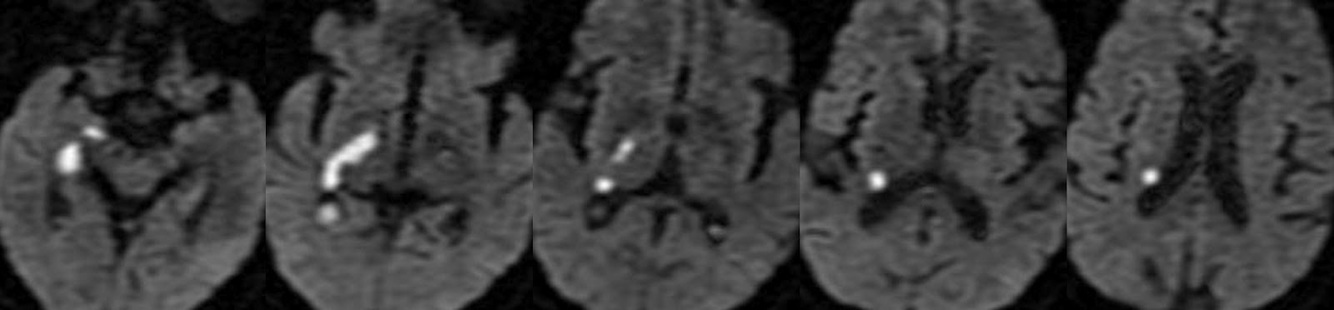
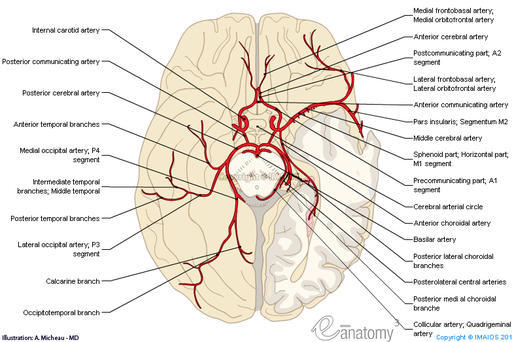
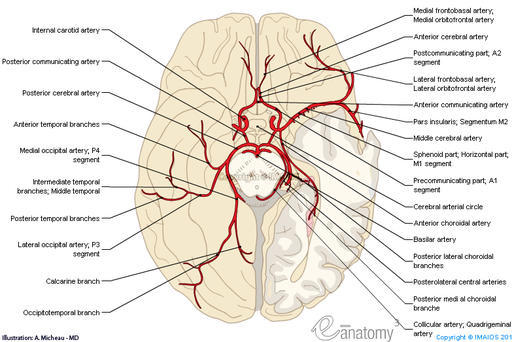
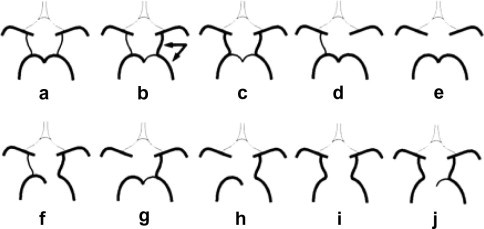
Variations in PCA anatomy
in 70%, both PCA’s originate from the bifurcation of the basilar artery. In 20-25%, one of the pCA’s comes from the ICA. In everyone else, both PCA’s come from the ICA’s. See diagram
Stroke Syndrome:
- Left sensory loss
- Transient left hemiparesis
- after an interval, pain, paresthesia, hyperpathia
- Distortion of taste
- Athetotic posturing of hand
- Depression
“Dejerine and Roussy” Syndrome - Thalamic (on this case on the right). Infarction of sensory relay nucli due to occlusion of thalamogeniculates. These come from the PCA
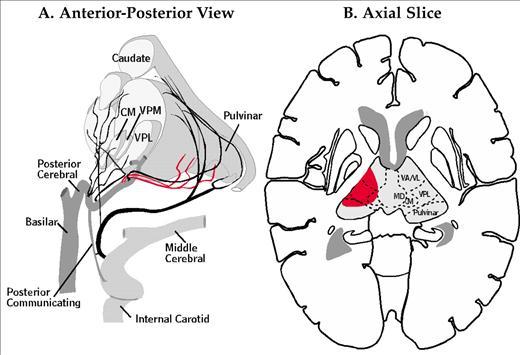
Stroke Syndrome:
- CN III palsy
- Left hemiplegia
- Stupor
- Coma
- Left ataxic tremor
Weber Syndrome, aka subthalamic or central midbrain syndrome - in this case on the right
Due to occlusion of interpeduncular branches of the PCA
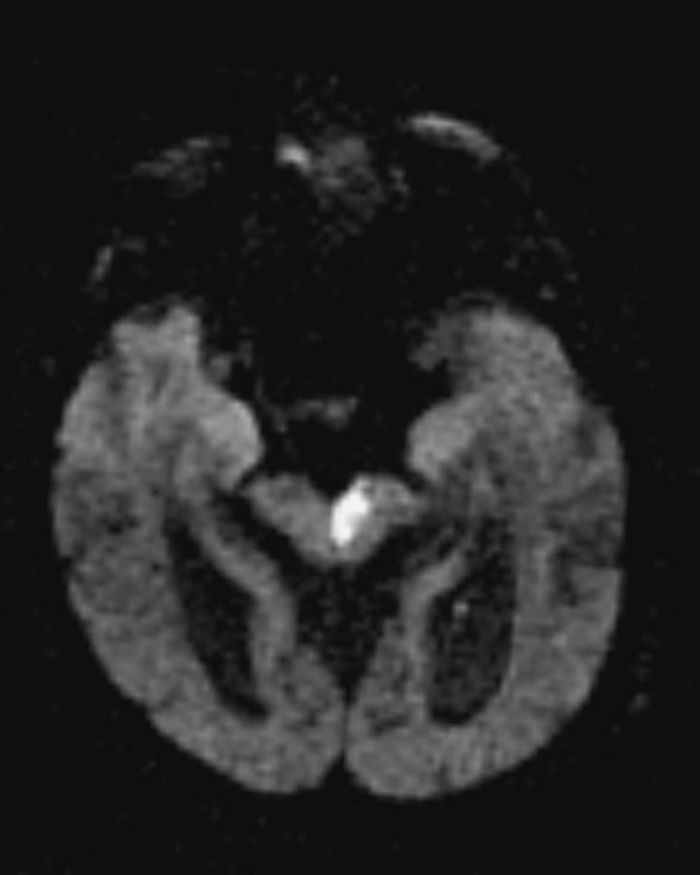
Stroke Syndrome:
- Hemiballismus
- Hemichoreoathetosis
- Deep sensory loss
- Hemiataxia
- Tremor
Anteromedial-inferior thalamic syndrome: Occlusion of thalamoperforate branches of PCA.
Occlusion of the dominant dorsomedial nucleus gives rise to korsakoff syndrome
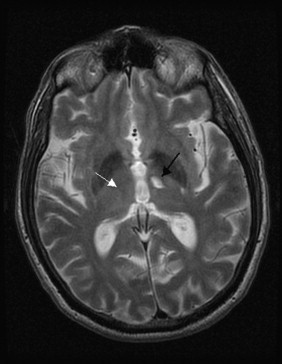
Stroke Syndrome:
- Homonymous hemianopsia
- Visual hallucinations in blind areas
- Metamorphopsia (visual distortion)
- Palinopsia (afterimages)
- Alexia
- Anomia, especially for colors and visually presented objects
- Occasionally memory impairment
Occlusion of branches to posterior temporal and occipital lobes from branches of the PCA