What are all living things made of?
all living things are made of cells. A cell is considered the basic unit of life
What are some features of cells?
- are an easily recognised package
- are surrounded by a membrane
- have a highly organised structure with many chemical processes and reactions occurring within
- are able to sense and respond to changes in their environment
- arise from pre-existing cells
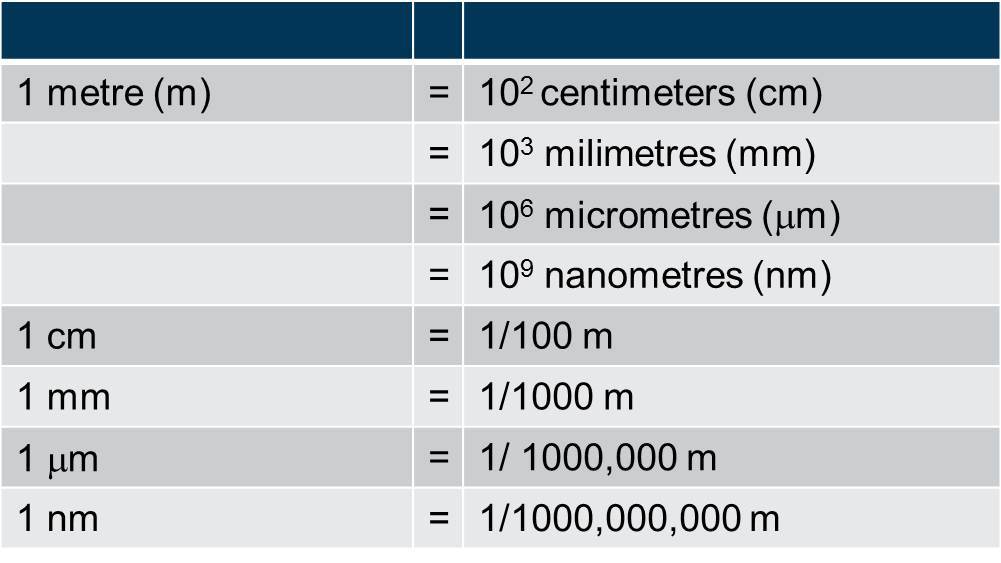
Convert a metre to centimetres, millimetres, micrometres and nanometres. Then express each unit as a fraction of a metre
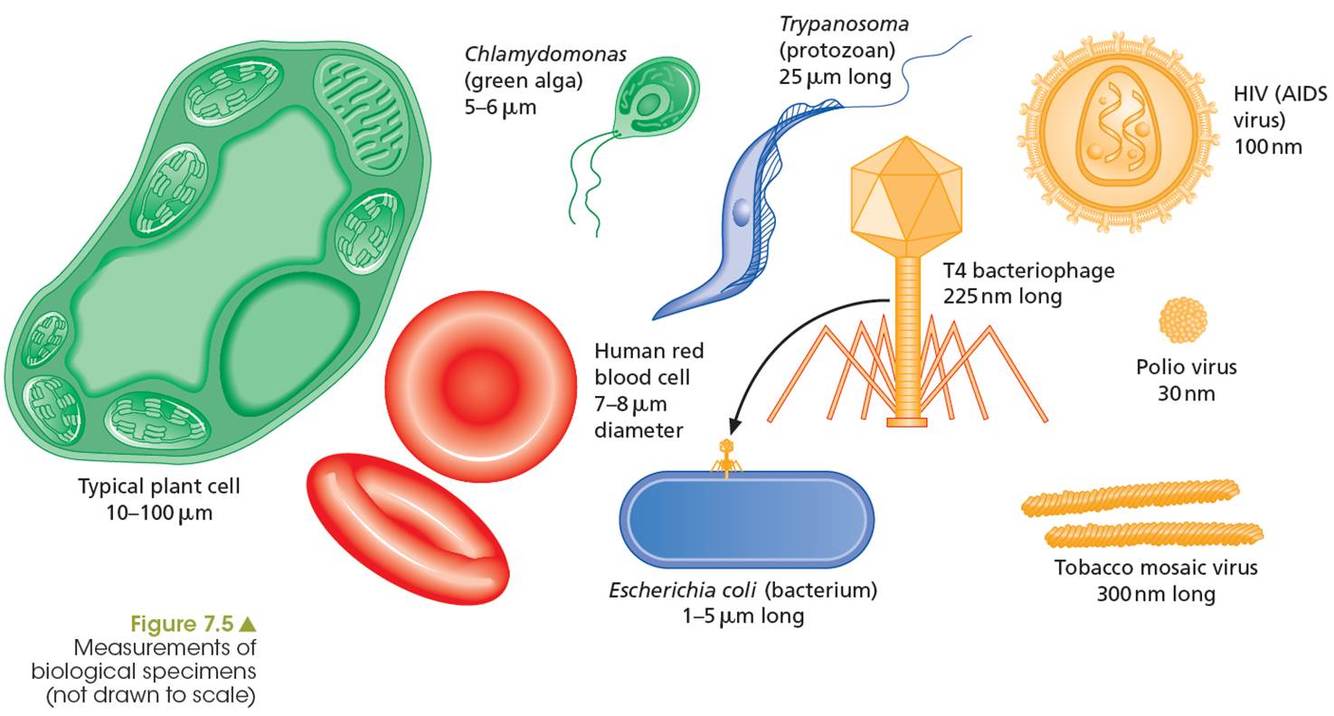
List the general lengths/diameters of a:
- plant cell
- human red blood cell
- green alga (Chlamydomonas)
- protozoan (Trypanosoma)
- T4 bacteriophage
- AIDS virus
- polio virus
- Escherichia coli (bacterium)
- tobacco mosaic virus
What are the features of a light microscope v a electron microscope?
Light microscope
- Light rays from a source beneath the stage are transmitted through two glass lenses in series: the objective and ocular lenses
- Light microscope may magnify 400 times
- Fine structures will not be visible
Electron microscope
- Electron microscopes uses focused beam of electrons and achieves higher magnification
- transmission electron microscope (TEM): the electrons pass through the specimen. The TEM is the most common form of electron microscope and has the best resolution. It can magnify up to 1 500 000 times.
- scanning electron microscope (SEM): solid specimens are bombarded with a beam of electrons, which causes secondary electrons to be emitted from the surface layers of the specimen. The SEM has poorer resolution, but gives excellent 3-dimensional images of surfaces.
What are features of prokaryotic cells?
- very small, 1–10 µm in length and 0.2–2.0 µm in diameter
- Simple internal structure - no membrane bound organelles
- Cytoplasm is made up of cytosol fluid together with cell organelles.
- Ribosomes build up (synthesise) proteins from amino acids
- Genetic material in circular chromosome come in direct contact with the cytoplasm – no nuclear membrane. Carry instructions for protein synthesis
- Numerous small rings of DNA, called plasmids
- experience difficulty performing several diferent functions at the same time
- 2 Domains: Bacteria and Archaea
What are features of eukaryotes?
- Size 10–100mm in length and 0.2–2.0mm in diameter.
- Membrane-bound organelles - enable cell to carry out multiple different reactions at the same time, important when reactions are incompatible
- Cytoplasm is made up of cytosol fluid and cell organelles
- Ribosomes build (synthesise) proteins from amino acids
- Sarcoplasmic reticulum is where protein is modified and transported
- Membrane-bound nucleus contains DNA
- Organelles also separate chemical reactions in time i.e. when substances are stored and then used in other reactions. Also facilitate the synthesis of complex molecules
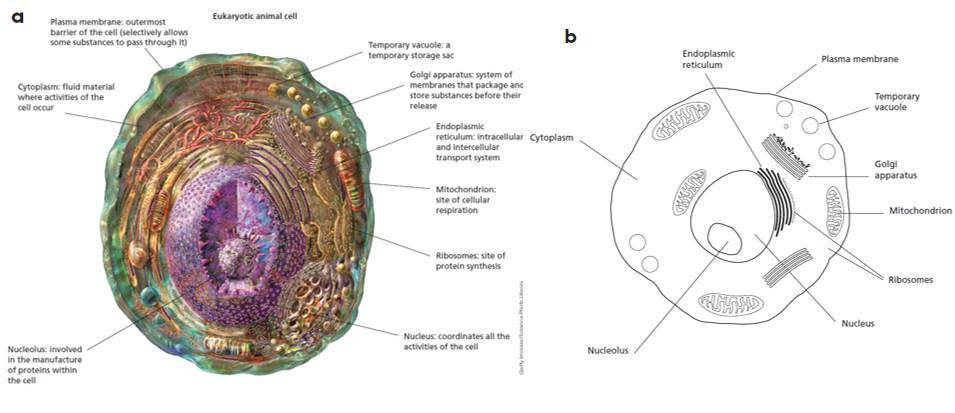
What does a eukaryotic animal cell look like?
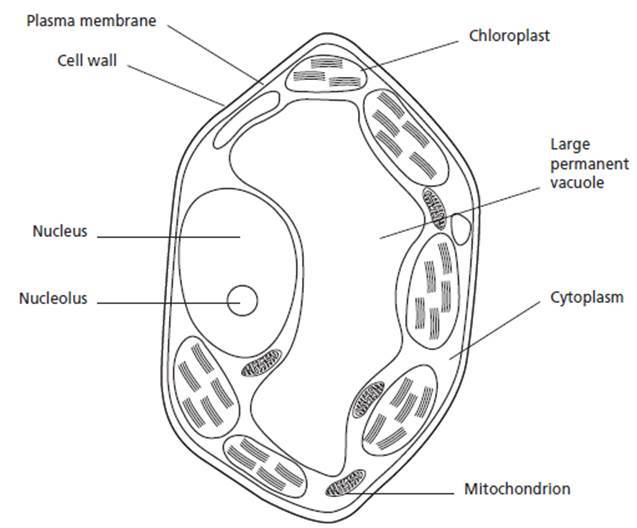
What does a eukaryotic plant cell look like?
What are the features of the nucleus?
- one of the most prominent organelles in a eukaryotic cell - clearly visible under light or electron microscope
- control centre of the cell - by coding for different proteins at different times and in different cells the nucleus can coordinate the activities of the cell
- main molecule inside is DNA (bundled chromosomes that code for the production of proteins that carry out a variety of activities)
- chromosomes - rod shaped and surronded by a membrane which keeps the DNA separate from the chemical reactions of the cytoplasm making it easier for DNA to be copied and organised before cell division
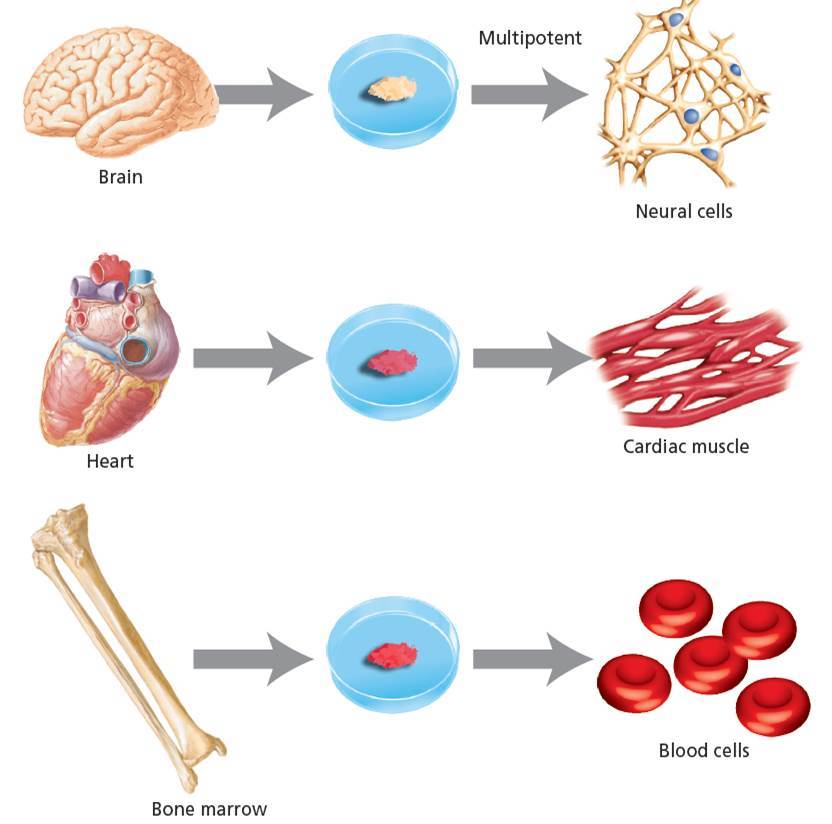
What are the unspecialised cells in our body?
Most of the cells of our body (e.g. blood, liver, brain and nerve cells) are specialised to perform particular functions. Stem cells are unspecialised cells that have the potential to develop into many different kinds of cell. Unlike most specialised cells, they also have the capacity to keep dividing.
What is photosynthesis and where does it occur?
Photosynthesis is a series of reactions that occur in the stroma and thylakoid membrane system of the chloroplast.
During these photosynthesis reactions carbon dioxide and water are combined to produce glucose, oxygen and water.
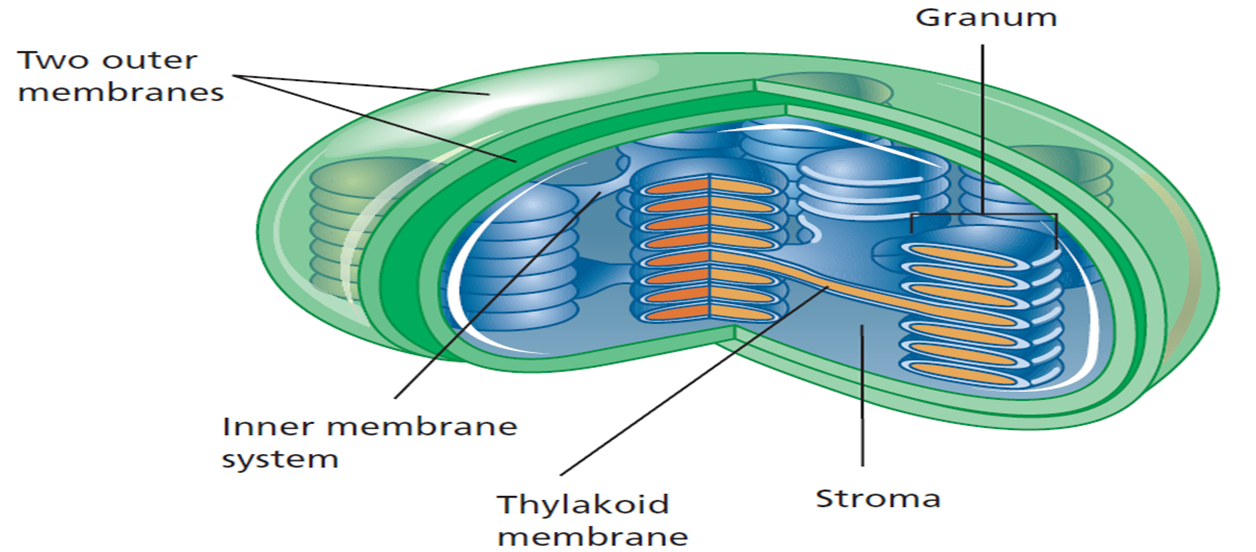
What aids in allowing a greater amount of photosynthesis reactions to occur?
The internal membranes of a chloroplast are folded many times, this provides more sureface area for chemical reactions of photosynthesis to occur
What is cellular respiration
Cellular respiration is a series of chemical reactions that involve a reaction between glucose and oxygen to produce carbon dioxide and water. During certain stages of these chemical reactions energy is released and this is used to build up molecules of adenosine triphosphate (ATP).
In eukaryotic cells, the first stage of cellular respiration takes place in the cytoplasm. The final stage occurs in mitochondria.
What are features of mitochondria and how does it aid cellular respiration?
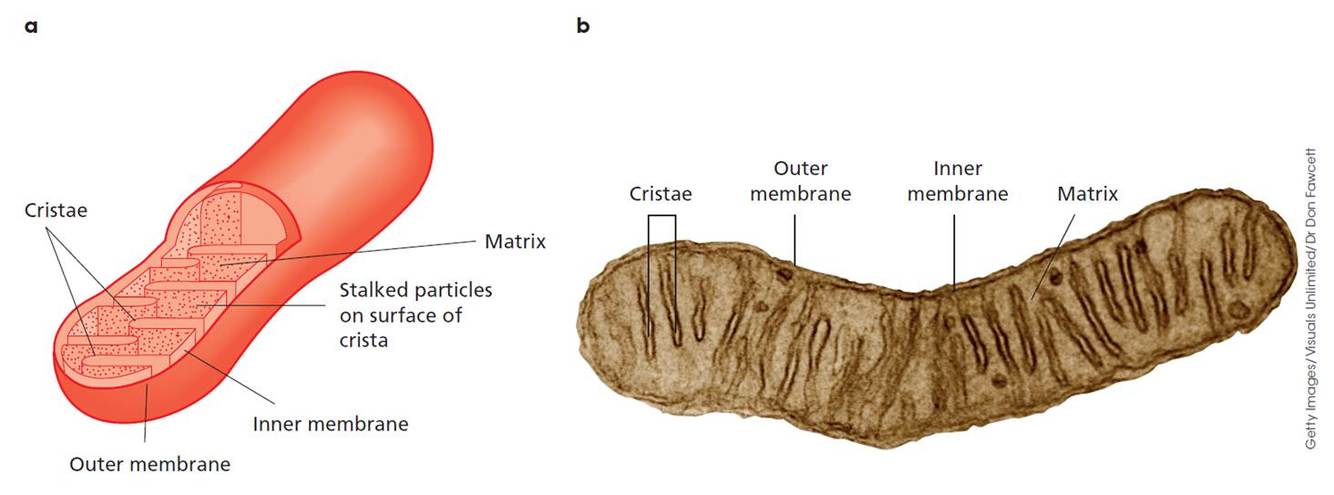
- small, oval-shaped structures found scattered throughout the cytosol of a cell.
- each mitochondrion consists of an outer smooth membrane and a highly folded inner membrane (cristae). The folds in the inner membrane protrude into the inner space of the mitochondrion, a protein-rich fluid called the matrix.
- these cristae provide two important features to cellular respiration:
- The enzymes for cellular respiration are located mainly on the cristae.
- The numerous folds of the cristae provide a large surface area for the chemical reactions to occur.
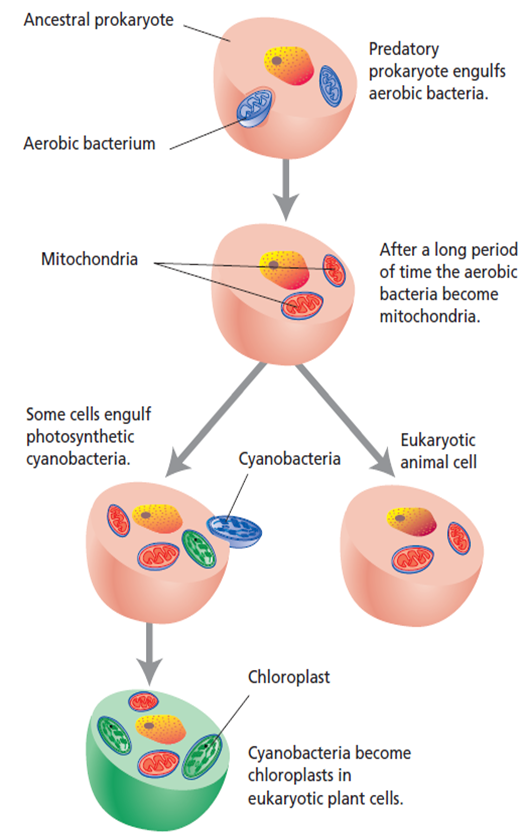
What is the endosymbiosis theory?
proposes that eukaryote cells were formed when a bacterial cell was ingested by another primitive prokaryotic cell.
Why do cells need biomacromolecules and how are they grouped?
Every living cell is involved in synthesising these large molecules that are needed not only to build the body parts of organisms but also to maintain the biochemical processes that keep them living: communication, transforming energy and relaying genetic information.
grouped into four main classes based on their chemical composition and structure
- complex carbohydrates
- lipids
- proteins
- nucleic acids
What is a carbohydrate and what are features of carbohydrates?
>organic compound that serves as a structural component and a major energy sourc in the diet of animals : includes sugars, starches, celulloses and gums
- each molecule consists of carbon, hydrogen and oxygen atoms in the ratio of 1:2:1, giving the general formula for carbohydrates as nCH2O
- carbohydrates are classified into:
- monosaccharides - simple sugar which cannot be broken down into smaller sugar molecules i.e. glucose
- disaccharides - 2 linkes monosaccharides i.e. sucrose (glucos +fructose)
- polysaccharides - complec carbohydrates that are made up by linking together simple sugars i.e. cellulose
What is a lipid and what are some features?
>organic molecule insoluble in water, diverse group of molecules and include fats and oils, terpenes, waxes, phospholipids, glycolipids and steroids.
- Lipids all contain the elements carbon, hydrogen and oxygen
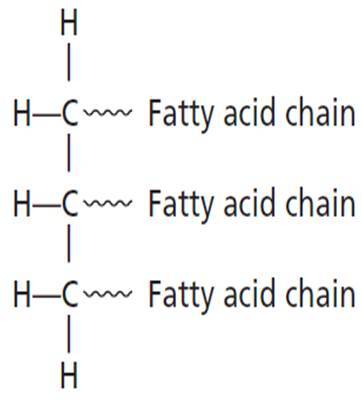
- oils + fats in plants and animals typically composed of triglyceride molecules (fatty acid chains + glycerol molecules)
Important functions:
- energy storage (they have approximately twice the amount of energy as carbohydrates)
- structural component of membranes
- specific biological functions (e.g. transmission of chemical signals both within and between cells).
- cells also excret lipids that function to protect the cell/organism to which it belongs
What are proteins and what are some features?
>large organic molecule, built up from amino acids, made up of the elements carbon, hydrogen and oxygen, always contain nitrogen. Also often contain sulfur, phosporous or other elements
- Amino acids are made into proteins in the ribosomes.
- Plants can synthesise their own amino acids.
- Amino acids are linked by peptide bonds to form a polypeptide chain.
- The order of amino acids is determined by the genes in our chromosomes.
- Polypeptide chains folds to give each protein its characteristic features.
- Mammals use 20 amino acids to make proteins +2 ‘non standard’ amino acids
- 9 essential amino acids must be taken from our diet (can’t be synthesised in cells)
What is the importance of proteins?
>Virtually everything a cell is, or does, depends on the proteins it contains.
- They contribute to building many different structures and parts
- and, as enzymes, control the thousands of chemical reactions that maintain life processes.
What is nucleic acid and what are its features?
>large organic molecule made up of nucleotides
- main function: cells carry out many and varied tasks, usually at the same time. To be an efficient system a cell needs to have some way of coordinating all of these activities.
- The nucleic acids DNA and RNA are found in the nucleus.
What is DNA?
- A molecule of DNA is composed of two long strands of sub-units called nucleotides. They are wound around each other to form a double helix.
- codes for the production of proteins that carry out and control the many activities within a cell. When a cell divides, new DNA is synthesised.
- Each DNA molecule is large. They are too large to move through the nuclear membrane. It is the job of messenger RNA (mRNA) to transfer the DNA code to the ribosomes for protein synthesis. The order of nucleotides in mRNA is determined by the order of nucleotides in a section of DNA.
- After synthesis of a strand of mRNA has been completed, it moves from the nucleus to ribosomes in the cytoplasm. The order of nucleotides in the mRNA determines the order of amino acids in protein synthesis.
What is endoplasmic reticulum?
> Interconnecting membrane sheets dividing the cytoplasm into compartments.
- Membrane produces vesicles to transport proteins within and between cells.
- Rough ER: studded with ribosomes so protein can enter the ER directly, transports proteins that are synthesised in the ribosomes
- Smooth ER: is where specialised lipids are synthesised.
- Major calcium store.






