What do unicellular organisms do?
- Unicellular organisms take in materials (inputs) from their external environment. They use these materials inside their single cell.
- Outputs or products of these activities are biomolecules and inorganic wastes. The biomolecules form the structures that carry out tasks.
What are the benefits of internal cellular membranes in terms of the control of biochemichal processes?
- Compartmentalising a cell by having membrane-bound organelles creates specialised environments for specific functions.
- A large number of activities can occur at the same time in a very limited space and under different conditions.
- Membrane structures can concentrate reactants, recycle catalysts and store products
- i.e. chemical reactions in lysosomes break down compounds brought into the cell by using strong digestive enzymes in an acidic environment. Enclosing them in a membrane prevents them destroying the cell.
How do enzymes control biochemical pathways and why are they needed to do this?
Metabolic reactions are controlled and regulated to:
- maintain cell functions
- meet the energy needs of the cell.
the rate varies among organisms.
Enzymes control the type and duration of these reactions.
- These reactions need to occur at a rate that allows the cell to function.
- Each step in the pathway is controlled by an enzyme.
- Enzymes speeds up the rate of chemical reactions without undergoing any change itself.
- Without enzymes the reactions would occur so slow as to hardly proceed at all.
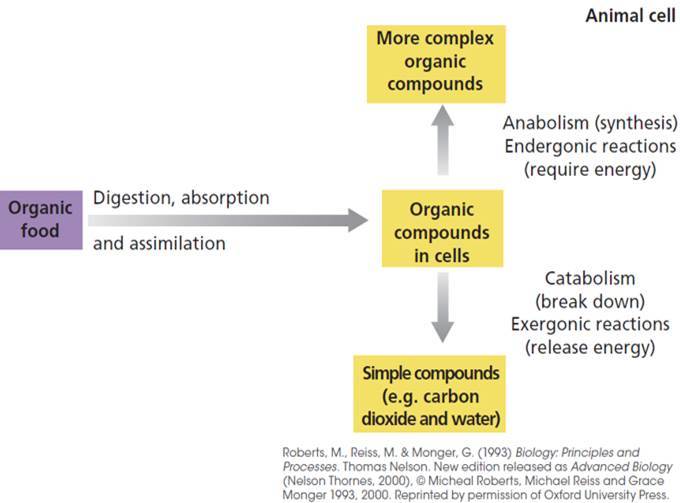
What does the relationship between anabolic and catabolic reactions look like?
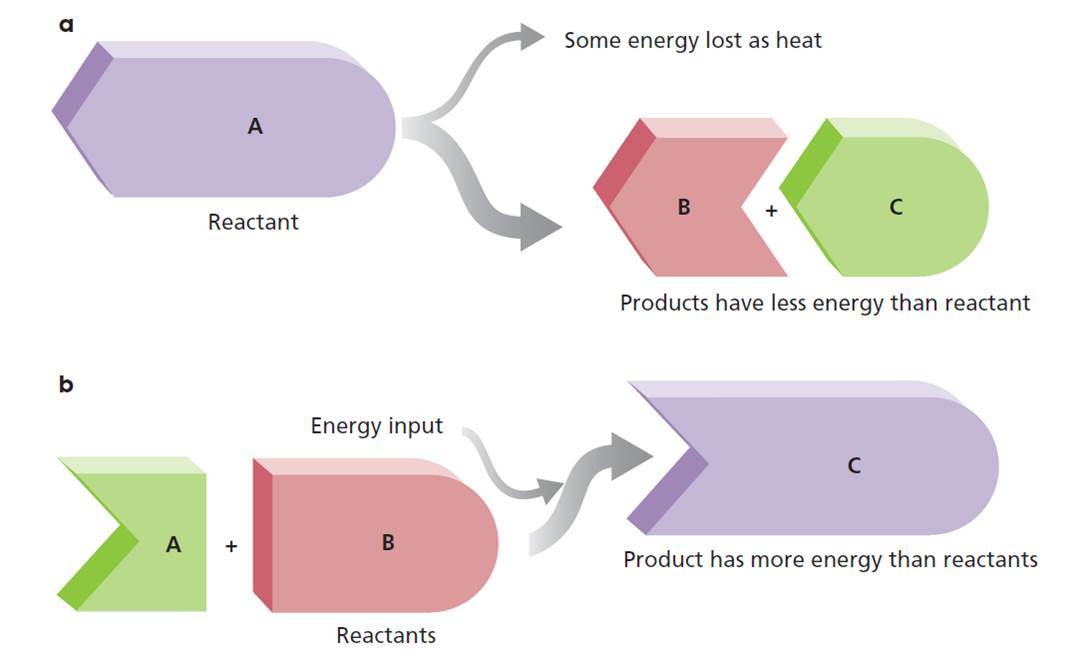
What does a comparison of endogonic reactions and exergonic reactions look like?
What are features of a biochemical pathway?
- At each step, reactants react to form new reactants, which themselves become reactants for the next step in the reaction chain, until the final products are formed.
- Each step is often reversible, with the reaction favouring the formation of products.
- If products build up and are not removed, the reaction might slow down to the point that the whole pathway is slowed.
- Fortunately, the products formed at each step are consumed by the next step in the pathway, or are removed in a variety of ways, ensuring the reactions continue in the right direction.
- Photosynthesis and respiration are two pathways controlled and regulated by enzymes.
What is it thought about enzymes?
that enzymes have an active site, a region that is precisely shaped to target a molecule or substrate.
The active site bring substrates close to each other in an enzyme-substrate complex.This is where the reaction occurs to form the new product. The enzyme is not consumed in the interaction.
What is the lock and key model?
A model that describes the enzyme-substrate interaction.
A model of enzyme action. The folding of an enzyme protein forms a ficed groove or pocket-shaped active site. A substrate is an exact fit for the enzyme active site.
What is the induced fit model?
The enzyme shape is not fixed
- Bonds that form between an enzyme and its substrate can modify the shape of the enzyme so that the substrate can be fully accommodated by the enzyme.
- Bonds within the substrate molecule are stretched and bent by the molecular interactions with the amino acid groups that line the active site.
- Bond stresses on the substrate, lowering the activation energy required to kick-start the reaction.
- New products form at a fast rate.
What are properties of enzymes that affect their specific function?
- enzymes can work rapidly: by lowering the activation energy required, enzymes can speed up the reaction. As the enzyme has lowered the activation barrier, this means that reactions can occur at lower temperatures – i.e. within a normal physiological temperature range.
- enzymes are not destroyed or altered by reactions
- this depends on the relative amounts of substrates and products. If reactancts>products, an enzyme-controlled reaction will go from reactants to products until equilibrium is reached
- One direction may be more favourable than the other, unfavourable direction occurs using a different enzyme-controlled reaction.
- These types of reactions are equilibrium reactions.
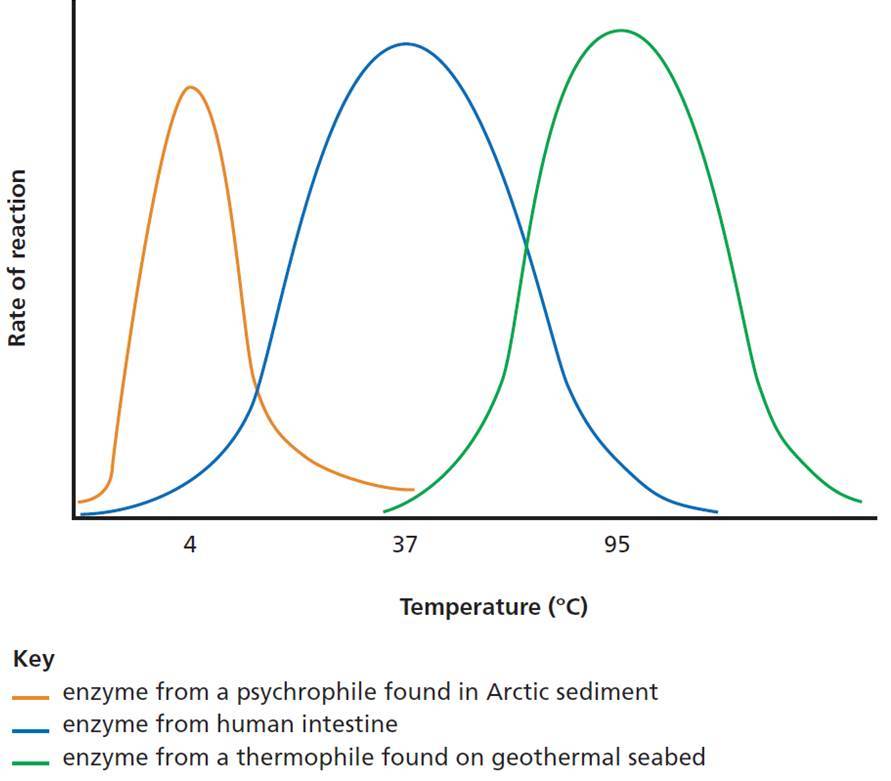
How does temperature affect enzyme activity?
Enzymes are affected by temperature and have an optimal range in which they operate. The temperatures that enzymes work best in are the temperatures of the environment they can be found in.
- activity (between the substrate and enzyme) gradually increases with temperature until the optimum temp. for enzyme activity is reached
- as temp. continues to increase the protein loses its functional shape and the substrate can no longer bind with the active site (denaturation)
- if the shape has changed enough to break the bonds between connecting units of amino acids, proteins can’t return to their original shape when conditions revert to normal
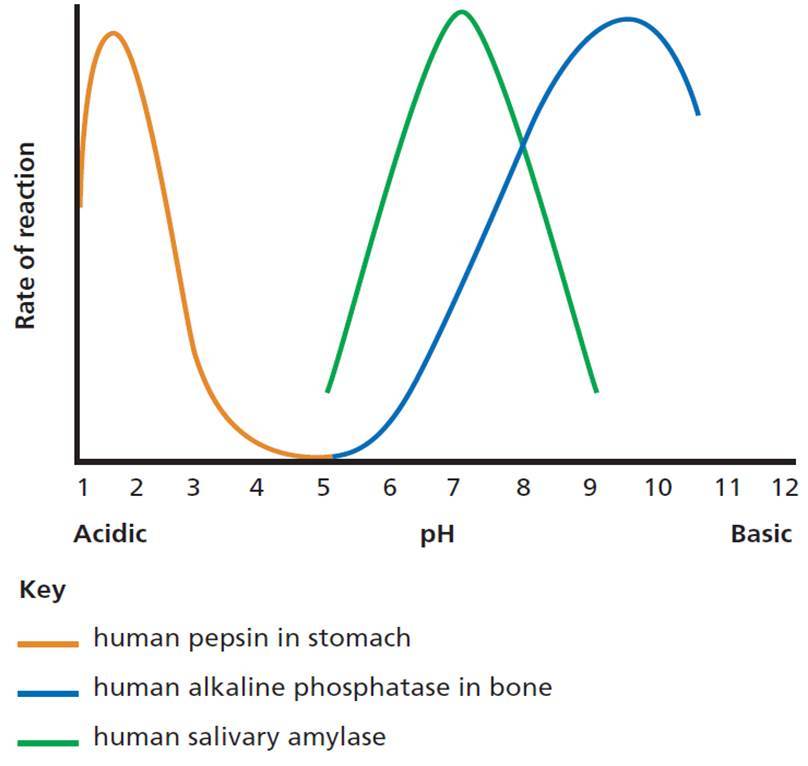
How does pH affect enzyme activity?
- excess acidity or alkalinity to the enzyme’s optimal range can alter the active site so much that it becomes denatured
- pH can also affect the shape of a substrate
- like temp., the pH that enzymes work best in are pH levels of the environment they are found in
How does substrate and enzyme concentration affect enzyme activity?
>can limit the amount of product produced
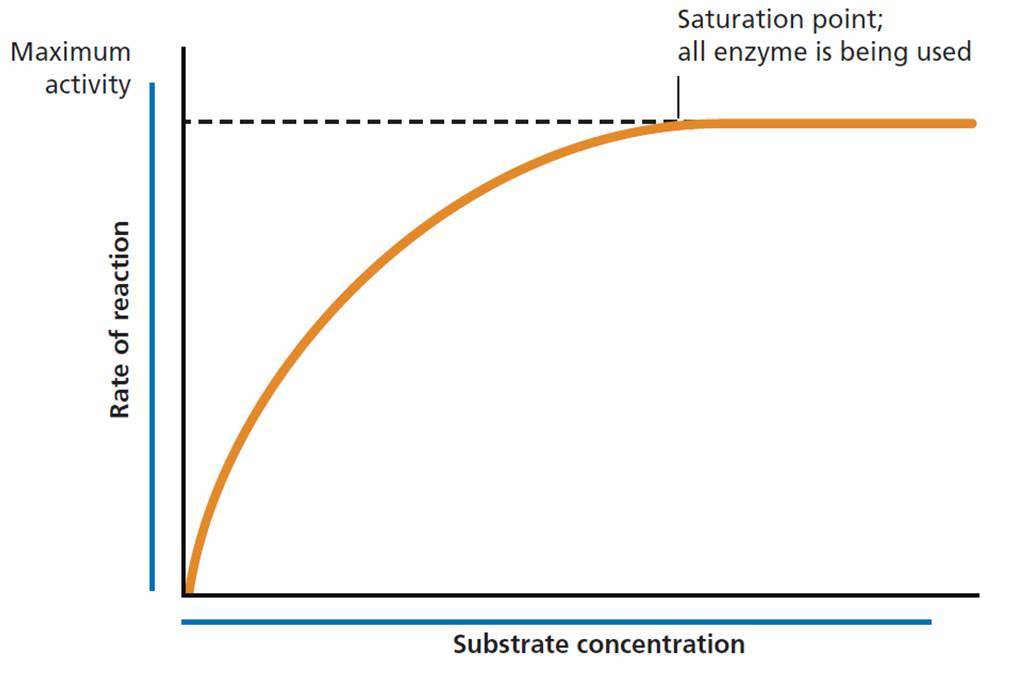
Enzyme-limiting reaction
As substrate concentration increases, so too does the rate of reaction until saturation. At saturation, further increases in substrate concentration do not increase the rate of the reaction.
Substrate limiting reaction
- When the amount of enzyme in a system is increased, then the amount of product increases exponentially.
- This keeps on happening until the product starts to inhibit enzyme action or the substrate is depleted.
- The rate of reaction is proportional to the enzyme concentration provided there is excess substrate present.
How does inhibitors affect enzyme activity?
> some enzymes have 2 or more active binding sites. These enzymes can move between their active/inactive state when inhibitor/activiation molecules bind with them
Non-competitive inhibitor
- The activity of almost every enzyme in a cell is regulated by feedback inhibition, in which the product of a reaction can inhibit enzyme activity.
- if a large amount of prouct is present in the cell, it binds to a site on the enzyme, other than the active site, thus slowing the rate of reaction.
- When the inhibitor binds to the enzyme, the active site of the enzyme changes shape so that it no longer has an affinity for its substrate.
- If the product is removed, then inhibition will be reduced and the product will be produced again.
- This helps cells keep the concentration of products within a certain range.
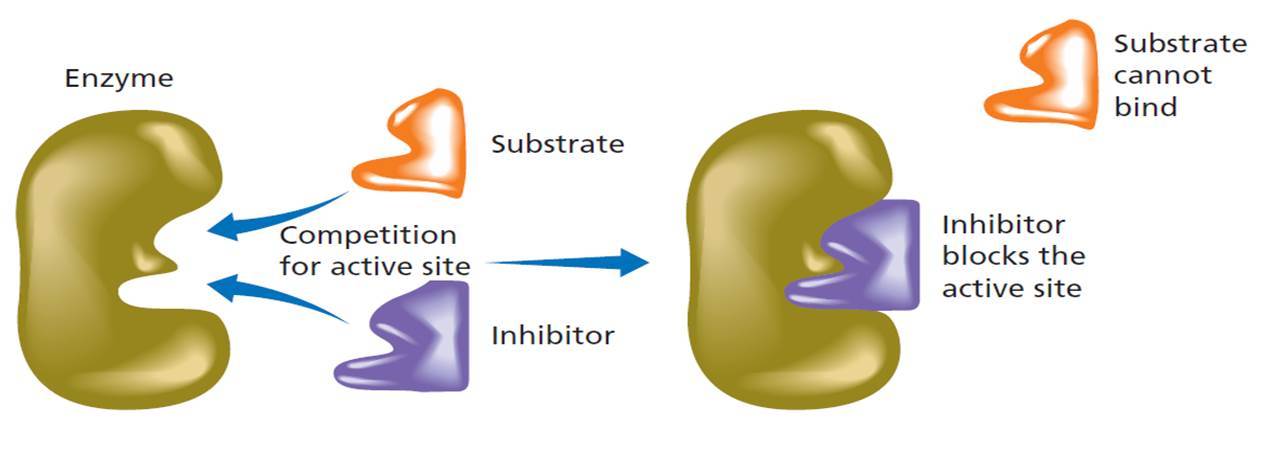
Competitive inhibitor
- Other substrates compete with the natural substrate for space in the active site.
How does cofactors and coenzymes affect enzyme activity?
> some enzymes are inactive until they bind with other morlecules/ions that change their conformation. This alters the shape and the charge of the active site so that it can capture substrate molecules and catalyse reactions more efficiently
Coenzymes
•Coenzymes are non-protein organic substances that are required for enzyme activity.
•Relatively small molecules compared to the enzyme.
•Dietary vitamins act as carriers of substances to and from catalytic reactions.
Cofactors
•Cofactors are small inorganic substances, such as zinc and magnesium ions.
What is ADP?
- Cells use the chemical energy released from exergonic reactions to fuel endergonic reactions.
- This transfer is achieved by a molecule called adenine triphosphate (ATP).
- ATP is a nucleotide containing adenosine attached to a sugar group (ribose), which is bound to a chain of three phosphate groups.
- ATP is readily moved around the cell and is an energy carrier in all living cells. It couples energy-releasing reactions with energy requiring ones.
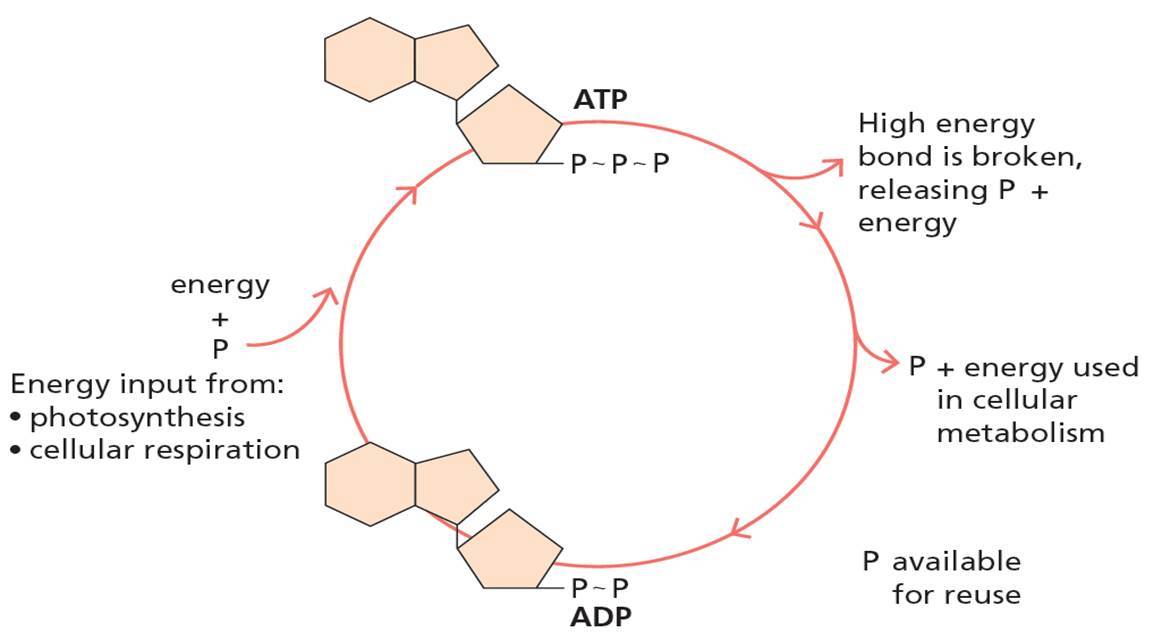
- Hydrolysis of ATP removes the 3rd phosphate from the molecule and releases energy.
- This leave adenine diphosphate (ADP) and a free inorganic phosphate.
- This reaction is sped up by the enzyme ATPase.
>below is a diagram of the ATP-ADP Cycle
What is the net reaction of photsynthesis?
carbon dioxide + water → glucose + oxygen + water
6CO2 + 12H2O → C6H12O6 + 6O2 + 6H2O
What are the 3 steps of photsynthesis?
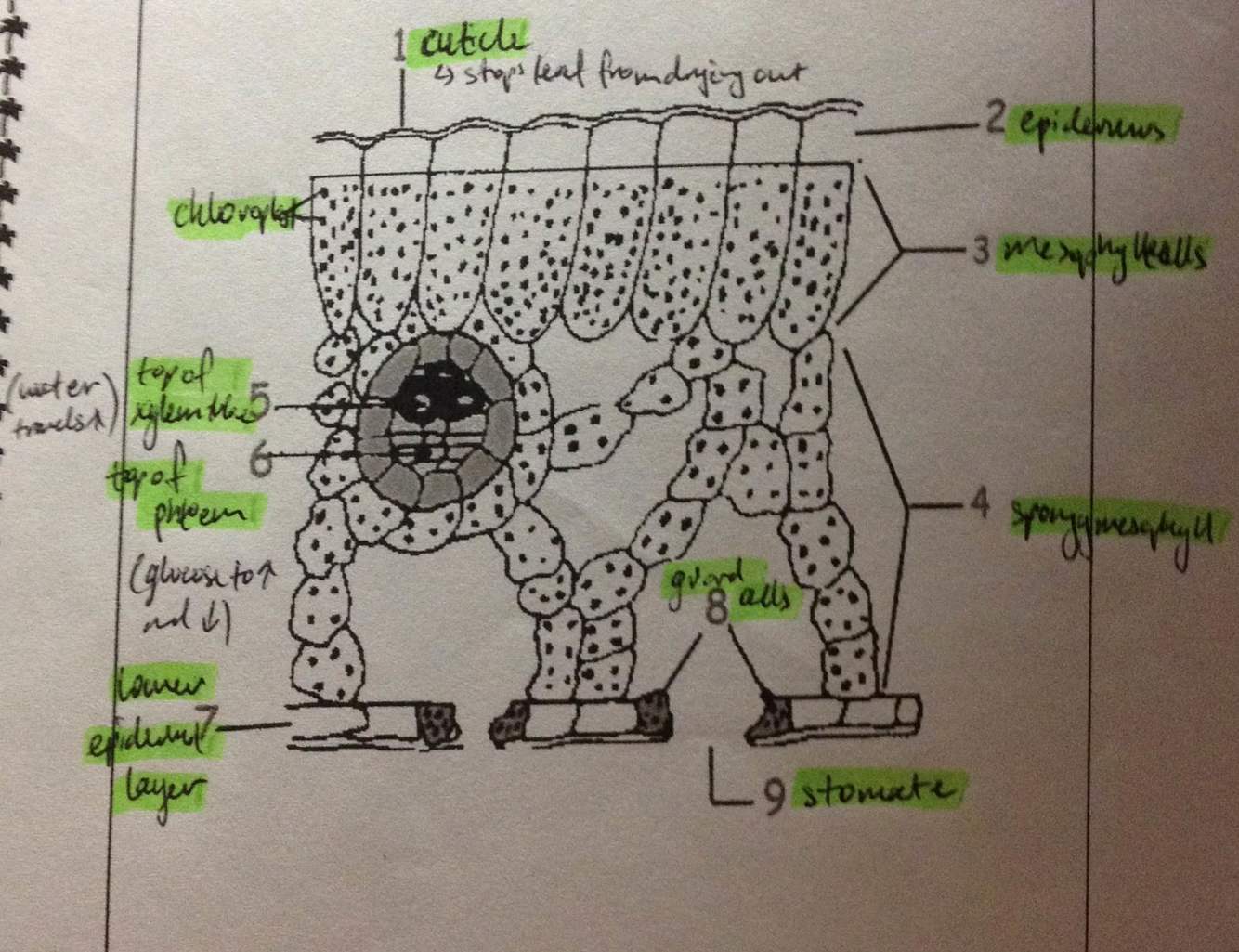
- Chloroplasts
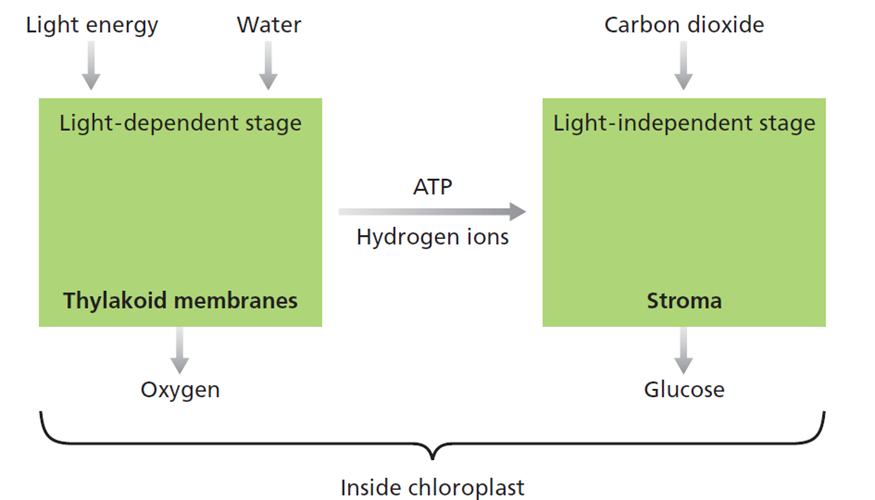
- Light Dependent Stage
- Light Independent Stage
What is in the chloroplast?
Chloroplasts
- Chloroplasts are the site of photosynthesis.
- The stroma is a gel like matrix rich in enzymes, enclosed by the inner membrane.
- Suspended in the stroma is the thylakoid membranes.
- These are flat, sac-like structures that are called grana when grouped together into stacks.
What happens in the light dependent reaction?
Light dependent stage - grana
- Light energy is absorbed by different pigments within the thylakoid membranes.
- These pigments include chlorophylls (green), carotenoids (orange) and xanthophylls (yellow).
- Chlorophylls absorb the wavelengths of blue and red light, and they reflect the green wavelengths.
- When a chlorophyll molecule in the thylakoid membrane absorbs light energy, electrons within the molecule become energised.
- The energy is used to split water molecules (H2O) into hydrogen ions (H+) and oxygen gas (O2).
- energy carrying molecules formed:
- NADP + H = NADPH
- ADP + P = ATP
What happens in the light independent reaction?
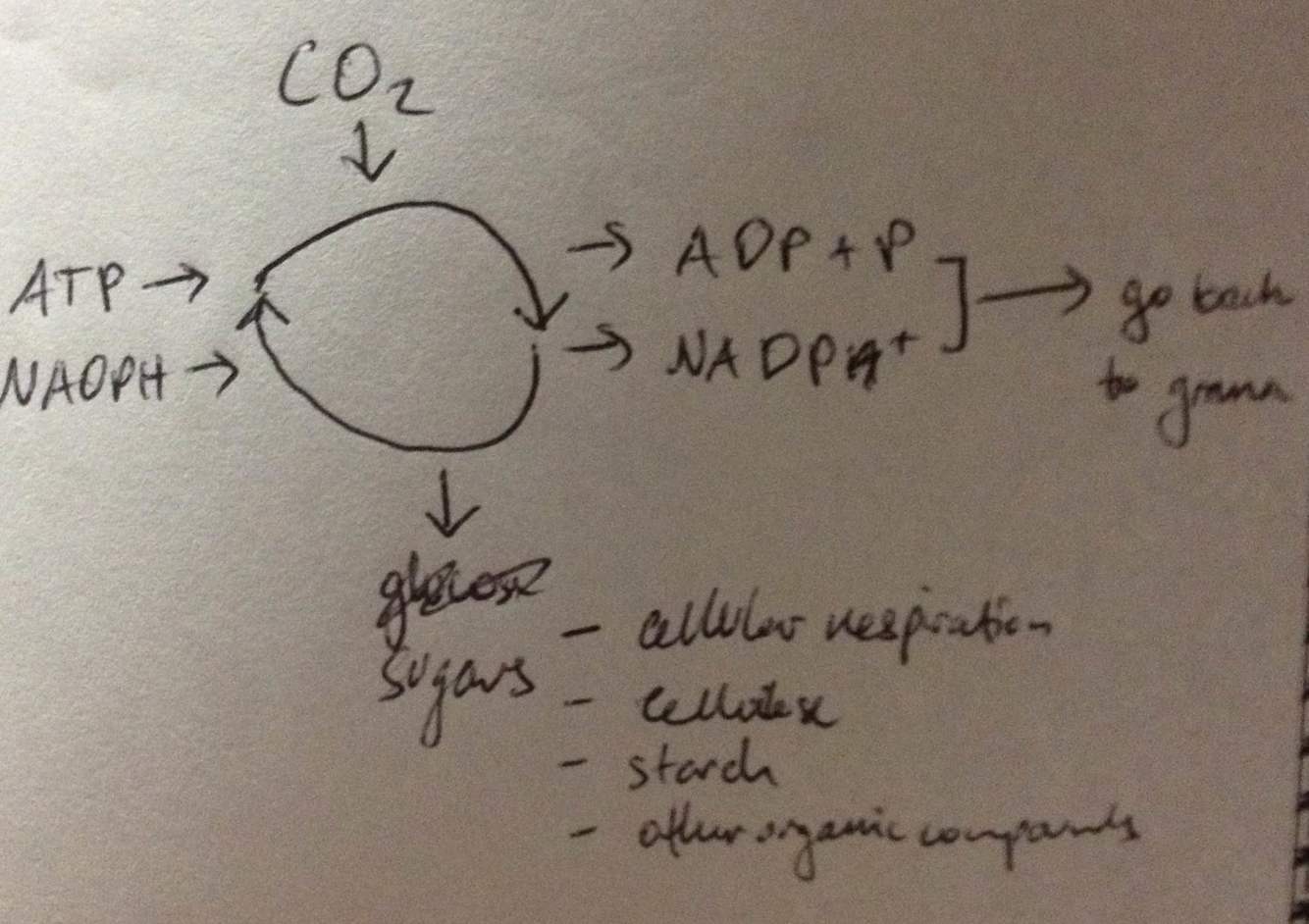
Light independent stage
- Occur in the stroma of the chloroplast.
- In this reaction glucose molecules are produced from carbon dioxide.
- This reaction requires a supply of carbon dioxide gas, hydrogen ions and chemical energy in the form of ATP.
- ATP provide the chemical energy for the conversion of carbon dioxide to glucose molecules.
- Sucrose, starch and cellulose are polymers of glucose molecules produced in photosynthesis.
WHat are factors that affect the rate of photosynthesis?
- light intensity - as LI increases, the rate of photosynthesis initially increases and then levels off to a plateau
- temperature - only the dark, not light reactions, are temp. dependent because of the enzymes they use (35C - 37C)
- length of day
- increasing carbon dioxide improves the photosynthesis rate
- level of air pollution
What is the chemical equation for aerobic respiration?
glucose + oxygen → carbon dioxide + water + ATP
C6H12O6 + 6O2 → 6CO2 + 6H2O + 36 ATP
Give a general overview of cellular aerobic respiration:
- All organisms, with the exception of the Archaea, use glucose as the primary source of energy for cellular metabolism.
- The chemical bonds in glucose are broken, releasing energy in the form of ATP.
- The word ‘aerobic’ is used when oxygen is present.
- For all organisms, the breakdown of glucose to supply the cell with available energy, regardless of whether oxygen is present or not, starts with a biochemical pathway called glycolysis.






