Bone
specialized CT
- made up of different tissues working together
- cartilage
- dense CT
- epithelium
- blood forming tissues
- adipose tissue
- nervous tissue
functions of skeletal system
- support
- protection
- movement
- mineral homeostasis
- hemopoiesis
- triglyceride storage
skeleton as support
- framework for soft tissues
- serves as POA for muscles
- maintains posture
skeleton for protection
brain, heart, lungs, spinal cord
skeleton for movement
motion
skeleton for mineral homeostasis
stores calcium and phosporous which are critical to nerve activity and muscle contraction
skeleton for hemopoiesis
examples
blood cell production:
- stem cells located in red bone marrow of flat bones
- ex: scalpula, sternum, skull, ribs, vertebral body, ilia
skeleton for triglyceride storage
store fat in yellow bone marrow
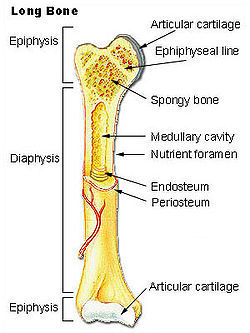
long bone parts
bones and areas on bone
humerus, femur, tibia, fibula, ulna, radius,
diaphysis, epiphysis, metaphysis, articular cartilage, periosteum, endosteum, marrow, medullary cavity
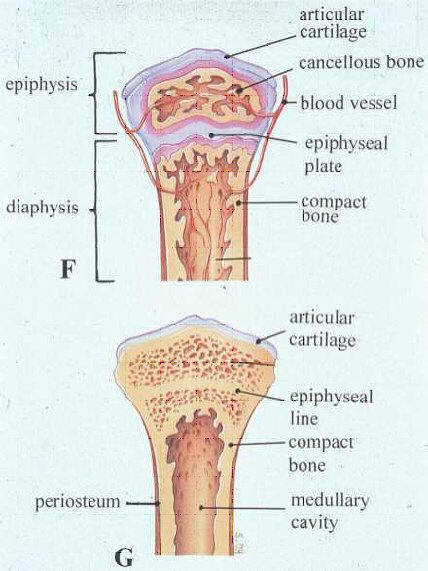
diaphysis
shaft, long and cylindrical
epiphysis
extremities, end of bone, proximal and distal
metaphysis
- includes epiphyseal plate in growing bone
- region where diaphysis joins epiphysis in mature bone
epiphyseal plate
calcified cartilage is replaced by bone as bone lengthens
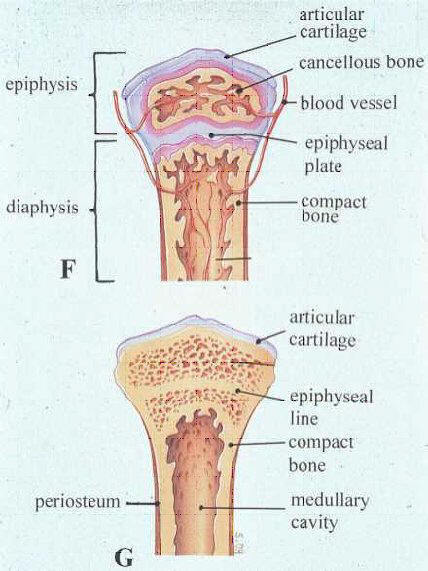
articular cartilage
description
location
function
- covers epiphysis
- thin layer of hyaline cartilage covering ends of bone that enter joint
- absorb shock and reduce friction
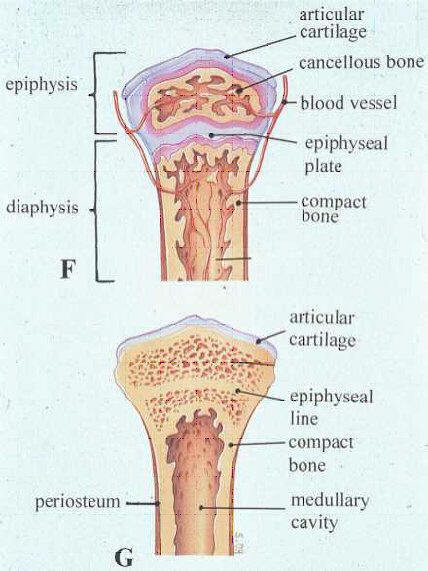
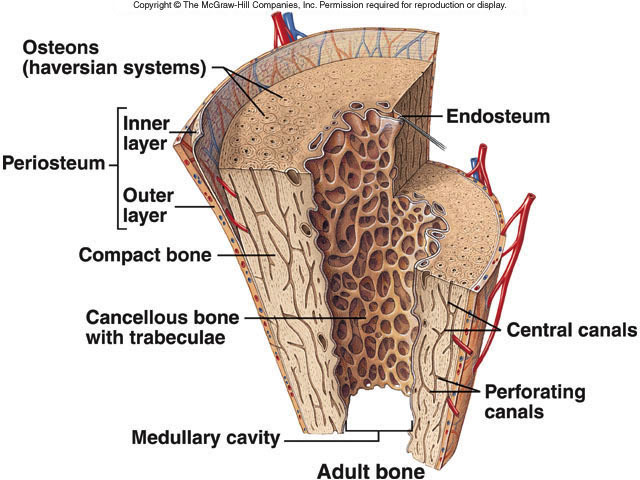
periosteum
- CT membrane made up of fibrous layer and osteogenic layer
- covering bone surfaces but not articular cartilage
- important in bone growth, nutrition, repair, provides attachment surface for muscles + ligaments + tendons
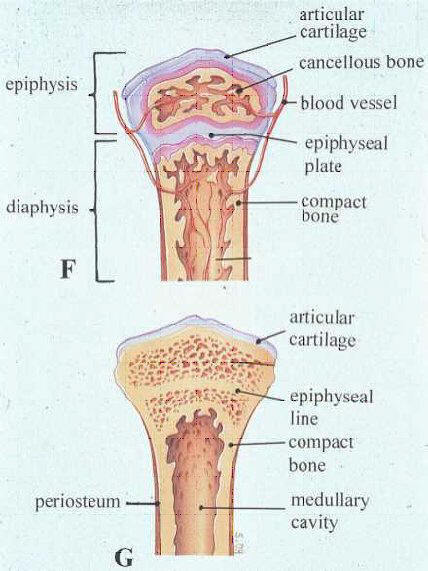
periosteum: fibrous layer
dense irregular CT has blood vessels, lymphatic vessels, nerves
- outer layer
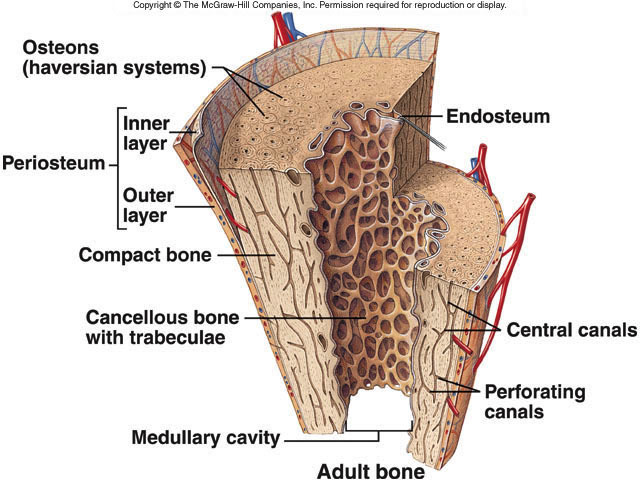
periosteum: osteogenic layer
layer of elastic fibers
- contains blood vessels and bone forming cells (osteoblasts)
- inner layer
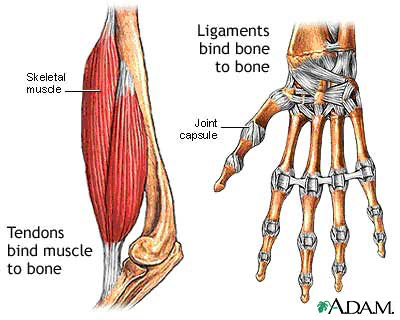
tendons
muscles to bone
marrow or medullar cavity
contains yellow bone marrow in adults (none in infants)
- necessary to produce blood cells
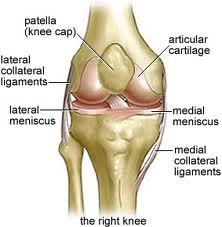
ligaments
bone to bone
endosteum
- lining of medullary cavity
- contains bone destroying cells (osteoclasts)
matrix of bone chemical makeup
- 50% inorganic salts
- 25% collagen fibers
- 25% water
responsible for hardness of bone
mineral salts
how does bone get tensile strength?
collagen fiber



-
Chapter 1 definitions35
-
Chapter 4: Tissues28
-
Chapter 2: Chemistry35
-
Lab identification terms106
-
Chapter 5: Integumentary System64
-
Chapter 6: Bone Tissue64
-
Chapter 9: Joints59
-
Chapter 11: Muscular System18
-
Lab 2: Facial Muscles15
-
Lab 2: Upper Extremity Muscles17
-
Lab 2: Torso Muscles8
-
Lab 2: Lower Extremity7
-
Chapter 10: Muscle Tissue54
-
Chapter 10: Cellular Respiration, Types of Muscle Fiber54
-
Chapter 12: Nervous System34
-
Chapter 12: Neurons39
-
Chapter 12: Action Potentials30
-
Chapter 12: Neurotransmitters14
-
Chapter 13: Spinal Cord31
-
Chapter 13: Parts of spinal Vertebra29
-
Chapter 13: Spinal Reflexes26
-
Cranial Nerves15
-
Chapter 14: The brain and Cranial Nerves43
-
Chapter 14: more brain function55
-
Chapter 15: ANS0



