what is conjunctivitis
- inflammation of conjunctiva
- most common cause of red eye worldwide
- inflammation can be hyperacute, acute or chornic
- caused by infection or toher factors like allergic, chemical, mechanical, dermatologial, systemic or lacrimal system infections
- Acute (less than 3-4 weeks) vs chronic (>4 weeks)
- usually self limiting
What are teh 3 types of conjunctivitis
- viral, bacterial and allergic
previlance of viral conjunctivitis
- peak prevalence in summer
- adenovirus infections most common (65-90%) followed by herpes simplex
- other viruses: varicella zoster, molluscum contagiousum
- oftne misdiagnoses as bacterial conjunctivitis
previlance of bacterial conjunctivitis
2nd most common
- 50 -75% cases in children in winter months
- staphylococcal specis most common, followed by streptococcus pneumoniae and haemophilus influenza
- neisseria gonorrhoeae or chlamydia trachomatic cause more serious hyperacute infection
previlance of allergic conjunctivitis
non-infectious, least frequent
- peak in spring and summer
- immediate hypersensitivity, allergy to seasonal pollens or allergic reactions to eye rpoducts
- chemical or irritative cuases include dry eye, drug induced dry eye
clinical presentation of viral conjunctivites
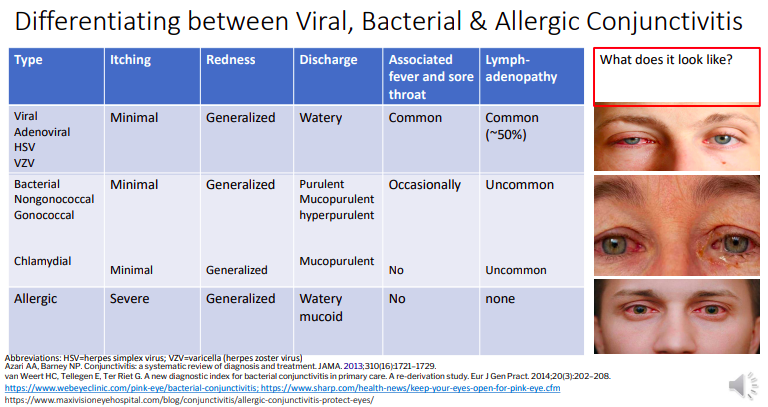
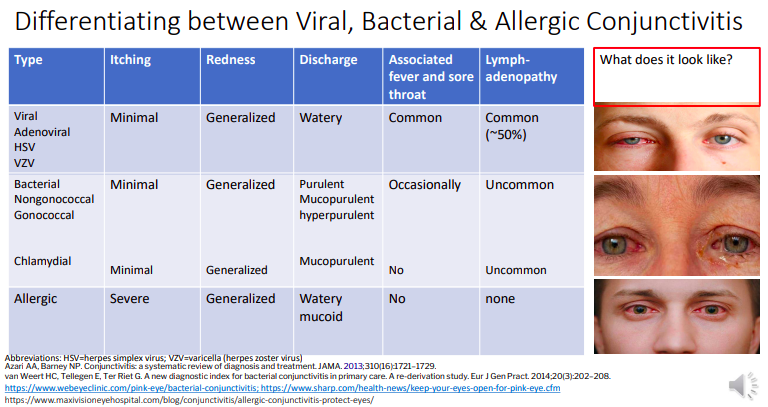
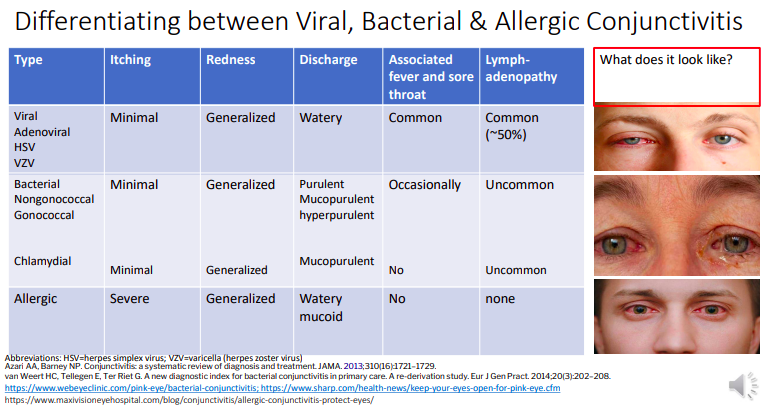
- Generalized redness, serous (watery) discharge, burning, foreign body sensation, itching, unilateral symptoms initially that may progress bilaterally
clinical presentation of bacterial conjunctivitis
- Generalized redness, purulent (viscous, yellow/green colour) secretion with sticky eyelids in the morning, minimal itching
- Hyperacute bacteria conjunctivitis symptoms include rapid onset, purulent discharge, diminished visual acuity, eye tenderness and swollen lymph nodes
clinical presentation of allergic conjunctivitis
Mild to severe ocular itching, redness and watery or mucoid discharge, mild eyelid swelling and bilateral presentation
what are the risk factors for conjunctivities
● Exposure to someone infected with active viral or bacterial conjunctivitis
● Contact lens use, poor contact lens hygiene
● Foreign body exposure
● Use of contaminated cosmetic eye products
● Chronic dry eye or blepharitis
● Use of ophthalmic or other medications that might cause allergic reactions or dry eyes
● Immunosuppression, rheumatological disease, allergic rhinitis
what information to collect for SCHOLAR
- S: redness, discharge, itching
- C: water, serous, purulent, mucopurulent, hyperpurulent discharge • History of contact lens use, exposure to person with red eye, URI
- O:acute presentation 1-2 days vs chronic
- L: conjunctiva vs eyelid or around the eye
- A: risk factors for dry eyes, blunt trauma, chemical exposure
- R: what has been tried before
HAMS for conjunctivitis
- H: history of ocular disease, intermittent episodes of red eye, history of atopy, current URI, Sjogren’s, rheumatoid arthritis, thyroid disorder, rosacea
- A: allergies to medications or environment
- M: medications with anticholinergic side effects, beta blockers, hormone-based therapy, antineoplastics, allergy medications, nonprescription or natural medications, recreational drugs/opiate
s• S: history of smoking, alcohol use and caffeine use, hobbies, travel, sexual history, use of illicit drugs
Red flags signs and symptoms of conjunctivitis
● Contact lens wearer due to the high risk of corneal ulcer
● Visual loss, blurred vision, halos
● Moderate to severe pain or ocular trauma
● Severe or hyperpurulent discharge or any corneal involvement
● Photophobia or coloured halos around lights
● Irregular pupils- fixed, smaller, larger
● Visible corneal opacity or haze
● Rash +/-blisters around eye or redness at the corneoscleral junction, ciliary flush
● Foreign body sensation
● Severe headache with nausea, vomiting
● Bacterial ophthalmic infections in children
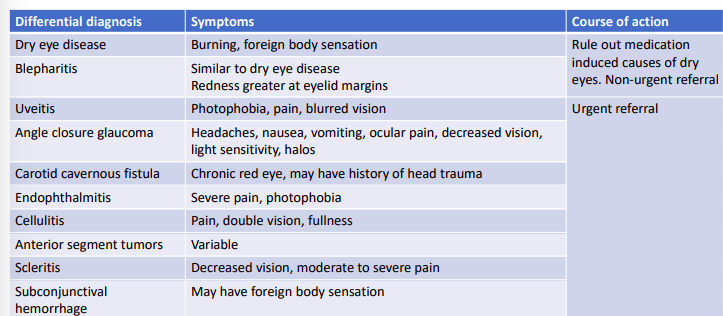
differential diagnosis
what are the goals of therapy
- Eliminate or reduce signs and symptoms
- Restore or maintain normal vision
- Prevent complications (preserve eyesight)
- Prevent recurrence
- Cure or control infection where present and prevent transmission of infection to others
what are the non-pharmacological recommendations for conjunctivitis
- Cold compresses for allergic or viral conjunctivitis
- Warm compresses or soak for bacterial conjunctivitis
- Sterile saline irrigation or refrigerated commercial eye wash
- Eyelid wipes for blepharitis
- Infection prevention and control measures
- Contact lens wears should stop using contact lens and seek medical advice
- Avoid environmental triggers for allergic conjunctivitis
- Encourage proper use of eye drops and recommend discarding contaminated or older eye drop bottles
- Discard old eye cosmetic/eye make up products being used
- Review use of other medications that can worsen eye conditions
pharmacological treatment for Viral conjuncivitis
- adenoviral conjunctivitis is self limiting
- no proven treatment for eradication of virus
- treatment for viral infection mainly supportive
- > arificial tears or ocular lubricants (cold) ex: carboxymethylcellulose or polyvinyl alcohol
- > Opthalmic decongestants or antihistamine/decongestant combinations (can help with severe itching)
ex: maphazoline, oxymetazoline or antazoline/nephazoline
*decongestants/vasoconstrictors may provide angle closure glaucoma (reserved for occasional short term use)
Drugs used for adjunctive or supportive drug therapties for virual conjunctivities
ocular lubricants
opthalmic vasoconstictior monotherapy
antihistamine/ophthalamis vasoconstictor
describe does/directions, safety and considerations for
ocular lubricant
*treatment of viral conjunctivitis
Dose/directions: 1-2 drops TID to QID
safety: preservative toxicity, filmy/blurry vision
considerations: preferable to use preservative free product to minimize eye irritation
describe does/directions, safety and considerations for
Ophthalmic vasoconstrictor monotherapy
ex: . Naphazoline, oxymetazoline, phenylephrine, tetrahydrozoline
dose/directions: 1-2 drops every 3 to 4 hours or up to QID ≤ 3-4 times per month and ≤ days in a row
safety: Minor stinging on instillation, pupillary dilatation and angle closure glaucoma in predisposed patients
considerations: Ophthalmic vasoconstrictors are meant for occasional and short-term use. Overuse may cause rebound hyperemia
Antihistamine/ophthalmic vasoconstrictor/combinations
Eg. Antazoline/naphazoline Pheniramine/naphazoline
dose/directions: 1-2 drops every 3 to 4 hours or up to QID ≤ 3-4 times per month and ≤ days in a row
safety: Minor stinging on instillation, pupillary dilatation and angle closure glaucoma in predisposed patients
considerations: Ophthalmic vasoconstrictors are meant for occasional and short-term use. Overuse may cause rebound hyperemia
describe pharmacological treatment for bacterial conjunctivitis
- usually self-limiting and resolves within 7 to 10 days
- Refer children to primary care provider or optometrist
- No evidence of superiority of any topical antibiotic agent
- Consider preference for ophthalmic drops vs ointment formulations
- OTC treatment for mild infection (small amounts of discharge, tearing mild burning)
-> Polymyxin B/gramicidin combinations
• Rx treatment for moderate infection (copious amounts of discharge and tearing, moderate burning)
-> Erythromycin, trimethoprim/polymyxin B, tobramycin
OTC treatment for bacterial conjunctivitis
polymyxin B gramicidin eye/ear drops
- directions: 1-2 drops 4-6 times/day F5-7D
- chronic use can cause corneal epithelium toxicity, allergy and bacterial resistance
- use for mild infections, if no improvement after three days refer
what are the prescription treatments for bacterial conjunctivitis
- erthromycin 0.5% ointment
Fusidic acid 1% viscous eye drops
Trimethoprom/polymyxin 0.3% opthalmic drops
- fluoroquinolones: besifloxacin 0.6%, cuprofloxacin 0.3%, gatifloxacin 0.3%, Moxifloxaci 0.5% ofloxacin 0.3%
describe directions, safety and considerations of Erthromycin 0.5% ointment
sig: 1 xm 2-6x daily F1W
Antibacterials: chronic use can cause corneal epithelum toxicity, allergy and bacterial resistance
considerations: moderate to severe infection


-
top 50 drugs100
-
JP120
-
JP235
-
JP314
-
Migranes60
-
Fever54
-
Insommnia28
-
Sports Injury50
-
Acute Pain in pediatrics8
-
Teething23
-
Eye Conditions41
-
Infant Care26
-
infant colic23
-
Oral Candidiasis31
-
Dry eye28
-
conjunctivitis32
-
Oral hygiene30
-
Vaginal Dryness24
-
xerostomia19
-
Oral Aphthous ulcers21
-
Cold Sores21
-
Vaginal Hygiene21
-
vulvovaginal candidiasis38



