What determines core body temp
- core body temp
- t emp of blood surrounding hyppothalamus (test is v invasive)
*very different than skip temp
what is responsible fpr thermoregulation
- hypothamalus
- maintains core body temp at 37 C via neg feedback between thermoregulatory center in hypothalamus and thermosensitive neuron in skin and CNS
- compensatory physiologic mechanisms and behavioural adapt help to return temp to normal
why must you refer an infant with a fever
- infants < 3 months have an immature thermoreg system & are incompletely vaccinated
*hard to get a fever so if they have one something is likely very wrong
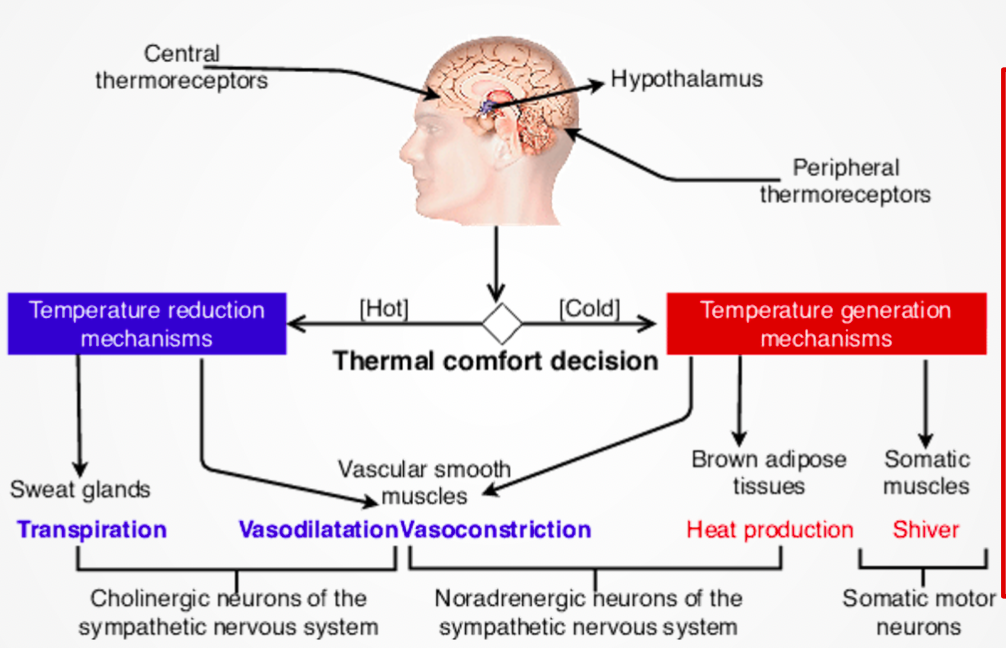
Describe the heat dissipating phase
- mech of maintain homeostasis
- peripheral vasodilation to promote heat loss: skin feels hot, flushing,
- sweating (cholinergic
- head ache
- behavioural: remove clothing, adjust air conidtioning, seeking shade from hot sun
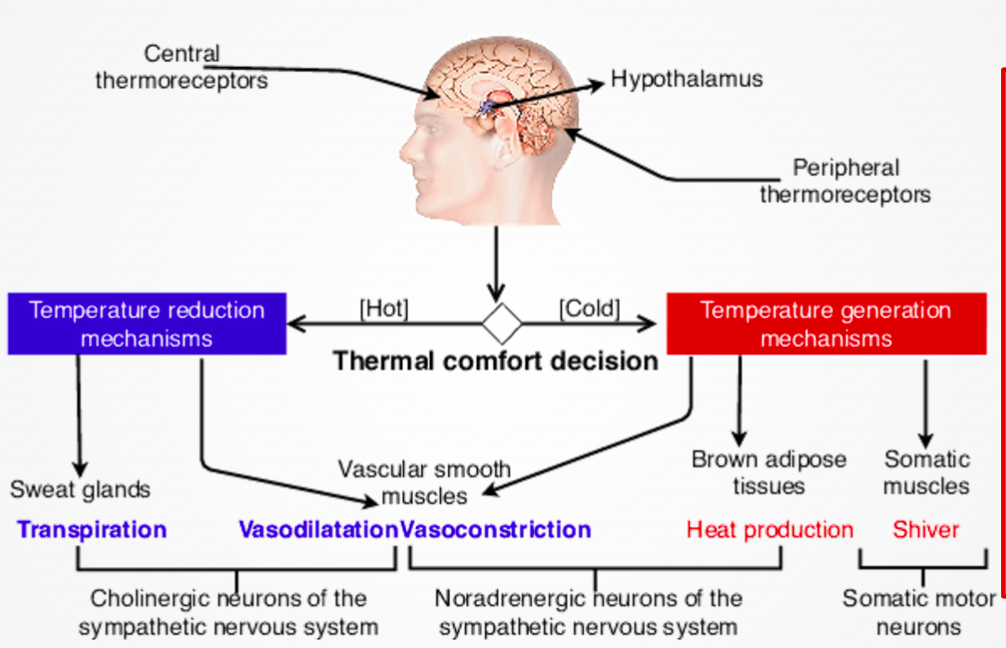
Describe the Heat-generating Phase
- peripheral vasocontriction to prevent heat loss -> inc HR, malaise (general feeling of unwell)
- involuntary skeletal muscle contraction -> shivering, chills
- increase catabolism
- behavioural: wearing additional chlothing, rub hands together
how does normal body temp vary daily
- according to circadian rhythms
- lowest in AM
- highest late afternoon (4-5)
*varies daily be 0.5-1 C
what is normal temp range
rectally
tympanically
orally
axillary
temporally
Rectally: 36.6 - 38
Tympanic: 35.7-38
Oral: 35.5 - 37.5
Axillary 34.7 - 37.2
Temporal 36.6 - 37.8
prevalence of fever
- 30% f children presenting to pediatricians have fever as complaint
- leader cuase of ER visits udner 15
- afftects 70% ICU
what temperature is:
fever
high fever
hyperrexia
Fever: T > 38 (rectally ( remove 0.6 or oral)
High fever: T > 40.5 oral
Hyperpyrexia: T > 41.1 C
What temp is fever
rectally
tympanically
orally
axillarly
temporally
Rectally: > 38C
Tympanically >38
Oral > 37.5
Axillary > 37.2
Temporal *depends on pt age and device used (prov over 37.8
what causes a fever?
Pyrogens
- Exogenous
- Microorganisms and toxins
- Induce formation and release of endogenous pyrogens (act to inc PGE2)
- ex: gram -ve bacteria have exogenous pyrogens, fungi, virus, clood prod, drugs (amphotericin B) or excipients (EDTA)
- Endogenous
- Polypeptides produced by host cell macrophages, monocytes and other cells in response to or from damaged tissu
- IL-1α & IL-1β, TNFα, IL-6, CNF and IFN-Υ (act to increase PCE2 -> inc set point)
- their release causes symptoms such as nyalgias and arthralgias (muscle aches and pains)
- Polypeptides produced by host cell macrophages, monocytes and other cells in response to or from damaged tissu
Pathophysiology
- Inection, toxins, injury, ifnlammation
- Immune Response mediators
- IL-1 IL-2 TFN IFN
- Leukocytes
- monocytes, neutrophils, lymphocutes
- endothelium, glial cells, mesenchymal cells
- Pyrogenic Cytokines
- IL-1, TNF, IFN
- Hypothalamic endothelium
- production of PGE2 **treat fever with inhibitors of PGE2
- rise in cAMP
- Elevated Set point
- activation of vasomotor centre neurons
- peripheral vasocontriction and heat production
an increase in body temp may be _____ or _____
- idopathic or the result of infectious and other pathologic processes, systemic response to certain drugs and vigrous activity
What are the ifnectious causes of Fever
Airway: Pharyngitis, sinusitis, dental infection
- Respiratory system: Pneumonia, bronchitis
- Circulatory system: Endocarditis, myocarditis
- Central nervous system :Meningitis, encephalitis
Endocrine system : Prostatitis
Renal/urinary tract: Cystitis, pyelonephritis
- Gastrointestinal tract: Pancreatitis, C. difficile colitis
- Integument: Cellulitis, necrotizing fasciitis
What are the non infectious causes of fever
CNS inflammation
Malignancies & Neoplasms
Tissue Damage
Dehydration
Metabolic Disorders
Immunologically-Mediated Conditions: Antigen-Antibody Reactions -> Drug Fevers (drug-induced hyperthermia)
What is hyperthermia
- uncontrolled elevation in body temp without elevation of the hypothalamic set point
*represents a malfunctioning of the normal thermoregulatory process at hypothalamic level
- usually caused by inadephate heat dissipating in response to warm env
*young children and early adults prony to heat stroke
- Antipyretic agents not efective in lowering body temp **Can be rapidly fatal
if have hypothermia treatmeith w/ NSAID will do NOTHING
what is drug induced hyperthermia
- accounts for 3-5% of all ADR (not common
- occurs in 10% hospitalized pat (bc usuall on many drugs)
- body unable to maintain core temp (ranges from 38.8-40 but could reach 42.2)
- foten goes unrecognized bc of inconsistent signs and symptoms
- management = disc suspected drug (failure to do so can cause substancial borbidity and mortabilty
caused by: antineoplastis, cardobascular agents, CNS agents, anti-infectives, other agents
what are the 5 categories of drugs that can induce fever
- antiinfectives
antineoplastics
cadiovasucular agents
CNS agents
- other agents
aspects to aplying PPCP to fever
- demographics: name, age, weight *always ask if consult is for that person or somebody else
- SCHOLAR: gives info about cheif complaints
- HAIMS: tells aobt patient
Scholar for fever
- Symptoms
- main and assocaited symptoms
- Characteristics
- QOL
- Daily activities
- did he go to day care are pthers around him sick
- Histroy
- happened in past
- what as done then
- where ddi you measure temp what was temp
- has fever fluctuated in this episode or used in medication
- Pmset
- when did this episode fever begin
- what time did yu measure
- when did this episode fever begin
- location
- whre is problem
- Agrvsting factors
- what akes symptoms worse
- Remitting factors
- what maeks feel better
wha signs and symptoms typically accompany fever
headache
•backache
•diaphoresis
•clammy skin
•flushing
•tachycardia
•chills
•somnolence
•arthralgia
•myalgia
•irritability/ crying
•anorexia
•generalized malaise
•tachypnea
how do most children tolerate fever
- well
- if continue to be alert, play formally
and stay hydrated fever is not great concern
Collecting HAMS for fever
- Health Status
- condition, wellnes (immunizations), diagnostics, physical assessemnt
- obtain accurate temp measurement: pat age, time of day, level of physical & emotional stress
- Allergies/intolerances
- drugs or env
- Medication histroy
- Rx, OTCs, NHPs, Recreational
- Socail histroy
- lifestyle (daycare, school, diet, water)
- beliefs, goals and preferences
- socioeconomic factors


-
top 50 drugs100
-
JP120
-
JP235
-
JP314
-
Migranes60
-
Fever54
-
Insommnia28
-
Sports Injury50
-
Acute Pain in pediatrics8
-
Teething23
-
Eye Conditions41
-
Infant Care26
-
infant colic23
-
Oral Candidiasis31
-
Dry eye28
-
conjunctivitis32
-
Oral hygiene30
-
Vaginal Dryness24
-
xerostomia19
-
Oral Aphthous ulcers21
-
Cold Sores21
-
Vaginal Hygiene21
-
vulvovaginal candidiasis38



