Objectives
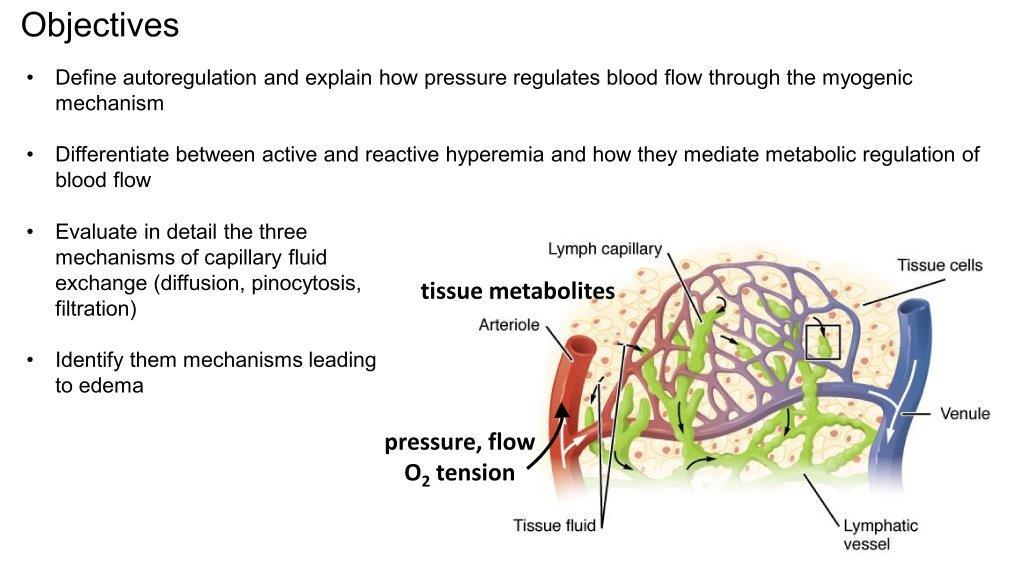
What mechanisms regulate organ blood flow?
local control mechanisms
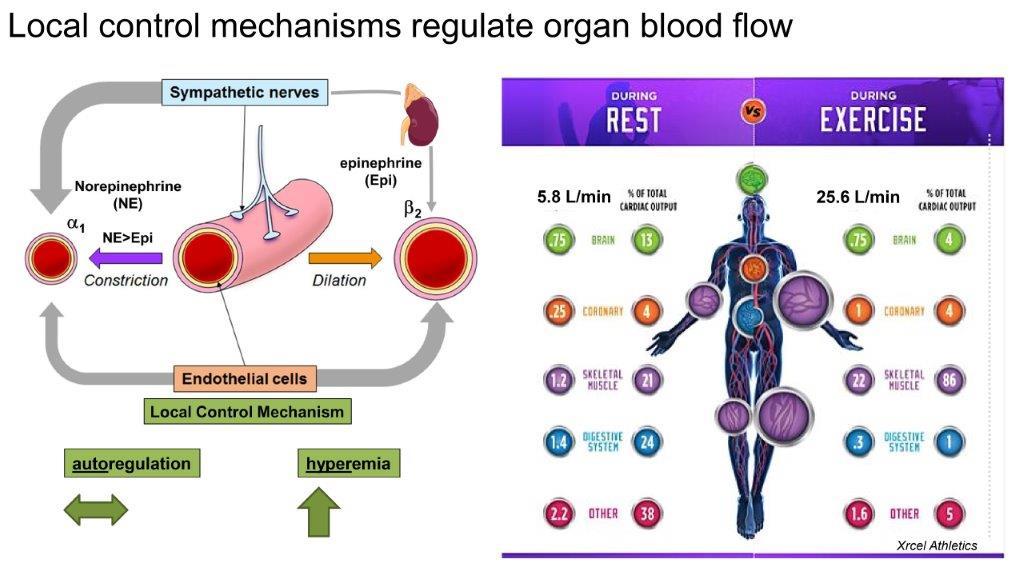
Locall control mechanisms of organ blood flow
- Autoregulation
- Hyperemia
Autoregulation of blood flow definition
to keep it constant
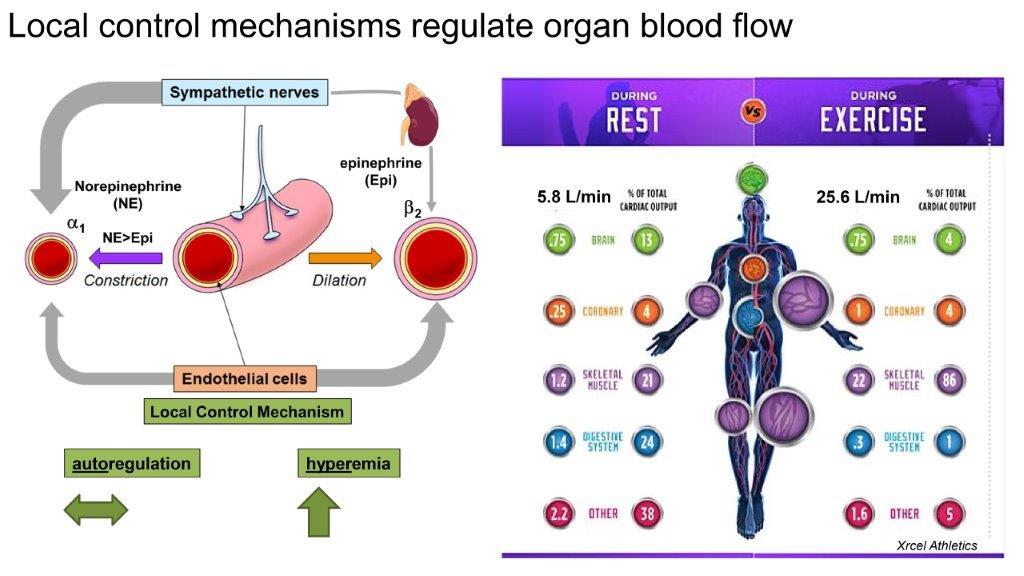
Hyperemia blood flow definition
increasing blood flow
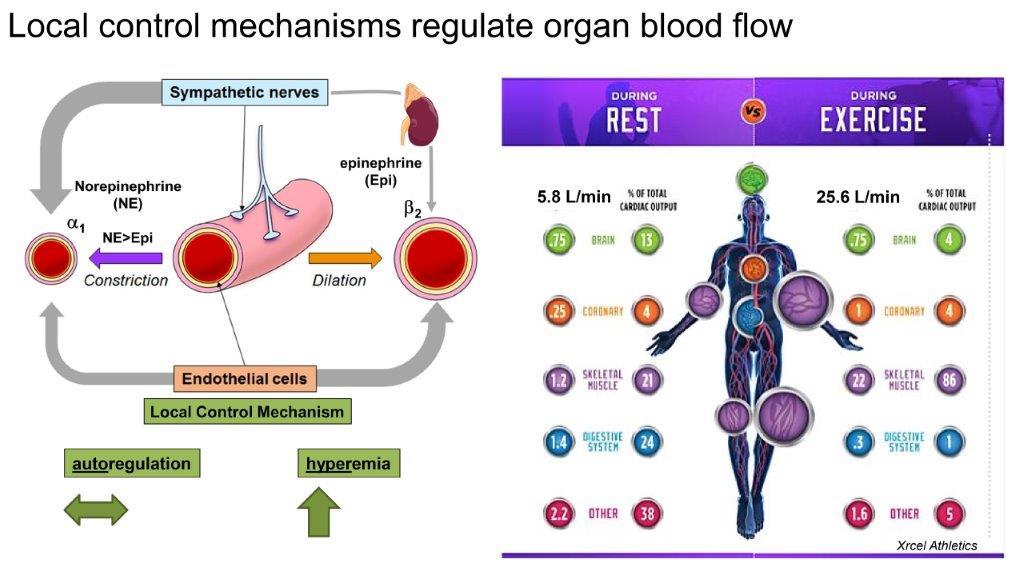
Example of autoregulation
- when exercising the total blood flow increases and the % blood flow to the brain is reduced; however, the brain is still receiving the same amount of blood as it was at rest
- this is an example of autoregulation
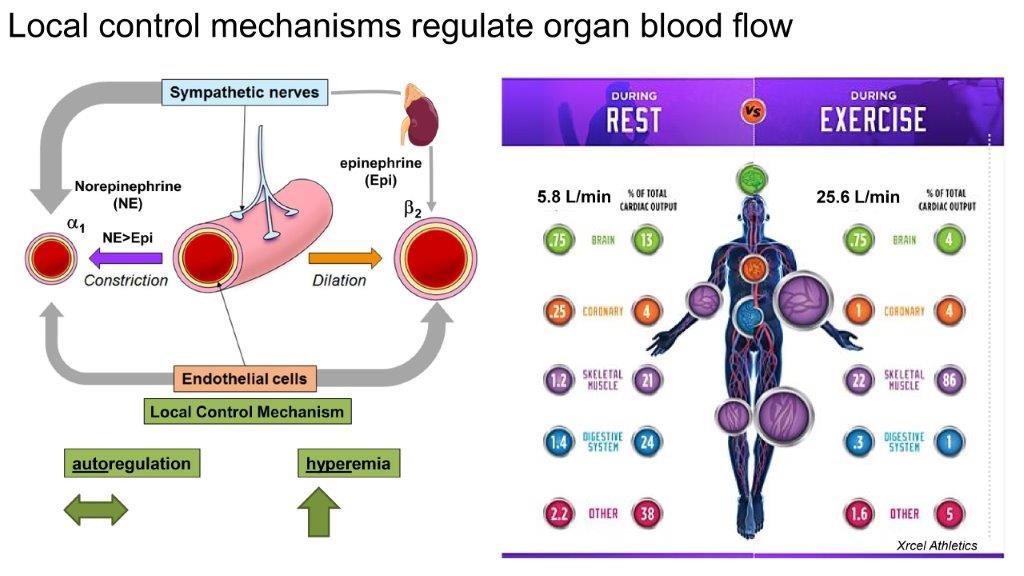
Example of hyperemia`
During exercise the blood to the skeletal muscle is increased dramatically from at rest which is an example of hyperemia
Explain the autoregulatory mechanism of blood flow
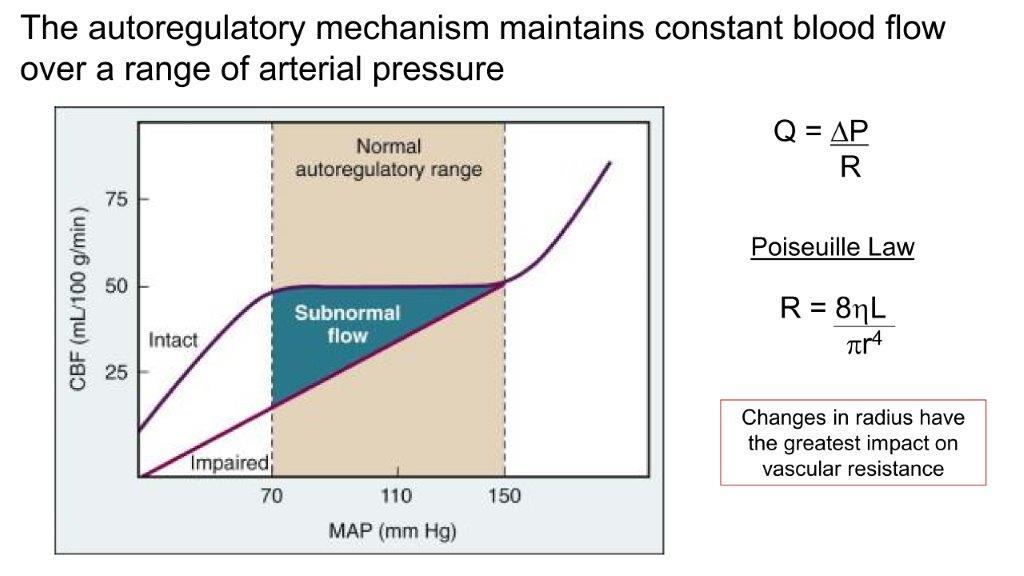
With increasing pressure how can blood flow remain constant?
by constricting or dilating vessels as specific
changes in resistance have the greatest impact on vascular resistance
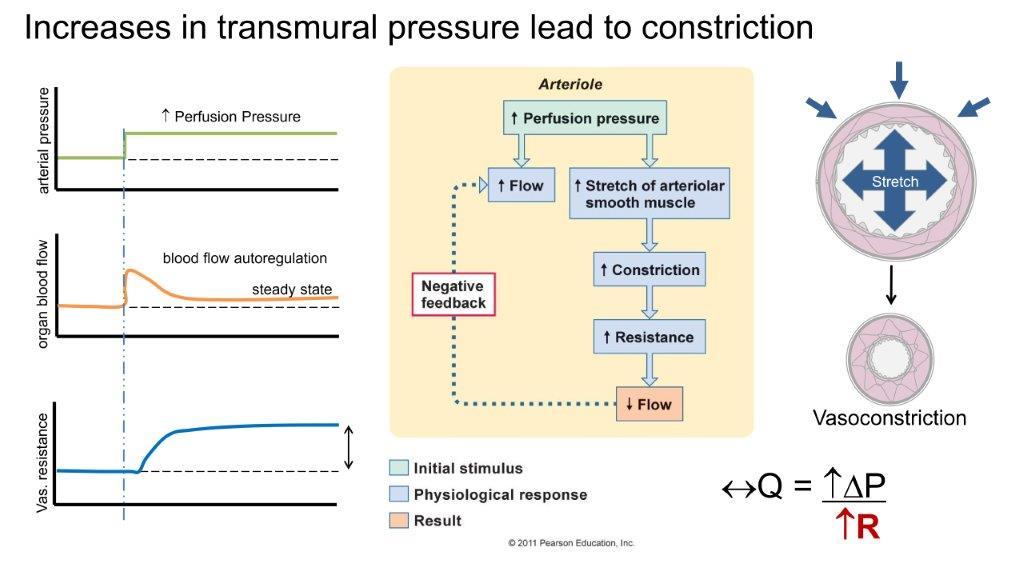
How does the autoregulatory mechanism regulate flow?
- an increase in perfusion pressure to the organ will cause an initial increase in blood flow and a stretch of the arterial smooth muscle cell wall
- stretch stimulates smooth muscle cells in that artery
- causes constriction
- causes increased resistance
- and reduces flow
- so this is a negative feedback to increased flow
Myogenic mechanism
- The method of autoregulation
- AKA Bayliss effect
- receptors on the smooth muscle cells
- Mechanosensitive ion channel (MSC)
- Stretch-activated ion channels (SAC)
- sens the pressure and stretch and allow Ca2+ and Na+ into the cell and causes contraction
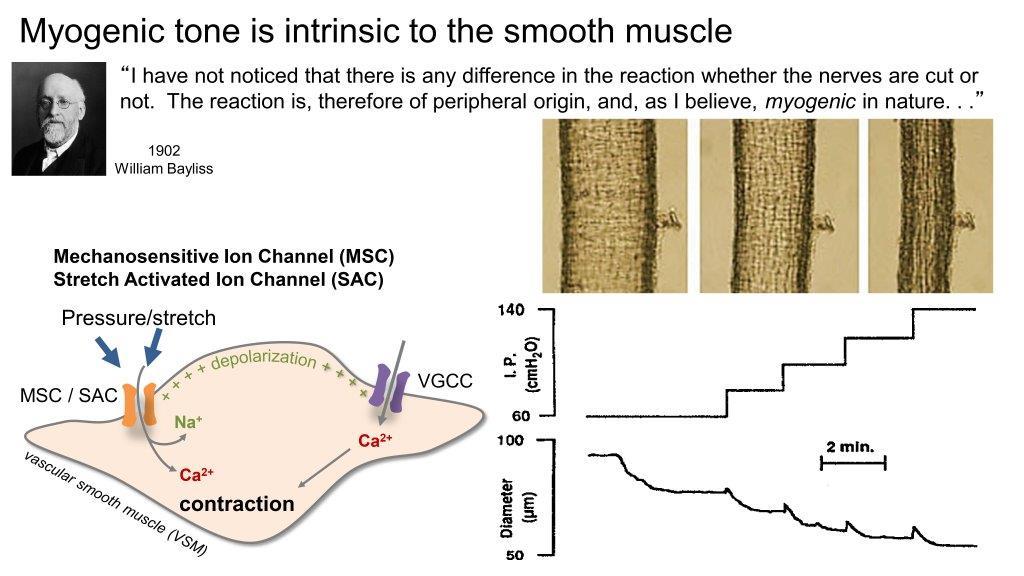
Bayless effect AKA
Myogenic mechanism or autoregulatory mechanism
A decrease in transmural pressure
- a reduction in perfusion pressure
- artery dilates
- reduces resistance and increases flow up to a steady-state level
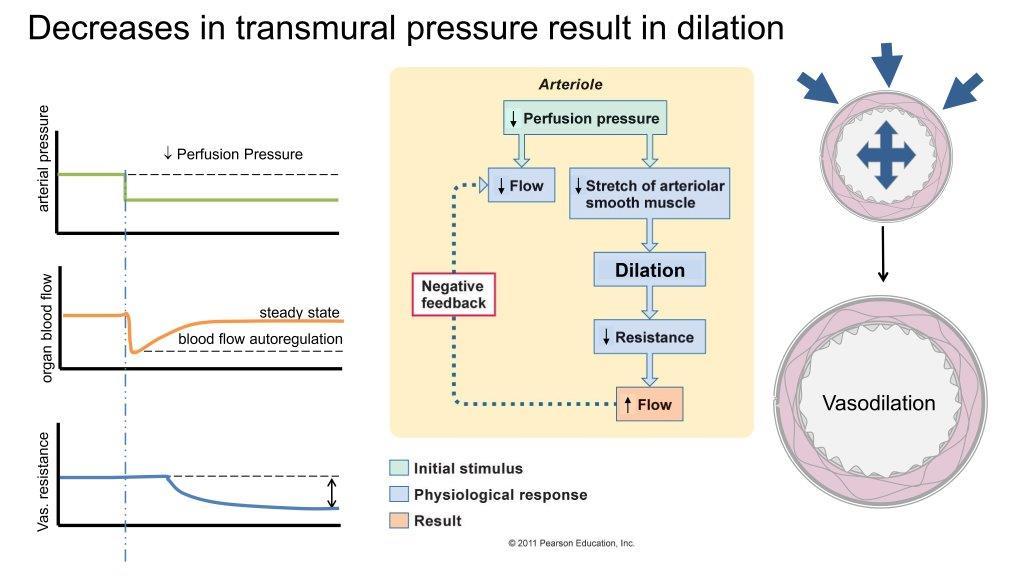
Autoregulation description
- mediated by the myogenic response
- mechanism that maintains blood flow to the organs
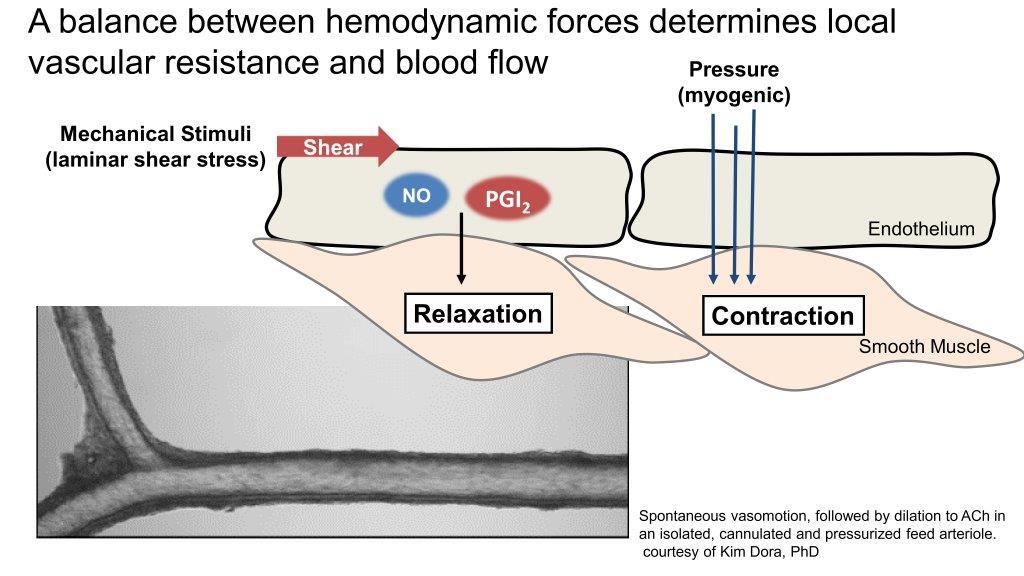
How is local vascular resistance and blood flow regulated?
A balance of hemodynamic forces determines local vascular resistance and blood flow
- Shear stress causing relaxation
- Myogenic pressure causing contraction
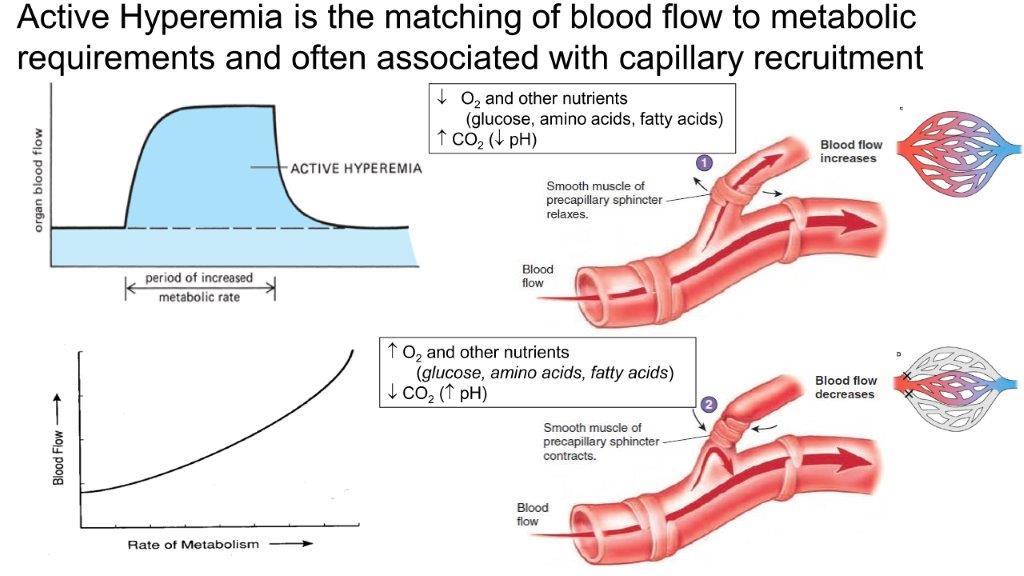
Explain active hyperemia
- Active hyperemia matches blood flow to the metabolic requirements = as metabolism goes up blood flow goes up, as it goes down blood flow goes down
- is associated with capillary recruitment and allow other capillary bed to open and precapillary sphincters will close to other capillary beds
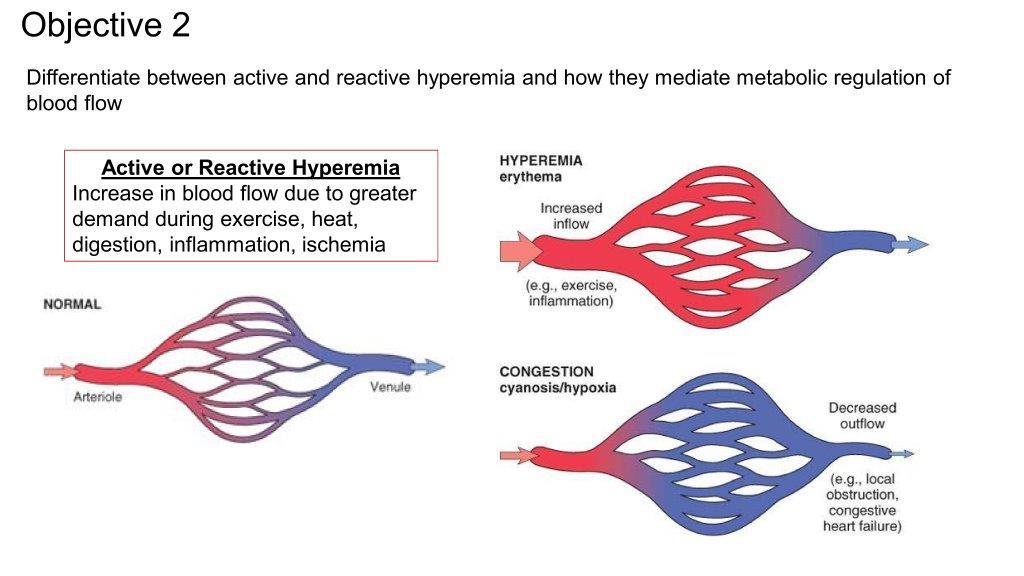
Congestion and hyperemia
- congestion is an increase in blood flow but it is due to an obstruction in outflow which doesn’t have new nutrients
- Hyperemia supplies tissues with new nutrients
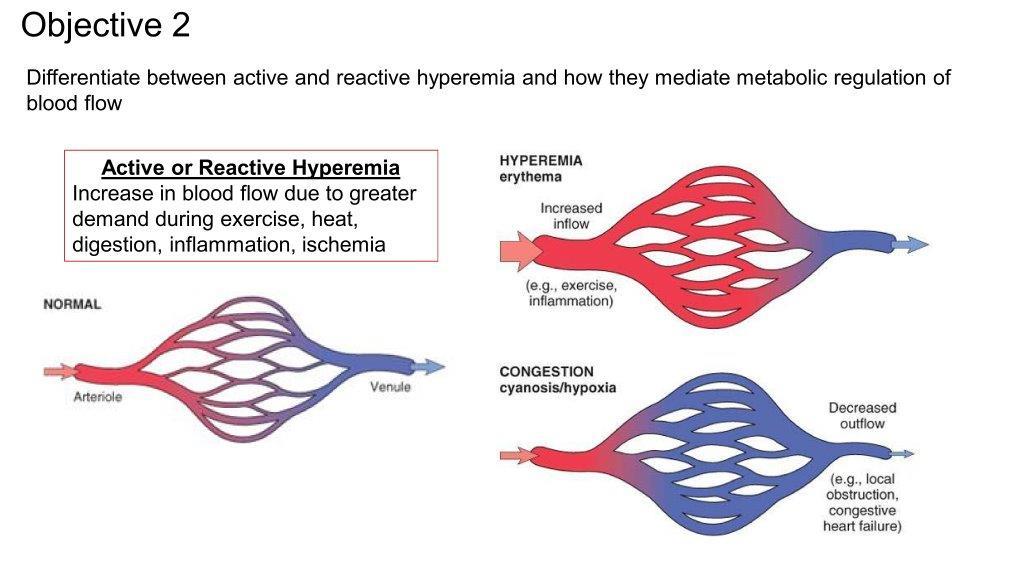
What is hyperemia?
increase in blood flow due to greater demand during exercise, heat, digestion, inflammation or in response to ischemia
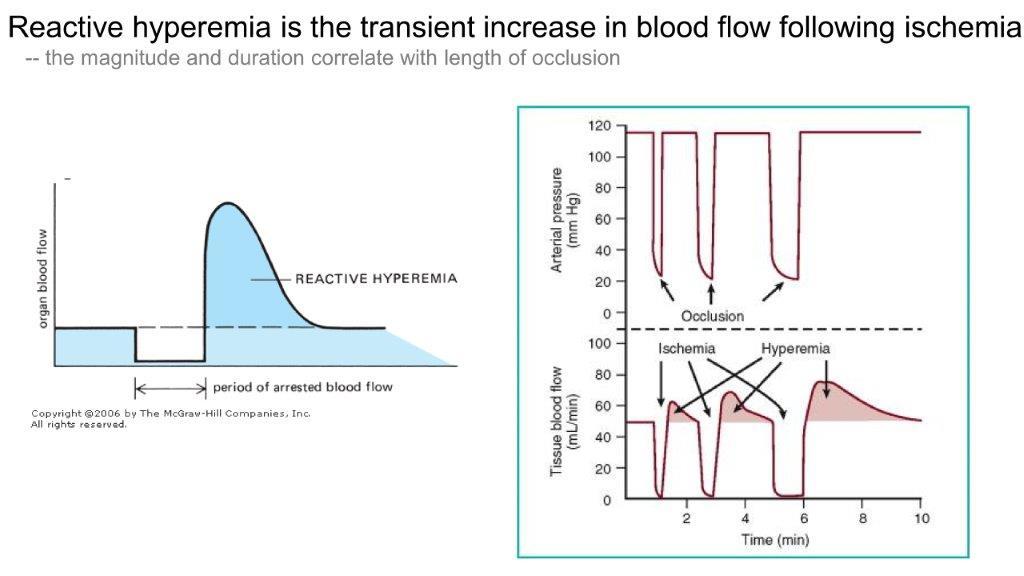
Explain reactive hyperemia
a transient increase in blood flow due to ischemia
not that the tissue is requiring more nutrients it just is not getting enough nutrients
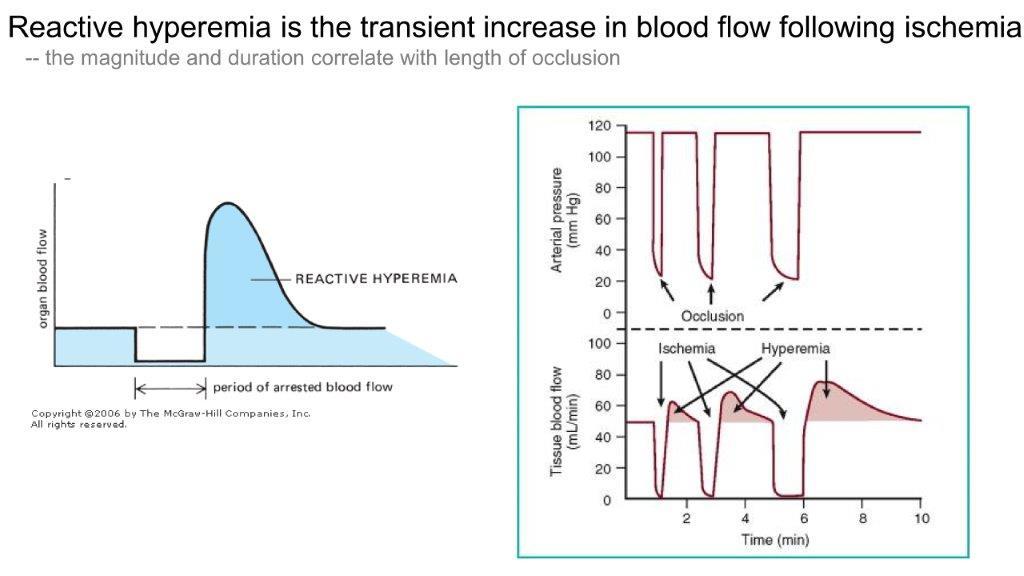
The magnitude of reactive hyperemia correlates with?
The duration of the occlusion is highly correlative to the magnitude and duration of the reactive hyperemic response is
“A repayment of nutrients to that tissue”
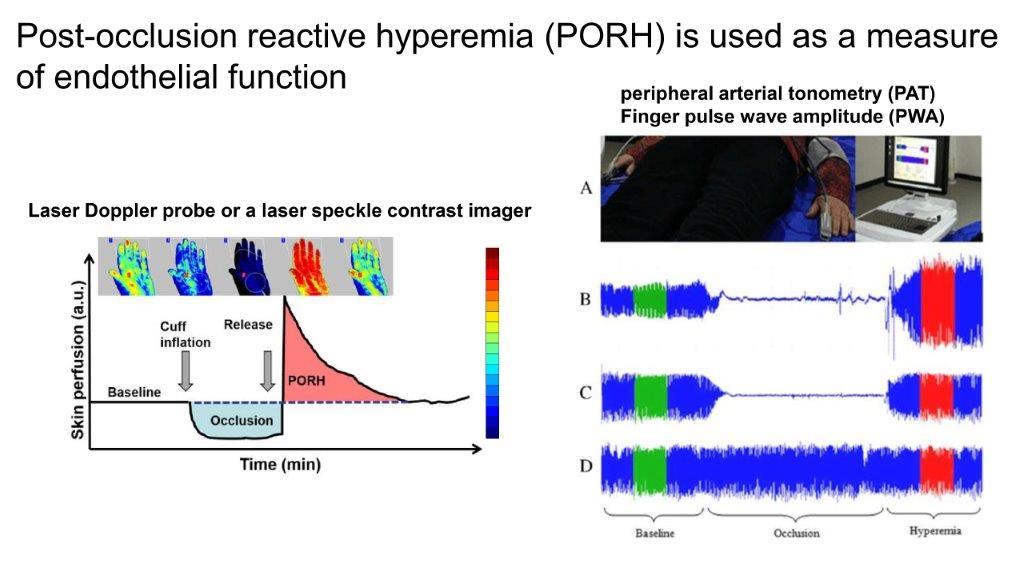
Post-occlusion reactive hyperemia response (PORH)
is used as a measure of endothelial function
panel B is a good hyperemic response
Panel C is a bad hyperemic response and would indicate endothelial dysfunction
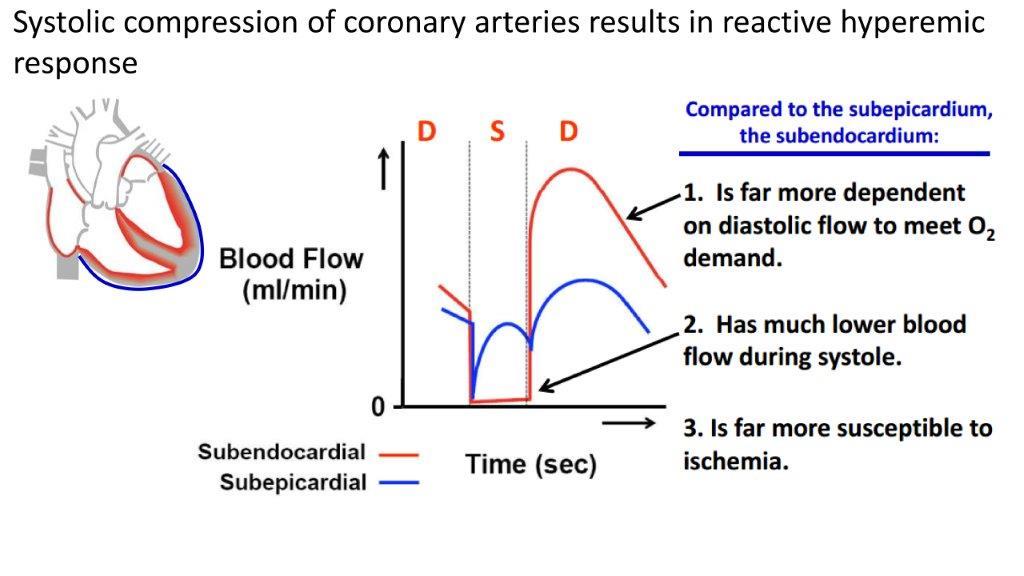
There are some normal hyperemic responses in the body
Give an example
The endocardial arteries during systole has very low flow during systole so during diastole there is a hugh hyperemic response
This is why the are at a high risk for ischemia if there is endothelial dysfunction then the hyperemic response may be reduced leading to the ischemia
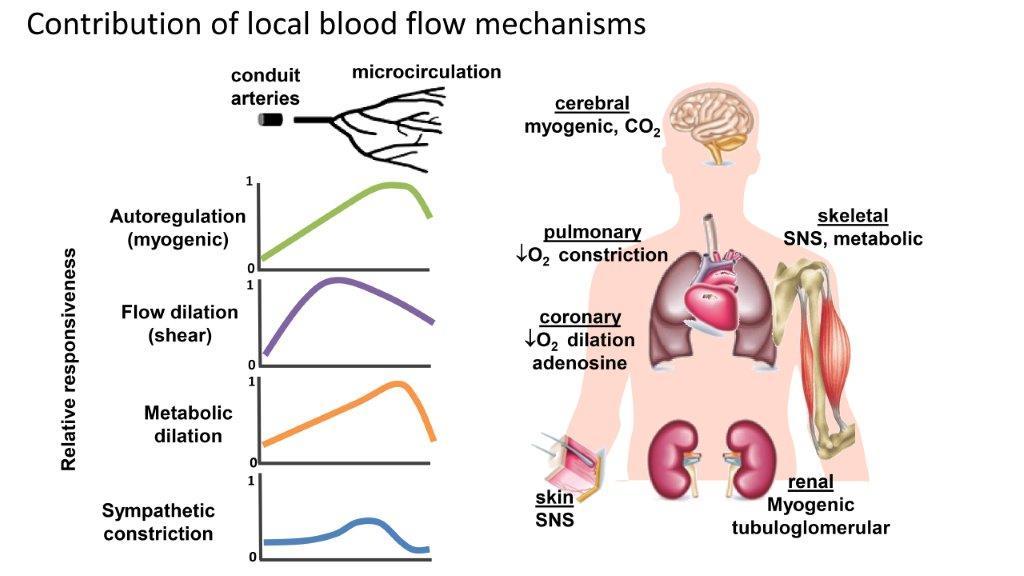
The contribution of local blood flow mechanisms
4 listed
Metabolic dilation AKA active Hyperemic response
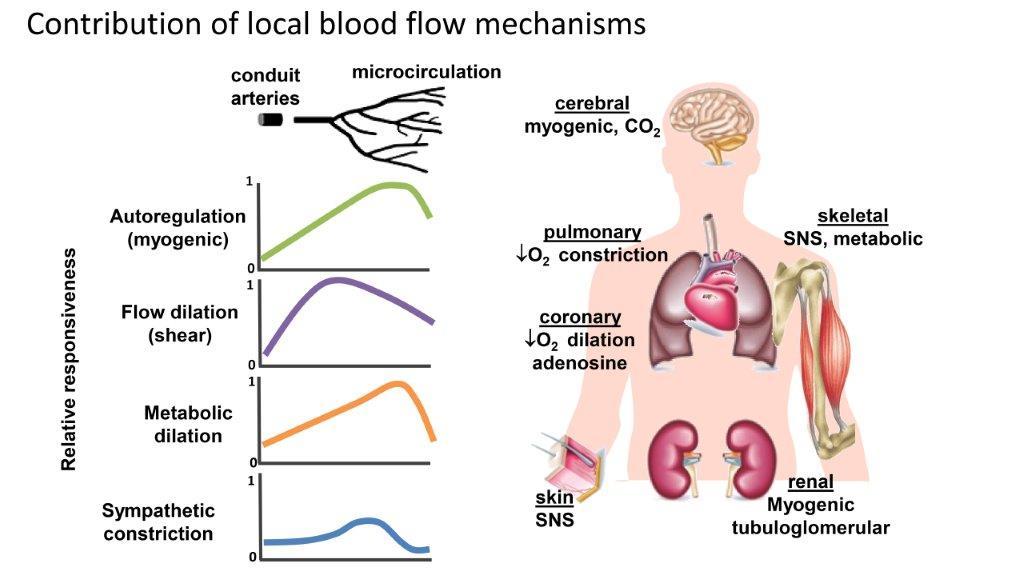
Skin local blood flow control mechanisms
Sympathetic nervous system and temperature



-
CVPR Week 1: Thorax Overview143
-
CVPR Week 1: Heart, Lungs and Vessels Histology111
-
CVPR Week 1: Heart and Lung Embryology4
-
CVPR Week 1: Renal Embryology0
-
CVPR Week 1: Lab Practical56
-
CVPR Week 2: CV system and Hemodynamics76
-
CVPR Week 2: Cardiac Cycle55
-
CVPR Week 2: Cardiac Muscle Physiology I81
-
CVPR Week 2: Cardiac Muscle Physiology II62
-
CVPR Week 2: Heart model and ECG Part I28
-
CVPR Week 2: Heart model and ECG Part II67
-
CVPR Week 2: EKG Practice19
-
CVPR Week 2: Myocardial oxygen supply and demand15
-
CVPR Week 2: Bradycardia and Tachycardia94
-
CVPR Week 2: Pharmacology of Antiarrhythmic agents74
-
CVPR Week 2: ECG Review29
-
CVPR Week 3: Pressure Volume Loops53
-
CVPR Week 3: Autonomic Physiology of the Cardiovascular System61
-
CVPR Week 3: Reflex Control of Cardiovascular Function74
-
CVPR Week 3: Listening to heart murmurs76
-
CVPR Week 3: Pathophysiology of valvular heart disease108
-
CVPR Week 4: Vascular smooth muscle and endothelial cells146
-
CVPR Week 4: Pharmacology of ischemic heart disease124
-
CVPR Week 4: Microvascular control92
-
CVPR Week 4: Introduction to lipids117
-
CVPR Week 4: Atherosclerosis100
-
CVPR Week 4: CAD117
-
CVPR Week 5: Pulmonary embryology8
-
CVPR Week 5: Pulmonary anatomy0
-
CVPR Week 5: Mechanics of breathing102
-
CVPR Week 5: Ventilation56
-
CVPR Week 5: Obstructive Airway Disease163
-
CVPR Week 5: Pulmonary function tests77
-
CVPR Week 5: Basics of lung cancer61
-
CVPR Week 5: Occupational lung disease67
-
CVPR Week 5: Gas Transport I25
-
CVPR Week 5: Gas Transport II24
-
CVPR Week 5: Gas Transport III5
-
CVPR Week 5: Acid and Base prework125
-
CVPR Week 5: Acid base chemistry 10
-
CVPR Week 5: Asthma and COPD Pharmacology0
-
CVPR Week 5: Drugs used in the treatment of Asthma and COPD59
-
CVPR Week 6: Pulmonary Circulation115
-
CVPR Week 6: Hypoxemia134
-
CVPR Week 6: Control of ventilation106
-
CVPR Week 6: Pulmonary Hypertension81
-
CVPR Week 6: Pulmonary Edema80
-
CVPR Week 6: Pulmonary embolism70
-
CVPR Week 6: Sleep Disordered Breathing43
-
CVPR Week 6: Pleural Diseases1
-
CVPR Week 7: Water & Sodium Balance94
-
CVPR Week 7: Hemodynamics80
-
CVPR Week 7: Renal-Urinary Histology73
-
CVPR Week 7: Glomerular Filtration55
-
CVPR Week 7: Renal tubular absorption and secretion141
-
CVPR Week 7: Concentrating and Diluting16
-
CVPR Week 7: Diuretics0
-
CVPR Week 8: Renal handling of Ca101
-
CVPR Week 8: Renal handling of P89
-
CVPR Week 8: CVPR Week 8: Renal handling of P74
-
CVPR Week 8: Acid-Base 245
-
CVPR Week 8: Acid-Base 325
-
CVPR Week 8: Cystic disease and renal neoplasia100
-
CVPR Week 8: Renal diseases Part A68
-
CVPR Week 8: Renal diseases Part B72
-
CVPR Week 8: Intro to Urology3
-
CVPR Week 8: CKD107
-
CVPR Week 8: AKI150
-
CVPR Week 8: RAAS65
-
CVPR Week 9: Congenital heart disease1
-
CVPR Week 9: Congenital Heart Disease cases44
-
CVPR Week 9: Pathophysiology of congenital heart disease88
-
CVPR Week 9: Heart Failure87
-
CVPR Week 9: Acquired Heart disease107
-
CVPR Week 9: Pediatric pulmonology64
-
CVPR Week 9: Renal tubule disorders62
-
Cardiovascular embryology4
-
CVPR First Aid: Renal embryology263
-
CVPR First Aid: Renal pathology116
-
CVPR First Aid: Kidney stones52
-
CVPR First Aid: renal malignancies32
-
CVPR First aid: renal pathology 222
-
CVPR First Aid: Respiratory embryology65
-
cvpr first Respiratory physiology82
-
cvpr physiology 260
-
cvpr physiology 3314
-
Cardiovascular embryology43
-
CVPR Cardiovascular pharmacology54
-
CVPR Cardiovascular pharmacology 249
-
CVPR Cardiovascular pharmacology 367
-
Cardiovascular anatomy50
-
Cardiovascular anatomy 252
-
Cardiovascular anatomy 350



