What is an Array
An array is an ordered, finite set of elements of a single type
What Type of Array is a Linear Array
A one-dimensional array
How can you visualise a two-dimensional array
A 2D array can be visualised as a table/spreadsheet and when searching this type of array, first go down the rows and then across the columns
How can you visualise a three-dimensional array
A 3D array can be visualised as a multi-page spreadsheet
An element in a 3D array uses: threeDimensionalArray[z,y,x]
z = array number, y = row number, x = column number
What is a Record
- A row in a file and is made up of fields
- Records are used in databases
- Each field in a record can be identified using the syntax
What is a List
A data structure consisting of a number of ordered items where the items can occur more than once
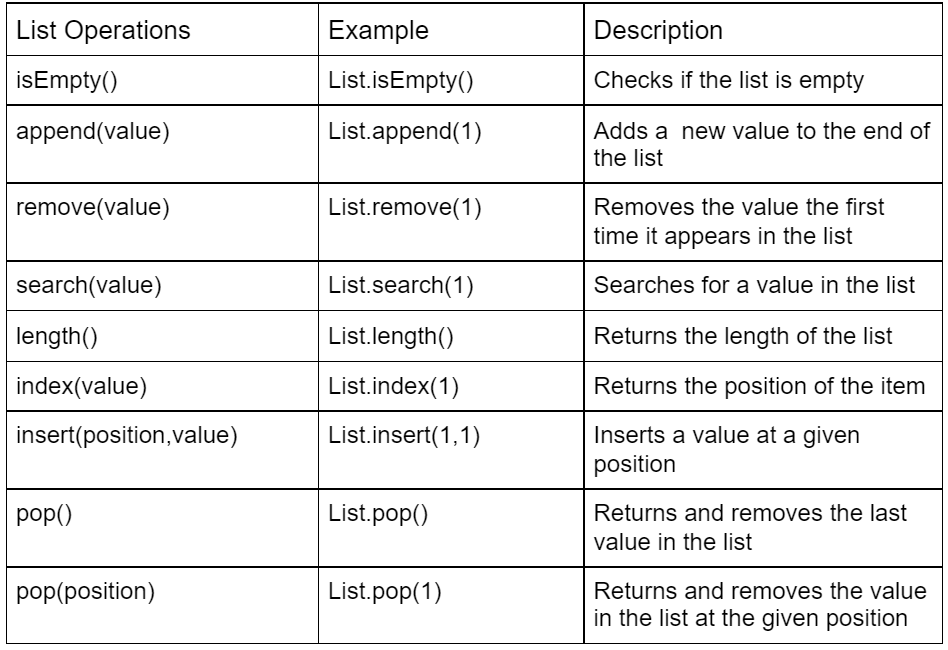
Describe the List Operations
What is a Tuple
An immutable (cannot be changed) ordered set of values of any type
How is a tuple initalised
Initialised with regular brackets rather than square brackets
What is a Static and Dynamic Data Structure
Static - fixed size
Dynamic - can keep growing
What is a Linked List
A linked list is a dynamic data structure used to hold an ordered sequence
How is a Linked List Organised
- The items in a linked list are not necessarily in contiguous data locations (the order they occur in the sequence)
- Each item in the list is called a node and contains a data field and a next address field called a point field
- The data field holds the actual data of the next list item and the pointer field holds the address of the next item
- Also the list has a pointer variable showing the first node in the list
What are the Disadvantages of using a Linked List
- They waste memory, storing pointers mean more memory is required compared to an array
- As items in linked lists are stored in a sequence, they can only be traversed in this order; an item cannot be directly accessed, as is possible in an array
Describe the three different types of Graphs
- Directed Graph - The edges can only be traversed in one direction
- Undirected Graph - The edges can be traversed in both directions
- Weighted Graph - A cost is attached to each edge.
Describe an example of an Adjacenecy Matrix
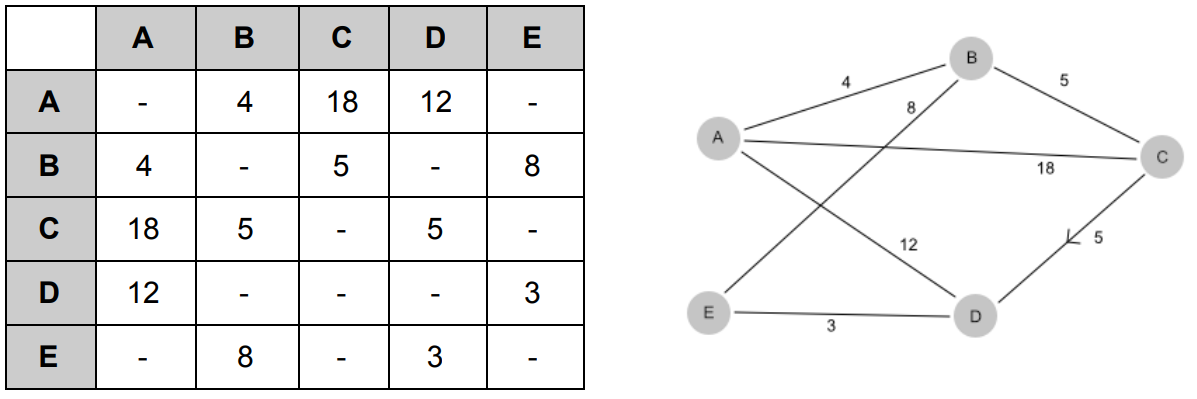
What are the Advantages and Disadvantages of the adjacency matrix
- Convenient to work with due to quicker access times
- Easy to add nodes
- Most graphs leave most of the cells empty meaning the larger the graph the more memory space will be wasted
Describe an example of an Adjacenecy List
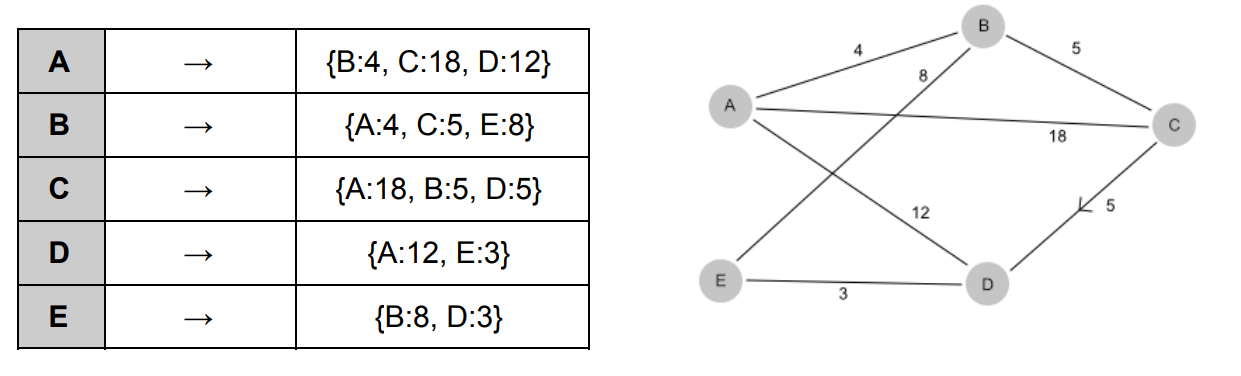
What is the Advantage of an Adjacenecy Lists
More space efficient for large, sparse networks
What are the two ways of traversing a graph
Depth-first - you go as far down one route as you can before backtracking and taking the new route
Breadth-first - you visit all the neighbours of the first node and then all the neighbours of the second node and so on
Describe some uses of graphs
- Computer networks
- Roads between towns
- Tasks in a projects
- Web pages and links
What is a Stack
A data structure that operates on a first in last out basis
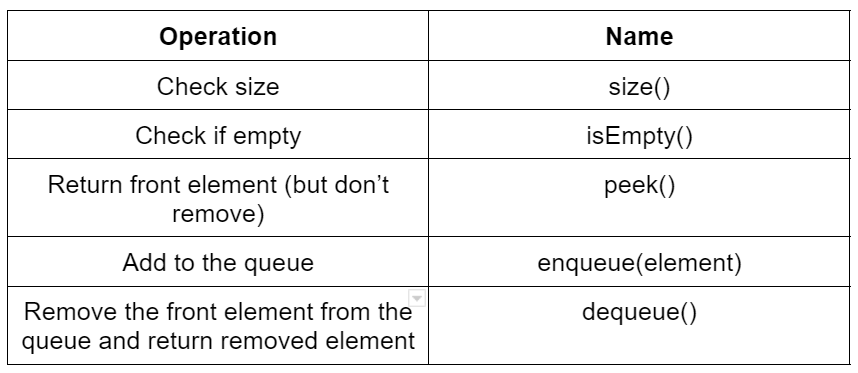
What is a Queue
A data structure that acts on a first in first out bias
Describe the Stack Operations and Names
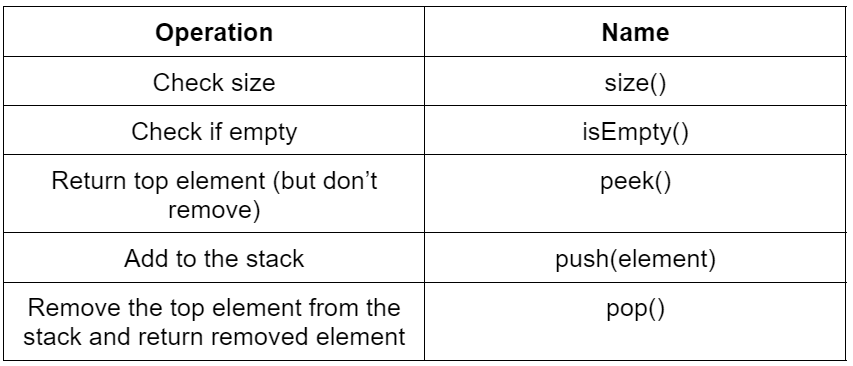
Describe the Queue Operations and Names

-
Structure and Function of the Processor36
-
Types of Processors10
-
Input, Output and Storage23
-
System Software31
-
Application Generation35
-
Software Development19
-
Types of Programming Languages22
-
Compression, Encryption and Hashing19
-
Databases36
-
Networks57
-
Web Technologies26
-
Data Types27
-
Data Structures40
-
Boolean Algebra29
-
Computing Related Legislation9
-
Moral and Ethical Issues11



