Function of anesthetic breathing systems
to deliver O2 and anesthetic gases to patient and to eliminate CO2
*CO2 eliminated by FGF washout or CO2 scrubber
ESSENTIAL requirements of a breathing system
- deliver the gases form teh machine or device to the alveoli in the same concentration as set and in teh shortest possible time
- effectively eliminate CO2
- have minimal apparatus dead space
- have low resistance
DESIRABLE Requirements of a breathing system
- economy of FG
- conservation of heat
- adequate humidification
- lightweight
- convenient to use
- efficient for spontaneous and controlled ventilation
- adaptable for adults, peds, neonates
- reduce environmental polution
CONSIDERATIONS of a breathing system
- Reistance- want low resistance
- rebreathing- may be beneficial
- cost reduction/ adds humidication (NOT CO2)
- dead space- increases the chance of rebreathing CO2
- minimized by seperating the insiratory/expriatory streams as close to the pt as possible
- dry gases/humidfication
- manipulation of inspired content
- once we start rebreathing, change in concentration from what’s set on dial
- bacterial colonization
resistance in tubing
such as sharp bends, valves, lots of connections
*want short, large diameter tubing to keep flow laminate (smooth)
Rebreathing
Can be beneficial to save gases and maintain heat and moisture in system
*Do not want rebreathing of CO2
**Associated with less rebreathing in any type of circuit
dead space
deadspace ends where the inspiratory and expiratory streams diverge. Can be minimized by separating I and E as close to pt as possible
*more deadspace increases the chance of rebreathing CO2
Classifications of anesthetic delivery systems
- open
- semi-open
- semi-closed
- closed
Open system
- Two types
- insufflation(cannula)/Blow by
- open drop
- Characterized by:
- no gas reservoir bag
- no valves
- no rebreathing of exhaled gas
insufflation “steal” induction
when you hold a mask with gasses in front of pt’s face and as they start to feel affects, move it closer until it is on face.
Good for pediatrics who freak out
*lots of pollution
open system advantages
- simplicity
- avoids direct patient contact
- no rebreathing of CO2
- no reservoir bag or valves
open system disadvantages
- no ability to assist or control ventilation
- may have CO2/O2 accumulation under drapes
- no control of anesthetic depth /FiO2
- environmental pollution
open drop method
adv vs disadv
Advantages:
- simplicity
- low cost
- portable
Disadvantages
- poor control of inspired concentration of anesthetics
- accumulation of CO2 under mask
- hypoxia risk
- spontaneous ventilation only
- OR pollution
5 components of semi-open systems
- facemask or ETT
- pop-off valve (APL valve)
- Reservoir tubing
- fresh gas inlet
- reservoir bag
- 3L for adults, 2L for peds, 1L for neonates
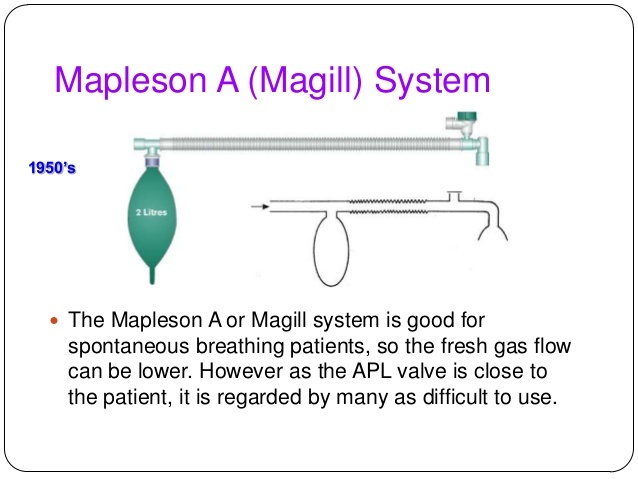
Group 1, Mapleson A
Pop-off located near the facemask, FGF located at opposite end
*more effective for spontaneous b/c pop off valve is close to pt
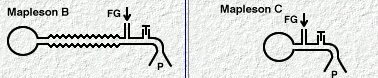
Group 2, Mapleson B & C
with pop-off and FGF near facemask
*more effective for spontaneous b/c pop off valve is close to pt
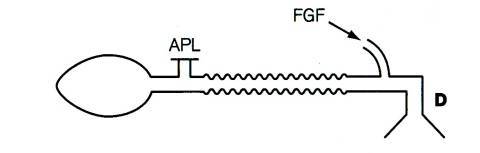
Group 3, Mapleson D, E, F
FGF located near facemask and pop-off at opposite end
(opposite of Mapleson A)
With Mapleson’s, CO2 rebreathing will depend on:
- FGF rate
- minute ventilation of patient
- type of ventilation (spontaneous or controlled)
Mapleson D
- Reverse of A
- can be used for both SV and CV
- During SV: FGF = 2-3 x MV
- During CV: FGF = 1-2 x MV
*Most efficient Mapleson during controlled ventilation
Minute volume
Tidal volume * RR
*normal TV about 7 ml/kg
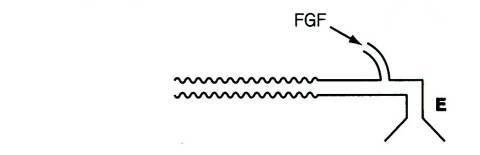
Mapleson E
- AKA T-piece
- No reservoir bag and NO POP OFF VALVE
- modification of T-piece commonly used in ICU/PACU
Maplesone F (Jackson-Rees)
- modification of Maplesome E (T-piece) with adjustable pop-off valve at the end of reservior bag
- little resistance/dead space
- very popular in peds
- good for controlled ventilation during transport of intubated pts
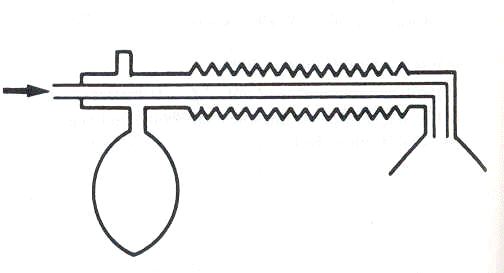
Bain circuit
- Modification of Mapleson D, FGF tubing within the large bore corrugated tubing
- allows the exhaled gas to warm the inspired gas
- preserves heat and humidity
- allows the exhaled gas to warm the inspired gas
- Used for controlled or spontaneous ventilation
- FGF requirements same as M-D
- SV: 2-3 x MV
- CV: 1-2 x MV
Ambu Bag
- Modification of Mapleson A with non-rebreathing valve
- capable of delivering high FiO2
- respivior self filling with intake valve
- requires high fresh gas flow
- CO2 wash-out depends on min ventilation






