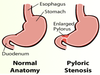
The primitive gut tube is formed from the incorporation of the dorsal part of the yolk sac into the embryo as a result of what two types of folding in the embryo?
craniocaudal folding
lateral folding
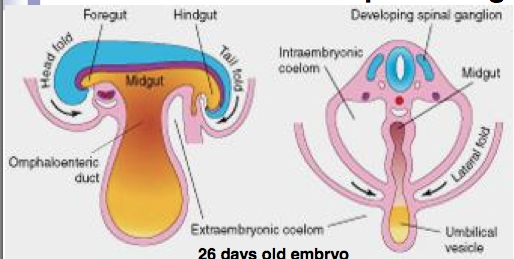
Week 4: The primordial gut is closed at its cranial and caudal ends by what membranes?
cranial = oropharyngeal membrane
caudal = cloacal membrane
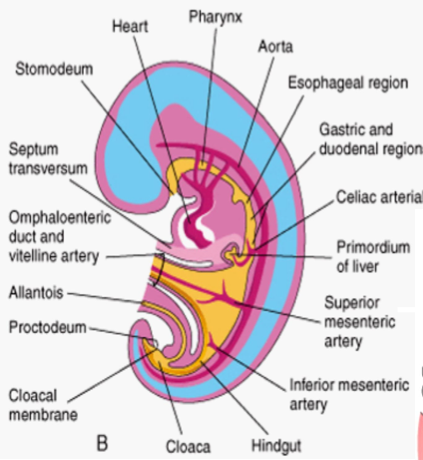
What tissue of the primordial gut gives rise to most of the epithelium and glands?
endoderm
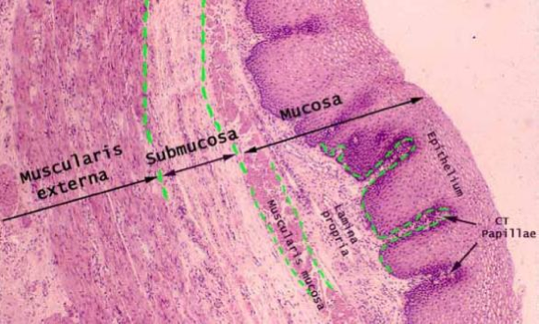
What part of the adult G.I. tract is derived from endoderm and has a lamina propria and muscularis mucosae?
Mucosa
epithelial lining and glands
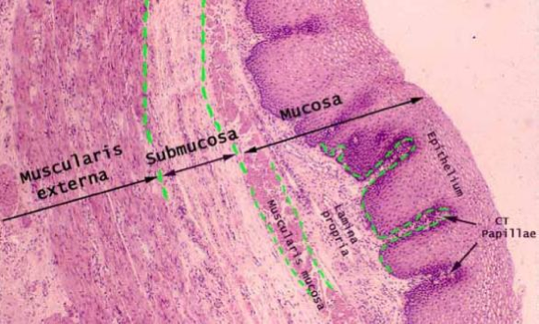
What 3 parts of the acult G.I tract are derived from visceral mesoderm?
submucosa
muscularis externa
adventitia or serosa
*(lamina propria + muscularis mucosa are also mesoderm)
In early development the epithelial lining of the gut proliferates and obliterates the lumen. What precess reverses this later?
recanalization
The epithelium of the cranial and caudal end of the gut is derived from what primordial tissue type?
ectoderm of the stomodeum and proctodeum
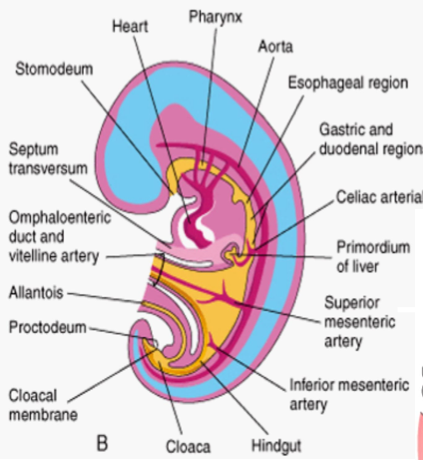
The primordial gut is divided in what three sections?
- foregut
- midgut
- hindgut
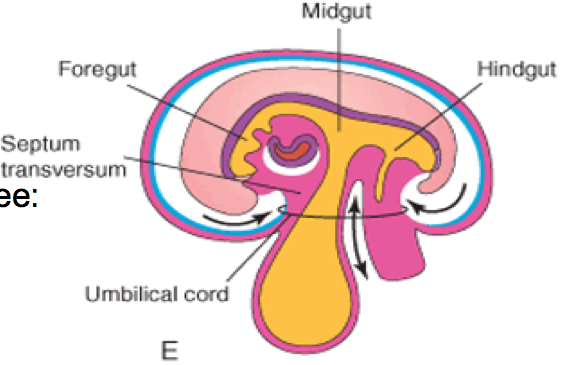
The Foregut:
What are the derivitives?
Primordial pharynx (+ derivatives)
Lower respiratory system
Esophagus and stomach
Duodenum, distal to the opening of the bile duct
Liver, biliary apparatus (hepatic ducts, gallbladder + bile duct)
Pancreas
The foregut derivatives are supplied by the what artery/branch?
celiac trunk
The foregut is divided into the esophagus dorsally + trachea ventrally by what folds?
These fuse to form what structure?
The esophagus reaches its final length by what week?
- tracheoesophageal folds
- tracheoesophageal septum
- week 7
The epithelium and glands of the esophagus are derived from what primordial tissue?
It proliferates and obliterates the esophageal lumen. By what week does recanalization occur?
endoderm
- week 8
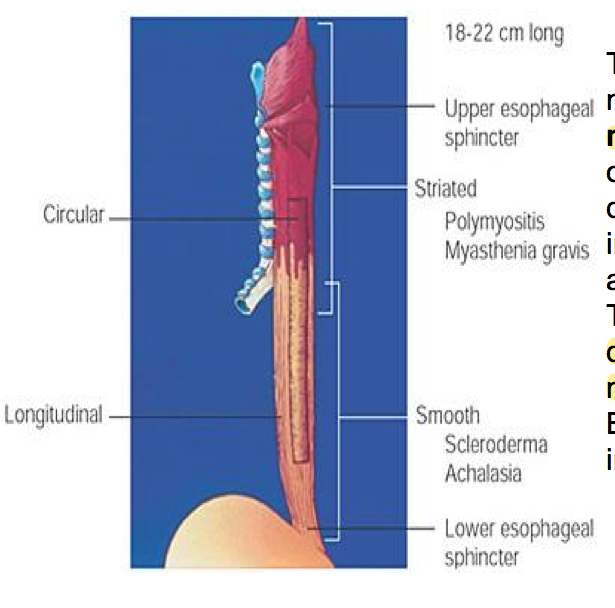
Esophagus: superior third
- striated muscle forms muscularis externa
- derived from mesenchyme in caudal pharyngeal arches
- innervated by CN X
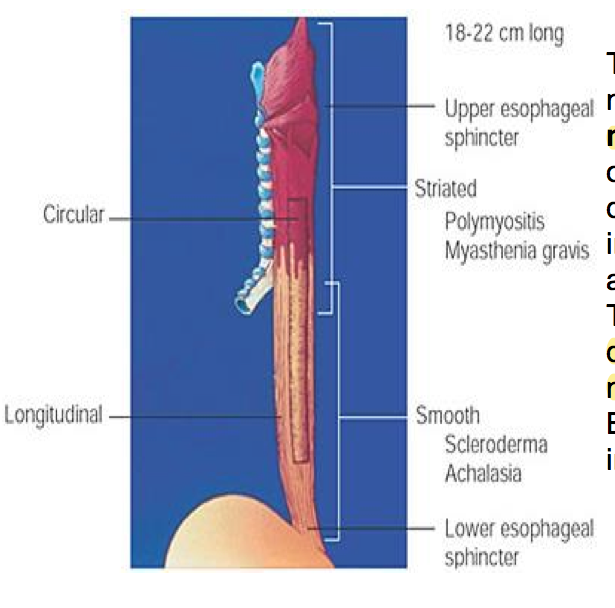
Esophagus: inferior two thirds
- smooth muscle
- derived from splanchnic mesenchyme
- innervated by CN X
Esophageal Atresia
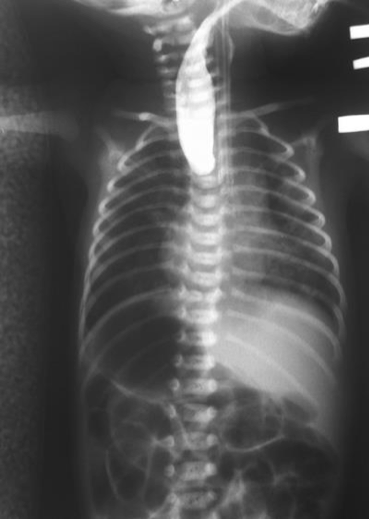
incomplete separation of the esophagus from the trachea
- results from deviation of tracheoesophageal septum in a posterior direction
- associated w. tracheoesophageal fistula (TEF) - 85% of cases
- other congenital defects associated with the VACTERL syndromes - 33% of cases
- can not swallow amniotic fluid = polyhydramnios
- Inability to pass a catheter through esophagus into stomach
V.A.C.T.E.R.L. syndromes/associations
V = vertebral defects
A = anal atresia
C = cardiovascular defects
T/E = tracheoesphageal fistula
R = renal defects
L = upper limb defects
*syndrome = all defects; association = only some*
Esophageal Stenosis
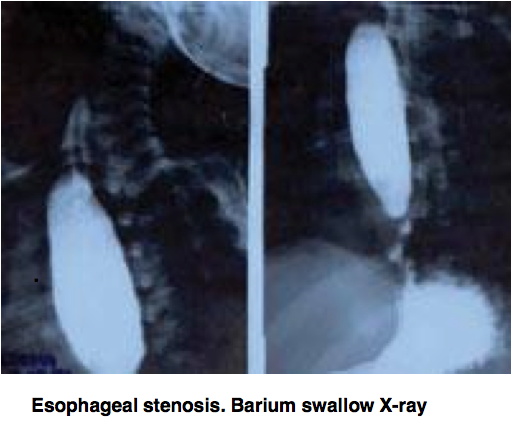
narrowing of the lumen (usually in midesophagus)
- week 8 = recanalization process is incomplete, or blood vessels did not develop in this region= atrophy of segment
Esophageal duplication
usually a congenital esophageal cyst
**(usually lower esophagus) **
- cysts may lie on posterior aspect of the esophagus protruding into the posterior mediastinum
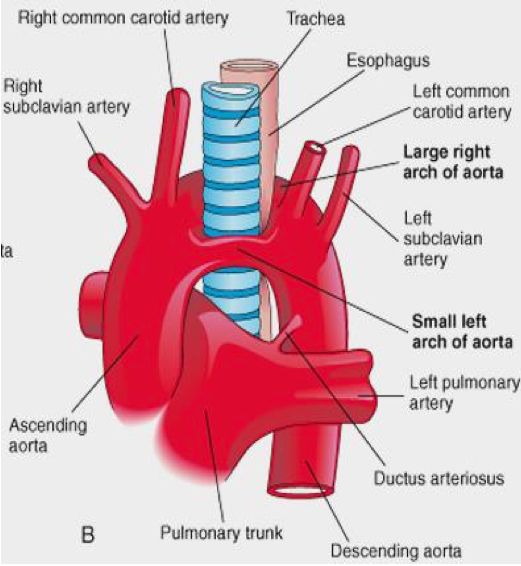
Vascular Compression of the Esophagus
abnormal origin of one of the vessels derived from the pharyngeal arteries (usually right subclavian artery)
- anomalous artery passes behind the esophagus and may cause dysphagia (difficulty swalling)
The foregut is initially a simple tubular structure. At week 4, a slight dilation becomes ____________?
primordium of the stomach
(oriented in the median plane)
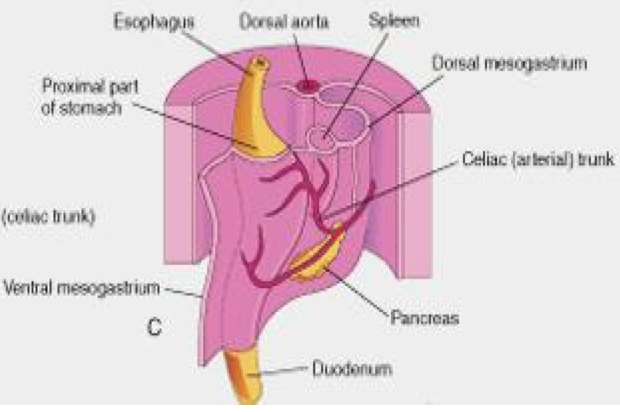
Rotation of the Stomach
90 degrees clockwise
- lesser curvature (ventral) moves right; greater
curvature (dorsal) moves left
- cranial region moves left + slightly inferiorly; caudal region moves right + superiorly
- Final position = long axis almost transverse
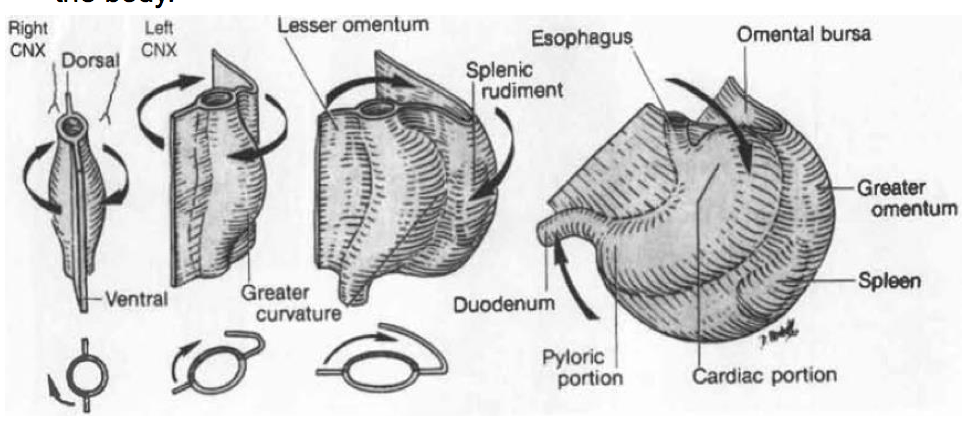
Due to rotation, the dorsal mesentery is carried to the left and eventually forms …?
What nerves innervates the ventral and dorsal surfaces of the stomach?
** greater omentum**
ventral = left vagus nerve (CN X)
dorsal = right vagus nerve (CN X)
Regarding the stomach, which cells are derived from endoderm?
Surface mucous cells lining the stomach
mucous neck cells
parietal cells
chief cells
enteroendocrine cells of the gastric glands
Regarding the stomach, which layers are derived from visceral meesoderm?
lamina propria
muscularis mucosae
submucosa
outer longitudinal layer
middle circular layer
inner oblique layers of smooth muscle of muscularis externa
serosa of the definitive stomach