Vertigo
dizziness
“feel like the world is spinning around u”
fluid in vestibular appartatus is moving and sens a signla to ur brain that ur head is moving when it didnt!

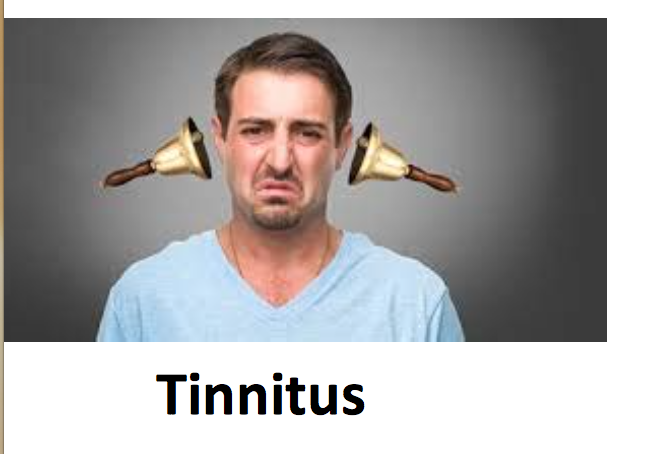
Tinnitus
hearing sounds that come from inside your body , rather than from an outside source.
It’s often described as “ringing in the ears”
hyperacusis
increased sensitivity to certain frequencies and volume ranges of sound
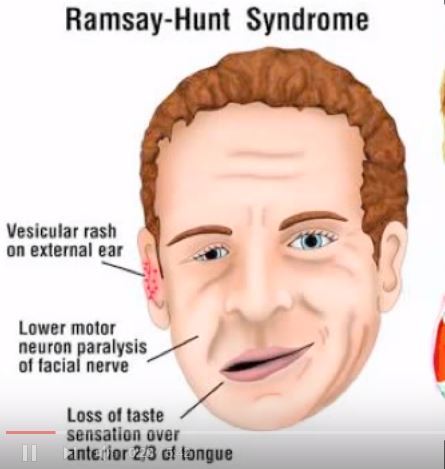
ramsay hunt syndrome
presentation
is a complication of shingles.
It is the name given to describe the symptoms of a shingles infection affecting the facial nerve
u get vesicles aorud the ear, due to reactivation. of varicella zoster virus (chicken pox virus) w/ in the geninucleate ganglion, affecting the facial nerve!
- vesicles around ear
- ipsilateral facial droop
which ear is this otoscopic view?
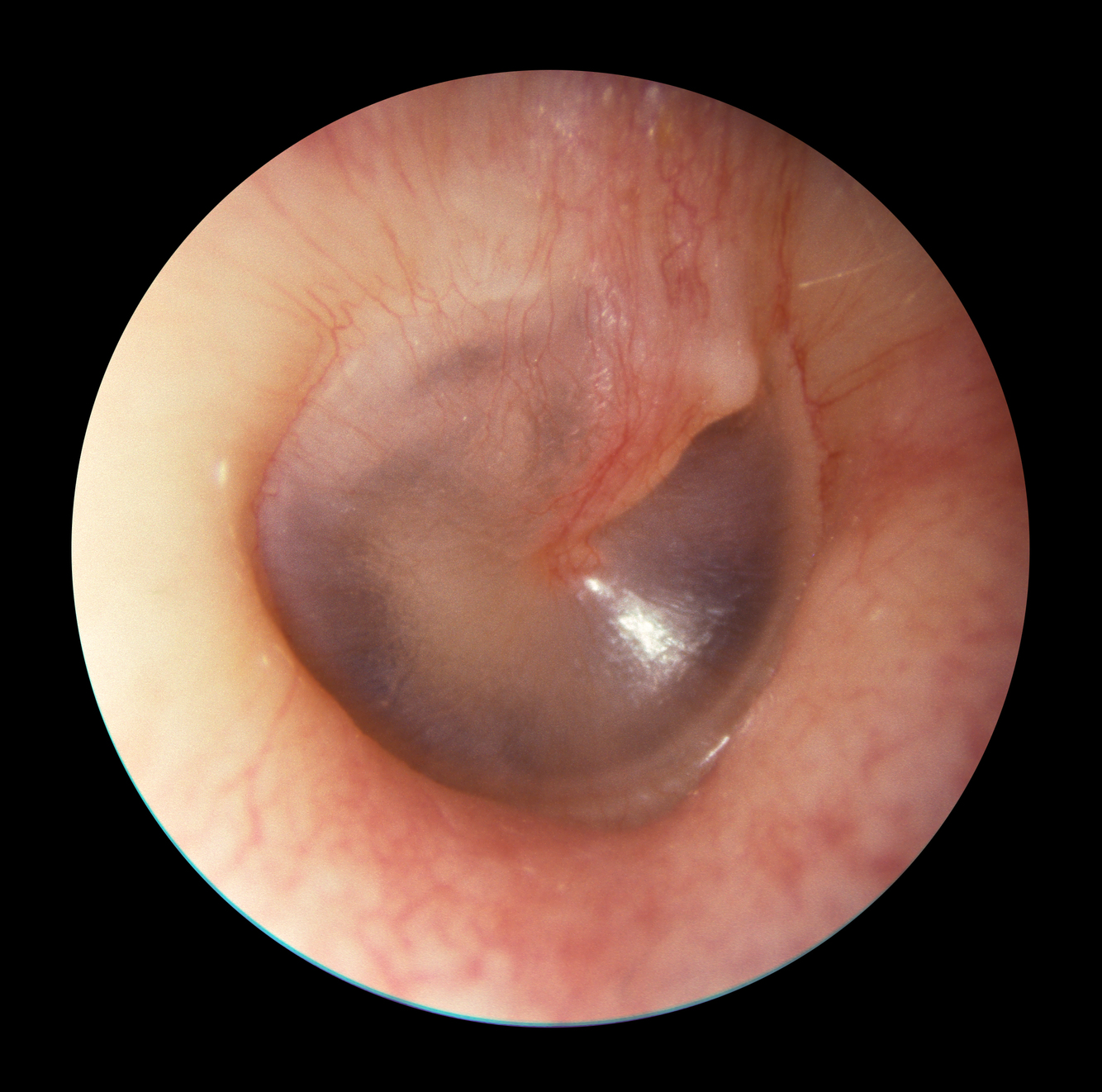
This is the right ear drum as the light reflex and head of malleus is on the right
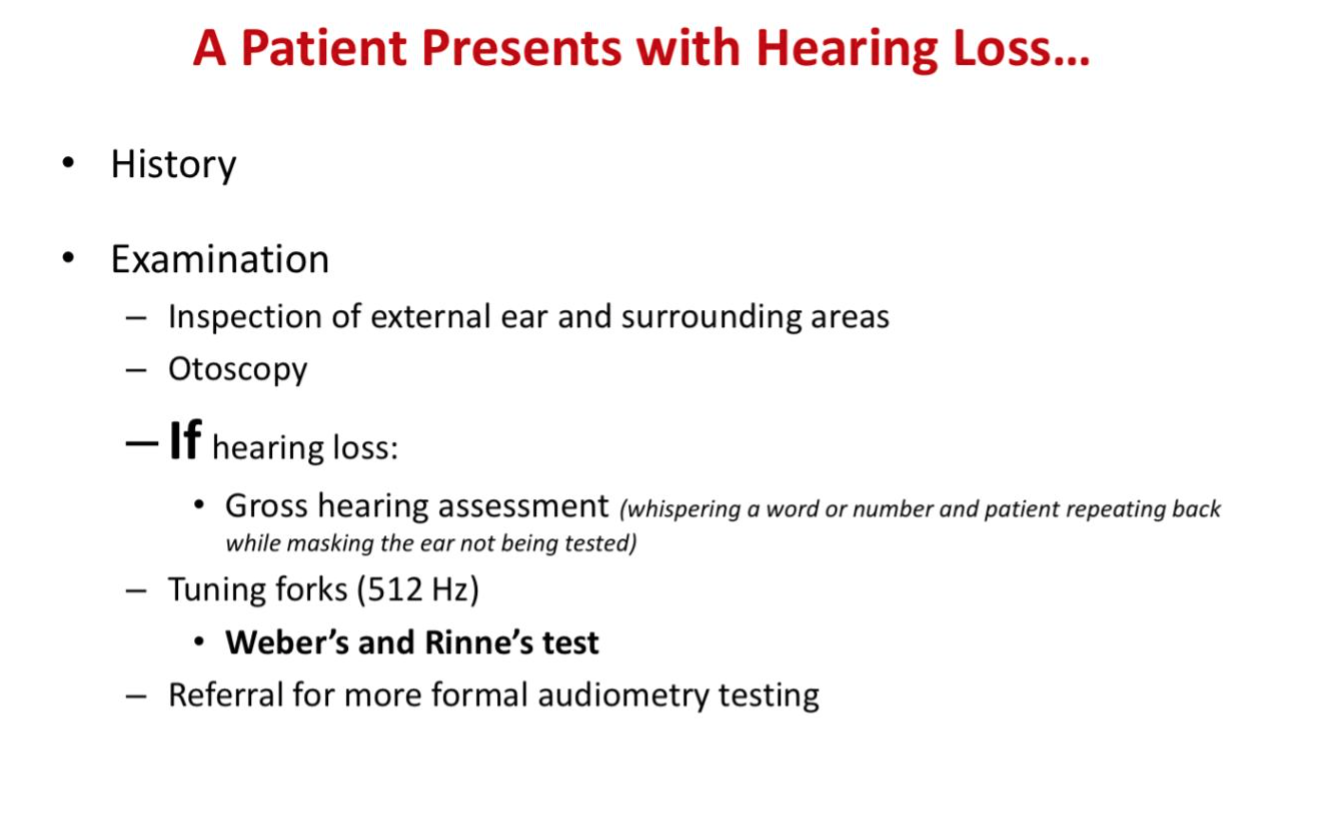
How to manage a patient who presents with hearing loss?
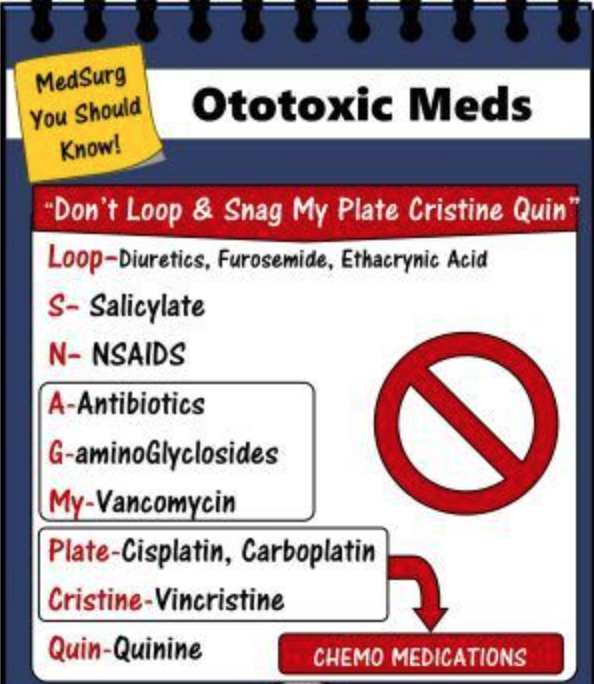
What r examples of ototoxic medication
aminoglycoside antibiotics (such as vancomycin and gentomycin)
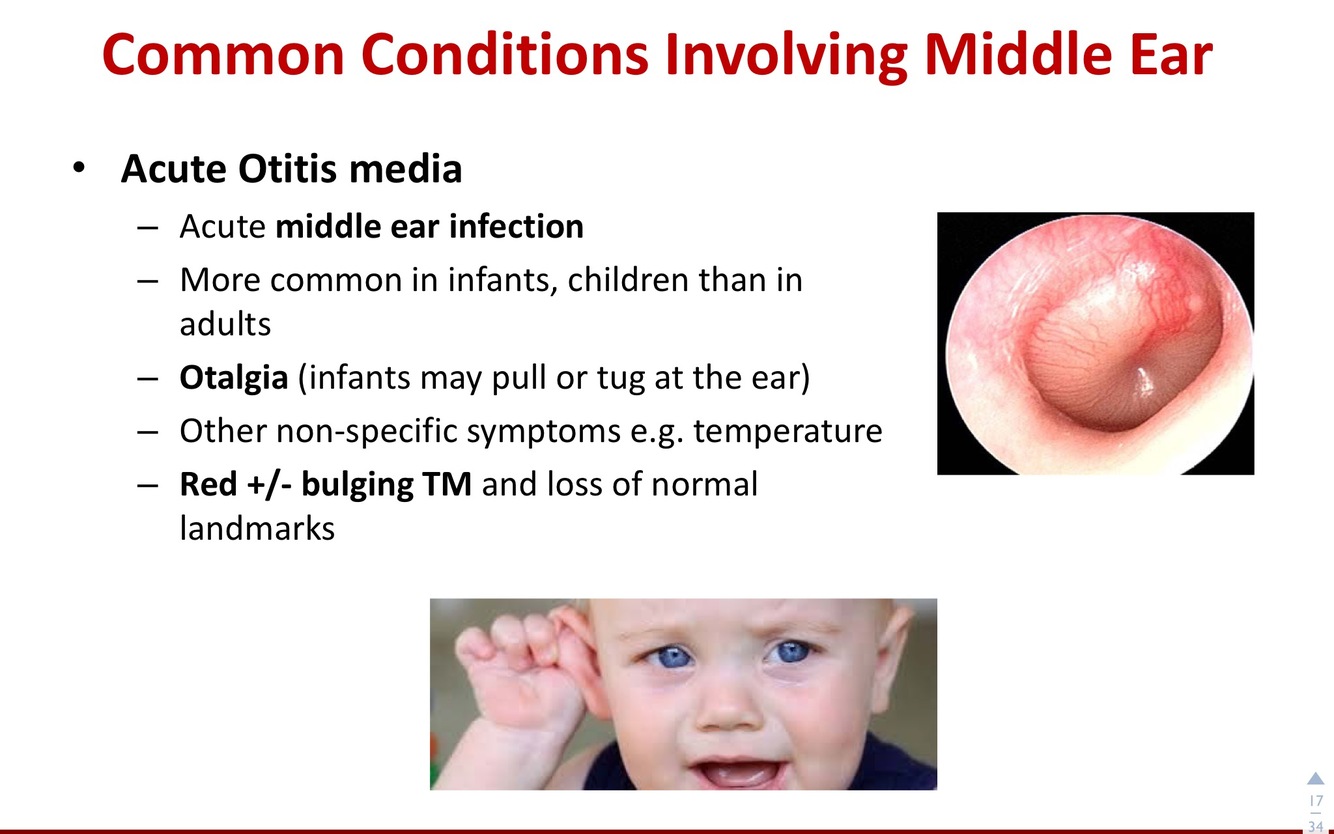
What is Acute Otitis media
why is it most common in kids?
RF?
Bc their Pharyngotympanic tube is shorter and more horizontal in infants
Risk factors:
- Preceding otitis media infection
- Frequent upper respiratory tract infections
- Allergic rhinitis
- Parents who smoke
- Winter
- Cystic fibrosis
- Down’s syndrome
which common viruses cause AOM
which bacteria?
(viruse cause account 2/3 of AOM)
rhinovirus,enterovirus,respiratory syncitial virus
strep pneumonia, H.infulenza, Morexella catarahlis
Ix and Mx of AOM
Complications of Acute Otitis Media
Tympanic membrane perforation , tympanosclerosis
Facial nerve involvement
Can be divided into intratemporal & intracranial
RARE:
- Intracranial complications
- Meningitis
- Mastoiditis
- Sigmoid sinus thrombosis
- Brain abscess
what is glue ear?
cause?
why does it affect children mostly?
treament?
characterised by a collection of fluid in the middle-ear cleft
cause: Enlarged adenoid tonsils – these are found where the Eustachian tube meets the nasopharynx so if they are inflamed, the Eustachian tube can be blocked
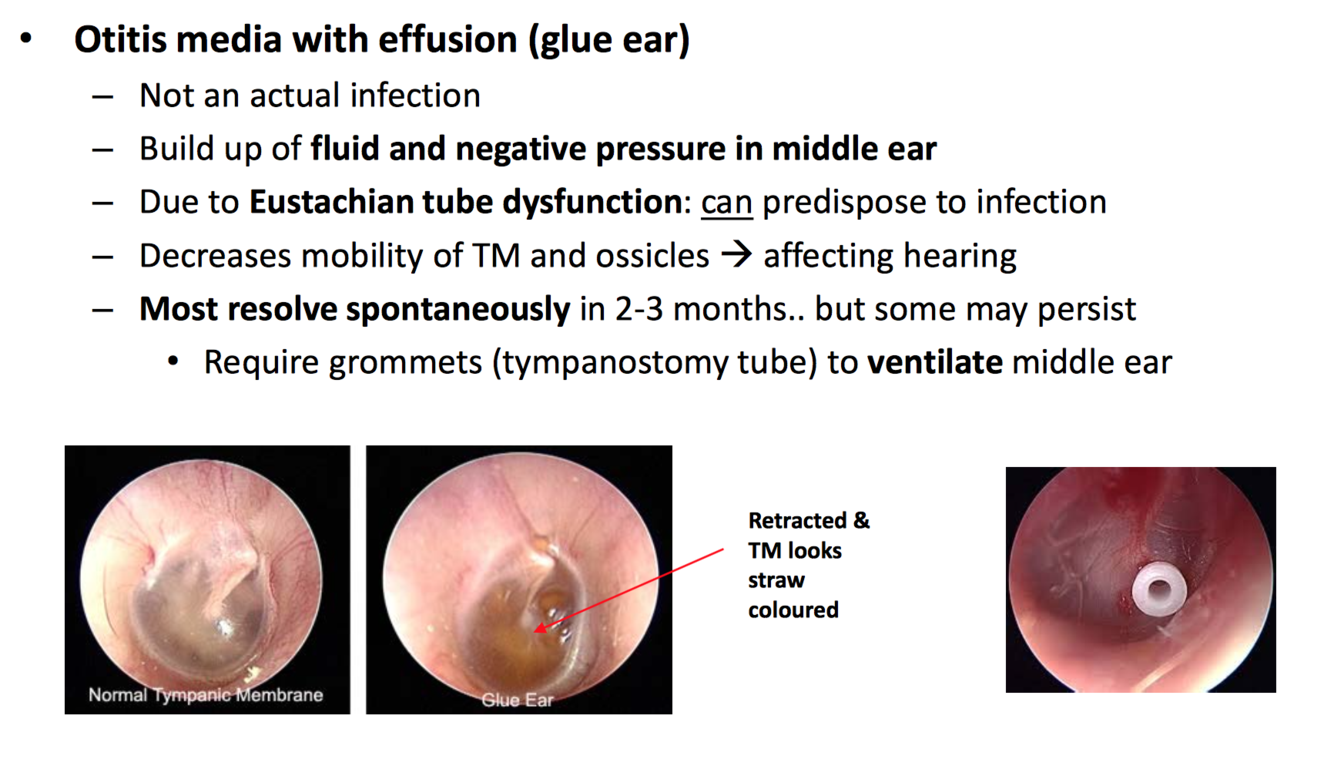
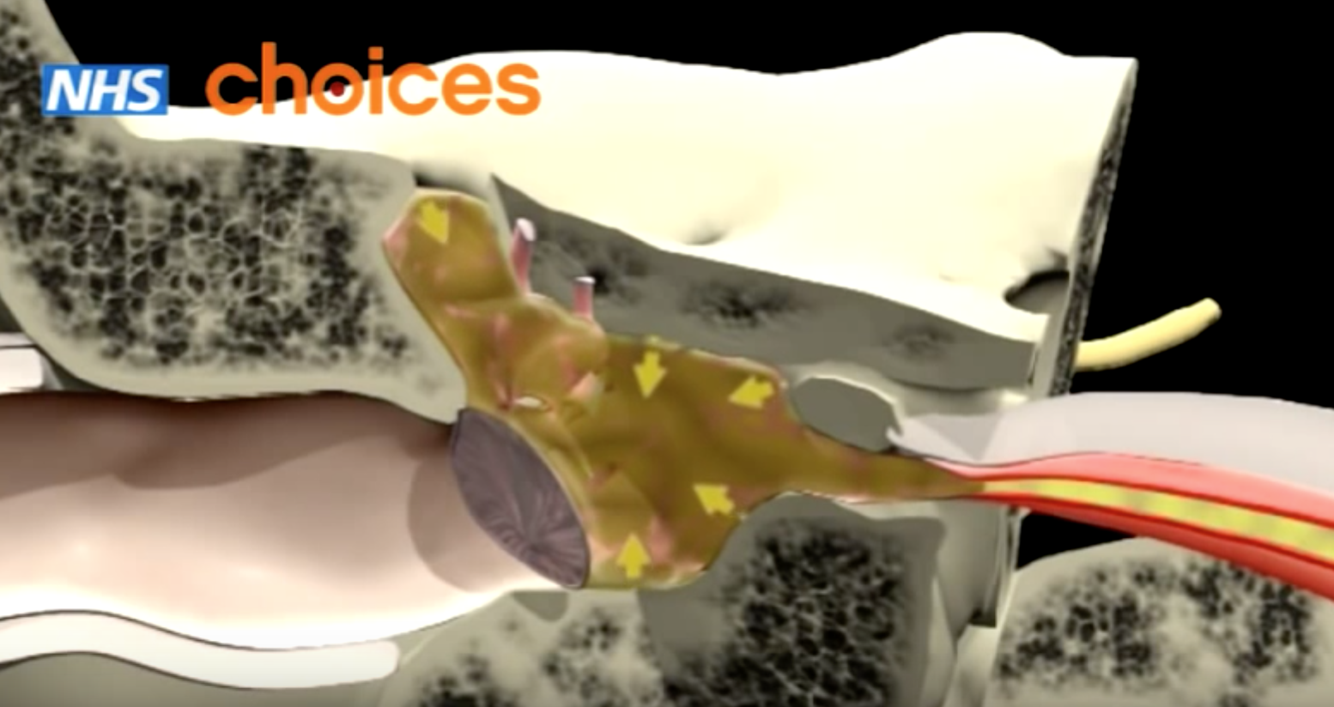
pathophysiology of glue ear?
If EU tube is blocked, it can stop air from getting into the middle ear, causing a vacuum that draws fluid into the area, this fluid becomes thick & glue-like overtime and prevents ossicles from moving!
treatment of glue ear
mostly resolves on its own! If not, surgeoun will make an incision in the typmanic memebrane and drain the fkuid, then he will place a GROMMET, that allows are to move in and out of the middle ear
it evetually falls out after 2-3 minths and must be replaced
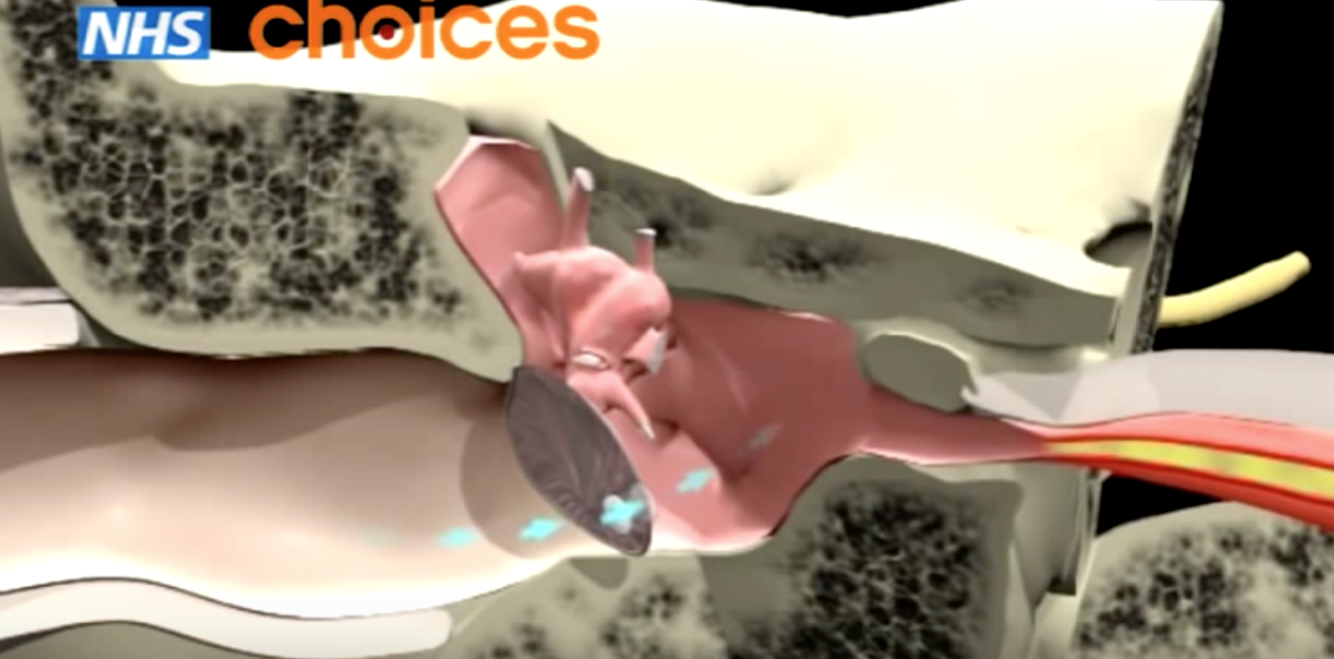
complication of Grommet insertion
tympanosclerosis
Cholesteatoma pathophysiology & causes
form from eustashian tube dysfunction> “-“pressure in middle ear> the weakest part of eardrum starts to sink in> the squamous epitheliam on the outer surf of the eardrum (typmpani cmemebrane) starts to grow in the middle ear and form a sac or cyst of cells
outmost layer of skin usually is sloughed off, but when the skin finds itself in the middle ear, it has no where to shed! so it’ll grow like a “tumour’ and the bone around that area remodels!
- Congenital – rare
- Primary acquired – due to chronic negative pressure in otitis media with effusion
- Secondary acquired – insult to tympanic membrane, such as perforation secondary to otitis media, trauma or surgical manipulation of the ear drum
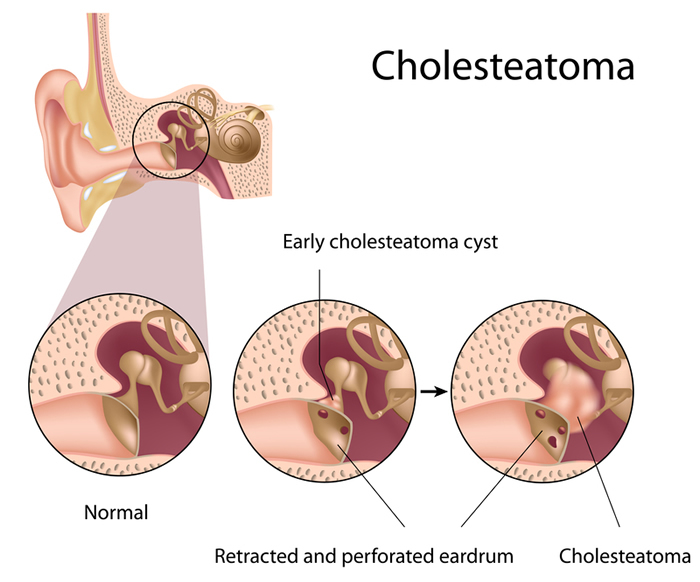
Cholesteatoma
symptoms
secondary to?
complication?
Causes painless, often smelly otorrhea (ear discharge) +/- hearing loss
– But also potentially more serious neurological complications
Usually secondary to chronic ET dysfunction or chronic/recurring ear
infections
Not malignant but slowly grows and expands, eroding into structures e.g.
ossicles, mastoid bone, cochlea
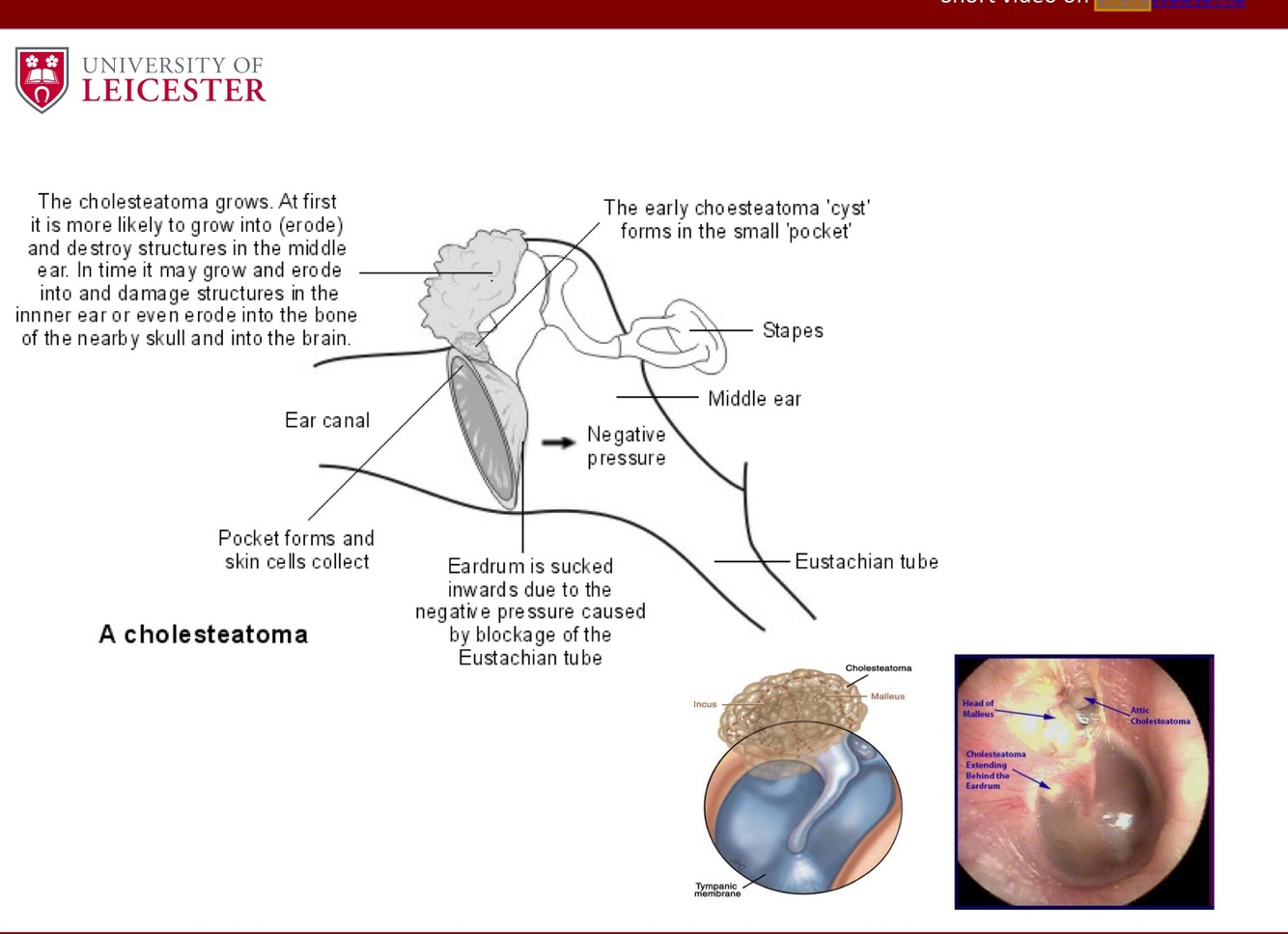
Ix & Tx of cholesteatoma
Otoscopy
PTA and CT scan of temoral bone
Ménière’s Disease
tooooo much fluid in the cochlear duct and the vestibular apparatus because there is an issue with its drainage.
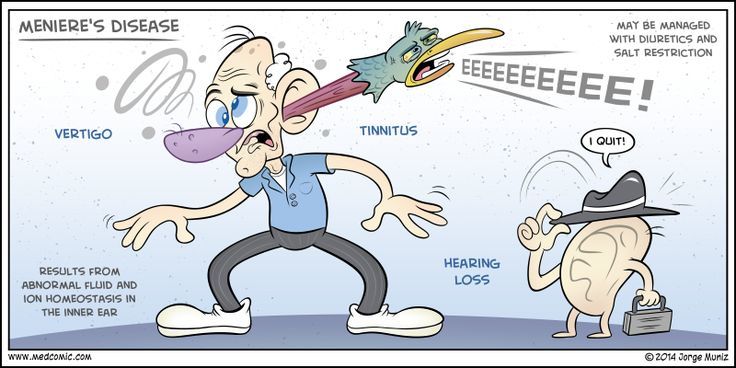
- * Feeling of pressure or FULLNESS in the ear*
- * Hearing loss*
- * Vertigo*
- * Tinnitus*
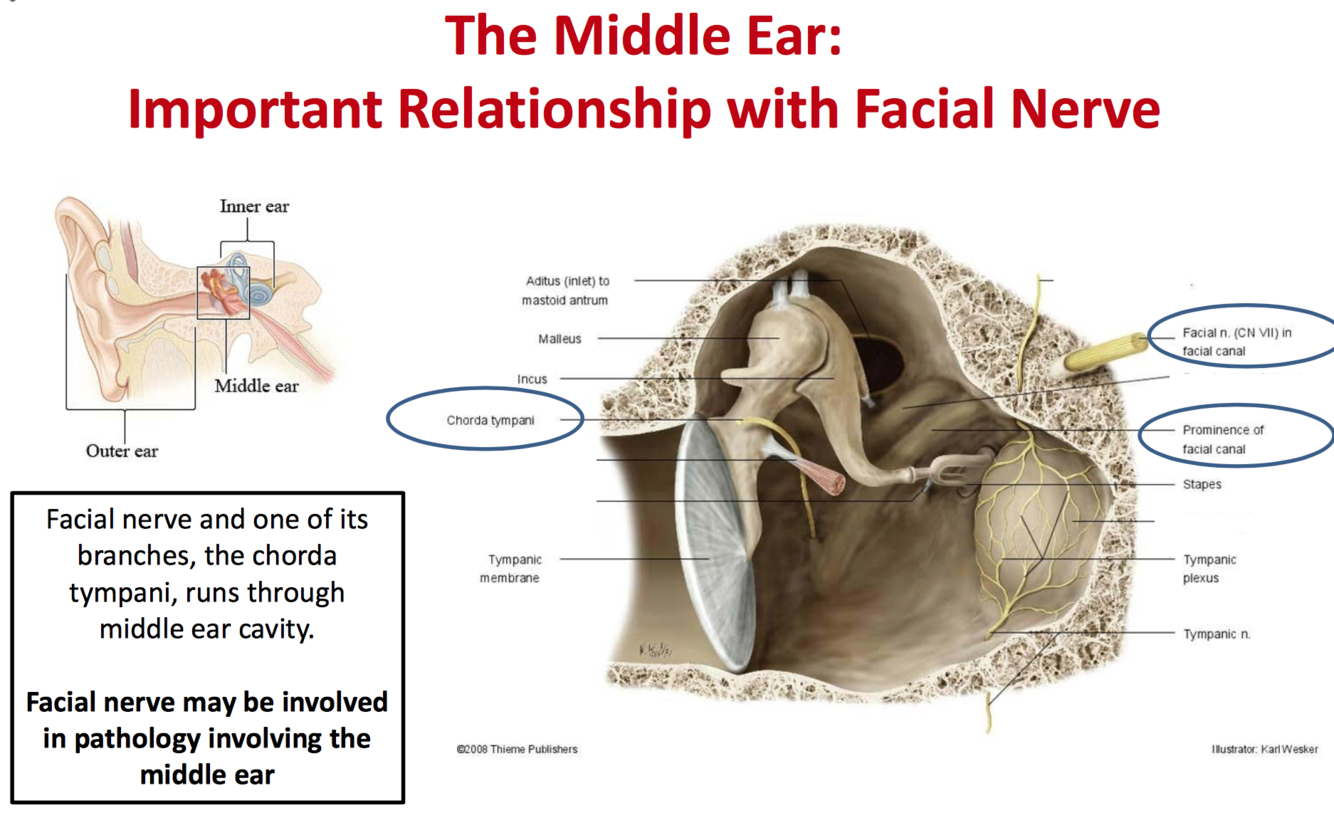
which branch of facial nerve runs throught the middle ear?
Chordae Tympani
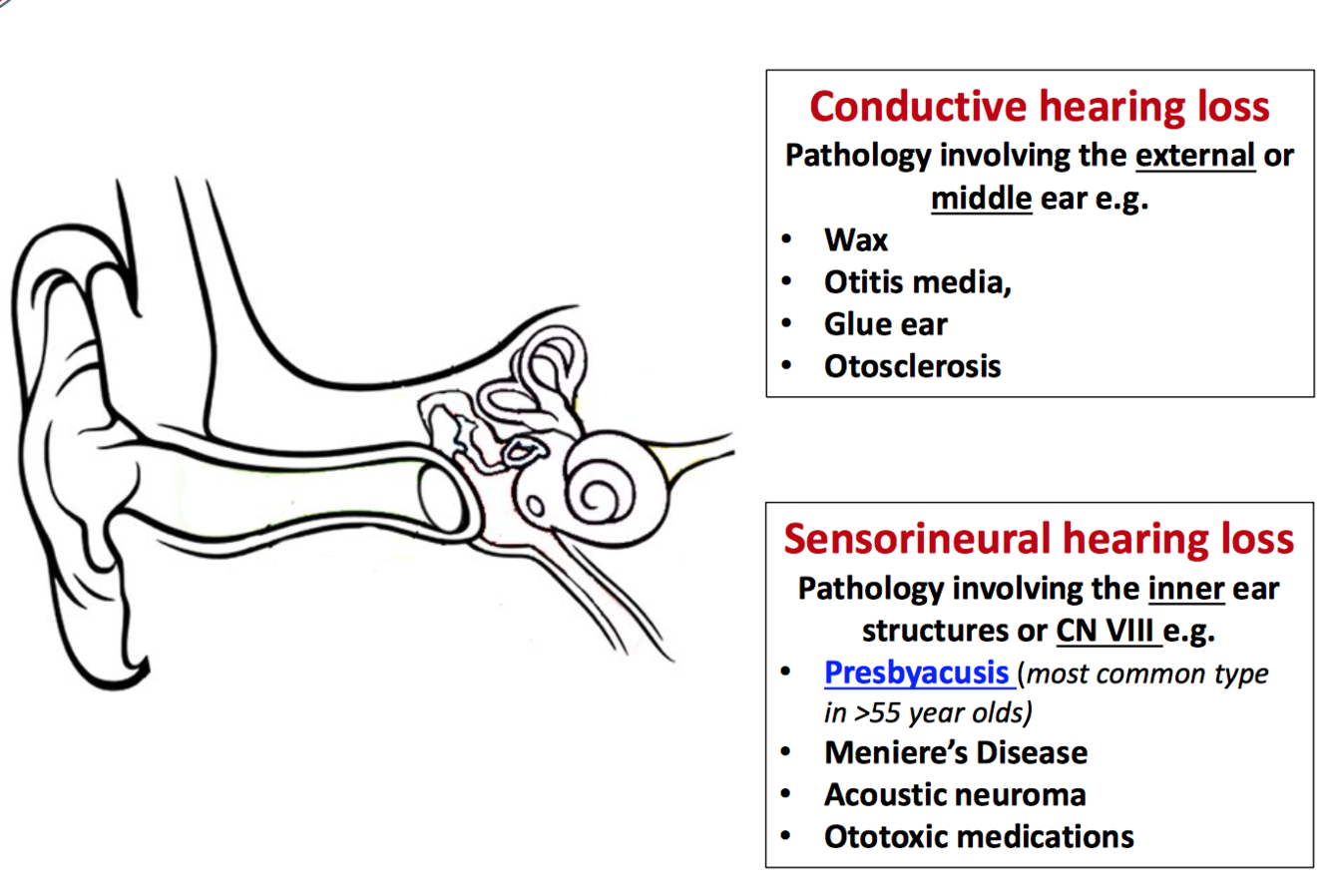
sensory hearing loss vs conductive hearing loss
give example conditions for each!
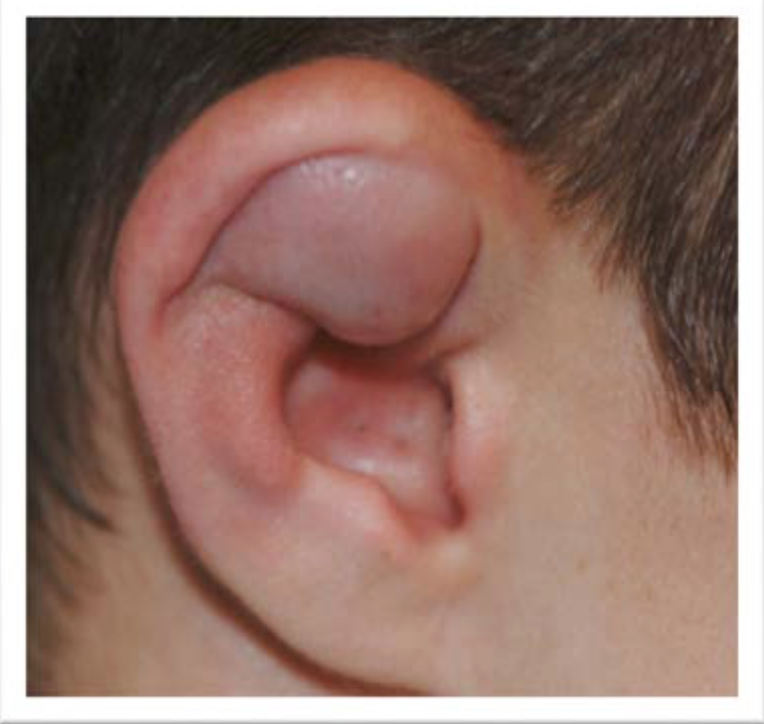
Pinna Haematoma, clinical implications, treatment
- Accumulation of blood between cartilage and perichondrium
- the cartilage is avascular and relies on the perichondrium
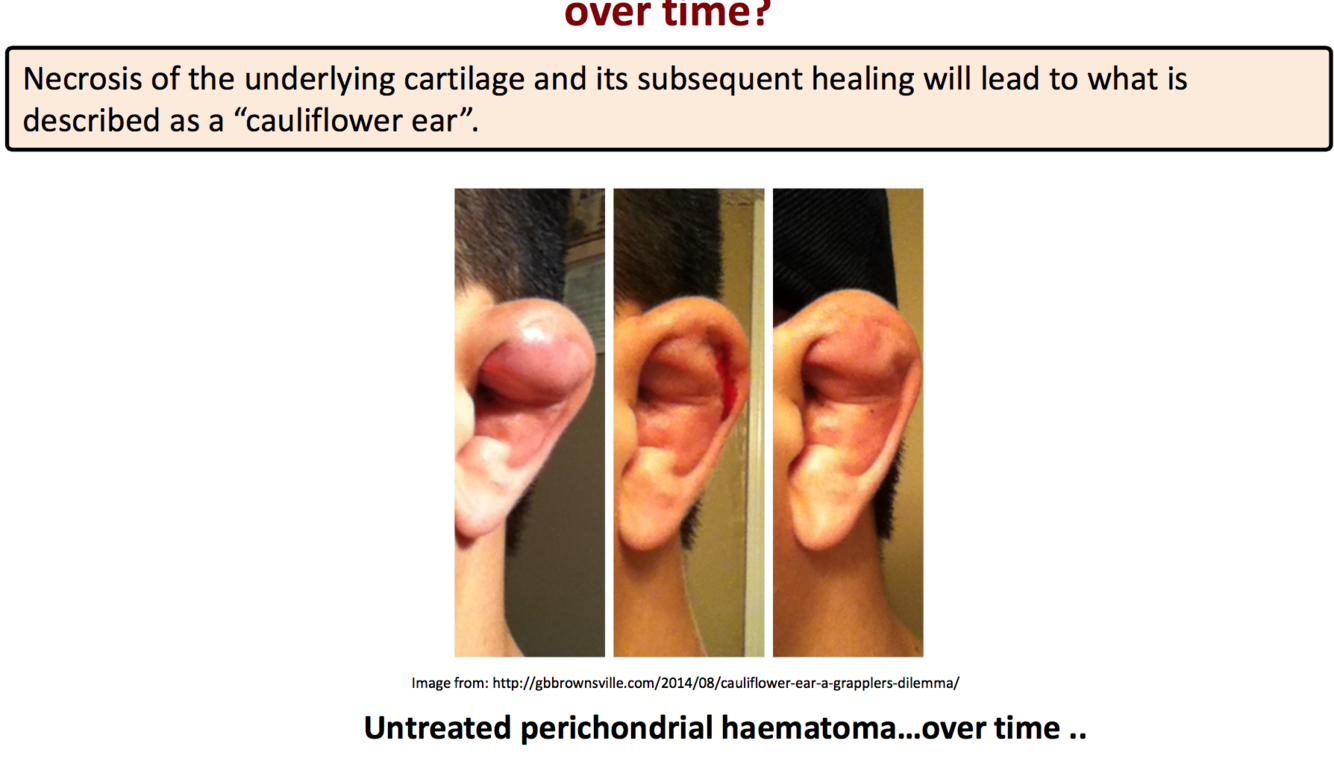
- if not corrected > the cartilage will undergo avascular necrosis and new cartilage growth will be asymmetrical causing a ‘cauliflower’ ear deformity.
*
Treatment
Drain the haematoma and bring the 2 layers back togezer
if pinna hematoma wasnt treated, what complication can arise?
f this isn’t corrected quickly the area of the cartilage will undergo avascular necrosis, fibrosis and new cartilage growth will be asymmetrical causing a
‘cauliflower’ ear deformity
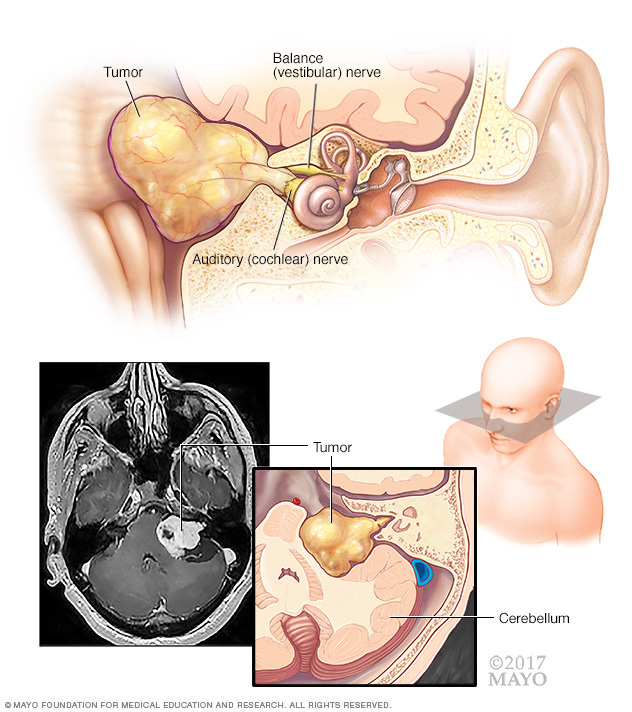
acoustic neuroma, where does the tumor normally arise?
also known as?
symptoms?
- Rare, slow growing benign tumour arising from the Schwann cells of the vestibular nerve (a small percentage can arise from the cochlear nerve).
- also known as vestibular schwannomas.
- The tumour arises on the nerve often within the internal auditory meatus, where, as it grows it will start to compress all nerves running through here.
Symptoms:
unilateral hearing loss- tinnitus (cochlear component of CN 8) -balance problems (vestibular component of 8)


-
Organziation of head and neck51
-
Ear40
-
Cranial Nerves1
-
muscles and bones20
-
osteology and cervical vertebre49
-
Meningeal Layers, Dural Folds and Dural Venous Sinuses19
-
Clinical problems13
-
blood vessels59
-
Lymphatic drainage45
-
Brain anatomy50
-
Brain conditions8
-
Autonomic Innervation of Head and Neck40
-
ear problems40
-
eye18
-
eye problems!64
-
Neck Lumps22
-
cancers29
-
Otoscope pathology22



