Ampulla
Widest region of fallopian tube where fertalization usually occurs
What are the wo major components of the ovum (outside of cellular membrane)?
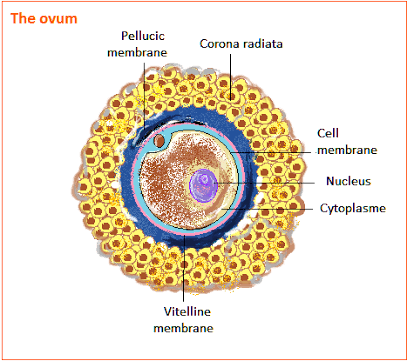
- Zona Pellucida: acellular mixture of glycoproteins
- Aid in protection of ovum
- Aid in sperm binding
- Corona Radiata
- layer of cells that adhere to oocyte during ovulation
Explain process and major components of Fertilization.
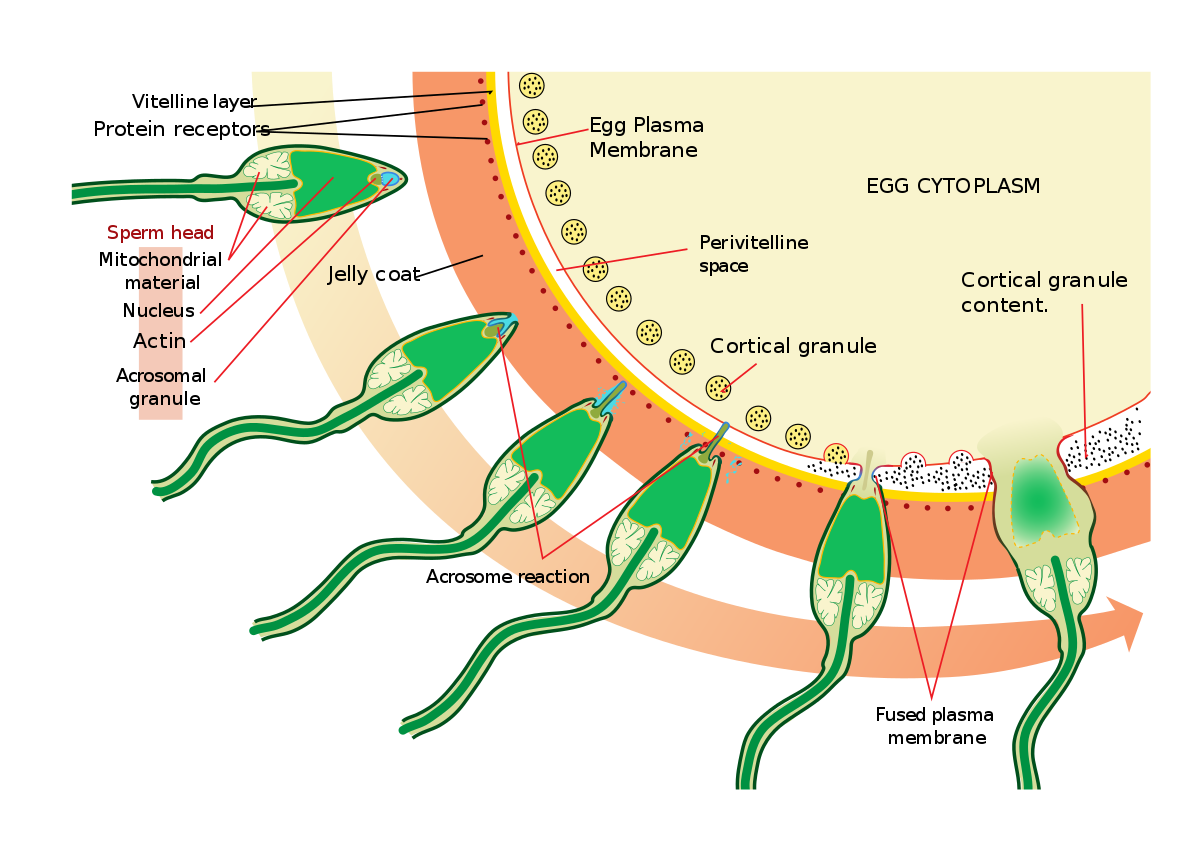
- Sperm comes into contact with ovum (often in ampulla)
- Sperm Penetrates ovum with acrosomal enzymes
- Forms Acrosomal Apparatus with ovum membrane
- Tube-like structure that penetrates membrane (fusing with ovum membrane) so that pronucleus can be release into ovum for completion of meiosis II
- Cortical Reaction Occurs after penetration
- Fertlization Membrane is Produced
- Depolarized and impenetratable
Two main purposes of Cortical Reaction
Releases of calcium ions:
- Depolarizes the ovum membrane to prevent further fertilzation by additional sperm
- Increase metabolic rate of the newly formed zygote
Fertilization of two different eggs release during the same ovulatory cycle and fertilized by two different sperm. Each develop their own, chorion, amnion, and placenta.
Dizygotic (Fraternal) Twins
Single Zygote splits into two. Have same genetic material. Can share embryonic structures such as placenta, chorion, and amnion.
Monozygotic (Identical) twins
Three classifications of monozygotic twins.
- monochorionic/monoamniotic
- monochorionic/diamniotic
- Diamniotic/monochorionic
Four Major Processes that Occur after fertilization.
- Cleavage
- Blastulation
- Gastrulation
- Neurulation
Brief Summary of four processes that occur after fertilzation.
- Cleavage: Rapid mitotic division of the embryo forming a morula (with the first nulifying the unicellular defining character of a zygote)
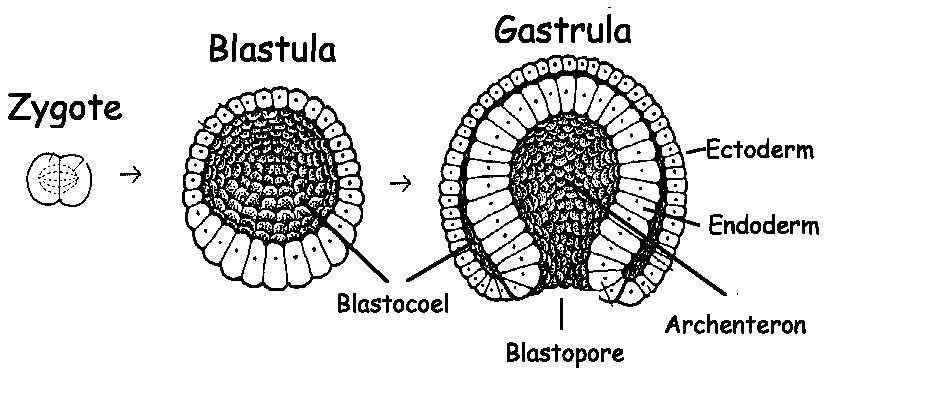
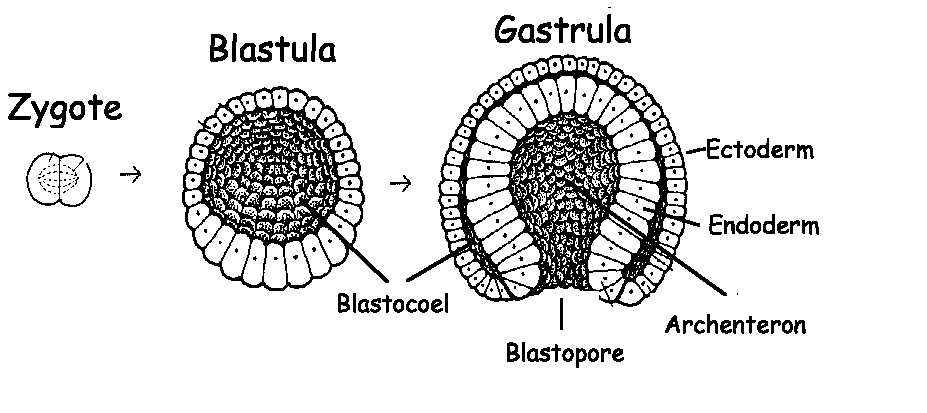
- Blastulation: Blastula with Blastocoel is formed and comprised of inner cell mass and surrounding trophoblast. (known as a blastocyst in mammals). Implantation also occurs during blastulation.
- Gastrulation: Generation of three distinct cell layers forming a gastrula (with ectoderm, mesoderm, and endoderm)
- Neurulation: Development of the nervous sytem.
Important aspects of Cleavage
Purpose: Rapid Mitotic Division of New Embryo
- Cells Increase two ratios
- N:C
- SA:V
- Indetermine Cleavage vs. Determinite Cleavage
Process in which cells are capable of becoming any part of the body during cleavage.
Indeterminate Cleavage
Process by which cells are committed to differentiating into a specific cell during cleavage.
Determinate Cleavage
Solid mass of cells created by embryonic cleavage.
Morula
Important Aspects of Blastulation
- Blastula (hollow ball of cells) with Blastocoel (fluid -filled inner cavity)
- Two different cells types: Inner Cell Mass + Trophoblast
Part of the Blastula that becomes the placental structures.
Trophoblasts
After Implanation into the Endometrium, the trophoblasts begin development of the:
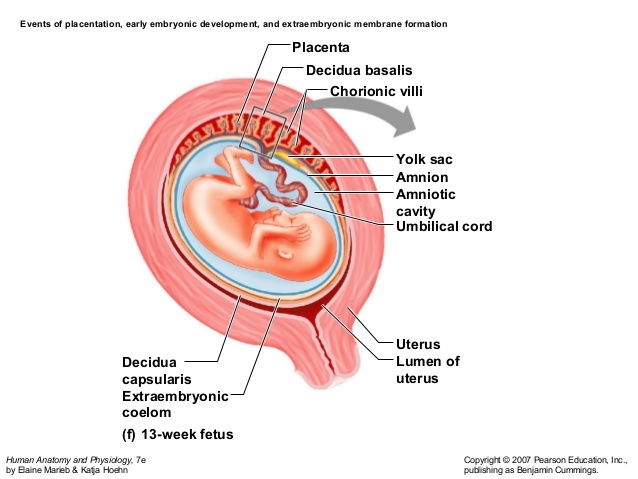
- Chorion: extraembryonic membrane that becomes placenta
- Chorionic Villi: finger-like projections (that also develop into placenta)
- Penetrate into endometrium and support maternal-fetal gas exhange
Consists and 2 arteries and 1 vein encased in a gelatinous substance and function as maternal-fetal blood exchange. Also connects placenta to developing embryo.
Placenta (Formed from yolk sac and allantois)
- Arteries: deoxygynated fetal blood and waste from embryo to placenta
- Vein: oxygynated blood from placenta to embryo
Site of early blood cell development (functions in place of placenta until it becomes fully functional)
Yolk Sac
Site of early fluid exchange between yolk sac and embryo
Allantois (together with yolk sac become the placenta)
Thin tough membrane filled with amniotic fluid that surrounds the allantois. “Shock absorber” during pregnancy.
Amnion
Be able to understand and analyze the major aspects of fetal develoment within this picture.
Important aspects of gastrulation.
- Formation of the Gastrula = Archenteron + Blastospore
- Archenteron: membrane invagination into blastocoel (gut)
- Blastospore: Opening of Archenteron (anus(in deuterosomes))
- Formation of Primary Germ Layers = Beginning of Differentiation
- Ectoderm
- Mesoderm
- Endoderm
“Atractoderm”
Ectoderm (what can make a person attractive)
-Skin, hair, nails, facial structures, and nervous systems
Oderm: Means to “get around”
Mesoderm
- Bones and muscles
- Circulatory System
“In-doderm” (Lining of Organs)
Endoderm
- Respiratory and Digestive Tract and accessory organs




