Aspects of A-E assessment
Identify a problem and deal with it as going along…
Airway - patent? look, listen and feel –> head tilt + chin lift, jaw thrust, airway adjunct
Breathing - RR, O2 Sats (>94% - scale 1, 88-92% - scale 2 if COPD), resp exam, ABG –> Oxygen (15L/min O2 non-rebreather mask)
Circulation - HR, BP, CRT, cardio exam –> IV fluids
Disability - BM, pupils (PEARL - pupils equal and reactive to light), GCS/AVPU, abdo/neuro exam
Exposure - calf tenderness, bleeding, bruising, rashes etc.
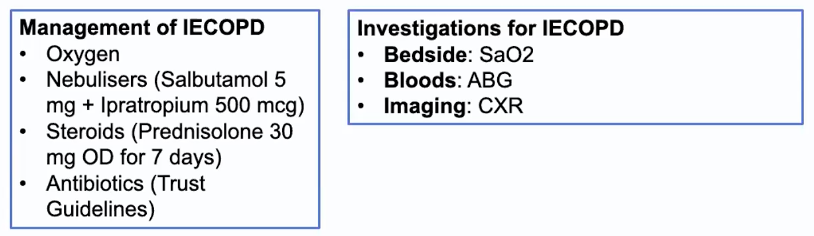
COPD breathing problem Ix? Mx?
Ix: ABG, ECG, CXR, FBC, U&E
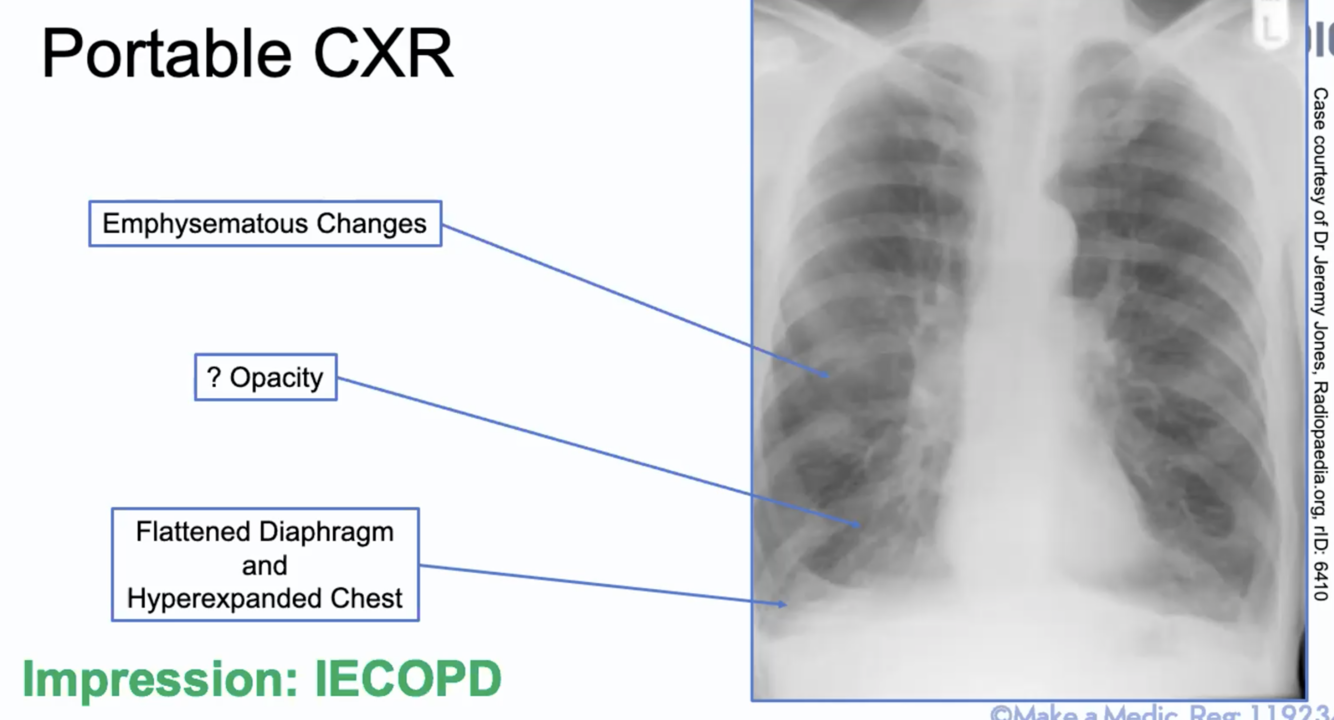
Infective exacerbation of COPD Oon CXR: emphysematous changes, opacity, flattened diaphragm + hyperexpanded chest
Acute Mx:
- 15L/min O2 non-rebreather mask (despite COPD)
- Salbutamol NEB - back to back
- IpB NEB - 6 hourly
On discharge:
- Pred for 7 days
- PO Abx (e.g. co-amox)
Reassess:
- If O2 sats increasing, RR decreasing and HR decreasing
- Continue abx/steroids, wean off nebs + O2
PaO2 (Partial Pressure of Oxygen) normal range?
Normal: ≥10 on room air
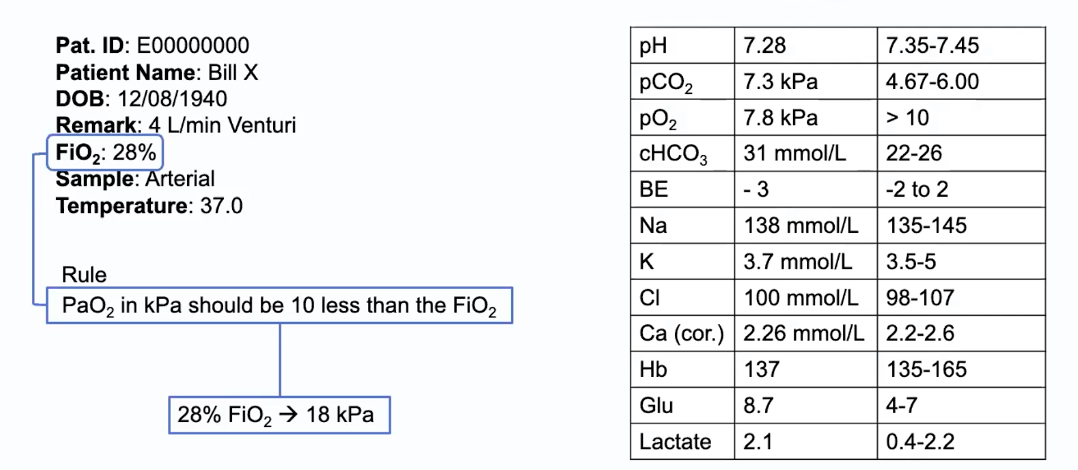
On Oxygen: PaO2 (kPa) should be 10 less than FiO2 (level of oxygen they are on %)
Reading an ABG?
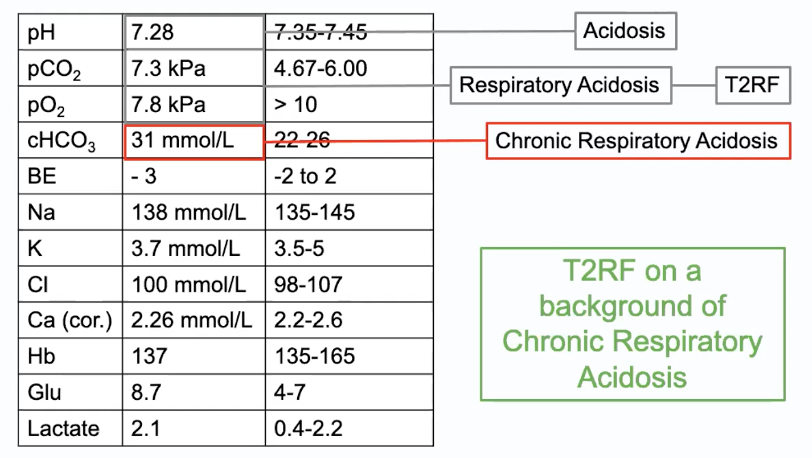
Low O2 = T1RF
Low O2 + High CO2 = T2RF
Low pH + high CO2 = Respiratory acidosis (low CO2 = metabolic)
High pH + low CO2 = Respiratory alkalosis (high CO2 = metabolic)
NOTE: if bicarb is high in RA = chronic RA (compensation by bicarb is slow) –> this determines if should be on scale 1/2 O2 (scale 2 = 88-92%)
When to do ABG vs VBG?
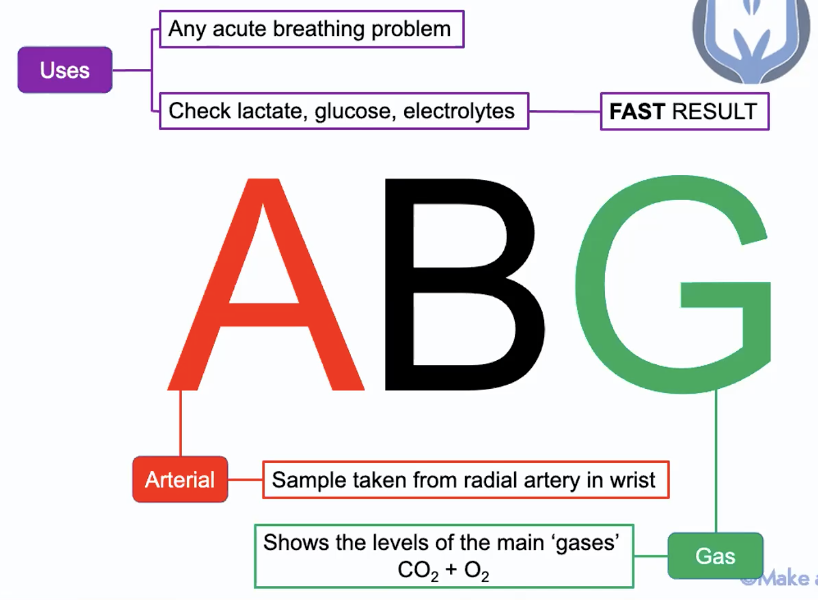
ABG (radial artery) - acute breathing problem
VBG (venous) - check lactate, glucose, elctrolytes FAST
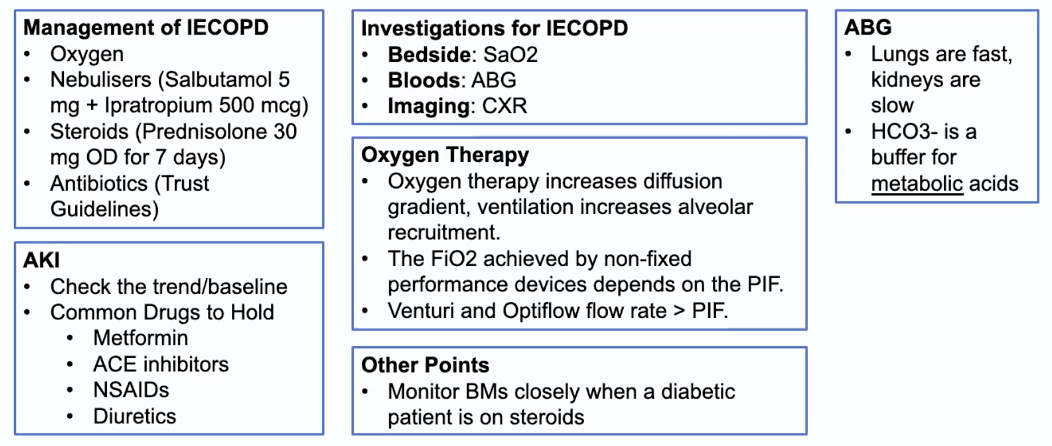
Oxygen therapy principles
Oxygen from wall = 100%
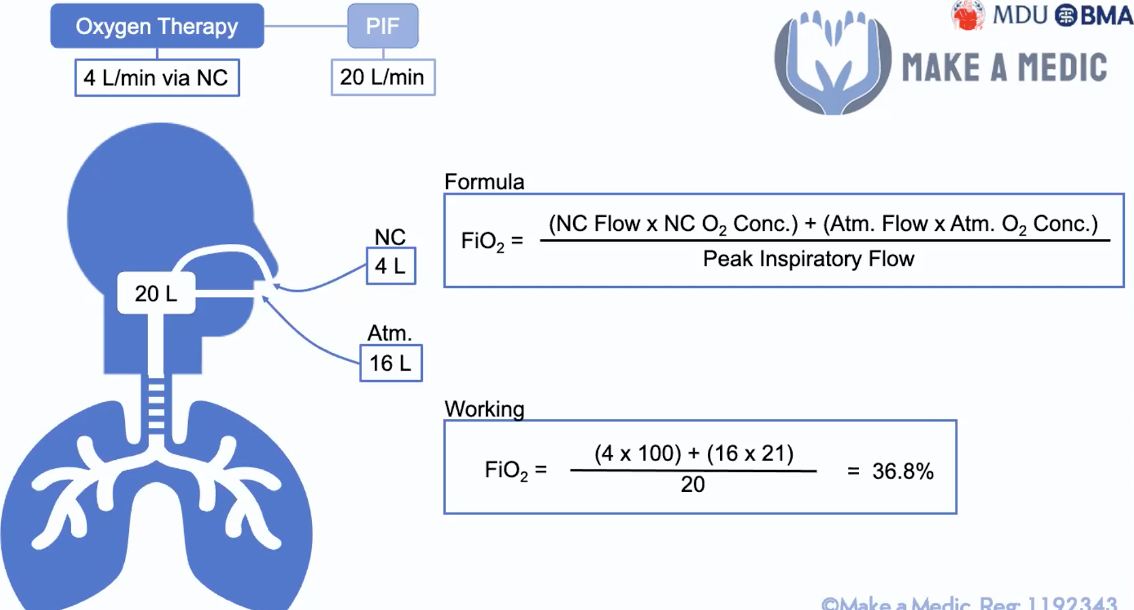
Peak inspiratory flow - the maximum rate of drawing in O2 normally is 20L/min (not normally measured unless ITU)
O2 therapy goal is increasing conc grad between alveoli and blood - done by increasing FiO2 (fraction of inspired O2)
Devices types: 1) variable (can’t guarantee FiO2, depends on PIF) - nasal cannula, hudson mask, non-rebreather mask 2) fixed - venturi mask (useful if COPD as need to know exactly how much O2 giving)
NOTE: If PIF increases (breathing harder) –> FiO2 decreases so more device O2 is required
High-flow nasal oxygen therapy - humidifies + warms O2 = well-tolerated –> very high flow rate can be achieved - finely controlled FiO2
O2 therapy vs ventilation
O2 therapy - increase FiO2 so bigger conc gradient between alveoli and bloodstream (of part of the lung that is working)
Ventilation - pressure increases SA of lungs available for gas exchange e.g. if part of the lung is blocked off (e.g. mucus, collapse)
SO COMBO IS NORMALLY USED
AKI - key things to do?
1) Check trend
2) Check drug chart (any nephrotoxic?) –> remove/replace
* Common: Metformin (increases risk of lactic acidosis), ACEi (reduces renal perfusion pressure), NSAIDs, diuretics (unless congestive heart failure - may have AKI from fluid overload)
3) Check fluids (pre-renal - dehydration) –> give fluids
Case 1 Learning points
Bibasal crackles indicates what? Ix? Mx?
Fluid overloaded with pulmonary oedema = acute heart failure
HF = pumping of blood by heart isn’t meeting body demands
Ix:
- Bedside - ECG
- Bloods - ABG, troponin, BNP
- Imaging - CXR, Echo (further down the line)
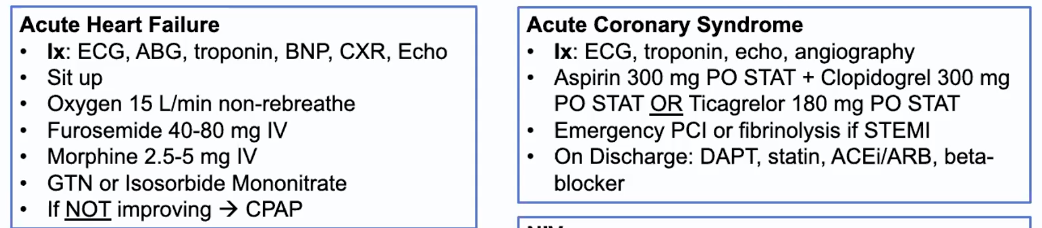
Acute HF Initial Mx:
- Immediate: sit patient up, O2 15L/min NRM
- Medical: IV furosemide (higher dose if on LT Tx), GTN, Morphine IV
- If no improvement: repeat furosemide (after 15mins) –> consider CPAP
Types of Non-Invasive Ventilation
CPAP = fixed IPAP and EPAP
- Holds open/splints airways –> for T1RF –> increase O2
BiPAP = IPAP higher than EPAP
- Gradient allows exhalation more easily –> for T2RF –> excrete CO2
(- If had high CO2 on ABG –> increase IPAP –> more excreted CO2)
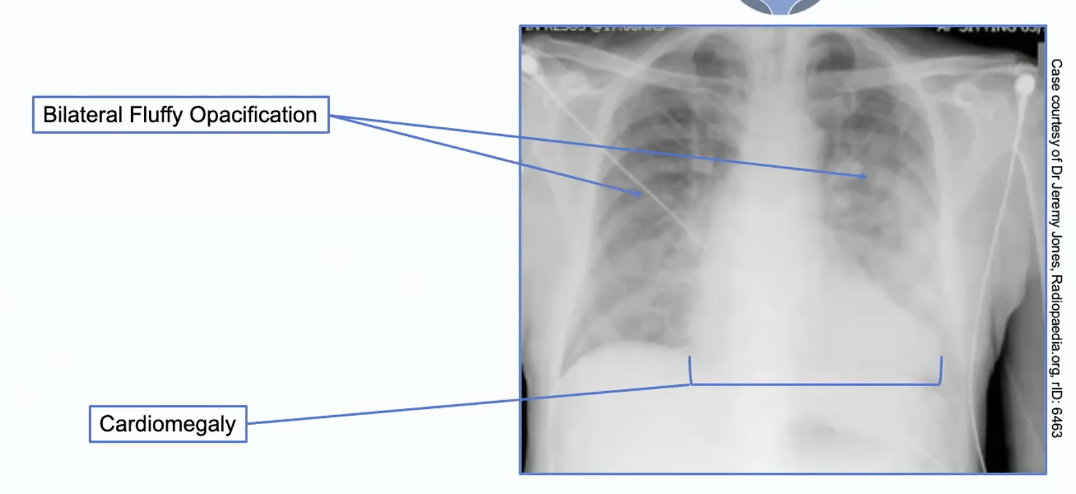
CXR for HF
Bilateral opacification
Cardiomegaly
CXR for Infective Exacerbation of COPD (IECOPD)
Emphysematous changes
Opacity
Flattened diaphragm + hyperexpanded chest
ECG Important Considerations
- Make sure to compare to a previous ECG = dynamic changes (acute)
- Coronary infarcts commonly present as T-wave inversion/RBBB/LBBB, not always with ST-elevation/depression
NSTEMI Mx? Scoring? Ix?
Immediate:
- Aspirin PO stat AND Ticagrelor OR Clopidogrel PO stat
- Fondaparinux SC
On discharge (give all despite BP/HR):
- Aspirin for life
- Ticagrelor OR Clopidogrel for 1 year (2 needed for 1 year as stent impregnated with Tacrolimus
- Ramipril (ACEi) - titrate up to 10mg
- Atorvastatin
- Bisoprolol (B-blocker) - titrate up to 10mg
Scoring Risk: GRACE score
Ix if high risk: cathlab for angiogram (will be started on IV unfractionated heparin instead of fondaparinux as procedure is very thrombogenic) –> PCI (stent)
Anaemia Ix? Mx?
Ix: FBC, haematinics, B12/folate, endoscopy
Blood transfusion threshold: Hb <70 or <80 AND ACS
Other options: Fe infusion, ferrous fumarate
NOTE: anaemia can exacerbate chest pain/ACS
Significance of Atorvastatin + Clarithromycin?
Drug-drug interaction –> risk of liver damage + rhabdomyolysis
Withhold atorvastatin
Heart failure key consequences x2
1) Reduced CO (SV*HR) –> shock, tachycardia, AKI
2) Congestion –> pulmonary oedema + peripheral oedema
How do you calculate ejection fraction? What are the different types of HF based on ejection fraction?
Ejection fraction = SV/End Diastolic Volume
HF w/ preserved EF: >50% - inadequate filling of stiff ventricles
- Causes: volume overload (valve regurg), pressure overload (HTN), decreased distensibility (constrictive pericarditis)
- No drugs w/ prognostic benefit, Mx Sx w/ diuretics
HF w/ reduced EF: <40% - inadequate emptying of ventricles from outflow obstruction or impaired contractility
- Causes: MI, cardiomyopathy, arrhythmia
Acute HF vs ACS
Critical drugs - DO NOT EMIT when put on NBM in hospital
- Parkinson’s drugs (Levodopa, Carbidopa)
- Antiepileptics (Na Val, Carbamazepine, Lamotrigine, Levetiracetam)
- Antiretrovirals (-avir)
- Steroids (long-term)
Routes –> patches, IV, NG tube
What area of the lungs does aspiration pneumonia normally affect? Mx?
The right bronchus is more vertical and so aspiration normally affects the right lung base = coarse crackles
Mx: O2, suction, abx, NBM until SALT review
Irregularly irregular heart rhythm - Dx? Ix? Mx?
AF - II narrow complex tachycardia with no p-waves
Ix:
- ECG, Echo (valve check)
- Bloods - U&E, Mg (QT interval), Troponin (ischaemic), TFTs
Mx:
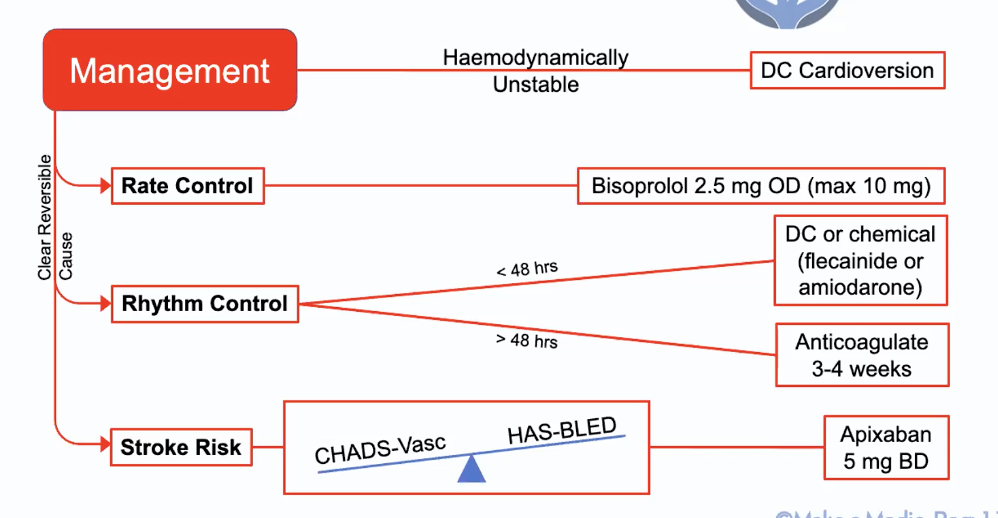
- Haemodynamically unstable –> DC cardioversion
- Rate control - Bisoprolol 2.5mg OD (max 10mg, can use rate-lim CCB)
- Rhythm control - if clear reversible cause: <48hrs = DC/chemical cardioversion (flecanide/amiodarone); >48hrs = anticoag 3-4wks (clot may have formed)
- Stroke risk Mx - CHADS-Vasc Vs HAS-BLED/ORBIT - Apixabab 5mg BD (DOAC, can use Warfarin)
Virchow’s triad + anticoagulants vs antiplatelets
1) Stasis - coag factor activation–> venous clot (AF, DVT)
* Anticoags are most effective as coag factors cause clot
2) Vessel wall injury - plaque rupture - thrombogenic material release –> platelets activated –> arterial thrombosis (MI, stroke)
* Antiplatelets most effective as platelets cause clots
3) Hypercoagulability - does not change acutely



