Reading an ABG?
Respiratory failure:
- Low O2 = T1RF (PaO2 <8kPa)
- Low O2 + High CO2 = T2RF (PaO2 <8kPa, PaCO2 >6kPa)
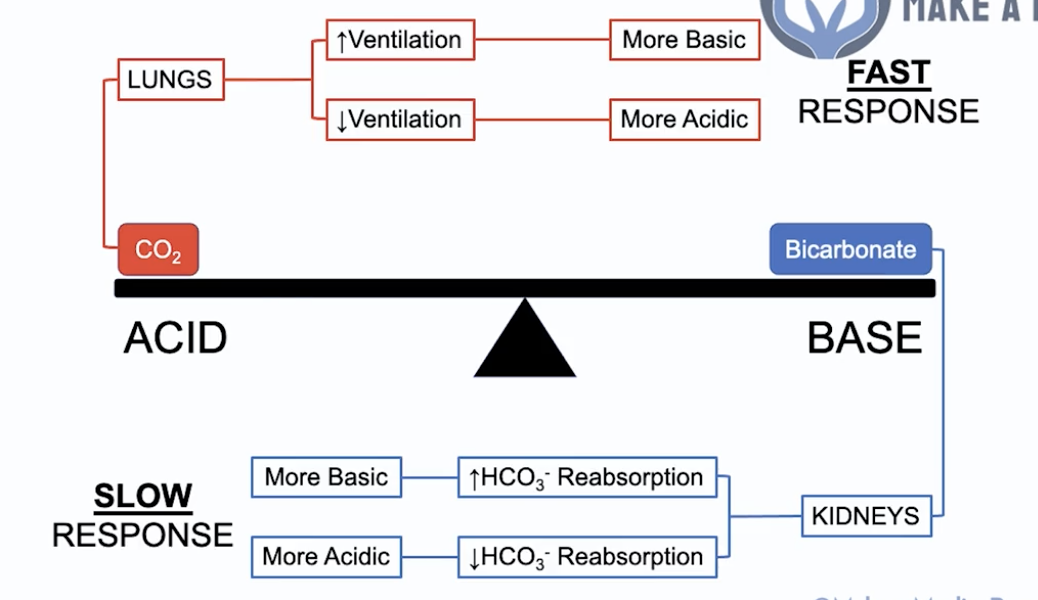
Determining acid: base balance:
- Low pH + high CO2 = Respiratory acidosis (low CO2 = metabolic)
- High pH + low CO2 = Respiratory alkalosis (high CO2 = metabolic)
- NOTE: if bicarb is high in RA = chronic RA (compensation by bicarb is slow) –> this determines if should be on scale 1/2 O2 (scale 2 = 88-92%)
Causes of acid: base balance:
- RA causes: COPD, ILD, hypoventilation, asthma (normally resp alkalosis but can be acidotic if severe)
- MA causes: lactic acid, ketoacids (CO2 blown off to compensate –> Kussmaul breathing)
COPD - definition? Signs & Sx? New Dx & exacerbation Ix/Mx? Prognosis factors?
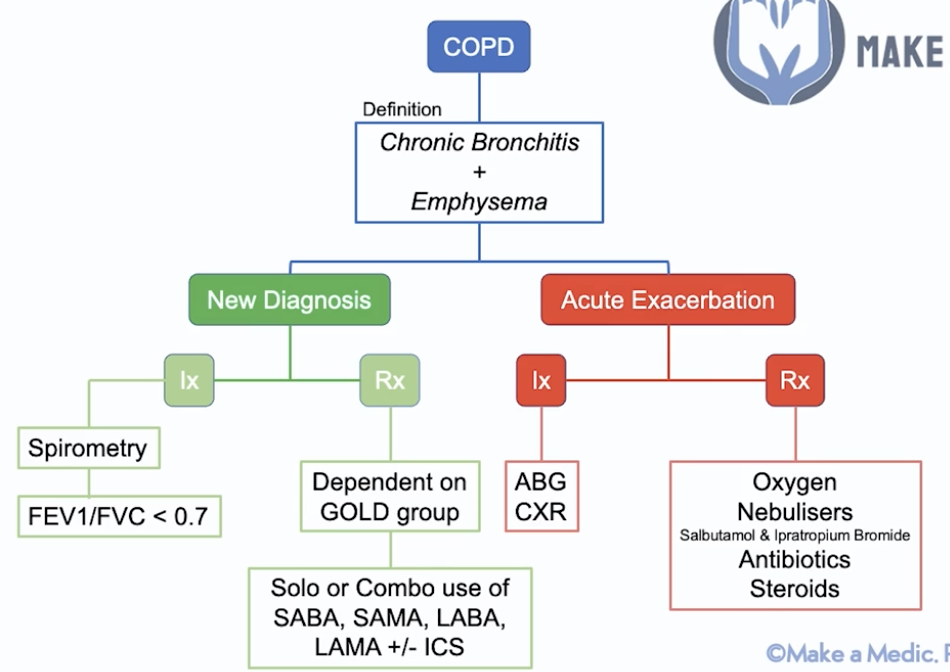
Def: chronic bronchitis (damaged to cilia in bronchi - blue bloater) + emphysema (damage to alveoli - pink puffer)
Presentation:
- Cough (productive), SoB (starts on exercise)
- RF exposure - smoking/pollution
- Signs:
- Barrel chest
- Hyper-resonant (air trapping)
- Reduced breath sounds
- Widespread expiratory wheeze
- Coarse crackles if exacerbation (mucus in airways)
- Other - asterixis (CO2 retention flap), raised JVP (cor pulmonale)
- NOTE: COPD does not cause clubbing –> cancer/bronchiectasis
New Dx Mx:
- Ix:
- Bedside - mMRC dyspnoea scale, O2 sats, ECG (cor pulmonale)
- Spirometry - FEV1/FVC <0.7 (forced exp volume in 1s)
- Mild - FEV1 ≥ 80%
- Moderate - FEV1 ≥ 50%
- Severe - FEV1 ≥ 30%
- Very severe - FEV1 <30%
- Bloods - FBC, ABG, eosinophil count, alpha1-antitrypsin level
- Imaging - CXR, CT chest
- Other: serial peak flows if asthma DDx, sputum culture (in freq exacerbation), pul funct tests
- Mx:
- Conservative - stop smoking, influenza + pneumococcal vaccine, inhaler device training
- Persuade to stop smoking
- Pul rehab
- Prick them - influenza + pneumococcal vaccine
- Psych issues
- Medical - depends on severity - GOLD group –> solo/combo of:
- SABA e.g. salbutamol
- SAMA e.g. Ipratropium bromide
- LABA e.g. salmeterol
- LAMA e.g. tiotropium
- ± ICS e.g. beclomethasone
- Other: mucolytic e.g. acetylcysteine, O2 therapy, theophylline
- Medical pathway:
- 1 - SABA/SAMA
- 2a - Steroid-responsive (eosinophilia/atopy): LABA + ICS
- 2b - Not steroid-responsive: LABA + LAMA
- 3 - LABA + LAMA + ICS
- 4 - specialist input e.g. theophylline
- Surgical - lung reduction surgery (large bullae)
- Other: long-term O2 therapy
- Only if non-smoker (smoker –> burns)
- Only if <7.3 PaO2/<8 if also pul HTN
- Only if PaCO2 does not rise excessively on O2
- Conservative - stop smoking, influenza + pneumococcal vaccine, inhaler device training
Acute Exacerbation Mx:
- Ix: ABG, ECG, CXR
- Mx:
- 15L O2 NRM
- Nebs - salbutamol + IpB
- Steroids (PO pred/IV hydrocortisone)
- Abx if infective –> prophylactic abx if persistent infections - azithromycin
- Reassess:
- If improvement (increased SaO2, reduced RR/HR):
- Continue abx/steroids
- Wean of nebs and O2
- No improvement (after 30 mins):
- NIV (BiPaP)
- If improvement (increased SaO2, reduced RR/HR):
Prognosis factors:
- Body mass - worse if obese
- Obstruction - worse if reduced FEV1
- Dyspnoea
- Exercise capacity - how far can you walk in 6 minutes?
Complication –> vasoconstriction to redirect blood flow to well-oxygenated areas of the lungs –> if widespread –> pul HTN –> cor pulmonale
Aspects of A-E assessment
Identify a problem and deal with it as going along…
- Airway - patent? look, listen and feel –> head tilt + chin lift, jaw thrust, airway adjunct
- Breathing - RR, O2 Sats (>94% - scale 1, 88-92% - scale 2 if COPD), resp exam, ABG –> Oxygen (15L/min O2 non-rebreather mask)
- Circulation - HR, BP, CRT, cardio exam –> IV fluids
- Disability - BM, pupils (PEARL - pupils equal and reactive to light), GCS/AVPU, abdo/neuro exam
- Exposure - assess everything but not all at the same time –> calf tenderness, bleeding, bruising, rashes etc.
NOTE: if put in intervention say to examiner I would reassess previous steps e.g. A&B if gave IV fluids are there any changes
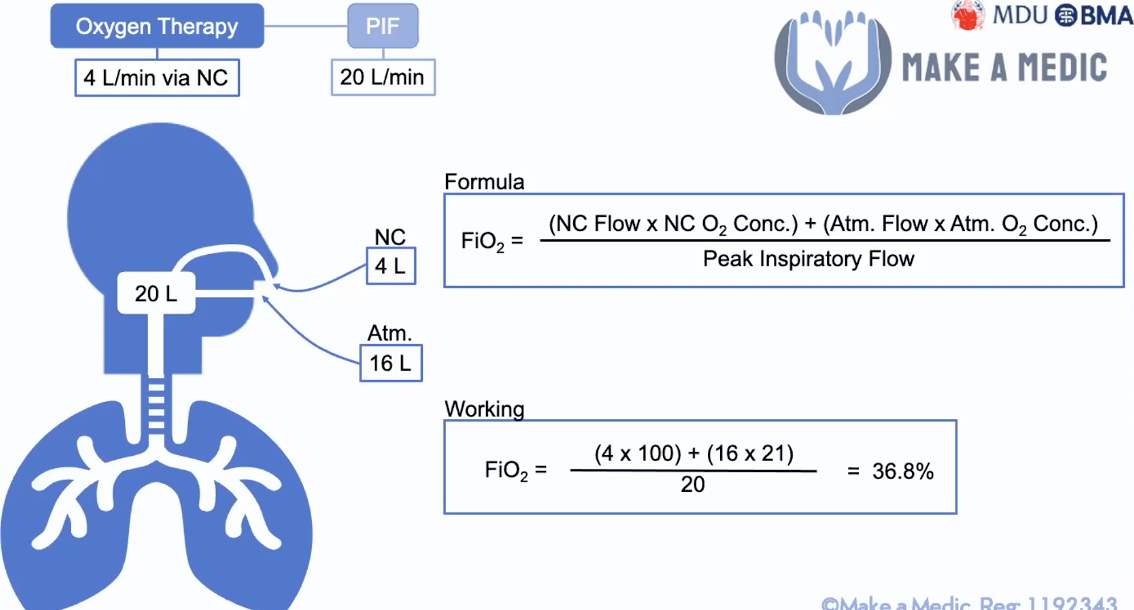
Oxygen therapy principles
Oxygen from wall = 100%
Peak inspiratory flow - the maximum rate of drawing in O2 normally is 20L/min (not normally measured unless ITU)
O2 therapy goal is increasing conc grad between alveoli and blood - done by increasing FiO2 (fraction of inspired O2)
Devices types: 1) variable (can’t guarantee FiO2, depends on PIF) - nasal cannula, hudson mask, non-rebreather mask 2) fixed - venturi mask (useful if COPD as need to know exactly how much O2 giving)
NOTE: If PIF increases (breathing harder) –> FiO2 decreases so more device O2 is required
High-flow nasal oxygen therapy - humidifies + warms O2 = well-tolerated –> very high flow rate can be achieved - finely controlled FiO2
AKI - def? Severity stages? Breakdown by pathology? Key things to do? Ix? Mx?
Def: abrupt loss of kidney function resulting in dysregulation of fluid balance + electrolytes & retention of nitrogenous waste products
Severity defined based on creatinine/urine output:
- Stage 1: 1.5-1.9x baseline/UO <0.5mL/kg/hr for 6-12hrs
- Stage 2: 2-2.9x baseline/UO <0.5mL/kg/hr for >12hrs
- Stage 3: >3x baseline/UO <0.3mL/kg/hr for >24hrs OR anuria >12hrs
Breakdown by pathology:
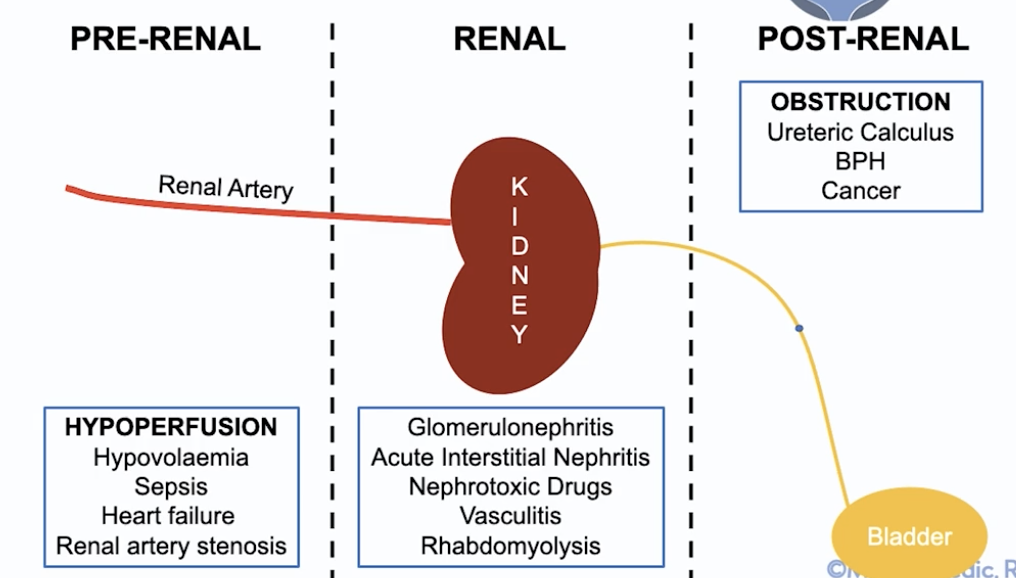
- Pre-renal - HYPOPERFUSION
- Hypovolemia (e.g. dehydration/upper GI bleed -> less circulating volume)
- Sepsis/Anaphylaxis (widespread vasodilation -> reduced perfusion pressure)
- HF (heart pumping less effectively -> less blood reaches kidneys)
- RAS (mechanical obstruction of blood flow to kidneys)
- Renal - KIDNEY-SPECIFIC –> renal referral
- Acute tubular necrosis (following pre-renal AKI, high CK)
- Glomerulus = Glomerulonephritis
- Interstitium = acute interstitial nephritis (low-grade fever, elevated urinary eosinophils, commonly from NSAIDs)
- Blood vessels = vasculitis
- Toxin accumulation = nephrotoxic drugs (ACEi, thiazide diuretic), rhabdomyolysis (myoglobin)
- Post-renal - OBSTRUCTION –> urology referral
- Ureteric calculus
- BPH
- Cancer (prostrate, bladder)
Key things to do:
- Check trend (compared to baseline creatinine)
- Check drug chart (any nephrotoxic?) –> remove/replace
- CANDA: Contrast (keep very hydrated), Aminoglycosides (Gent), NSAIDs, Diuretics, ACEi
- NOTE: DO NOT GIVE Metformin if kidney issue/low GFR - increases risk of lactic acidosis but unlikely to cause AKI
- 3) Check fluids (pre-renal - dehydration) –> give fluids
Ix:
- Bedside - urinalysis (haematuria, inf, BM, PCR)
- Red cell casts - glomerulonephritis
- White cell casts = pyelonephritis
- Bloods - U&E, AI screen (ANCA), CK
- Imaging - renal USS (stones, vascular thrombosis)
Mx:
- Identify & Mx the cause
- Hypovolaemic - IV fluid bolus
- Hypervolaemic - if pul oedema –> loop diuretic (furosemide) + Na restriciton
Heart failure def? Pathophysiology? Categories & Causes? Ix? Mx?
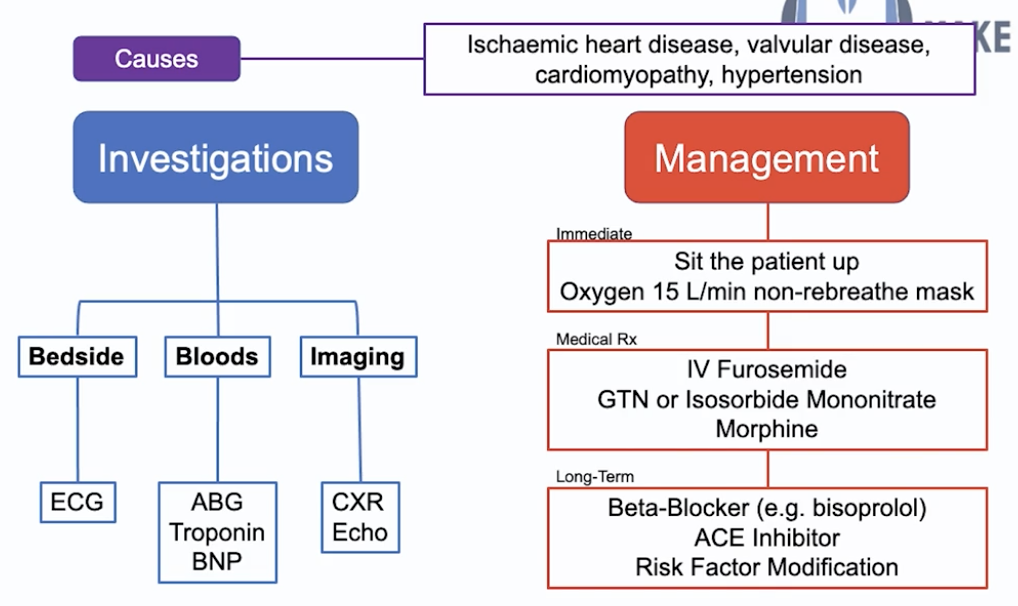
Def: pumping of blood by heart insufficient to meet the demands of the body
Pathophysiology:
- RHF - right side of the heart pumps deoxygenated blood from the body to the lungs to be reperfused - if the RH is not pumping effectively you get the fluid collection in the peripheries = PERIPHERAL OEDEMA
- LHF - left side of the heart pumps oxygenated blood from the lungs to the body - if the LH is not pumping effectively you pooling of blood in the lungs = PULMONARY OEDEMA
- Reduced CO –> shock, tachycardia, AKI
- CO = SV*HR
- Ejection fraction = SV/End-diastolic Volume
Categories:
- HF w/ preserved ejection fraction (left ventricular >50%) = inadequate filling of ventricles during diastole (from ventricular stiffness)
- Causes of ventricular stiffness:
- Volume overload (valve regurg)
- Pressure overload (HTN)
- Decreased distensibility (constrictive pericarditis)
- Causes of ventricular stiffness:
- HF w/ reduced ejection fraction (left ventricular <40%) = inadequate emptying of ventricles during systoles (from outflow obstruction/impaired contractility)
- Causes of outflow obstruction/impaired contractility:
- MI, Cardiomyopathy, Arrythmia
- Causes of outflow obstruction/impaired contractility:
Ix:
- Bedside: ECG - detects if anything precipitating HF (arrhythmia/ischaemic event)
- Bloods: ABG (if resp compromise from pul oedema), troponin (ACS), BNP (HF screening)
- Imaging: CXR (visualise pul oedema = fluffy opacification, cardiomegaly), ECHO (valvular abn/regional wall mov abn)
Mx: MON BA (out of MONA BASH)
- Immediate:
- Sit the patient up (reduce venous return to heart –> less strain)
- O2 15L/min NRM
- Medical:
- IV furosemide (loop diuretic) - remove excess fluid + venous dilation (reduce preload)
- Nitrates (GTN/Isosobide Mononitrate) AND Morphine - reduce preload on the heart
- If no improvement –> furosemide ± CPAP
- Long-term:
- Reduced ejection fraction - prognostic benefit:
- B-blocker (bisoprolol) - reduce strain on heart, do not give acutely if severe HF as will kill them
- ACEi - reduce strain on heart
- After the above if LVEF <35% & Sx –> mineralocorticoid antagonist e.g. spironolactone
- 3rd line - by specialist: Sacubitril/Valsartan (entresto), Ivabradine & CRT
- SGLT2 inhibitors (dapagliflozin)
- RF modification - poor glycaemic control/high cholesterol
- Sx (diuretics)
- Reduced ejection fraction - prognostic benefit:
Types of Non-Invasive Ventilation
CPAP = fixed IPAP and EPAP
- Holds open/splints airways –> for T1RF –> increase O2
BiPAP = IPAP higher than EPAP
- Gradient allows exhalation more easily –> for T2RF –> excrete CO2
- (- If had high CO2 on ABG –> increase IPAP –> more excreted CO2)
IHD - Types? Definition? Dx? Mx?
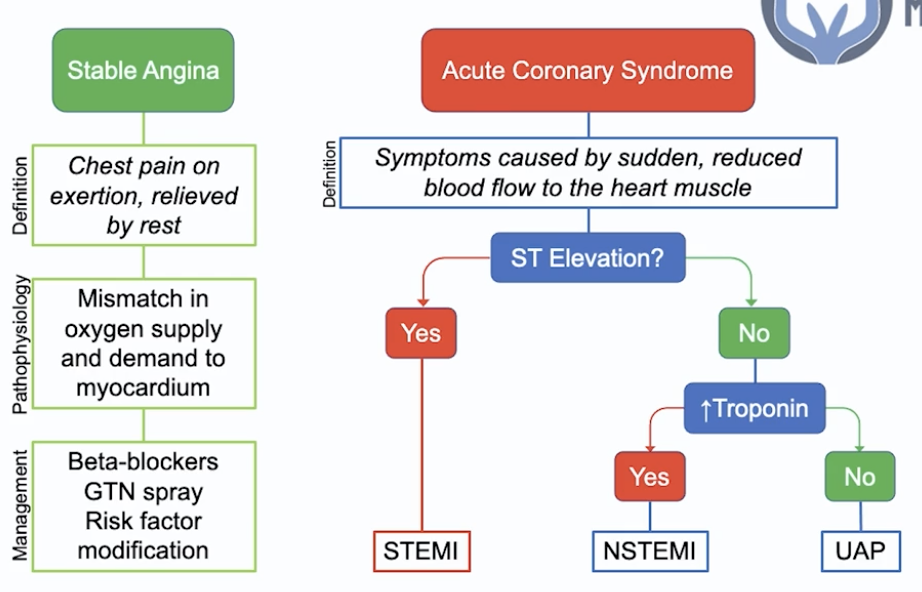
Stable angina - chest pain on exertion relieved by rest
- Path - mismatch in O2 supply and demand to the myocardium
- Ix: CT-angiogram
- Mx:
- B-blockers - reduces HR req for activity –> reduced likelihood of mismatch in O2 supply & demand
- GTN spray - reduce myocardial preload + reduces strain
- RF modification –> reduced risk of progression
Acute coronary syndrome - Sx caused by sudden reduced BF to the myocardium
- Dx:
- ST-elevation = STEMI
- Troponin raised = NSTEMI (+ dynamic T-wave inversion, ST depression)
- Unstable angina pectoris (pain at rest) = ischemia NOT infarct
- Generic ACS Mx - MONA BASH
- ALL immediate:
- 5-10mg Morphine IV + Nitrates (GTN spray)
- Dual antiplatelet therapy (DAPT) - 300mg Aspirin STAT + 300mg Clopidogrel STAT (or 180mg PO Ticagrelor)
- ALL long-term:
- Continue DAPT
- 1 year: 75mg OD Aspirin + 75mg OD Clopidogrel (or 90mg BD Ticagrelor)
- >1yr - 75mg OD Aspirin
- B-blocker (1.25-10mg Bisoprolol OD)
- ACEi (1.25-10mg Ramipril OD)
- Statin (80mg Atorvastatin OD)
- Continue DAPT
- ALL immediate:
- STEMI Mx: establish coronary reperfusion ASAP
- Sx <12hrs: PCI BUT if no PCI within 2hrs Dx –> thrombolysis (e.g. tPA - tissue plasminogen activator)
- Sx >12hrs: invasive coronary angiography ± PCI if needed
- PCI:
- If having PCI give Prasugrel (instead of Clopi/Ticagrelor)
- PCI accessed via radial (or femoral) artery, guidewire passed via X-ray guidance into the affected coronary artery AND IV unfractionated heparin during the procedure –> stent inserted impregnated with an anti-proliferative agent (e.g. Tacrolimus - to prevent adverse tissue reaction) –> takes longer for endothelialization of stent so DAPT needed for 1yr
- If PCI with stents inserted –> DAPT 12 months
- NSTEMI Mx:
- 2.5mg SC Fondaparinux (direct factor 10a inhibitor)
- Risk stratify - GRACE criteria (& others)
- High risk = invasive coronary angiography (within 48-72hrs)
Drugs to avoid in renal failure (eGFR <30)?
Key: NSAIDs, ACEi (& ARBs)
Other:
- Abx: tetracyclines, nitrofurantoin, aminoglycosides
- Allopurinol (accumulates in renal dysfunction)
- Lithium
- Metformin
- IV contrast
Drugs harmful in AKI = CANDA: Contrast (keep very hydrated), Aminoglycosides (Gent), NSAIDs, Diuretics, ACEi
Anaemia Ix? Mx?
Ix: FBC, haematinics, B12/folate, OGD
Blood transfusion threshold: Hb <70 or <80 AND ACS
Other options: Fe infusion, ferrous fumarate
NOTE: anaemia can exacerbate chest pain/ACS
Atrial fibrillation (AF)
- Def? Causes? Ix? Mx?
Def: rapid, chaotic, and ineffective atrial electrical conduction
- ECG def: irregularly irregular narrow complex tachycardia with no p waves
Causes: idiopathic, cardio (IHD, valvular disease, cardiomyopathy), resp (PE, pneumonia), hyperthyroidism, alcohol
Ix: ECG (absence of p-waves, irregularly irreg rhythm)
Mx:
- Haemodynamically unstable (≤90 BP, chest pain, acute HF) –> DC Cardioversion
OR
- Rate control –> B-blocker (bisoprolol) OR rate-limiting CCB (verapamil - asthma)
OR
- Rhythm control - ONLY if clear reversible cause
- Sx onset <48hrs –> DC/chemical cardioversion (amiodarone/flecanide)
- NOTE: IV heparin started prior to cardioversion
- Sx onset >48hrs –> anticoagulate for 3wks –> elective cardioversion (also anticoag for 4wks after)
- Sx onset <48hrs –> DC/chemical cardioversion (amiodarone/flecanide)
AND
- Stroke risk - CHADS-Vasc Vs Orbit/HAS-BLED score –> DOAC (Apixaban)
- If metallic heart valve –> warfarin INR 3-3.5
- Otherwise DOAC
- NOTE: if incidental non-symptomatic AF - normal rate, no other RFs, CHA2DS2-VASc 0 –> anticoagulation not recommended
- CHF, HTN, Age ≥75rs (2), DM, Stroke (2), Vascular disease, Age 65-74, Sex - female
- Score 1 - consider; ≥2 - DOAC/Warfarin needed
- Lifetime risk = annual risk x estimated years of life left (up to 80 yrs e.g. if 60 then x annual risk by 20)
Types of anticoagulant
Heparins
- LMWH (SC) - VTE prophylaxis BUT bad for renal function
- UFH (SC/IV) - GOOD for renal function as a rapid reversal BUT heparin-induced thrombocytopenia (hypercoag state) risk needs APTT ratio monitoring
DOACs - oral + no monitoring BUT bad for renal function e.g. Apixaban (BD), Rivaroxaban (OD)
Vit K antagonist = Warfarin if weight extremes, reduced renal function or AF w/ MS/mechanical heart valve BUT INR monitoring + drug interactions
Alcohol withdrawal management?
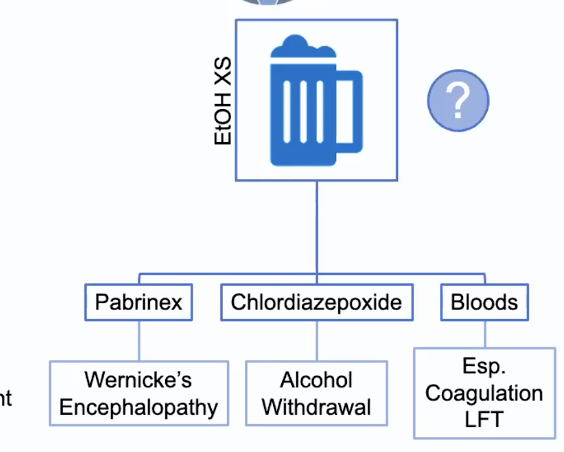
- Chlordiazepoxide (decreasing regimen + PRN) - prevent alcohol withdrawal Sx (anxiety, shakes etc.) + CIWA scoring (dose increased inf CIWA score increases)
- Pabrinex (thiamine, B1) - prevent Wernicke’s encephalopathy (ophthalmoplegia, ataxia, confusion)
- Bloods - coagulation (injury, bleeds), LFTs
What are the markets of liver synthetic dysfunction?
Bilirubin
Albumin - slow to change so gives good idea of chronic disease
Coagulation screen (APTT, PT, INR)
Causes of hepatic decompensation in CLD? Key features of decompensation?
Dx & Mx of decompensated chronic liver disease?
Cause of hepatic decompensation in CLD:
- Hypokalaemia
- Constipation (given lactulose in hospital)
- Alcohol
- GI bleed (lots of protein (Hb) enters the bowel –>liver can’t cope)
- HCC
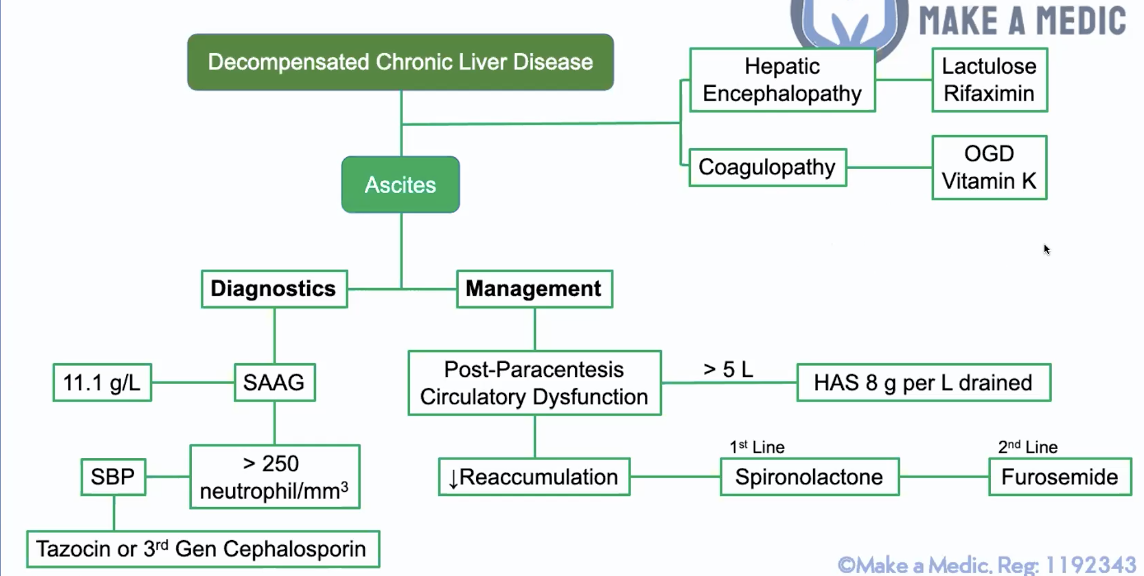
Decompensated CLD –> Ascites, jaundice & encephalopathy
- Severely scarred liver (cirrhosis) in CLD –> back pressure on portal vein –> PORTAL HTN = splenomegaly, ascites, varices - caput medusae, oesophageal & rectal
Ix:
- Serum Ascites Albumin Gradient (SAAG) - serum albumin conc vs ascites conc - 11.1g/L
- <11.1g/L = exudative cause - peritonitis (infection), peritoneal malignancy OR n_ephrotic syndrome_ (pee out albumin so low serum albumin)
- Otherwise = transudative cause - cirrhosis, renal failure, HF
- >250 neutrophils = spontaneous bacterial peritonitis (SBP) –> Tazocin/3rd gen cephalosporin
- If protein conc <15g/L give prophylactic oral ciprofloxacin
Mx:
- Paracentesis (ascitic drain) –> post-paracentesis circulatory dysfunction (drops BP) SO if >5L drained give human albumin solution (HAS) 8g/L drained
- Spironolactone (2nd line - Furosemide) - to prevent fluid accumulation
- (Salt restrict)
- Hepatic encephalopathy (liver not dealing with toxins) - give Lactulose + Rifaximin to prevent
- Coagulopathy - OGD (check for varices) + vit K (needed for clotting)
Chronic liver disease
- Functions of liver? Outcome of failure?
- Causes? Presentation? Ix?
- Important complication?
- Scoring?
Functions of the liver –> failure:
- Albumin (plasma oncotic pressure) –> oedema
- Bilirubin metabolism –> jaundice
- Clotting factors –> coagulopathy
- Detoxification –> encephalopathy
Causes:
- Common - alcoholic liver disease, viral hepatitis, NASH (non-alcoholic steatohepatitis)
- Less common - AI hepatitis, PSC/PBC, HF, alpha1-antitrypsin def, haemochromatosis, Wilson’s disease
Presentation:
- Spider naevi (≥5, SVC distribution, flush inside to out), palmar erythema, gynecomastia, Dupuytren’s contracture (alcoholic liver disease), clubbing
- Specific signs:
- Needle marks/tattoos - hep C
- Parotid swelling - alcohol-related liver disease
- Bronzed complexion/insulin injection signs - haemochromatosis
- Obesity/DM - non-alcoholic fatty liver disease
- Xanthelasma - cholestatic disorder
Ix:
- Alcohol history
- Hep B/C serology
- Ferritin, transferrin, A1AT, ceruloplasmin (Wilson’s)
- Ig, auto-abs (ANA in AI hep, AMA in PBC)
Important complication = VARICES
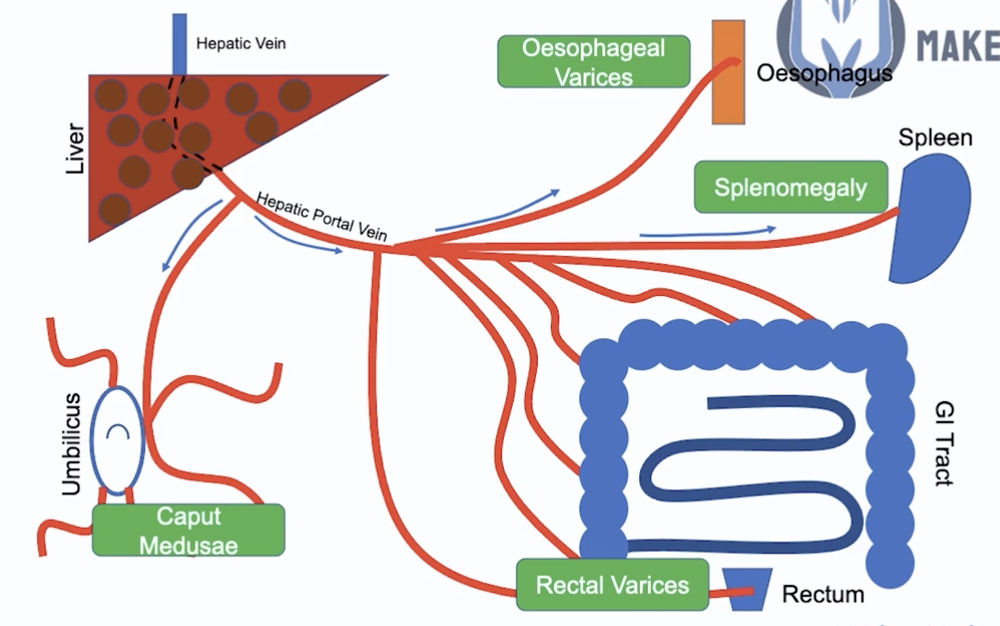
- Normal venous return: GI tract –hepatic portal vein –> liver –> hepatic vein –> systemic circulation
- Physiological hepatosystemic anastomoses (connection of portal vein to systemic circulation) sites - oesophagus, spleen, umbilicus, rectum
- MEMORY AID: BUTT, GUT, CAPUT
- Pathological process:
- In the case of cirrhosis - nodules impede flow of blood through the liver to the hepatic vein –> reducing blood flow to the systemic circulation
- Backflow of blood to the hepatic portal vein = increased –> backflow to hepatosystemic anastomoses:
- Oesophagus –> Oesophageal varices
- Spleen –> Splenomegaly
- Umbilicus –> Caput Medusae
- Only from portal HTN if running from below umbilicus up
- Rectum –> Rectal varices
Score for prognosis & need for liver transplant = Child-pugh score (A = 5-6; B = 7-9; C = 10-15 –> C is most severe)
Upper GI bleed - scoring for need for intervention? Mx?
Blatchford score
Variceal bleed
- Massive haemorrhage –> balloon tamponade
- A-E assessment –> IV fluids, blood transfusion
- F1 Essentials:
- 2x large bore cannula
- VBG
- G&S/X-match
- Bleep the bleed reg
- F1 Essentials:
- Drugs with prognostic benefit:
- IV Terlipressin (ADH analogue –> vasoconstriction)/Somatostatin (used for same reason)
- Prophylactic abx - Ceftriaxone/Norfloxacin (abx)
- Intervention (discuss with on-call bleed registrar) –> endoscopic band ligation
How does lactic acidosis appear on VBG? Lactate physiology/pathology?
Acute metabolic acidosis - low pH, low cHCO3/low BE, high lactate
Physiology:
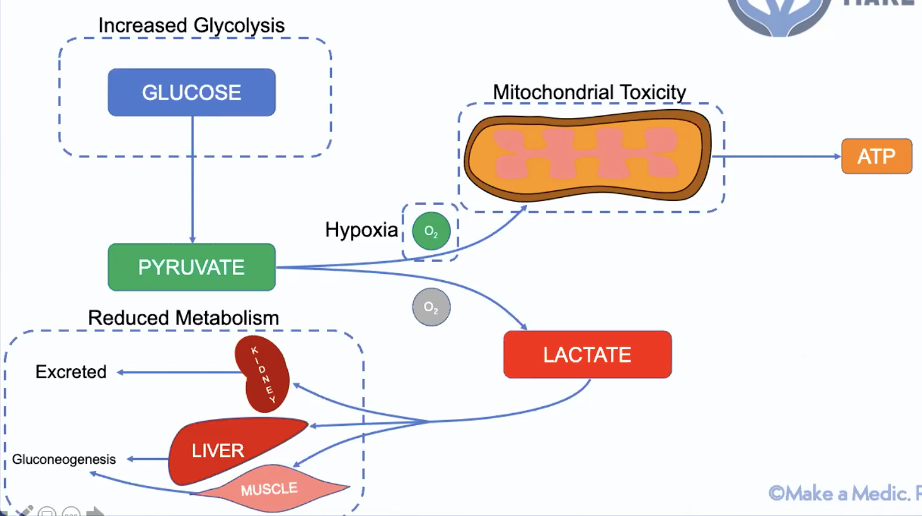
- Glucose –> Pyruvate –O2–> mitochondria –> ATP
- Glucose –> Pyruvate –NO O2–> Lactate (+ small ATP) –> excreted by kidney or liver/muscle –gluconeogenesis –> glucose
Pathology:
- Hypoxia
- Reduced oxygen delivery - from reduced circulating volume (bleed), vascular compromise (clot)
- Reduced oxygen carriage - reduced gas exchange, anemia
- Mitochondrial toxicity - mitochondria can’t aerobically produce ATP
- Drugs - metformin, propofol, cyanide
- Inherited - MELAS
- Reduced metabolism (of lactate) - liver/renal impairment, muscle compromise
- Increased glycolysis (more pyruvate) - both paths increase
- Increased glucose uptake from adrenergic stimulation e.g. salbutamol use
- Increased energy demand of cells - exercise
Delirium definition? Common causes?
Delirium screen breakdown? Mx?
Def: Acute confusional state caused by a physical condition
Causes: U PINCHES ME
- Urinary retention
- Pain
- Infections
- Nutrition
- Constipation –> stool chart + PR exam
- Hydration
- Endo & electrolytes
- Stroke
- Medications & alcohol
- Environmental
Delirium screen:
- FBC, U&E, LFT, glucose, BC, Ca, TFTs, B12/folate
- Urine dip + MC&S
- CXR, possibly CT-head
Management: Tx cause
- Conservative: lighting, clocks, 1:1 nursing, adequate hydration, laxatives, involve family/carers
- SOS (risk to themselves/others):
- Lorazepam (PO/IM/IV)
- Haloperidol (PO/IM) - be careful if Parkinson’s –> worsens Sx
How to think about inf for abx? What are the best broad-spectrum abx? Abx for pseudomonas cover?
- where is the infection? e.g. resp, skin, cardio etc.
- what are the common organisms that cause these infections? mainly G+ve or -ve?
G+ve: staph, strep, C. diff –> pneumonia, skin inf, colitis, sepsis
- B-lactams:
- Penicillins (peptidoglycan cell wall) - amox, co-amox, fluclox, tazocin
- Cephalosporins (cover -ve’s as well) - ceftriaxone, cefuroxime, cefalexin
- Carbapenems (holy grail) - meropenem
- NOTE: ESBL (extended spectrum b-lactamase) - bacteria that are not sensitive to Pen + Cephalosporins
- NOTE: Carbapenemase - resistant to carbapenems as well
- Macrolides - for pen allergic = Clari, erythromycin
- Glycopeptides - vancomycin, teicoplanin (good if pen allergic)
- Oxazolidinones - linezolid (rarely used)
G-ve: E.coli, P. aeruginosa, K. pneumo, salmonella –> UTI, pneumonia, GI inf
- Aminoglycosides (nephrotoxic –> monitoring) - gent, amikacin
- Fluoroquinolones - cipro/levo/moxifloxacin
- NOTE: broad spectrum so some +ve cover
Other antibiotic types:
- Tetracyclines - doxy
- Broad-spectrum intracellular pathogens (chlamydia, mycoplasma) –> STIs, pneumonia
- Nitroimidazoles - metro
- Anaerobes (c. diff, bacterial vaginosis) –> aspiration pneumo, abscesses
- NOTE: nitrofurantoin (related compound) - concentrates in bladder –> UTI
Best broad-spectrum abx:
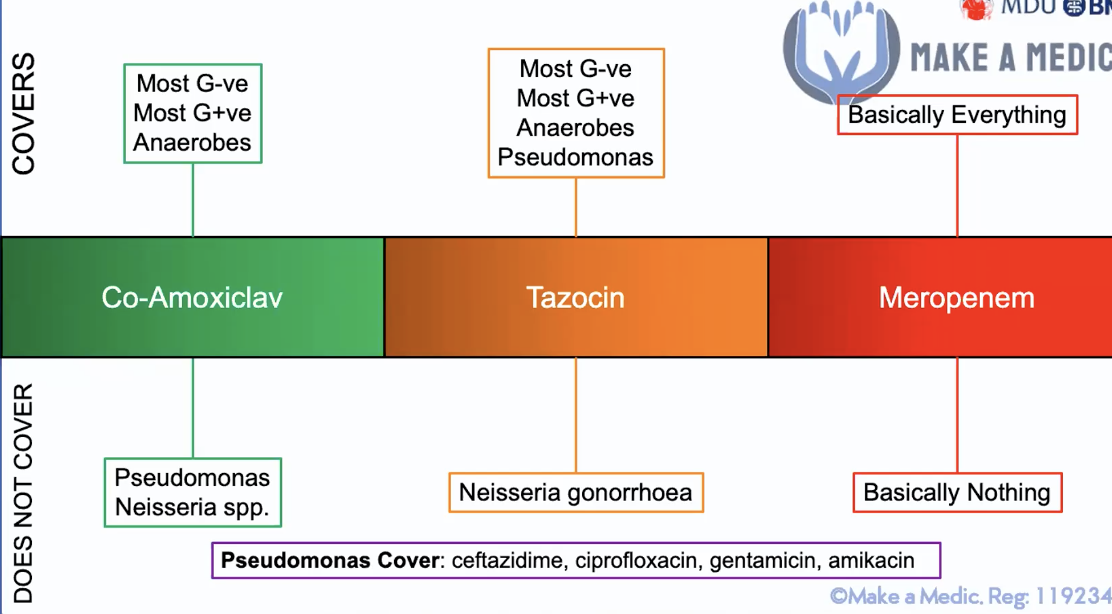
- Co-amox: most G-ve AND +ve AND anaerobes
- Does not cover pseudomonas + Neisseria spp.
- Tazocin: as above AND pseudomonas
- Does not cover Neisseria gonorrhoea
- Meropenem: EVERYTHING (bar carbapenemase bacteria)
Abx for pseudomonas cover: gentamicin, amikacin, ciprofloxacin, ceftazidime
Opioids:
- Strength of different opioids
- Forms of oral morphine
- Guide to giving morphine
- When to give oxycodone
- Breakthrough analgesia
- Conversion between opioid doses
Strength:
- Weak - codeine, dihydrocodeine
- Moderate - tramadol (surgeons love)
- Strong - morphine, oxycodone, buprenorphine, fentanyl
Oral morphine has 2 forms:
- Oral morphine has 2 forms:
- Immediate-release (e.g. oromorph) - max 4-hourly
- Modified-release (e.g. MST Continus/Zomorph/Morphgesic SR) - 12-hourly (BD) OR 24-hourly (OD)
Guide to morphine:
- If can’t tolerate oral e.g. vomiting alot –> oral dose/2 = IV dose
- Immediate-release PRN (max 4-hourly) –> see how much using
- If using a huge amount –> convert to modified-release (12/24-hourly):
- Add up total daily PRN dose = X
- 24-hourly = X (OD); 12-hourly = X/2 (BD)
When to give oxycodone: partial renal impairment (eGFR <30mL/min)
- Immediate-release: oxycodone oral solution, oxynorm
- Modified-release: oxycontin
- NOTE: same logic as above
- NOTE: fentanyl if very low eGFR
Breakthrough analgesia:
- Oral morphine/oxycodone
- 1/10-1/6 of total daily dose of modified-release morphine
Example: 60mg Oromorph –> 30mg MST BD + 6-10mg breakthrough dose
Conversion - 10mg oral morphine:
- Oxycodone - 5mg oral (x/2), 2.5mg IV (x/4)
- Tramadol/Codeine - 100mg oral/IV (x*10) - NOTE: codeine has no IV option
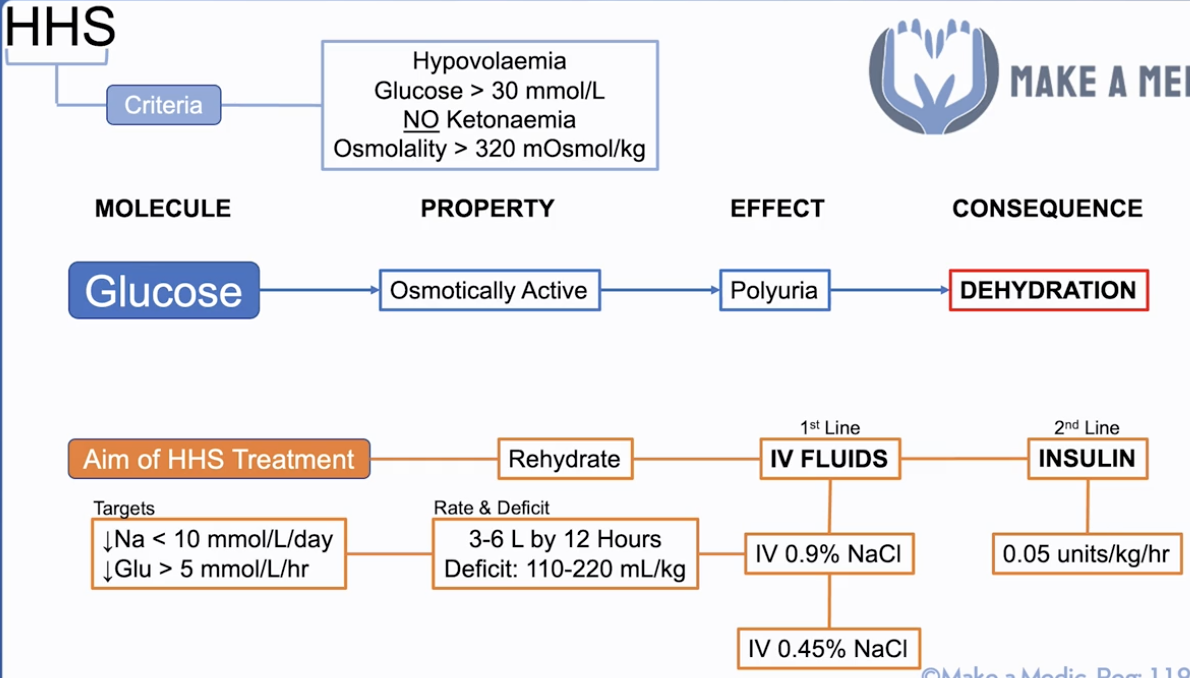
Hyperosmolar Hyperglycaemic State
- What does insulin do? Pathophysiology of HHS?
- HHS criteria? HHS Mx? HHS Mx Targets?
Insulin:
- High level of insulin –> reduces serum BM (pushes into surrounding tissues & hepatic glucose store)
- Low level of insulin –> switches off ketone production
Pathophysiology:
- HHS = complication of T2DM
- In HHS have enough insulin to switch of ketone production but not enough to reduce BM lvls
- High glucose - osmotically active –> polyuria –> dehydration
HHS criteria:
- Hypovolaemia
- Glucose >30mmol/L
- NO sign. ketonaemia (<3mmol/L)
- Serum osmolality >320mOsmol/kg
Mx: REHYDRATE = IV 0.9% NaCl (3-6L by 12hrs, deficit 110-220mL/kg)
- Targets:
- Reduce Na by less than 10mmol/L/day (otherwise risk osmotic demyelination syndrome)
- Reduce BM by over 5mmol/L/hr
- NOTE: if targets not met by 0.9% saline –> 0.45% instead
- If fluid alone are not enough –> 0.05 units/kg/hr fixed-rate insulin infusion
Diabetic Ketoacidosis (DKA)
- Normal glucose transport & during starvation?
- The problem in insulin deficiency (diabetes)? How does this relate to Sx of DKA?
- Ix? Dx criteria? Mx? Monitoring Tx & hourly targets?
Normal glucose transport: diet –> blood –insulin–> hepatic glucose store –GH, Cortisol, Adrenaline, Glucagon–> blood
- During starvating - GH, Cortisol, Adrenaline, Glucagon make sure there is enough glucose in the blood BUT liver also produces ketones
- Ketones can cross BBB providing an alternative source of fuel for the brain when low glucose
- Pancreatic beta cells –> insulin prod –> reduces glucose (high glucose has–> feedback on pancreatic beta cells –> produce more insulin)
- High insulin (associated with high glucose) –> -ve feedback on ketone prod
In insulin deficiency - high glucose but unable to produce insulin + no -ve feedback on ketone prod –> high glucose, high ketones
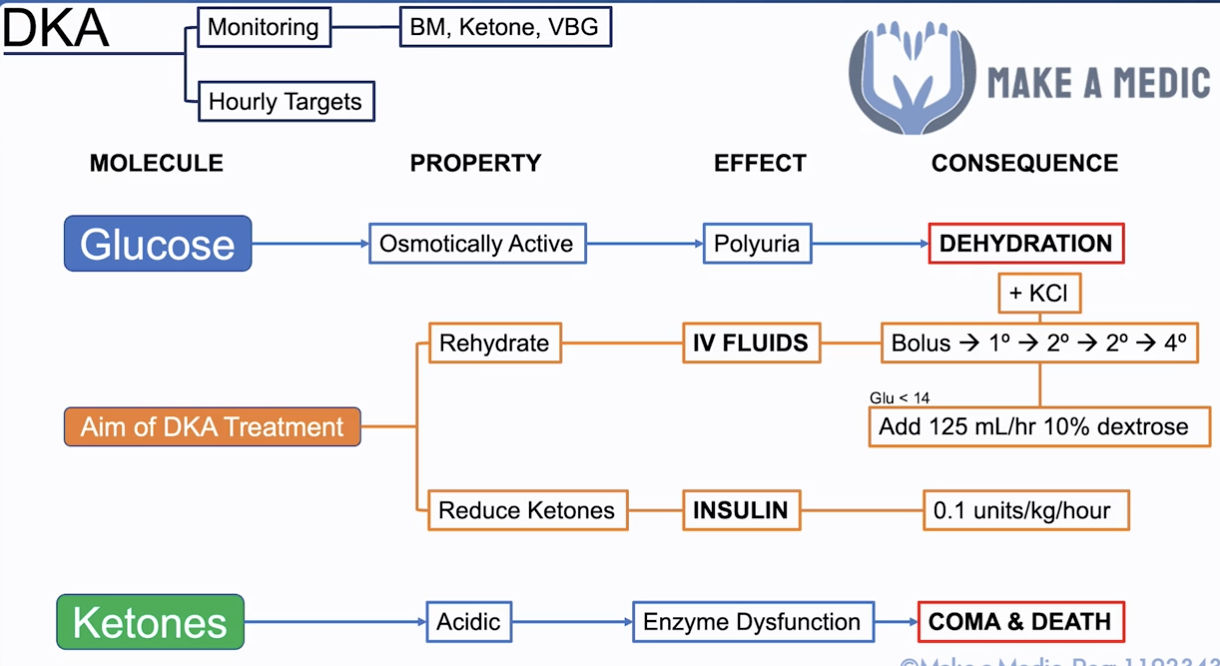
- High glucose - osmotically active (moves along concentration gradient into urine –> pulling more water with it) –> POLYURIA –> DEHYDRATION
- High ketones - acidic (metabolic acidosis) –> enzyme dysfunction –> COMA & DEATH
DKA Ix:
- Bedside - urine dip, ECG, continuous cardiac monitoring
- Bloods - VBG, FBC, U&E, BC, BM
- Imaging - possibly CXR
DKA Dx:
- BM: ≥11mmol/L
- Ketones: ≥3mmol/L (serum) OR ≥2+ (urine)
- Acidaemia: pH <7.3 OR Bicarb <15mmol (ketoacidosis)
DKA Mx: A-E assessment
- IV FLUIDS (rehydrate)
- Bolus –> 1L over 1hr –> 2hr –> 3hr –> 4hr
- Add 40mmol KCL to fluids after bolus
- 0.1 U/kg/hr fixed-rate INSULIN infusion (reduce ketones)
- If BM <14 –> start 125ml/hr 10% dextrose
- Insulin infusion continues until ketones normalise (not BM)
- NOTE: follow local trust guidelines for DKA Tx as varies slightly between trusts
Monitor - BM, ketones, VBG (K conc)
- Hourly targets:
- Fall in BM ≥3
- Fall in ketones ≥0.5
- Rise in HCO3 ≥3
- Continue until: blood ketones <0.6, pH >7.3, HCO3 >18
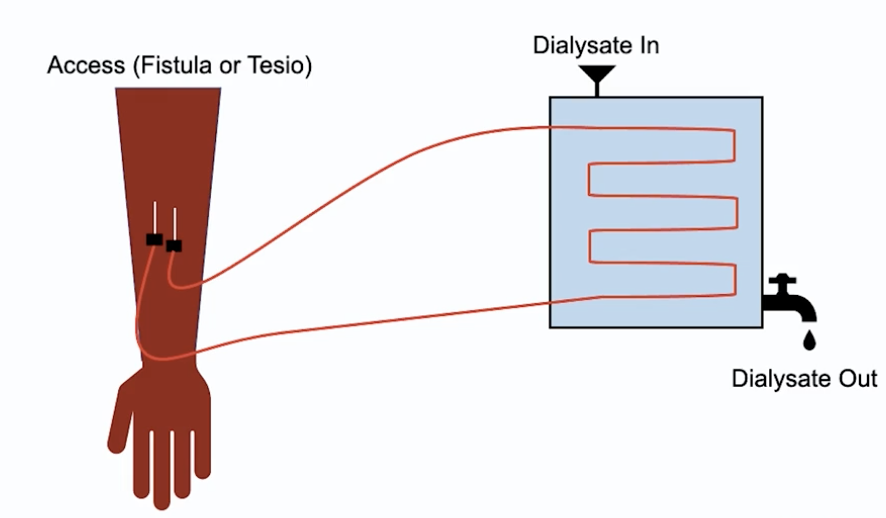
Haemodialysis - access? How does it work? How often? Indications? Complications?
Access - 2 points (one for blood to come out of and one to go back into):
- AV fistula (surgical anastomoses between artery & vein) OR Tesio (tunnelled central line)
How does dialysis machine work:
- Box with dialysate fluid in it
- Blood in separate tube going through box
- Semi-permeable membrane between dialysis fluid & blood - diffusion between the two - K+, Na+, Ca2+, Mg2+, Cl-, Glucose, Bicarbonate
- End-stage renal failure will not be able to excrete potassium –> hyperkalemia - blood high in K+, dialysate low in K+ –> diffusion across concentration gradient
- End-stage renal failure will not be able to retain bicarbonate in kidneys = at risk of metabolic acidosis - blood low in bicarbonate, dialysate high in bicarbonate –> diffusion across concentration gradient
- End-stage renal failure = low UO –> fluid retention –> -ve pressure created in dialysate compartment –> H2O drawn into dialysate from blood = ULTRAFILTRATION
How often - 4 times per week
Dialysis indications: HUMP
- Hyperkalaemia (refractory)
- Uraemic complications
- Metabolic acidosis (context of poor renal funct)
- Pul oedema (refractory & hypoxic)
Complications: infection, CVD, fluid balance irregularities