Describe the AOA of compressor blades
AOA is the angle between rotor blades chordline and the relative wind of the compressor
*relative wind is formed within the compressor by combining the inlet airflow with the compressor RPM. Increasing the compressor RPM increases the rw, which increases the AOA
*AOA can also be increased by decreasing the inlet airflow while the compressor RPM remains constant
Describe a compressor stall
A stall occurs when airflow over an airfoil breaks away causing the airfoil to lose lift due to excessive angle of attack.
It happens when anything increases the RPM or decreases the inlet airflow
Describe four mechanical malfunctions that can lead to a compressor stall
- Variable inlet gide vanes failure
- insufficient airflow at lower engine RPMs
- fuel control unit failure
- too much fuel leads to excessive back pressure
- Foreign Object Damage (FOD)
- can damage compressor blades
- Variable Exhaust Nozzle Failure
- excessive back pressure
Describe appropriate actions a pilot can take to avoid compressor stalls in the first place
- avoid erratic or abrupt power control lever (PCL) movement
- Maintain prescribed minimums
- avoid abrupt changes in aircraft attitude
- avoid flight through severe weather or air turbulence
Describe four engine design features that can be incorporated into a gas turbine engine design to minimize the potential for a compressor stall
Engine design features:
- variable inlet guide vanes
- dual/twin/split-spool Axial Flow Compressor
- Bleed Valves
- Variable exhaust nozzle
What are the two ways to increase the AOA of compressor blades?
increase the compressor blade AOA by
decreasing inlet airflow
increasing the compressor RPM
*an increased AOA increases the posibility of a compressor stall
What causes a compressor to stall?
(2 general ways that the AOA can be increased)
- Airflow distortions- most common cause
- abrupt change in attitude
- air turbulence
- atmospheric conditions
- rapid throttle movement
- Mechanical malfunctions- there is a whole flash card on this topic, do don’t worry about it just yet.
what actions should a pilot take if a compressor stall occurs
if a compressor stall occurs
reduce aircraft attitude (reduce inlet air AOA)
slowly retard to power control lever to adjust below stall threshold- this allows the engine to catch up with the inlet airflow and “clear” the stall
bleed valves to increase airflow
once normal you can advance the PCL slowly
Define thrust specific fuel consumption (TSFC)
the amount of fuel required to produce one pound of thrust
Describe a turbojet engine
How is thrust produced?
- gas generator with the addition of
- inlet section
- exhaust section
thrust is derived exclusively from the expanding gasses leaving the exhaust section. it is dependent on amount of fuel mixed with airflow
the propulsive efficiency of turbojets exhaust is not as efficient as work using a turbine (mechanical work)
high TSFC
Describe a turbofan engine
- gas generator +
- duct-enclosed fan driven by the turbine section connected to the front of the compressor of gg
A turbofan provides the propulsive thrust of the exhaust from the gg with additional thrust provided by the duct-enclosed fan
total thrust:
gg: 40%- 70%
ducted fan: 30%- 60%
*Turbofan as a lower TSFC than a turbojet
Describe a turboprop engine
What are the basic componants of the turboprop engine?
gas generator + a propeller which is driven by the turbine section
- Parts:
- Reduction gear assembly: converts high RPM and low torque of turbine into low RPM with high torque for propeller
- Torquemeter Assembly- connects the RGB to the gas generator. Measures and transmits the power output from the gg to the RGB
- Gas generator
* high thrust at low speed, good for lifting heavy loads on short runways.
Turboprop have the lowest TSFC of any gas turbine engine
What are the two ways that the propeller can be connected to the generator?
The propeller is attached to the gg in one of two ways.
1) attached to the front of the compressor or
2) attached to a free turbine/power turbine
90% of thrust is produced from the propeller
Describe the major components of the torquemeter assembly
The major components of the torquemeter assembly
- torque shaft (inner shaft)
- carries load from propeller and produces the measured twist
- reference shaft (outer shaft)
- proveides referene to the torque shaft. Does not move
Describe a turboshaft engine
similar to the turboprop: uses free turbine to drive the rotor
- 2 basic sections
- gas Generator
- Free/Power Turbine (PT)
Exhaust gases that come from the gas generator turbine drive the PT
propulsive energy from the exhaust gases is negligible. Virtually all of the pressure energy is converted to SHAFT HORSEPOWER
Describe the operation of the free/power turbine section
This is a turbine that is not mechanically connected to the compressor.
It is driven by the exhaust gasses from the gas generator
*in a turboshaft engine, all pressure energy is converted into shaft horsepower
Compare the thrust specific fuel consumption of turbojet, turbofan, and turboprop engine
Turbojet > Turbofan > Turboprop
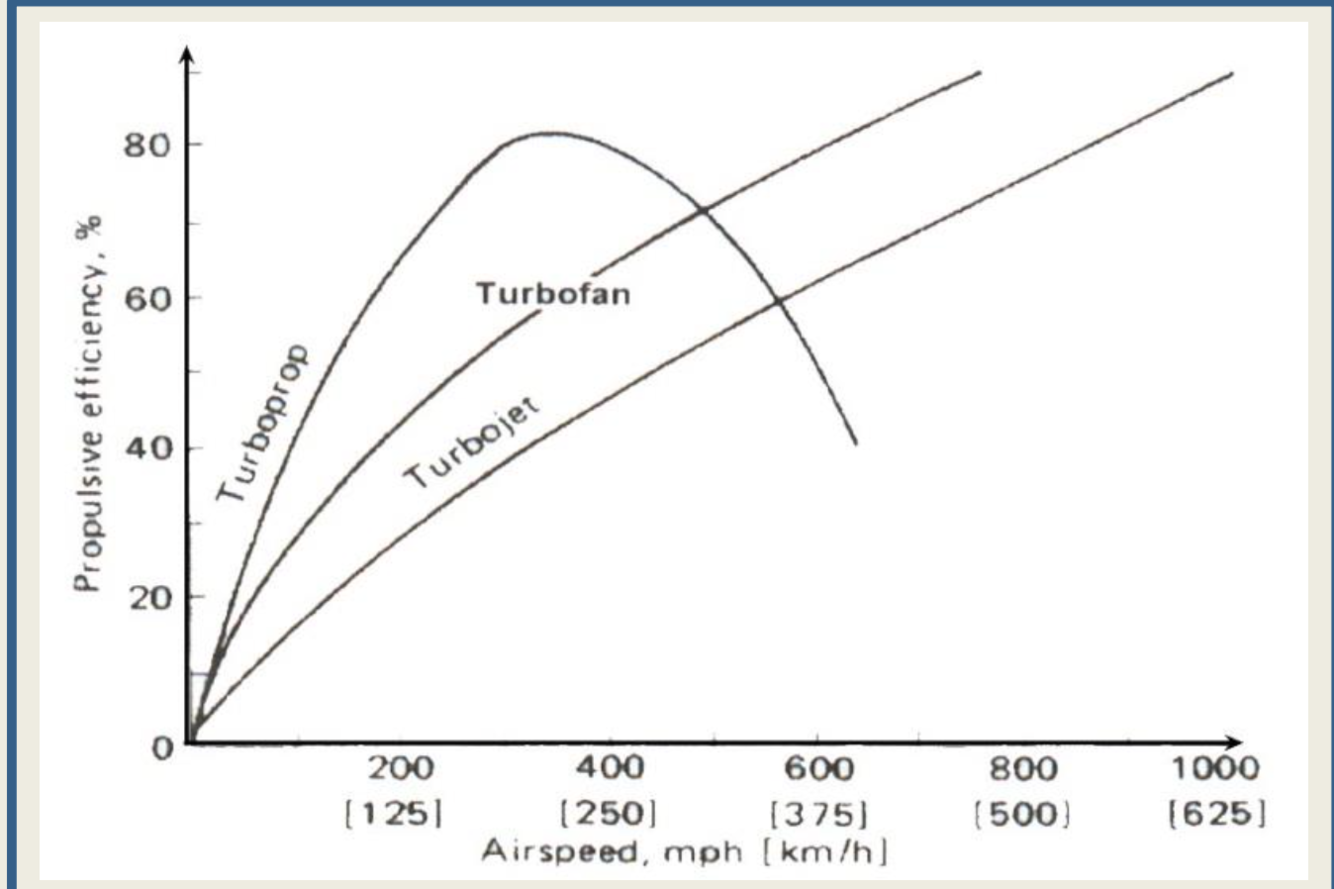
compare the propulsive efficiencies of turbojet, turbofan, turboprop, and turboshaft engines
Propulsive efficiency of an engine is determined by the efficient conversion of kinetic energy to propulsive force by its propelling mechanism
Turboprop: most efficient at lower air speeds. Efficiency decreases at higher airspeeds (> ~300 mph)
Turbofan: generally more efficient at any speed than the turbo jet
What is the difference between High Bypass Engines and Low Bypass Engines?
Bypass air: the air that bypasses the gas generator
Bypass ratio: the amount of bypas air in comparison with the amount of air that passes through the gas generator
High Bypass engines are more fuel efficient. Can take off with heavy loads and travel a very long ways without need to refuel
Low bypass ratio: design that resembles a turbojet but is more efficient. preferable for fighter aircraft
What are the components of the propeller
The main components of the propeller are:
- Pitch Change/dome assembly
- blade assembly
- hub assembly
What are the two ranges of propeller operation in a turboprop engine?
The propellers have 2 ranges of operation:
- alpha: PCL is positioned from flight idle to full power
- PCL sends fuel flow signals to FCU
- FCU controls the fuel flow
- blad angle is controlled by the propeller governor
- beta (groud range): PCL is flight idle to Max Reverse
- PCL is mechanically connected to FCU and pitch change assembly
what is pascal’s law?
how does it govern the forces and pressures associated with a confined liquid?
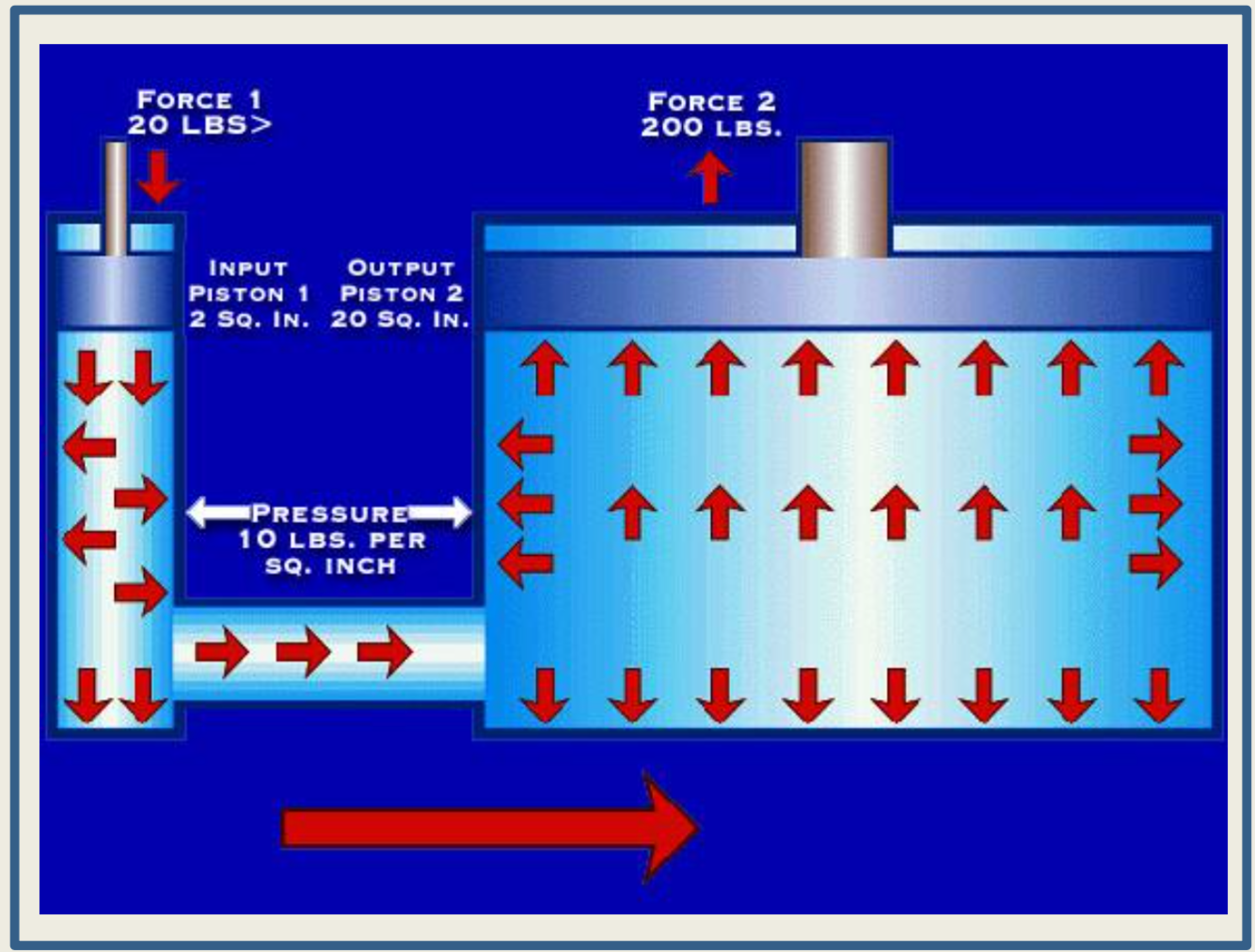
Pascal’s Law states: pressure applied to a confined liquid is transmitted equally in all directions without loss of pressure and acts with equal force on equal surfaces
F = P x A
What is the relationship between linear displacement and the change in foce between the input and output pistons of a closed hydraulic system?
if the pressure remains constant and the input piston is smaller than the output piston, the original force will be multiplied by the factor of the increase in surface area
P = F/A
However, linear displacement is inversely proportional to the multiplied force
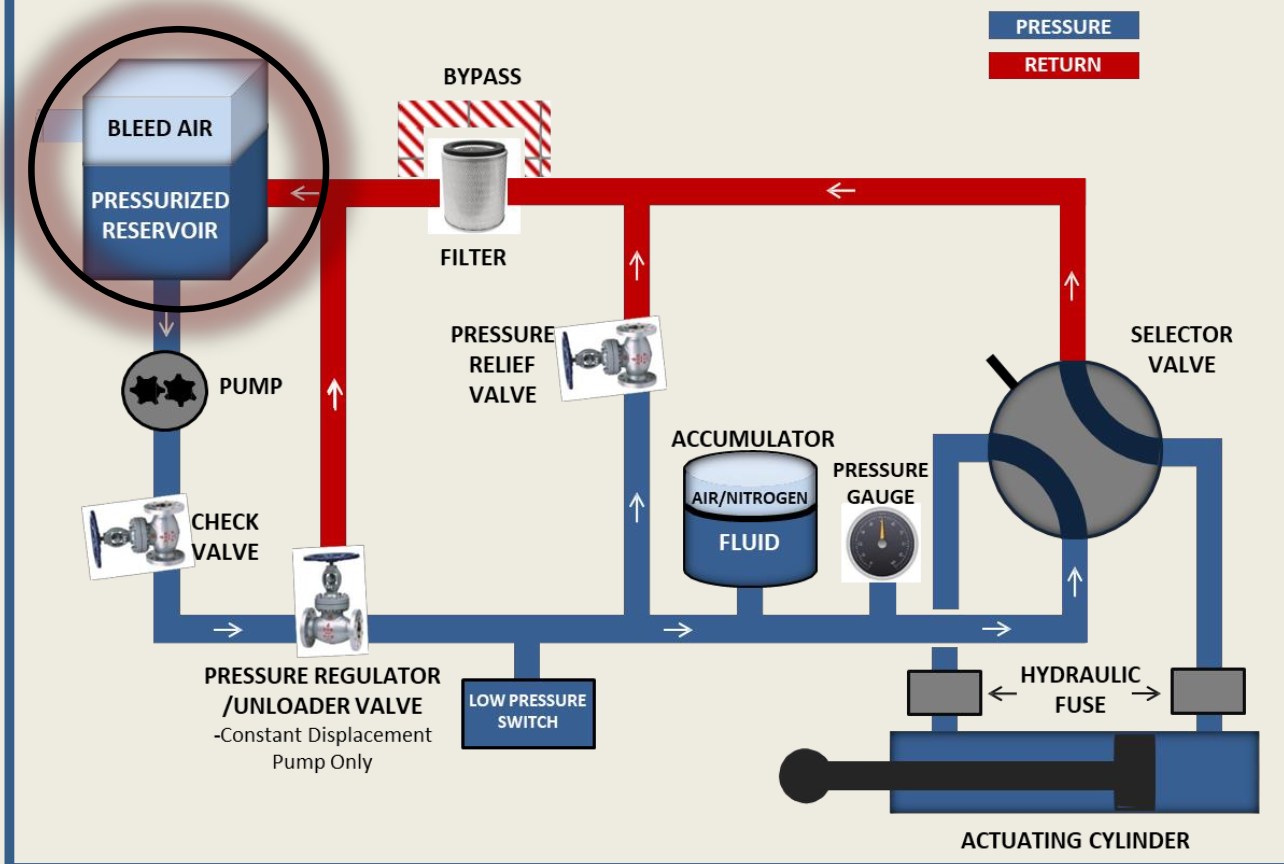
What 2 types of hydraulic power systems are on an aircraft?
2 hydraulic power systems:
- Power Control System
- suppplies fluid pressure to flight controls only
- Utility Control System
- supplies fluid pressure to the utility systems and acts as a backup for the flight controls


-
Aerodynamics59
-
Engines42
-
Engines 233
-
Engines- Electrical Systems47
-
Engines- Study Questions37
-
Flight Rules and Regulations Chapter 124
-
Flight Rules and Regulations- Chapter 229
-
Flight Rules and Regulations- Chapter 337
-
Whether the Weather- chapter 124
-
Weather- Chapter 2-354
-
Weather Chapter 422



