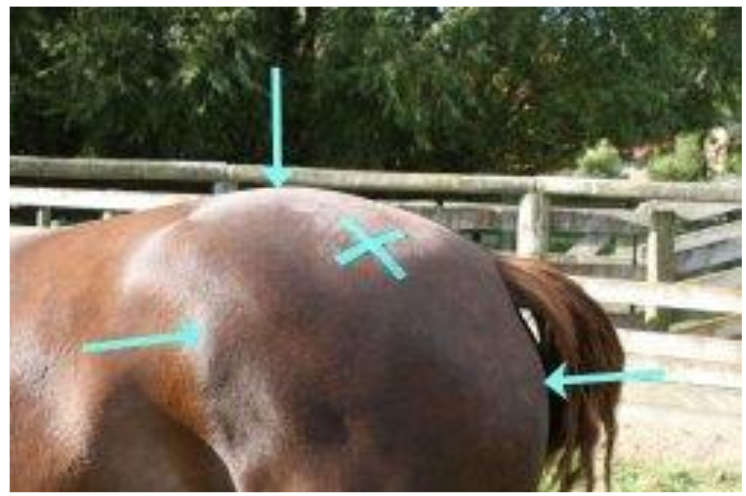
What needle gauge for IM injection of a horse?
Describe how to give intramuscular injections correctly (appropriate sites and needle gauges).
18 gauge
* Knock on the site with the back of your hand whilst holding the needle between your thumb and first finger, then push the needle boldly through the skin perpendicular
* Check that no blood comes through the needle, if so, redirect
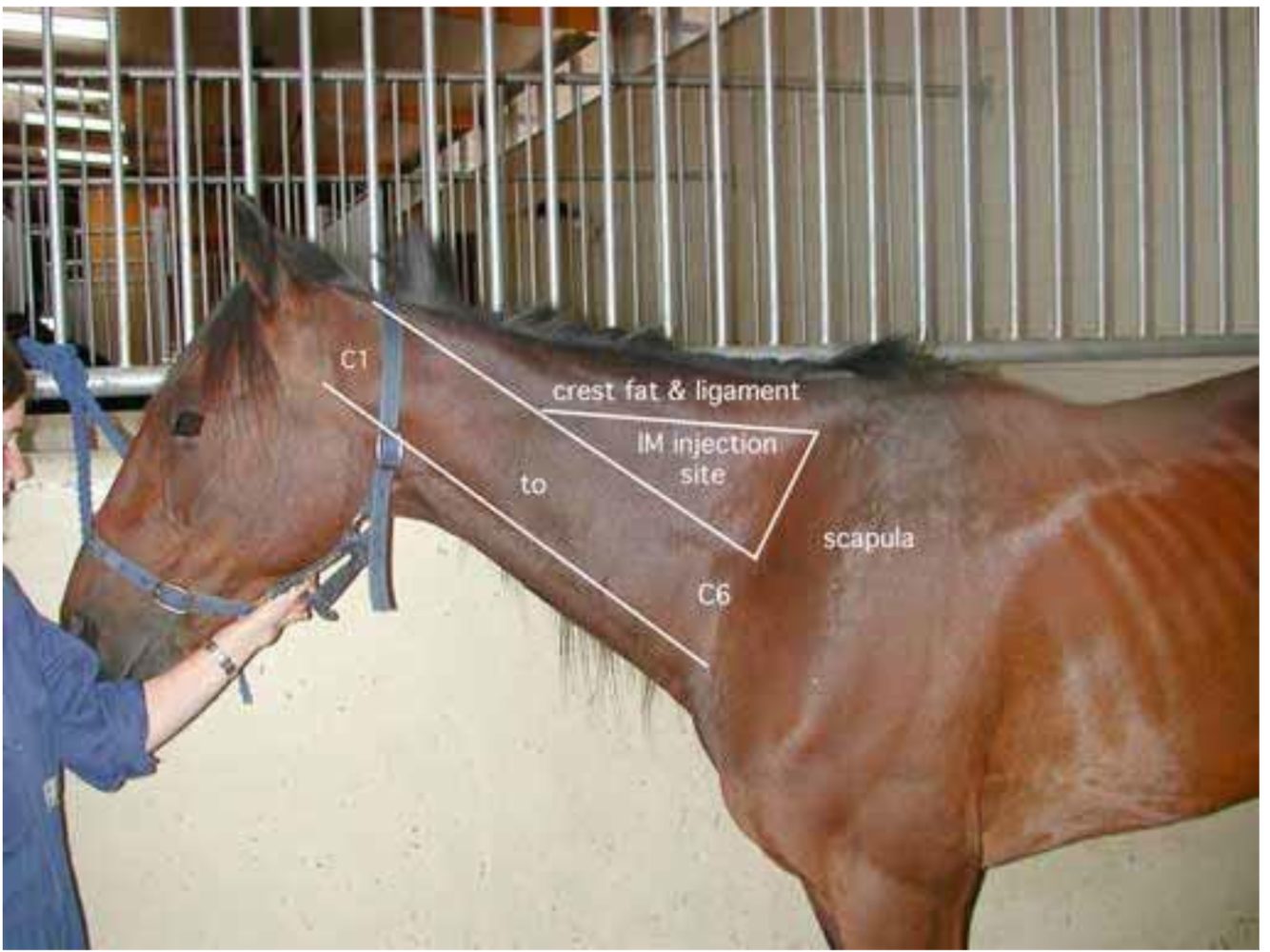
* Neck is preferred site if abscesses occur, easier to drain and neck muscles not primarily involved with propulsion
* avoid the scapula, cervical vertebrae, nuchal ligament and crest fat. Drugs are not absorbed adequately when injected into fat or ligament
* Triangle:
in front of the scapula
below the nuchal ligament and crest fat
above the cervical vertebrae
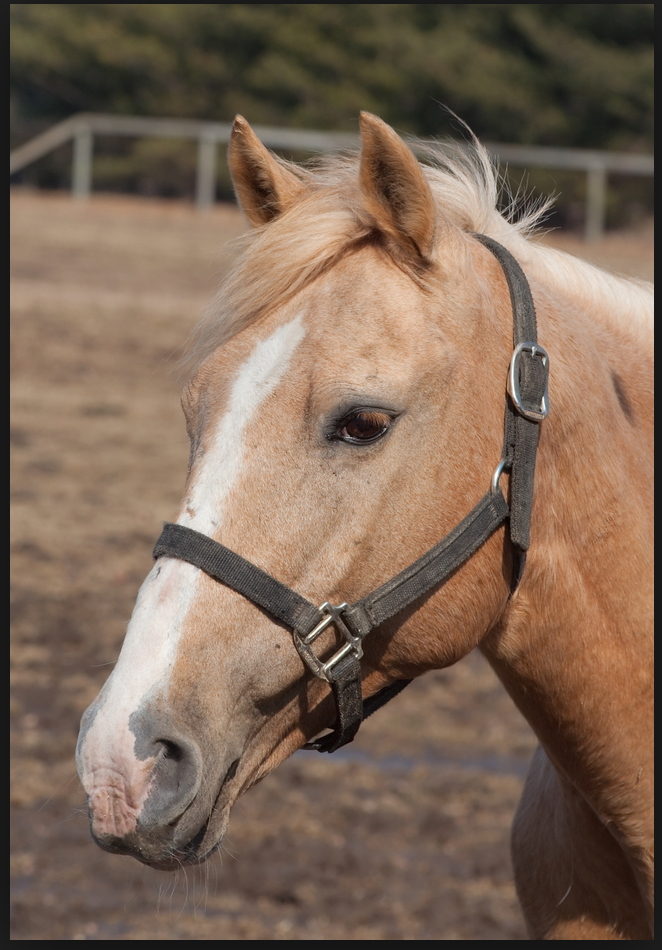
Safely approach and catch a horse and put on a head collar
Approach from the left side “near side”– near the shoulder slightly off to the side
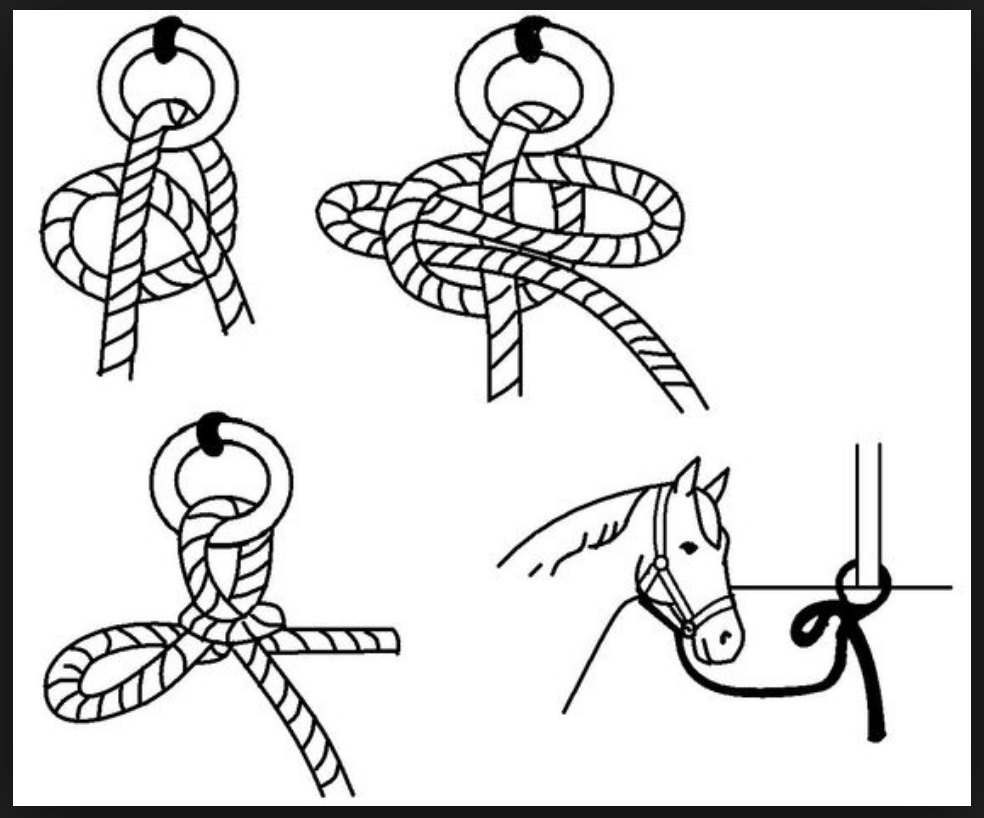
Tie a horse up with a quick release knot.
https://www.youtube.com/watch?v=rdgSDdwhKAI
Put on a horse rug correctly
https://www.youtube.com/watch?v=DvewE7zYFgs
Pick up front and hind limbs safely and hold on to a front and hind hoof leaving both hands free for examination.
https://www.youtube.com/watch?v=vW1PvMRo2PU
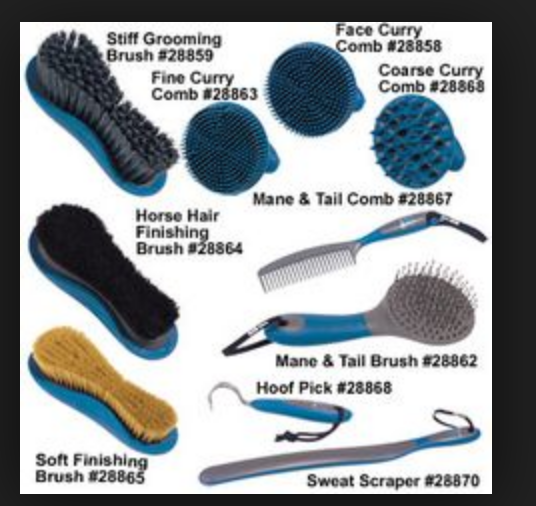
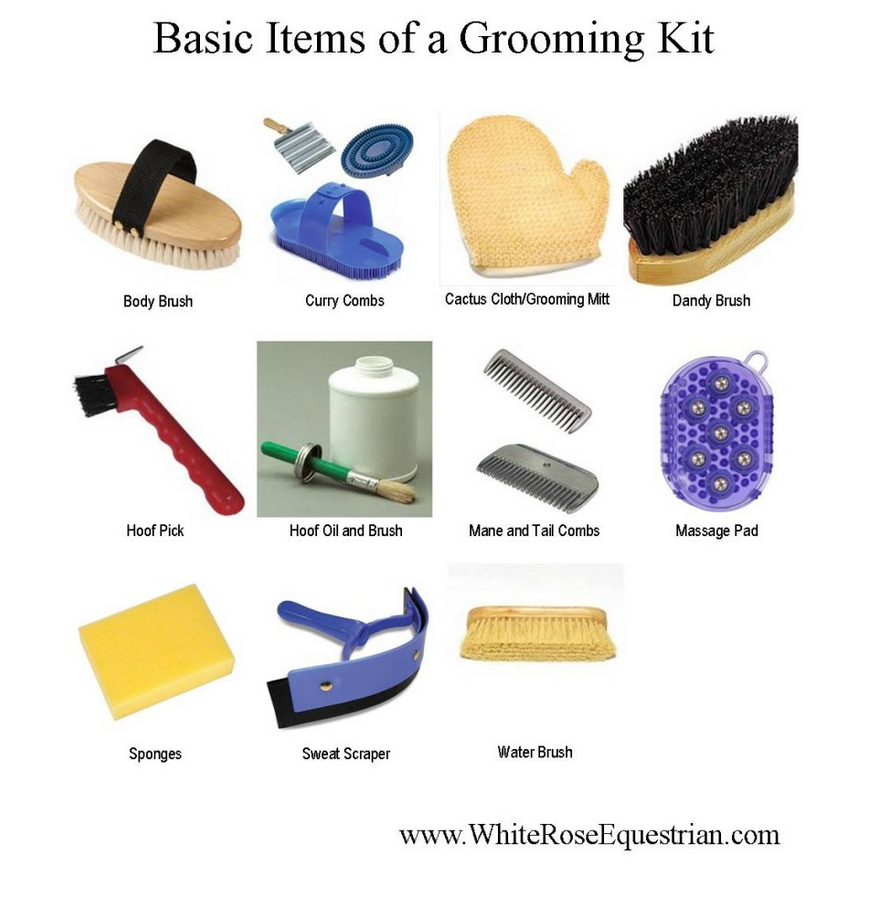
Identify all grooming gear
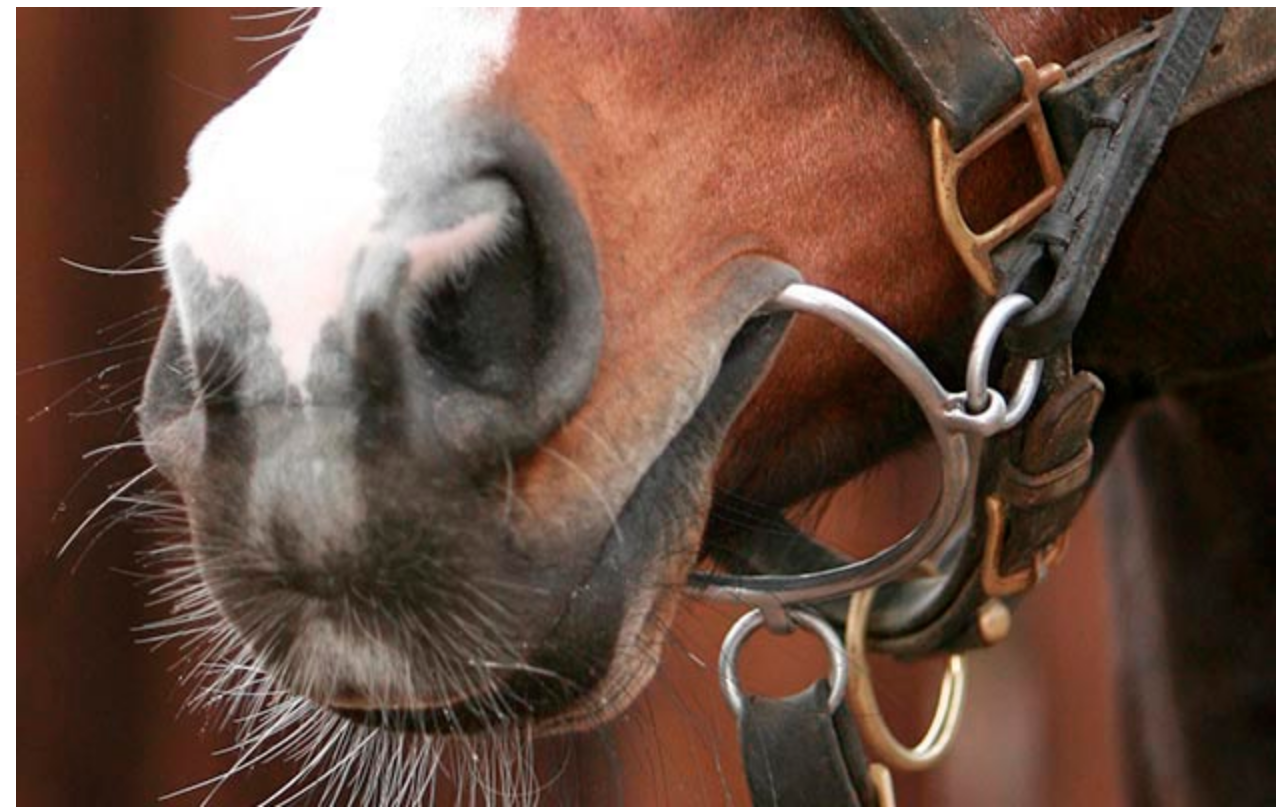
Put on a rearing bit
* Used for leading horses that require a little more restraint than a head collar and lead alone
- Stand on the horses left side and hold the bit in your left hand
- Slide the strap over the head, feeding the bit into the horse’s mouth as you go or undo the strap and fit the bit into the mouth first if the horse is head-shy
- Adjust the bit so it sits in the corner of the mouth to cause a small crease
- Make sure you clip the ring in the middle of the bit together with the ring of the head collar to your lead rope whenever you lead the horse. If you lead the horse only by the bit you can injure the horse’s jaw
- when the horse is to be tied you can leave the bit on the horse but don’t clip the bit to the lead or cross ties as if the horse puls back it may injure its mouth or jaw- only clip the cross ties to either side of the head collar
https: //www.youtube.com/watch?v=Ga_OMmnL1kA
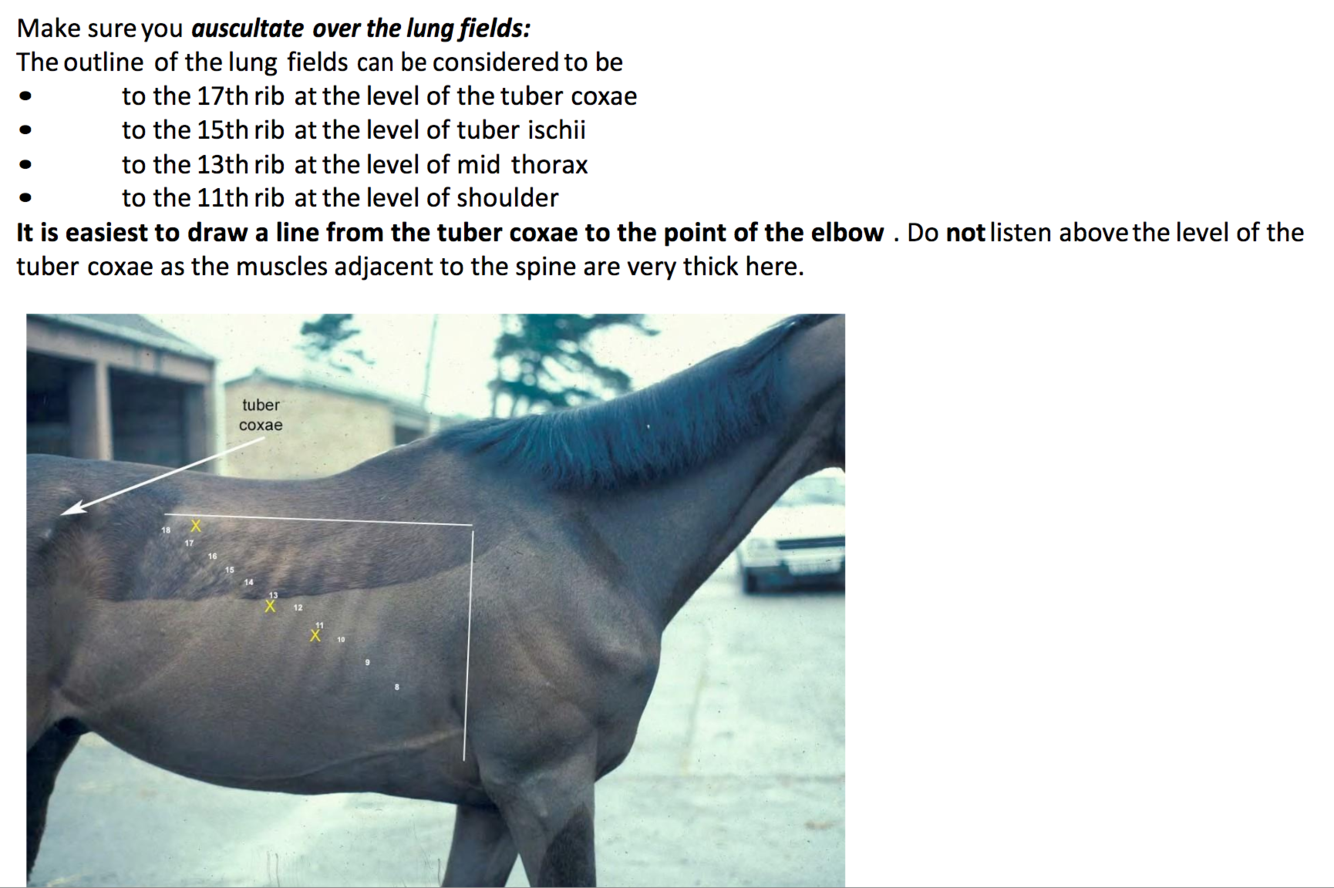
Assess cardinal signs correctly - knowledge of the normal range for heart rate, respiratory rate, temperature and mucous membrane colour is expected as well as the ability to identify normal from abnormal heart and lung sounds on auscultation.
Normal HR: 28-40 beats per minute
Normal resting rate: 8-16 breaths per minute
Normal temperature: 37- 38.4C
MM colour:pale pink and moist (can examine eye- conjunctiva and sclera) and the vagina for others
* Rebreathing bag may be used to cause the horse to breathe more deeply (large reserve) if exam is focused on respiratory system– compare lung sounds in the ventral, mid, and dorsal thorax and between the left and right sides (listen while the bag is in place and immediately after the bag has been removed)
Assess gut sounds correctly.
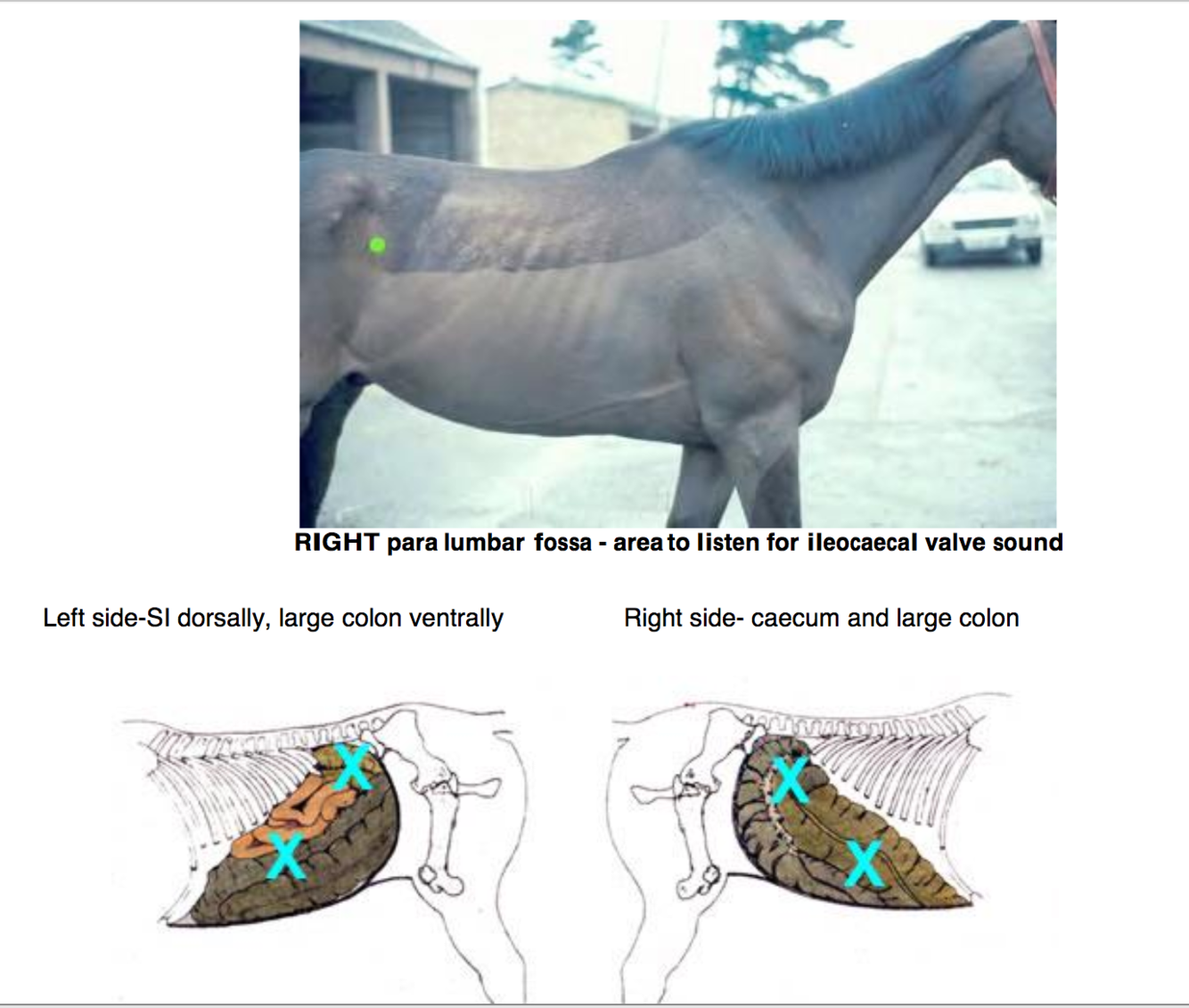
Auscultate the dorsal and ventral abdomen on both sides. Large colon and caecum fills the ventral abdomen. They produce low rumbing sounds (borborygmi). Small intestinal sounds are heard more dorsally as higher pitch pops and squeaks. The ileocaecal valve sounds (ICVS) is heard at the right paralumbar fossa about every 60 seconds (range 30-90 seconds). It sounds like the drain pipe of an upstairs toilet flushing!! Some horses will kick– so the safest place to stand is at the side of the horse close to the front limb
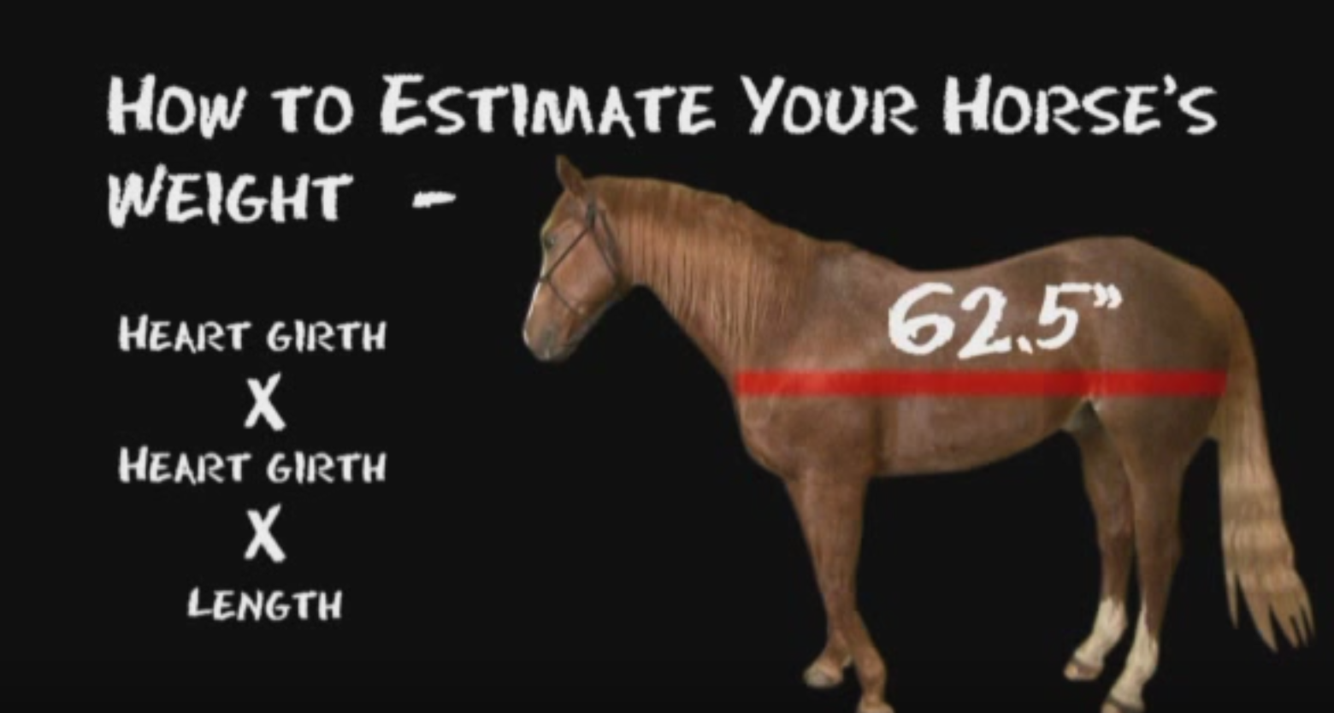
Estimate the weight of horses to within 50 kg of actual weight
Girth Length x Girth Length x Body Length divided by 330
560 kg e.g.
(right over the withers)
Estimate the height of horses accurately in hands, to within one hand
1 hand = 4 inches= 10.16 cm
Measuring to the withers
- 2 is a horse, anything under is a pony
https: //www.youtube.com/watch?v=lQ0HJGPfHNc
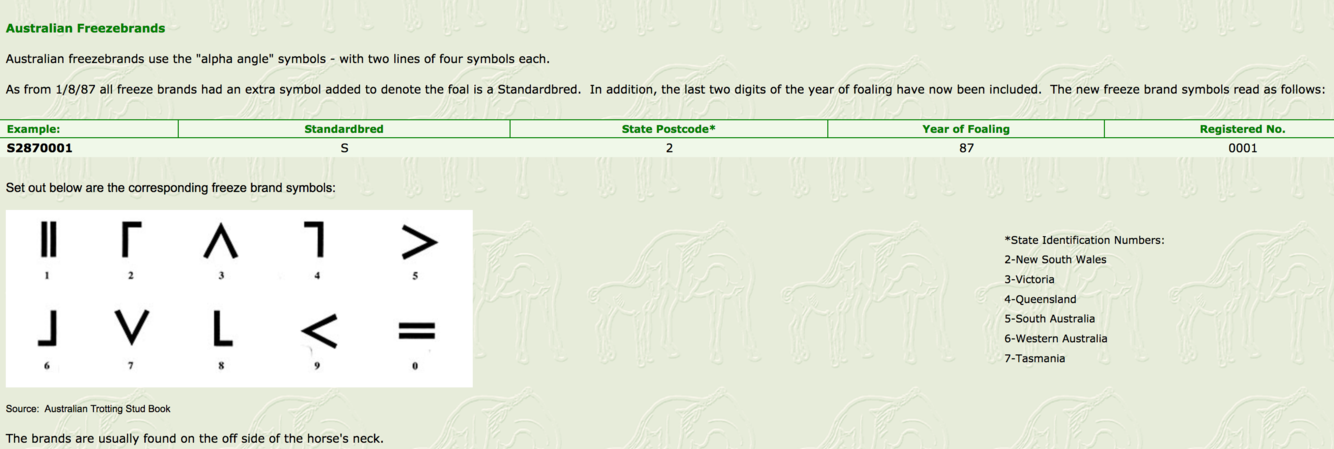
Recognise the information in brands on Standardbreds
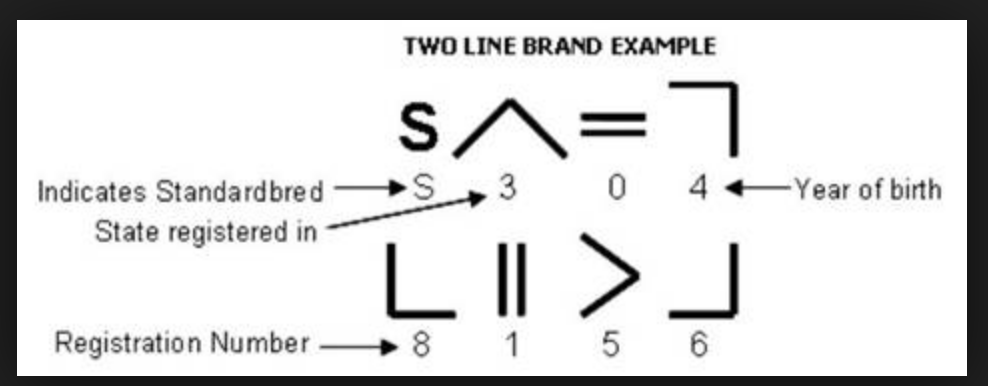
Standardbred S
State Postcode
Year of Foaling
Registered No.
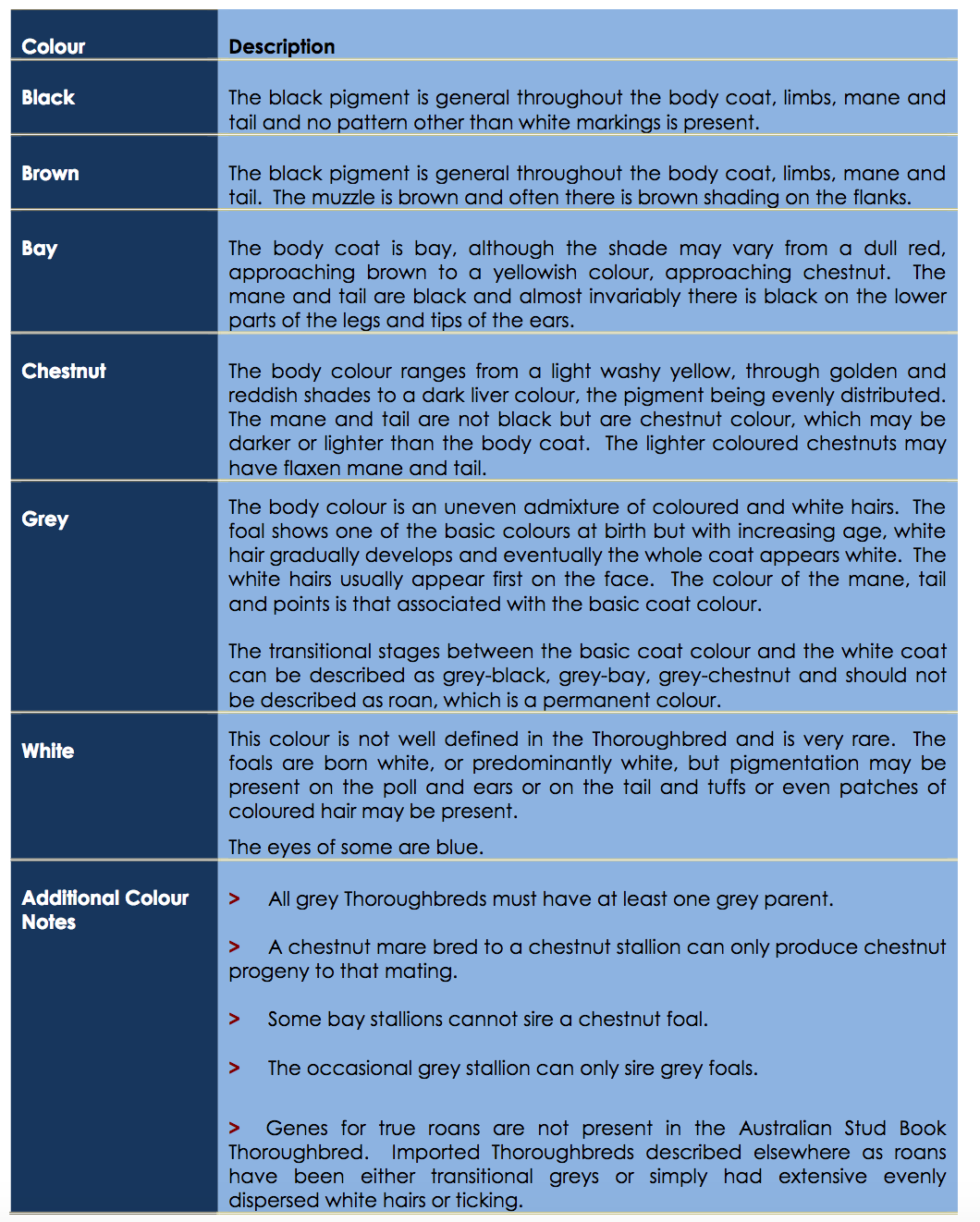
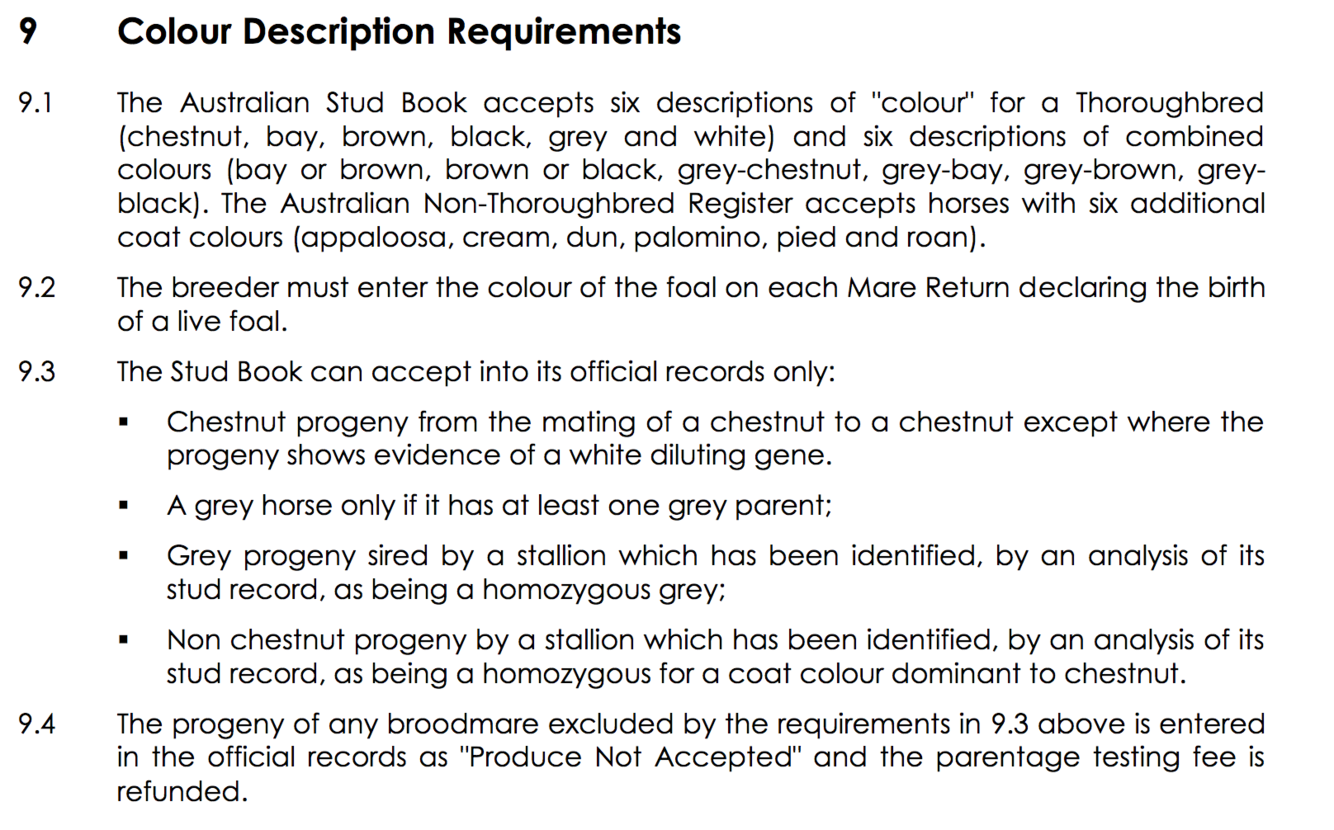
Complete an ID certificate correctly - knowledge of horse colours, the ability to correctly describe white markings, whorls, scars and muscular defects and to draw them, using international convention, on an identification sheet
whorls- patch of hair growing in the opposite direction of the rest of the hair
Describe how to give intravenous injections correctly.
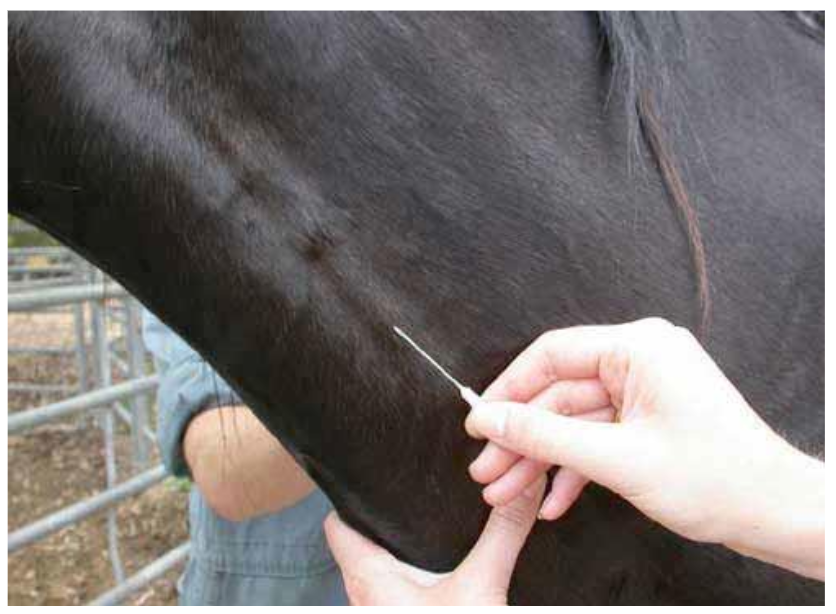
Jugular vein– usually left jugular vein for a right handed person
* 1.5” needle of 20 to 18 gauge is recommended
- Position the horse with its head and neck slightly extended and straight to make the vein easier to see
- Swab the jugular groove
- Take the needle off the syringe
- Raise the jugular vein by occluding it with one thumb approximately 1/2 to 2/3 of the way down the neck. Intermittently releasing and then reoccluding the jugular numerous times over several seconds will send a wave up the distended jugular that may make it easier to ID.
- Angle the needle at about 30 degrees to the skin directly over and aligned with the jugular vein. If the needle is not in the vein try not to withdraw the needle through the skin. It is preferable to just re-direct the needle into the vein from the original puncture site
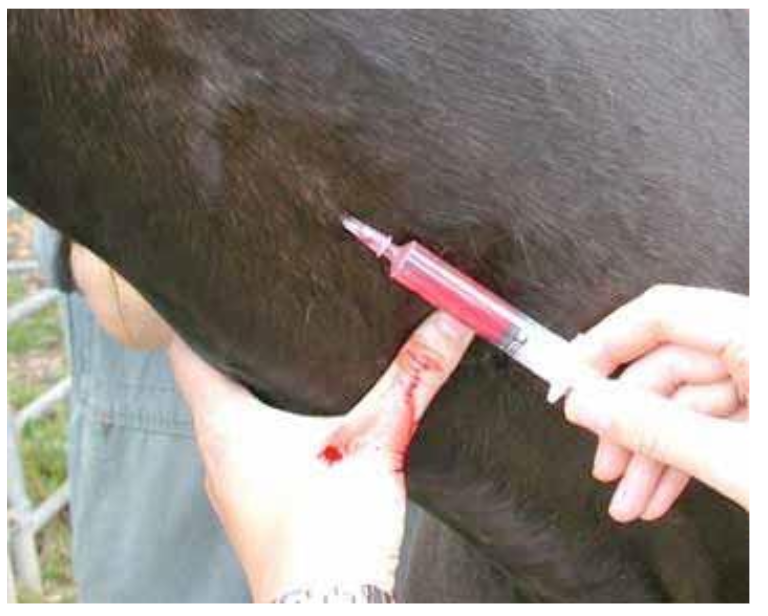
- Pass the needle fully into the vein until the hub of the needle is firmly against the skin. If you do not insert the needle fully, when you attach the syringe, the needle tends to be pushed in further and comes out of the vein (both hands are used to attach syringe, so the vein is collapsed at this time). If the syringe is attached successfully without the needle coming out of the vein, when you push the syringe plunger in, the needle can be pushed in further and may come out of the vein
- Attach syringe, occlude and distend vein and withdraw blood into the syringe to check the needle is still in the vein after the syringe has been attached. It is important that the vein is distended before you attempt to withdraw blood, if it is not, the vein wall is likely to be sucked onto and occlude the bevelled edge of the needle.
- Press the plunger to administer contents of the syringe if the horse moves during administration, stop injecting and confirm the needle is still in the vein by withdrawing blood into the syringe before continuing.
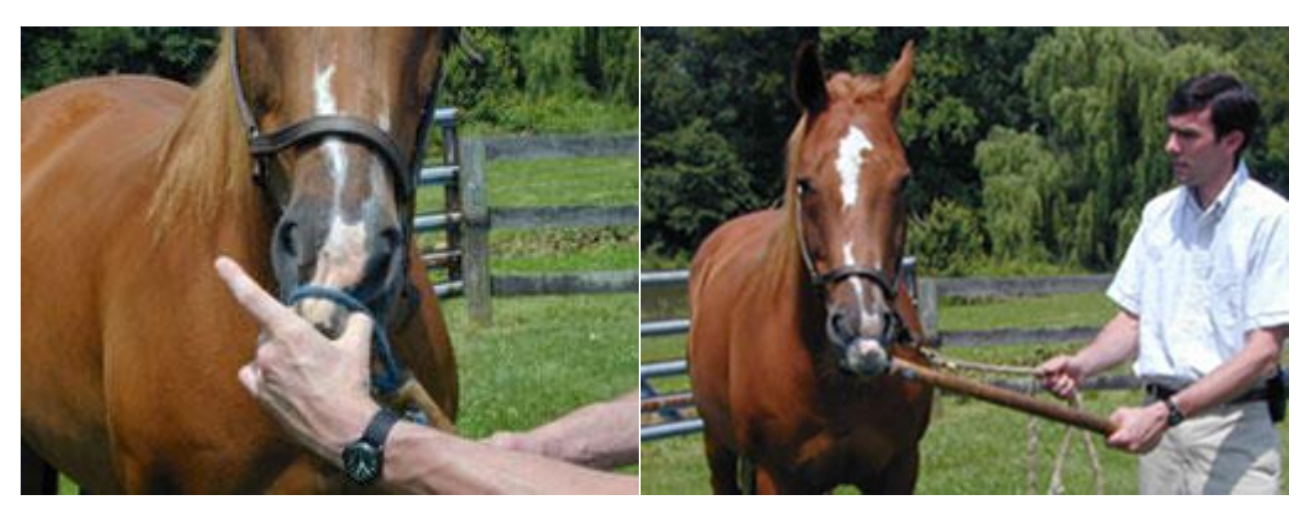
Apply a twitch efficiently.
Nose twitch
Step 1 firmly grasp muzzle with several fingers and thumb through the loop
Step 2 place loop over end of nose
** causes release of natural analgesic chemicals in the brain– endogenous opiates or endorphins– which then likely mask both the discomfort at the nose and discomfort elsewhere.
No longer than 10 minutes!
Estimate the age of a horse by interpreting any brands and looking at the incisor teeth.
* Teeth appear, develop, wear, change form and are shed with regularity (not an exact science due to quality of feed, environmental factors, heredity, and disease)
* Eruption times of each of the incisors
* Shape and appearance of the occlusal surface of the lower incisors
* Bite alignent of the incisor arcades
* Presence of hooks and grooves on the upper corner incisors
Official Guide for Determining the Age of the Horse
6 days- central incisors present
6 weeks- centrals and intermediates present
- 6 months all incisors present (corners just erupted)
- 12 months- dental star present in centrals and corners not in wear (molar 1 present)
- 18 months - corners in wear
- 24 months- dental star in all lower incisors (molar 2 present)
…
2.5 years- permanent central incisors erupted (but not in wear)
3 years- centrals in wear
3.5 years- intermediates erupted (not in wear)
4 years- centrals and intermediates in wear
4.5 years- corners erupted (not in wear)
5 years- all incisors in wear (the dentition is complete at this age)
6 years- corner incisors in full labial occlusal contact
7 years- lower corner incisors in full occlusal contact lingually
After this age, the accuracy of ageing by dentition decreases as it relies solely on occlusal forces causing attrition
* As the tooth wears, the infundibulum becomes shallower and smaller and moves lingually (towards the tongue)
Identify basic farrier/hoof equipment including a hoof knife, hoof rasp, nippers, pincers and nail pullers
Use hoof testers effectively and perform flexion tests.
Briefly discuss a suitable drug or drug combination for sedation of the horse in common clinical situations.
Anaesthetic 1: xylazine and ketamine/ diazepam
* Acepromazine given, clin exam, place catheter, wash mouth out, draw up xylazine, ketamine and diazepam in separate syringes
Premed: give 1 mg/kg xylazine IV via catheter and flush, wait for hose to appear heavily sedating before induction
Induction: 2.5 mg/kg ketamine and 0.05 mg/kg diazepam IV via catheter and flush
Anaesthetic 2: romifidine and Zoletil (zolazepam/tiletamine)
* Acepromazine given, clin exam, place catheter, wash mouth out, reconstitute zoletil with water to a combined strength of 100 mg per ml, label and date bottle, draw up romifidine and Zoletil in separate syringes
Premed: give 0.08 mg/kg romifidine IV and flush (wait to appear heavily sedated before induction)
Induction: give 1.65 mg/kg IV zoletil (1.65 mg/kg combined tiletamine and zolazepam not 1.65 mg/kg of each drug), IV via catheter and flush
Anaesthetic 3: romifidine and ketamine/ diazepam followed by “triple drip” maintenance (xylazine/ketamine/GGE– Giafen= guaiphenesin) for surgical castration
* Acepromazine given, clin exam, place catheter, wash mouth out, draw up romifidine premed, draw up ketamine and diazepam induction, Make up triple drip:
– GGE 10% (100 mg/ml) + xylazine (1mg/ml) + ketamine (2 mg/ml). So for 500 ml bottle of 10% GGE, you need to add 500 mg (5mL) xylazine and 1000 mg (10mL) ketamine. Insert an administration set into the bottle and run fluid through the line so there is no air in the line… decide on rate for trip drip– starting pt may be 1 mL/kg/hr (given to effect– giving sets deliver 20 drips per mL), calculate the drops per second rate for administering 1 mL/kg/hr to your horse
Premed: 0.08 mg/kg romifidine IV via catheter and flush (wait for heavily sedated to induce)
Induction: give ketamine 2.2 mg/kg and diazepam 0.05 mg/kg IV via catheter and flush
Maintenance:
- after your horse is induced and laterally recumbent, attach your trip drip to your catheter and begin to run your mixture at the pre-prepared rate
- monitor pulse rate/ RR and cranial nerve reflexes
- Maintain this protocol throughout castration
Palpate and clearly identify the important anatomic structures of the horse discussed in practical classes including the superficial and deep digital flexor tendons, the suspensory ligament and its branches, the joints of the limbs and the sites for injection into fetlock, carpal, tarsocrural and femoropatellar joints; superficial landmarks of the maxillary and frontal sinuses
Identify sites for the
- palmar digital, abaxial sesamoid and four point nerve blocks
- auriculopalpebral nerve block
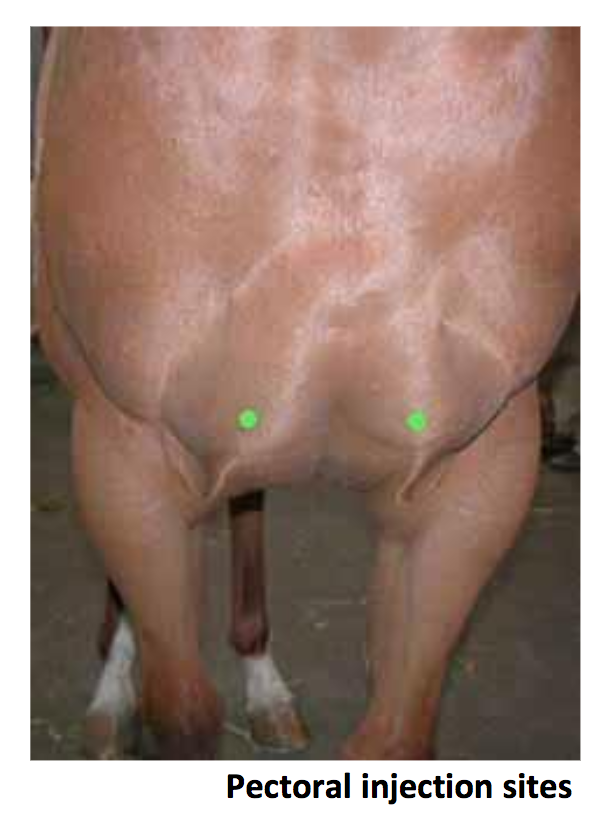
Pectoral IM injection– potential complication?
Could develop pectoral oedema after injection
Gluteal muscles as IM injection spot?
Middle of the gluteal muscle avoiding the area of the tuber sacrale, tuber coxae, tuber ischia, hip joint and sciatic nerve
* this location depends on the temperment of the horse
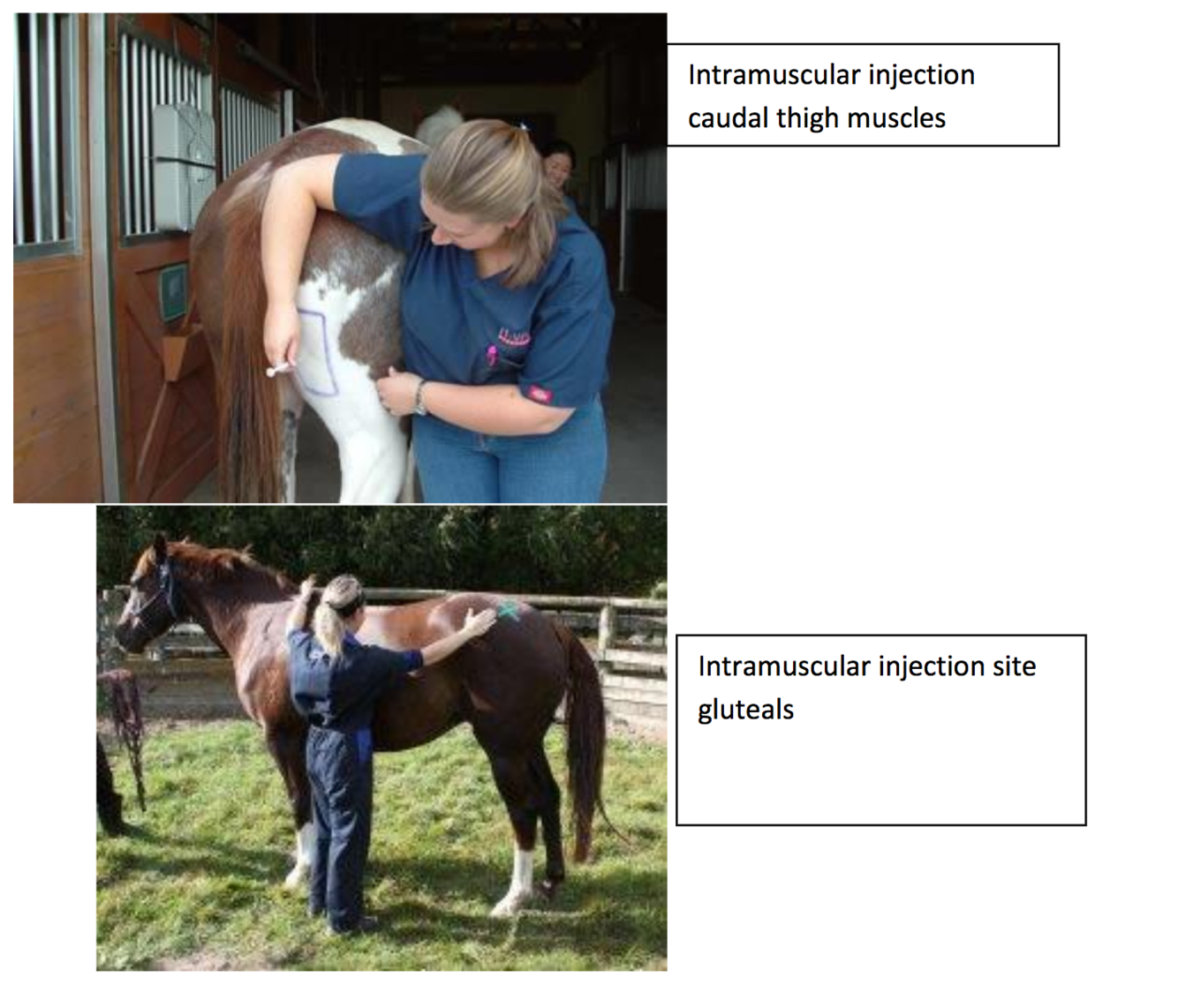
Caudal thigh as a location for IM injection
Semimembranosis, semitendinosis
avoid the furrow between these