2 Parts of the Eyelid
- Outer layer- made of palpebral skin, sweat glands, cilliary glands, sebaceous glands and striated muscles (levator palpebral and obicularis oculi).
- Inner layer – made of tarsal plate, dorsal and ventral tarsal smooth muscles, palpebral conjunctiva and tarsal (Meibomian) glands

What is Blinking Reflex?
- The action of regular blinking of the eye (20-30X a minute) distributes the lacrimal fluid and glandular secretions thereby preventing the drying of the eye
- The corneal reflex, also known as the blink reflex, is an involuntary blinking of the eyelids elicited by stimulation of the cornea (such as by touching or by a foreign body), though could result from any peripheral stimulus
The Conjunctiva
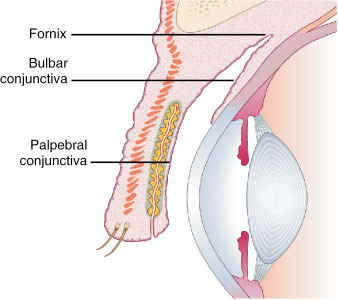
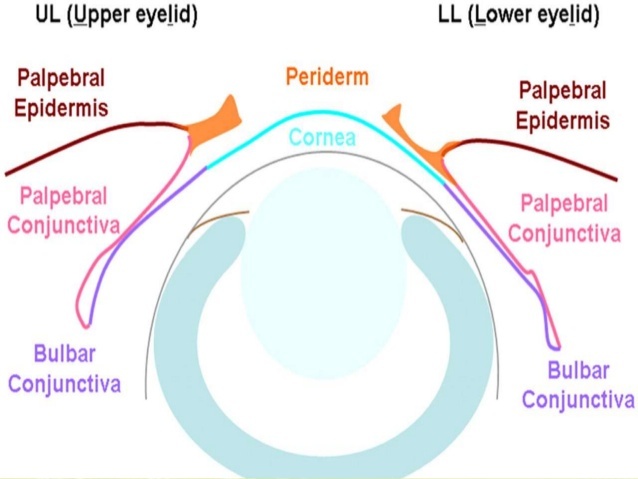
The conjunctiva is a vascularised mucous membrane and is divided into palpebral, fornical and bulbar (ocular) parts.
The bulbar conjunctiva blends with the corneal surface and forms conjuctival sac which allows painless movement of the bulbar and palpebral parts relative to each other.
The dorsal and ventral fornices are important sites for topical medications.
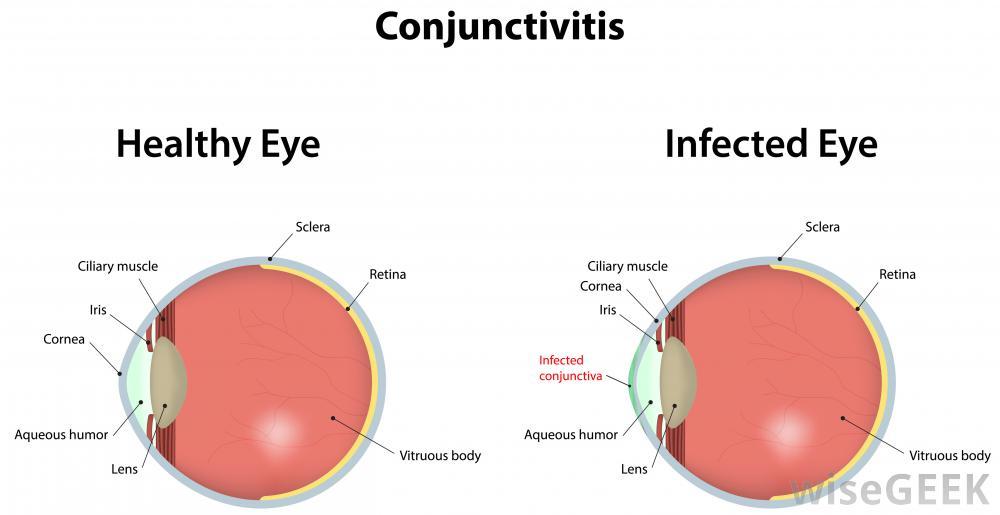
Inflammations of the conjunctiva cause vascular congestion resulting in reddening of the eye otherwise called “pink eye”.
The converse of this is paleness of the conjunctiva as in the case of anaemia.
The conjunctiva should be checked routinely in clinical examinations.
Conjunctivitis
(picture)
Parts of Conjunctiva
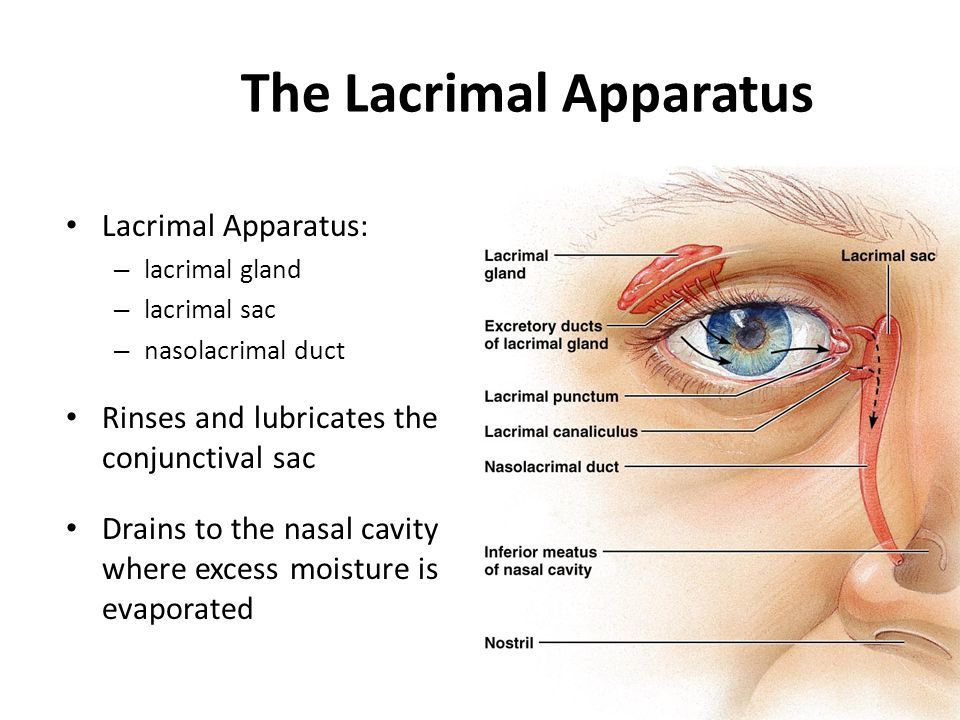
Lacrimal Apparatus
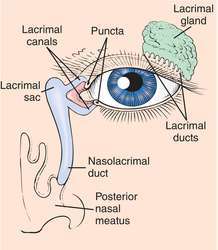
- Consists of lacrimal gland and the draining ducts.
- The lacrimal apparatus is the physiological system containing the orbital structures for tear production and drainage
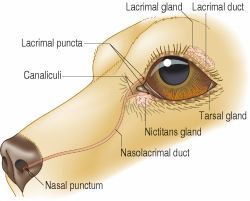
Lacrimal Duct System
The Lacrimal duct is located on the dorsal lateral aspect of the eye on the lacrimal fossa of the frontal bone and produces most of the lacrimal fluid.
This gland is innervated by sympathetic nerves from the the dorsal cervical ganglion.
The parasympathetic innervations arise together with the facial nerve and after synapsing in the Pterygopalatine ganglion and send branches to the lacrimal gland via the maxillary branch of the trigeminal nerve.
The lacrimal secretions enter the dorsal and ventral lacrimal puncta into the ventral and dorsal lacrimal duct and continue into the common lacrimal duct.
The lacrimal duct opens in the nasal cavity at the level of the ventral concha in the nasal cavity. Blockage of this drainage system results in “watery eyes”.
How does a common cold cause watery eyes?
- A tear duct can get infected if it becomes blocked and bacteria collect in the ducts or the lacrimal sac. A blockage near the nose also can cause excessive tearing from the eye
- Your tears are made by a small organ above the eye under the upper lid. Your lacrimal sac is connected by a tube to each tear duct, and to the inside of your nose. Tears spill out of the eyes and into the back of your nose when you cry, although the tears entering the nose are not visible.
- Blocked tear duct from congestion
Tear Formation
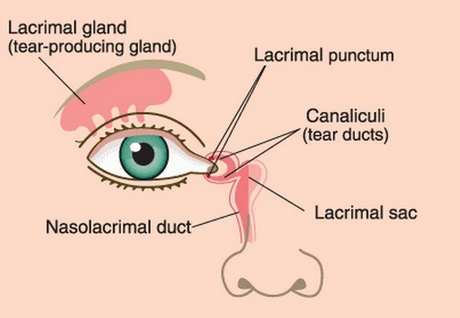
Combination of:
- lacrimal (acqeous)
- goblet cell (mucin)
- tarsal (lipid) gland secretions
-The mechanical propulsion of the lacrimal fluid is achieved thru the contraction of the orbicularis oculi muscle in a temporal-nasal direction.
Why does facial nerve paralysis result in a “dry eye”?
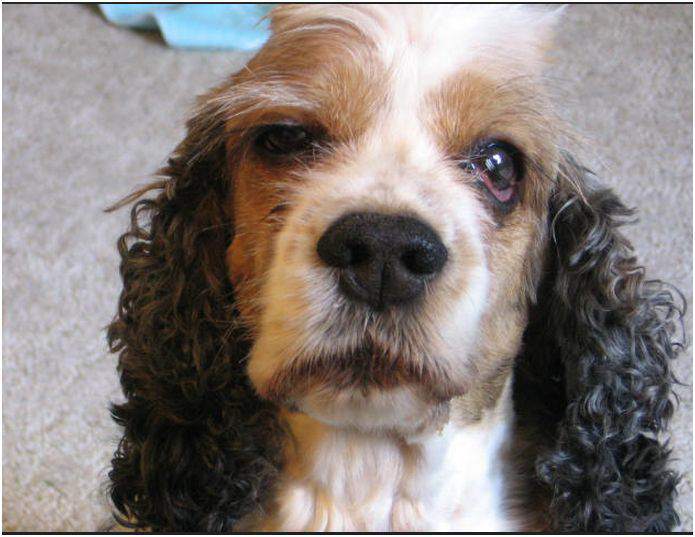
- Facial nerve palsy includes both paralysis and weakness of the seventh cranial nerve.
- There are multiple etiologies of facial nerve palsy, and Bell’s palsy (idiopathic, acute onset unilateral facial nerve palsy) is the most common cause.
- unilateral facial weakness that can result in dry eye
- -facial nerve #7 innervates the obicularis oculi m. and frontalis m. which controls the movement of the upper eyelid
- also known as Bell’s palsy
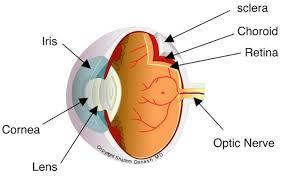
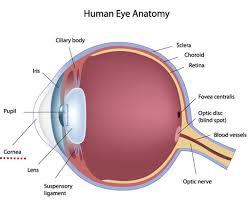
3 concentric layers of the eyeball
(from outside to inside)
- sclera
- Choroid
- Retina
Sclera
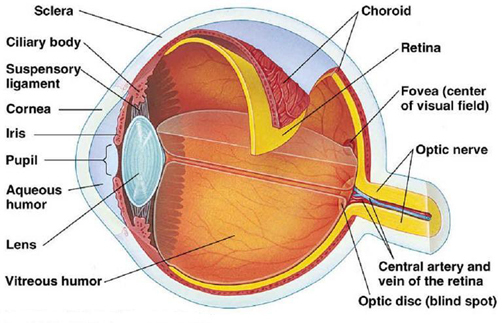
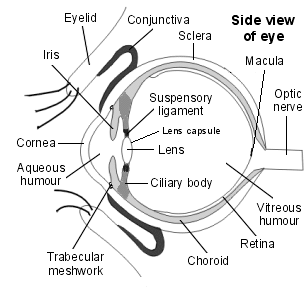
The sclera is a tough fibrous coat that serves as an attachment for the extraocular muscles but is also perforated at the posterior aspect by the optic nerve at the lamina cribrosa.
The most anterior portion of the sclera arrangement bulges to form a “window of the eye”-the cornea- while continuing as part of the sclera posteriorly. Caudal to the cornea lies the aqueous humour.
The corneoscleral junction forms a trabeculae meshwork which contains the canal of Schlemm whose function is to drain the aqueous humour into a network of veins.
Uvea
(and 3 parts)
- the vascular coat of the eye
- lying beneath the sclera
- Three parts:
- Choroid
- Iris
- Ciliary Body
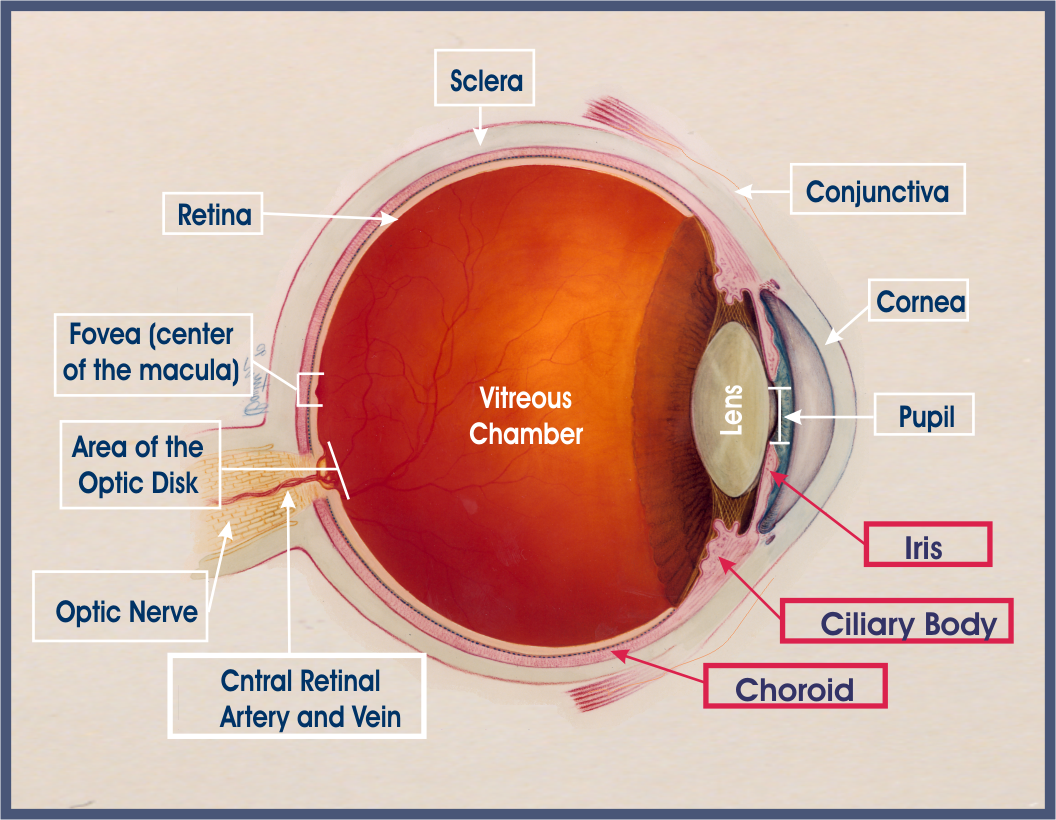
Choroid Layer
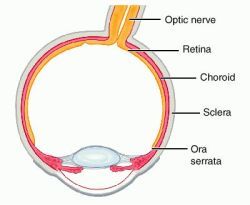
The choroid layer is the most vascularised organ of the body and serves to regulate the temperature of the eye and supply blood the most outer layer of the Retina.
The Choroid is highly pigmented and appears black in colour.
The incident light coming thru the lens is therefore prevented from scattering once it hits the choroid. (anlogue camera like)
Ciliary Body
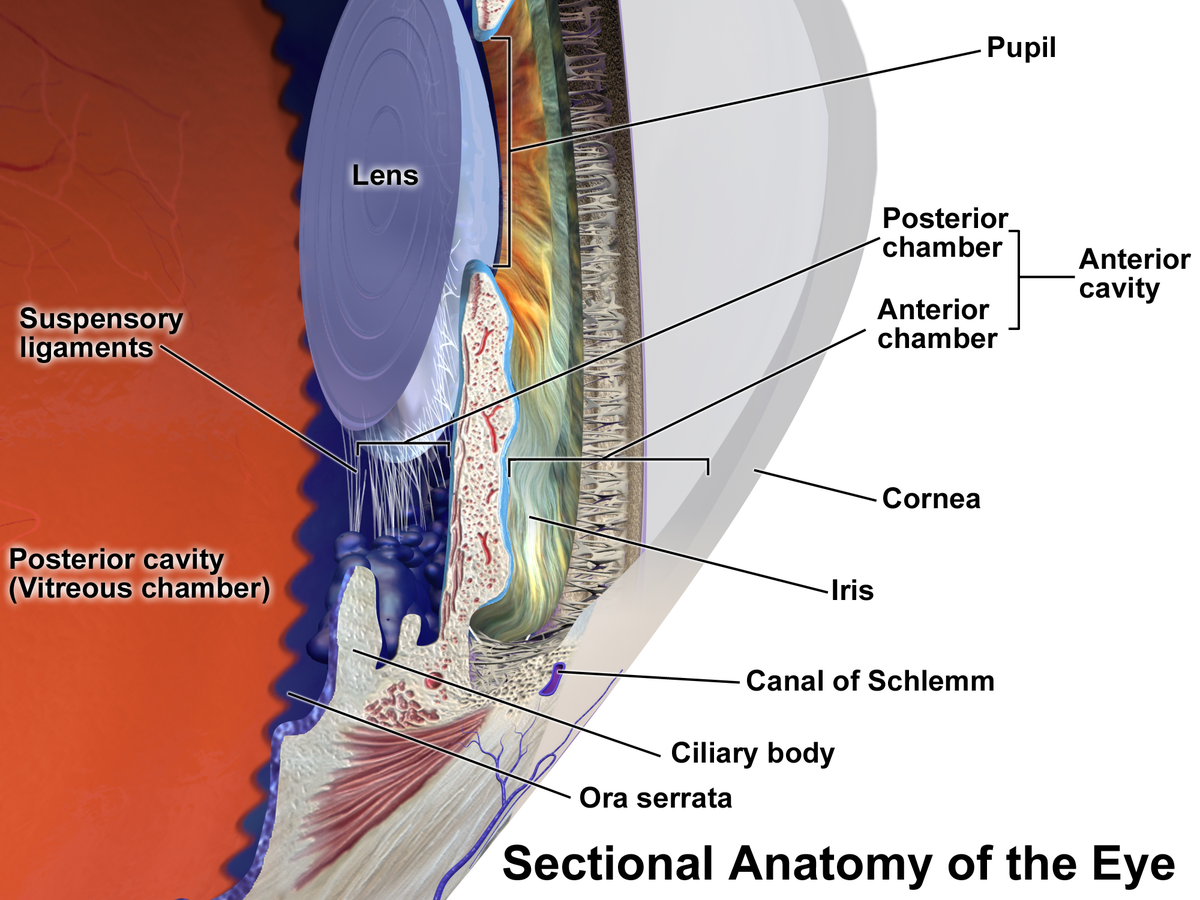
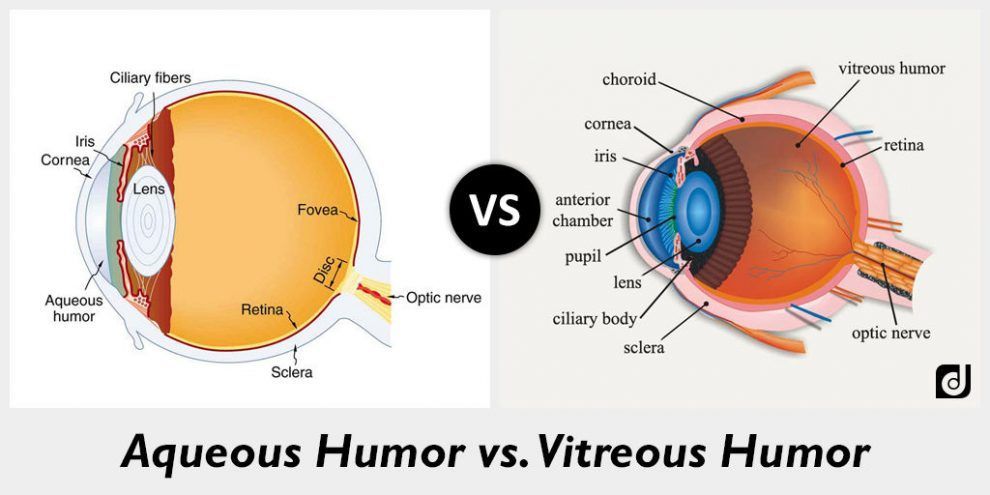
- The epithelium of the ciliary body produces the aqueous humour which flow from the posterior chamber thru the pupil to the anterior chamber.
- It then flows out into the canal of Schlemm at the iridocorneal angle.
- The ciliary body also bears the Zonular fibers which hold the lens into its place.
The Iris
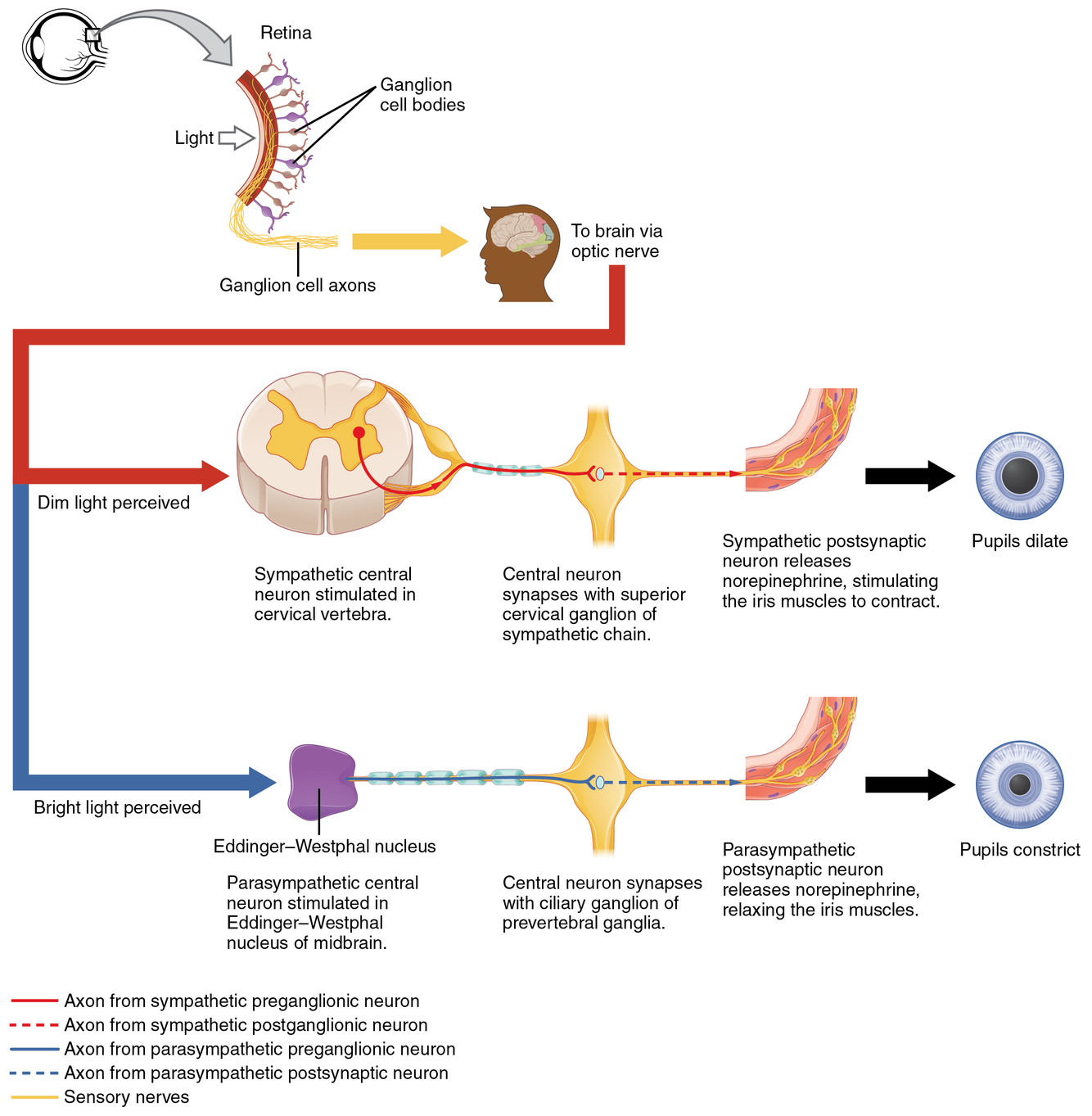
- The iris is a projection of the uvea and contains both radial and smooth muscles that regulate the diameter of the pupil, thereby controlling the amount of light passing thru the lens.
- The pigmentation of the iris determines the colour of the eye.
- The muscles of the iris (radial and circular) are under control of both parasympathetic and sympathetic nerves.
- The parasympathetic nerves innervate the circular muscles (sphincter) whose contraction constricts the pupil aperture
- dilation is due to sympathetic innnervation to the radial muscles which widens the pupil aperture.
Why does the pupil increase in size when one is frightened?
- Stimulation of the autonomic nervous system’s sympathetic branch, known for triggering “fight or flight” responses when the body is under stress, induces pupil dilation.
- Your pupils dilate to optimise the amount of light at the back of the eye so that you know what’s going on around you
The Cornea
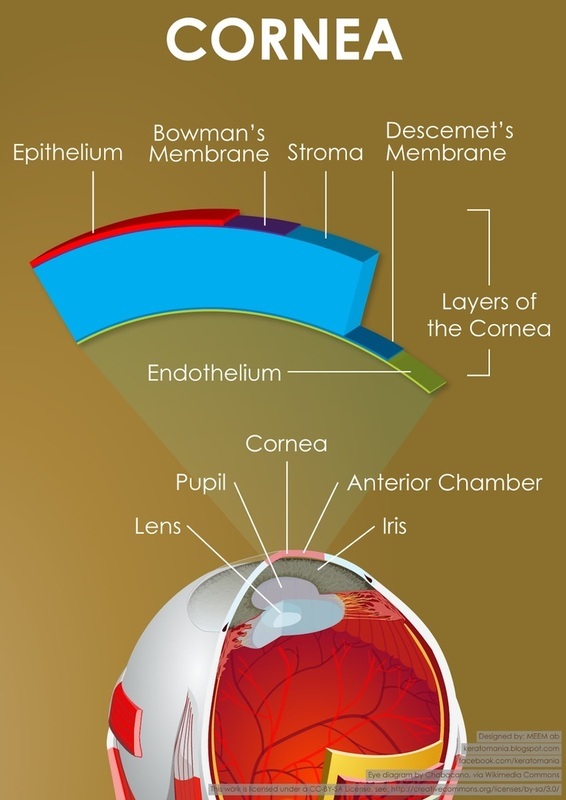
This is the most outer and visible projection of the eyeball which is continuous with the sclera.
The Cornea is made of several layers but is devoid of blood supply.
The cornea receives nutrition from the aqueous humour and oxygen dissolves from the external environment.
The Cornea however is innervated and cornea reflexes are used to test functional integrity of the eye.
The Retina
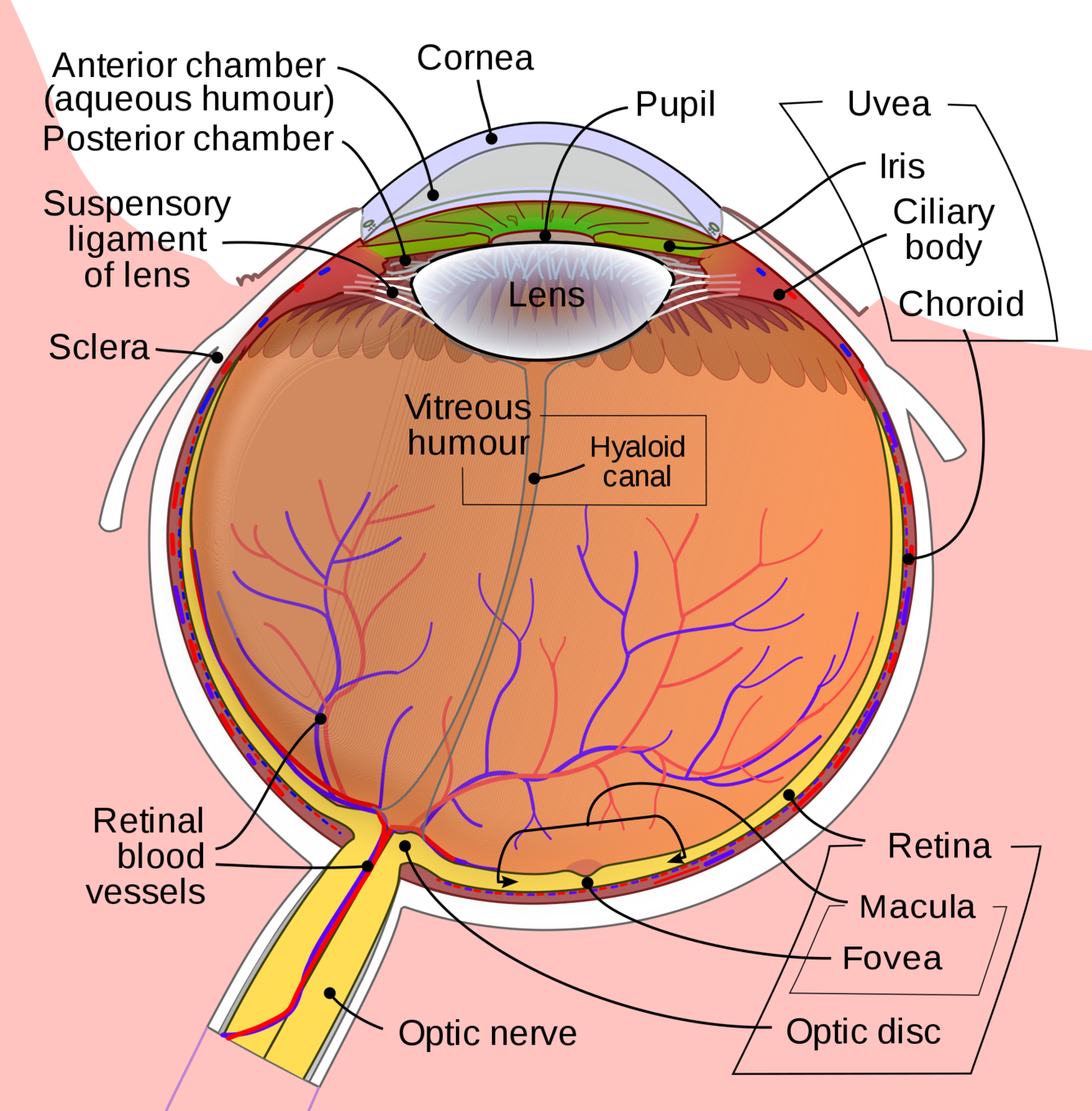
This is the innermost layer of the eye and contains the photosensitive cells.
The retina consists of ten different layers of cells.
The outermost layer is the pigment retinal epithelium upon which the photosensitive layer rests. The pigmented epithelium continues globally in the eye to the ciliary body and the iris.
The retina is divided into visual and non-visual parts, the latter being made up of the iridial and ciliary part of the retina.
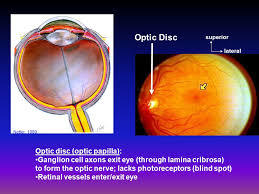
The rest (posteriorly) is visual retina which also bears the macula lutea, an area temporal to the optic disc in which most of the inner retinal layers have been pushed peripherally to leave a depression called the fovea centralis.
The fovea has the photosensitive cells (cones only) exposed to incident light making this depressed area of the retina to provides for high visual acuity and sharp focus of images.
Incident Light and Lamina Cribrosa
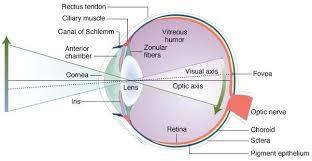
The incident light must travel thru all the 10 layers of cells in order to reach the photoreceptors
while the impulses travel inwards towards the bipolar neuron layer and finally to the ganglion cell layer whose axons join together to form the optic nerve that leave the eyeball at the optic disk after penetrating the lamina cribrosa.
There are no photoreceptor cells at the optic disk and images falling on this area will not be detected.
There are 6-7 million cones and about 100-200million rods.
The Vitreuous Humour
The vitreous humour has the same constituents elements like the aqueous humour except that it contains collagen and hyaluronic acid which makes it jelly like in appearance and consistency.
The Vitreous humour exerts pressure and stabilises the retina peripherally.
The Lens
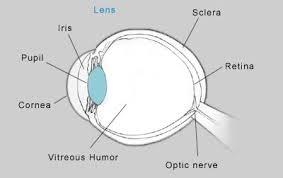
The normal lens is transparent and is made up of layers of epithelium on top of each other giving it the “onion bulb” arrangement i.e. you can peel one layer after another.
The lens lies in the hyaloid fossa of the vitreous humour. The lens is attached to the ciliary body (muscles) by Zonular fibres whose contraction changes the shape of the lens according to the demand of visual accommodation.
The lens is devoid of nerves and blood supply and derives nutrition from the aqueous humour.
The contraction of the ciliary muscles pulls the choroid layer forward allowing the zonular fibres to become lax thereby causing the lens to become more convex.
Structural alteration in the layers of the lens leads to cataract which causes opacity especially at old age.
Ophthalmic Manifestations of Systemic Diseases in the Eye
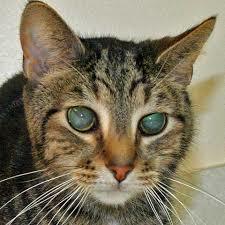
- Ophthalmic manifestations of systemic diseases are not uncommon with inherited, infectious, degenerative, and neoplastic disorders in animals.
- Often, ophthalmic examinations can assist in timely identification of the systemic disorder
- Diseases affecting the vascular and nervous systems are likely to show ocular manifestations.
- Animals with bilateral ocular disease should be carefully evaluated for systemic diseases.
- In dogs, ophthalmic diseases, such as retinal dysplasia, microphthalmia, and cataracts, have been associated with dwarfism, albinism, and merling.
Blood Supply to the Lens
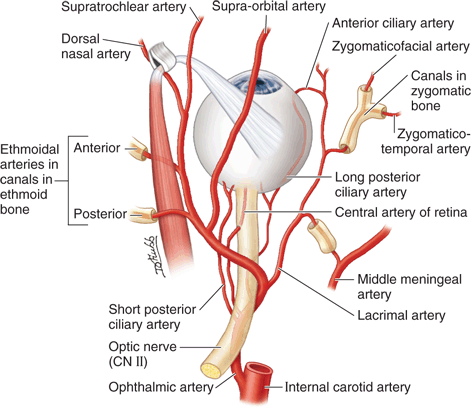
All the blood reaching the eye arise from the ophthalmic artery, a branch of the internal carotid artery.
The blood vessels are divided into:
- central artery to the retina
- short posterior ciliary artery to the choroid
- long posterior ciliary artery to the ciliary body
- iris and anterior ciliary artery arising from the vessels of rectus muscles