Function of the Skin
Enclosing Barrier:
- water, electrolytes, macromolecules IN
- Microbes, chemicals OUT
- physical protection
- UV protection
- allows movement
Dermis
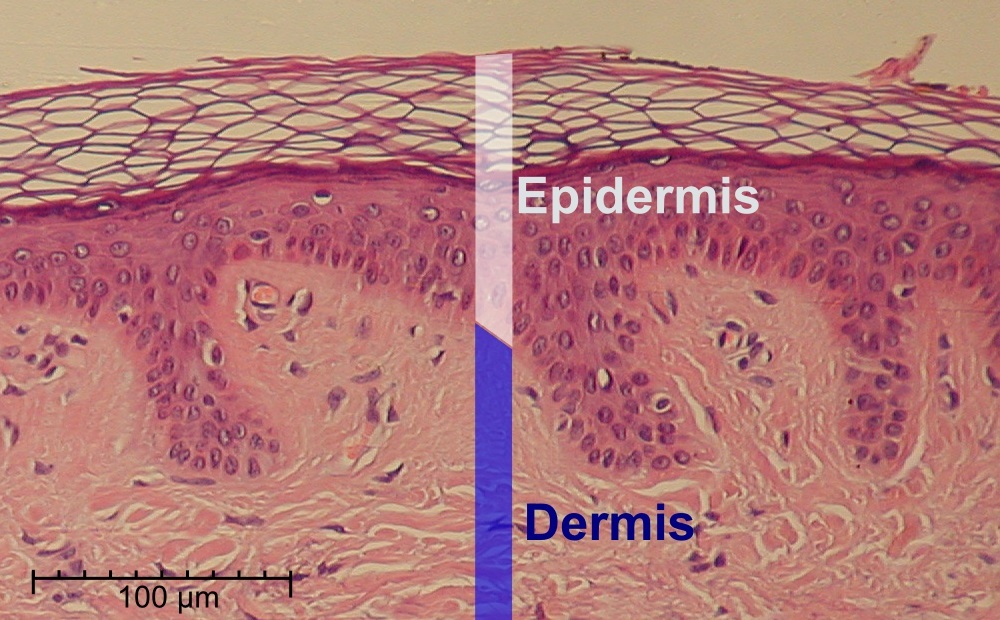
consists of:
- Connective Tissue: collagen fibers, elastin fibres
- follicle units,
- glands,
- vascular tissue,
- nervous tissue,
- sensors,
- arrector pilae muscles
- collagen bundles (provide tensile strength)
–all innervated, has a various vascular supply (plexus) supplying the whole area
Hypodermis
(panniculus adiposus)
Hypodermis (panniculus adiposus)
- the fat layer beneath the dermis which allows skin to be freely moveable over underlying tissues (except in pinnae of ear)
- makes it hard to biopsy there if needed
- Subcutaneous fat that allows the skin to be freely moveable
Epidermis
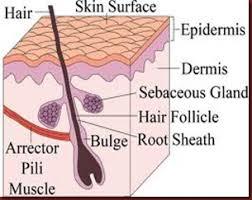
Epidermis= stratified squamous keratinising epithelium that is self-renewing,
composed of several layers:
- stratum corneum
- stratum granulosum
- stratum spinosum
- stratum basale
- The epidermis sends down invaginations from which the hair follicle will grow ( hair being a property of mammals)
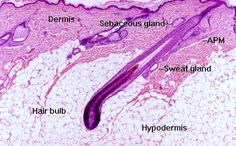
- -associated with this are sebaceous glands and sweat glands
- dogs DO sweat!! They just use panting for thermoregulation instead
- these structures are all embedded in the dermis
- Erector Pili Muscle: allows for bristling up of hair
Skin Histo
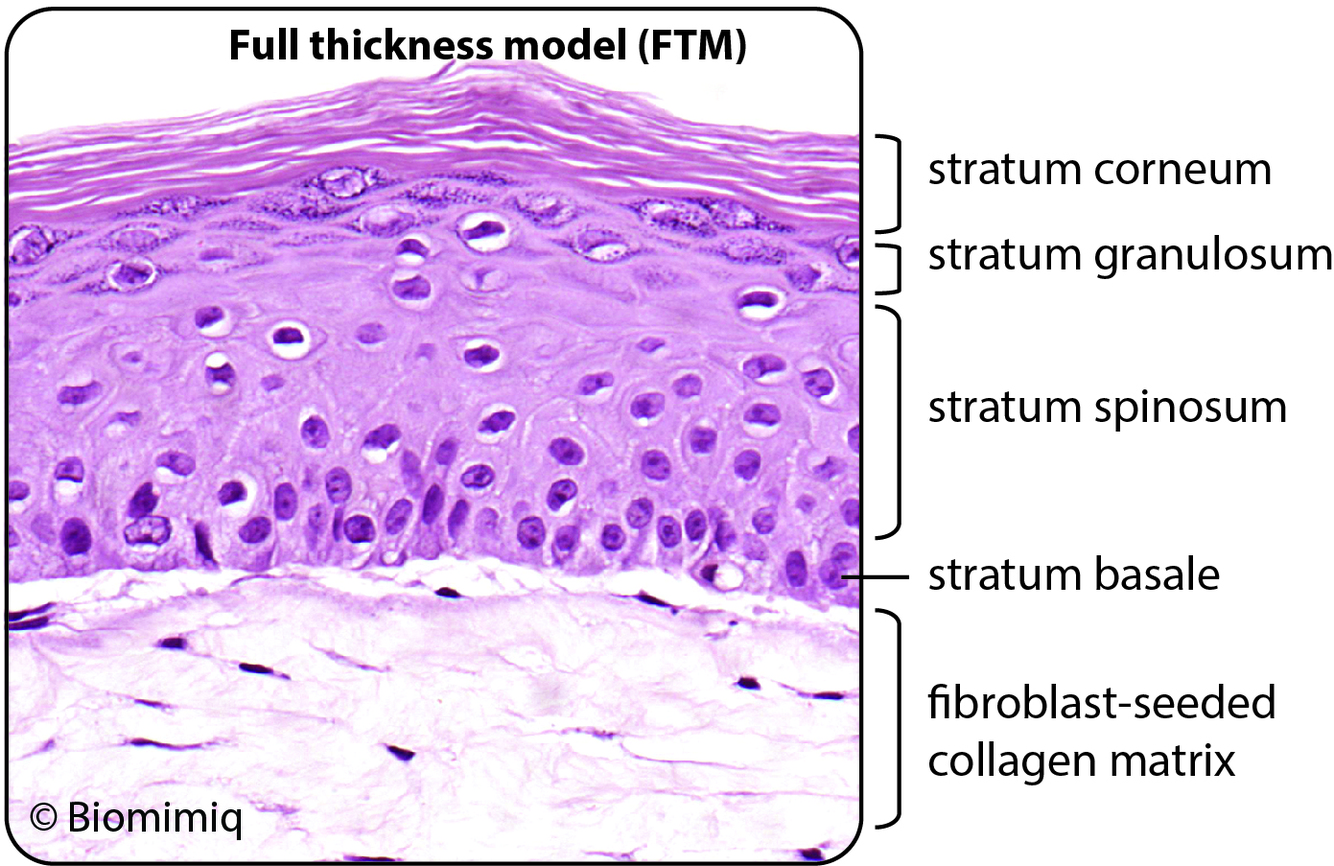
Layers of the Epidermis
- These layers of epidermis act like a “moving escalator”: the constant turnover provides protection.
- Acceleration of this can be protective in case of noxious stimulus on skin surface.
- With disease you can see a thickening of the epidermis as the disease can cause acceleration of the formation of these layers (hyperpoliferation by mammal in response to surface injury)
- Thickening also protects in the event of trauma eg itch
- As the epidermal cells migrate superficially they undergo a series of moleculare changes leading to their deaths, thus rendering them incapable of reacting to the various influences once they reach the surface (imposes an obvious startification)
- There are no blood or lymphatic vessels in the epidermis, it is nourished by diffusion from the subadjacent dermis
Statum Basale
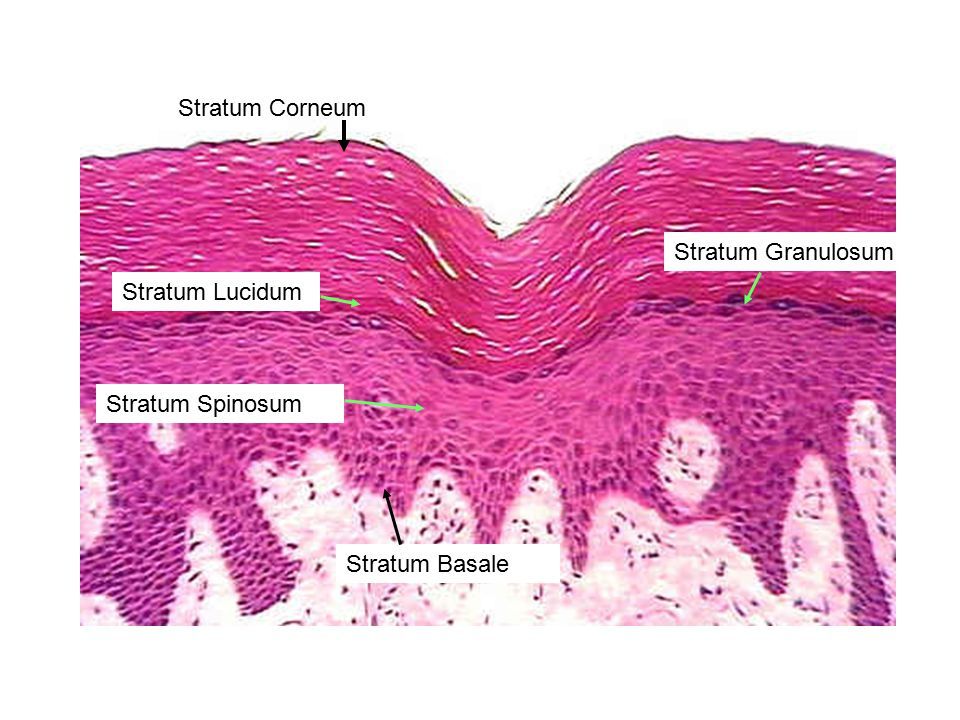
- population of stem / transient amplifying cells (have a smaller capacity of undergoing cellular division before they stop doing that–> will enter a terminal differentiation process) where proliferation takes place (here only in dog)
- Attached to other keratinocytes by desmosomes
- and to lamina lucida of basement membrane via hemi-desmosomes
- stratum basale is closely moleded on the irregularities of the underlying dermis and has a considerably greater area than the surface of the body
Stratum Spinosum
Stratum spinosum: Differentiation.
- Make up the bulk of living epidermis.
- Attached to other keratinocytes by desmosomes
- These cells rise out of basal layer & no further cell division takes place (in dog).
- Committed to terminal differentiation (nothing will stop them from becoming a dead “squam” on the top
- The cells shrink and draw apart as they move into the stratum spinosum, though they remain connected by intercellular bridges (desmosomes)
- Cells that have popped up out of the basal layers, these cells will now commit to dying as part of the maturation process to become part of top layer
Stratum Granulosum
Stratum Granulosum:
- (Late) DIfferentiation.
- Attached to other keratinocytes by desmosomes
- Contain ‘keratohyaline granules’: an insoluble aggregate of enzymes (mainly profillagrin) involved in cross-linking keratin filaments as well as proteins that form the envelope of cornified cells
- process of keratinization (cornification) begins as the cells enter the stratum granulosum layer
- In this layer the cells contain scattered keratohyalin granules
- In some regions, this layer is followed by a narrow stratum lucidum composed of flattened cells that have already lost their nuclei and distinct outlines, but obtain a homogenous appearance from the even dispersal of granules
- Granules are composed mainly profillagrin (precursor of fillagrin): filament aggregating protein.
- Scaffolding is keratin intermediate protein filaments forming a structural scaffolding to maintain morphology. Must be collapsed as it gets to top layer
Stratum Corneum
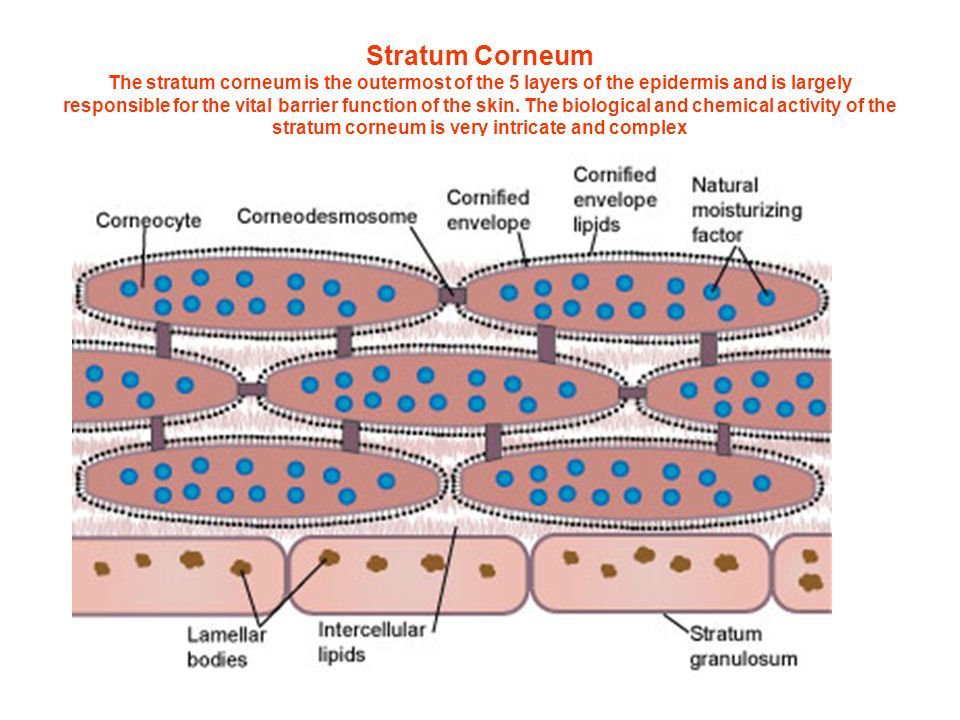
Desquamation.
- Cells (corneocytes, squames), the dead remnants of living keratinocytes, are attached by corneo- desmosomes, that are enzymatically degraded to allow shedding.
- A lipid seal between the squames reflects the ‘bricks and mortar’ analogy for this key layer in skin barrier function
- Has ‘a ‘basket weave’ structure in humans
- densely packed with the fibrous protein keratin , the true horny substance, which is transformed keratohyalin
- by this layer the cell has lost all its organelles, its dead
- they adhered to eachother by corneo-desmosomes but these are usually enzymatically degraded to allow shedding!
- moving upwards and shedding off the top
- important lipid seal in between them! (Creating ‘bricks and mortar’ analogy)
- Bricks: squams
- mortar: lipids in between them
–> lipids come from the keratinocytes themselves and also from the sebaceous glands
Hemi-Desmosomes
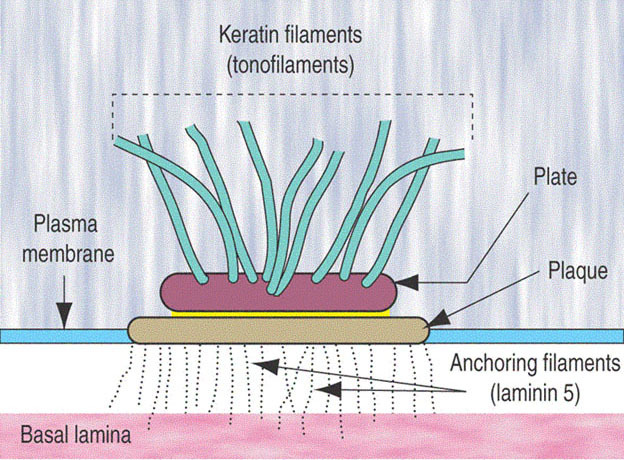
- anchor the basal cells to the lamina lucida of the basement membrane.
- Relevance: proteins (e.g. laminin-5 & BP180) are potential targets in auto-immune blistering diseases and geno-dermatoses- tend to present with erosion & ulceration (skin +/- mucosae)
- Geno-dermatoses: result from mutations in genes that encode for the essential structural proteins that lead to the formation of the hemi-desmosome. If these do not form properly the epidermis will not be anchored properly (sloughing off)
- Anchoring fibrils in dermis are important as a special type of collagen, collagen 7, which holds it together
Desmosomes
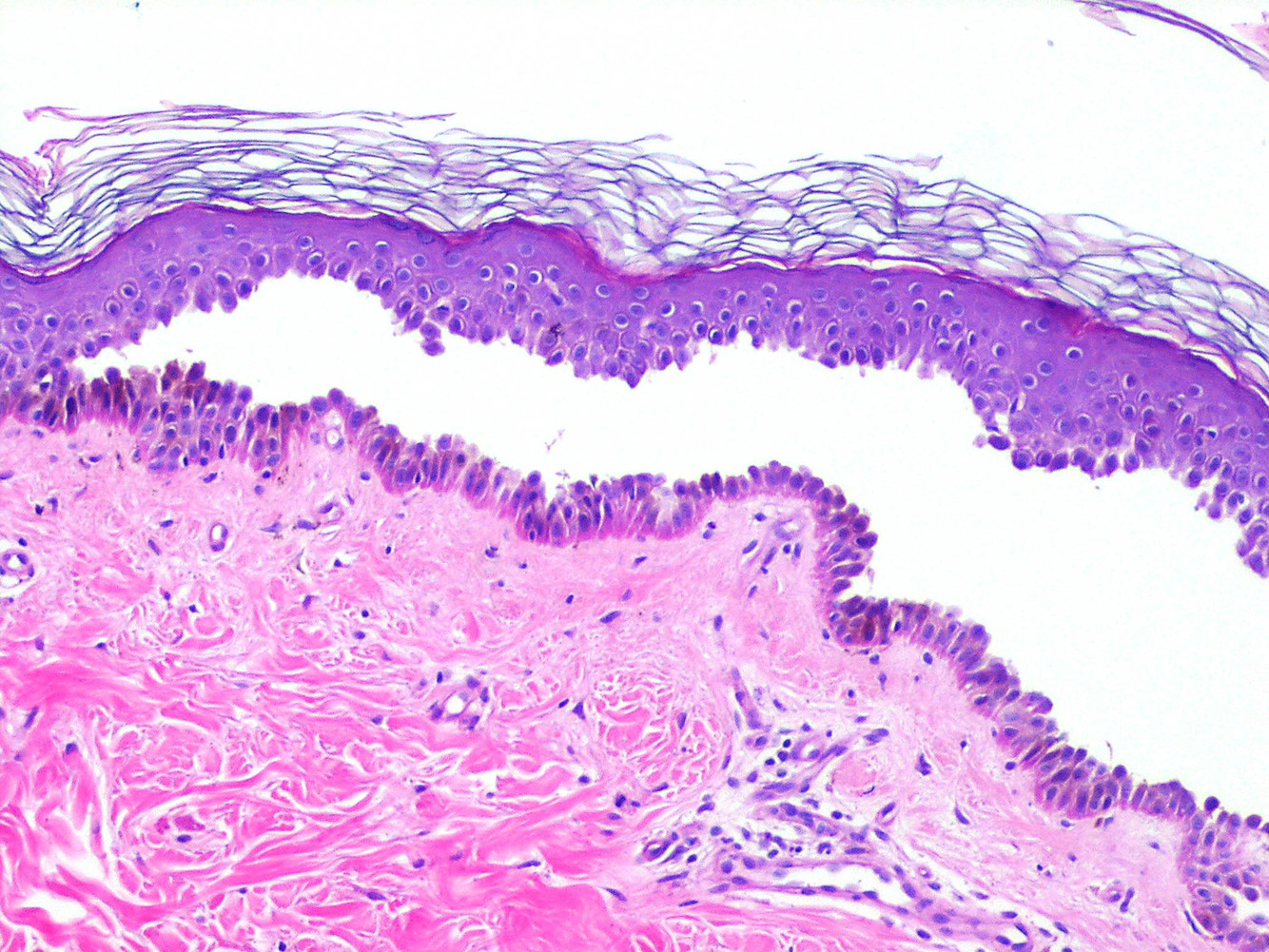
Desmosomes: the cellular attachments between keratinocytes
Desmosomal proteins= targets for auto-immune diseases (pemphigus) & rare geno-dermatoses
- Pemphigus foliaceus- keratinocytes of the granular layer of the stratum corneum lose attachment to each other due to autoimmune attack on desmosomal proteins. Leaves cells floating free in a blister. becomes very cell rich as many chemoattractants are released as part of this inflammatory process. Accumulation of neutrophils and eosinophils leading to a pustual type lesion. Pustular disease, shows clinically as crusting in a symetrical patten .
- give it steroids or immunosuppressant drug to stop immune response (skin will heal if we can stop the autoimmune attack) - -some animals do respond, some don’t, but side effects can be intolerable
- sometimes can be drug triggered, then the prognosis is much better as you can stop using that drug
- Pemphigus vulgaris (v. v.rare), attack occurs above the basal layer –> ‘row of tombstones’
- Desmosome attack occurs immediately above the basal layer. VERY SEVERE. Blister, epidermis is sloughing off –> very bad
- leads to Erosions and ulceration in the skin and mucosa
Pigmentation
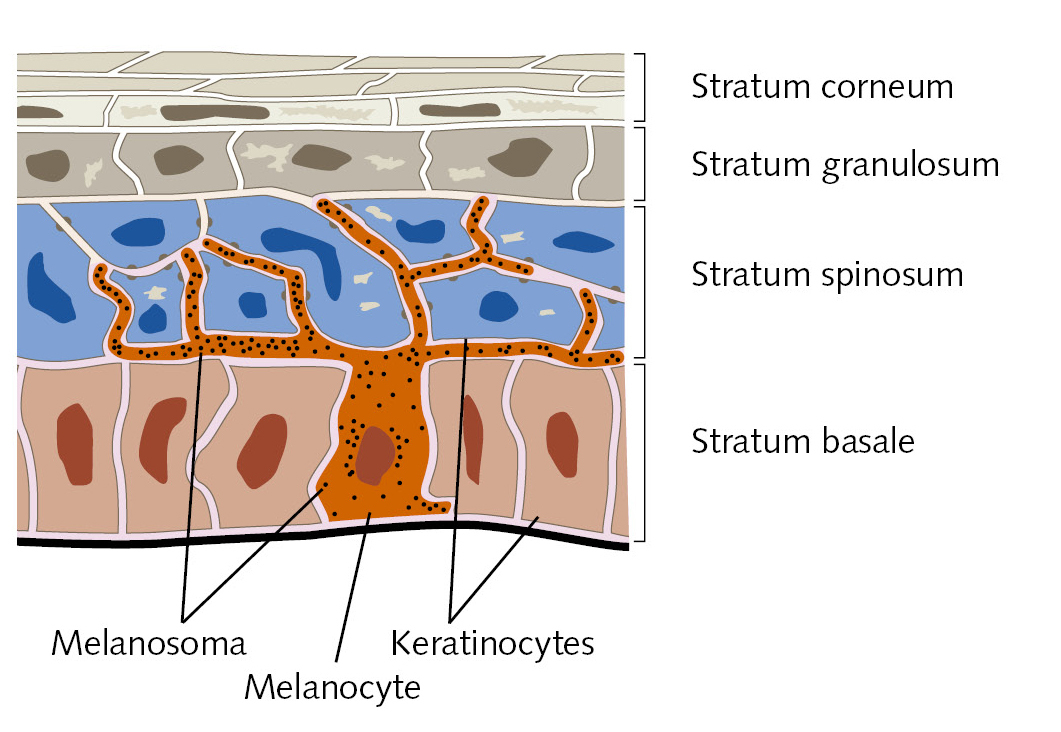
Pigmentation-
Important for:
Skin & coat colour,
UV protection,
camouflage
& social recognition
Melanocytes (dendritic cells) sit above basal layer, transfer melanin pigment granules to keratinocytes through projection (epidermal melanin unit). Melanin granules spread around for pigmentation and UV protection
Causes of pigmentation in disease: 1) modified by hormones/ inflammatory mediators or 2) damage to melanocytes:
- Hyperpigmentation e.g. due to chronic skin disease/ endocrine disorders. Can lead to Basal layer being very heavily pigmented, huge clumps of melanin above the nuclei of the keratinocytes in the spinous layer
- Thermal damage to melanocytes hair grows back white (e.g. branding)
- Macule- change in colour of skin <1cm, Patch- >1cm in diameter
- Vitiligo- autoimmune attack of melanocytes
Macule vs. Patch
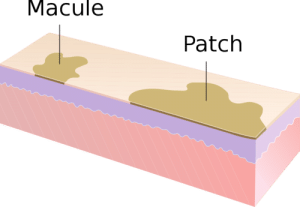
- It is flat, if you were to close your eyes and run your fingers over the surface of a purely macular lesion, you could not detect it.
- A macule greater than 1 cm. may be referred to as a patch.
- A papule is a solid raised lesion that has distinct borders and is less than 1 cm in diameter
- Macule:
Change in color in one center.
More than one–> patch
Antimicrobial action
Antimicrobial action-
Antifungal,
antibacterial
& antiviral
but commensal microbiota present (necessary, but commensal bacteria CAN become pathogenic, dogs–>staphylococcus, the bug straight onto sterile skin caused a fatal infection
Dermatophilosis: reduced immunity from malnutrition & tick infestation severe skin infection (bovidae in tropics). Maceration (breakdown of skin from moisture) may do the same–> (e.g. equine “rain scald”/”mud fever”)more severe on unhealthy skin. = Rain rot or trench foot for humans
Motion and Shape
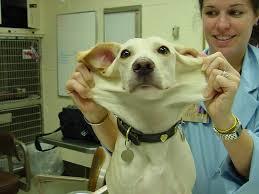
Motion & shape- Flexibility, elasticity & toughness- allows for movement
*Comes down to the collagen bundles produced by fibroblasts in the dermis
Elastic fibres return skin to original dimensions after stretch
Elastin Fibres (less importance, but still there!) = vertical in superficial dermis & horizontal in deeper layers
Group of syndromes where you can have genetic disorders relating to collagen:
Ehlers-Danlos syndromes: Skin hyperextensibility, skin fragility, joint
laxity caused by various genetic defects in collagen biosynthesis
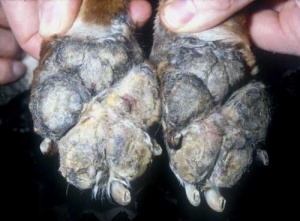
Footpad hyperkeratosis: from metabolic disease –> ↓ elasticity &
painful fissures, hence lameness
Blood Supply
(skin)
Blood Supply- extensive blood supply, but can be modified depending on conditions i.e. thermoregulation
Vasculitis: vessels are target of inflammation, if we damage those vessels, everything downstream will become devitalised skin (occurs in extremities e.g. ear tips)- loss of tissue, hyperpigmentation, scaling
Perivascular dermatitis(more common, is not target but participant of inflammation) : ‘stereotypic’ reaction: prominent dermal blood vessels (dilated), leucocytes recruited around BVs (form ‘cuff’), with epidermal hyperplasia (mediators ↑ keratinocyte proliferation)
Perivascular Dermatitis
- “stereotypic”/classical reaction
- Prominence of dermal blood vessels (dilate due to being part of inflammatory reaction)
- leucocytes recruited around blood vessels- these cells will go along the vessel wall and out the capillary wall to sit in the dermis, forming a cuff around the vessel–> perivascular dermatitis
- often cocurrent with dermal hyperplasia: the presence of inflammatory cells causes the keratinocytes to be more proliferative (leading to thickened hyperplastic epidermis)
- stereotypical reactionof the skin to inflammation and damage
- Usually with epidermal hyperplasia (mediators promote Keratinocyte proliferation)
Innervation
(skin)
Innervation
Motor function: blood vessels, sweat glands, pilomotor apparatus- sympathetic fibres only
Sensory organ: plexus of nerve fibres, both superficial & deep
- pain and itch sensation detected by many free nerve endings
- touch / vibration sensations detected by Merkel cells / nerve endings & various ‘corpuscles’ sitting at the end of neurons
Merkel Cells: mechanoreceptor cells that also sit in the epidermis
Temperature Regulation
Temperature regulation- Regulated by skin blood supply, hair coat & sweating
- Sweat: thermoregulation (horses, humans), protection against microbes, friction & pheromones
-Sweat glands:
- Apocrine (epitrichial)- discharge into hair follicles
- Eccrine (altrichial)- not associated with hair follicles- discharge directly onto skin surface. well developed in human skin and footpads (sweaty kitty pads in clinic)
*sweat glands have a myoepithelial layer around them that can contract and pass up secretion up to the surface of the skin or the hair follicle
- Sebaceous glands: Holocrine- entire cell (mature sebocytes) disintegrates to excrete its substance (which is ↑ in lipids): sebum sebaceous gland duct hair follicle canal
- less hairy skin is more rich in sebaceous glands
- basal progenitor layer around the periphery of the sebaceous gland( where the mitotic activity occurs), similar to stratified squamous keratinized epithelium
- Commensal yeasts (Malassezia spp.) are lipophilic- use & breakdown lipids for nutrients
- Young animals= more prone to ringworm- sebaceous lipid composition changes post puberty & becomes ↑ protective as ↑ saturated FAs
- Sebaceous adenitis: glands destroyed by inflammation granulomas form in their place scales around hairs (‘follicular casts’) which reflects the lack of sebum.
Sweat
(General Functions and Properties)
- termoregulation in only certain species (e.g. horses, humans)
- Protection against microbes, friction
- species extinction (pheramones, milk–> mammary gland is a giant sweat gland)
Storage and Metabolism
Storage and metabolism:
- Reservoir of water, fat, vitamins, carbohydrate / protein, vitamin D production (Rickets-humans need to expose our skin to sunlight for some time during day for metabolic needs)
Products of Epidermis/Follicles/Adnexal Glands
Products of epidermis / follicles / adnexal glands (sensation, contractility, lubricatio, hair-loss):
hair, hooves / claws, horns / antlers
Sebaceous Glands
- Progenitor Layer produces daughter cells and instead of becoming a dead squam become dead by a rupturing process
- liberating the lipids into the duct of the sebaceous gland and or into the hair follicle
- Sebum (cell) then upwardly migrates to the surface of the skin and onto the epidermis
- Stratum Corneum is lipid rich!! important for protection
- can be important for what topical drugs you may use
- need to be aware of such things as commensal yeasts that may be lipophilic (Malassezia sp.)
- lipids are also important for innate immunity (ringworm in puppies)
- Post puberty the output of the glands changes and they put out more FA’s influenced by hormonal effects which is more protective against the fungi–> change in innate immunity with age due to change with composition with sebaceous excretions






