Visual Field testing
Finger confrontation
- 4 quandrants; Pt asked to sum number of fingers seen
Kinetic boundary test
- from far lateral position, bring finger slowly toward midline and ask Pt to indicate when target first appears
- test vertical, oblique, and nasal fields as well
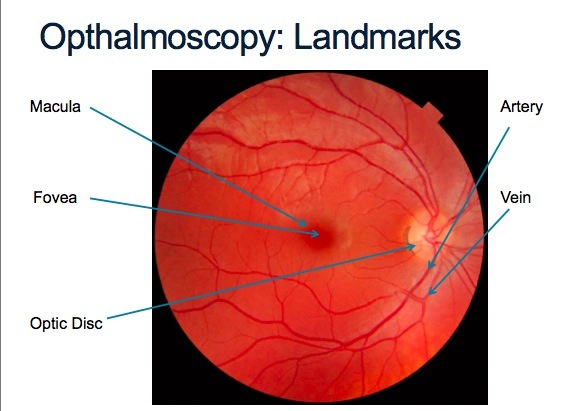
Opthalmoscopy landmarks
Special considerations in children
Vision milestones
- 3 mo: fix & follow
- 4 mo: accomodation
- 6 mo: conjugate gaze
Red reflex testing: shine light -> check for leukocoria in Rb or cataracts
Screen for strabismus/heterotropia
- corneal light testing
- cover/uncover testing: watch for eye movement
Pre-literate or low literate Pt
- Allen picture chart: visual acuity
- Motion (not counting): visual field testing
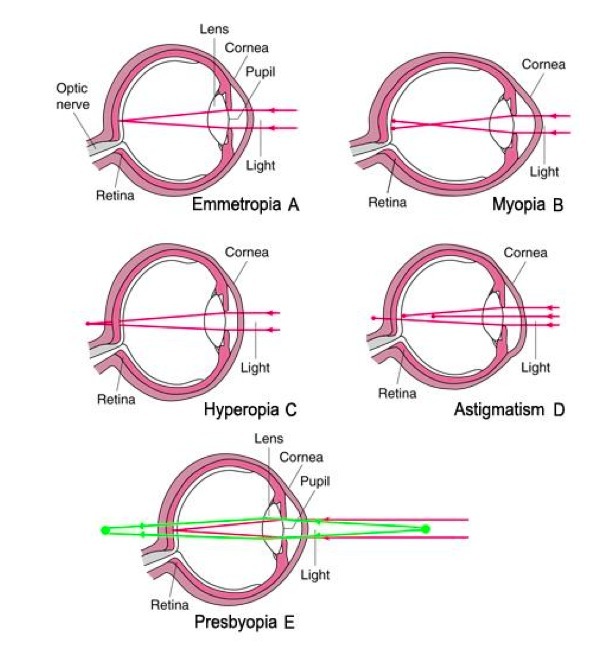
Refractive diseases
- Emmetropia: nl
- Myopia: convergence past retina
- Hyperopia: convergence before retina
- Astigmatism: abnormal corneal shape affecting vision
- Presbyopia: decreased lens flexibility
Eyelid position
- entropion: eyelid folds inwards
- ectropion: eyelid folds outwards
- ptosis: droopy eyelid
Eyelid lesions
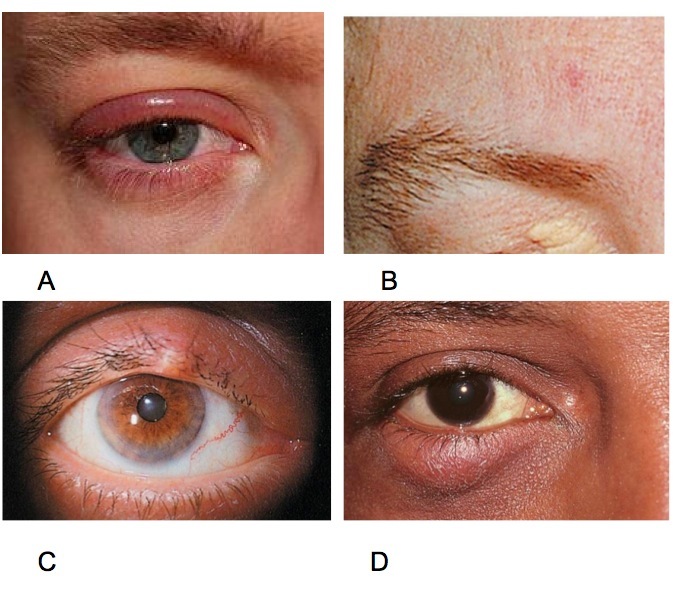
A. Blepharitis: chronic inflammation of the eyelid
B. Xanthelasma: yellowish fat deposit underneath eyelid
C. Hordeolum: infection of sebaceous gland of Zeis or sweat gland of Moll
D. Chalazion: cyst in eyelid caused by obstruction of meibomian gland
Lacrimal disease
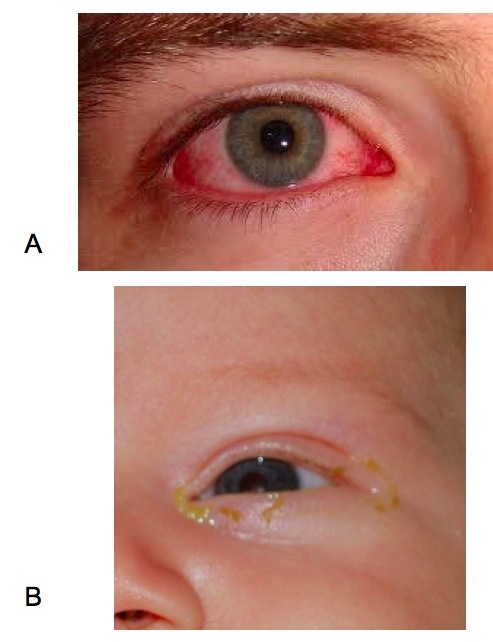
A. keratoconjunctivitis Sicca (Sjogren: dry eyes and dry mouth)
B, lacrimal gland obstruction
Conjunctiva & sclera
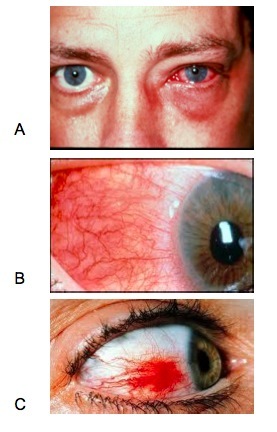
A. conjunctivitis
B. scleritis: painful inflammation
C. episcleritis: painless inflammation
Cornea
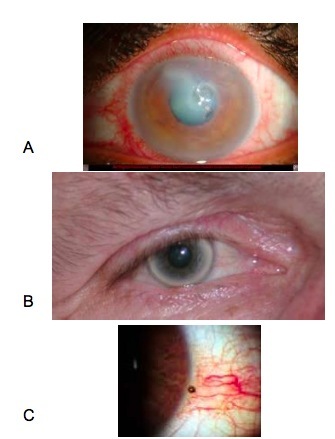
A. Keratitis: Infection or inflammation of the cornea (the centre portion of the eye that surrounds the pupil) & is usually accompanied by eye pain, photophobia, foreign body sensation, tears, & blurred vision.
B. Arcus senilis: infiltration of cholesterol deposits
C. Foreign body
Pupils
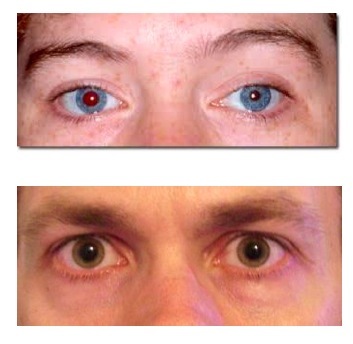
A. Aniscoria
B. Tonic pupils
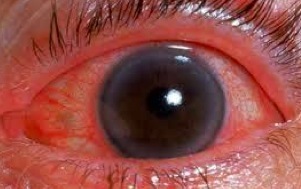
Glaucoma
- characteristic finding in all types of glaucoma is an increased intraocular pressure.
- DDx with conjunctivitis
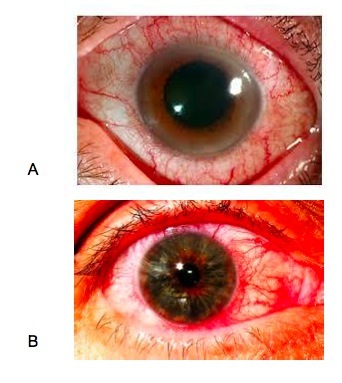
Uveitis and assoicated disorders
A. Uveitis: assoc w red eye
B. Iritis: associated with severe pain, photophobia, tearing, decreased vision
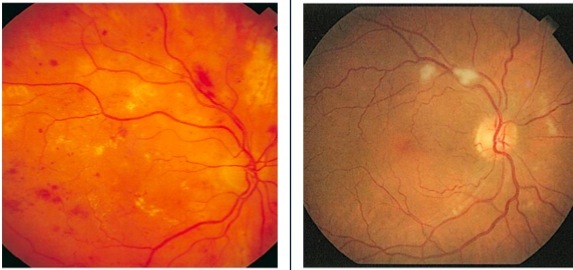
Retinal diseases
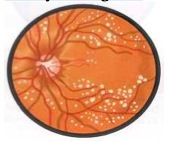
Left: diabetes showing
- Flame and/or dot blot (similar to microaneurysms) hemorrhages;
- neovascularization of the disc [NVD]
Right: HPT
- Thicker vessels -> described as Copper-wiring
Special testing
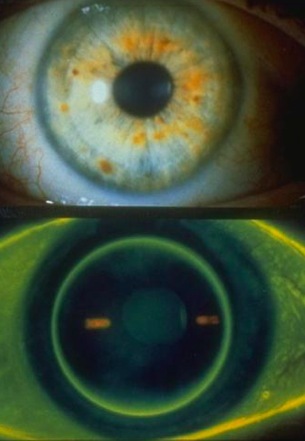
Slitlamp Examination:
• Used to visualize the anteriorsegment for foreign body in cornea
• Details of the external landmarks can also be seen
Fluorescein Staining:
- Stains cornea and can demonstrate irregular epithelium, i.e. To visualize for tears in cornea
- Slitlamp with blue light used to visualize fluorescent dye
Eyebrow distribution & lesions
- suggests hypothyroidism, leprosy, or myxedema
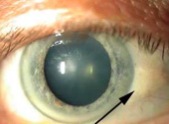
Pingueuculum
A yellowish patch or bump on the white of the eye, most often on the side closest to the nose. It is not a tumor, but an alteration of normal tissue resulting in a deposit of protein and fat. Unlike a pterygium, a pingueculum does not actually grow onto the cornea. A pingueculum may also be a response to chronic eye irritation or sunlight.
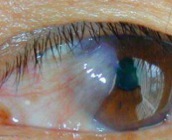
Pterygium
A fleshy growth that invades the cornea. It is an abnormal process in which the conjunctiva (a membrane that covers the white of the eye) grows into the cornea. Pterygium may be small or grow large enough to interfere with vision, and commonly occurs on the inner corner of the eye. The exact cause of pterygium is not well understood. Pterygium occurs more often in people who spend a great deal of time outdoors, especially in sunny climates. Long-term exposure to sunlight, especially ultraviolet (UV) rays, and chronic eye irritation from dry or dusty conditions seem to play an important causal role.
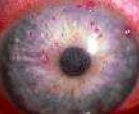
Sjogren’s syndrome
Sjögren’s (“SHOW- grins”) syndrome is a chronic disease in which white blood cells attack the moisture-producing glands
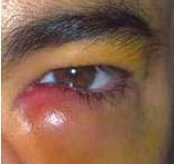
Dacrocystitis
Infection of the tear sac between inner corner of eyelids and nose. Usually caused by block of the duct that carries tears from the tear sac to the nose. Dacroadenitis is lacrimal gland enlargement.
Arcus senilis
- Grayish or whitish arc or circle visible around the peripheral part of the cornea in older adults.
- caused by lipid deposits in the deep layer of the peripheral cornea and not necessarily associated with high blood cholesterol.
- Should always indicate to the physician the need to explore the possibility of alcoholism, particularly when it is detected in males under the age of 60
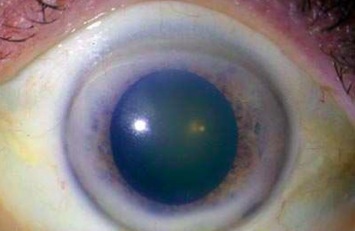
Adie’s pupil
- Widely dilated,
- Light reflex absent,
- Near reaction present
Argyll-Robertson pupil
- Irregular pupils bilaterally,
- React to near reaction but not light
- syphilis & diabetes
Nystagmus
- Horizontal: cerebellar lesion, brain stem lesion, drugs ex. ethanol or phenytoin
- Vertical: from inner ear, vestibular disease, brainstem disease, PCP
Drusen
Look like specks of yellowish material under the retina. They are deposits of extracellular material that accumulate between the retinal pigment epithelium (RPE).
A few small drusen normally form in the human eye, usually after age 40.