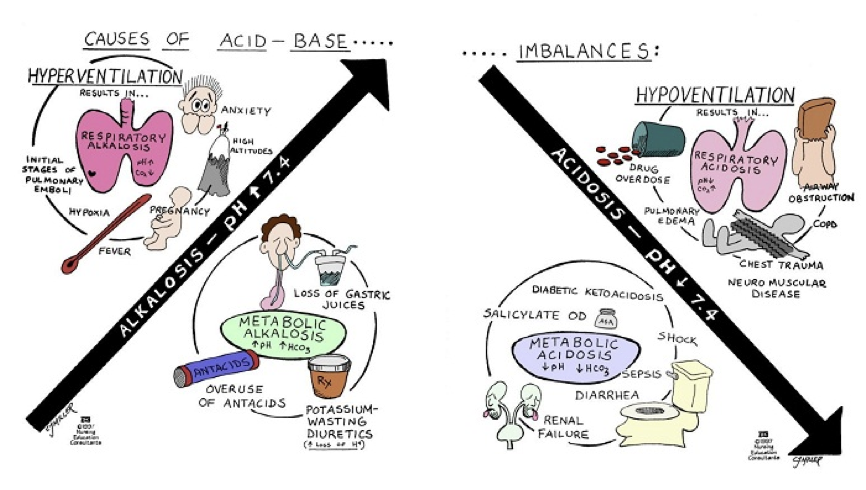
Understand the ABG’s and how to decide if a patient is in resp acidosis or resp alkalosis, Metabolic acidosis, or metabolic alkalosis.
FUNCTION OF POTASSIUM
- K+ necessary for normal cardiac rhythms.
- K+ necessary for skeletal and smooth muscle contraction.
- K+ helps make glycogen deposit in the liver.
- Yum Yum Potassium :D
- Administration: NO IV PUSH, Oral and IV.
FUNCTION OF SODIUM
- It’s the main regulator of ECF volume! (Hence, more sodium you balloon up)
- Administration: Hypertonic fluids
FUNCTION OF CALCIUM
Low calcium: Tetany, Chvostek + sign, Trousseau +
Ca++ works as an enzyme co-factor for clotting and hormone secretion. Stored in parathyroid glands.
- Ca++ maintains plasma membrane stability-particularly in the cardiac cell nerve receptors.
- Ca++ aids in the transmission of nerve impulses and contraction of muscles.
- Administration:
- Acute situations give Calcium Gluconate IV PUSH slow
- Non-Acute give Calcium PO
CORRECTED CALCIUM FORMULA!
measured Ca(mg/dL) + 0.8(4.0 - serum albumin g/dL) = Corrected calcium (mg/dL)
Example:
Pt’s serum calcium level is reported as 7.5 mg/dL and serum albumin is 2.5 g/dL.
7.5 mg/dL + 0.8(4.0-2.5 g/dL) =
7.5 mg/dL + 1.2 = 8.7 mg/dL (corrected calcium)
ANGINA
vs.
MI
Angina is a result of ischemia caused by reversible cell injury.
MI: Coronary artery occlusion with myocardial death and necrosis. WE HAVE AN ST ELEVATION OMG - every medical drama show ever….
MI INTERVENTION
- Oxygen therapy: keep 02 sat > 95%.
- Aspirin: 325 mg chewable
- Metoprolol: 5 mg IV push
- Morphine: 2-10 mg IV push
- Nitroglycerin IV titrate to pain and BP
- 12 lead ECG: monitor for S-T elevation, depression.
- Cardiac enzymes- CPK-MB, LDH, Troponin T/I,
- electrolytes, CBC.
- GET THAT PATIENT’S ASS TO A CATH LAB, or umm he’s gonna die
Cardiac markers (labs) for a patient having an MI
- Topononin I & T (Most reliable)
- CK (Creatine Kinase)
- Myoglobin
Current standard of care for a patient having an MI
Reperfuse heart via Percutaneous Coronary Intervention or PCI with/without stents.
signs and symptoms of decompensated heart failure
- SOB
- Fatigue
- DOE
- Orthopnea (Wake up cause they can’t breathe)
- Paroxysmal Nocturnal Dyspnea
- Tachycardia (Compensation of fluid load)
- Poor Activity Tolerance
- Fluid weight gain
- Edema (LE, pulm)
- Nocturia
- Skin changes (Greyish color)
- Chest pain (give nitro, check for MI)
- Cough (Can be productive, if they are foaming at the mouth, then they are drowning - Medical Emergency))
- Hepatomegaly
- Anorexia/Nausea
Medications given for heart failure management
- ACE inhibitors-1st line therapy in all stages of HF for both systolic and diastolic HF.
- Diuretics- Lasix, HCTZ
(That hydro chloro Thiazide), (watch electrolyte levels, monitor intake/output)
Given IV push (not PO)
- Inotropes- Digoxin (measure serum levels)
- B-Adrenergic Blockers- Metoprolol
- Calcium channel Blockers- Amlodipine
- Vasodilators- Imdur
- Antiarrhythmics- Amiodarone
- Blood thinners, platelet inhibitors- ASA, Plavix,
- Nitrates/ vasodilators
- s/s of digoxiticity: HTN, nausea, fatigue, U wave after T wave on ECG
- B-Adrenergic Blockers- Metoprolol (given because the faster the heart goes, the less CO so BB help slow it down to function properly)
- know the HR before giving
- Calcium channel Blockers- Amlodipine (Know heart rate)
- Vasodilators- Imdur
- Antiarrhythmics- Amiodarone (KNOW THIS)
- s/s: Turns you into a smurf (blue), pulmonary fibrosis, Liver function goes bad, hyperthyroidism leading to AFib, blindness
- Used to treat atrial fib, and ventricular fib but can also cause your a. fib
- Blood thinners, platelet inhibitors- ASA, Plavix, Coumadin (Vitamin K and FFP reserve it and you need to check INR normal 2-3)
- Nitrates/ vasodilators
- SE: low BP and headache
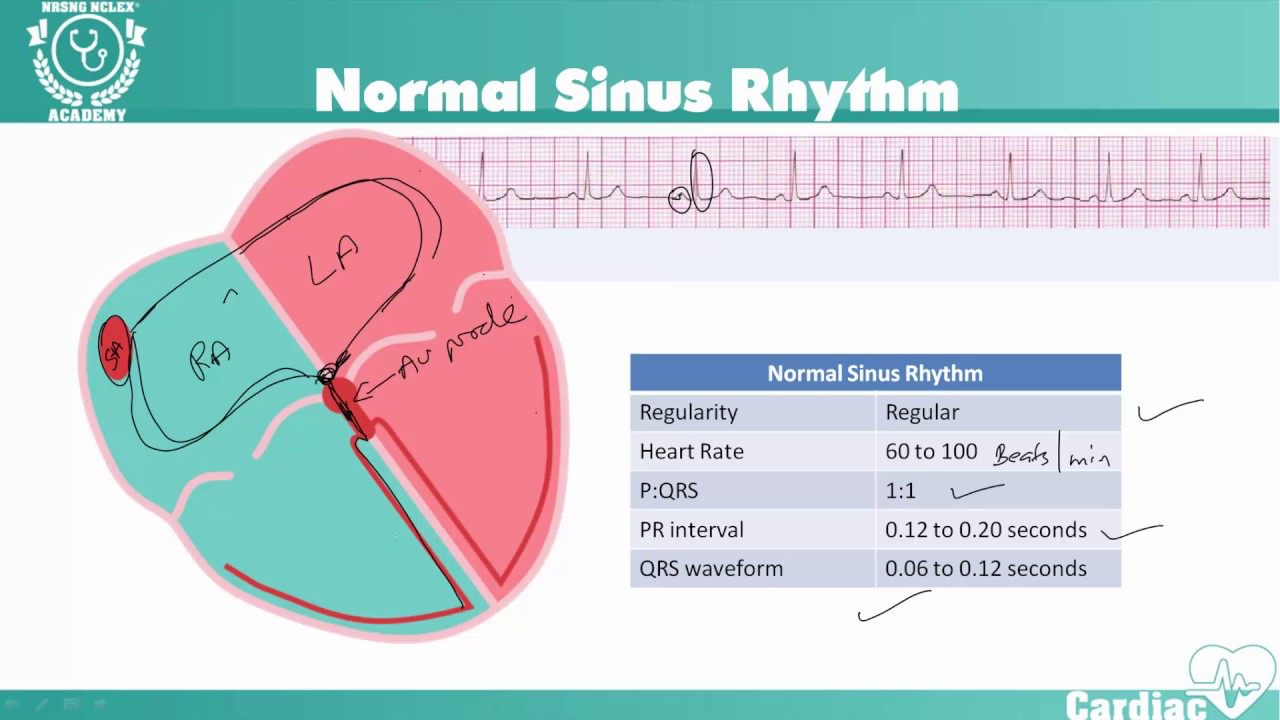
criteria for normal sinus rhythm
- There is a P-wave in front of every QRS. (0.06 to 0.12)
- Distance between P wave and QRS complex is the same in each complex.
- Distance between R-R waves is the same.
- Rate is between 60-100 beats per minute.
- Rate increases as metabolic demand increases with activity- ex: exercise
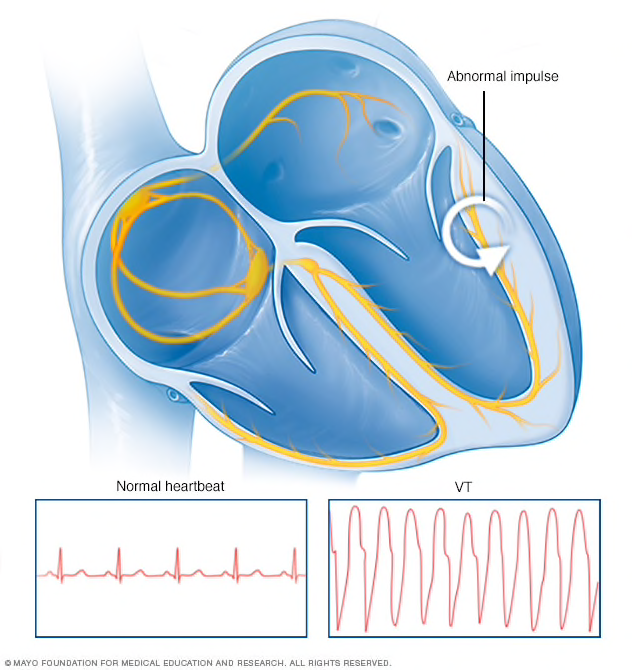
Ventricular Tachycardia
- Heart rate is 100-280 , Cardiac output is minimal
- Treatment: When patient is unconscious, DEFIB them or cardioversion
- first thing you do is look at them (assessment)
- Due to scar tissue from previous MI.
- no BP, no HR, nothing
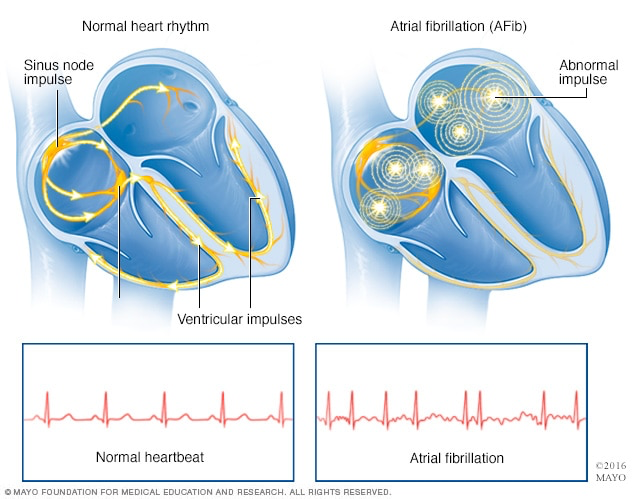
Atrial Fibrillation
- Impulses stop at AV node, got atrial quiver at over 400-600 bpm.
- CAN THROW A CLOT, stroke guys :(
- Treatment: RATE vs RHYTHM control. so slow the heart (Beta blockers and CCB), and give antiarrhythmics (Amiodarone). ALso give heparin to prevent clots.
- count the R to R interval
- Can also cardiovert or ablation
- No visible P-wave
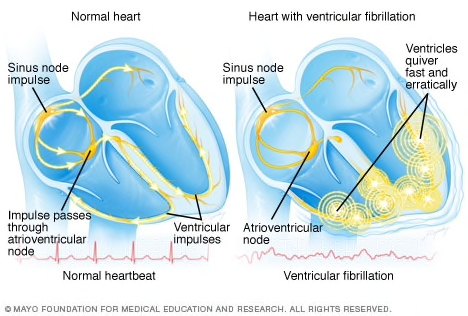
Ventricular Fibrillation (CODE BLUE)
- Defib that patient’s ass or he ain’t gonna be alive. (Defib ASAP)
- CPR, Pharm management (Amiodarone, epi, etc.)
- No Respirations or pulses
- START CPR
Indications for Coumadin therapy and the patient teaching and bleeding precautions that are associated with Coumadin therapy.
- Coumadin for them A Fib boys
- Give Coumadin for atrail fibrillation as prophylaxis to prevent clots and strokes
- Try not to hurt your self or you’ll bleed to death
- Keep vitamin K the same, so don’t chug them leafy greens
signs and symptoms of acute respiratory failure
- Sudden and life threatening deterioration of gas exchange function of the lung.
- Defined as:
- * a decrease in PaO2 to < 50 mm Hg (hypoxemia)
- * an increase in PaCO2 to > 50 mm Hg (hypercapnia)
- * an arterial pH of < 7.35 (acidemia).
- Tachypnea, dyspnea with prolonged expiratory phase - approximately 1:4.
- SpO2 less than 80%
criteria for a diagnosis of ARDS
A clinical syndrome characterized by:
- sudden and progressive pulmonary edema
- increasing bilateral infiltrates on chest x-ray
- hypoxemia that is refractory to oxygen therapy
- reduced lung compliance.
- These signs occur in the absence of left-sided heart failure
- No response to O2 therapy
cardinal signs of a patient with COPD
Characterized by 3 primary symptoms:
- Cough
- Sputum production
- Dyspnea on exertion
o Weight loss as dyspnea interferes with eating
o Energy-depleting work of breathing
o Use of accessory muscles to breathe
o Appearance of a barrel chest from fixation of the ribs in inspiratory position (hyperinflation)
- Hx of smoking
COPD Medical Management
· Smoking cessation: MUST ask patient. Most effective intervention
· Bronchodilators: MDI’s and nebulizer therapy (for acute COPD exacerbation)
o Beta adrenergic agonist agents
o Anticholinergic agents
o Methyxanthines
· Corticosteroids: inhaled and systemic (for short bursts only)
o Do NOT take continuously (S/E profile: bone loss, high Glu)
· Oxygen therapy: long-term continuous O2 therapy in LOW doses
o PaO2 of 55mmHg or less needs O2
o Any evidence of organ damage needs O2
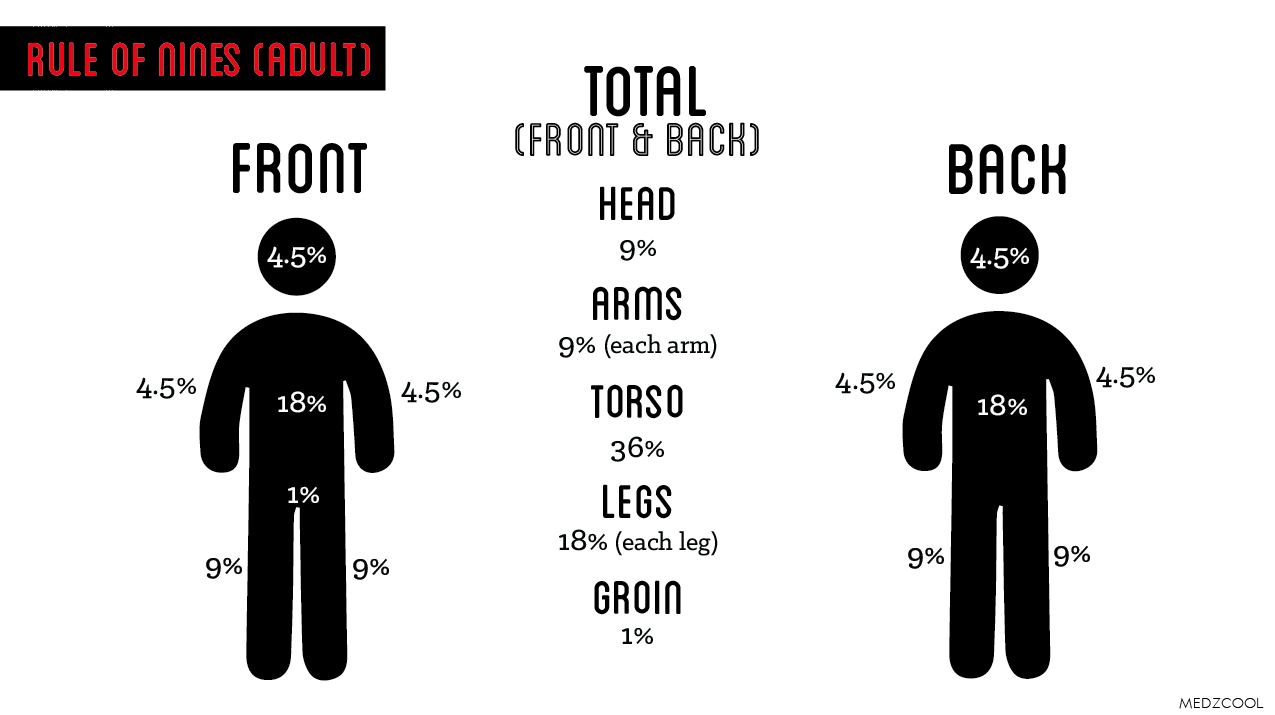
rule of nines in estimating burn percentages on a patient
- Any burn greater than 40% TBSA will have systemic effects
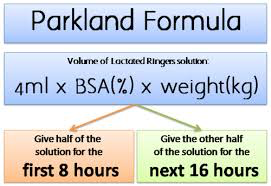
Parkland formula in determining the amount of fluid replacement a burned patient will need in the first 8 hours and the next 16 hours
- Urine output above 50 an hour, BP over 80/50
- Give the fluid central Line.
goals of cancer therapies (cure, control, palliation), and what to do if a patient has an implanted radiation device that suddenly becomes explanted
- *Cure:** can the cancer be completely removed? (stage 0-1)
- *Control:** can we limit/stop the spread? (stage 2-3)
- *Palliation:** can we keep the patient comfortable? Say Goodnight Crazy (aka stage 4)
In event of dislodged implant- use long-handled forceps and place implant in lead container
3 things a nurse needs to remember when dealing with a patient with a radiation implant - in terms of protecting herself
Time: minimize time spent in close contact
Limit total time to 30 min per total 8 hour shift
Minimum 6 feet of distance when possible
Distance: maintain maximum distance possible from radiation source
Shielding: use lead shields to reduce exposure
In event of dislodged implant- use long-handled forceps and place implant in lead container


-
Exam 3 Burn Injuries25
-
Exam 3 Renal19
-
Exam 3 the Elderly3
-
Exam 3 GI11
-
Exam 3 Peri-Operative3
-
Exam 3 Liver7
-
Exam 4 Immunological Abnormalities33
-
Exam 4 Immunodeficiency Disorder HIV/AIDS17
-
Exam 4 Musculoskeletal Disorders27
-
Exam 4 Gerontological Nursing13
-
FINAL EXAM ABG and K, Na and Ca27
-
FINAL EXAM Heart19
-
FINAL EXAM Study Guide Version Part 166
-
FINAL EXAM Study Guide Version Part 254



