thick layer of glycoproteins surrounding the oocyte that supports the oocyte in development
zona pellucida
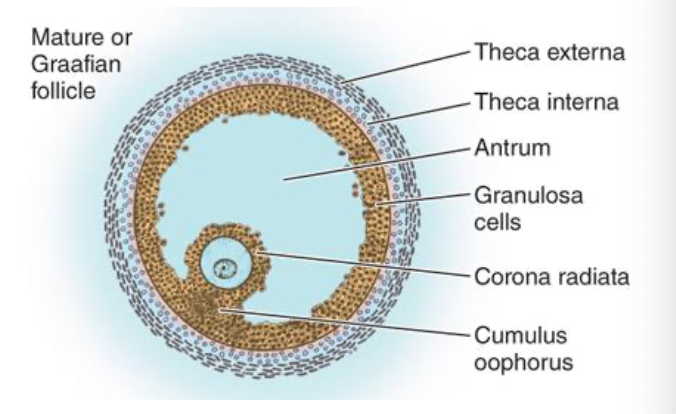
Describe the different types of granulosa cells (responsible for follicle development):
- cumulus oophorus: anchor oocyte to follicle wall
- mural granulose cells: line the wall of the follicle
- corona radiata: firmly anchored to the zona pellucida
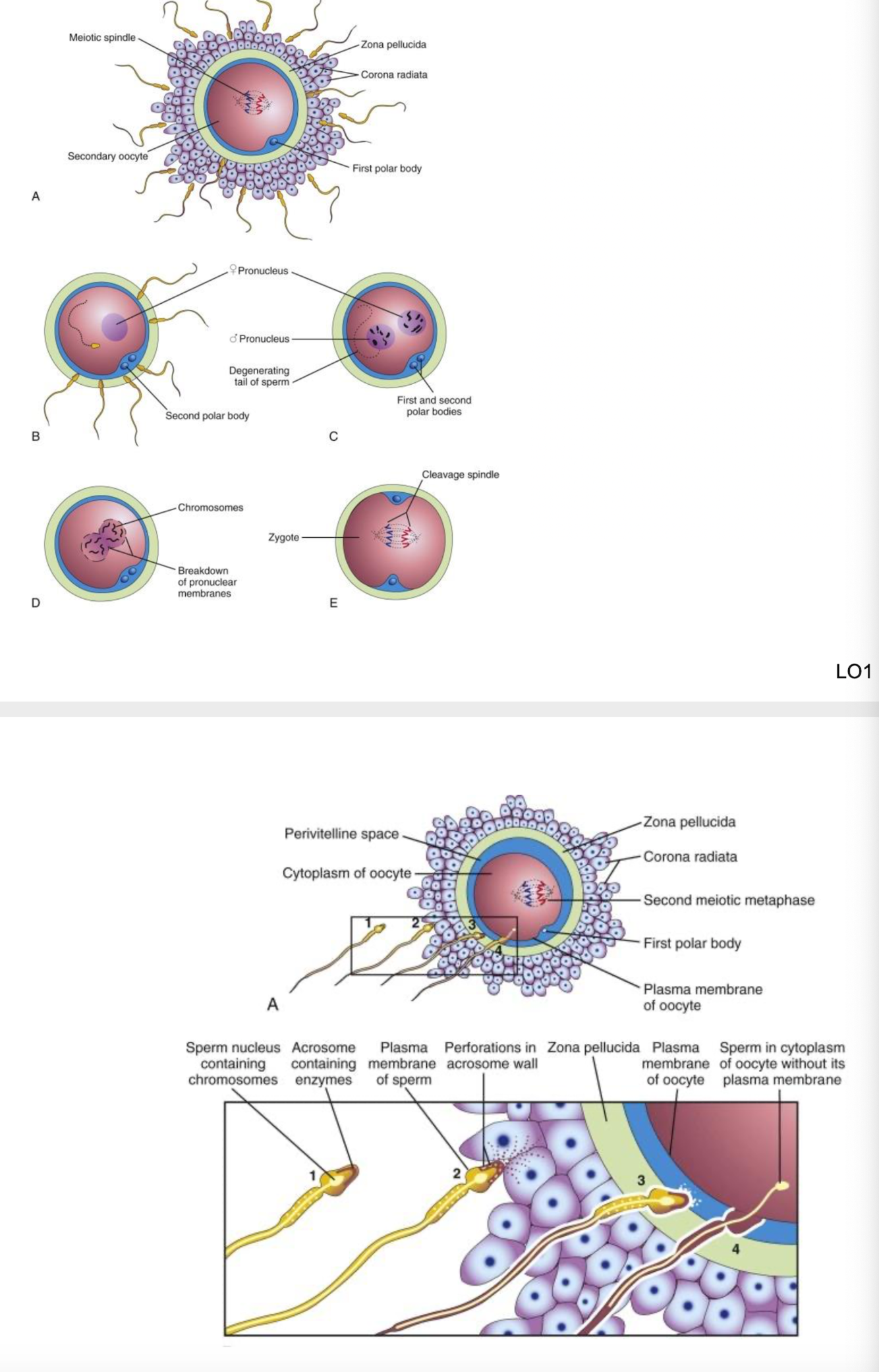
Describe the process of fertilization:
(sperm contact the plasma membrane of the oocyte)
- acrosome reaction: sperm head releases enzymes allowing for its passage through corona radiate and zona pellucide
(a single sperm enters the oocyte)
- zona reaction: changes in the zona pellucide renders it impermeable to other sperm
- fusion of egg and sperm cell membranes
- sperm head and tail enter the secondary oocyte
- formation of male and female pronuclei: nucleus of the oocyte is now the female pronucleus; sperm head enlarges, forming the male pronucleus while the sperm tail diffuses
- pronuclei fuse forming the zygote (n=46)
- metabolic activation/initiation of cleavage, chromosomes of the zygote are arranged on a cleavage spindle
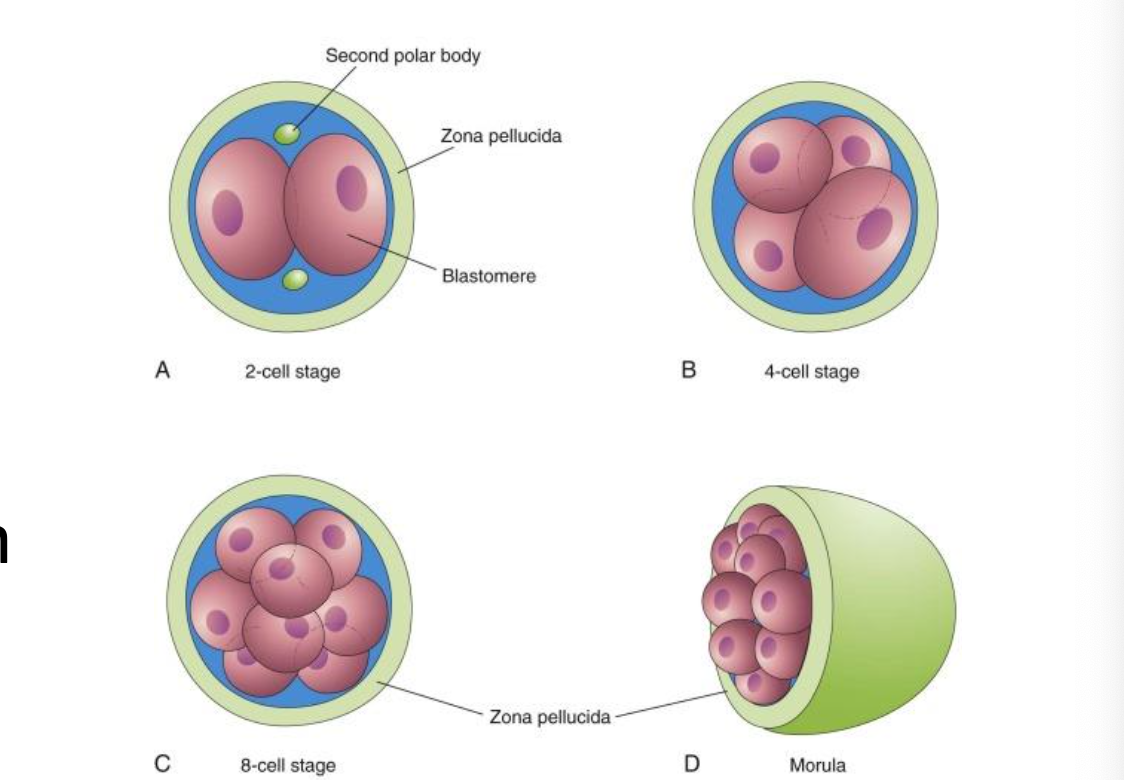
Describe the process of cleavage and when it occurs:
- begins ~30 hours after fertilization
- repeated mitotic divisions of the zygote
- cells in this stage are named, blastomeres
- at 9-cell stage, undergo compaction
- at 12-32 cells, the developing human is named morula (means mullberry)
*cell growth is limited because of the zona pellucida, thus the cells start compacting and become smaller in size*
Describe blastogenesis and when this occurs:
- morula enters the uterus ~day 4
- blastocystic cavity appears ~day 5 (create from fluid called uterine milk)
- developing human is now termed blastocyst: embryo and its membranes (trophoblast and embryoblast)
- after ~2 days, the zona pellucida degenerates and that blastocyst “hatches”
(zona pellucida degrades from enzymes released by blastocyst, forming the late blastocyst which is ready to implant in the uterine wall)
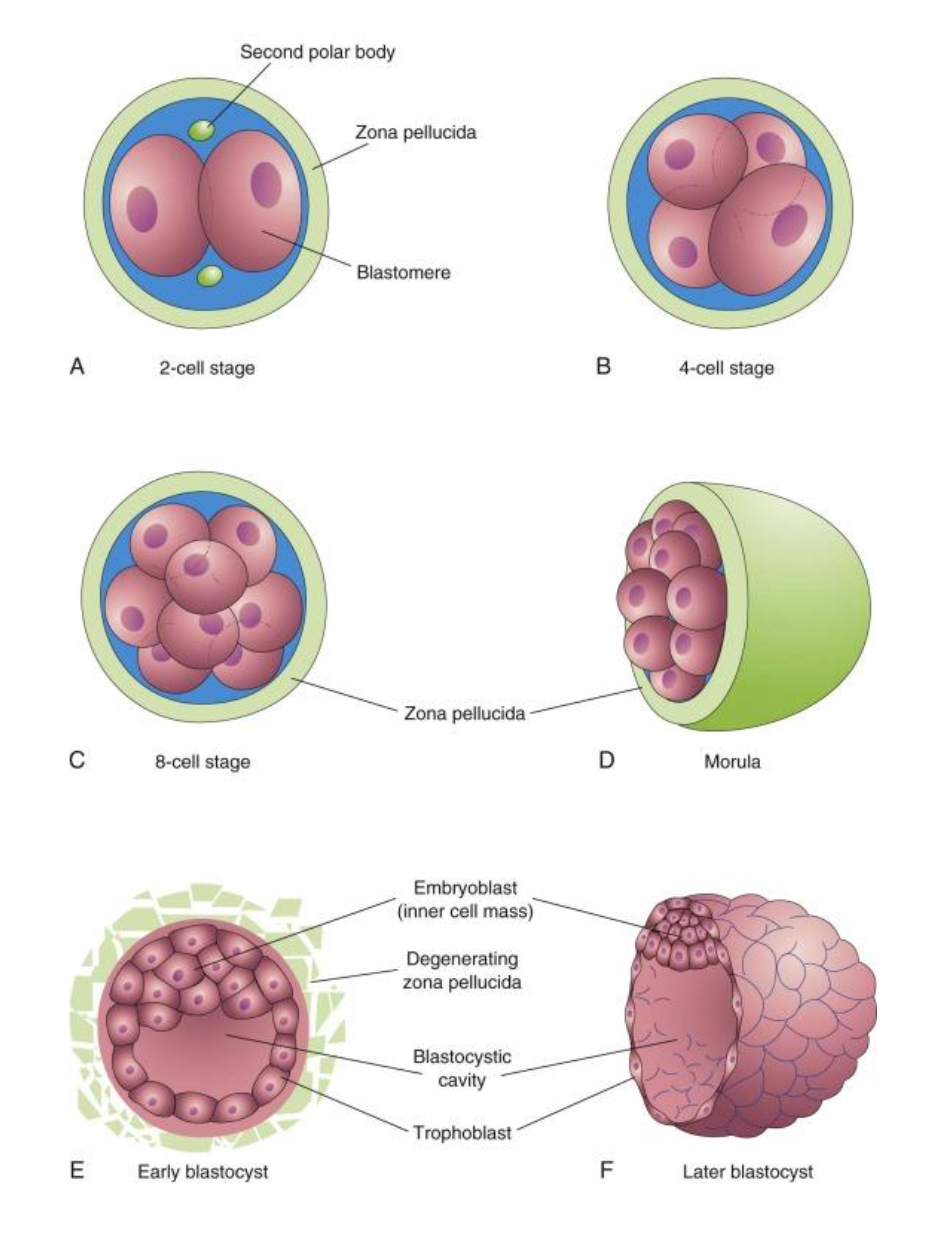
Diagram of fertilization:
(good study tool)
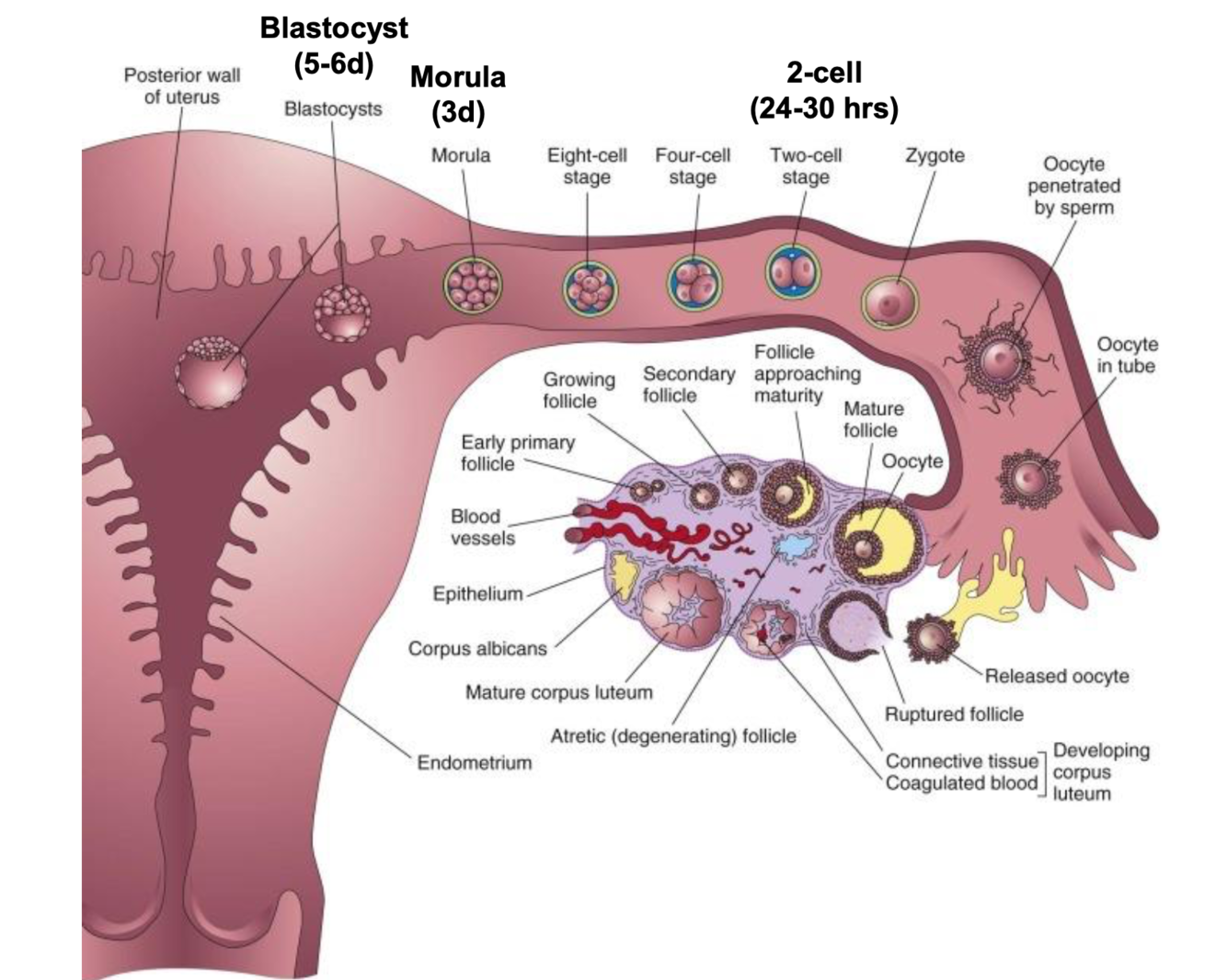
- many zygotes, morulae, and blastocysts are lost early on in development, at a rate of ~45%
- causes: inadequate production of progesterone/estrogen from corpus luteum; chromosomal abnormalities, including abnormal segregation, duplication, deletions, dispermy (69 chromosomes), etc.
- may require dilation and curettage (D&C)
spontaneous abortion
Describe implantation and trophoblast differentiation, and when they occur:
- late blastocyst attaches to endometrium in the uterus, with the embryoblast (inner cell mass) being adjacent to the uterine wall, occurs ~6-8 days
- trophoblast (inner layer of cells within blastocyst) differentiates into cytotrophoblast and syncytiotrophoblast
- syncytiotrophoblast invades the endometrium via enzymatic digestion
- blastocyst “burrows” into the endometrium and becomes superficially implanted
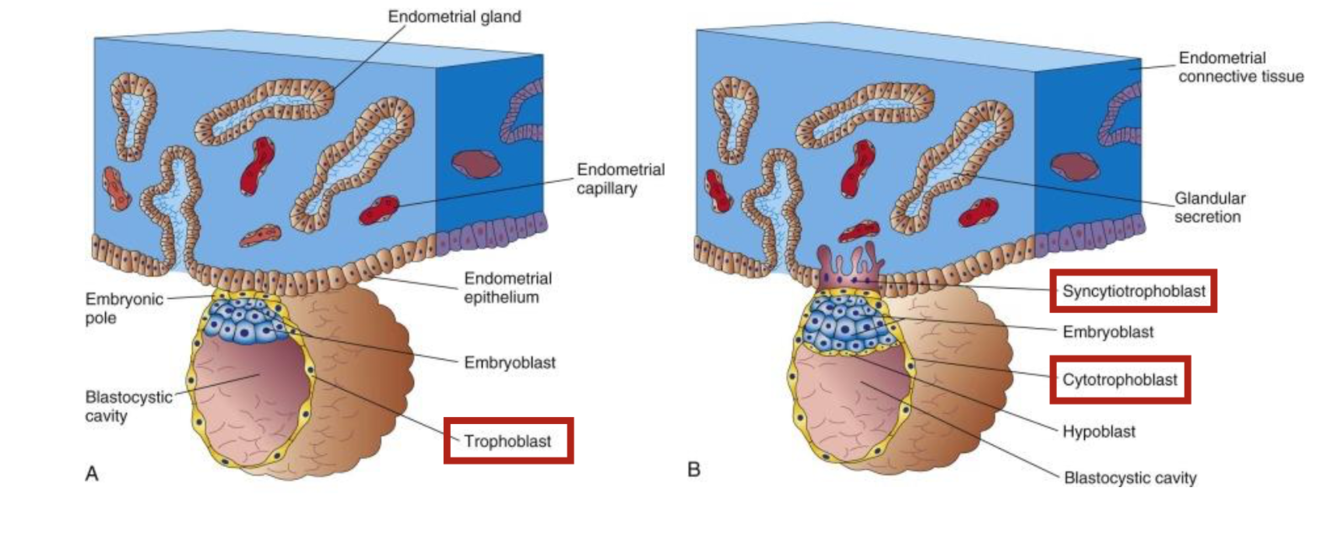
Describe the embryoblast, trophoblast, cytotrophoblast, and syncytiotrophoblast:
- embryoblast: inner mass of cells that gives rise to the human body
- trophoblast: inner lining of cells that plays a role in inplantation and placenta formation; gives rise to cytotrophoblast and syncytiotrophoblast
- cytotrophoblast: remains as boundary of the inner lining of blastocyst
- syncytiotrophoblast: lack cell membranes, produces syncytium which is a single cell or cytoplasmic mass containing several nuclei, plays a role in blastocyst implantation
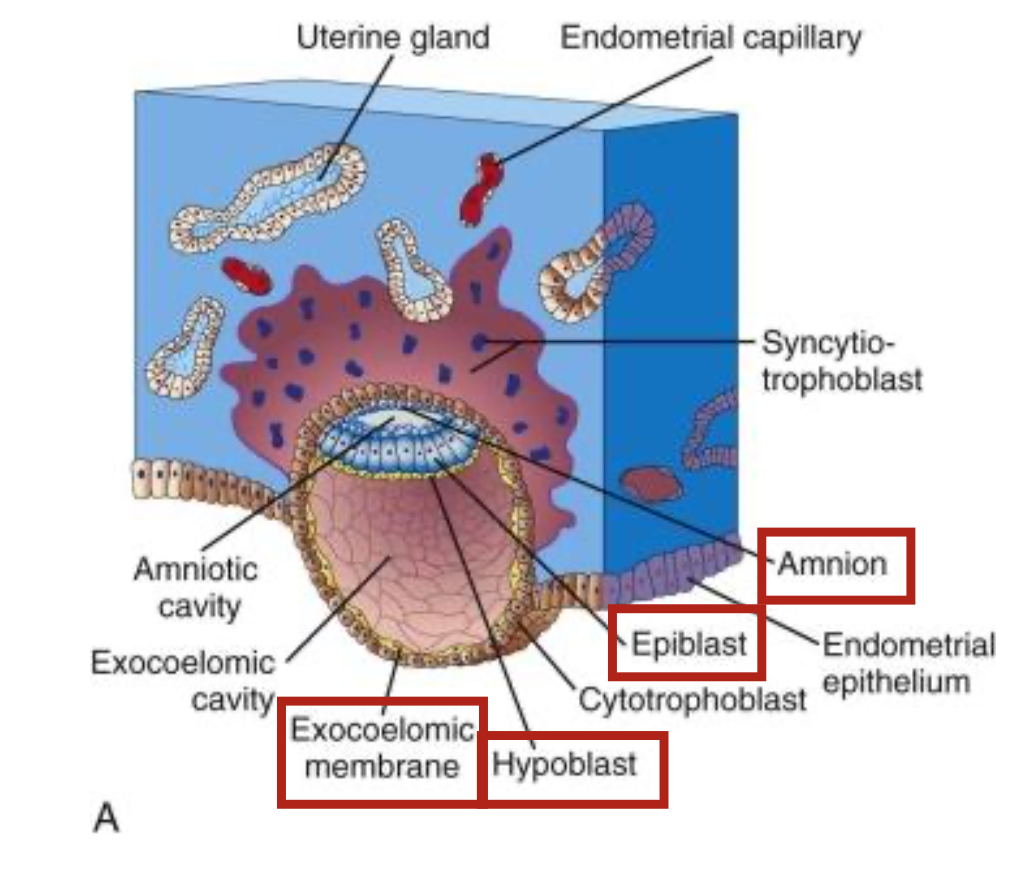
Describe the process of bilaminar embryonic disc formation and when it occurs:
- embryoblast differentiates during implantation ~7 days, into the epiblast and hypoblast
- hypoblast creates the exocoelomic membrane ~9-10 days (these cells are an inner layer to the cytotrophoblast), which eventually gives rise to the chorion
- epiblast remains as a mass of cells; an amniotic cavity forms and cells separate from epiblast, forming the amnion (encloses the embryo and houses amniotic fluid)
Describe the process of primary umbilical formation:
- primary umbilical vesicle = hypoblast + lining of the exocoelomic membrane
- gives rise to the extraembryonic mesoderm, a layer of tissue that surrounds amnion and umbilical vesicle, will develop spaces that join and fuse to create the extraembryonic coelom
*primary umbilical vesicle is equivalent to the yolk sac present in other animals*
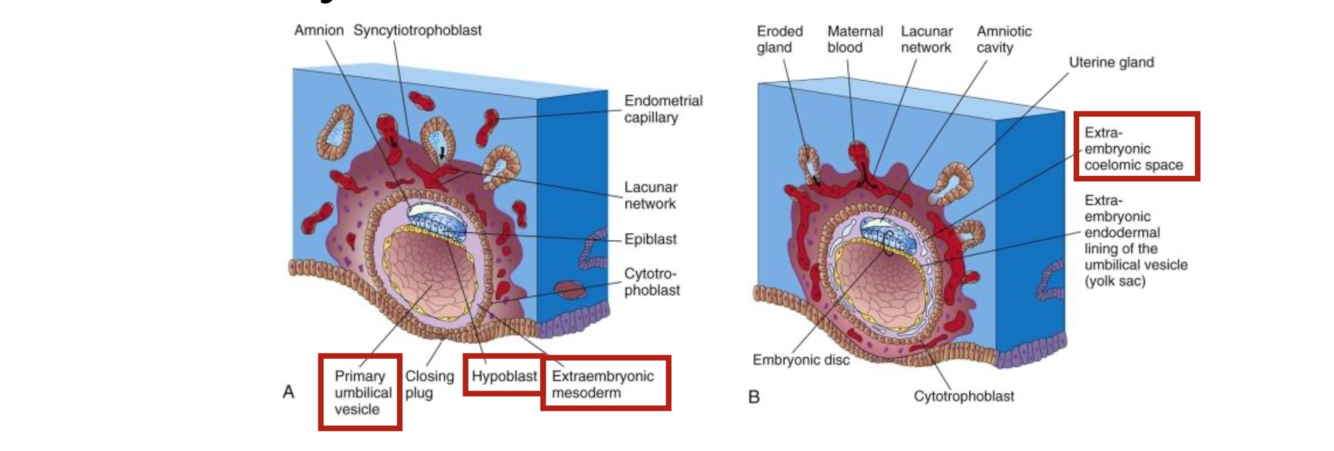
Describe the process of the formation of the secondary umbilical vesicle:
- extraembryonic coelom forces primary umbilical vesicle to decrease in size
- majority of the primary umbilical vesicle pinches off and is eventually lost
- secondary umbilical vesicle forms from hypoblast cells (these cells migrate inside of the primary umbilical vesicle, site of origin of primordial germ cells)
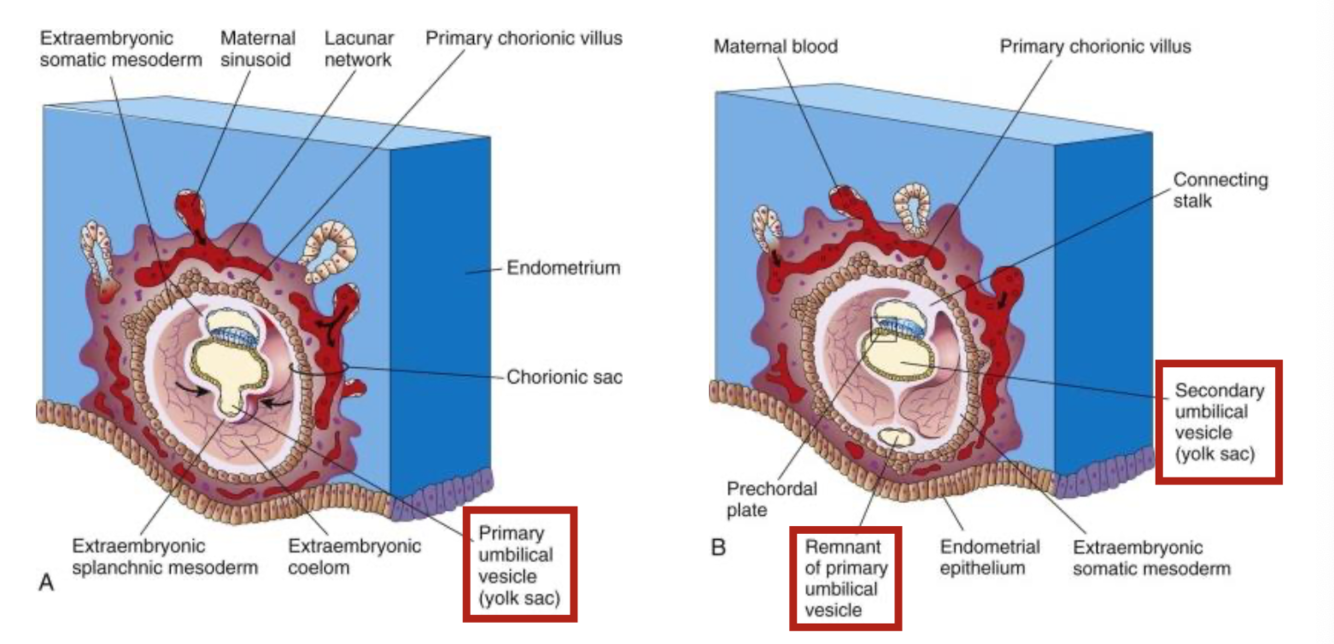
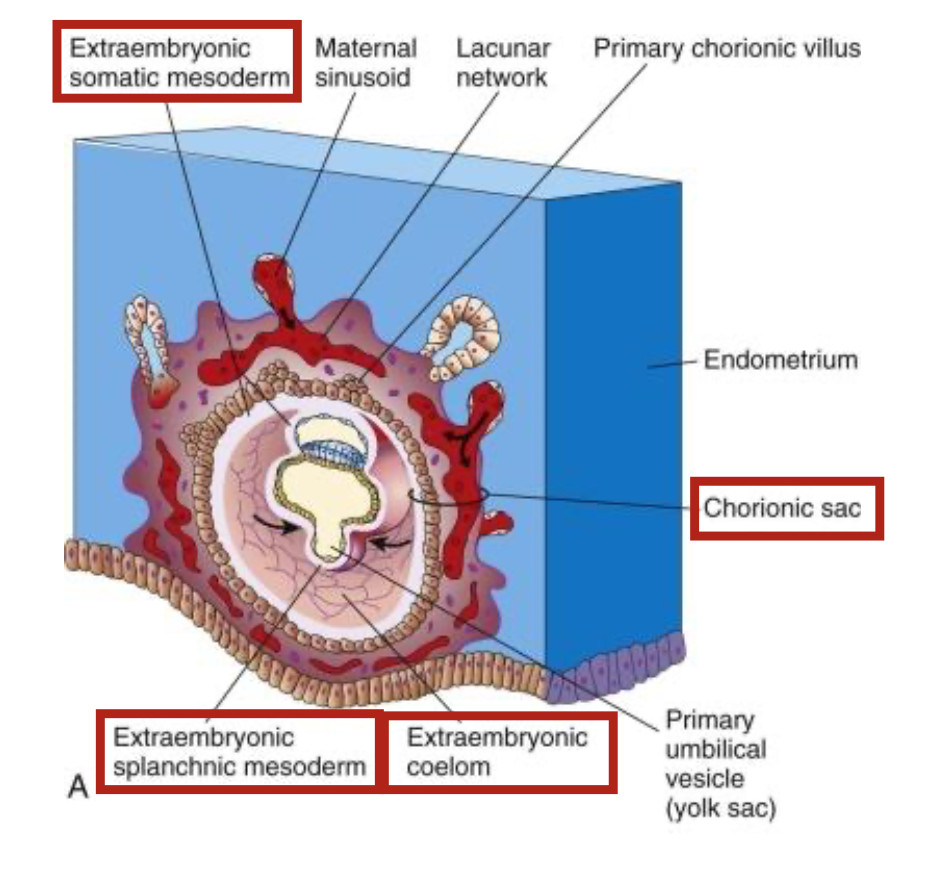
At the same time as the formation of secondary umbilical vesicle, the chorionic sac is formed, describe this process:
- extraembryonic coelom separates the extraembryonic mesoderm into: extraembryonic somatic mesoderm (lines trophoblast and amnion) and the extraembryonic splanchnic mesoderm (surrounds umbilical vesicle)
- the chorionic sac is thus formed, which is the extraembryonic somatic mesoderm + trophoblast; the chorion is the fetal component of the placenta
- when the implantation of the blastocyst occurs outside of the uterine cavity
- 2% of all pregnancies
- typically occur in the oviduct (95-98%)
- sx: abdominal pain, amenorrhea, vaginal bleeding, profuse bleeding and rupture of the oviduct wall
ectopic pregnancy
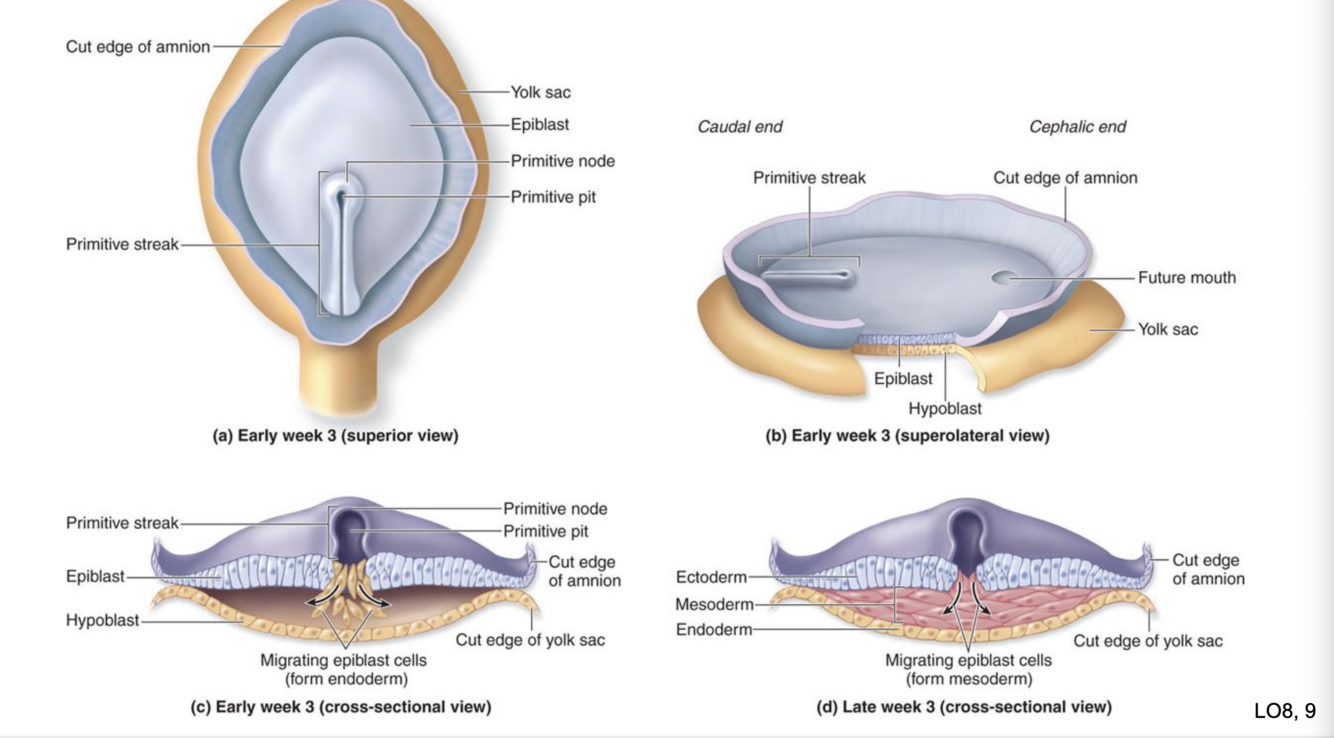
- process by which cells from the epiblast migrate to form the primary germ layers
- establishes basic body plan: a tube within a tube
- begins during week 3 of development, w/ formation of the primitive streak (thin depression on the surface of the epiblast)
- once all germ layers are present, the trilaminar embryonic disc is established
- defines all body axes: cranial-caudal, dorsal-ventral, medial-lateral, left-right
gastrulation
- germ cell tumor (benign or malignant) derived from pluripotent primitive streak cells
- persistent remnants of primitive streak, incidence of ~1:35,00 live births, largely female (80%)
- may be derived from any/all germ layers
- surgically excised
sacrococcygeal teratoma
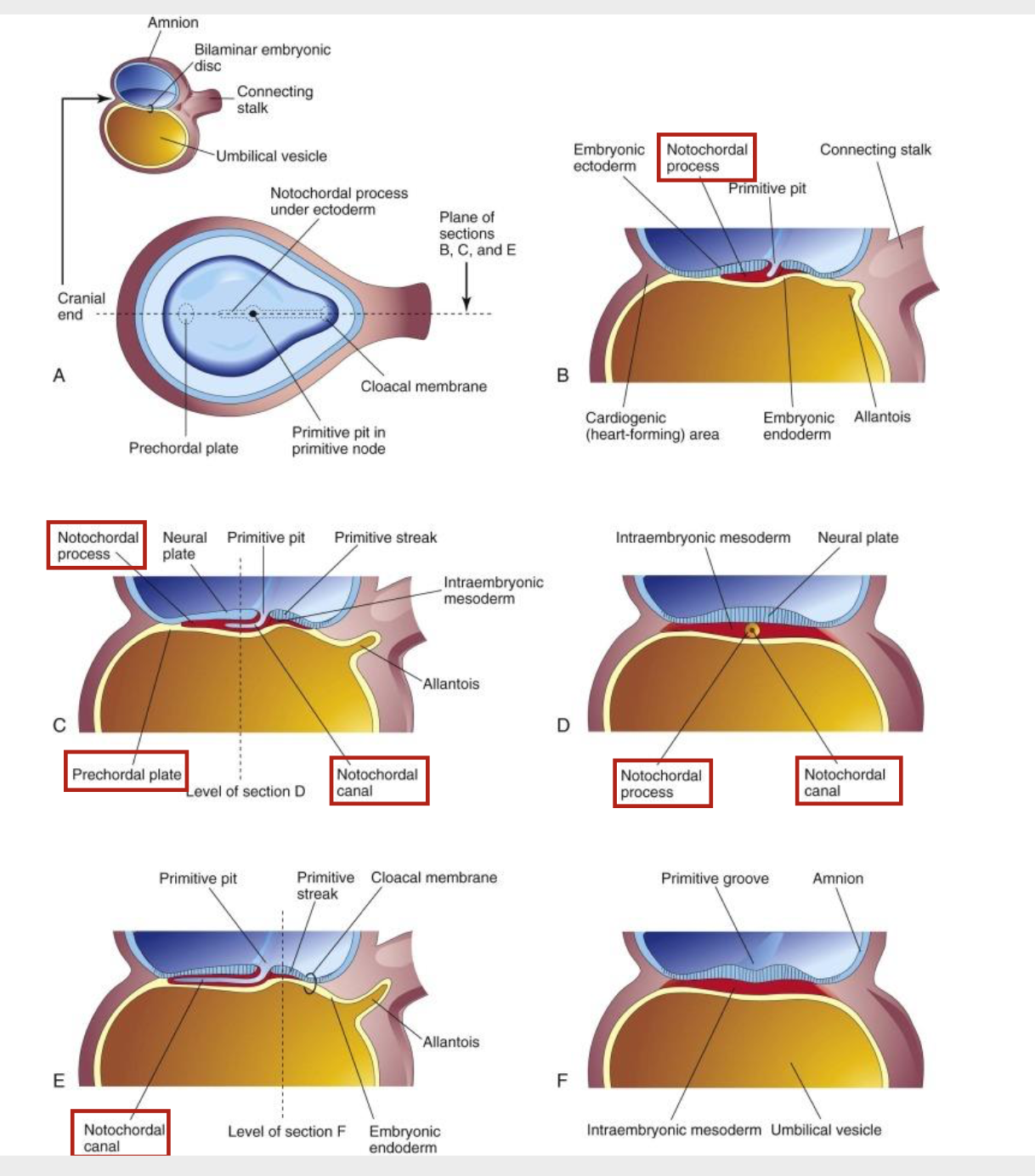
- rod of cells that defines longitudinal axis of the embryo
- cells migrate cranially from the primitive node and pit, forming this structure
- extends to prechordal plate, site of future mouth
- gives rise to the notochord
notochordal process
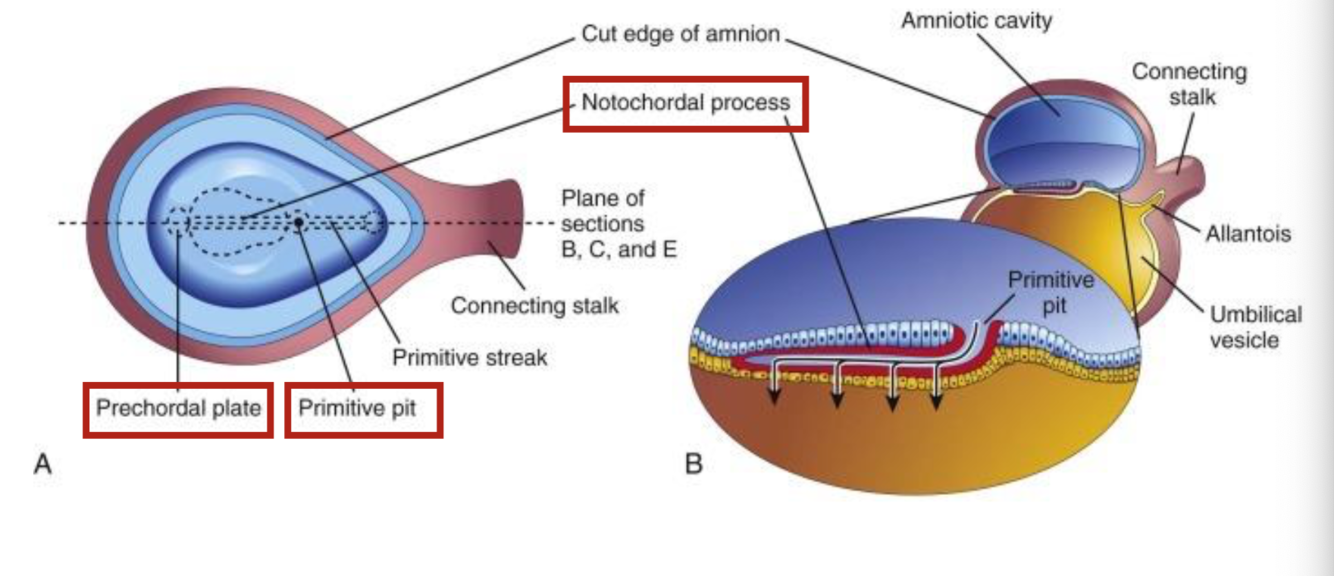
Descibe the process of formation of notochordal process and when this occurs
- formation begins w/ cranial extension from primitive node
- forms a hollow tube, the notochordal process
- grows cranially between ectoderm and endoderm until it reaches the prechordal plate
- hollows out, forming a canal
- by day 20, the formation of notochordal process is complete
- solid mesodermal rod derived from the primitive node
- extends from the oropharyngeal membrane to the primitive node
- functions as the primary inductor (signaling center) in the early embryo
- induces the formation of the neural plate from the embryonic ectoderm and provides signaling for development of axial musculoskeleton
- will degenerate as the vertebral bodies form and give rise to the nucleus pulposus (intervertebral discs)
notochord
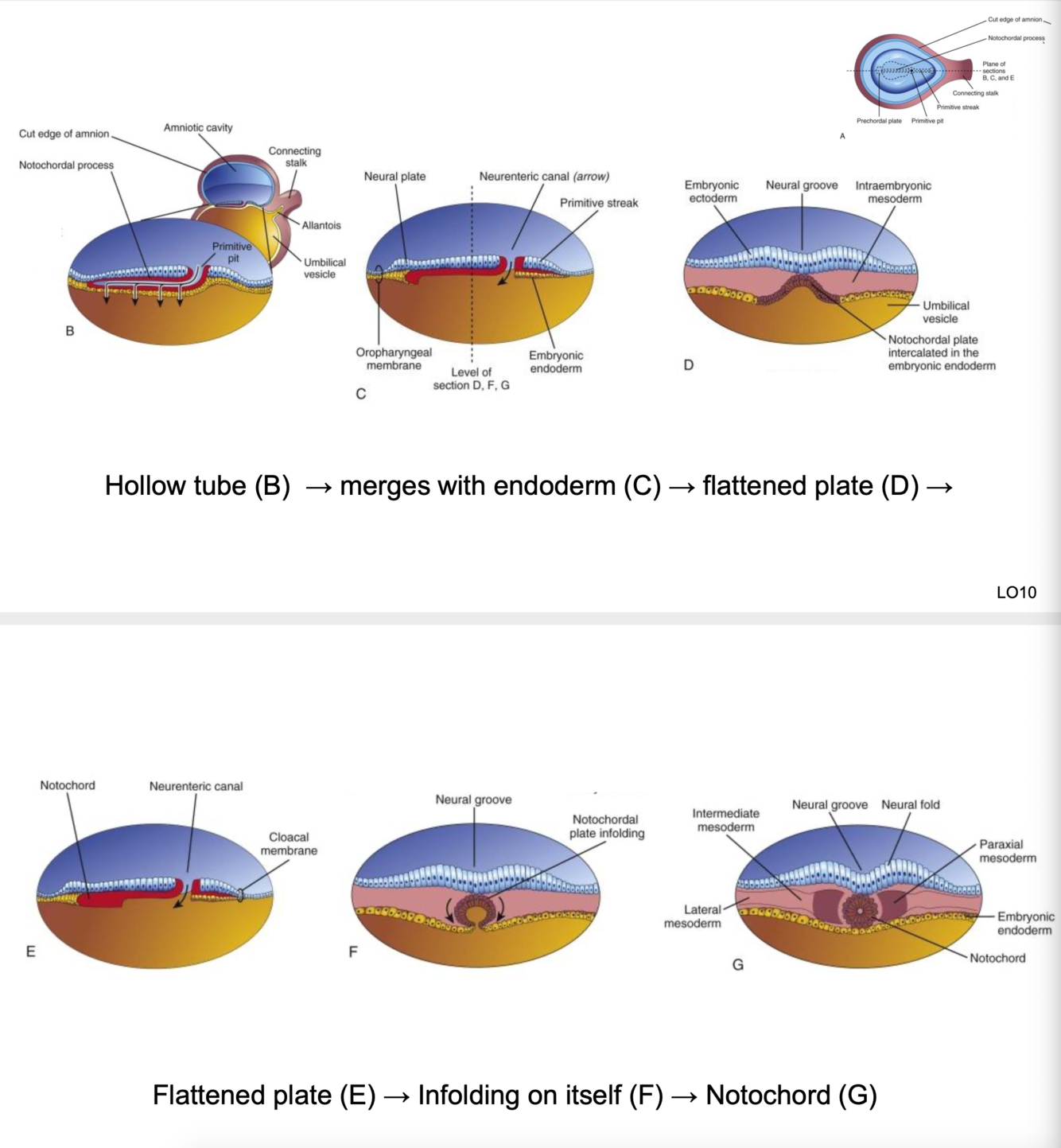
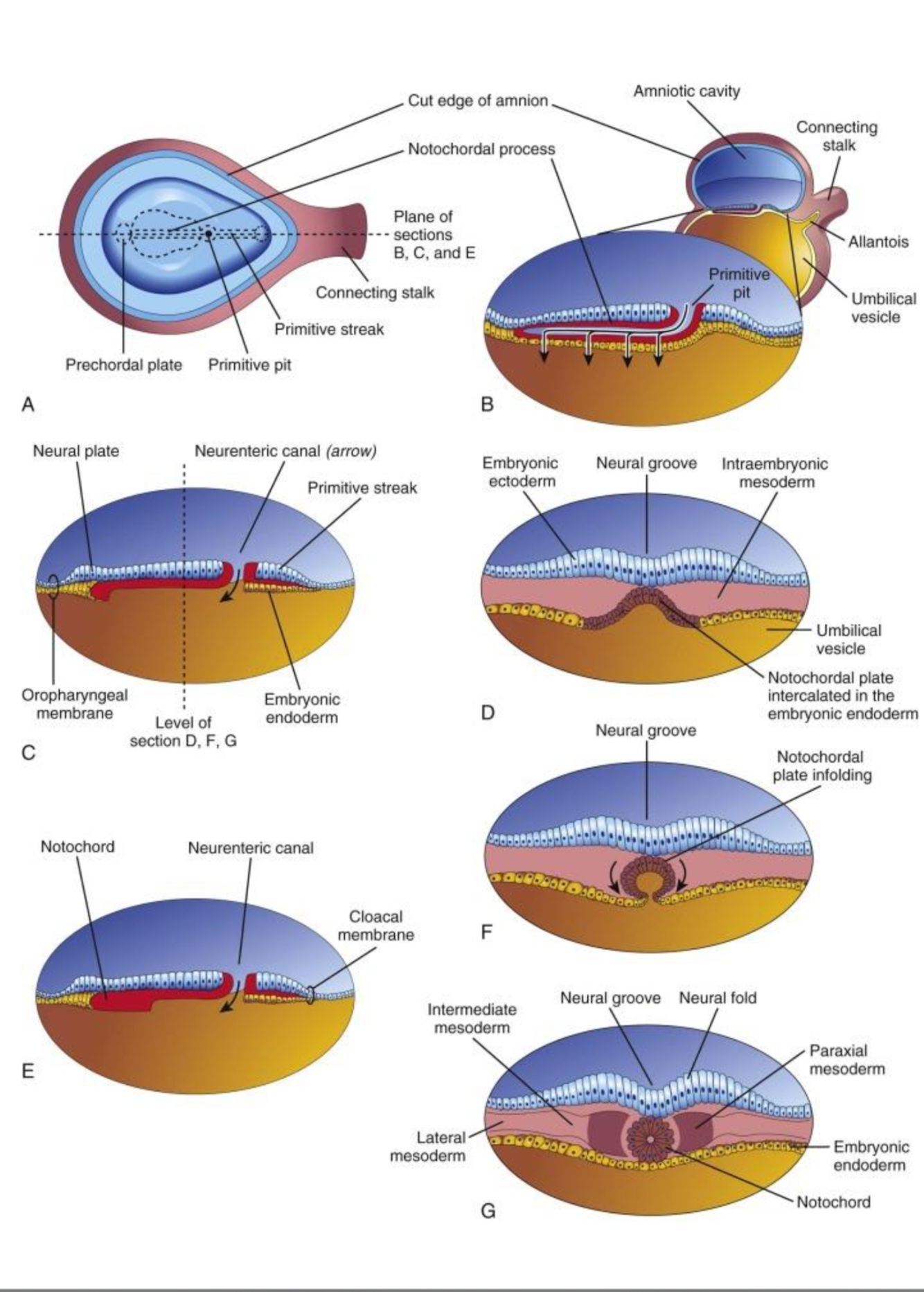
Describe the process of notochord formation:
- floor of the notochordal process fuses w/ the underlying embryonic endoderm
- fused layers will degenerate, allowing contact between the notochordal canal into the umbilical vesicle
- floor of the notochordal canal disappears and the notochordal process forms the notochordal plate (flattened, grooved plate of cells in contact laterally w/ the embryonic endoderm)
- cranially, notochordal plate cells proliferate and undergo infolding, forming the notochord
- notochord pinches off from the endoderm and the umbilical vesicle
- separates the germ layers (endoderm and mesoderm)
- notochord formation occurs in cranial regions anterior to the primitive streak
- in caudal regions, the primitive streak swells to produce the _____ ________ (or the tail bud) which is a group of median, mesodermal cells
- gives rise to the most caudal structures of the body (cells will extend caudally forming a transient tail)
- tail bud contributes cells to the caudal end of the neural tube and neural crest cells, caudal somites
caudal eminence
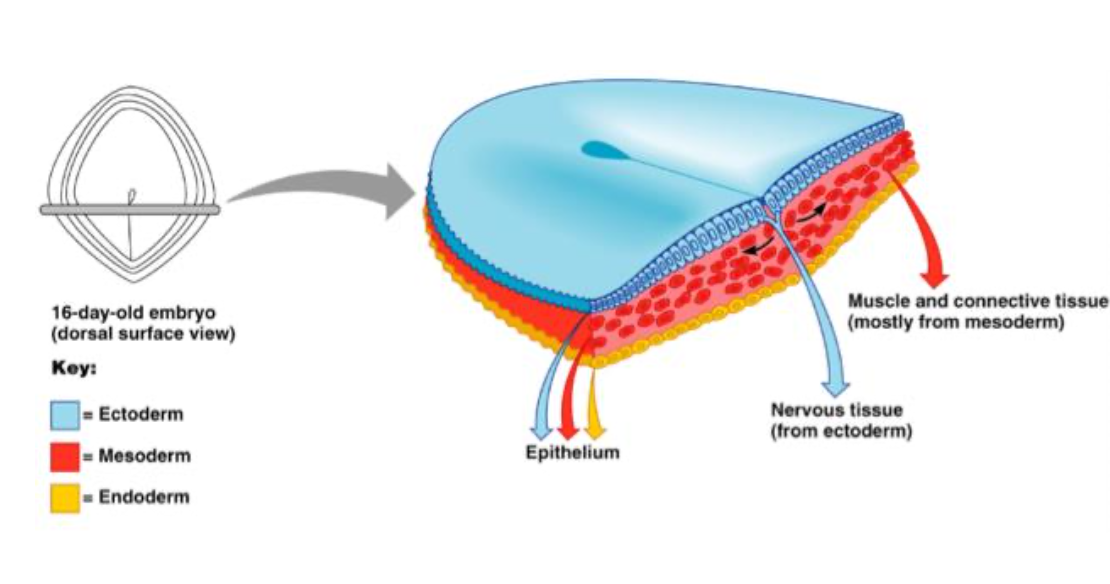
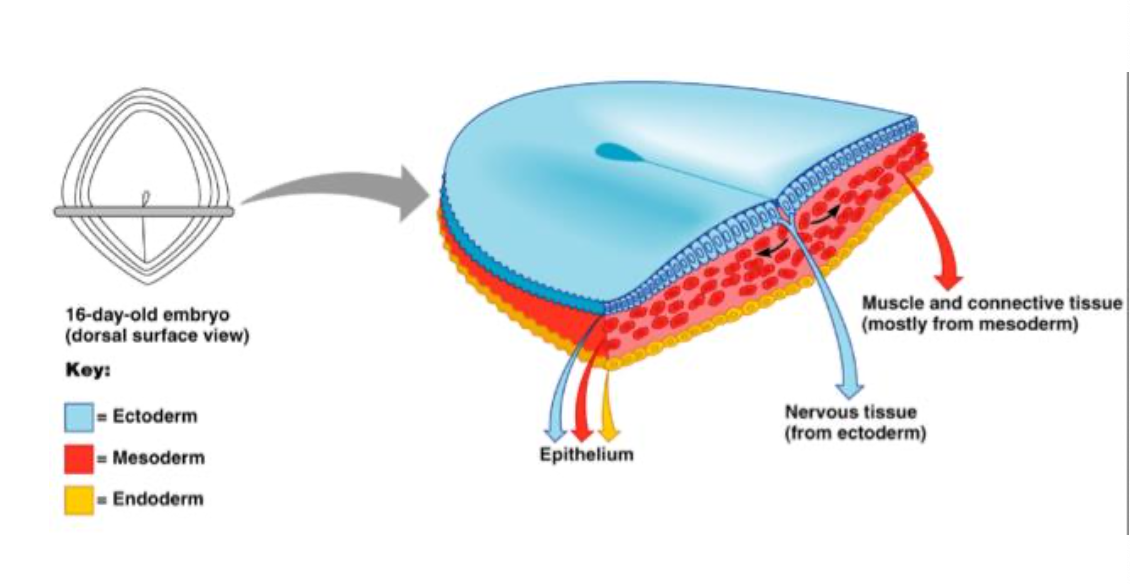
- primary germ layer
- epidermis of the skin and epidermal derivatives
- central and peripheral nervous systems
- neural crest cells, eyes, and internal ears
ectoderm
*epithelia comes from all germ layers*
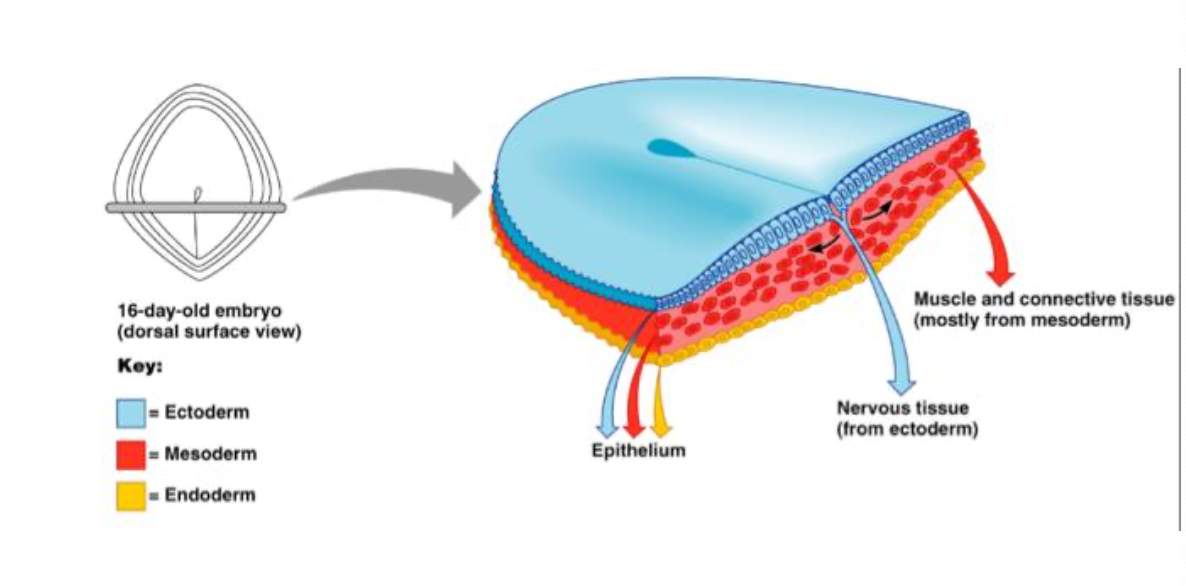
- primary germ layer
- all skeletal muscle
- visceral smooth muscular coats, serosal linings of all body cavities, urogenital ducts and organs
- most of the cardiovascular system, blood cells, lining of vasculature
- cartilage, bones, tendons, ligaments, dermis, and stroma of internal organs in the trunk
mesoderm
*epithelia comes from all germ layers*
- primary germ layer
- epithelial linings of the respiratory and digestive tracts
- glands opening into the GI tract
- glandular cells of accessory GI organs (liver and pancreas)
endoderm
*epithelia comes from all germ layers*

-
Back Osteology108
-
Back Arthrology36
-
Back Myology72
-
Back Angiology49
-
Back Neurology34
-
Intro to Autonomic Nervous System (Olinger)20
-
Physiology of Autonomic Nervous System23
-
Femoral Triangle, Anteromedial Thigh, and Knee53
-
Posterior Leg28
-
Foot and Ankle39
-
Anterior and Lateral Leg21
-
Tissue Architecture25
-
Epithelia32
-
Hip/Glutes44
-
Posterior Thigh and Popliteal Fossa19
-
Dermatomes, Myotomes, Plexuses17
-
Gastrulation32
-
Neurulation and Development of the PNS26
-
Fibrous Connective Tissues33
-
Development of the Musculoskeletal System22
-
Development of the Limbs31
-
UE Osteology41
-
UE Arthrology47
-
Physiology of Bone31
-
Integument36
-
Cartilage and Bone Tissue41
-
UE Myology70
-
Structure List for Final164
-
Muscle Tissue21
-
UE Angiology45
-
UE Neurology33
-
Membrane Potentials39
-
Pharmacology of the Neuromuscular Junction30



