Chromosomal abnormalities
- Whole chromosome -aneuploidy,
- Monosomy loss of one chromosome Turner’s syndrome ( XO)
- Trisomy, e.g. Klinefelter’s syndrome
- Structural abnormalities
- Point mutation
- deletions,
- inversions,
- translocations
Turner Syndrome
The paternal X chromosome is more likely to be missing cubitus valgus, medial tibial exostosis and a short fourth metacarpal/metatarsal, webbed neck, flat chest with widely spaced nipples, low hairline, low-set ears, and a higharched palate. urinary tract system and coarctation of the aorta
trisomy, the cells have an extra chromosome.
- The incidence of trisomy 21 is around 1 in 660 live births, with an increased risk in mothers over the age of 35 years -The aetiology in 94% of cases is the failure of separation of the autosomal pair during meiosis. -Mosaicism occurs following defects in mitosis during formation of the zygote. Orthopaedic problems are scoliosis, hip instability, slipped capital femoral epiphysis, patellar instability, flat foot, metatarsus primus varus and most importantly, atlantoaxial instability. The atlantodens interval (ADI) is measured on flexion–extension lateral radiographs of the cervical spine. An ADI between 5 and 10 mm with no neurological symptoms is observed with yearly radiographic and neurological examinations.Surgical stabilization is indicated in asymptomatic ADI of more than 10 mm or symptomatic ADI between 5 and 10 mm.
Kleinfelter’s syndrome (XXY).
The incidence of this syndrome is 1 in 1000 male births and results in a tall, thin male with infertility and hypogonadism.
A genotype is an organism’s complete set of heritable genes, or genes that can be passed down from parents to offspring
The genotype is the inherited genetic code that produces the physical appearance known as the phenotype An allele is defined as one or two alternative forms of a gene that can have the same locus on homologous chromosomes and are responsible for alternative traits. If both alleles are similarly involved, then there is a homozygous trait; if the alleles differ, then there is a heterozygous trait.
- Achondroplasia/hypochondroplasia - FGF receptor 3
- Diastrophic dysplasia Sulphate transporter
- Duchenne’s muscular dystrophy Dystrophin
- Jansen metaphyseal chondrodysplasia
- PTH/PTHrP receptor
- Marfan’s syndrome Fibrillin
- Multiple epiphyseal dysplasia COMP or type IX collagen (COL9A2)
- Achondroplasia/hypochondroplasia FGF receptor 3 Diastrophic dysplasia Sulphate transporter
- Duchenne’s muscular dystrophy Dystrophin
- Jansen metaphyseal chondrodysplasia
- PTH/PTHrP receptor
- Marfan’s syndrome Fibrillin
- Multiple epiphyseal dysplasia COMP or type IX collagen (COL9A2)
point mutations
The alteration in chromosomal structure may occur at specific nucleotide bases
penetrance of a genetic disorder
relates to the probability that the phenotype will be expressed
variable expressivity
The severity of the phenotypic expression may alter between individuals with the same genotype
Marfan’s syndrome
- Mutation in the gene fibrillin-1 (which acts as a Chinese finger trap around collagen) causes a defect in scaffolding for elastic tissues in the body.
Prominent skeletal issues are
- joint laxity,
- protrusio acetabuli
- scoliosis. Bracing is recommended for progressive curves, many of which will require surgical fusion.
- Early echocardiogram and eye examination are part of routine care.
- Clinical features include
- myopia, lens dislocation (superiorly), retinal detachment, aortic regurgitation, dissecting aortic aneurysm and mitral valve prolapse. Early echocardiogram and eye examination are part of routine care.
Incomplete penetrance inheritance of the mutant gene without expression of the phenotype of the disorder.
variable expressivity - in which the patient always expresses some of the symptoms.
Examples of single-gene inheritance
- Autosomal dominant: achondroplasia, osteogenesis imperfecta, neurofibromatosis.
- Autosomal recessive: mucopolysaccharidoses (except Hunter syndrome), sickle cell anaemia.
- X-linked dominant: hypophosphataemic rickets.
- X-linked recessive: Duchenne’s muscular dystrophy, haemophilia A.
Autosomal dominant conditions
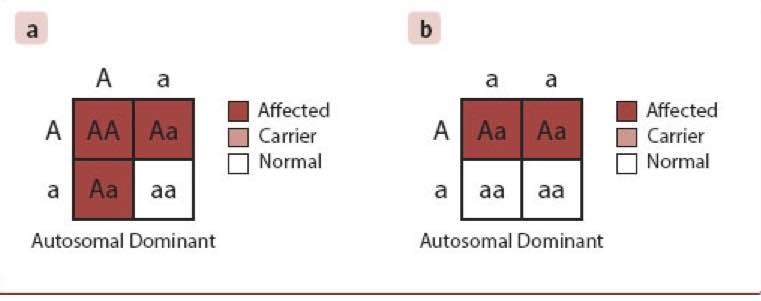
- Clinical cases usually heterozygus,
- homozygys usually fatal
- Males = females
- Probabilities: If one parent has the condition 50%
- chance of inheritance of abnormal gen
- Examples
- Achondroplasia
- multiple epiphyseal dysplasia
- most cases of osteogenesis imperfecta
(although some cases of OI are autosomal recessive)
Autosomal recessive
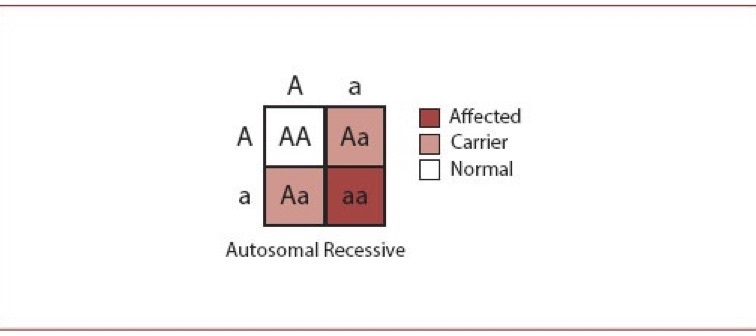
- Homozygous have the condition,
- heterozygous carry the condition
- Males = females
- Probabilities: If both parents carriers, 25% chance of child being affected, 50% chance of children being carriers
- Examples –
- Mucopolysaccharidoses (except type II)
- sickle cell disease,
- the severe forms of hypophosphatasia (milder forms of hypophosphatasia may be autosomal dominant)
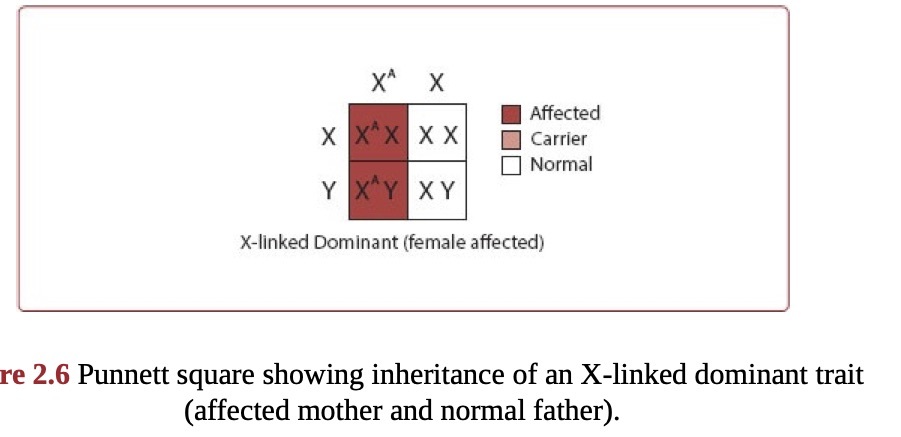
X-linked dominant
- Females more commonly affected than males
- Inheritance pattern depends on whether the mother or father has the affected gene.
- If mother has the gene 50% of sons and daughters inherit the condition
- If father has the gene 100% of daughters and none of sons inherit the condition
- Example
- Hypophosphataemic rickets (defective PHEX gene, causing failure to break down Fibroblast Growth Factor 23 (FGF23) resulting in lack of reabsorption of phosphate in the renal tubules)
X-linked recessive
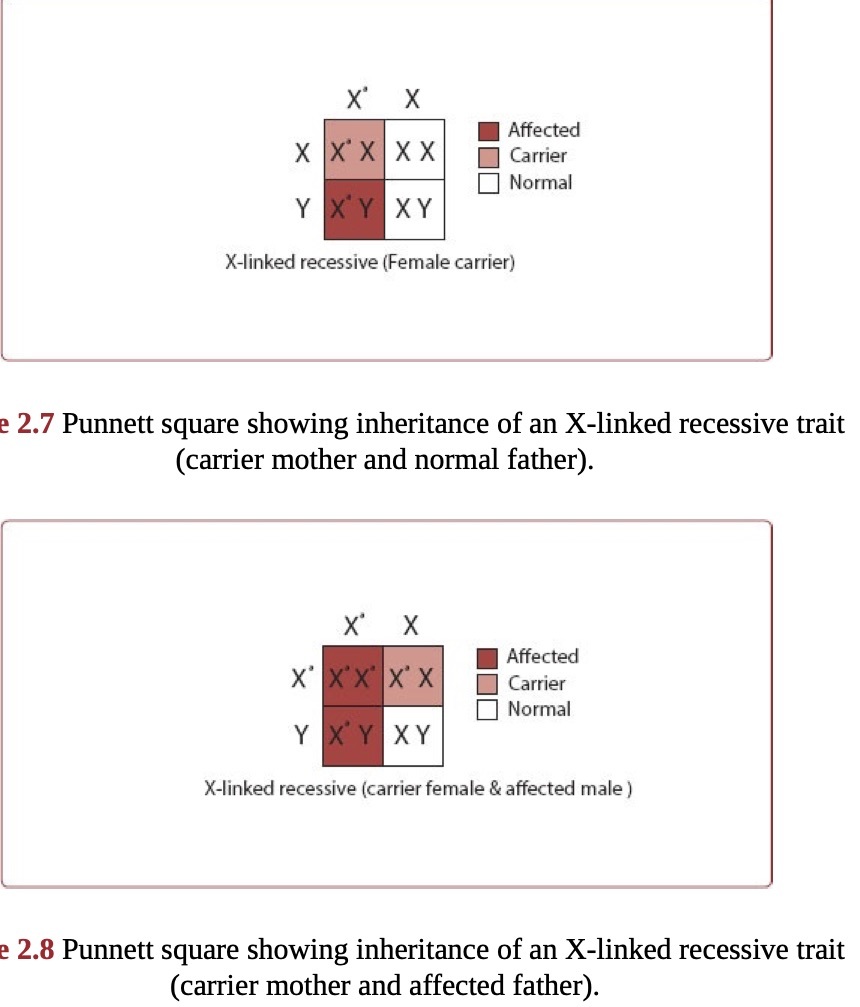
- Homozygous affected, heterozygous carriers
- Males more commonly express the condition than females
- Probabilities:
- If the mother is a carrier, 50% of sons will have the condition and 50% of daughters are carriers.
- If the father has the condition and the mother a carrier, 50% of the daughters carry the gene, 50% of the daughters have the condition, 50% of sons have the condition
- Examples
- Duchenne’s muscular dystrophy (fault in the dystrophin gene, which has an adverse effect on the muscle cell membrane)
- haemophilia
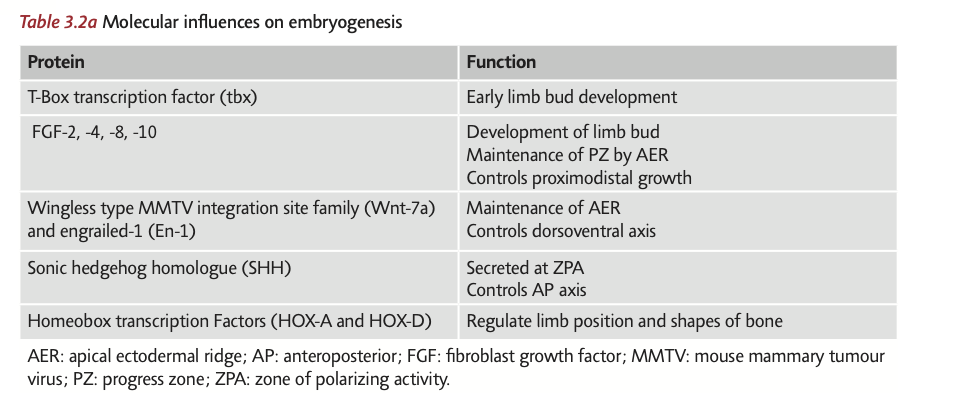
Limb Bud
- first appear at the end of fourth week.
- it consisits of a mesenchymal chondrogenic core ( from the lateral plate mesoderm) covered by a layer of ectoderm
- The ectoderm cevering the distal tip of the limb bud, under the influence of BMP thickens to form AER
- Proximodistal
- first signaling center to appear is AER
controls proximal to distal growth forms under FGF10 stimulation
* removal /defect in AER results in proximal limb truncation
* example is central deficiency (cleft hand), radial clubhand (radial dysplasia, absence of radius) * Anteroposterior (radioulnar) limb growth - second signaling center to appear is ZPA (zone of polarizing activity), along posterior limb bud
* signaling molecule is Shh compound (dose dependent)
* normal
    * high concentration of Shh on posterior (ulnar) side for small finger development
    * low concentration of Shh on anterior (radial) side for thumb development

* posterior/ulnar side abnormalities abnormal upregulation of Shh in the ZPA results in polydactly on the ulnar (posterior) side
    * extent of duplication is dose dependent (higher dose = more replication)
    * downregulation of Shh (on the posterior/ulnar side) leads to loss of ulnar digits * Dorsoventral axis- third signaling center is non-AER limb ectoderm /Wnt signalling center (progress zone, PZ)
* activates Lmx1b (LIM-homeodomain factor) to regulate dorsal patterning
WNT7a is responsible for all dorsal features (including nails)
Limb bud
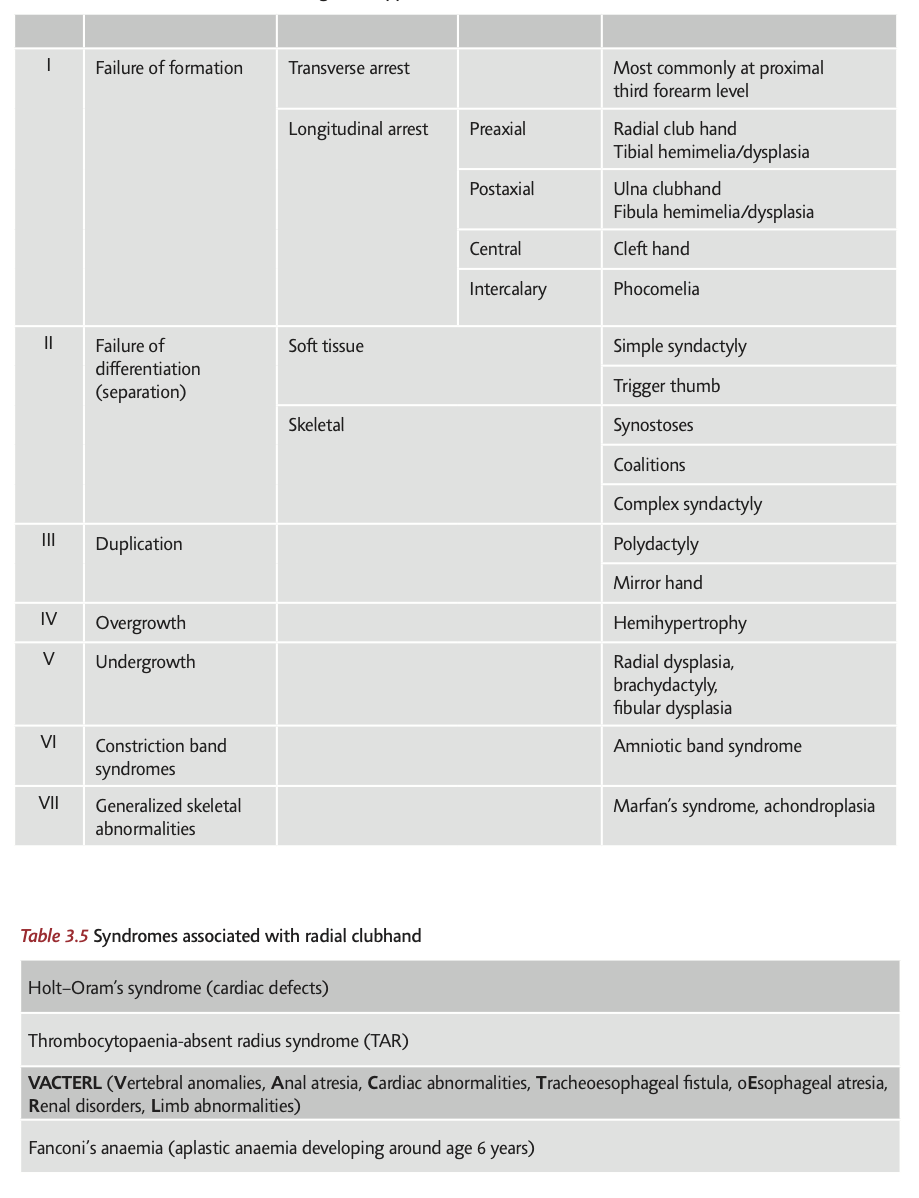
Swansons classification
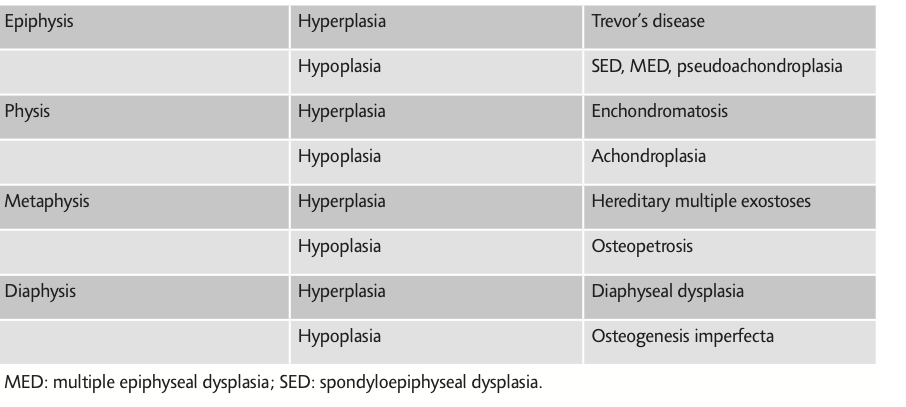
Rubin’s classification of skeletal dysplasias
fbd knee