Head & Neck Flashcards

This deck covers Chapters 60-62 in Rosens, compromising all of Dentistry, ENT, and Ophthalmology. (75 cards)

1
Q

Outline the grading of hyphema.

A

Grading:

  • Grade 1 - 0 to ⅓
  • Grade 2 - ⅓ to ½
  • Grade 3 - ½ to 99%
  • Grade 4 - 100%
2
Q

List 4 complications of an orbital floor fracture.

A
  1. Globe rupture
  2. EOM entrapment
  3. Orbital emphysema
  4. Retro-orbital hematoma
3
Q

Describe the flow of aqueous humour in the eye.

A
  • Made by the ciliary process in the posterior chamber
  • Enters anterior chamber through the pupil
  • Moves peripherally, then through trabecular meshwork
  • From meshwork to Canals of Schlemm to episcleral veins
4
Q

List 4 indicators of poor prognosis with globe rupture.

A
  1. RAPD
  2. Retinal detachment
  3. Decreased VA
  4. No red reflex
5
Q

What is dacryocystitis?

A

Acute infection (Staph) of the lacrimal sac, usually from an obstructed nasolacrimal gland.

  • Warm compress, gentle massage
  • Keflex PO + Vigamox drops QID
6
Q

32 yo male with lower incisor pain and metallic taste. He has the worst breath you’ve ever smelt. Diagnosis?

A

Acute Necrotizing Ulcerative Gingivitis

  • Vincent’s Angina
  • Fusobacterium/Spirochetes
  • Invade gingival issue
  • Ulcerated, blunted interdental papillae

Treatment

  • Saline rinses
  • Flagyl/Amox-Clav/Clinda x7d
  • Dentistry
7
Q

How many primary teeth are there? When do they erupt?

How many permanent teeth are there? When do they erupt?

A

Primary Teeth

  • 20 in total (5 in each quadrant)
  • Erupt at 6 months
  • Present by 3 years

Permanent Teeth

  • 32 in total (8 in each quadrant)
  • Erupt at 5-6 years
8
Q

Differentiate periorbital and orbital cellulitis.

A

Periorbital

  • Pre-septal
  • Normal VA, non-painful EOM, white sclera
  • Staph, Strep, H. flu
  • Amox-Clav x14d

Orbital

  • Post-septal
  • Decreased VA, painful EOM, red sclera
  • Proptosis, RAPD
  • Staph, Strep, H. flu
  • CT orbit
  • Pip-Tazo + Vanco IV
9
Q

List 5 reasons to consult a corneal FB to ophthalmology.

A
  1. Multiple FBs
  2. Rust ring
  3. Deep
  4. Perforation risk is high
  5. Large portion of the visual axis involved
10
Q

List 6 risk factors for cataracts.

A
  1. Age
  2. Smoking
  3. Alcohol
  4. Sunlight
  5. Low education
  6. Malnutrition
  7. Diabetes
  8. Steroids
11
Q

List 6 causes of binocular diplopia.

A
  1. Hematoma
  2. Abscess
  3. CN palsy
  4. Thyroid disease (Graves)
  5. EOM fibrosis syndrome
  6. INO
  7. MS
  8. Myasthenia
12
Q

List 4 treatments given in Bell’s Palsy.

A
  1. Eye patch
  2. Antivirals
  3. Steroids
  4. ENT
13
Q

List 5 symptoms/signs of an orbital floor fracture.

A
  1. Diplopia
  2. Limited upward gaze
  3. Facial paresthesias (V2)
  4. SubQ air
  5. Enophthalmos
  6. Ptosis
  7. Step deformity
14
Q

List 5 slit-lamp findings in blunt trauma to the anterior chamber.

A
  1. Cells
  2. Flare
  3. Hyphema
  4. Iridodialysis
  5. Traumatic miosis
  6. Traumatic mydriasis
15
Q

What is glaucoma?

A

An optic neuropathy from high IOP

Peripheral to central progression

Normal IOP 10-20 mmHg

16
Q

Name 3 treatments for HSV keratitis.

A
  1. Topical antiviral - trifluridine 1% q2h x2-3 weeks
    • Oral acyclovir/valacyclovir also work
  2. Cycloplegic
  3. Ophthalmology referral
  4. Avoid steroids
17
Q

List 6 steps in the management of an alkaline burn to the eye.

A
  1. Analgesia
  2. Irrigate
  3. Check IOP
  4. Topical antibiotics
  5. Cycloplegic
  6. Ophthalmology
18
Q

List 5 causes of CN7 paralysis.

A
  1. Bell’s palsy
  2. Lyme
  3. DM
  4. Facial nerve tumor
  5. Parotitis
  6. CVA
  7. AOM
  8. Basilar skull fracture
19
Q

What is the most serious complication of a dental infection that has spread to the periorbital area?

A

CVST

20
Q

What is the treatment of AOM?

A
  • Kids <2 yr = Treat x10d
  • Kids >2 yo = Treat if unwell (perf, T>39, severe pain), or in 48h x5d
  • Adults = Treat x10d
  • Kids with tubes and drainage get Ciprodex BID x7d

Treatment

  • Amoxicillin 90 mg/kg div BID x5-10d
  • 10 days in perf, chronic/recurrent
  • Amox-Clav if treatment failure
  • CTX if treatment failure
  • ENT for drainage if treatment failure
21
Q

Outline (in order) your management of anterior epistaxis

A
  1. Blow nose to remove clots
  2. Direct pressure w/ clamp x15 min
  3. Examine for bleeding vessel amenable to cautery
  4. Pack with vasoconstrictor soaked pledgets
  5. Pack with TXA soaked pledgets
  6. Pack with Rhinorocket x48h
  • ABx prophylaxis no longer recommended
22
Q

Provide 8 DDx for superficial punctate keratitis.
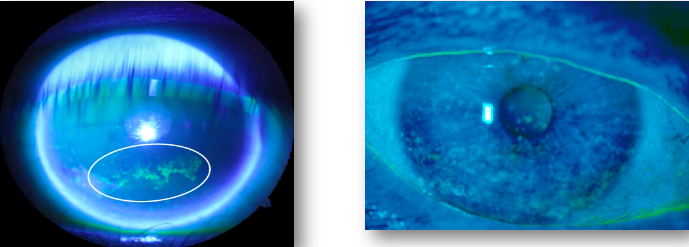
A
  1. UV light
  2. Conjunctivitis
  3. Blepharitis
  4. Dry eyes
  5. Contact lens issues
  6. Exposure keratopathy (incomplete lid closure, Bell’s)
  7. Minor trauma
  8. Mild chemical injury
  9. Topical eye drops
  10. Trichiasis (lashes rubbing inside)
23
Q

List 8 causes of sudden hearing loss.

A

Conductive

  1. Wax
  2. Foreign body
  3. Trauma
  4. Otitis media
  5. Otitis externa

Sensorineural

  1. Acoustic neuroma
  2. Aminoglycosides
  3. Loop diuretics
  4. ASA
  5. Bell’s palsy
  6. DM
  7. Pregnancy
  8. Leukemia
  9. HSV
  10. VZV
  11. EBV
  12. CMV
  13. Stroke
  14. Meningitis
24
Q

List 4 signs of globe rupture.

A
  1. Loss of AC depth
  2. Blood in AC
  3. Teardrop pupil
  4. Iris prolapse
  5. Seidel’s test +
25
4 yo girl has pain and redness behind her ear. What is the diagnosis? Workup? Treatment?
**Mastoiditis** **Workup** * CT Head, r/o abscess * Full septic workup **Treatment** * Ceftriaxone * Admission * ENT
26
List 4 arteries responsible for **anterior epistaxis**.
1. Superior Labial artery 2. Greater Palatine artery 3. Anterior Ethmoid artery 4. Septal branch of the Sphenopalatine artery
27
List 2 arteries responsible for **posterior epistaxis**.
1. Posterior Ethmoid artery 2. Sphenopalatine artery
28
List 4 causes of **post-chiasmal vision loss**.
1. Stroke 2. Tumour 3. AVM 4. Migraine 5. MS
29
List 4 causes of **pre-chiasmal vision loss**.
1. Optic neuritis 2. Methanol 3. GCA 4. Retinal detachment 5. Aneurysm
30
List **5 intra-temporal complications** of AOM.
1. TM rupture 2. Mastoiditis 3. Hearing loss 4. Labyrinthitis 5. Facial paralysis
31
List **5 intracranial complications** of AOM.
1. Meningitis 2. Encephalitis 3. Abscess 4. Subdural empyema 5. Lateral venous sinus thrombosis
32
How do you manage a TMJ dislocation? What are 3 things you'll tell patients post-reduction?
* Thumbs in mouth, in buccal recess, not teeth * Downward then backward pressure **DC Instructions** * Soft diet x1 weeks * NSAIDs PRN * Avoid opening mouth to maximum (yawns, laughing) * Consider Barton bandage for chronic dislocation
33
List 3 causes of **chiasmal vision loss**.
1. Pituitary tumor 2. Craniopharyngioma 3. Meningioma
34
List 6 drugs for **acute angle-closure glaucoma**.
**TAMPA-P** * **Timolol 0.5% 1 ggt (beta)**: Decrease aqueous humour * **Acetazolamide 500 mg IV (CAi)**: Decrease aqueous humour * **Mannitol 1 g/kg (diuretic)**: Osmotic shift * **Prednisolone 1% 1 ggt (steroid)**: Anti-inflammatory * **Aproclonidine 1% 1 ggt (alpha)**: Decrease aqueous humour * **Pilocarpine 1% 1 ggt (cholinergic)**: Pupillary constriction
35
Is an acidic or alkaline burn to the eye worse?
Alkaline Deeper penetration causes corneal sclerosis.
36
List 3 risk factors for **retinal detachment**.
1. Trauma 2. Myopia 3. FHx 4. Diabetes 5. PVD
37
List 5 causes **CN3** palsy.
1. Trauma 2. Tumour 3. Aneurysm 4. DM 5. CVST 6. MS 7. Myasthenia
38
List 5 causes **CN4** palsy.
1. Trauma 2. Tumour 3. Aneurysm 4. DM 5. CVST 6. Myasthenia Gravis
39
List 5 causes **CN6** palsy.
1. Trauma 2. Tumour 3. Aneurysm 4. DM 5. CVST 6. ICP 7. Meningitis 8. MS
40
List 5 treatment priorities for **CRAO**.
1. Call ophthalmology 2. HOB 30 3. Breath into bag (increase CO2 --\> vasodilation) 4. Digital globe massage 5. Timolol 0.5% 6. Acetazolamide 500 mg IV 7. tPA
41
Outline 6 treatment priorities for **hyphema**.
**Treatment** 1. HOB 30 2. Stop OAC/Antiplatelets 3. Cycloplegics 4. Antiemetics 5. Manage IOP * Alpha, Beta, CAi, Anticholinergic, Mannitol, Prednisolone 6. Ophthalmology
42
Regarding gonorrhea and chlamydia of the eye in neonates, which happens first?
* Gonorrhea = 0-4 days old * Chlamydia = 5-14 days old
43
List 5 signs/symptoms of a **retrobulbar hematoma**.
1. Proptosis 2. Restricted EOM 3. Increased IOP 4. Decreased VA 5. Pain 6. Cherry red macula 7. RAPD
44
What is the **endpoint** in the treatment of acute angle-closure glaucoma?
IOP \<35 mmHg \>25% reduction in pressure
45
List 6 treatment strategies for managing an **intraocular foreign body**? (Not corneal FB).
**Same as globe rupture, but get a CT** 1. CT 2. ABx - fluoroquinolone 3. Antiemetic 4. Analgesia 5. Tetanus 6. Rigid shield 7. Ophthalmology
46
List 5 complications of **wearing contact lens**.
1. Corneal ulcer 2. Corneal chemical burn 3. Corneal abrasion 4. Corneal neovascularization 5. Superficial punctate keratitis 6. Bacterial conjunctivitis
47
Woman presents with ear pain, itching, and whitish discharge. Diagnosis? Etiology (3)? DDx (3)? Treatment?
**Otitis Externa** **Etiology** 1. S. aureus 2. P. aeruginosa 3. Gram-negative organisms **DDx** 1. AOM + Rupture 2. Malignant Otitis Externa 3. Otomycosis 4. Furunculosis 5. Ramsay Hunt Syndrome **Treatment** * Cipro-Dex 4 drops BID x7d
48
What is the **difference** between a pterygium and a pinguecula?
P_**t**_erygium _**T**_OUCHES cornea * Pinguecula = involves sclera * Pterygium = involves sclera + cornea
49
How is the diagnosis different if a patient presents with severe pain within 1d vs within 3-4d following a dental extraction?
**Within 1 day** * Periostitis **Within 3-4 days** * Acute alveolar osteitis (dry socket) * Pain + Smell * Caused by loss of the healing blood clot in the socket * Pack with iodine soaked gauze * PCN VK 500 mg QID or Clinda 300 mg QID * Dental F/U in 24h
50
Regarding **malignant otitis externa**: * List 2 bacterial causes * List 3 risk factors * List 2 treatment options * List 3 complications
**Etiology** 1. P. aeruginosa 2. S. aureus 3. S. epidermidis **Risk Factors** 1. Elderly 2. Immunocompromised 3. AIDS **Treatment** 1. Ciprofloxacin 750 mg PO BID x6-8 weeks 2. Close ENT follow-up 3. HBOT **Complications** 1. Skull base osteomyelitis 2. Meningitis 3. Venous sinus thrombosis
51
List 6 treatment steps in managing a **globe rupture**.
1. Ophthalmology 2. Antiemetics 3. Analgesia 4. Tetanus 5. IV ABx 1. Ceftaz + Gent + Vanco 6. Rigid shield
52
List 5 long-term complications of **caustic eye burns**.
1. Corneal clouding 2. Corneal perforation 3. Corneal neovascularization 4. Glaucoma 5. Cataracts 6. Symblepharon 7. Retinal damage
53
How do you manage a **primary tooth avulsion** in a child?
Do nothing! Re-implanting it will cause bony fusion.
54
Name 4 organisms associated with **bullous myringitis**.
1. S. pneumoniae 2. M. catarrhalis 3. H. influenzae 4. M. pneumoniae
55
List 5 complications of **posterior epistaxis**.
1. Apnea 2. Arrhythmia 3. Bradycardia 4. MI 5. CVA 6. Aspiration 7. Nasopulmonary reflex (hypoxia/hypercarbia)
56
What is the triad of **Horner's syndrome**? List 5 causes.
1. Ptosis 2. Miosis 3. Anhydrosis **Causes** 1. Pancoast tumor 2. Lung cancer 3. Thyroid mass 4. Carotid dissection 5. Stroke 6. Tumour 7. Cluster headache 8. Acute otitis media
57
List 8 DDx for **acute painless vision loss**.
1. CRAO 2. CRVO 3. BRAO 4. BRVO 5. Retinal detachment 6. PVD 7. Vitreous hemorrhage 8. Optic neuritis 9. Amaurosis fugax
58
Give a DDx of 8 causes of an **RAPD**.
**Retinal** 1. Ischemia 2. CRAO 3. CRVO 4. Macular degeneration 5. Retinal infection 6. Retinal tumour 7. Methanol toxicity **Optic Nerve** 1. Infection 2. Inflammation 3. Tumour 4. Trauma 5. GCA 6. Radiation 7. Post-operative eye surgery
59
List 6 indications to refer a **lid lac to ophthalmology**.
1. Into lid margin 2. Into canalicular system (medial) 3. Into canthal tendons (lateral) 4. Through septum 5. Through tarsal plate 6. Tissue loss 7. Full thickness
60
List 2 emergent complications of **orbital cellulitis**.
1. Meningitis 2. CVST
61
List 7 causes of **papilledema**.
1. IIH 2. Brain tumour 3. Brain abscess 4. Brain bleed 5. Hydrocephalus 6. CVST 7. Meningitis 8. Optic neuritis 9. Methanol toxicity
62
List 4 reasons to admit a **hyphema**.
1. Decreased VA 2. Increased IOP 3. Severe pain 4. Sickle cell 5. Hyphema \>50% (Grade 3+)
63
Describe the **Ellis classification**.
Dental Fractures * I - through the enamel * II - through dentin (?ABx) * III - through pulp (ABx) Cover II/III with calcium hydroxide paste.
64
List 8 DDx for a **neck mass**.
1. Goiter 2. Thyroid nodule 3. Thyroid cancer 4. Thyroglossal duct cyst 5. Brachial cleft cyst 6. Adenopathy 7. Lymphoma 8. Salivary gland tumour 9. AVM 10. Lipoma
65
List 3 precipitants for **primary closed-angle glaucoma** attacks.
Anything that makes your pupils big 1. Dark 2. Strong emotion 3. Sympathomimetics 4. Anticholinergic
66
List 3 causes of **monocular diplopia**.
1. Refractive error 2. Lens dislocation 3. Iridodialysis 4. Conversion disorder
67
List 8 causes of **epistaxis**.
1. Digital trauma 2. Fracture 3. URTI 4. FB 5. OAC 6. Dry air 7. Cocaine 8. Tumour 9. Hemophilia 10. Diabetes
68
List 6 risk factors for **otitis media**.
1. Male 2. Daycare 3. Parental smoking 4. Pacifier use 5. FHx 6. Cleft palate 7. Down syndrome 8. HIV 9. Immunocompromise
69
What should you be concerned about with an **orbital wall fracture**?
Globe Rupture
70
Differentiate a chalazion from a hordeolum.
**Chalazion** * Obstructed M*eibomian* gland * Chronic, non-painful * Warm compresses **Hordeolum (Hurts)** * Inflammed *Gland of Zeis* * Acute Staph infection * Warm compresses **Antibiotics only if concomitant blepharitis**
71
List 5 complications of **hyphema**.
1. Increased IOP 2. Rebleeding 3. Corneal blood staining 4. Glaucoma 5. Synechiae
72
List 6 risk factors for **CRAO**.
1. Age 2. Carotid disease 3. HTN 4. Diabetes 5. DLD 6. Smoking 7. Valvular disease 8. Vasculitis 9. Sickle cell 10. Cardiac disease 11. Collagen disease 12. Any condition with higher IOP
73
When would you give antibiotics in an **orbital fracture**?
If fractured into infected sinus. Amox-Clav
74
In **anisocoria**, how do you determine which pupil is the abnormal one?
**Anisocoria greater in light** * The larger pupil is abnormal * Should constrict in the light **Anisocoria greater in dark** * The smaller pupil is abnormal * Should dilate in the dark
75
Name 6 structures with the **cavernous sinus**.
1. Internal carotid artery 2. CN III 3. CN IV 4. CN V1 5. CN V2 6. CN VI

