Immunosuppressive effects Malnutrition Noise Anesthetic Agents
Cause physiologic or psychological stress which may result in suppression of the immune system
- Malnutrition: humoral immunity
- Anesthetic agents: affect natural defense mechanisms and the actions of the immune system
- Music: noise causes stress, which has a detrimental effect on the immune system
Management of Patient with Disseminated Intravascular Coagulation (DIC)
- Avoidance of injections
- Replacement of fluids, blood, and clotting factors
- Turning frequently and gently
- Manual blood pressure reading (avoid NIBP cuff readings because increased pressure can cause bruising/trauma)
Indication for Administration of Blood
- Symptoms of hypoperfusion such as chest pain or dyspnea.
- Blood is necessary to carry oxygen
- Absolute hemoglobin or heamtocrit are no longer indications because of the risk of blood-transmitted diseass.
- Inability to control bleeding is an indication for surgery
Which Labs Should Be Monitored With Multiple Blood Transfusions
Potassium - Hyperkalemia
- Stored blood has a high potassium content resulting from aging and hemolysis of RBCs
Calcium -Hypocalcemia
- Citrate used as an anticoagulant in banked blood
- Citrate binds with calcium that reduces the ionized calcium level and causes tetany
Which Labs Most Specifically Indicate DIC is Cause for Bleeding
Fibrin Degradation Products (FDPs)
- Elevated FDPs speficially indicative of a fibrinolytic process rather than simply a clotting abnormality
D-dimer
- Form of FDP most specific to DIC
Heparin-Induced Thrombocytopenia (HIT)
- Immune-mediated adverse effect of heparin
- Causes thrombosis and thrombocytopenia
- Patient receiving heparin therapy by continuous infusion
- Petechiae
- Not dose-related
- Platelets clump (white clots) which causes ischemia and platelet depletion
What is the first sign of platelet dysfunction (quantity or quality)?
Petechiae
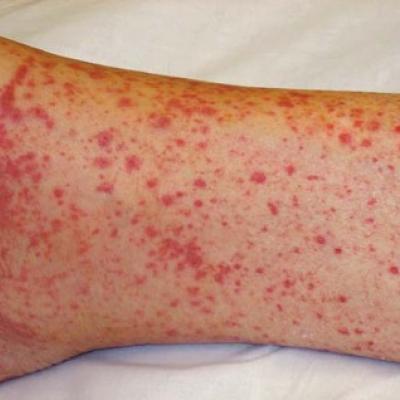
Most common cause of a fatal transfusion reaction?
Mismatched blood transfusion
- Causes hemolytic reaction
Disseminated Intravascular Coagulation (DIC)
- Consumptive coagulopathy (consumption of clotting factors)
- Stimulation of the clotting cascade and formation of microclots cause the consumption of clotting factors and platelets
- Stimulation of the fibrinolytic process causes formation of fibrin degradation products (FDPs) from clots
- FDPs also have an anticoagulant effect
- Always secondary and never hereditary or primary
- Results in deposition of thrombi in microvasculature (microembolism) and consumption of clotting factors (hemorrhage)
Disseminated Intravascular Coagulation (DIC) Phases
- Excessive clotting: uses up clotting factors
- Bleeding
- Stimulation of the fibrinolytic system
Desired platelet count for surgical procedures
Platelet count 50,000/mm³
Platelet counts <20,000/mm³ are associated with spontaneous bleeding
Why do patients receiving multiple units of packed RBCs also need to receive platelets?
- RBC’s do not contain platelets
- Clotting abnormalities in these patients result from hypocalcemia, thrombocytopenia, and depletion of clotting factors
- Fresh frozen plasma also is indicated to replace the clotting factors
- Patients receiving multiple units of banked blood develop ineffective clotting
Suspected Transfusion Reaction
- Stop the transfusion -The more blood that is administered = the more severe the reaction
- Infuse normal saline at a keep-vein-open rate -Keep the IV catheter open in case emergency drugs must be given
- Check patient’s vital signs
- Notify the physician and blood bank
- Order new type and crossmatch
- Send appropriate specimens to the laboratory
Patients with platelet count 10,000/mm3 are at great risk for what?
Spontaneous intracerebral hemorrhage
- Assess level of consciousness
- Manifested by changes:
- LOC
- headache
- pupillary changes
- focal signs
- hemiparesis
- hemiplegia
- aphasia
Lab value changes seen with one unit of packed red blood cells
- Increased hemoglobin by 1 g/dl
- Increased hematocrit by 3%
- Changes within approximately 4 to 6 hours
DIagnostic panels suggestive of disseminated intravascular coagulation (DIC)
- platelets
- fibrinogen
- prothrombin time (PT)
- activated partial thromboplastin time (aPTT)
- thrombin time
- fibrin degradation products (FDPs)
- decreased platelets
- decreased fibrinogen
- prolonged prothrombin time (PT)
- prolonged activated partial thromboplastin time (aPTT)
- prolonged thrombin time
- increased fibrin degradation products (FDPs)
Electocardiogram Signs of Hyperkalemia
- Tall, peaked T waves
- Widening QRS complex
Why give heparin in patients in DIC?
Heparin neutralizes circulating thrombin to prevent clotting.
- Heparin does not affect the fibrinolytic process (plasmin - the active agent of the fibrinolytic system)
Platelet
- Smallest of blood cells
- Made in bone marrow
- 200 billion produced per day
- Platelet count measures platelet quantity
- Bleeding time measures platelet function, how well platelets work
Intrinsic Coagulation Pathway
- Stimulated by vascular endothelium injury
- Causes
- Cell trauma (valve, IABP)
- Sepsis
- Shock
- ARDS
- Hypoxemia, acidemia
- Cardiopulmonary arrest
Extrinsic Coagulation Pathway
- Stimulated by tissue injury
- Releases “tissue thromboplastin”
- Causes:
- Extensive trauma
- OB emergencies
- Malignancies
- Dissecting aortic aneurysm
- Extensive MI
Anticoagulant Reversal
- Heparin = Protamine
- Warfarin (Coumadin) = Vitamin K
DIC Lab Values
- Primary
- Decrease Platelets
- Decrease Fibrinogen
- Decrease Hematocrit
- Increase Fibrin split products (FSP) (D/t increase fibrinolysis)
- Increase PT, PTT, INR, bleeding time
- Secondary
- Increase D-dimer assesses presence of clotting
- Increase Antithrombin III
Normal Fibrin split products (FSP) and Fibrinogen levels
- FSP = < 10 mcg/mL
- Fibrinogen = 200 - 400 mg/dL

-
Professional Caring & Ethical Practice 20%25
-
Behavioral/Psychosocial 4%39
-
Integumentary and Musculoskeletal Systems 2%29
-
Hematologic and Immunologic Systems 4%35
-
Endocrine System 4%41
-
Gastrointestinal System 5%64
-
Renal System 5%56
-
Multisystem 14%14
-
Neurologic 7%98
-
Hemodynamic Concepts16
-
Nursing Illustrations24
-
Cardiology34



