enumerate constituents of blood
- cellular
- leukocytes (WBC)
- thrombocytes
- erythrocytes
- plasma
- electrolytes
- Na, Ca, Cl, HCO3, PO4 , protein, K, Mg
- non electrolytes
- colloids- too large to dissolve
- electrolytes
Compare area and blood volume between the vascular tree compartments
cross sectional area
capillaries>veins>arterioles>arteries>vena cava>aorta
blood volume
veins>arteries>capillaries
explain flow dependence on pressure and resistance
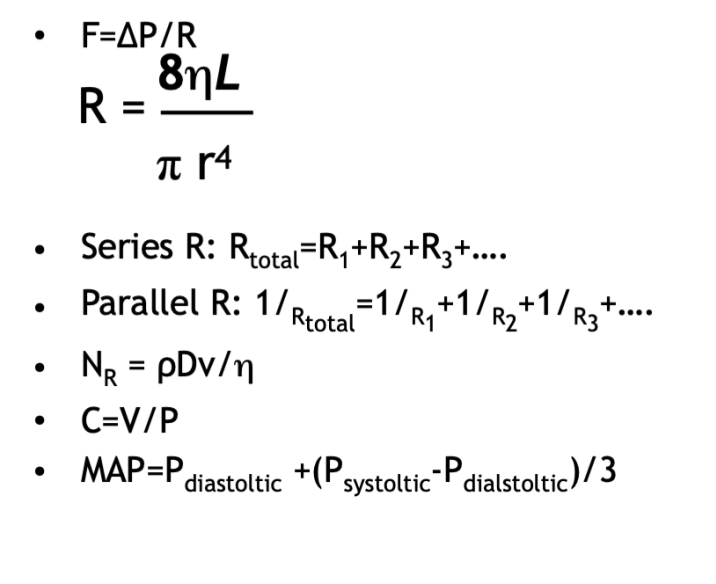
F=(P1-P2)/R
can also be flipped to find resistance
R=(P1-P2)/F
- describe poiseuilles law and its ramification
- what happens to resistance when you reduce the radius from 2 ->1?
- resistance is inversely correlated ot radius^4
- 2->1
- P/16 -> P/1 = the flow decreases and pressure increases
what is compliance?
C=V/P, allows an understanding the distendability of a vessel
- veins have a large Compliance
- large amount of blood under low pressure
- Arteries have a low compliance
- small amount of blood under high pressure
Define MAP. How can you calculate it?where is the largest and lowest? How dow arteries maintain their value?
mean arterial pressue
diastolic + (systolic-diastolic)(1/3)
- pulse pressure = systolic /diastolic
largest=aorta, smallest= inferior vena cava
arteries maintain their value due to high elastance
what is the reynolds number? how does it related to flow?
determines the turbulence of the flow.
the increase in reynolds number identifies the increase in turbulence.
laminar<2000….30000<turbulent></turbulent>
<p>Nr=diameter/viscocity: think about a bp cuff</p>
</turbulent>
Velocity is ____ proportional to vessel diameter. Put the following in order of blood velocity
Aorta, Vein, capillary
inversely proportional
increasing velocity: aorta>vein>capillary(b/c the total cross sectional area is greatesr here)
how is velocity related to vessel size?
V=D/T
- this is inversely proporionate to vessel diameter.
- increase diameter = decrease velocity
- decrease diamter = increase velocity
what is the measurement of bloodcell in the blood?
hematocrit
describe the velocity of blood in capillariecapillaries are very slow, b/c they have the greates cross sectional area
What structures have an unstressed volume and stressed volume of blood?
- stressed
- arteries
- unstressed
- veins
what is the reason for most of the blood in venous system?
b/c of high compliance of veins
what is the flow formula?
flow = change in pressure/ resistance
which arrangement has most resistance: series or parallel?
Series>parallel
- series
- overall sum of individuals
- parallel
- overall is less than the any individual resistance
what applies to laminar flow?
how is flow rate considered with this concept?
laminar flow follow poiseulles law, increasing in flow as you move closer to the center.
heart murmurs and arterial bruts are detected b/c of what principal?
turbulent flow in the vessel
calculate the MAP
pulse pressure= 40
systolic=120
diastolic=80
MAP= diastolic + 1/3(pulse pressure)
80+1/3(40)=93
what is the notch in the systolic phase of contraction?
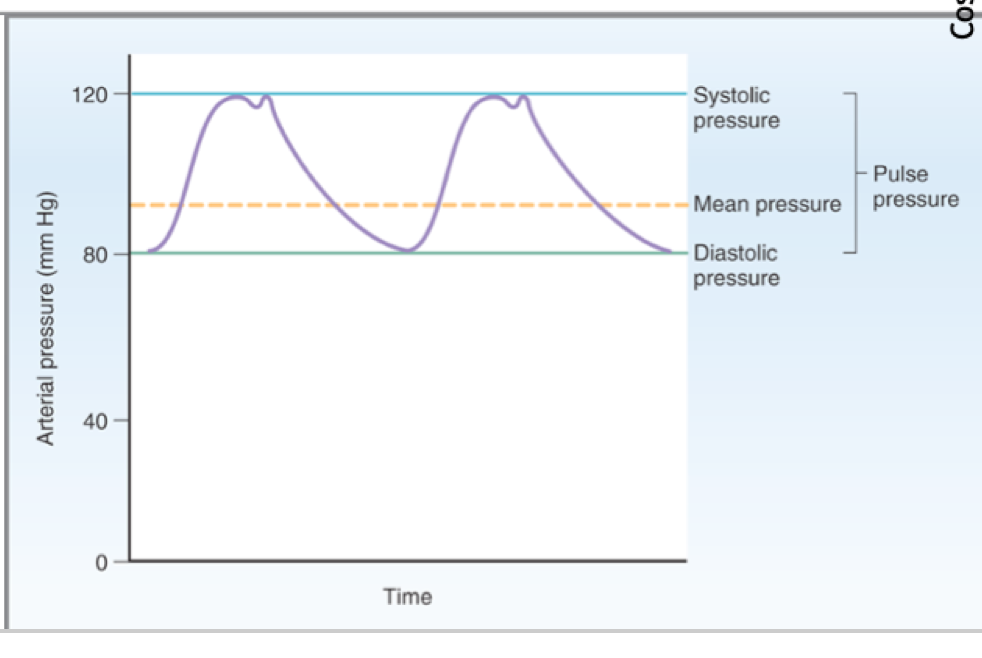
notch in the systolic phase is the dicrotic nothc (incisura). due to a short period of retrograde flow in the aorta just following closure of the aortic valve.




