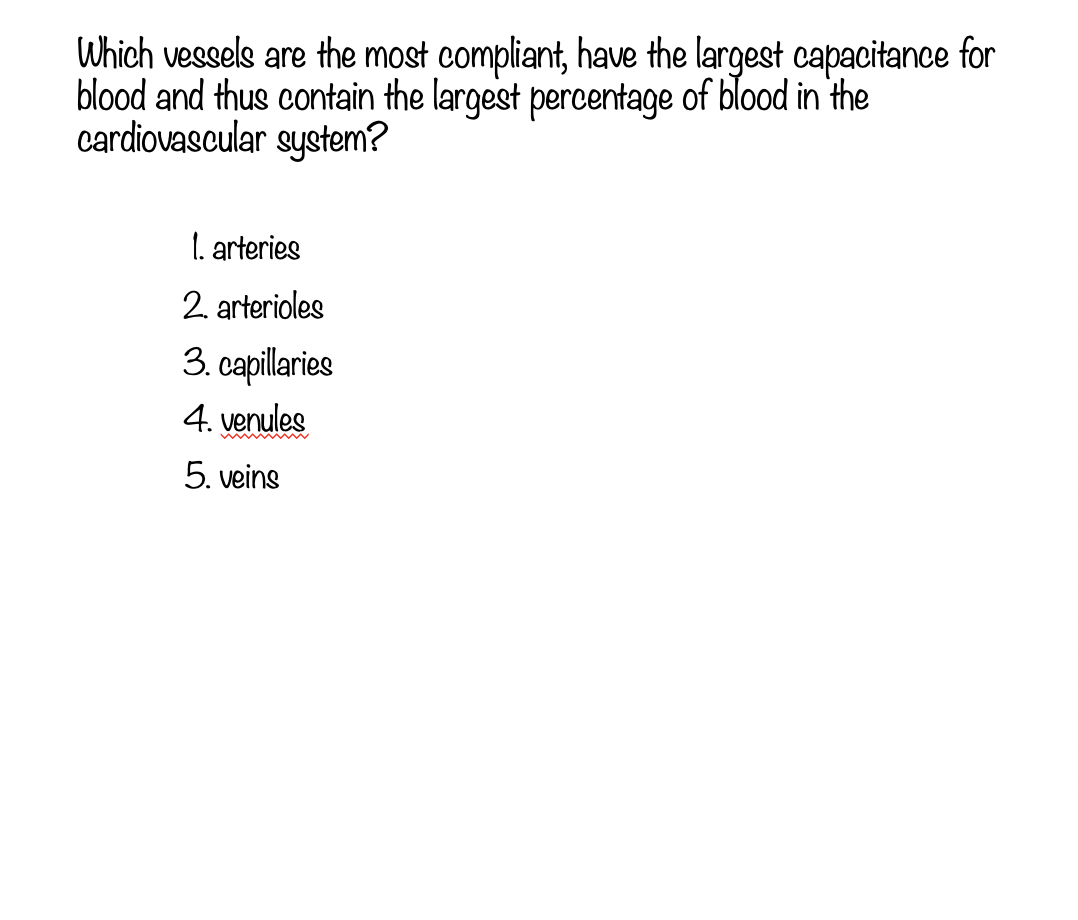
Veins
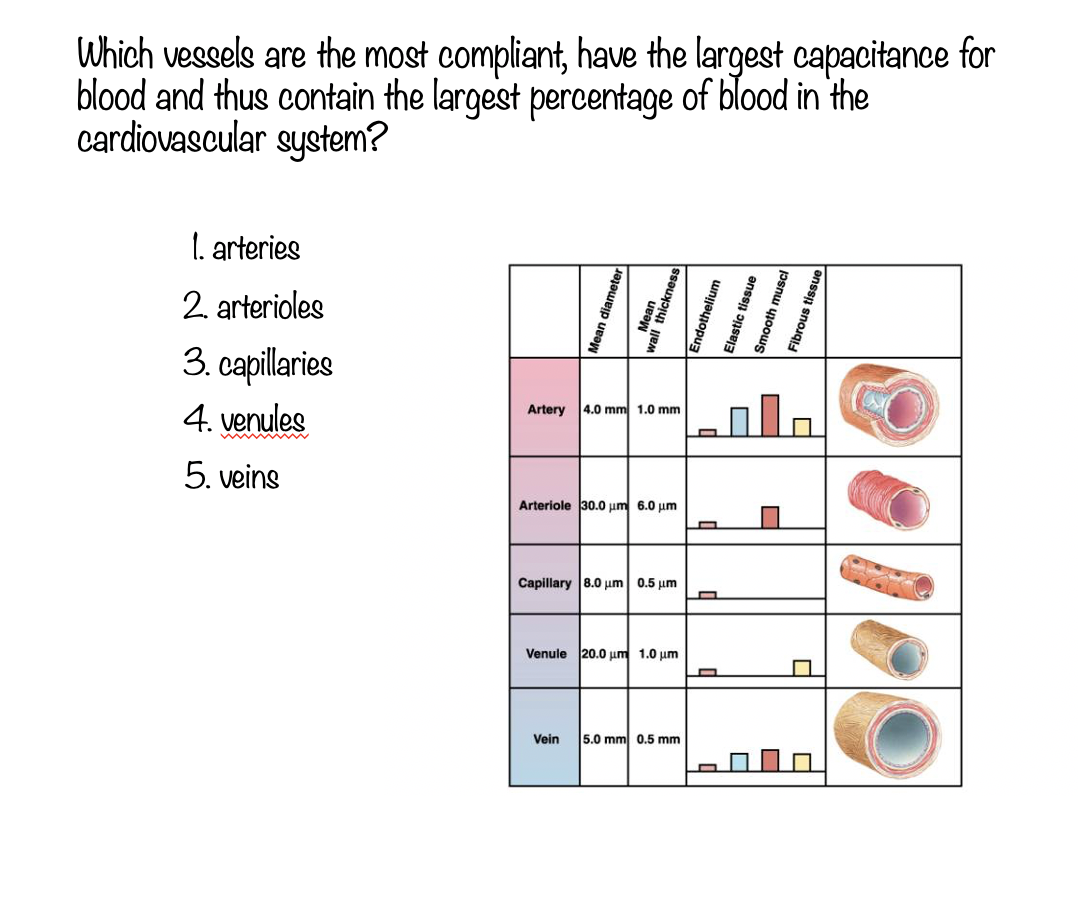
How do you determine the systemic pressure difference that drives blood flow (Q)?
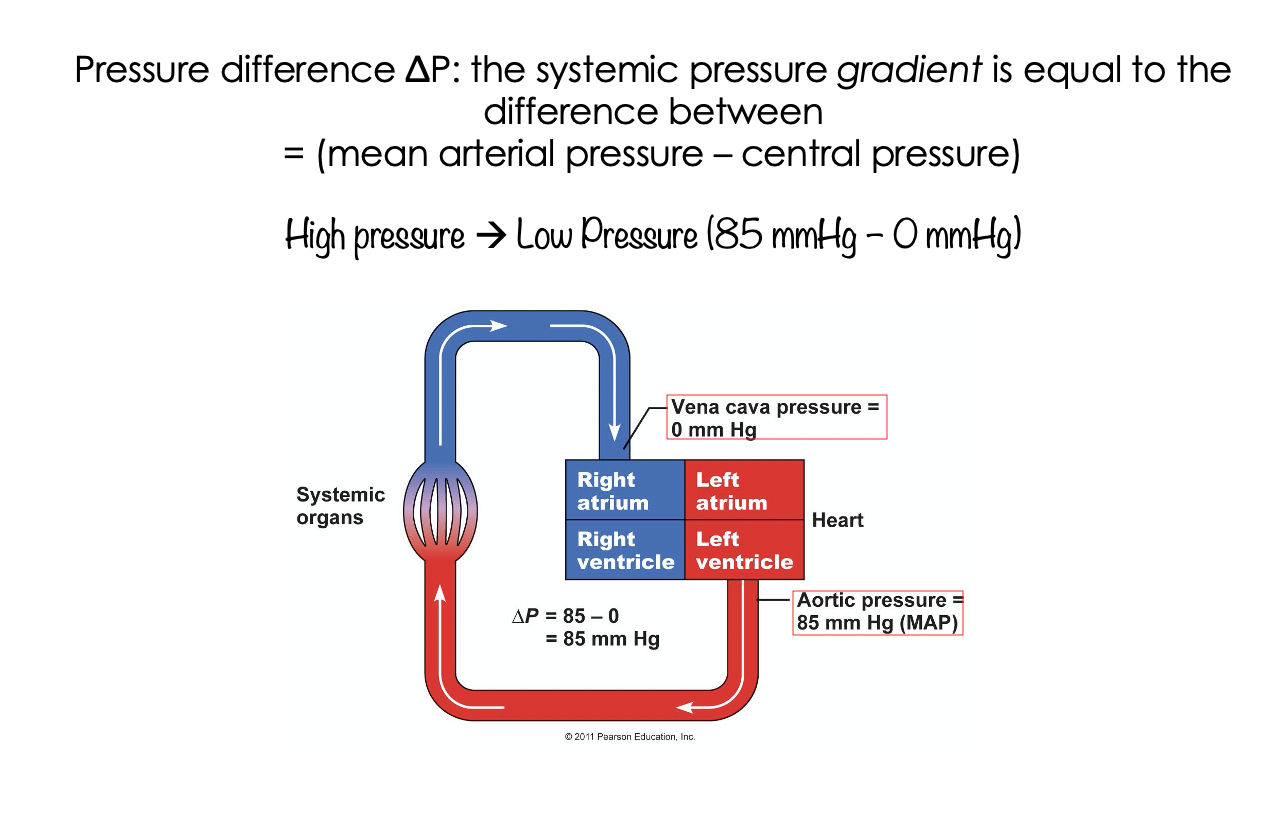
Why is turbulent flow bad in the systemic vasculature?
- Can cause endothelial damage –> inflammation, dysfunction of endothelium (important for local vasodilation and autoregulation of CV system) –> can lead to atherosclerosis and / or thrombus formation
- Local pockets of static blood that’s not moving as much –> more likely to clot
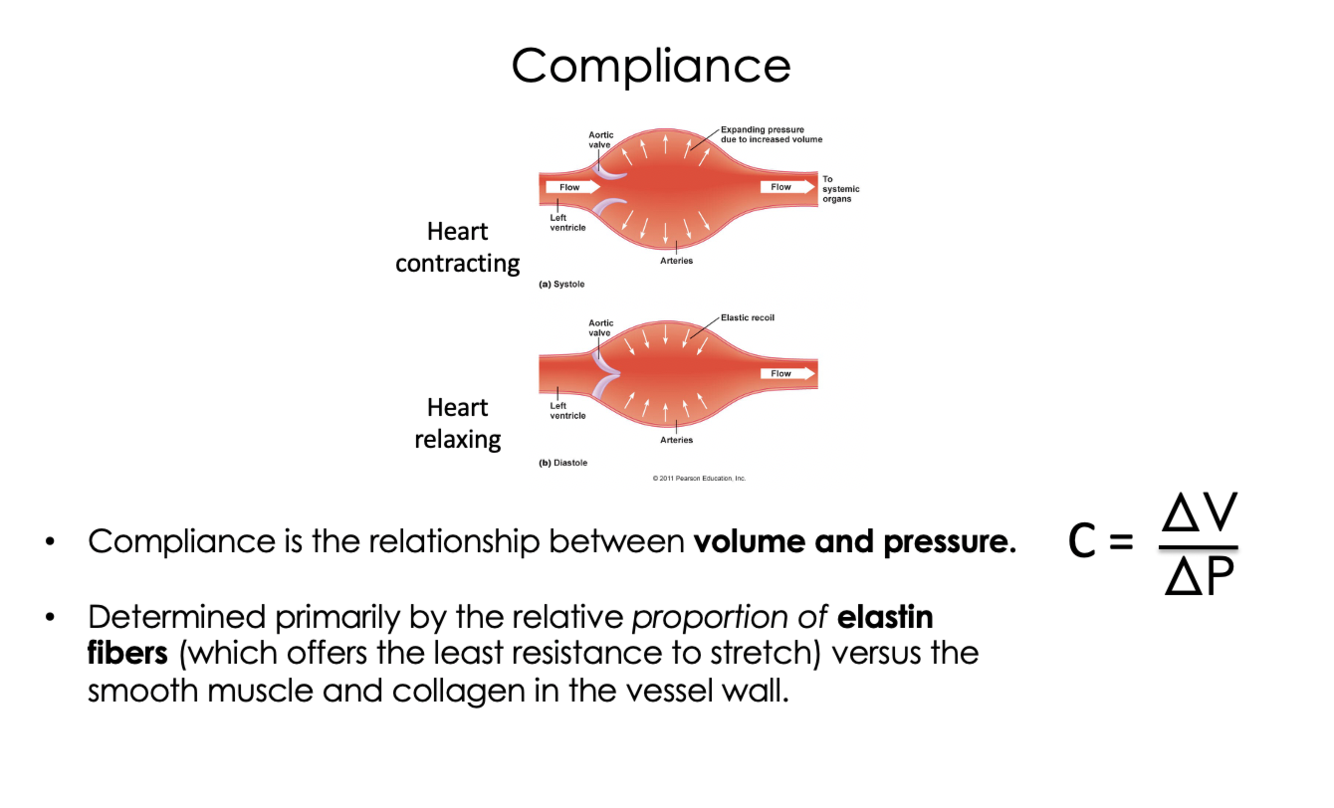
In the CV system, what determines compliance?
- Changes in […] alter peripheral venous pressure
- How can venous pressure be altered?
- Nitroglycerin is a selective venodilator. What affect will this drug have on pre-load and oxygen demand?
- Blood volume
- Changes in venous tone via SNS activation
- It will vasodilate veins, increasing blood in veins, thereby decreasing blood that is returned to heart so decrease pre-load and decrease oxygen demand
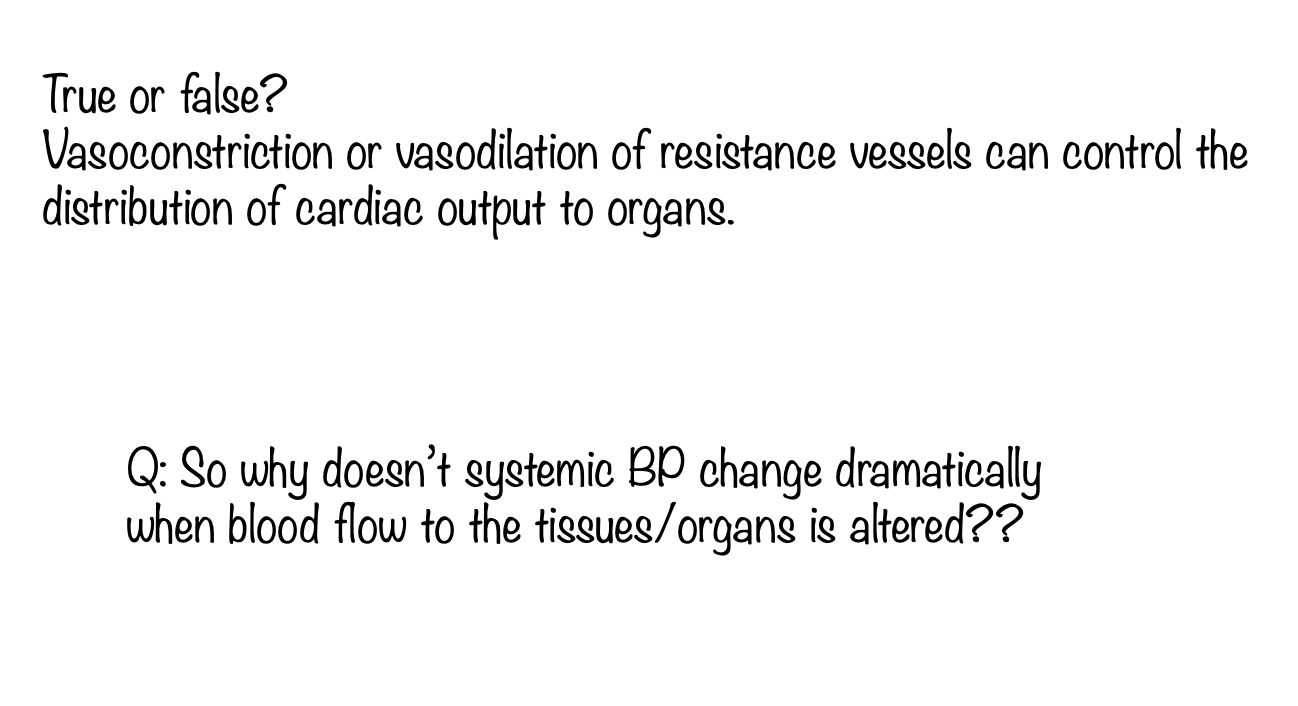
Capillaries are arranged in parallel. This allows the body to alter local vasoconstriction and vasodilation to alter blood flow locally to tissues without changing total resistance. If total resistance is unchanged and flow is constant, then pressure will not change.
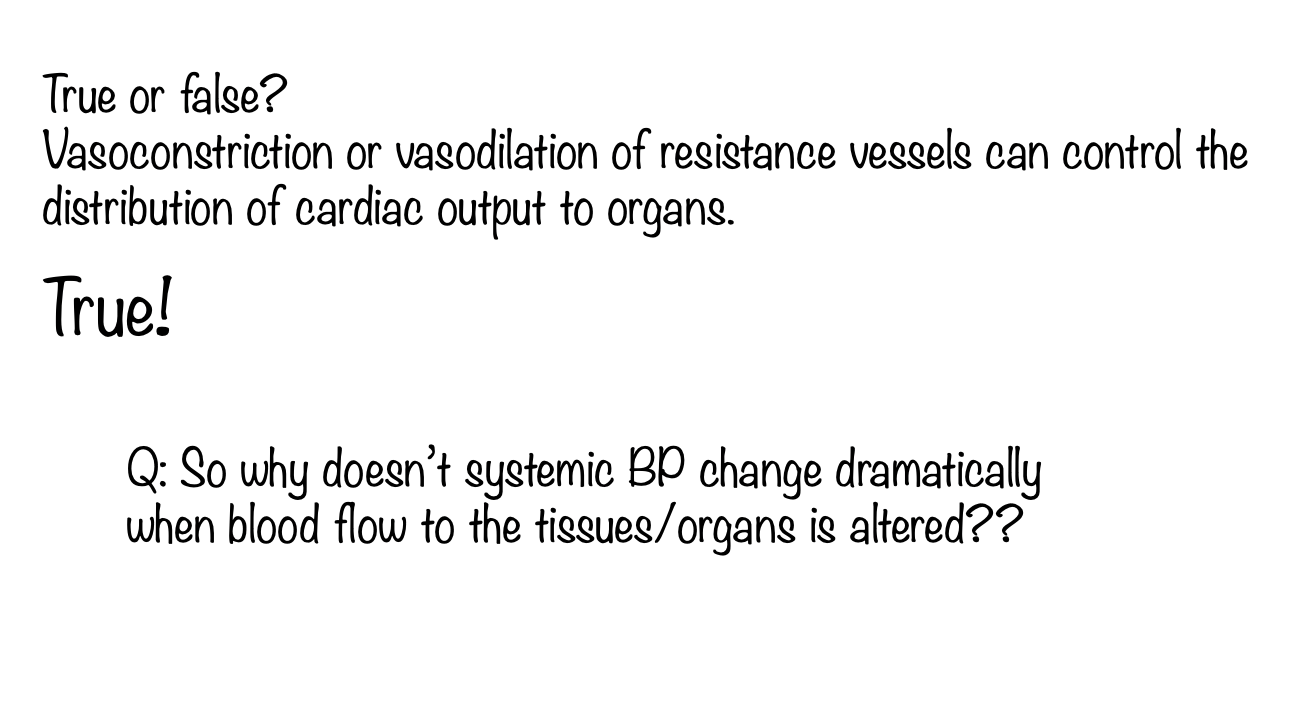
What must be the relationship between the pressure gradient and vascular resistance in order for blood flow to occur?
Pressure gradient must be high enough to overcome TPR
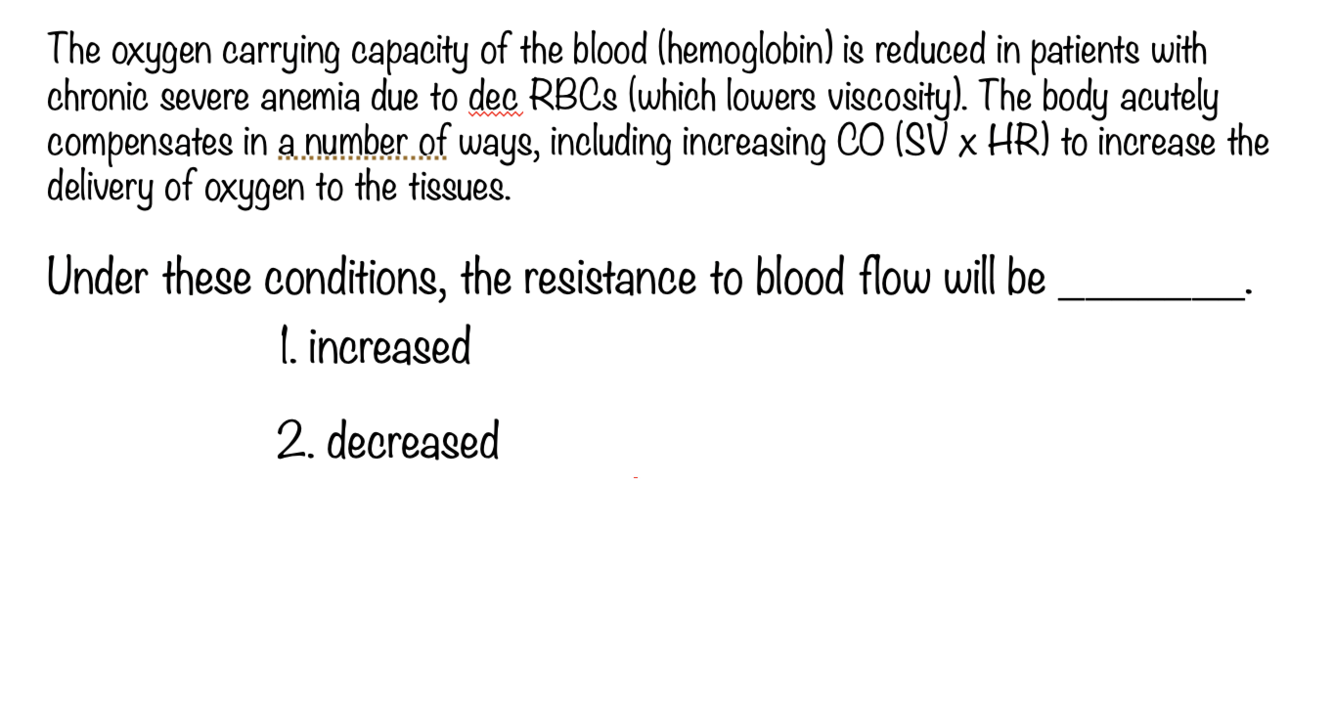
Normally the viscosity of blood does not change. However, there are circumstances that can change viscosity. When would this happen?
Polycythemia = genetic condition, too many RBCs
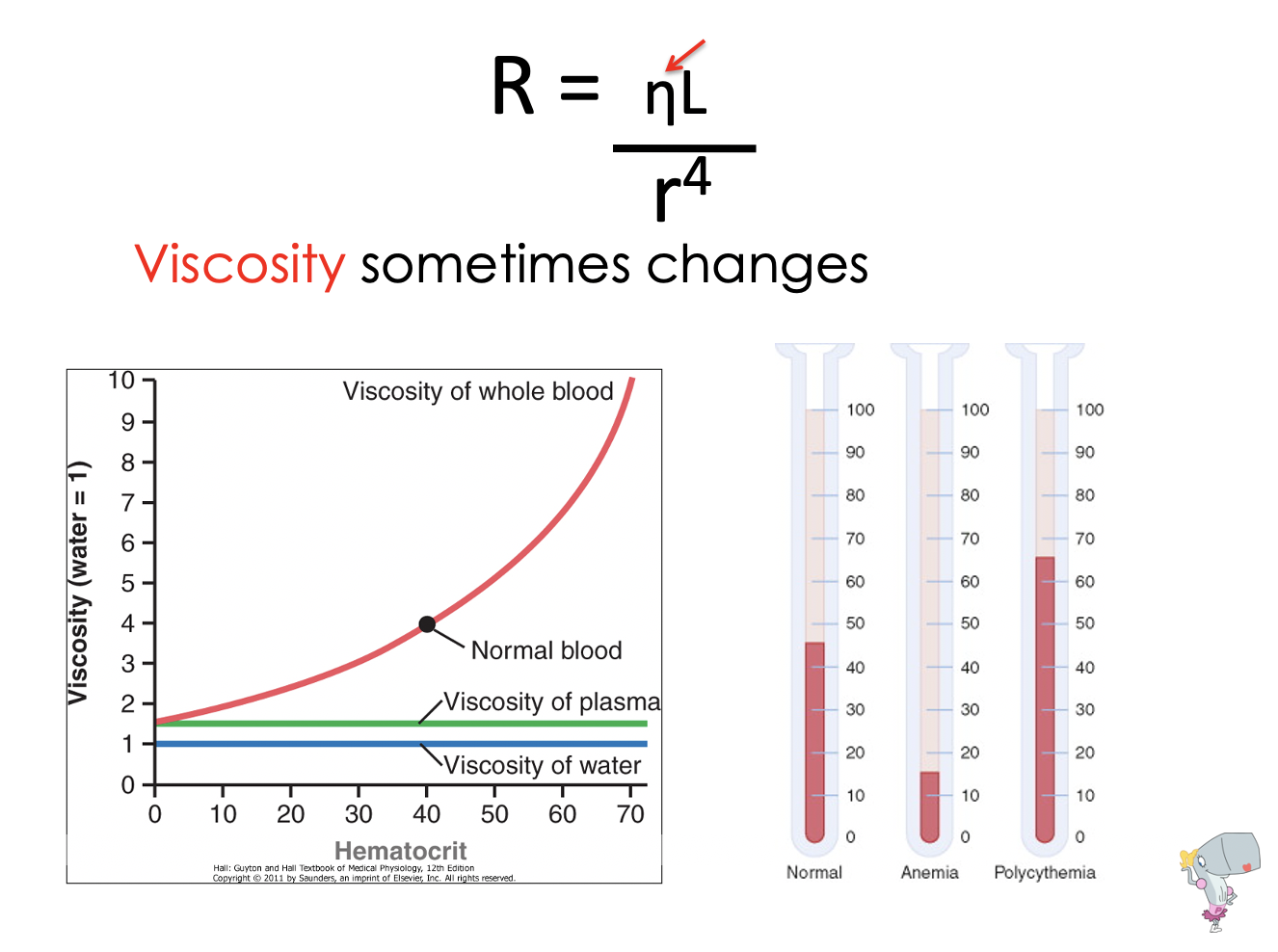
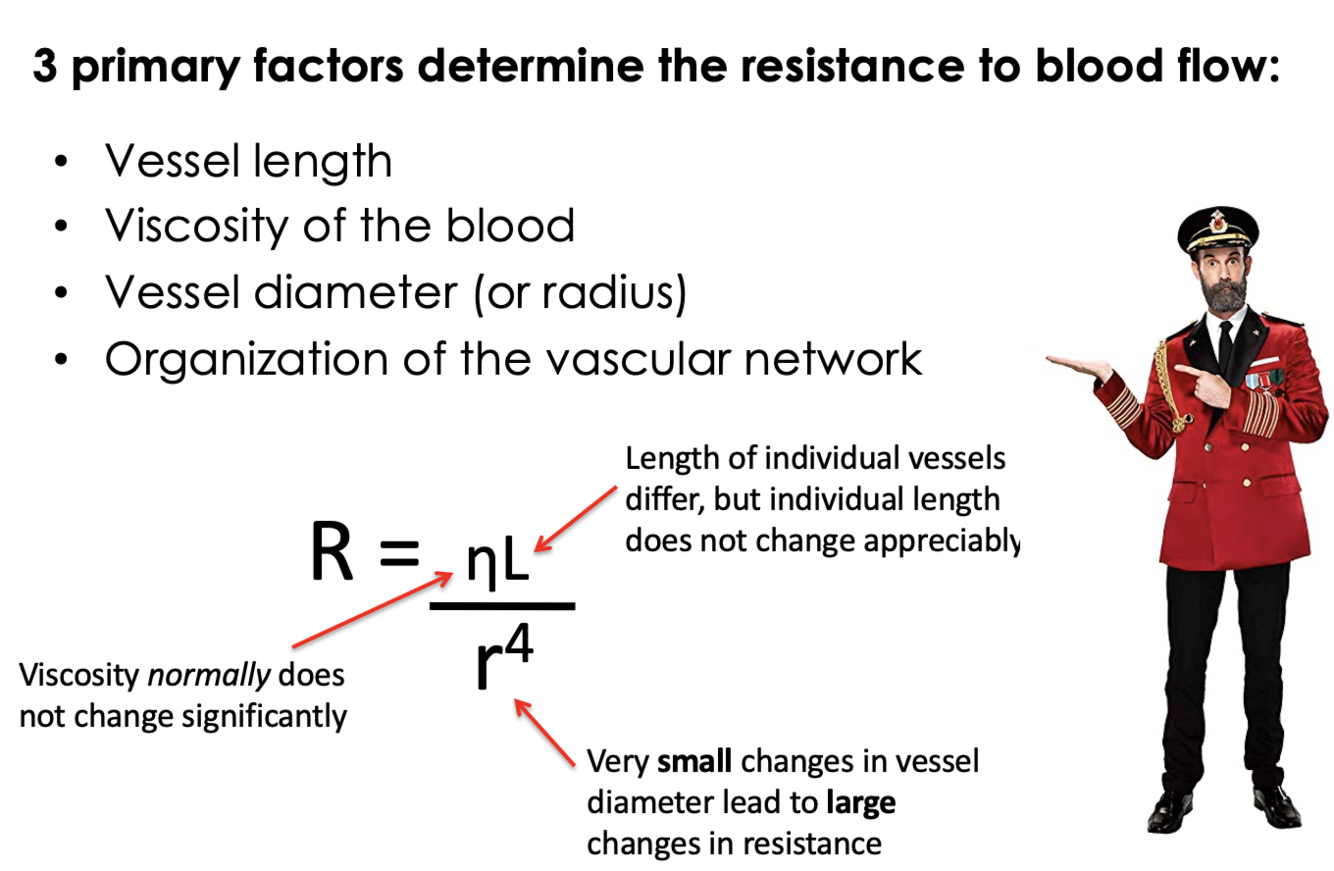
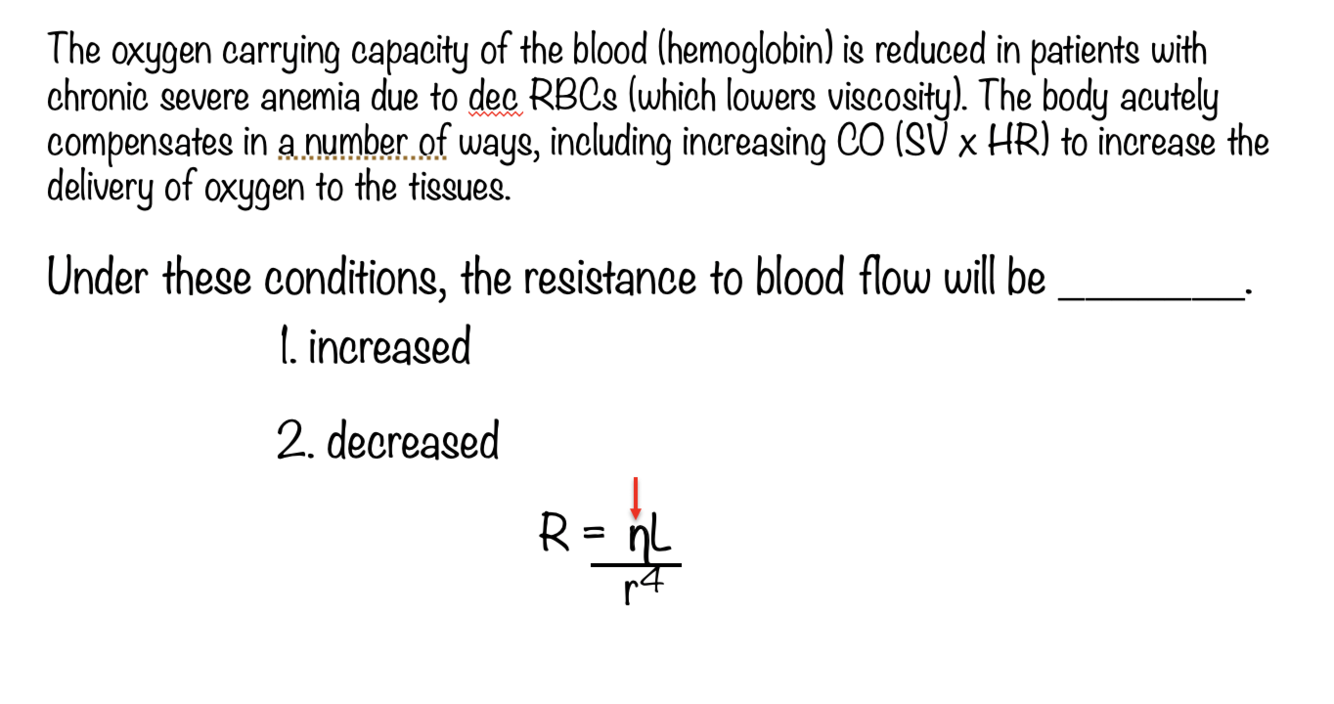
What 4 factors determine the resistance to blood flow?
- decreased
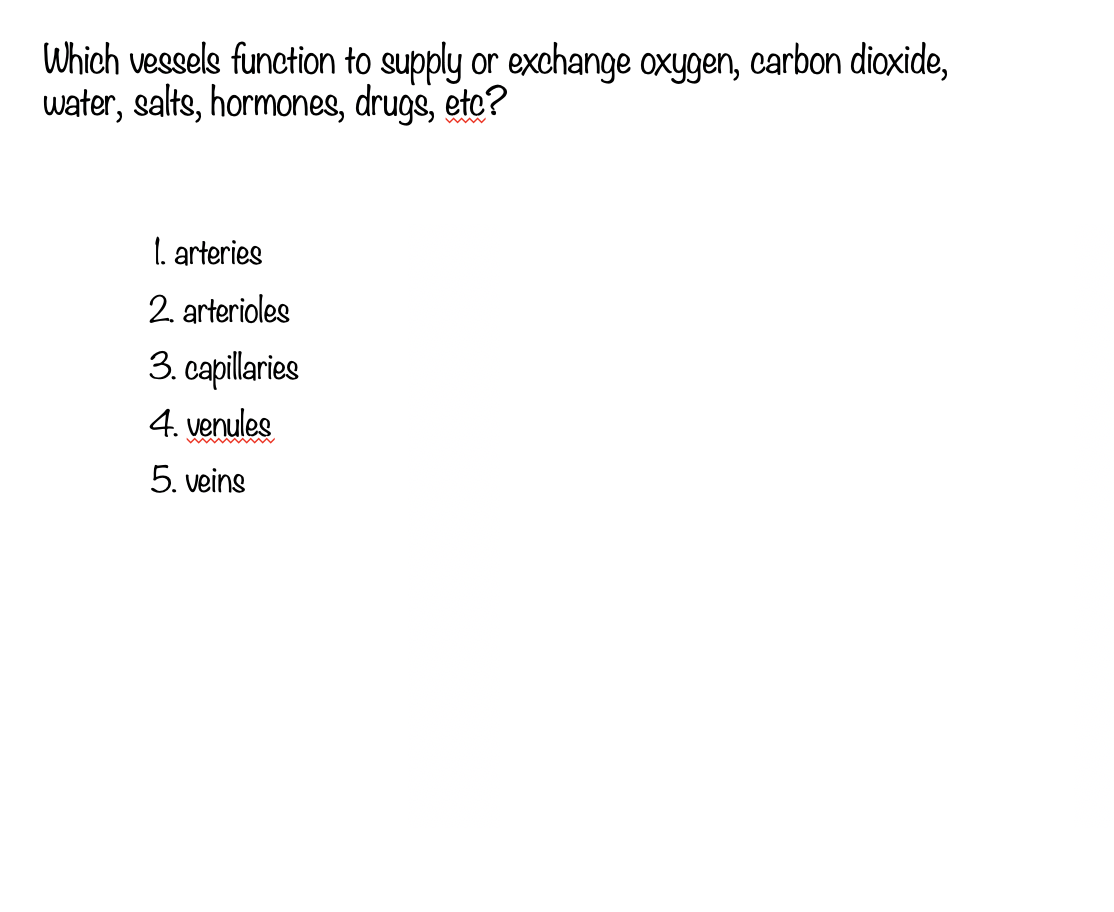
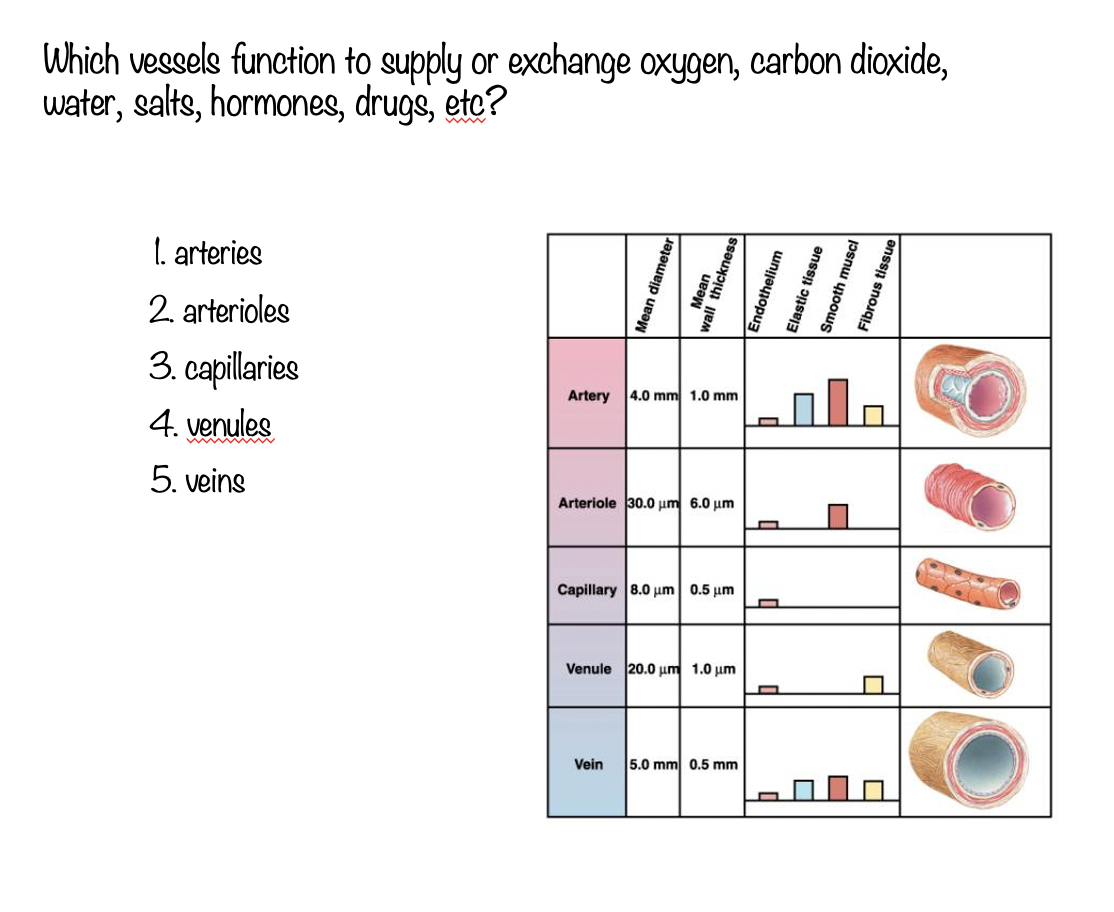
Capillaries
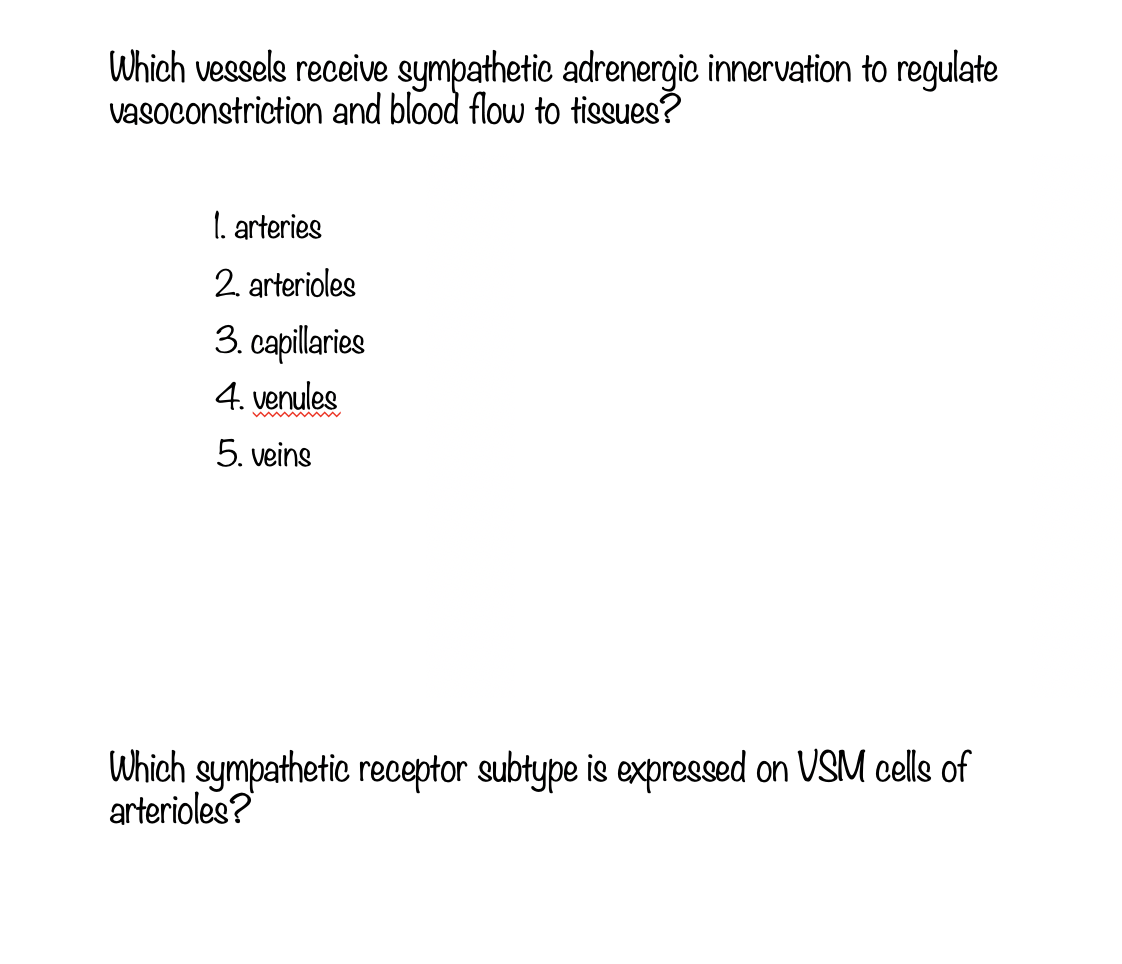
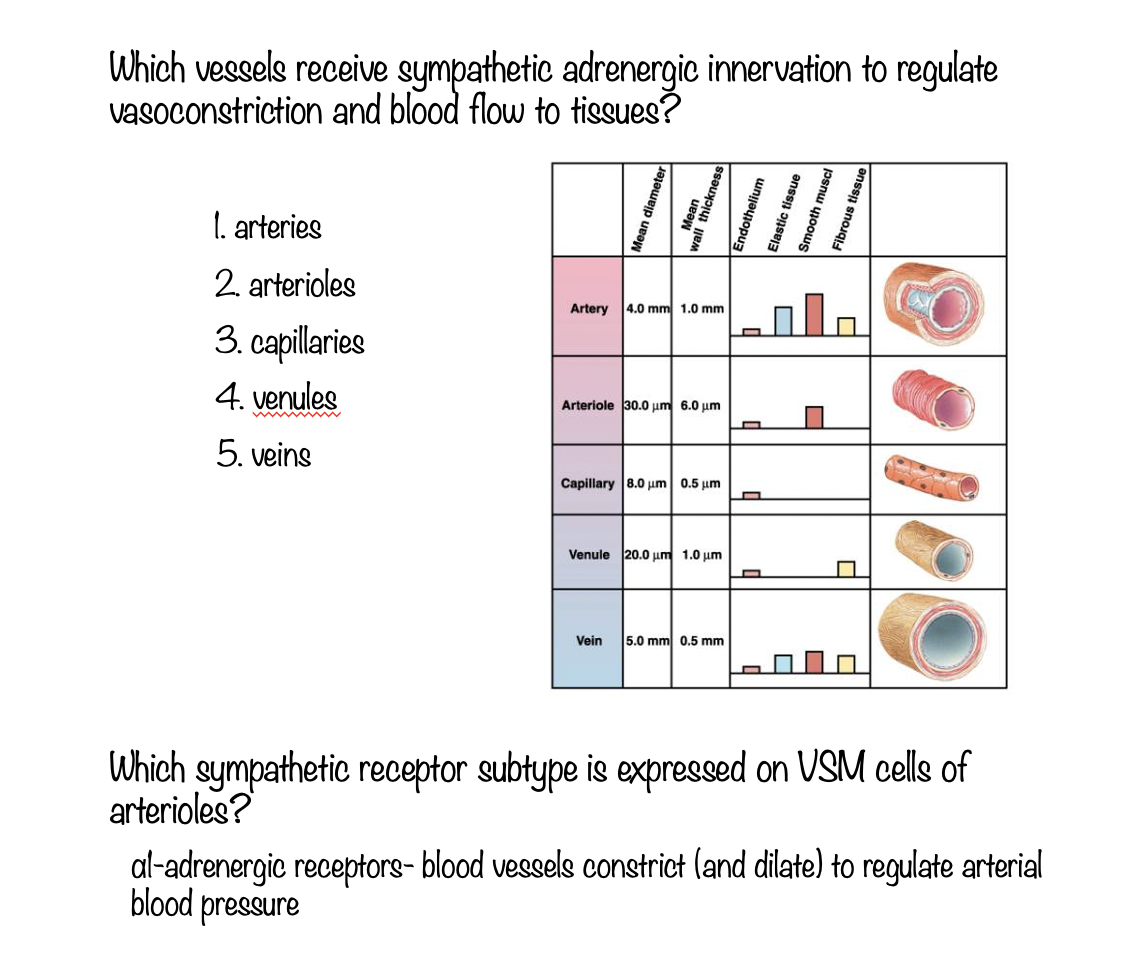
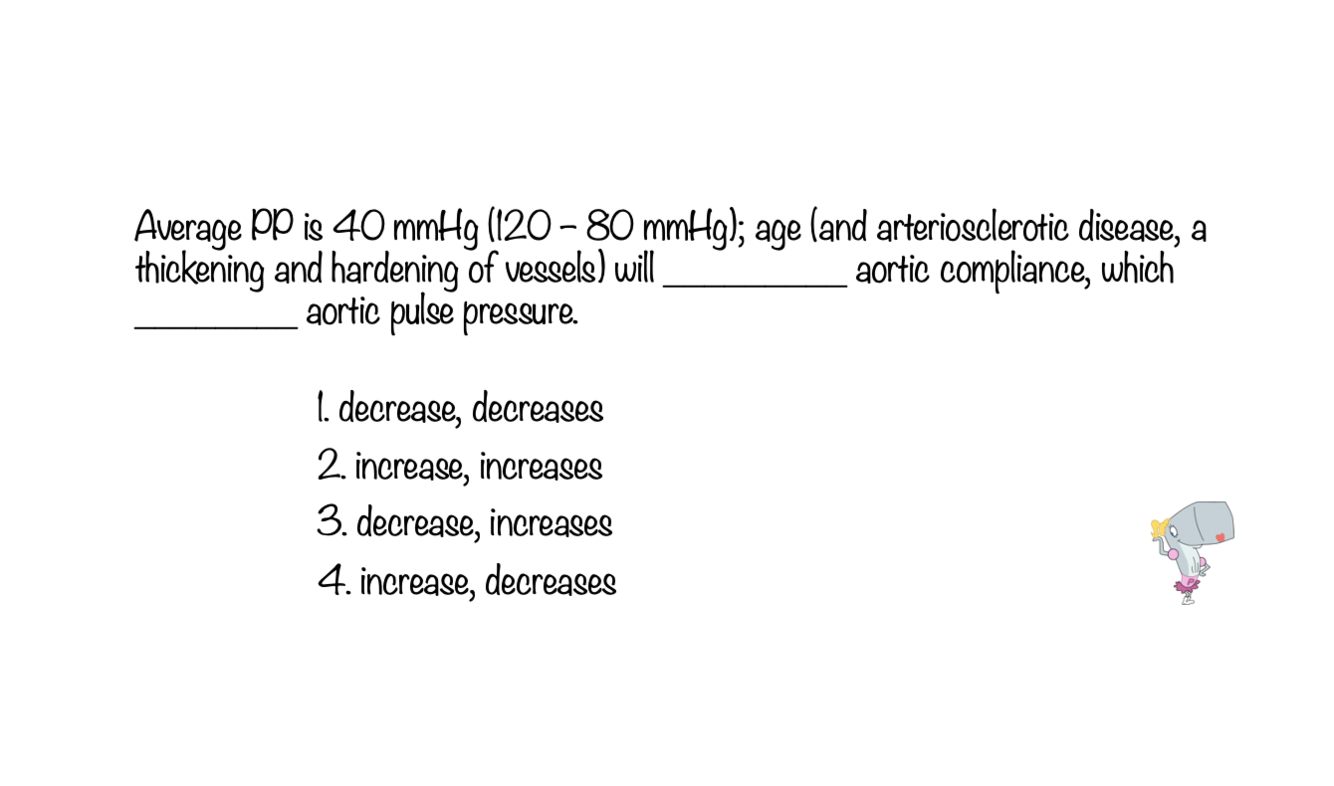
Decrease; increase
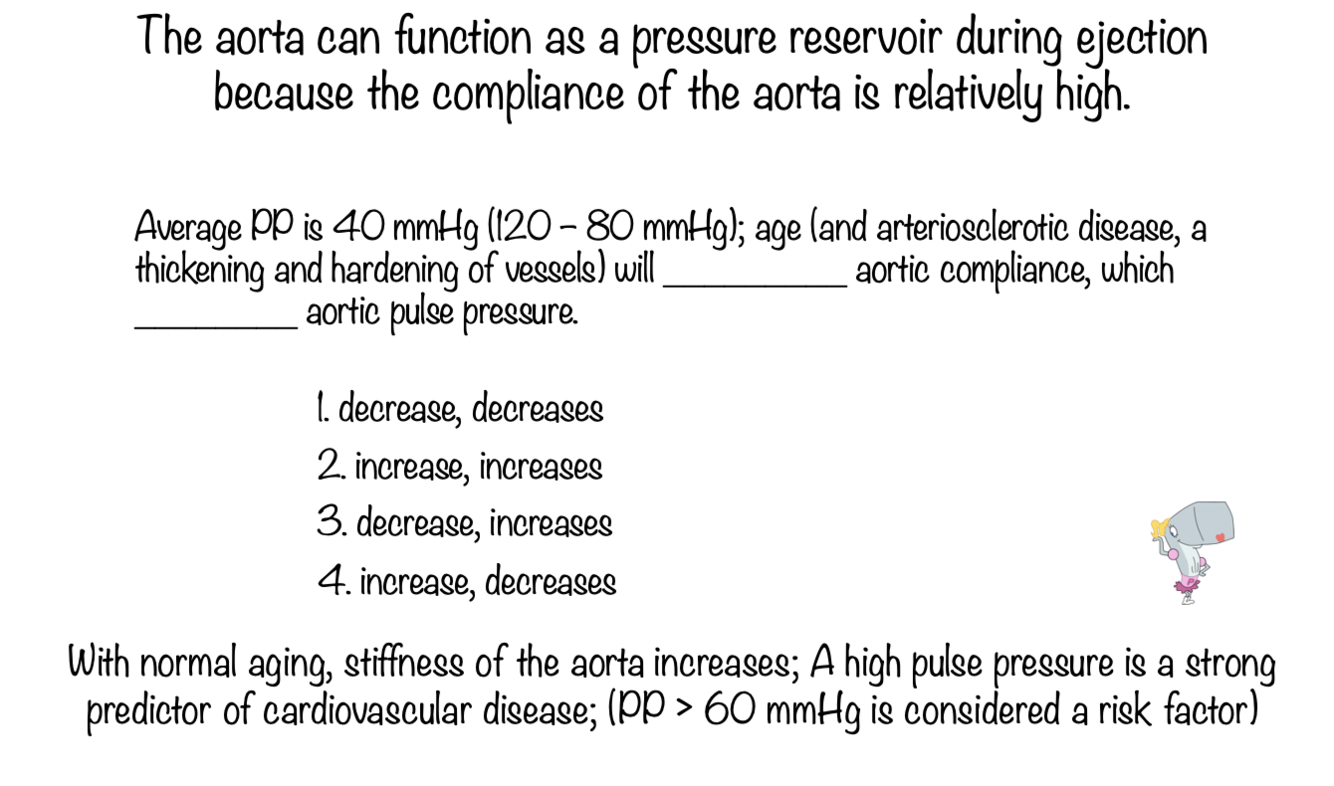
With compliance in mind, explain why the BP measured at the brachial artery is not the same as the BP of the actual aorta.
The aorta is more compliant that the systemic arteries. Therefore, blood in the aorta will display a lower increase in pressure for a given change in volume or distention of the vessel. The systemic arteries distend less than the aorta, so for the same level of distention, there will be a larger change in pressure. Therefore, the pressure measured at the brachial artery is actually higher than it is in the aorta. The systolic pressure increases, while the diastolic pressure decreases leading to a greater pulse pressure in the BA vs. aorta.
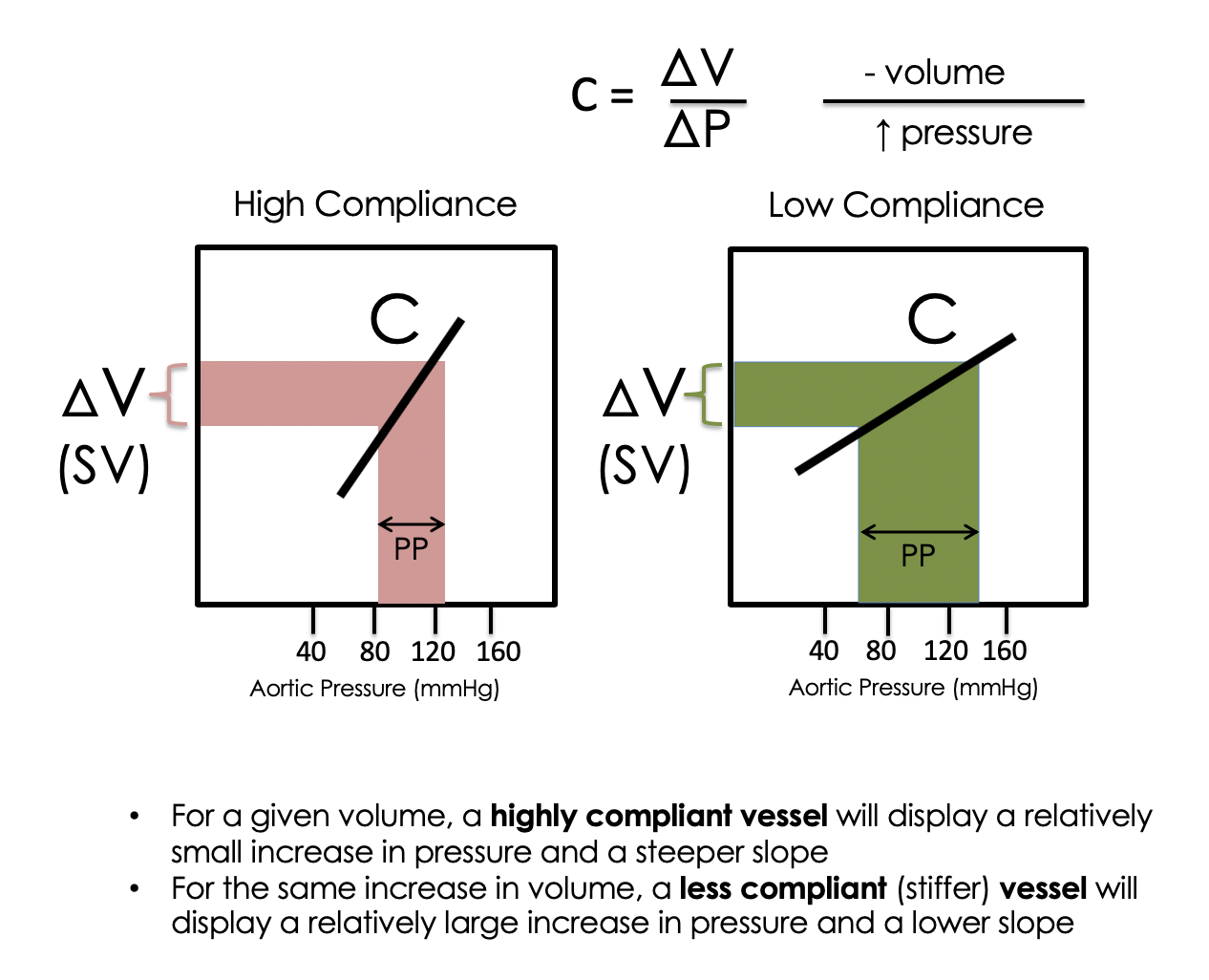
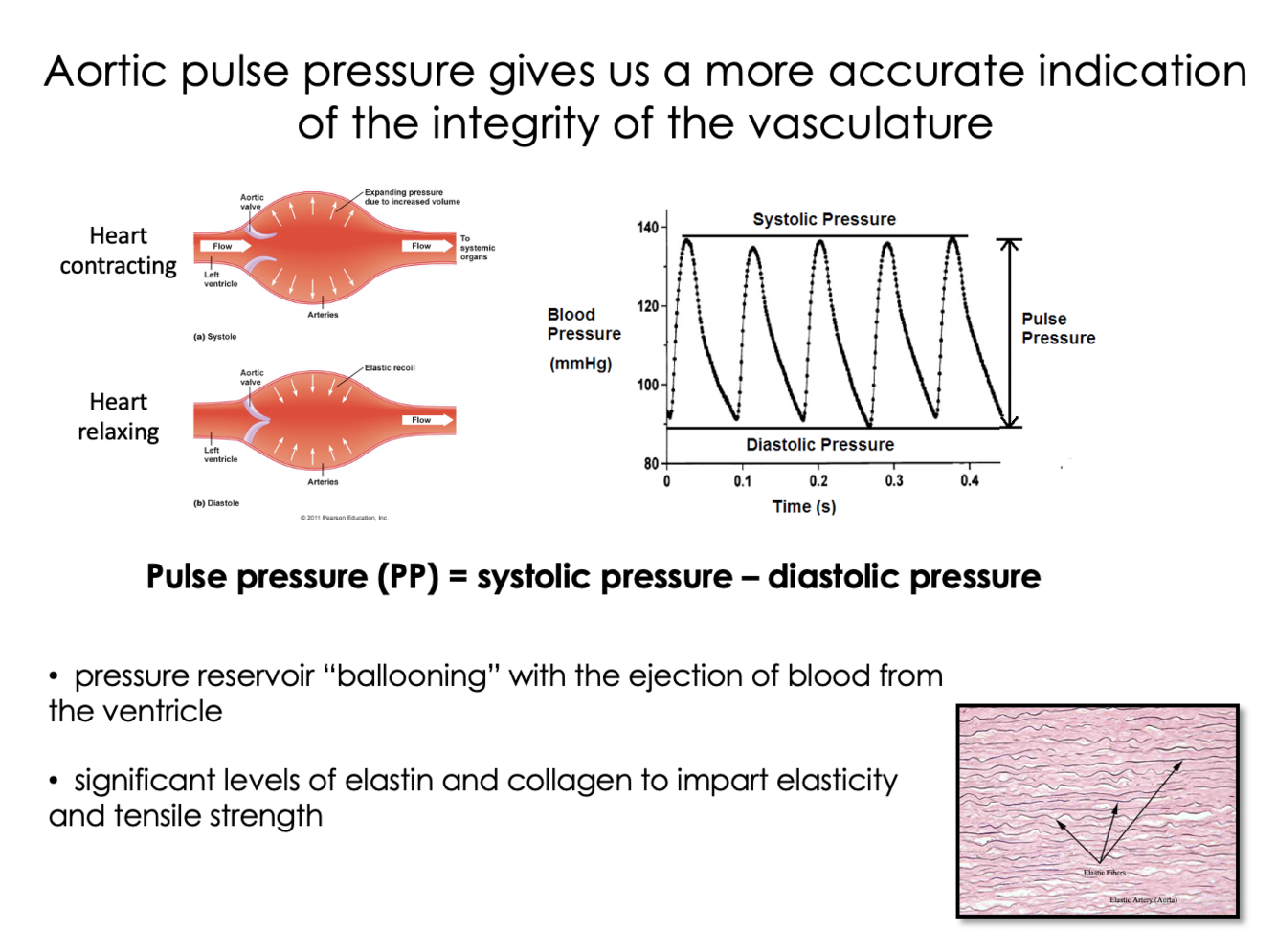
- What does aortic pulse pressure tell you?
- How is it calculated?
- What 2 things determine PP?
- See image
- See image
- Compliance and stroke volume output
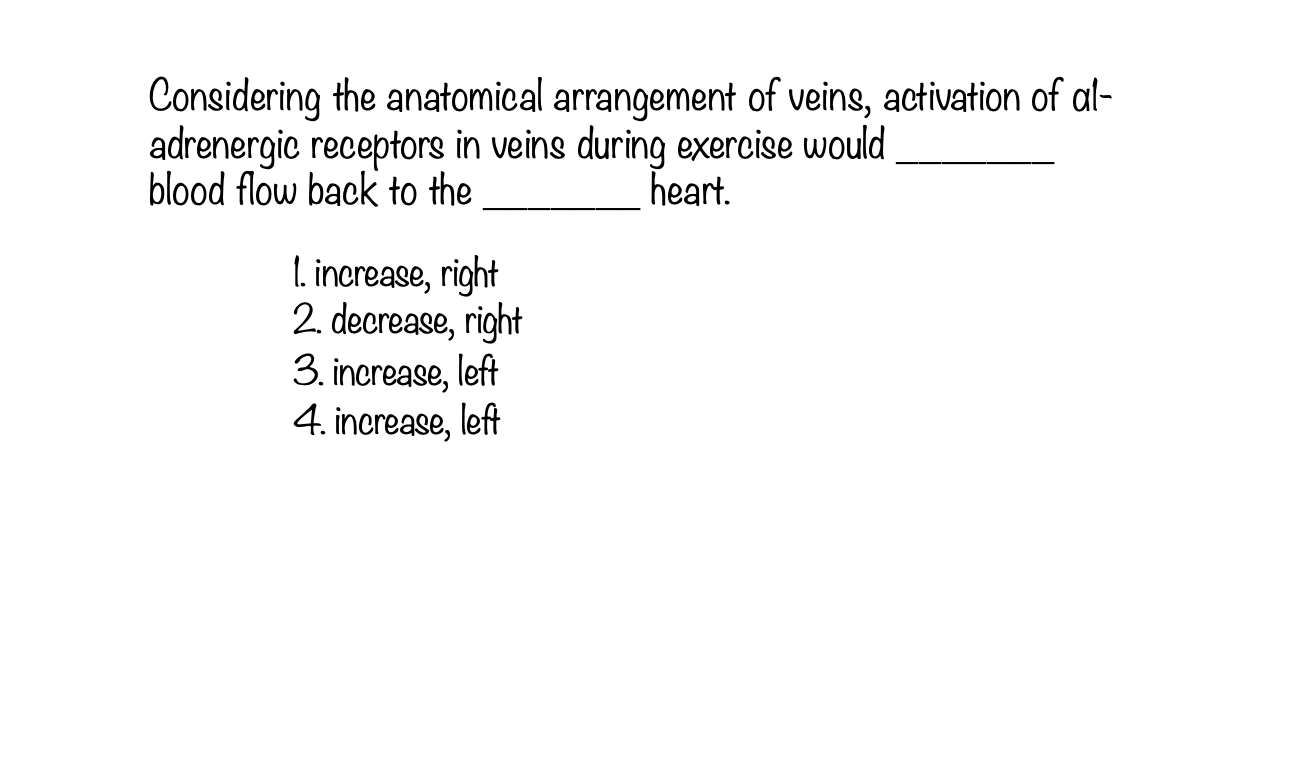
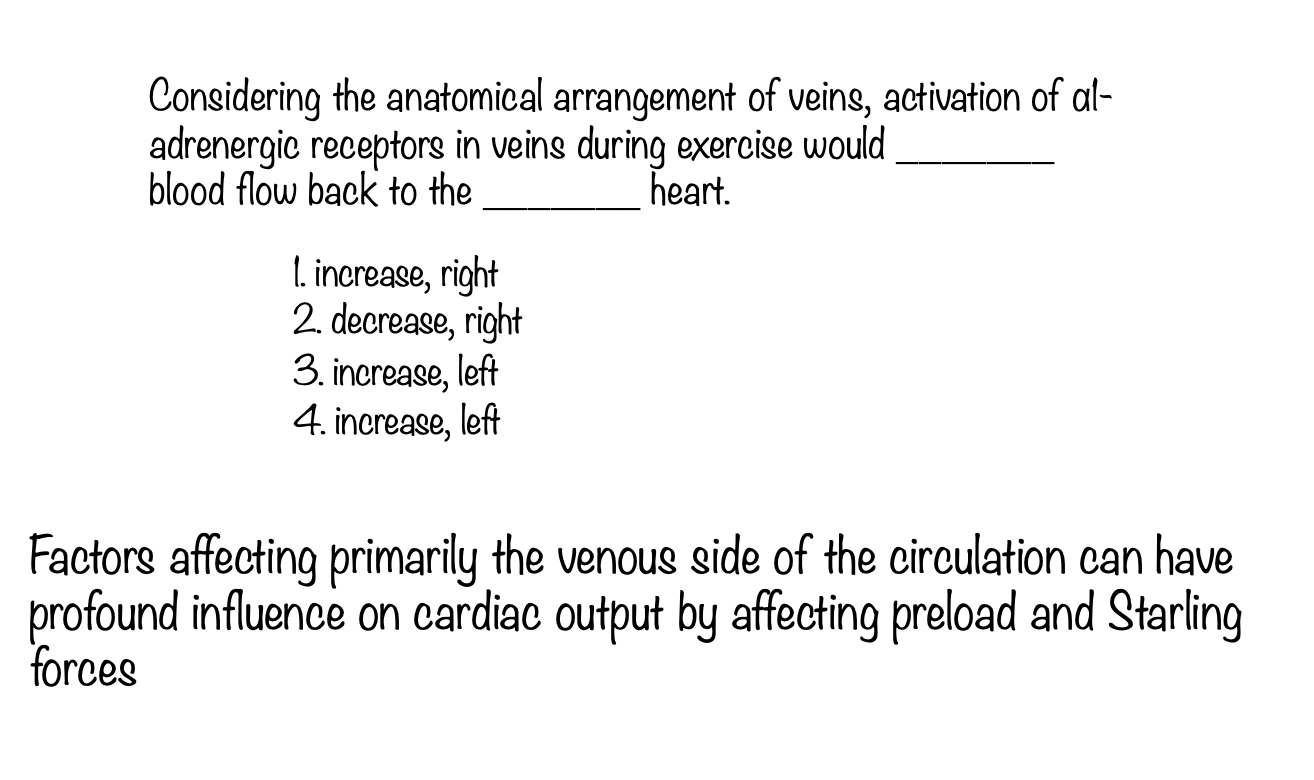
Increase, right
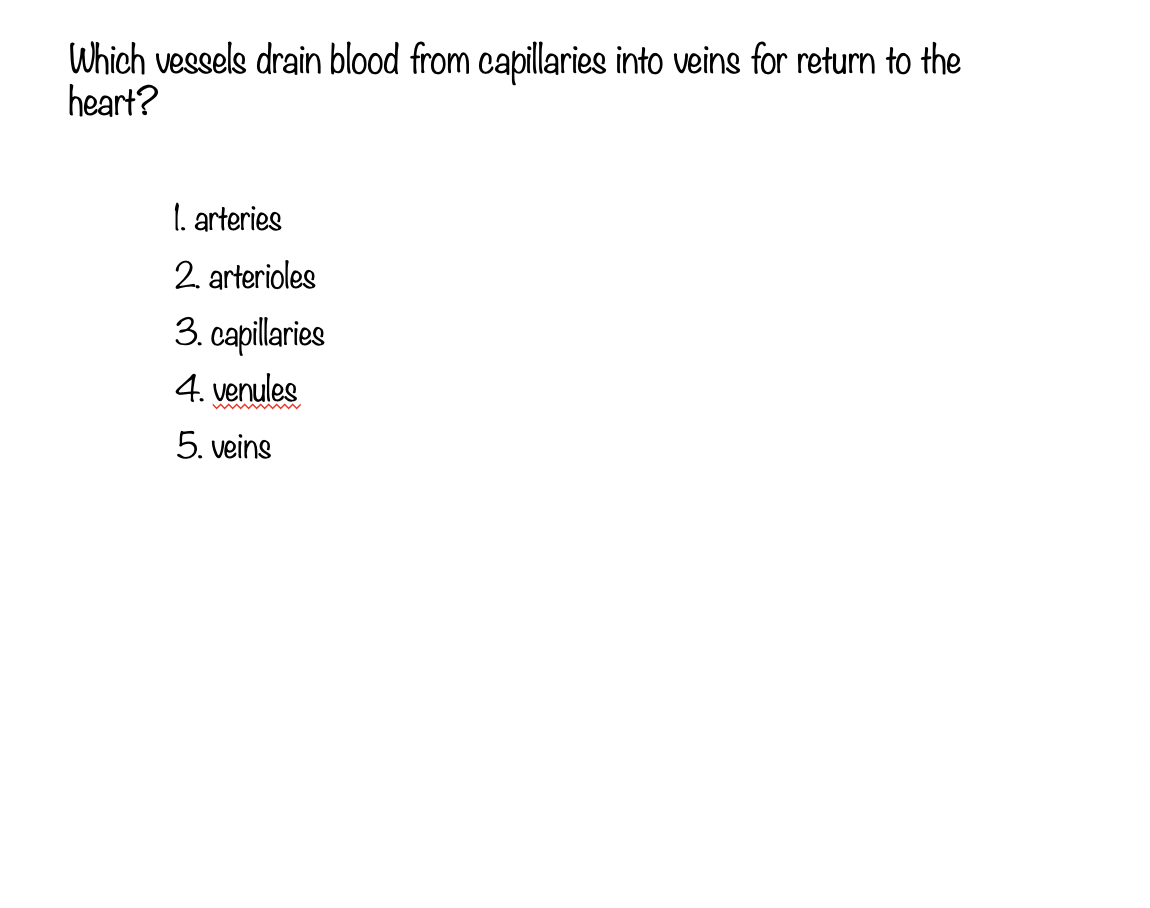
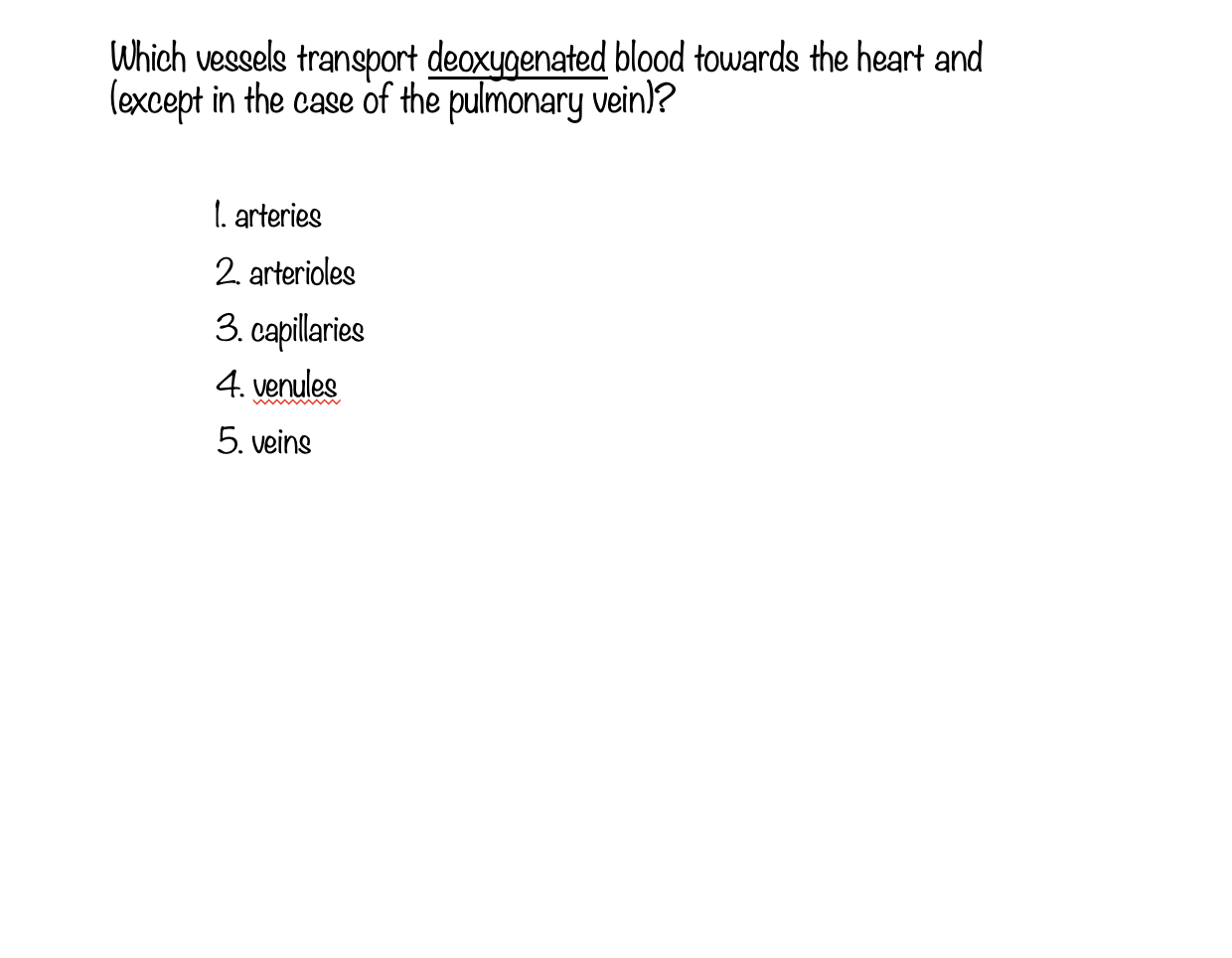
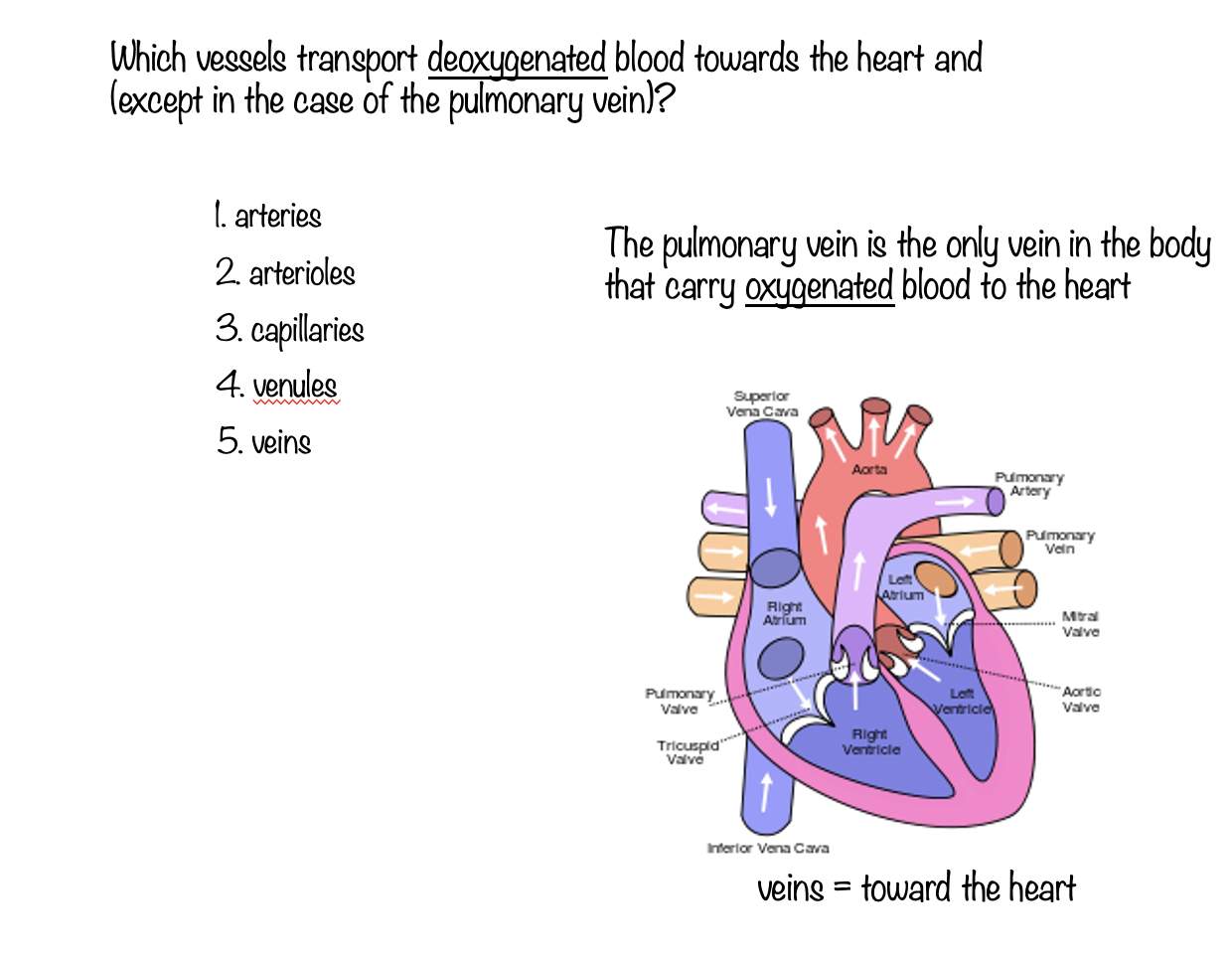
Venules
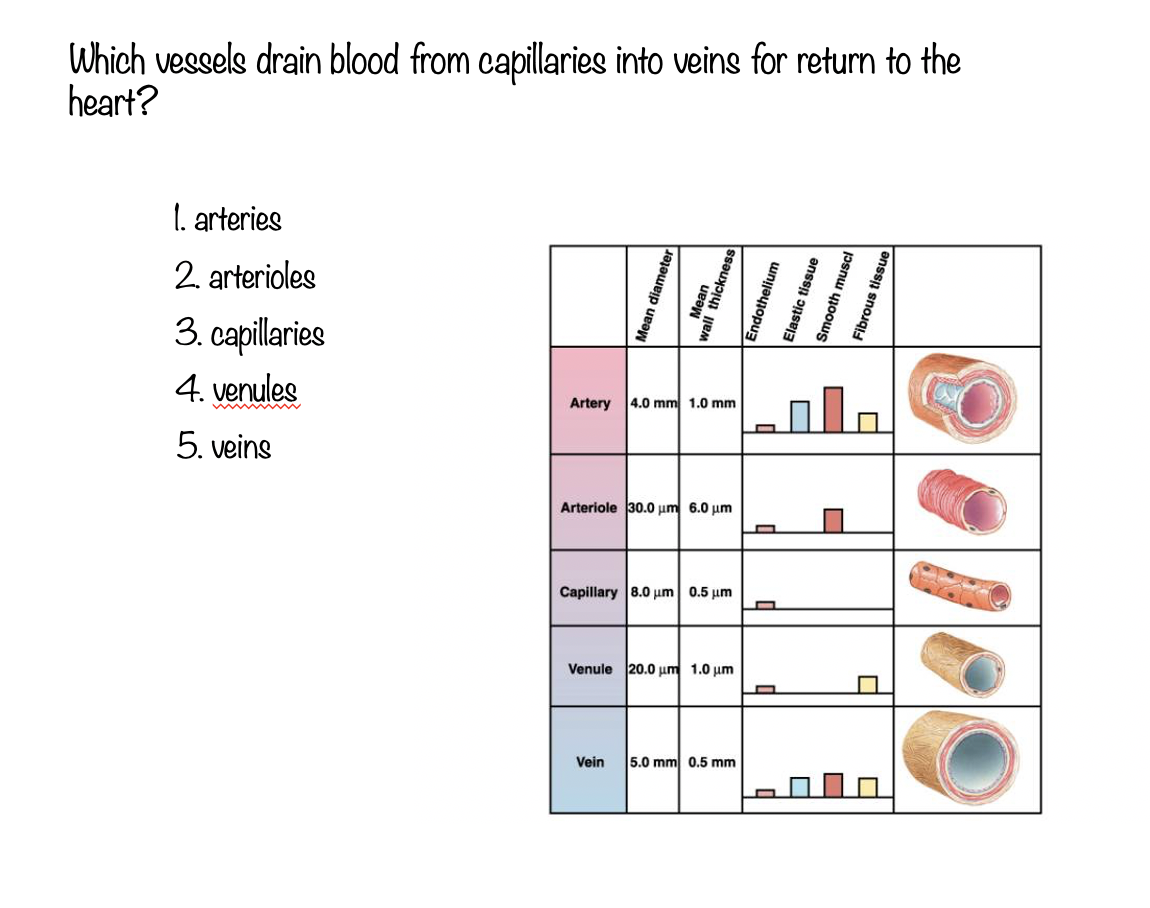
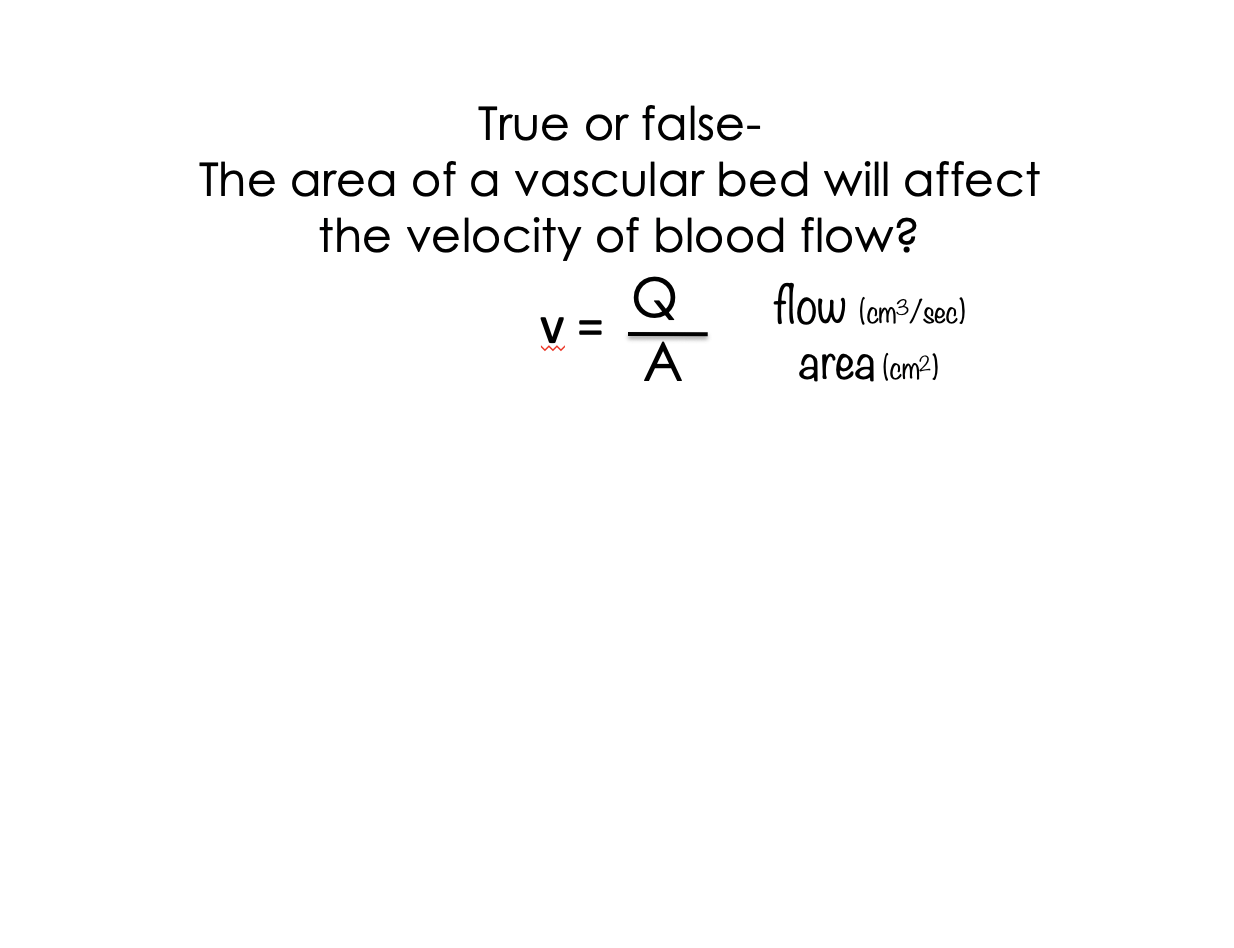
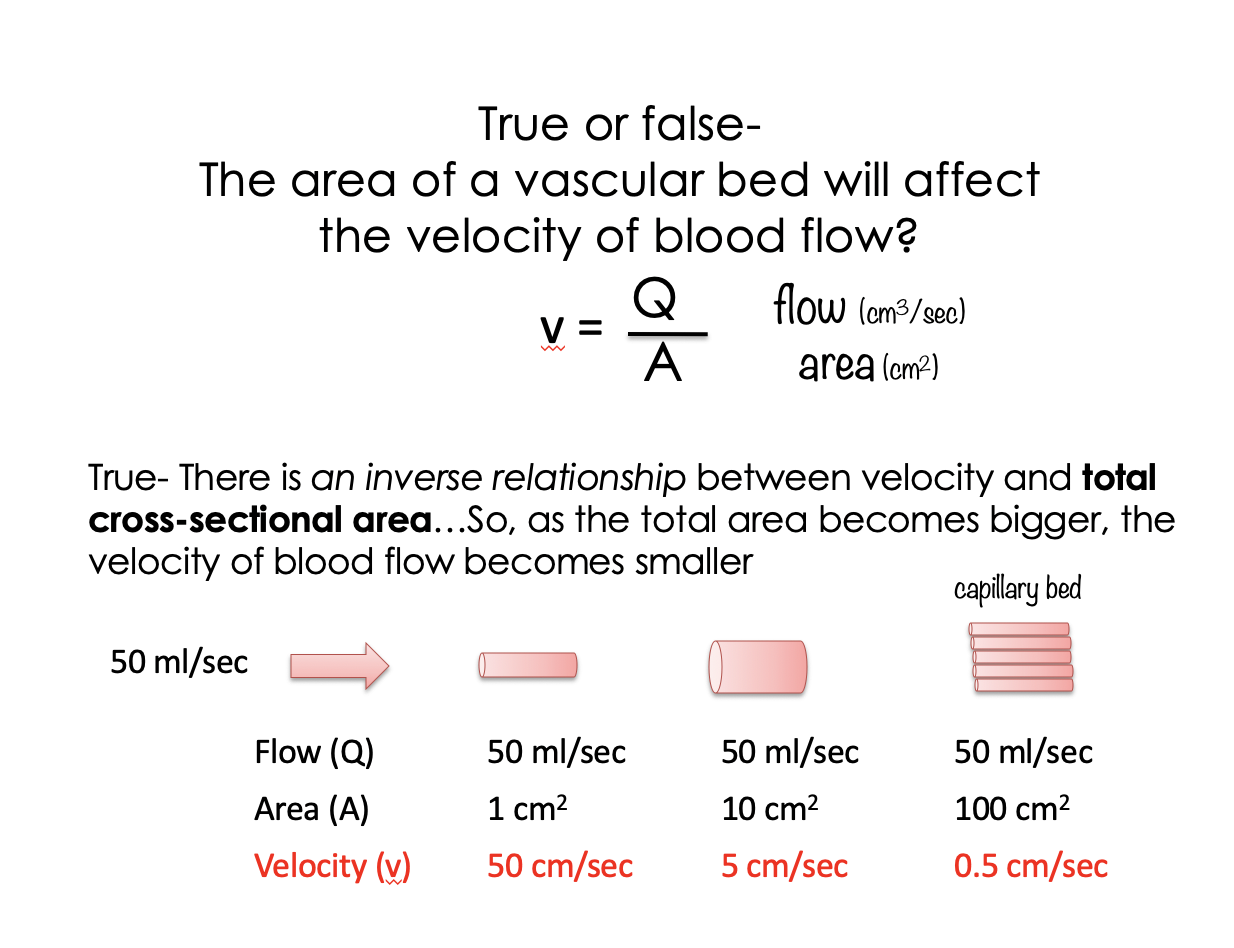
What is the equation for flow rate?
A * v
v = velocity
A = Cross-sectional area
Therefore, v = Q / A
- When the left ventricle ejects blood into the aorta, the aortic pressure […].
- What is systolic pressure?
- As the left ventricle is relaxing and refilling, the pressure in the aorta […].
- What is diastolic pressure?
- Rises
- The maximal aortic pressure following ejection is systolic pressure
- Falls
- The lowest pressure in the aorta, which occurs just before the ventricle ejects blood into the aorta, is diastolic pressure
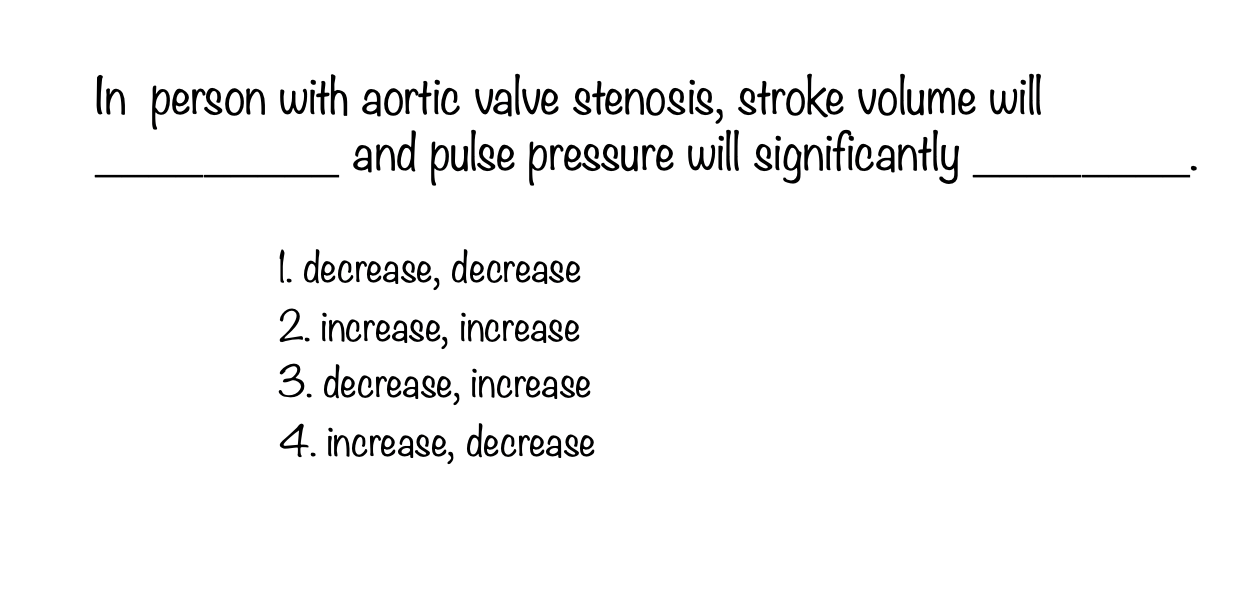
- decrease, decrease
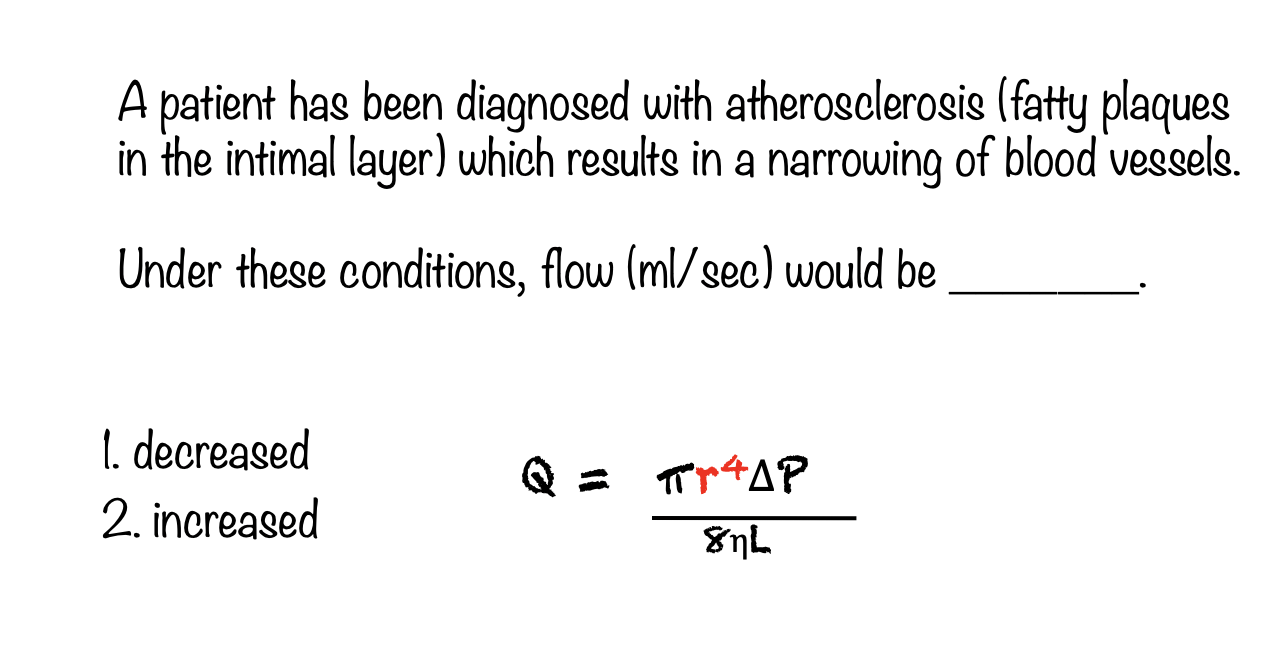
Decreased



-
Lung Anatomy and Histology44
-
Mechanics of Breathing and Ventilation27
-
Epidemiology and GB of Pulm Dis13
-
Pulmonary Circulation21
-
Clinical Correlates13
-
Hb Structure, Function and Gas Transport37
-
Pulmonary Function Test19
-
Control of Respiration25
-
HBCT7
-
Ventilation Perfusion21
-
Pharmacology30
-
Anatomy - Anterior Thoracic Wall22
-
Anatomy - Lungs28
-
Causes and Mechanisms of Hypoxemia17
-
Acid Base 126
-
CVD Epidemiology17
-
Role of Food in CHD Treatment7
-
Atherosclerosis26
-
Dissection - Heart70
-
Anatomy and Histology - Cardiovascular System40
-
Overview of CV System and Cardiac Cycle42
-
Electrical Properties of the Heart42
-
ECG16
-
Contractile Properties of the Heart36
-
Hemodynamics36
-
Control of Cardiac Output16
-
Local and Humoral Control of Blood Flow19
-
Regulation of Blood Pressure18
-
Special Circulations20
-
Posterior Thoracic Wall60
-
CV Physiology and Exercise25
-
Radiology of Heart and Lungs22
-
Surface Anatomy25
-
Anatomy and Histology - Kidney39
-
Overview of Renal System27
-
Dissection - Kidneys11
-
Intro to Renal Physiology27
-
Health Disparities - Renal20
-
Integrated Pharmacology and Drug Clearance17
-
Glomerular Filtration and Renal Clearance23
-
Regulation of ECF Volume and Water Balance35
-
Regulation of K+, Ca2 and PO4-67
-
Regulation of NaCl Balance25
-
Heart valves and sounds45
-
Acid Base 2 Kidneys40
-
HTN Guidelines13
-
Integrated Pharmacology - HTN21
-
ABG event4
-
Integration renal, pulm, CV, hepatic3



