8: A 65-year-old white male presents to his primary care provider for a routine physical examination. He has a history of hypertension, hypercholesterolemia, type 2 diabetes mellitus, and emphysema. Medications include losartan, rosuvastatin, and metformin. Blood pressure is 142/76 mmHg, heart rate 72 bpm, and temperature 98.8 F. Physical examination is within normal limits other than the findings shown in the attached figure. Swabbing of the lesion is most likely to reveal which of the following microorganisms?
- Candida albicans
- Bacteroides
- Peptostreptococcus
- Aspergillus fumigatus
1 - Candida albicans
- Angular cheilitis (AC) refers to inflammation of one or both oral commissures. Angular cheilitis is most prevalent in adults between 20 and 50 years old with equal distribution between men and women.
- Angular cheilitis is the most common manifestation of fungal and bacterial infections of the lips. Angular cheilitis typically presents with erythema, maceration, crusting, and fissuring of the corners of the mouth, involving both vermilion and cutaneous surfaces of the lips. When the cutaneous aspect of the lips is involved, linear fissures, known as rhagades, may appear that radiate from the corner of the mouth.
- Angular cheilitis has numerous etiologies, including infectious, allergic, irritant, and nutritional. Infectious causes include Candida albicans and Staphylococcus aureus. Allergic causes may include toothpaste, food, or makeup. Irritants causing angular cheilitis include poorly fitted dentures, drooling, sun exposure, and trauma. Micronutrient deficiency has been implicated in some forms of angular cheilitis, including iron, zinc, and B vitamin insufficiencies. Angular cheilitis is more common in patients who are immunocompromised or otherwise immunosuppressed.
- Treatment of angular cheilitis involves four aspects: (1) elimination of infectious reservoirs within the mouth, (2) increasing the vertical dimension of the lower face to prevent overclosure of the mouth, (3) administering topical antifungal medications, with or without corticosteroids, and (4) workup for underlying causes.
A 16-year-old has returned from a mission trip. He has been home for 30 days. He has developed a fever, abdominal pain, constipation, and weakness. On physical exam, a rose-colored rash is seen on the chest. Which of the following is the most likely cause of the patient’s condition?
- Typhoid fever
- Hepatitis
- Measles
- Chicken pox
1 - Typhoid fever
- Typhoid fever is a bacterial infection.
- Typhoid fever is a bacterial infection due to Salmonella typhi. Symptoms usually begin six to thirty days after exposure and often start with a gradual onset of a high fever. Weakness, abdominal pain, constipation, and headaches develop. Diarrhea is uncommon, and vomiting is not usually severe. Some patients develop a skin rash with rose-colored spots. The patient may develop confusion. Without treatment, symptoms may last weeks or months.
- Patients may carry the bacterium without being affected; however, they are still able to spread the disease to others. The cause is Salmonella enterica serotype Typhi which grows in the intestines and blood. Typhoid is spread by food or water contaminated with infected feces. It is associated with poor sanitation and poor hygiene. Diagnosis is by culturing the bacteria or detecting the bacterium’s DNA in the blood, stool, or bone marrow. Culturing the bacterium may be difficult. Bone marrow testing is the most accurate.
- Typhoid vaccine may prevent about 30% to 70% of cases during the first two years. The risk is reduced by clean drinking water, better sanitation, and handwashing. Until it has been confirmed that a patient’s infection is cleared, the individual should not prepare food for others. Treatment is with antibiotics such as azithromycin, fluoroquinolones, or third-generation cephalosporins. Resistance to these antibiotics has been developing.
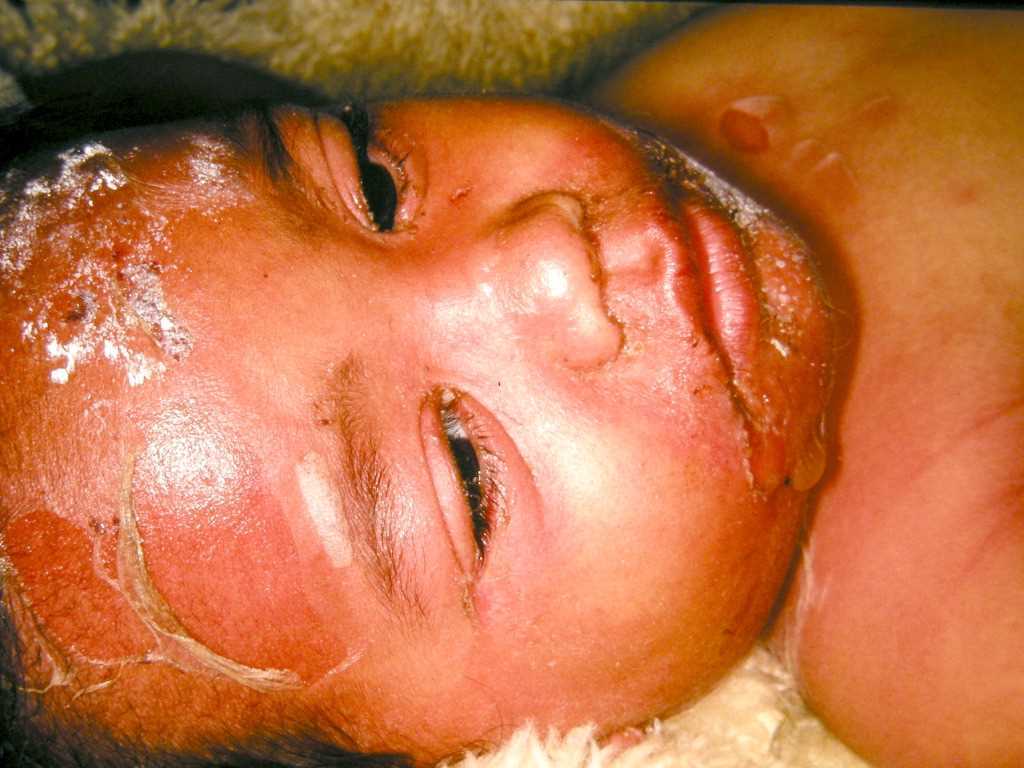
A 3-year-old is brought in with a rash around the mouth, on the upper chest, and on the neck. It is erythematous with scaling and moist red skin under the scales. There are a few fragile blisters. The mucosa is not involved. The patient is febrile and dehydrated. The patient has no significant past medical history and has not been on any medications. What is the most probable diagnosis?
- Staphylococcal scalded skin syndrome
- Child abuse
- Stevens-Johnson syndrome
- Toxic epidermal necrolysis
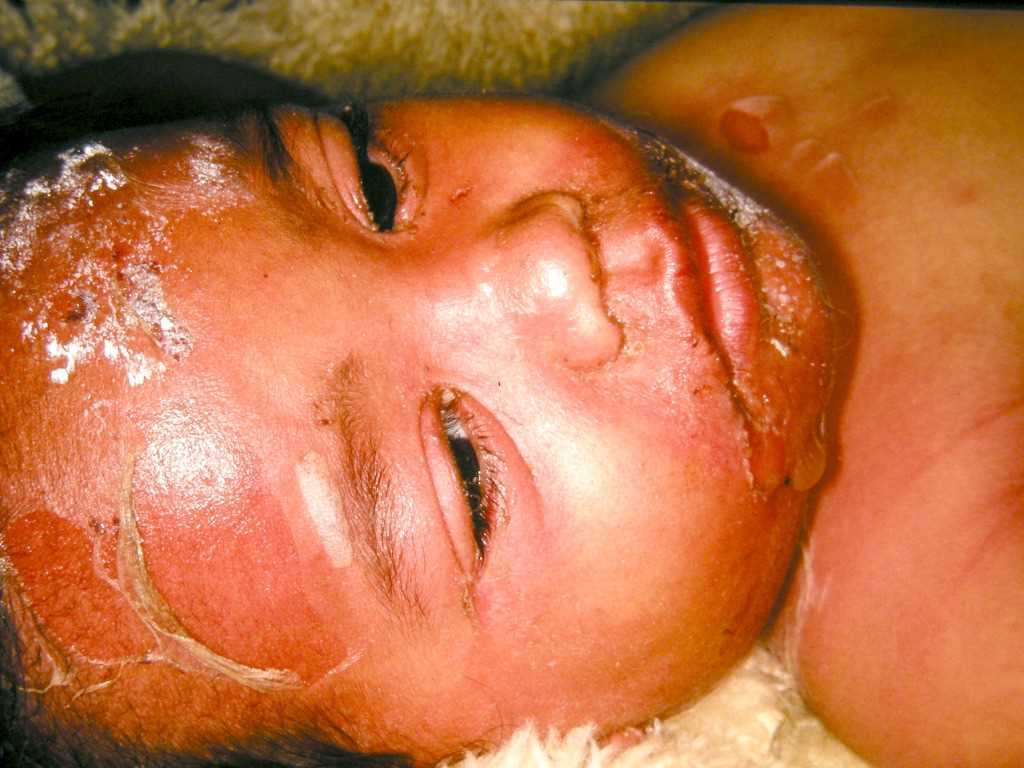
1 - Staphylococcal scalded skin syndrome
- Staphylococcal scalded skin syndrome is characterized by peeling skin, fragile blisters, and moist exposed denuded skin.
- It is caused by S. aureus that produces an exfoliation.
- Diagnosis is by a frozen section of the sloughing skin and blister cultures are negative.
- Stevens-Johnson syndrome and toxic epidermal necrolysis usually are drug induced and involve the mucosa.
A 2-year-old previously healthy child presents with a 2-day history of a rash with a temperature of 102.1F. His mother reports the rash started on the face and then spread to the rest of the body and began blistering today. The lesions slough off with pressure and do not involve the oral mucosa. Which of the following antibiotics is appropriate for this condition?
- Ciprofloxacin
- Aztreonam
- Nafcillin
- Penicillin
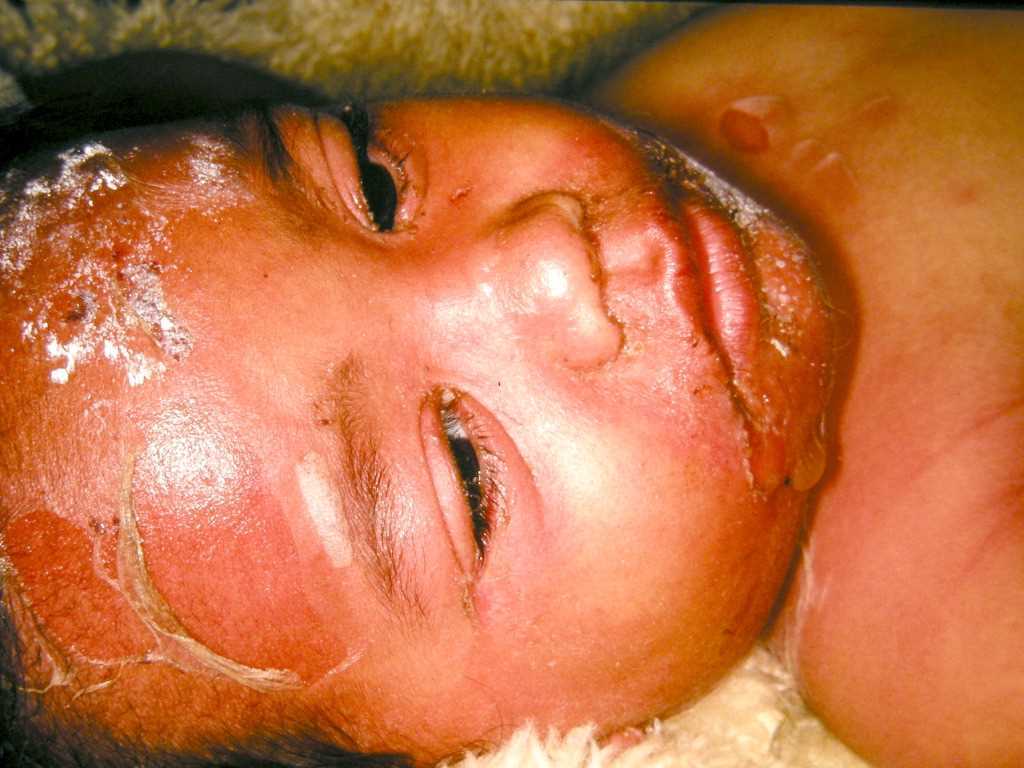
3 - Nafcillin
- This child has Staphylococcal scalded skin syndrome (SSSS). SSSS is caused by an exfoliative toxin.
- SSSS has resistance to penicillin and requires a penicillinase-resistant penicillin such as nafcillin or oxacillin.
- If the patient is suspected of a methicillin-resistant Staphylococcus aureus (MRSA) infection or lives in an area with significant MRSA prevalence, treatment should be with vancomycin or linezolid. Patients also need fluid rehydration and topical wound care.
A 3-year-old is brought in with a rash present for over a year but worse for the past few days. The mother has tried many over-the-counter treatments with intermittent success. The child picks and scratches constantly. The exam shows dry and excoriated skin that is thickened. There are fissures, erosions, and crusty exudates. The worst areas are at the antecubital and popliteal fossa. A cluster of vesicles and lymphadenopathy are noted. What may be the cause of the vesicles?
- Varicella zoster
- Contact dermatitis
- Eczema herpeticum
- Atopic dermatitis
3 - Eczema herpeticum
- Herpes simplex may cause an infection in a patient with skin barrier compromise.
- This patient has atopic eczema but may also have eczema herpeticum.
- The quickest method of diagnosis is the Tzanck preparation. Direct fluorescent antibody testing is confirmatory.
- This may require treatment with antiviral drugs. Acyclovir is dosed at 15 mg/kg/day intravenously.
21: A 17-year-old girl presents to the emergency department accompanied by law enforcement. The patient is emaciated and covered in flesh-colored, dome-shaped, pearly lesions on her trunk, thighs, and genitalia. She was recovered in a home handcuffed to a bed during a human trafficking raid. What skin infection is suspected?
- Pityriasis rosea
- Rubella
- Molluscum contagiosum
- Chickenpox
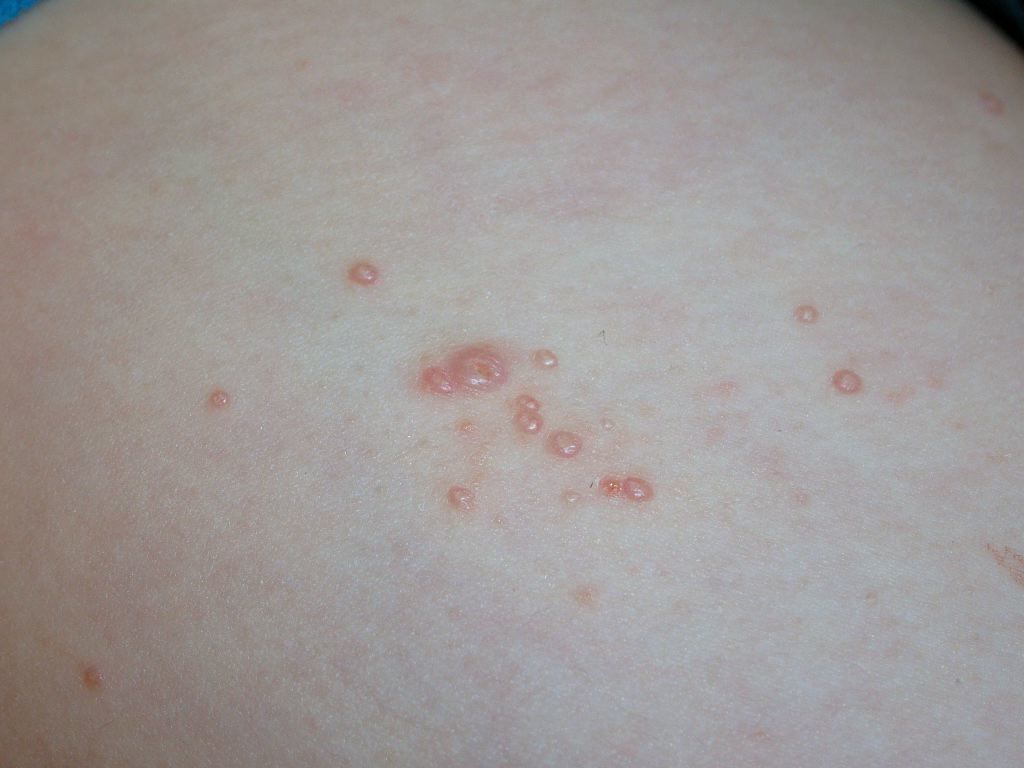
3 - Molluscum contagiosum
- Molluscum contagiosum is a viral skin infection that is part of the poxvirus family.
- Molluscum contagiosum is common in children but can occur in immunocompromised individuals and be spread by sexual contact.
- It spontaneously disappears in some cases in a few months, but in patients with AIDS, it can last years and be quite extensive.
- The distinctive lesions aide in diagnosis along with a detailed history. A skin biopsy may be required.
A farmer from the tropics presents with several firm, irregular, skin-colored nodules on his lower legs. The largest has a papillomatous, scaly surface. He says the lesions have been growing over several years and that they are not itchy. Biopsy reveals Medlar bodies. What is the most likely cause?
- Tuberculosis
- Kaposi sarcoma
- Chromoblastomycosis
- Erythema nodosum
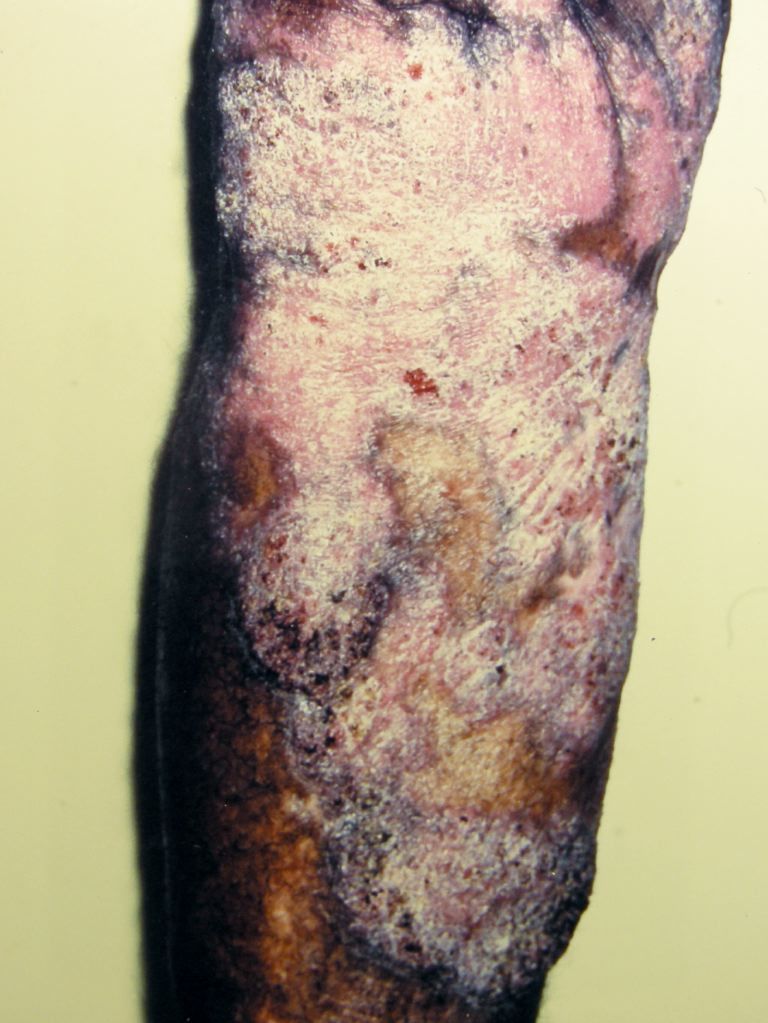
3 - Chromoblastomycosis
- Chromoblastomycosis is a chronic fungal infection due to various organisms that form Medlar bodies. Histologically, these are golden brown sclerotic cells.
- Morphology includes nodules, papillomatous cauliflower-like plaques, verrucous lesions, plaques, and scarring forms.
- Pathology usually shows tuberculoid-type granulomas with sclerotic bodies. These also may be seen in stratum corneum because of trans epidermal elimination.
- Pseudoepitheliomatous hyperplasia is another histological feature usually seen.
A 3-year-old is brought in with a rash around the mouth, on the upper chest, and on the neck. It is erythematous with scaling and moist red skin under the scales. There are a few fragile blisters. The mucosa is not involved. The patient is febrile and dehydrated. The patient has no significant past medical history and has not been on any medications. What is the best test for diagnosis?
- Culture of the denuded skin
- Blister fluid gram stain
- Frozen section of the sloughing skin
- Serum levels of TNF-alpha
3 - Frozen section of the sloughing skin
- Staphylococcal scalded skin syndrome is characterized by peeling skin, fragile blisters, and moist exposed denuded skin.
- It is caused by S. aureus that produces an exfoliation.
- Diagnosis is by a frozen section of the sloughing skin and blister cultures are negative.
- TNF-alpha can be elevated in Stevens-Johnson syndrome, but clinically this would involve the mucosa.
A patient who works in a flower shop presents to you with a history of eruptions along her right hand. She noticed that over the last week, the red swellings started in her right hand and soon extended to her axilla. She denies any significant pain but says the eruptions are itchy. She denies any fever or allergies and she does not smoke. Her past history is unremarkable. On examination, you notice numerous red papules extending all the way from the hand to the axilla. There is erythema and minimal induration but no discharge. Which of the following is the most appropriate treatment for this condition?
- Surgery
- Topical steroids
- Itraconazole
- Topical saturated potassium iodide
3 - Itraconazole
- The patient presents with a unilateral eruption of painless papules. She works in a flower shop. Sporothrix schenckii is known to cause this eruption in nursery workers, florists, and gardeners. The painless red papule extends along the lymphatics to the axilla.
- Cultures can be obtained from the papule or a biopsy can be obtained. The treatment involves itraconazole or fluconazole for 3 to 6 months. Topical saturated potassium iodide was used in the past.
- Surgery is not the treatment for a sporothrix infection. Surgery may be used only to obtain a biopsy.
- Steroids are used for numerous dermatological disorders, but they are not therapeutic for sporothrix. Steroids may relieve the itch.
A 27-year-old female presents with small grouped pink papules centered around the mouth and sparing the vermillion border. Which of the following is the best recommendation for treatment?
- Calcipotriene 0.005% cream
- Terbinafine 1% cream
- Metronidazole 0.75% cream
- Urea 40% cream
3 - Metronidazole 0.75% cream
- Perioral dermatitis presents as small pink papules or pink, scaly patches distributed in the perioral skin sparing the vermillion border.
- Topical treatment approaches for perioral dermatitis include metronidazole, azelaic acid, and clindamycin.
- Topical corticosteroids and topical calcineurin inhibitors can be treatment options for perioral dermatitis but have also been reported as exacerbating factors.
- In persistent cases of perioral dermatitis, oral tetracycline antibiotics can be helpful. In patients in which doxycycline is contraindicated, oral erythromycin can be used.
A group of individuals native to Africa presents to the hospital with various illnesses. Some patients have bowed shins and severe bony deformities of the midface face, while others only have small ulcerated papules on the lower aspect of their legs. The lesions on the lower legs are notable as some individuals have only single ulcerative nodules with rolled borders, while others have multiple smaller nodules with a similar phenotype. Serologic diagnosis will reveal false positive testing for which of the following?
- West Nile virus
- Dengue virus
- Ebola virus
- Syphilis
4 - Syphilis
- Yaws is a disease common to tropical areas. The disease is characterized by primary, secondary, or tertiary stages. The first stage is characterized by a single ulcerating nodule at the site of inoculation, while the second stage has multiple similar smaller lesions. The third stage presents with destructive osteitis. The spirochete Treponema pallidum spp causes yaws. It results in positive nontreponemal agglutination tests such as the Venereal Disease Research Laboratory Treponemal test, and treponemal tests, including the Treponema pallidum hemagglutination assay.
- While multiple tropical diseases can manifest with ulcerated lesions on the lower extremities, yaws has a characteristic third or late stage. This latter stage is typified by facial destruction, juxta-articular nodules, bowed tibia, nasal cartilage destruction, and exostosis of the paranasal maxilla.
- Yaws typically manifests in children and is transmitted via skin to skin contact. The lower extremities are the site of initial inoculation most commonly, and because of this, the primary lesions occur on the legs.
- Yaws, although infrequently occurring in the primary stage during maternal childbearing years, is not associated with transmission from mother to child during pregnancy.
A 28-year-old female presents to the clinic with a 4-week history of rash around the mouth and nose. It is not pruritic. She has been applying topical triamcinolone 0.1% cream, which had been previously prescribed for a separate complaint of insect bite reactions. She reports that initially, the rash improved with the use of the triamcinolone, but now it is worse, especially if she stops using the triamcinolone. On physical examination, there are scattered smooth pink 1-2 mm papules on the perioral cheeks and nasolabial folds. Which of the following is the next most appropriate treatment option?
- Oral ivermectin
- Oral doxycycline
- Oral fluconazole
- Oral valacyclovir
2 - Oral doxycycline
- Perioral dermatitis typically occurs in the perioral skin but can occasionally present on the paranasal and periorbital skin.
- Although topical corticosteroids may initially improve perioral dermatitis, they are often an exacerbating factor.
- Treatment of perioral dermatitis includes discontinuation of the topical steroids.
- Oral doxycycline is a recommended oral therapy for perioral dermatitis, especially if patients have been using topical steroids since upon discontinuation of topical steroids, the rash can severely flare. Erythromycin can be used in patients less than eight years of age or those with tetracycline allergy.
A 17-year-old male, recently returned to the United States after backpacking in Australia, presents with fevers, chills, headache, and body aches. Symptoms have been ongoing for one week. On physical exam, scattered papules and one black and necrotic lesion 2 cm in diameter are seen on the patient’s abdomen just above the waistline. What is the most likely diagnosis?
- Rocky mountain spotted fever
- Babesiosis
- Ehrlichiosis
- Scrub typhus
4 - Scrub typhus
- Scrub typhus is a rickettsial illness transmitted by species in the Leptotrombidium genus of mites, commonly known as chiggers. It is endemic from Pakistan as far east as Japan, and as far south as northern Australia.
- Scrub typhus causes fevers, headache, body aches, in a minority of patients a black eschar will form at the site of the bite where infection occurred.
- The diagnosis of scrub typhus should be suspected in those who have traveled in rural areas where the disease is endemic. The diagnosis can be definitively made with immunoassays available at state health laboratories.
- Treatment is with doxycycline.
A 19-year-old male has complaints of pain in the mouth, wrists, and ankles. Exam is remarkable for oral ulceration, tenderness in the wrist and ankles, balanitis, and a thick, scaly rash of the palms and soles. What is the most likely infectious cause?
- Chlamydia trachomatis
- Gonococcemia
- Syphilis
- Beta-hemolytic streptococcus
1 - Chlamydia trachomatis
- Reactive arthritis, previously known as Reiter syndrome, has arthritis, oral ulceration, a rash called keratoderma blennorrhagica, and balanitis or urethritis.
- It is associated with Chlamydia trachomatis infections.
- Gonorrhea can have an inflammatory arthritis and a rash with isolated purplish vesicles with red bases.
- Syphilis can have ulcerations and rash but less likely arthritis or tenosynovitis.
A 52-year-old male presents to the emergency department with a nodular lesion on the left thumb evolving over 48 hours. History revealed that the patient had handled lamb meat ten days earlier. General physical examination was within normal limits. The diagnosis of skin abscess was made, and he underwent a surgical excision under local anesthesia. Which of the following is most accurate about the patient’s management?
- The patient had an Orf infection and the surgical excision was unnecessary
- The physician made the right diagnosis and the surgical excision was necessary
- The patient should have been treated with systemic antibiotics instead of surgical excision
- Skin abscesses are a common complication after handling the meat of animals infected with a sore mouth
.
1 - The patient had an Orf infection and the surgical excision was unnecessary
- The patient had Orf infection. He touched meat with his hand after slaughtering.
- Orf infection can be acquired during butchering.
- There is no need for surgical excision or systemic antibiotics.
- Symptomatic management with antiseptics and adequate analgesia are usually sufficient in the immunocompetent patient.
A 50-year-old male immigrant from Nigeria presents to the clinic for his physical exam. He has a history of numbness of his lateral left leg for several years. On examination, his common peroneal nerve is enlarged and tender at the fibular head. He also has three hypopigmented macules on the ears, nose, and left leg. He has a previous history of hypertension, diabetes, and glaucoma. His mother was suffering from meningioma when she passed away 20 years back. Which of the following would also be found on a detailed examination of these macules?
- Tenderness to palpation and hyperhidrosis
- Hypesthesia and anhidrosis
- Tenderness to palpation and anhidrosis
- Hypesthesia and hyperhidrosis
2 - Hypesthesia and anhidrosis
- Leprosy is the most common cause of neuropathy worldwide, with both motor and sensory involvement. It should be on the differential for immigrants from endemic regions like India and Nigeria.
- The neuropathy in leprosy presents as mononeuropathy multiplex or a mononeuropathy commonly involving the peroneal, ulnar, posterior auricular, or sural nerve. The inflammatory damage to the myelin of peripheral nerves causes hypertrophy and makes them palpable on physical exam.
- Tuberculoid leprosy has a more localized nerve involvement compared to lepromatous leprosy. Peripheral nerve involvement with sensory loss occurs early, but the anesthetic patches remain localized to the affected nerve distribution. In tuberculoid leprosy, there is symmetric, “stocking-and-glove” pattern of neuropathy.
- The mononeuropathy of tuberculoid leprosy produces anesthetized, hypopigmented macules that are dry and scaly. The anhidrosis is due to accompanying autonomic neuropathy.



