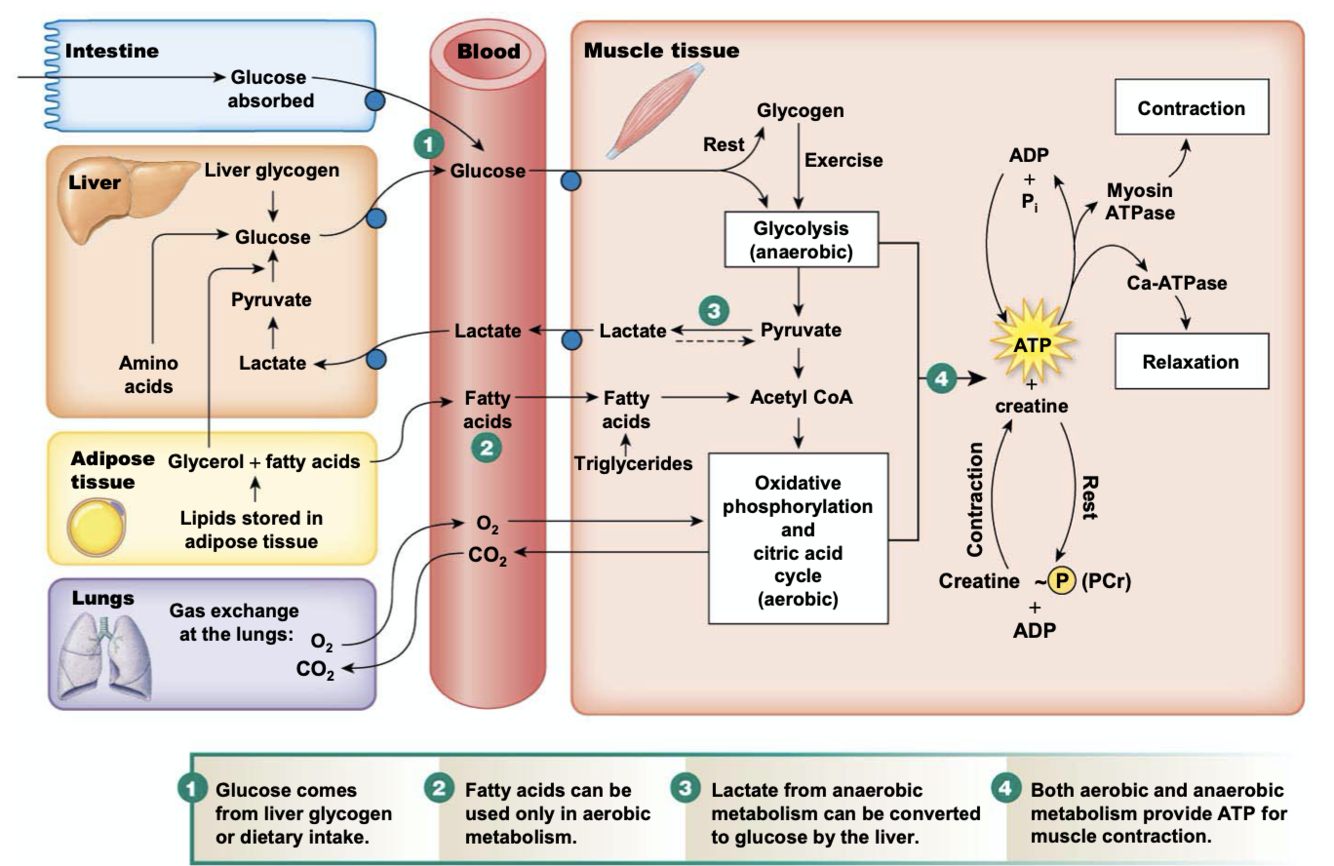
What are the sources of ATP?
Cell supply- small amount
Phosphocreatine- short intense exercise (sprinting, power lifting, etc.)
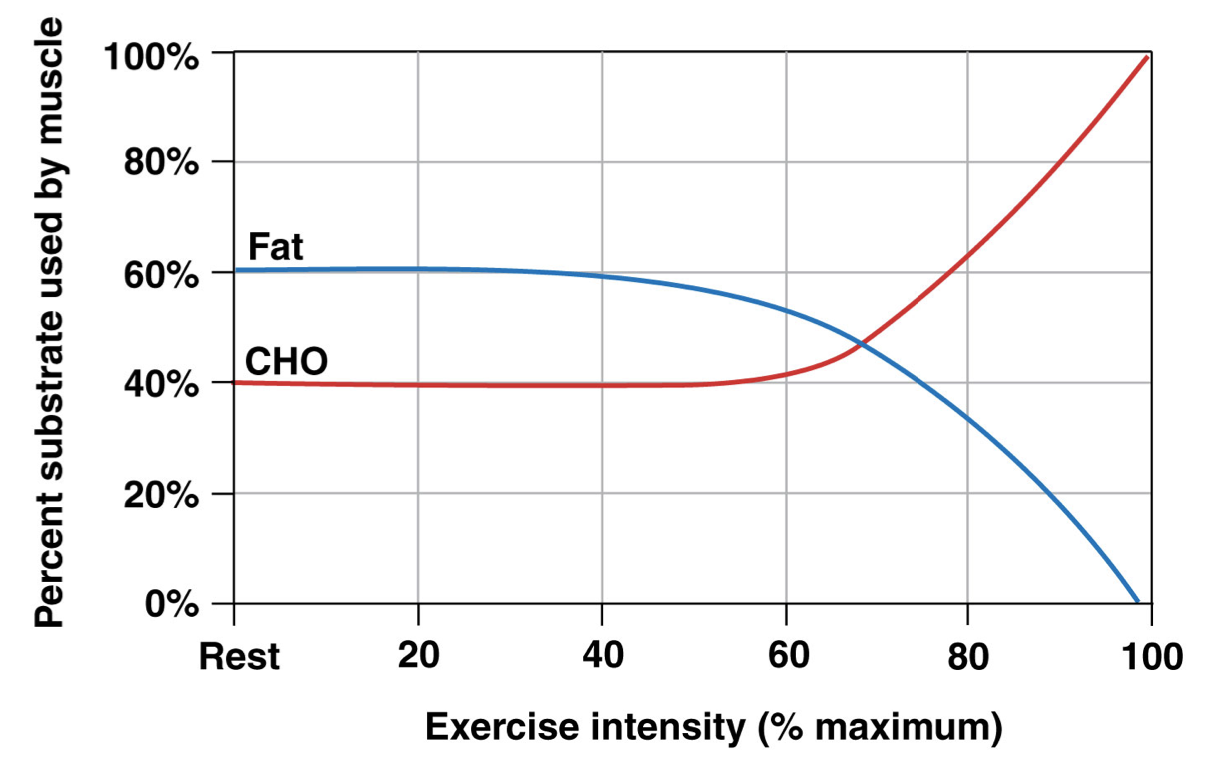
Carbohydrates and fats - Aerobic metabolism is most efficient through glycolysis-citric acid pathways, but requires oxygen, used for long term endurance exercise - Anaerobic (glycolytic) metabolism is faster, pyruvate to lactate, fatty acids not used, but less efficient than aerobic
Describe energy substrate use during exercise
What factors limit exercise?
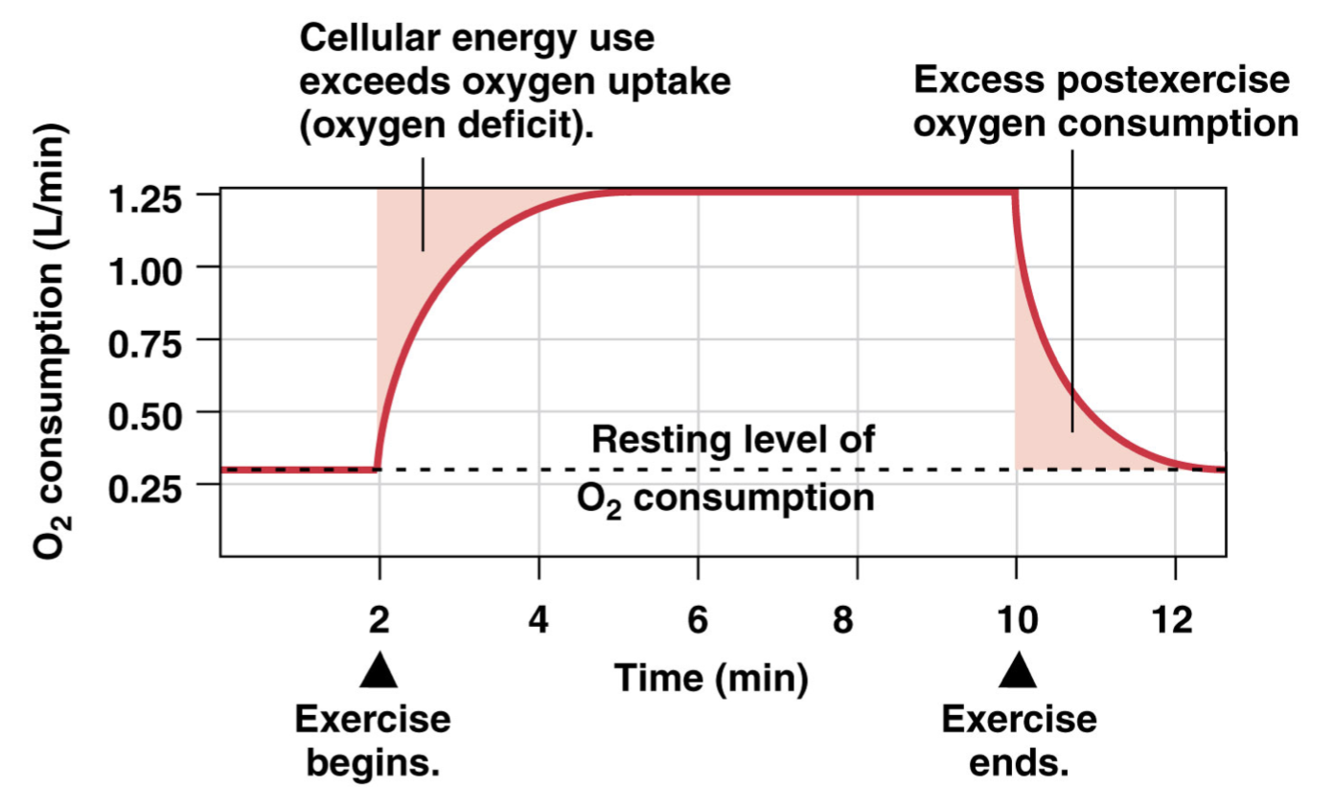
- Oxygen consumption (VO2) is related to exercise intensity (and capacity ~ VO2max)
- Excess post-exercise oxygen consumption used to restore ATP, myoglobin levels of oxygen
- Ability of muscle fibres to obtain and use oxygen
- Mitochondria are limited in number (increases with training)
- Insufficient oxygen supply (no. blood vessels increases with training)
- Not limiting for maximum exercise capacity
- Influences submaximal exercise capacity
- Ability of the cardiovascular system to deliver oxygen and nutrients to the muscle at a rate that supports aerobic metabolism
- Athletes –> big heart –> increased SV, decreased HR (at rest) = increased capacity to draw on (gives them a big advantage)
Describe oxygen consumption and exercise
What are the main ventilatory responses to exercise?
Increased rate and depth of breathing
Exercise hyperventilation feedforward signals from the motor cortex and sensory feedback from peripheral receptors (receptors drive hyperventilation)
- Carotid and aortic chemoreceptors
- Proprioception in joints
- Mechanoreceptors in muscles
Arterial PO2, PCO2 and pH do not change significantly during mild to moderate exercise
Describe the CV response to exercise
During strenuous exercise, cardiac output rises dramatically
CO = HR x SV
CO = (SA node rate + autonomic nervous system input) x (venous return + force of contraction)
- Parasympathetic activity tonically inhibits SA node rate
- Sympathetic activity increases autonomic nervous system input and force of contraction
Combination of faster HR and greater SV increases CO during exercise
Distribution of blood flow shifts towards muscle (local control can increase blood flow to a specific region)
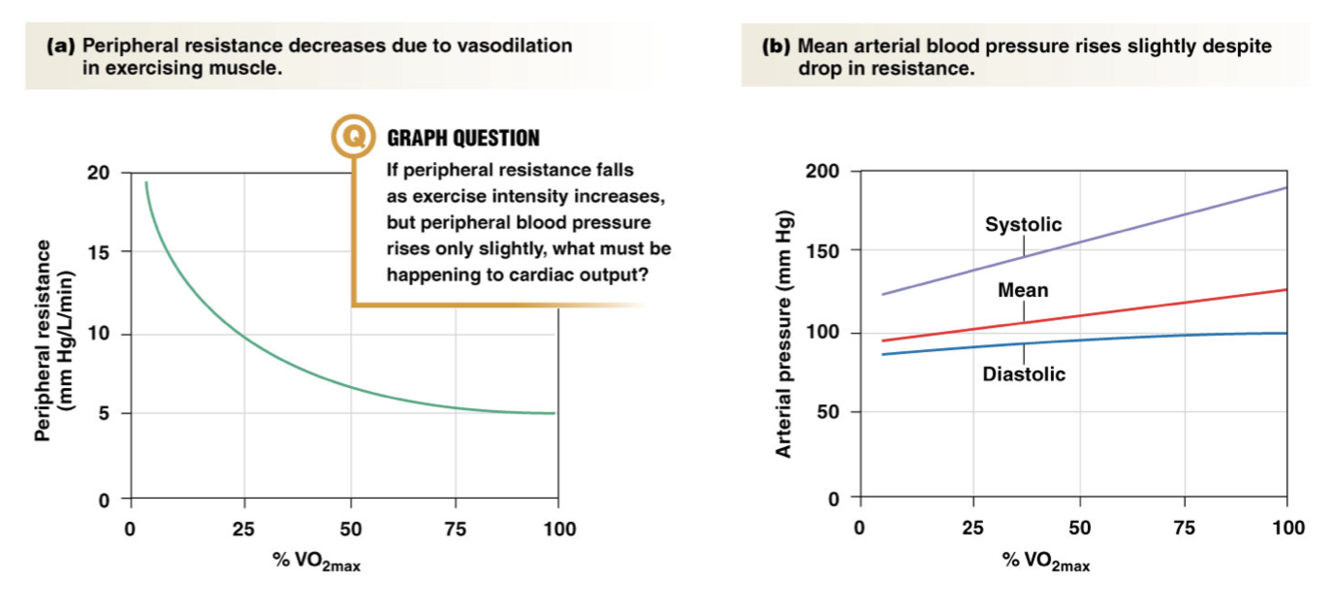
BP rises slightly during exercise because of skeletal muscle vasodilation
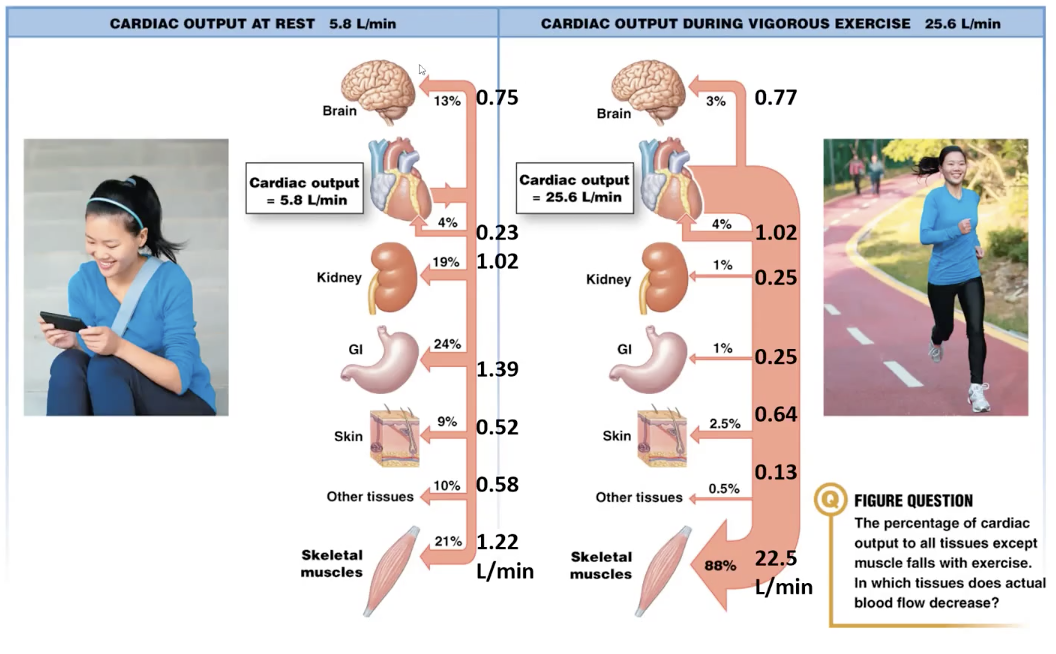
How does BP change during exercise?
How does the baroreceptor reflex adjust to exercise?
Usually baroreceptors responds to changes in pressure by opposing the change
Several theories:
Signals from motor cortex reset baroreceptor threshold
Afferent neurons are blocked by presynaptic inhibition
Muscle chemoreceptors (postulated) are sensitive to metabolites (changes setpoint of baroreceptors)
Describe temp. regulation during exercise
Heat released by metabolism creates a challenge to homeostasis:
Sweating- evaporative cooling
Problems- dehydration and reduced blood volume (this reduces venous return which can limit CO)
Increased cutaneous blood flow- convection
Problems- decrease in peripheral resistance and diversion of blood from muscles; body abandons thermoregulation to maintain blood flow to the brain
Temperature regulation during exercise:
Heat stroke danger in hot and humid conditions
Headache, cramping, arrythmia, etc.
Loss of salt
Acclimatization- body adapts to repeated exercise in hot environments (sweat more/reduce salt loss- different type of sweat)
Describe the feedforward responses to exercise
Many changes occur in the absence of stimuli or before stimuli are present
One model: proprioceptors in muscle and joints –> motor cortex –> descending signals to
- Exercising muscles
- CV control centre
- Respiratory control centre
- Limbic system
- Sympathetic discharge causing vasoconstriction, increasing BP
Yawning: prep, signal or edge?
A number of theories
- Increases attention/arousal via cooling of brain and increasing CSF flow
- Stress response (cortisol/Adr)
- Distraction
- Male-male conflicts (aggressive display?)
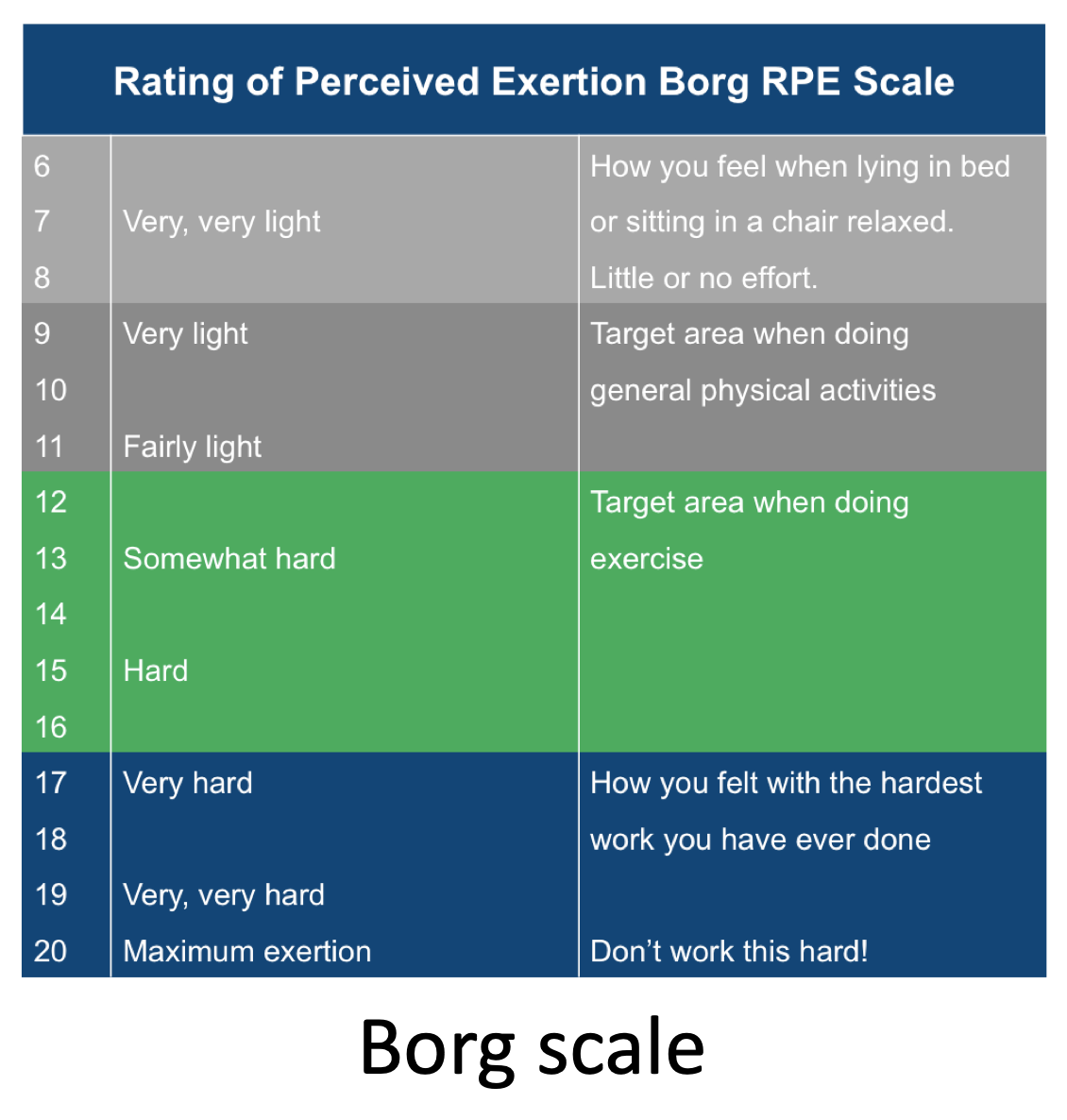
Describe RPE
Conscious manifestation of the integration of signals from muscle, joints, central CV and respiratory functions, CNS, psychological
Based on Borg Scale (6-20)
- RPE proportional to core body temperature
- RPE inversely proportional to arousal/fuel reserves
“Maximally tolerable” = physiological limits
endspurt phenomenon results from decreased uncertainty towards end
What are the effects of exercise on health?
Exercise lowers the risk of CVD
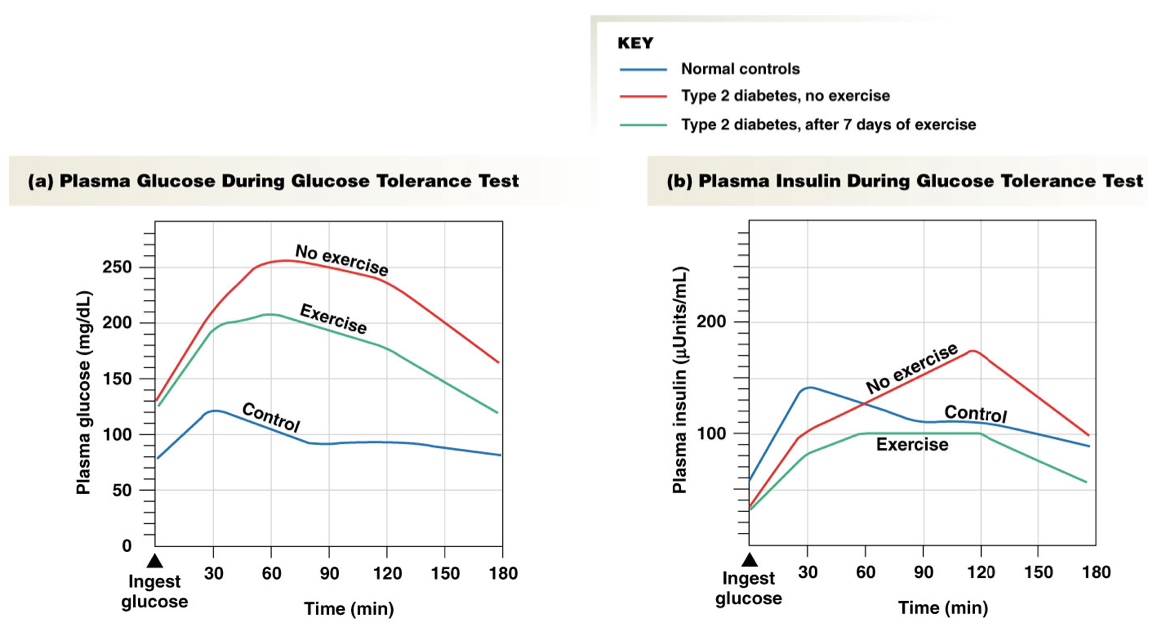
Type 2 diabetes mellitus may improve with exercise
Improves glucose tolerance and insulin secretion
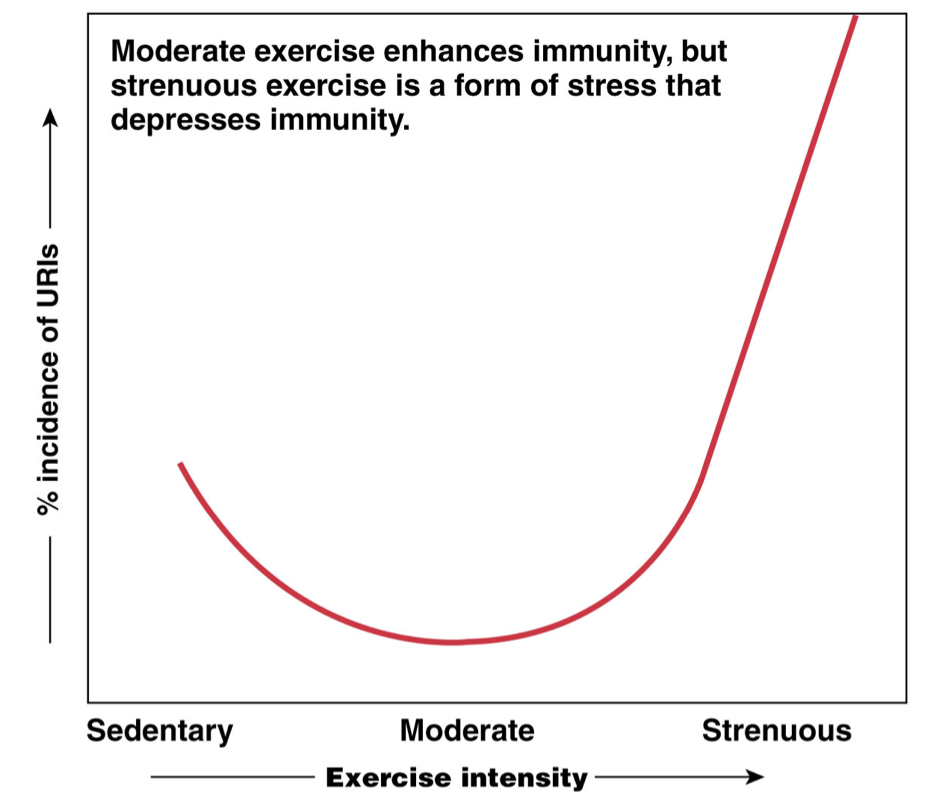
Stress and the immune system may be influenced by exercise
How does exercise impact immune function?
*upper respiratory infections, too much of a good thing is bad