Requirements of a pharmacist dispensing any pharmaceutical product
- Ther are 3 basic requirements when you dispense any pharmaceutical product
1) Efficacy: Ensure product maintains optimum therapeutic level for specified period of time
2) Saftey: There are minimal or no side effects
3) Stability: The products should retain their properties during storage - By ensuring you storage/dispense and give advice on the correct use of medicines, this will guareantee the efficacy and saftey
Measuring stability
- Stability of a formulation is factored into the shelf-life of a product
- The shelf-life therefore measure the stability of the drug formulation and is related to 3 types of degradation
- What factors can lead to a drug degrading on the shelf life +Temperature (fridge)
+Humidity
+Light
-What about inside your body
+pH +Liver
Measuring stability
- Good therapeutic response
- >LIGHT, TEMP, HUMIDITY= poor theraprutic response and potential ADR
Typical examples include
- Incorrect keeping fridge-lines at room temperature
- Keeping medicine in direct sunlight
- Not labelling newly opened liquid with date of opening -Discarding desiccant sachets (silica) from bottles
+NB- last 3 speed up rate of drug degradation
Kinetics- storage conditions
-MEP has the list of low temperature drugs in the pharmacy
Why study kinetics- application
Kinetics plays a role in all areas of phamacy
- IV bags
- Pharmacokinetics
- Radiopharmaceuticals
- Dispensing- trays
- Dose changes
- Nursing homes
NB- not just drug stability but also how drugs are degraded in the body
Kinetics- what is a rate of a reaction
- If you keep aspirin in a moist environment (e.g. bathroom), it will degrade -Aspirin –> salicylic acid
- By measuring the amount of aspirin left over time we can get an idea of the rate of reaction (in this case rate of degradation) -If you measure the concentration of the drug, you will see it devlining (it is being destroyed)
- Working out the slope of the graph at different points will tell you the rate of reaction
- Slope= rate of reaction= (A2-A1)/(t2-t1)= -DeltaA/Deltat
- The problem is the rate changes all the time, it begins really fast but then slows
kinetics= reaction rate constant
- Usual to use a rate constant (k)
- A single value describes the overall kinetics of reaction
- Using rate constant we can actually predict how quickly our drug will degrade
- For example we did a 1 day degradation study but wanted to know what happens after a year
- We can predict this without having the run the study for a whole year
Simplifying a complicated scenario- the rate constant
- During manufacture of pharmaceutical products, we need to be able to know how a product breaks down during storage and what promotes this reaction
- Temp, light, moisture and other drugs – (different ways in which breakdown occurs)–> Drug/formulation breakdown
- The reaction rate constant is a measure of the impact of these on the degradation of a pharmaceutical product
Simplifying a complicated scenario-Order of reaction
- We often characterise the breakdown of a drug product within a formulation using orders of reaction
- We can use the order of reaction to then calculate the value of k
- ZERO order: the breakdown rate is independant of the concentrations of any of the reactants
- FIRST ORDER: the reaction rate is determined by one concentration term
- The order is just a way for use to categorise the breakfown to make it easier to calculate the rate constant
- We can use the order of reaction to estimate shelf-life and understand the stability of a product over time
How is any of this clinically relevant
-Why are they used in pharmaceuticals -What could happen if we dont adhere to these protocols
Ethyl alcohol
- The way alcohol is dealt with by the body is useful in understanding how drugs are handled by the body
- It is rapidly absorbed (liquid) through stomach
- Into liver
- Gets into blood really quickly
- Has an effect really quickly on the brain
- Drug and chemical metabolism are degraded by liver- Gegrades bad things keeps the body safe
- Excessive alcohol- the liver can no longer copw with this and it removes the chemical at a mac capacity
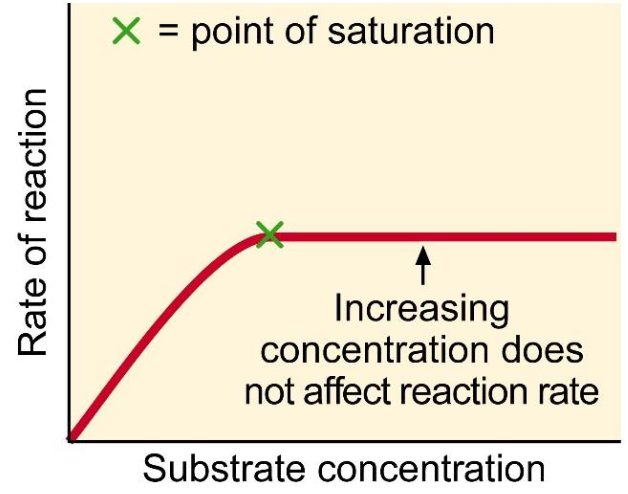
- Look at graph on BB- first part is first order reaction- second part is zero order
Ethyl alcohol- Zero order reaction
- Rate of reaction is indepednat of amount
- Doesnt matter how much more tou drink, the rate of degradation is constant and doesn’t change
- This is a zero order reaction and will look like a straight line when plotting on a graph
Zero order reaction
- Zero order reaction. are very common in pharmacy. THINK of drug which is released slowly over time (fentanyl)
- These are called modified release drugs
- They release drug really slowly over time
- They are controlled release
- They keep it steady
- They keep it constant
- So it becomes predictable- modified release preps adhere to first order kinetics (because they dont saturate enzymes so concentration will effect breakdown, once saturated turns to 0 order)
Zero order reactions- Calculations
- To deal with zero order reaction you need a starting point -Thats usually some data
- Just plot the data as it is (amount v time)
- A stright line will always indicate you have a first order reaction
- These are ALWAYS straight lines
- To calculate the rate constant (k) you just work out the gradient or slope of the graph
- Remember it is a straight line graph that we are trying to obtain so use -y=mx+c y= Y axis x= X axis c= intercept m= gradient
First order reactions
- There are many types of ‘orders’ of reactions
- First order reactions are much more common and much more important
- How do we know that paracetamol give QDS will give you good pain relief. It is because it follows first order kinetic. In fact, most drugs will follow 1st order kinetics IN THE BODY -Because kinetics allows you to predict things, during clinical trials it allows us to estimate how long the drug stays in your body for before you need to give another dose
First order reactions continued
- A 1st order reaction graph looks curved compared to 0 order -Thats another good way to figure out if you have zero or first order
- The visual approach only works sometimes and requires you to plot the concentration or amount vs time in the same way you have done for zero order reaction
NB- Rate of reaction= gradient of graph Reaction rate constant= k -To fix this wee need to transform the graph into a straight line. We use logs for this process called log-transformation
First order calculations -Look at BB slides
- Start with your data table of drug degradation we need to log the data
- This give us a straight line
- We can now work out the gradient Gradient= Log(100)-Log(10)/0-8 = 2-1/0-8= -0.125
- BUT for a semi-log there is one extra step you need to multiply by 2.303 the answer will give a reaction rate constant -0.125*2.303= -0.28h-1
NB- the negative is OK it means that the rate is a degradation one. Rate constant are always reciprocals
First order reactions- calcs
Option 2 -Use normal graph paper and pre-log all the values and do the same thing
-This option is good if you dont like using semi-log paper
NB- Note you still have to times by 2.303
First order kinetic equation
Amount v time= curve graph
-Log(amount) v time = gradient *2.303= rate constant Or ln(amount) v time= gradient= rate constant
First order kinetic equationsa
-dA/dt= -k[A0] (change of change of aspirin = rate constant (how quick reaction occurs with [A0]= amount fo aspirin at time 0) -
If this is a 20 mark question -Discuss the difference between 0 and 1st order reactions Discribe using graphs and equations
- Describe 0 and 1st order reaction
- Show 0 order= straight line graph with 1st order= curve graph -Then how to convert curve to straight line
- Show how rate of reaction is dependant on [Drug]
- Show equaitons that are 0 order (no log infront of it) and those that are 1st order (one with log in front of it)
First order kinetic equation- how to relate that making a graph (y=mx+c)
1st order kinetic equation ln[At]=ln[A0]-k.t ln[At]= Y axis
ln[A0]= c -k= m (this will be a minus in reactions because it is degradation of a product) t= X axis
First order kinetic equation
t=time-1 (min-1; s-1)

-
powders- lec 126
-
Pre-formulation Reformulation Of Powders36
-
Powders-Lec 215
-
Powders- Lec 3+435
-
tabletting56
-
RE-formulation7
-
Overview of the drug development process20
-
Solid state properties26
-
Fill weight calcollations4
-
Tableting 245
-
Kinetics31
-
Packaging19
-
Packaging 230
-
Assessment of pharma products- thermal analysis16
-
Clinical trials19
-
Regulatory affairs in the pharmaceutical industry19
-
Kinetics 26
-
Kinetic equations14



