What is a wave?
- A wave is defined as a periodic disturbance or oscillation which when it travels through a medium, it carries energy from place to another.
- Sound wave is a mechanical wave which requires a material medium for it to flow through. That is it cannot travel through a vacuum. However, an electromagnetic wave can.
Describe light in reference to electromagnetic wave
Light was described as a rapid variation in the electromagnetic field surrounding a charged particle, the variations in the field being generated by the oscillation of the particle. Visible light is between 0.4 to 0.7 um.
When light encounters another medium whilst travelling such as water or glass it slows and is refracted/bent.
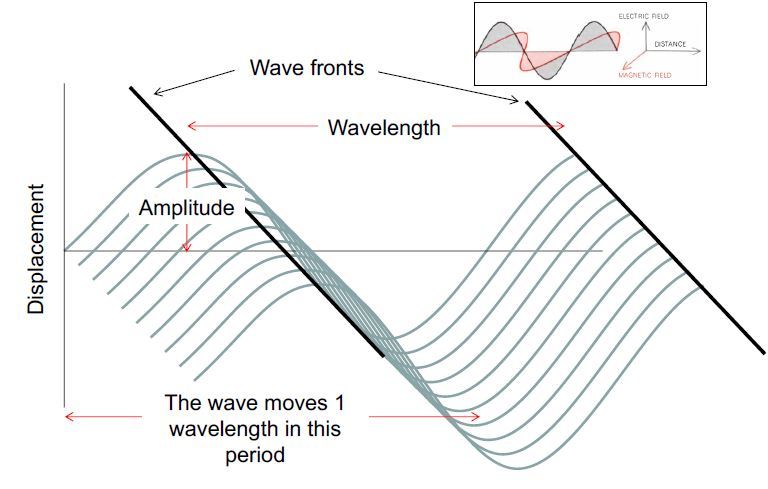
Wave terminologies
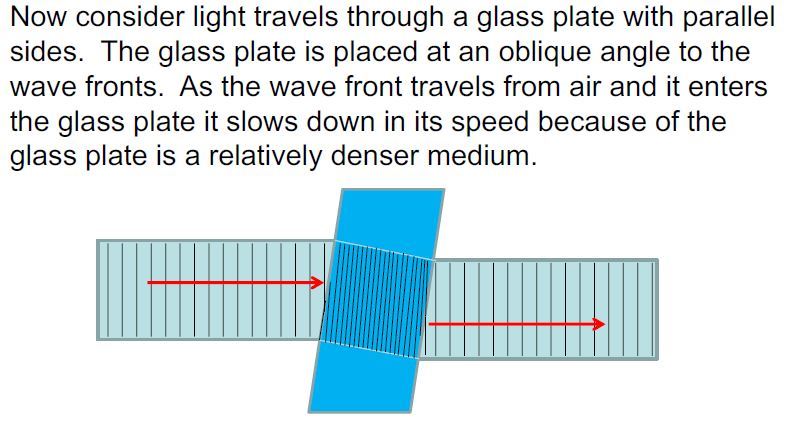
Light refracted by a glass plate
Summary
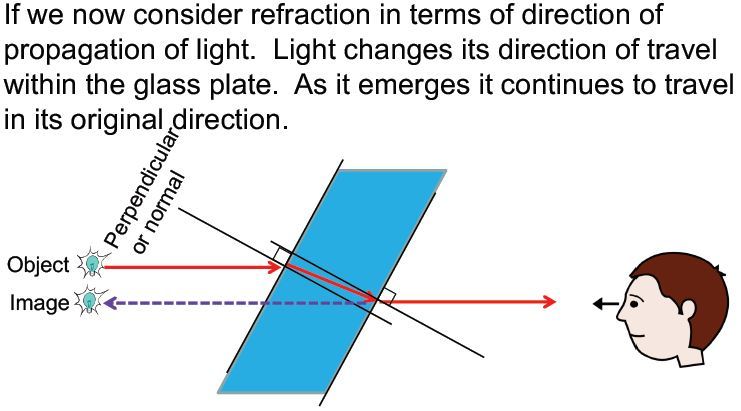
- The light ray will be refracted if
- it approaches the boundary at an angle
- and it changes speed
- If the light ray is perpendicular to the boundary then it won’t change direction
- It is the change in speed of the light that causes the light to be refracted
- The amount of refraction will depend on the optical density of the material at and beyond the boundary
Refraction
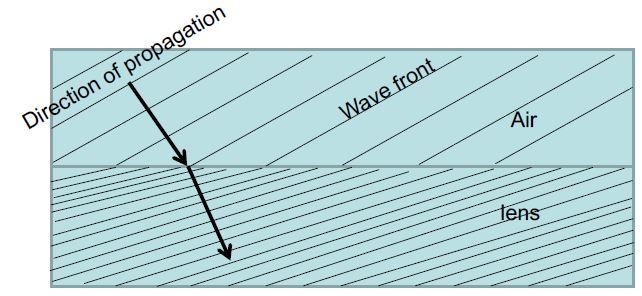
Refraction is the term used to describe the change in direction of a wave due to a change in its velocity as it passes one medium into another of different characteristic properties
How is refraction calculated?
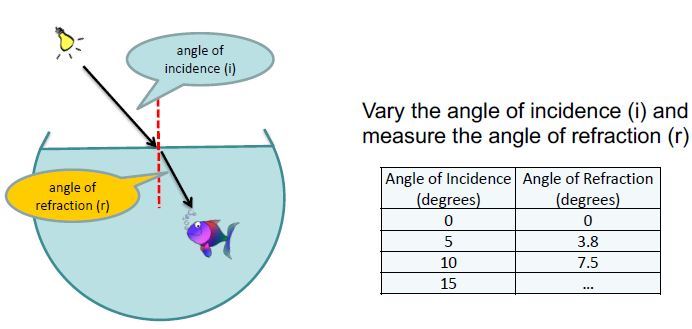
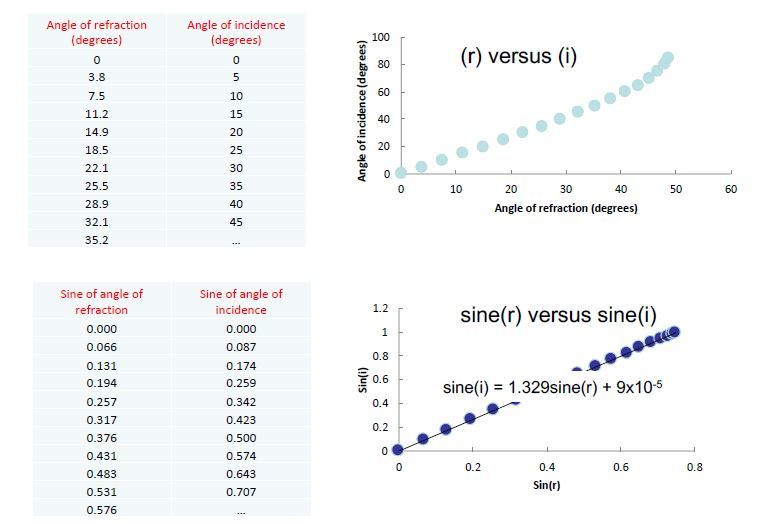
- Snell’s law of refraction describes the linear relationship between the angle of incidence and the angle of refraction when light travels from one transparent medium to another.
- nisin(i) = nrsin(r)
- ni = medium refractive index of incidence rays
- nr = medium refractive index refracted rays
- i = angle of incidence to nirmal
- r = angle of refraction to normal
Snell’s law
ni.sin(i) = nr.sin(r)
What occurs when going from a high index to low index and vice versa?
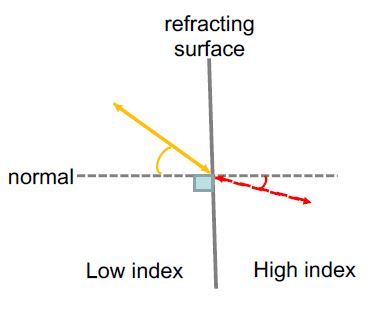
Going from a low index to high index medium the light will be refracted towards the normal.
Going from high to low index medium, the light will be refracted away from the normal.
What is refractive index?
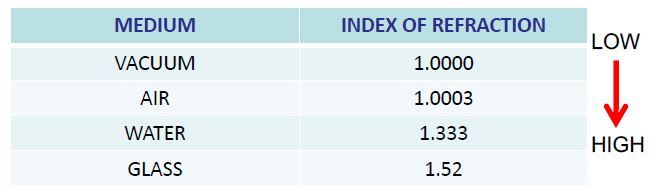
- The refracting medium can be made from different materials producing different optical densities.
- An optical density measure is the refractive index.
- The index expresses how much slower light travels in a medium compared to travelling in a vacuum (n = C/V(medium)
Light refracted by a prism
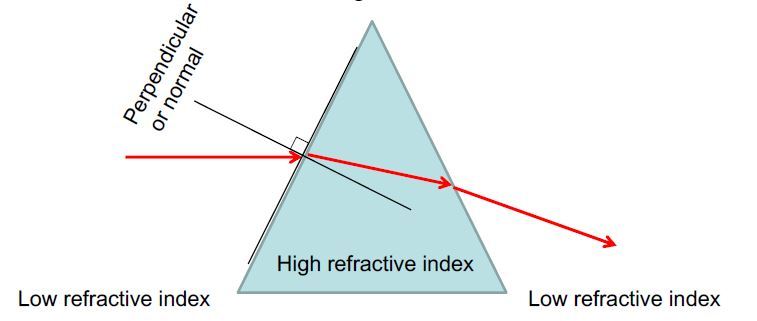
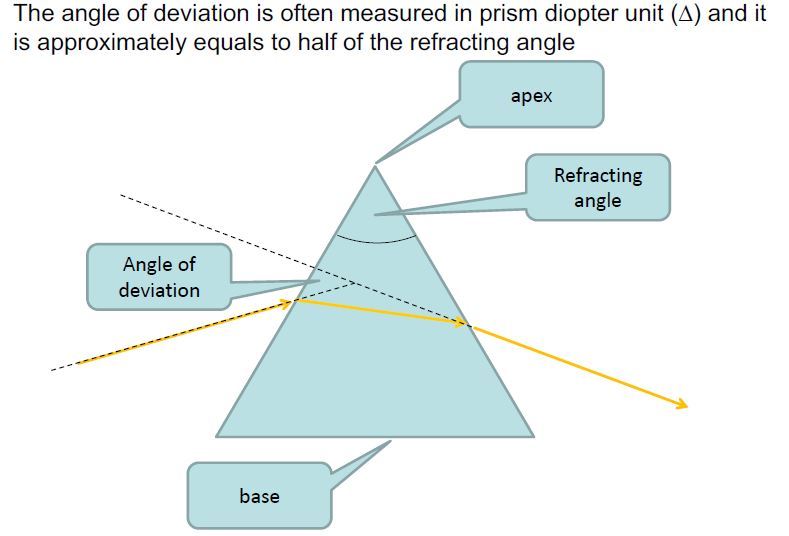
What effect do prism’s have when viewing a object, does its position shift?
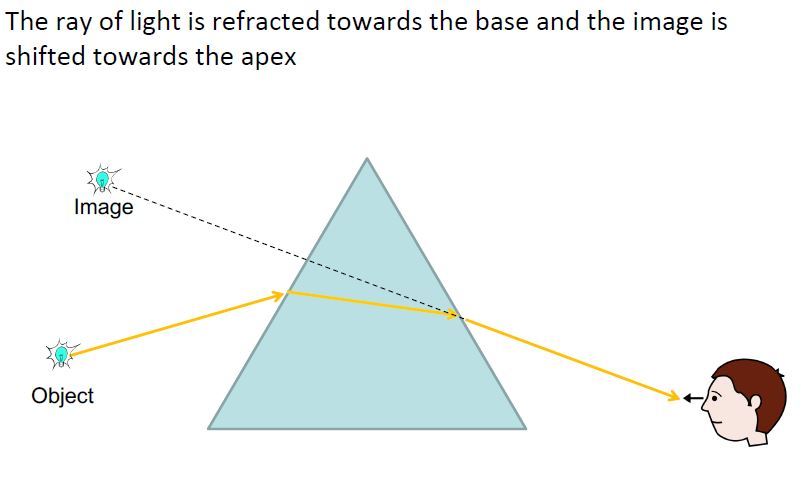
What happens if you stack two prisms base to base?
In a single prism the image will be shifted, however, a stacked prism base to base allows for the images to be brought back.
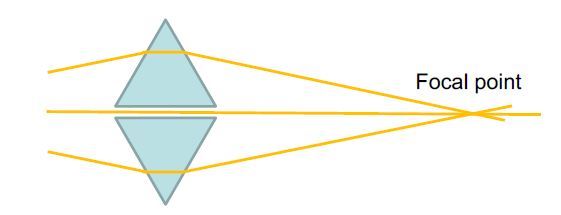
What happens if you stack 2 prisms together apex to apex?
The nature of the lens can be thought as a concave lens, wherein, the light will diverge.
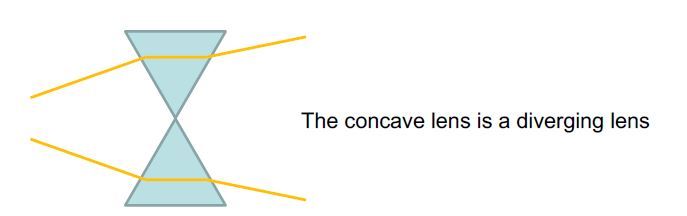
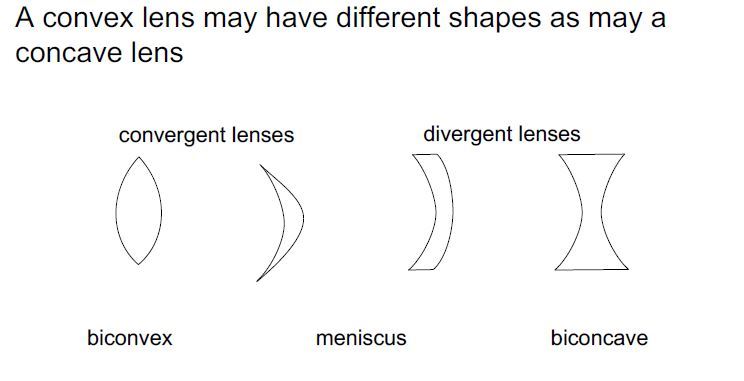
Formation of curved surface
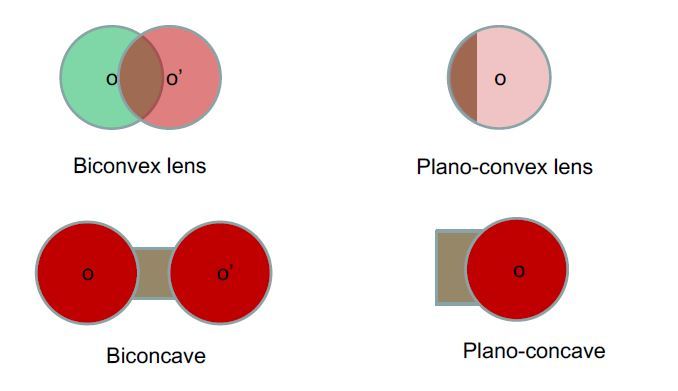
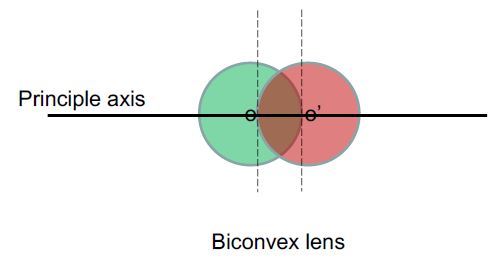
Whats is the principle axis
Using biconvex lens
There is a small tangent region on the curved surfaces on the biconves lens that can act as parallel glass plate. A line that passes through the centres of the two radii is unrefracted which is called principle axis of the lens
Describe the image formed by convergent lens
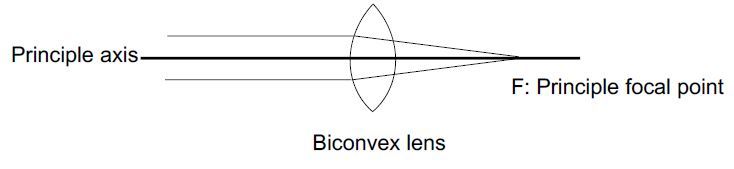
Rays of light on the lens are deviated and consequently must come to meet somewhere. Parallel rays of incident rays, that is if light comes from infinity, converge on the opposite side of the lens: at this point the image is formed and it is called the principle focal point.
Describe what a nodal point is
Image formed by convergent lens
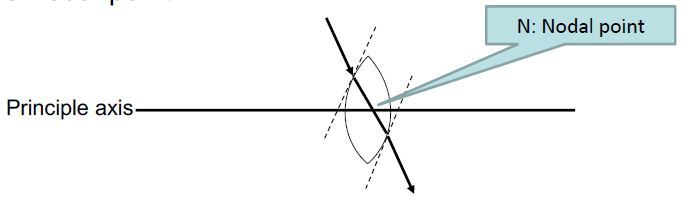
Away from the principle axis, at some point of the lens surfaces, the tangents of the points act as the parallel glass plate. The direction of propagation of the incident ray remained almost unchanged as they emerged. The point where the ray intercept the principle axis is called a nodal point.
In clinical practice, it is important to line the patients up with their nodal point, so that the light can be refracted back with minimal refraction.
What happens if rays of light is in front of a point and is too close to the lens?
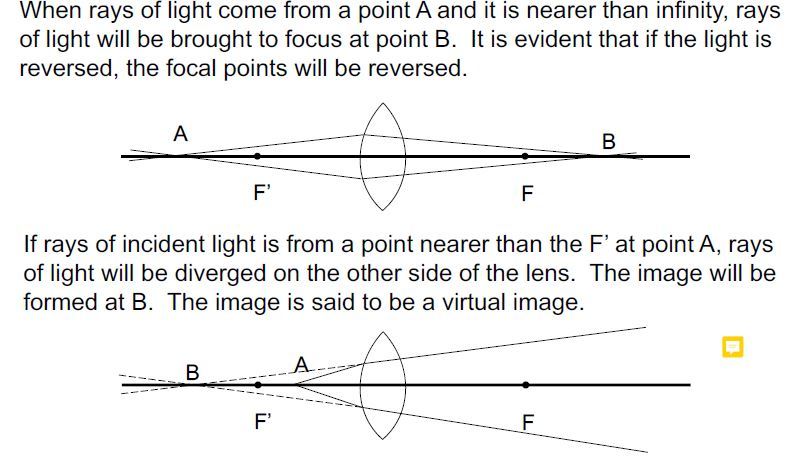
Point to remember is that a virtual image cannot be formed on a screen, it is an illusion we can see due to the divergence of light
What is the focal length
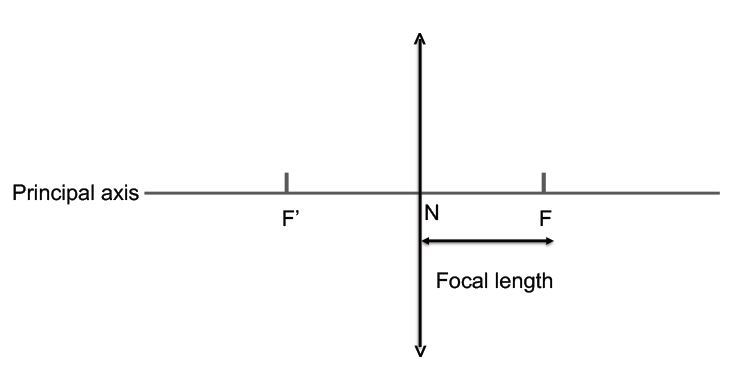
The focal length of an optical system is a measure of how strongly the system converges or diverges light; it is the inverse of the system’s optical power. A positive focal length indicates that a system converges light, while a negative focal length indicates that the system diverges light. A system with a shorter focal length bends the rays more sharply, bringing them to a focus in a shorter distance or diverging them more quickly. For the special case of a thin lens in air, a positive focal length is the distance over which initially collimated (parallel) rays are brought to a focus, or alternatively a negative focal length indicates how far in front of the lens a point source must be located to form a collimated beam. For more general optical systems, the focal length has no intuitive meaning; it is simply the inverse of the system’s optical power.
Why is this image imverted?
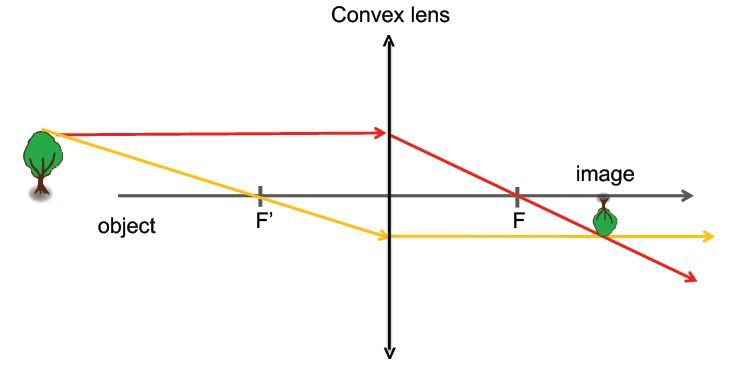
- A parallel incident ray to the principle axis will be refracted by a convex lens and the ray will pass through the second focal point.
- An incident ray that travels through the first focal point emerges travelling parallel to the principle axis
- The incident rays that travels along the principle axis will be unaltered
- Image formed is minimised, real and inverted
What do you see if the image in infront of the second focal point?
You see it magnified
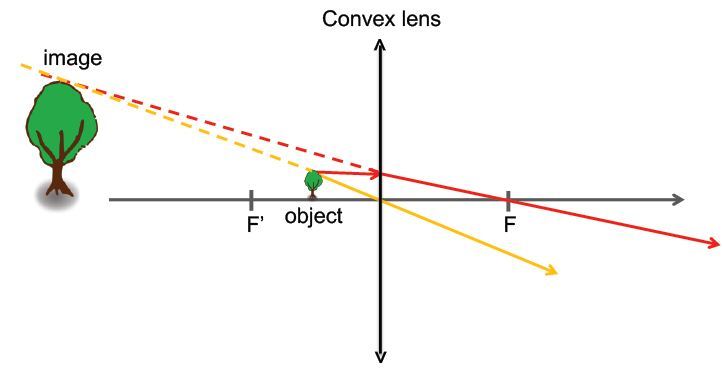
What do you see if the object is placed far from focal point and you are wearing concave lens?
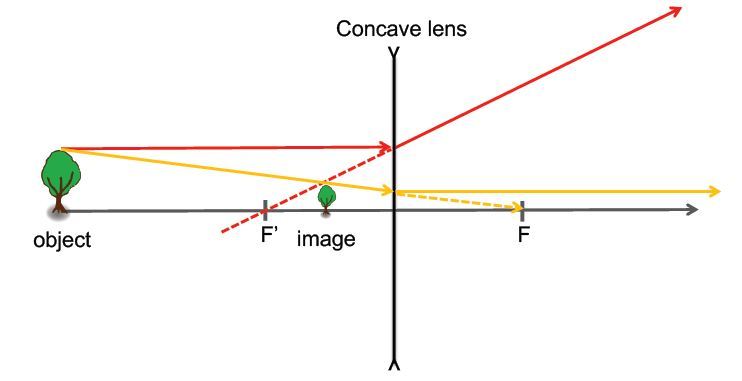
- A parallel incident ray parallel to the principle axis of a diverging lens will be refracted and the ray will apper to pass through the first focal point
- An incident ray appears traveling towards the second focal point will be refracted and the ray will travel parallel to the principle axis
- The incident rays that travel along the principle axis will be unaltered
- The image is virtual and minimised
Summary
- Ophthalmic thin lens can be thought of as multiple units of prisms
- Convergent lens bring rays of incident light into focus and it can form both real and virtual images
- Divergent lens diverges rays of incident light and it can form virtual images
- Lens of high refractive index and steep curvature has more power of bending light




