Lytic viruses
Viruses that induce destruction of a cell
Picornavirus Physical Properties
Size:
Morphology:
Nucleic Acid:
Lipid Envelope:
Tegument:
pH stability:
Size: 22-30nm
Morphology: Icosahedral
Nucleic Acid: ssRNA (+ polarity)
Lipid Envelope: NO
Tegument: NO
pH stability: Enteroviruses stable at pH 3-9; Rhinoviruses unstable below pH 6
Diseases associated with these simple viruses
Enteroviruses:
Rhinoviruses:
Hepatoviruses:
Parechovirus:
Kobuvirus:
Enteroviruses: paralysis, common cold, meningitis, diarrhea, hand-foot-and-mouth disease
Rhinoviruses: common cold
Hepatoviruses: hepatitis
Parechovirus: gastroenteritis, myocarditis, encephalitis
Kobuvirus: gastroenteritis
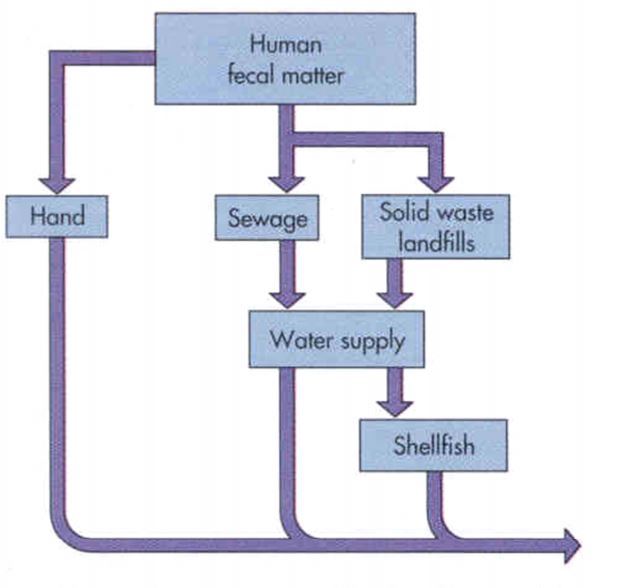
Enterovirus pathway
Fecal/oral pathway
Polio - Infection vs. Disease
- Inapparent infections (90-95%)
- Virus recoverd from throat and/or stool
- asymptomatic
- Mild illness (4-8%)
- Minor undifferentiated ferbile illness
- Influenza like
- Asceptic meningitis (1-2%) - non paralytic
- Minor illness progresses to CNS infasion
- Disease lasts 2-10 days; rapid and complete recovery
*
Paralytic poliomyelitis (0.1-2%)
- Initial nonspecific febrile illness
- Spectrum of paralytic disease is variable
- Asymmetric flaccid paralysis
- Lower extremeties involved more than upper
- Large muscle groups involved more often
- Bulbar paralysis: involvement of cranial nerves, medulla, respiratory compromise, death 5%
- Slow recovery
- Complications - resiudal paralysis
How does infection happen
Virus passes into Gastro-associated lymph tissues, then to local lymph nodes and then to the blood stream via lymphatic system
Picornavirus - Diagnosis
- Virus isolation
- Stool specimens and throat washings
- Cerebrospinal fluid
- Specific cell culture
- Serology
- 4 fold greater rise in titer
- neutralization
- PCR (multiplex)
Polio epidemiology
- An ancient disease
- Exclusively a human disease
- fecal - oral transmission
- Transmission enhanced by persons with sub-clinical infections
- Summer epidemics in temperate climates
Three major epidemiological phases: Endemic
- Children encounter virus at an early age
- Maternal antibody offers protection
- High rate of subclinical infections
- Very low incidence of paralytic disease
Three major epidemiological phases: Epidemic
- Late 1800s and Early 1900s in US
- Coincides with advent of indoor plumbing
- Patients are older when they first encounter virus
- Higher incidence of paralytic disease in older children and adults (no longer have maternal antibody)
Three major epidemiological phases: Post-vaccine
- Small number of cases
- Most all cases are vaccine related
How many proteins are made by the polio virus? Why is this important?
1 protein - which uses protesases to cut itself into many smaller proteins - these proteases are a good target for treatment
Poliovirus entry and genome release
Requires receptor interaction and injection of RNA genome into cytoplasm
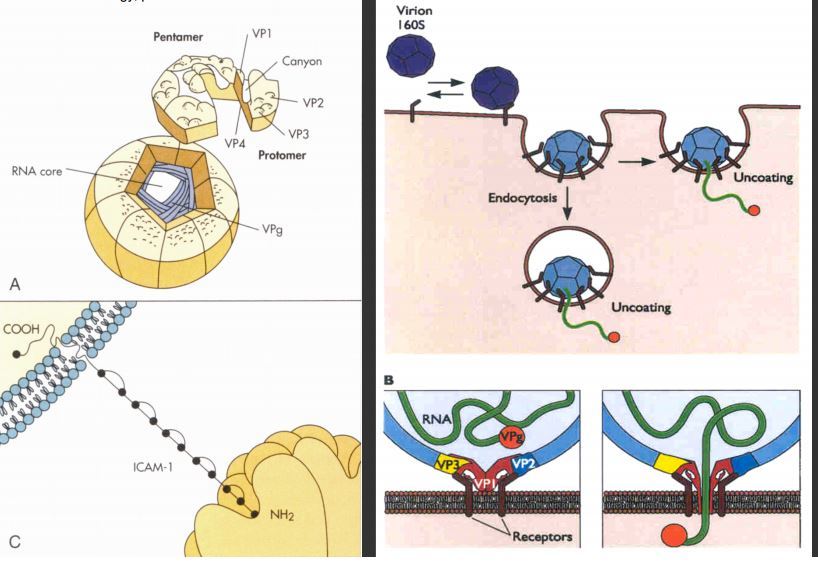
Viral Effect on host cell; Inhibition of ________ plays a role in cell death
Translation
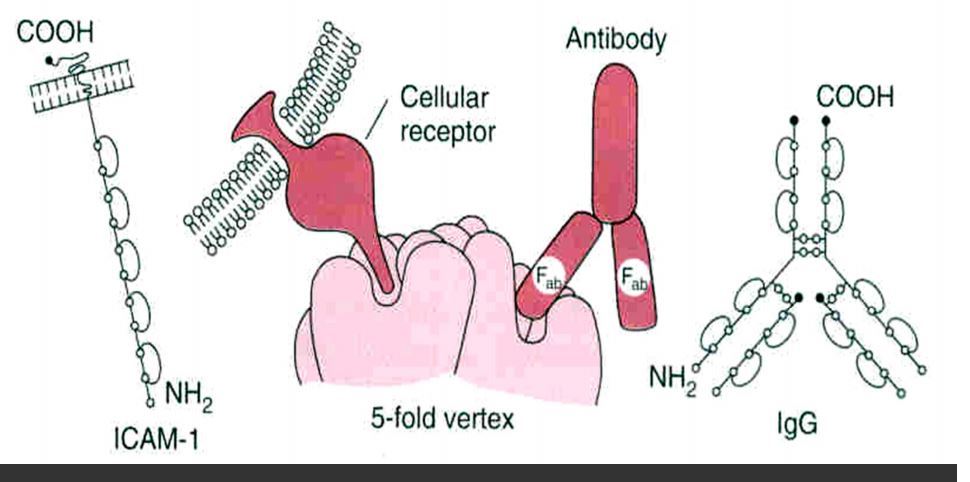
Picornavirus prevention and control
- Virus attachment
- block receptors (antibody or chemicals)
- Virus entry and genome release
- Protease processing
- RNA-dependent RNA polymerase inhibitors
Polio - Public Health success
1955 - Inactivated virus vaccine (Salk)
1962 - Live attenuated virus vaccine (Sabin)
Other RNA viruses - Different challenges
Negative strand RNA - can’t immediatedly translate genome (Don’t come with their own ribosomes)
- Have to bring along their own protein to get to positive strand RNA
Double stranded RNA - segmented genomes with each segment transcribed separeately to produce monocistronic mRNAs
Adenovirus
- Original isolate form normal adenoid tissues
- 51 serotypes
- Cross reactivity - family common antigen - reduces infection with other types and re-infection is rare
- Double-stranded DNA genome not enveloped
- Spread via fecal/oral route or respiratory
- Frequently causes unapparent respiratory infections
- Icosahedral capsid
The adenovirus particle is much more ______ than the picornavirus particle
complicated
Adenovirus disease
- Gastrointestinal in children
- More severe in immunosuppressed
- Enteric adenovirus infections
- Incubation 3-10 days
- Diarrhea lasts 6-9 days
- May have vomiting and fever preceding diarrhea
- More common in children than adults
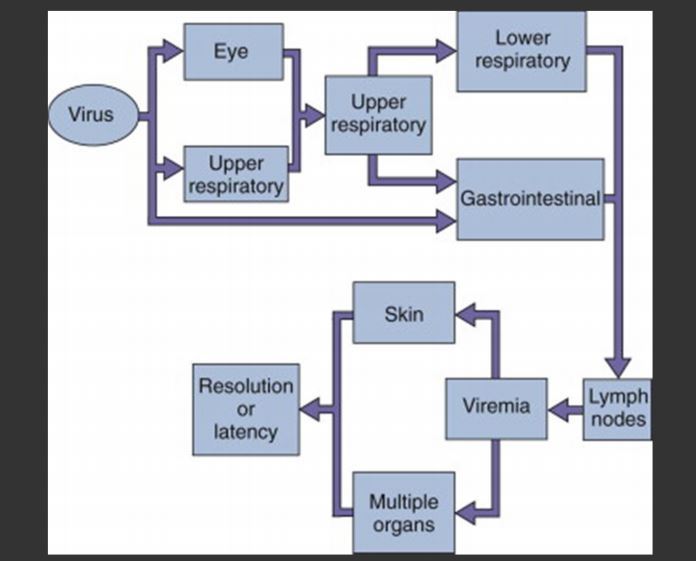
Adenovirus infectious progression
Eye, Upper respiratory, Gastrointestinal
Adenovirus attachment and entry
- Viral surfing
- Clathrin mediated endocytosis
- Viral fusion pore control
Production and Release of Adenovirus from epithelial cells
Virus attaches to apical surface
Virus shed into intestinal lumin
Virus released from basal surface
Excess virus penton spike fiber released from cells - disrupts adhesion junctions

-
Intro to Virology30
-
Lytic Viruses27
-
Latent and Persistent Infections22
-
Host Defenses29
-
Viral Oncogenesis30
-
Retroviruses I20
-
Retroviruses II33
-
Respiratory Viruses38
-
Childhood Viruses36
-
HIV Diagnosis, Management and Prevention17
-
Emerging Viruses31
-
Neurotropic Viruses25
-
Lymphotropic Herpesviruses35
-
Hepatitis33
-
Viral Vaccine Development22
-
Viruses as Therapeutics24
-
Viral Infections in Transplant Patients18



