Learning Outcomes (for general perusal)
Be able to describe with examples
- Direct and indirect diagnostic tests
- Microscopy and specifically the gram stain
- The principles of culture of microbes
- The basics of antibody detection methods for diagnosis of infection
- The basics of molecular detection of infectious agents
- The approach to taking blood cultures
What can microbiology be used for?
- Treatment
- Prognosis
- Infection control
- Epidemiology
Give examples of some infectious diseases
- Mumps
- Chickenpox
- SARS
- Tetanus
- Diphtheria
Microbiological tests can be…
- Diagnostic - What infectious agent is there? Is this significant?
- Theronostic (to direct therapy) - more about the bug
- Viral load
- serial testing
- Sensitivity/ resistance testing
- Immunity Testing - Has the person responded to a vaccine? Does the exposed person need prophylaxis?
- Outline Direct testing
- Outline Indirect testing
- See a germ, Grow a germ, Find a bit of germ (antigen), Find a bit of germ nucleic acid
- Find evidence of a specific immune response to a germ (lymphocytes, antibodies)
Give an example of direct testing
See a germ - Microscopy e.g Gram Stain (Gram negative diplococci In PMN in CSF =Meningococcal meningitis)
Grow a germ - eg. Staphylococcus aureus, Allows antibiotic sensitivities to be determined
Find a bit of germ (antigen) - Legionella urinary antigen
Find a bit of germ nucleic acid - PCR
Give an example of indirect testing
Finding evidence of a specific immune response to a germ - in practice this usually means serology
- Ab Assay Examples
- CFT (complement fixation test)
- ELISA (enz-linked immunosobent assay) / EIA (enz immunoassay) - same thing
- Indirect immunofluorescence (IIF)
- Measurements
- IgG / IgM (short lived = recent infection) / IgA Total Antibody or Positive, Negative, Equivocal or Quantity in Units
- Rising levels (serial sampling)
- IgG Avidity (estimation of how recent)
- Immunoblots (reactivity to xple Antigens from a bug)
Diagnostic Process
What is the role of the microbiology lab?
- Clinical history and examination
- Differential diagnosis
- Investigations
–Laboratory investigations
•Microbiology investigations
–Serology
–Direct detection
- *Clinical Diagnosis example**
- Meningococcal meningitis*
- What would the patient present with?
- What simple clinical test can be done?
- What microorganism would be seen microscopically?
- Describe it’s appearance
- What microbiological tests are carried out?
- Headache, fever, vomiting,drowsiness, Haemorrhagic rash, neck stiffness. Infants = poor feeding, bulging fontanelle
- Tumbler Test Positive in meningococcal infection
- Neisseria meningitidis
- Gram negative diplococci
- Microscopy
PCR
Culture
What determines if a good specimen is taken?
–site
–technique
–timing
–transport time
–storage conditions
–transport medium
Give examples of some specimens that can be taken?
–Throat swab
–Sputum
–Blood
–Faeces
–CSF
–Genital swab
–Biopsy
Give the different types of blood samples
- Clotted blood
- Serum e.g. serology
- EDTA blood
- Plasma / WBCs / Whole Blood e.g. PCR
- Blood culture
EDTA = Ethylenediaminetetraacetic acid. Anticoagulant, prevents haemolysis,
How will a diagnosis come about in a
- Patient
- Specimen
- Clinical Diagnosis. Haematology, Biochemistry, Non-microbiological investigations eg. Radiology
- Correct specimen, taken correctly, labelled and packaged correctly, appropriate transport and storage of specimen
- What is sensitivity?
- What is specificity?
- What is positive predictive value?
- What is negative predictive value?
- Measure of the lack of false negatives
- Measure of the lack of false positives
- TP/TP+FP
- TN/TN+FN
MICROSCOPY
- What can be seen with an electron microscope?
- What can be done with a light microscope?
- Herpes Virus, Paramyxovirus
- Staining e.g Gram Stain
MICROSCOPY
Outline the process of Gram staining
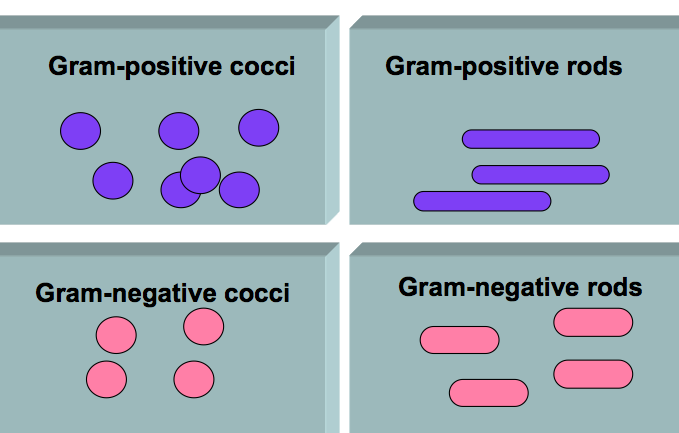
- Crystal Violet - Everything stains
- Gram’s Iodine - Stain differently fixed
- Decolorise (Acetone) - Gram-negatives destain
- Counterstain with Methyl Red - Gram-positives appear purple, Gram-negatives appear pink
Microscopy
Name some different shapes and gram reactions
- Gram positive cocci
- gram-positive rods
- gram-negative cocci
- gram-negative rods
What is the appearance of
- Neisseria meningitidis in CSF
- Staphylococcus aureus and E. coli - surgical wound
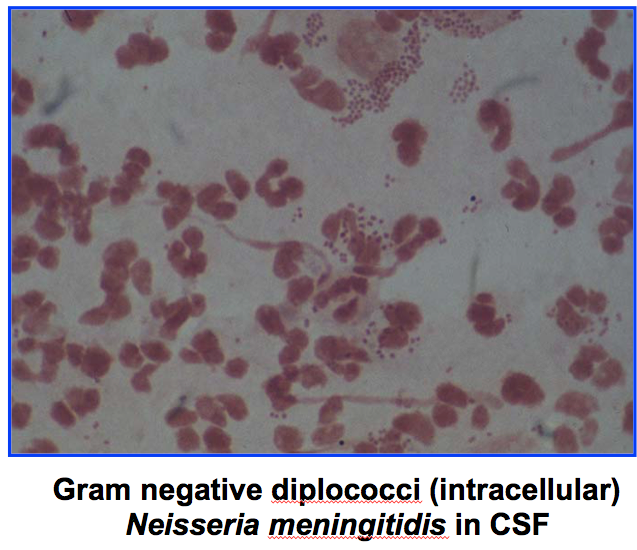
- Gram negative diplococci (intracellular)
- Gram positive cocci & gram negative rods
Microscopy
Describe the appearance of
- Haemophilus influenzae
- Streptococcus pyogenes
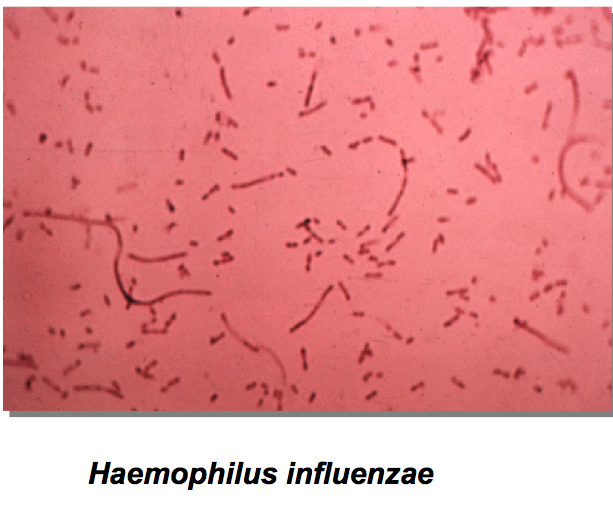
- Pleomorphic
- Gram-positive connected in long chains
What can the Ziehl-Neelsen (ZN) stain be used for?
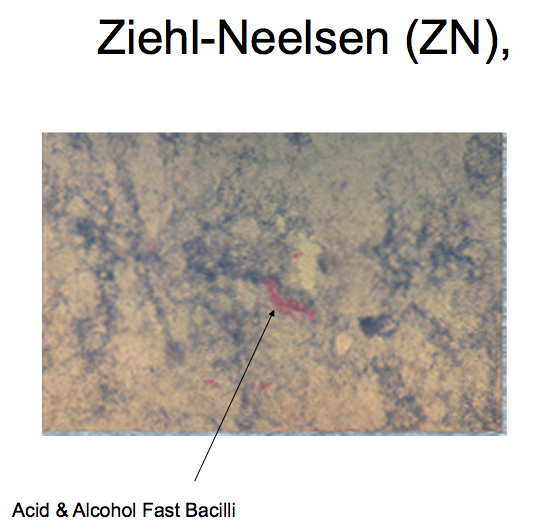
Used for the bacteria that cause TB
Sputum
Old technique
‘Grow a germ’
- What is a Bacteriological culture?
- What types of atmospheres can the culture be incubated in?
- Give an example of colony appearance
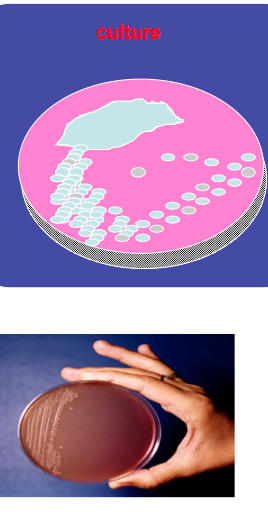
- Clinical specimen inoculated onto various media (selective, enrichment). Appearance of colonies suggests species present. Further tests to clarify
- Anaerobic, Aerobic, CO2-rich
- Haemolysis
- Beta-complete, Clear zone, B haemolysis, blood has been lysed = Streptococcus pyogenes
- Alpha-incomplete, Green zone, blood hasn’t been lysed, made leaky = Streptococcus pneumoniae
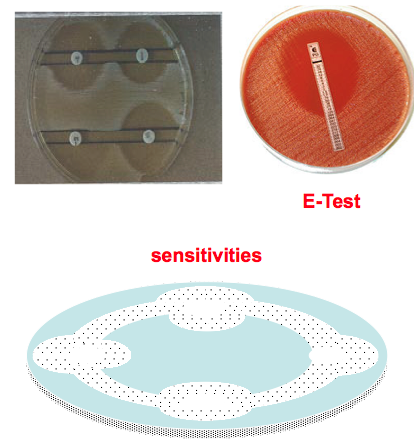
Antimicrobial Sensitivities
Outline these
- Filter paper disc
- Impregnated with antibiotic
- Zone of inhibition
If it can grow right up to the disc = resistant
What is a viral culture conducted in?
Giving this test what characterisitics?
Living cells
Slow and sensitive
Molecular Tests
What do these involve?
- Detection of nucleic acid
- Quantitative or Qualitative
- Amplification methods e.g. PCR



-
I1 - Intro to Immunology70
-
I2 - Cell Mediated Immunity29
-
I3 - Innate Immunity48
-
I4 - Immunopathogenesis35
-
MB 5 - Diagnostic Techniques41
-
I5 Antibodies and the Humeral Response1
-
MB6 Antimicrobials 132
-
I6 Drivers of Inflammation and Immunodeficiency33
-
MB7 Antimicrobials 236
-
I7 Hypersensitivity and Autoimmunity27
-
MB 8 Respiratory Infections29
-
MB9 Gastrointestinal Infections 134
-
MB10 Urinary Tract Infections26
-
MB11 Gastrointestinal Infections 223
-
MB12 Sexually Transmitted Infections - Mucosal36
-
MB13 Sexually Transmitted Infections - BBVs36
-
MB14 Obstetric and Perinatal Infections35
-
MB15 CNS Infections50
-
SPR L1 Childhood Exanthems and Selected Skin Manifestations37
-
SPR L2 Infections of Muscles, Bones and Joints0
-
SPR L3 Infections of Skin, Soft Tissue, Muscle, Bone and Joints36
-
SPR L4 Intro to Clinical Genetics0
-
SPR L5 Fever of Unknown Origin26
-
SPR L6 Ethical Aspects of Clinical Genetics18
-
SPR L7 Healthcare Acquired Infections24
-
SPR L80
-
SPR L90
-
SPR L10 Genetic Testing and Genetic Counselling41
-
SPR L110
-
SPR L12 Infection Prevention and Control16
-
SPR L13 Vaccinations and Immunotherapy 127
-
SPR L14 Vector-bourne Infections and Zoonoses27
-
SPR L15 Vaccines and Immunotherapy 224
-
SPR L16 Infections in the Immunocompromised Host33
-
SPR L17 Genetics Module Overview13



