- origin and insertion 2. movements
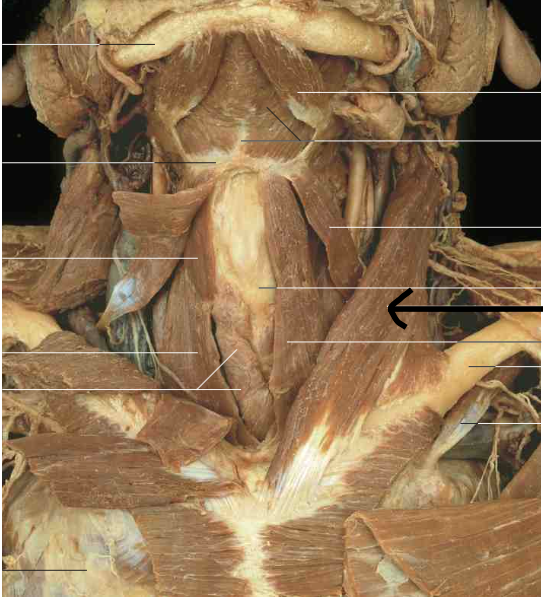
sternocleidomastoid 1. manubrium/clavicle –> temporal bone. 2. one muscle rotates face to opposite side. two muscles causes flexion of neck.
- origin and insertion 2. movement 3. location
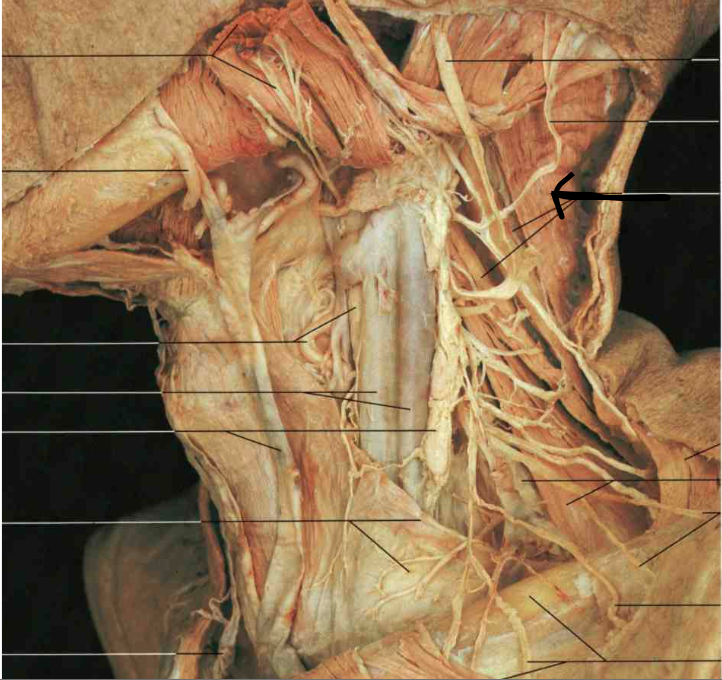
splenius 1. vertebrae –> occipital column. 2. acting singly they rotate head together they extend head. 3. located on posterior side and under the trapezius in neck region.
- origin and insertion. 2. movement.
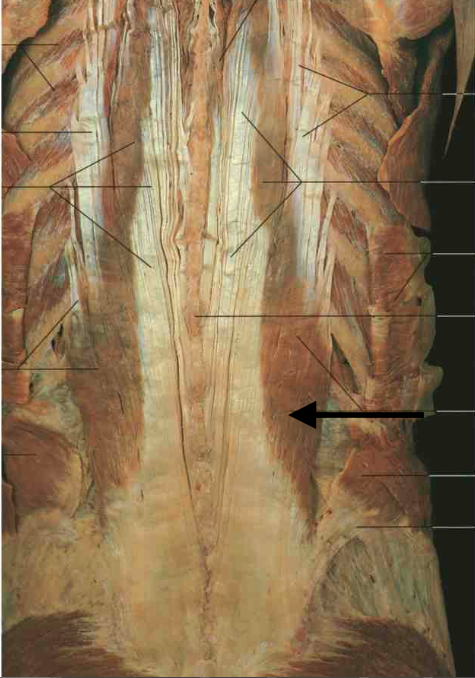
iliocostalis lumborum 1. ilium –> ribs. 2. extends vertebral column
name this structure.
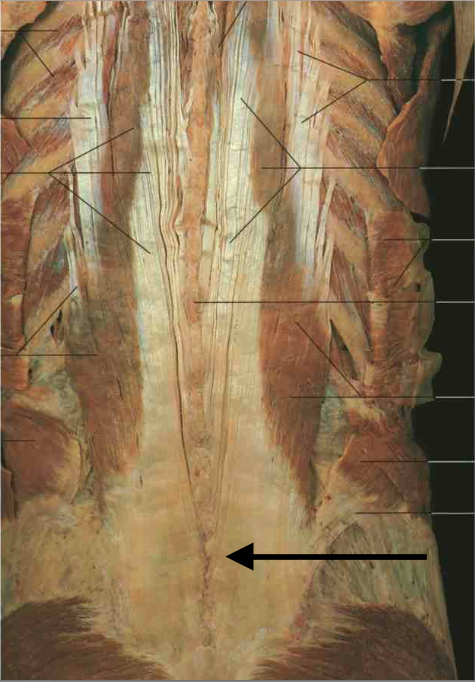
thoracolumbar fascia. base of lower back.
- origin and insertion. 2. movement. 3. direction of fibers.
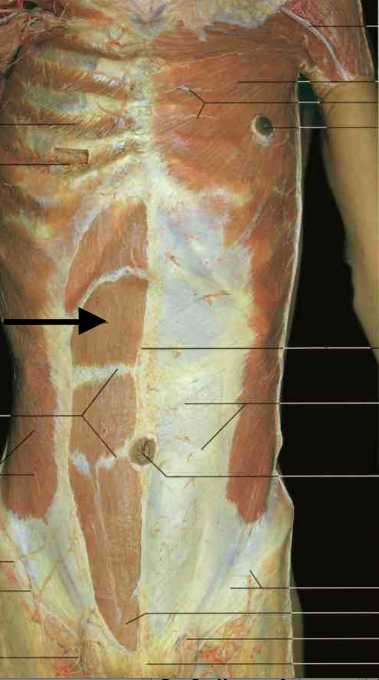
rectus abdominis 1. pubic bone –> costal cartilage. 2. flexes vertebral column. fibers run vertical. six pack.
name the structure.
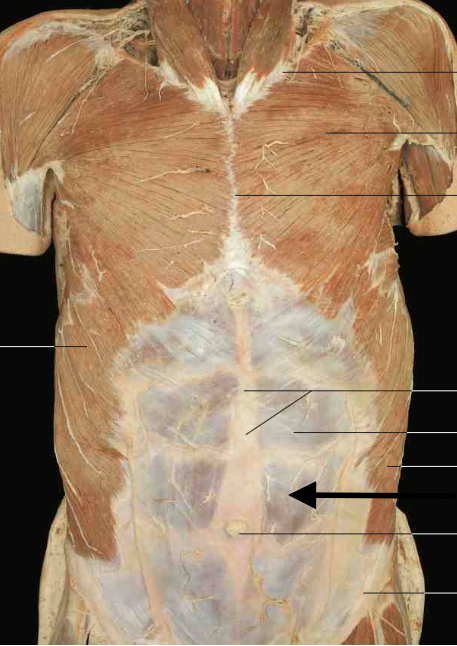
rectus sheath.
- origin and insertion. 2. movement. 3. direction of fibers.
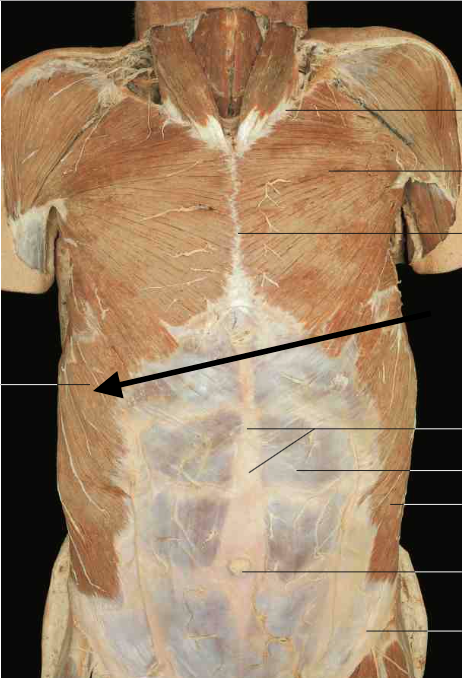
external obliques. 1. ribs –> rectus sheath. 2. compresses abdomin and rotates vertebral column. 3. put hands in pocket, fingers parallel fibers.
- origin and insertion. 2. movement. 3. direction of fibers
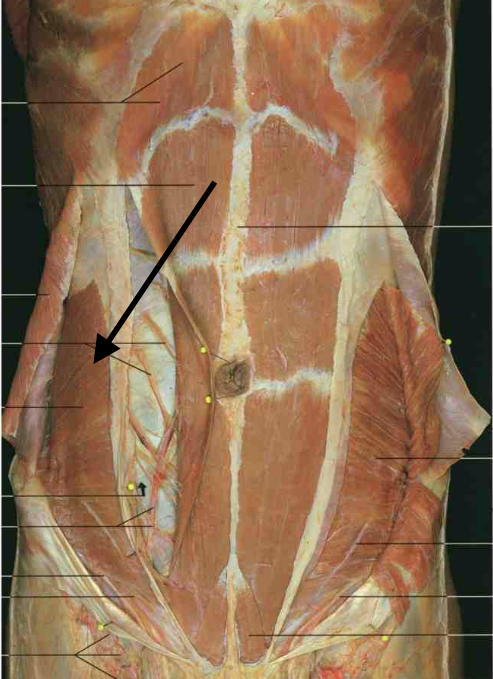
internal oblique. 1. thoracolumbar fascia –> rectus sheath. 2. compresses abdomen and rotates vertebral column. 3. right angel to external obliques
- insertion and origin. 2. movement. 3. direction of fibers.
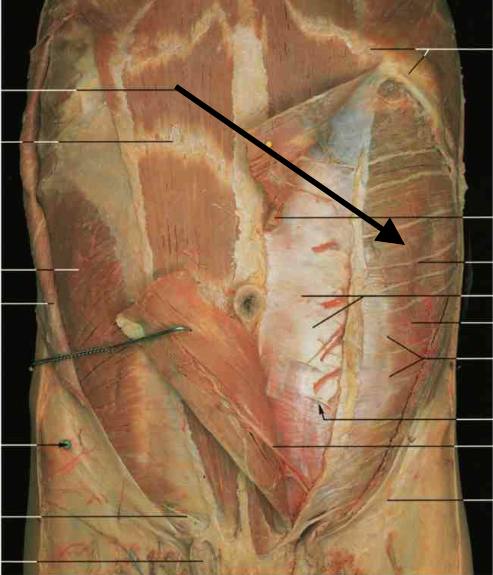
transversus abdominis. 1. thoracolumbar fascia –> rectus sheath. 2. compresses abdomen. 3. horizantal fibers. and deepest of the abdominal muscles.
- Origin and insertion. 2. Movement
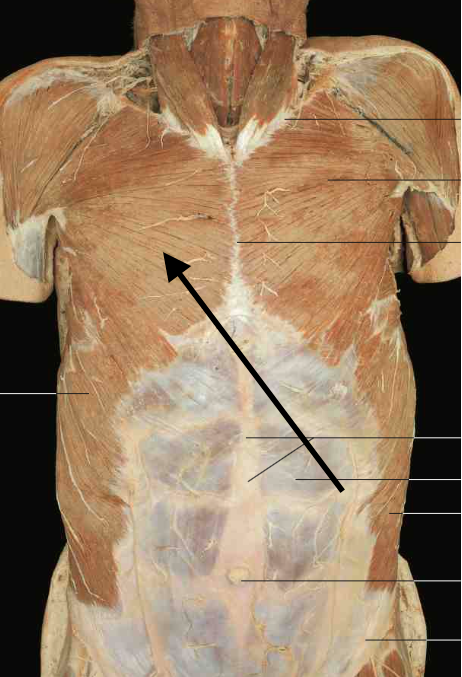
Pectoralis major. 1. Clavicle and sternum –> humerus 2. Flexion, adduction, medial rotation of arm.
- Origin and insertion. 2. Movement.
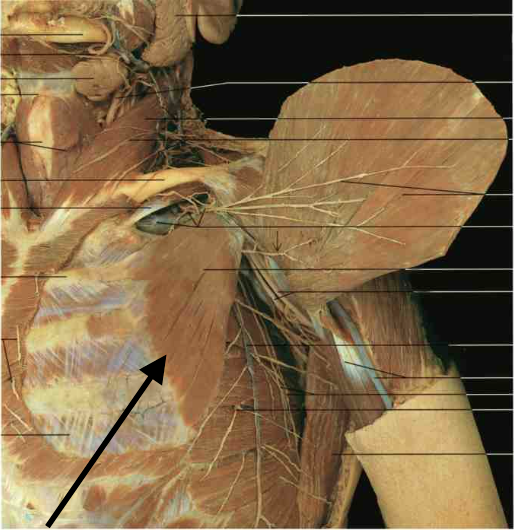
Pectoralis minor. 1. Ribs –> scapula. 2. Depresses shoulder.
- insertion and origin. 2. movement
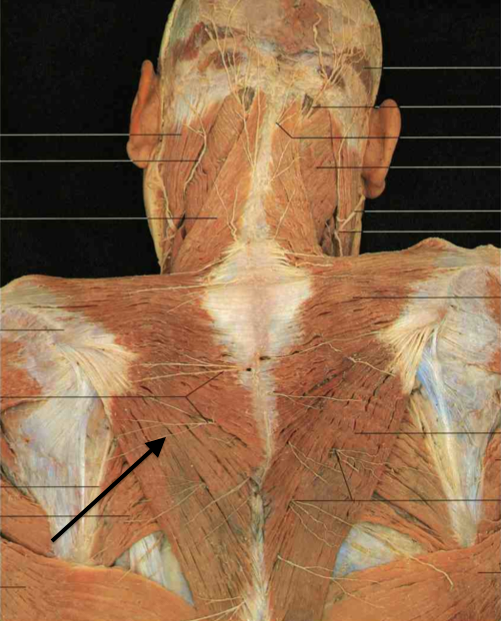
trapezius. 1. occipital bone and thoracic vertabre –> clavicle and scapula 2. adduction of scapula, upper fibers elevate scapula, lower fibers depress scapula.
- insertion and origin. 2. movement. 3. location
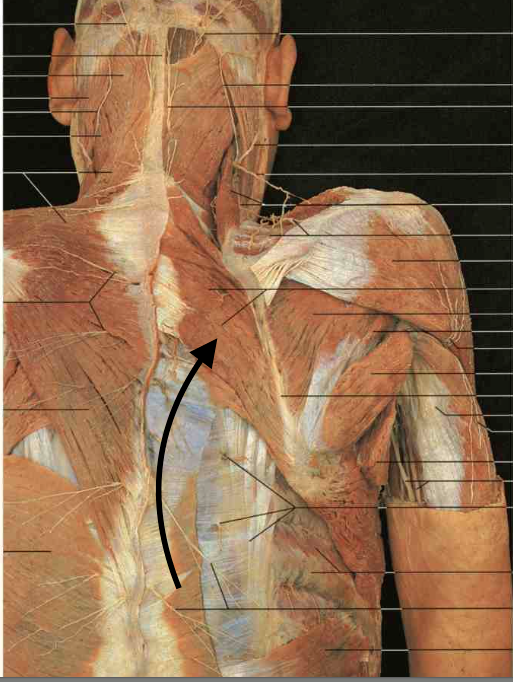
rhomboideus 1. thoracic vertebrae –> scapula 2. adduction of scapula 3. located beneath trapezius.
- insertion and origin. 2. movement
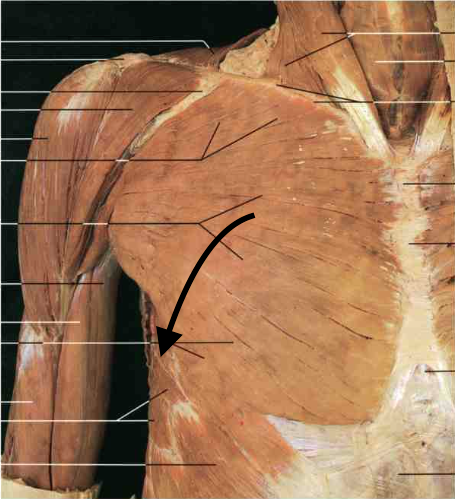
serratus anterior. 1. ribs –> scapula 2. abduction of scapula
- insertion and origin. 2. movement
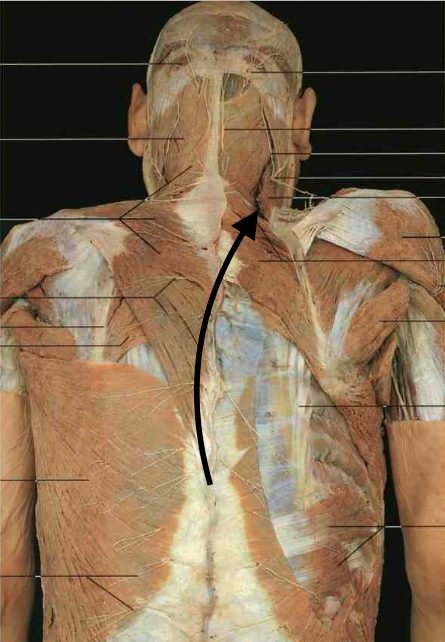
levator scapulae. 1. cervical vertebrae –> scapula. 2. elevates scapula.
- insertion and origin. 2. movement
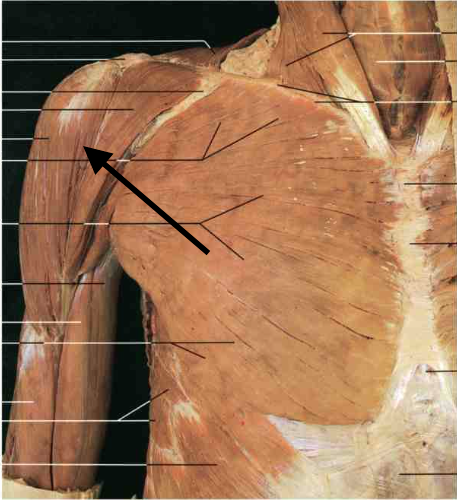
deltoid. 1. clavicle and scapula –> humerus. 2. abduction of arm, anterior fibers flex and medially rotate, posterior fibers extend and laterally rotate.
- insertion and origin. 2. movement
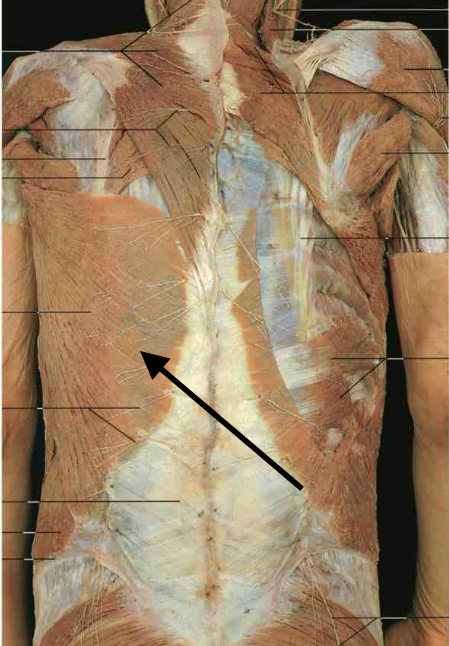
latissimus dorsi. 1. thoracolumbar fascia –> humerus 2. adduction, extension and medial rotation of arm.
- insertion and origin. 2. movement
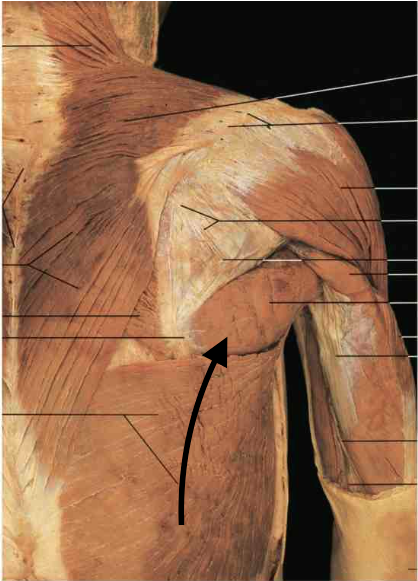
teres major. 1. scapula –> humerus. 2. adduction, extension and medial rotation of arm.
- insertion and origin. 2. movement. 3. group
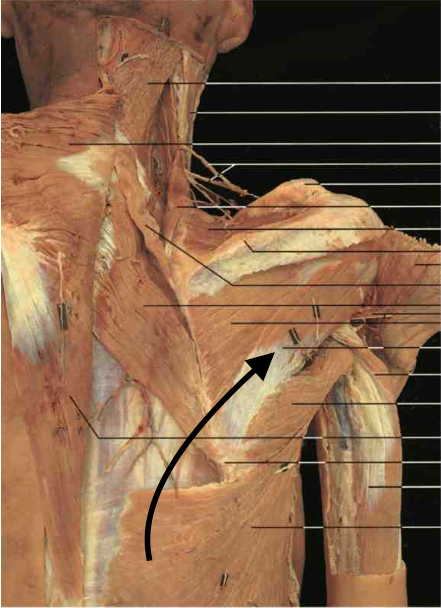
teres minor. 1. scapula –> humerus. 2. lateral rotation of arm. 3. rotator cuff group
- insertion and origin. 2. movement 3. group
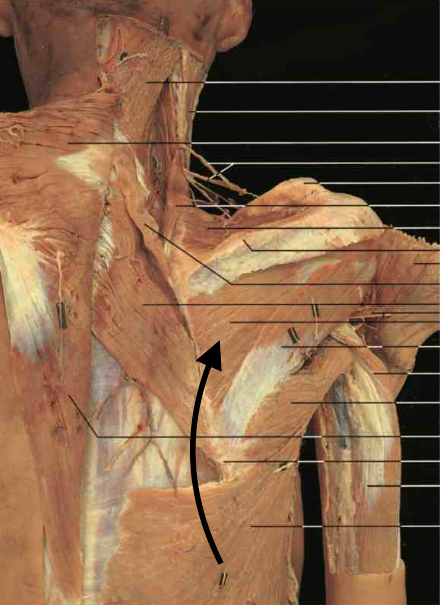
infraspinatus. 1. scapula –> humerus. 2. lateral rotation of arm. 3. rotator cuff group
- Origin –> insertion. 2. Movement. 3. Group
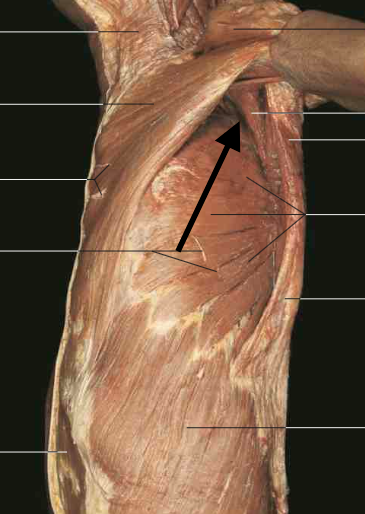
subscapularis 1. scapula to humerus. 2. medial rotation of arm. 3. rotator cuff group.
- Origin –> insertion. 2. Movement
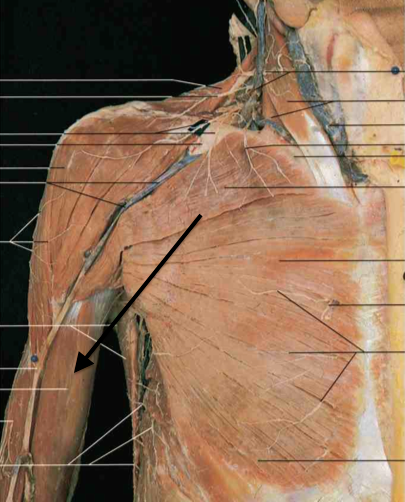
biceps brachii. 1. scapula –> radius and connective tissue. 2. flexion of forearm.
- Origin –> insertion. 2. Movement 3. location
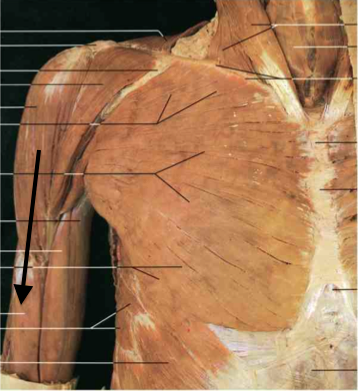
brachialis 1. humerus –> ulna. 2. flexion of forearm. 3. lateral to biceps brachii
- Origin –> insertion. 2. Movement 3. location
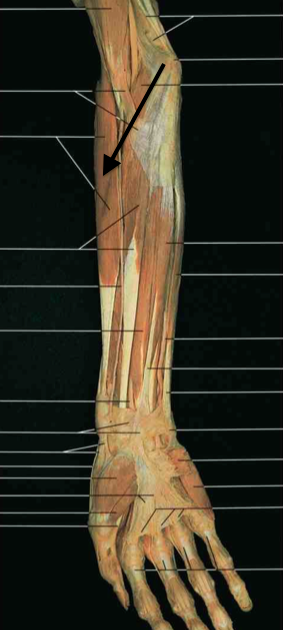
brachioradialis 1. humerus –> radius. 2. flexion of forearm. 3. more distal than brachialis and biceps brachii.






